Japanese Garden Techniques
Boxwood Alternatives: Japanese Holly — How Japan Grows It
Among boxwood alternatives, Japanese holly (Ilex crenata) comes closest in leaf, gloss, and response to shearing, and it is a host of…

Journal
This shelf holds the techniques behind Japanese garden trees: how they are shaped, thinned, trained and placed in a landscape. I write about them as an arborist working in Tokyo, so the focus is on what is done to the tree and why, not on garden style alone.
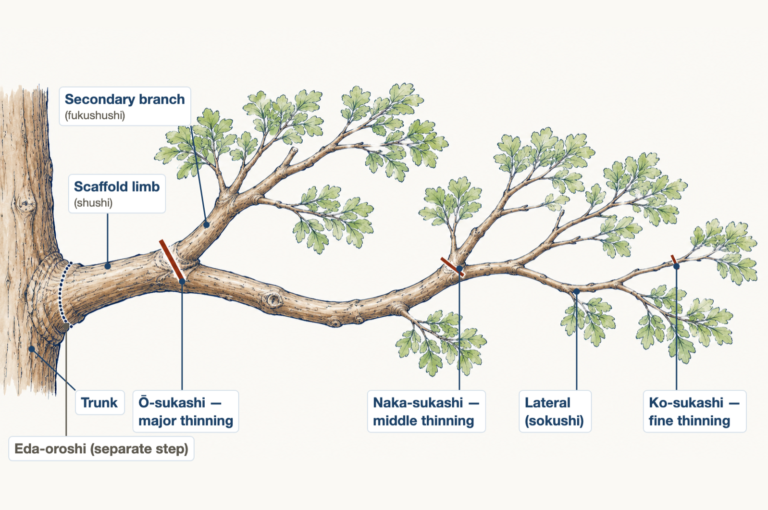
Several articles separate Japanese practice from the Western ideas it is most often confused with. Niwaki are garden trees grown in the ground, and the pieces on niwaki versus bonsai and niwaki versus topiary explain how that single fact changes size, care and purpose. Karikomi, the cloud pruning that shapes shrubs into rolling green waves, has its own walk-through of history, tools and technique. The sukashi article covers the three levels of Japanese thinning, where whole branches are taken out at the fork so the tree keeps its outline while light and air reach the interior.
Other pieces are about timing and judgement. Midori tsumi pinches a pine's spring candles in a window of only two to four weeks, and each cut decides what the tree becomes. Daisugi, the Kitayama method of harvesting straight cedar from a living stump, has two articles: one on how the 600-year-old method works and one that fact-checks the viral Kyoto cedars.
The shelf also looks at ideas behind the technique. Shakkei borrows a distant mountain into the garden. Kamon, the botanical motifs on family crests, quietly shaped planting plans. A submerged forest raises the question of whether ecology should outlast aesthetics.
It is written for gardeners and designers outside Japan, and for anyone who wants to understand what a Japanese technique actually is before copying it. If you only have time for a few articles, these three give a good first picture.
Start here
Niwaki vs Bonsai — The Difference, from a Japanese Arborist
Sukashi Pruning — The Three Levels of Japanese Thinning
Karikomi: The Japanese Art of Cloud Pruning Explained
Japanese Garden Techniques
Japanese Garden Techniques
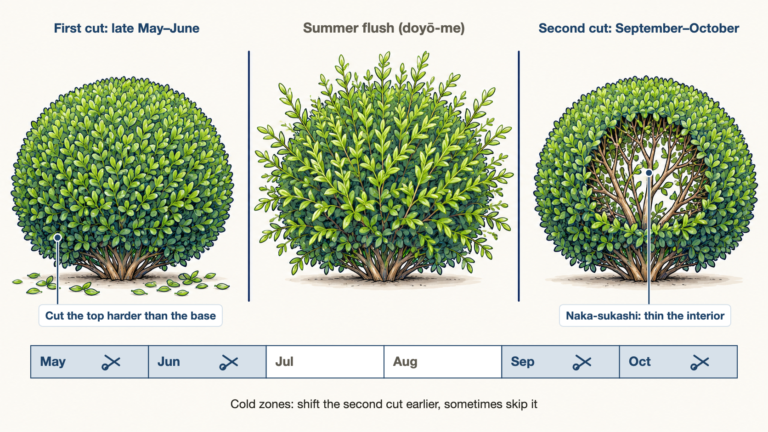
Among boxwood alternatives, Japanese holly (Ilex crenata) comes closest in leaf, gloss, and response to shearing, and it is a host of…
Japanese Garden Techniques
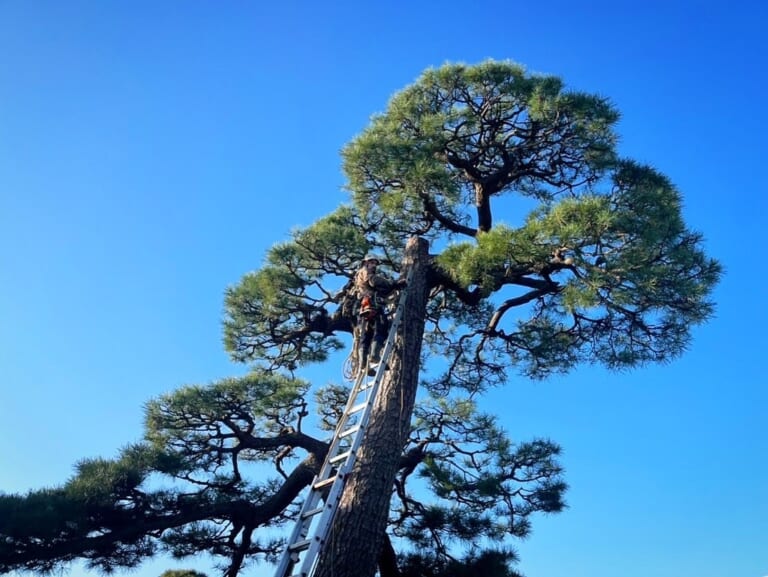
Momiage (もみあげ) is the cold-season work on a Japanese garden pine: the gardener pulls off the needles from previous years by hand,…
Japanese Garden Techniques
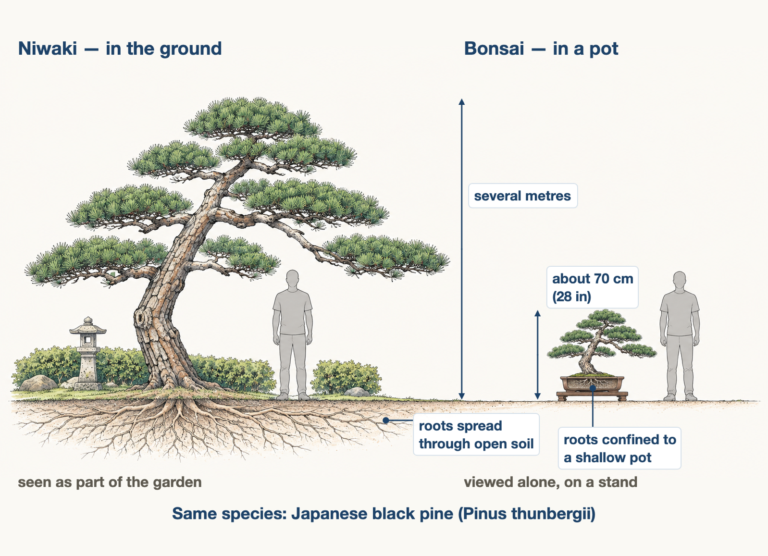
Niwaki (庭木) are trees grown in the ground as part of a garden; bonsai (盆栽) are trees grown in a container and…
Japanese Garden Techniques
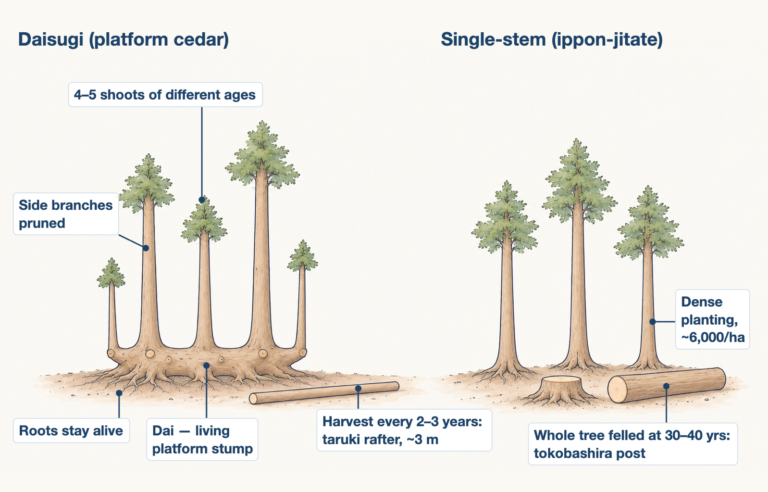
Yes, daisugi is real. Daisugi (台杉, “platform cedar”) is a documented way of growing Kitayama cedar (Cryptomeria japonica) in the hills north…
Japanese Garden Techniques
Sukashi pruning (透かし, literally “see-through”) is the Japanese term for thinning a crown by taking out whole branches where they fork, so…

Japanese Garden Techniques
Daisugi (台杉) harvests straight cedar from a living mother tree every 20 years without felling it. How Kitayama's 600-year-old method works.
Japanese Garden Techniques
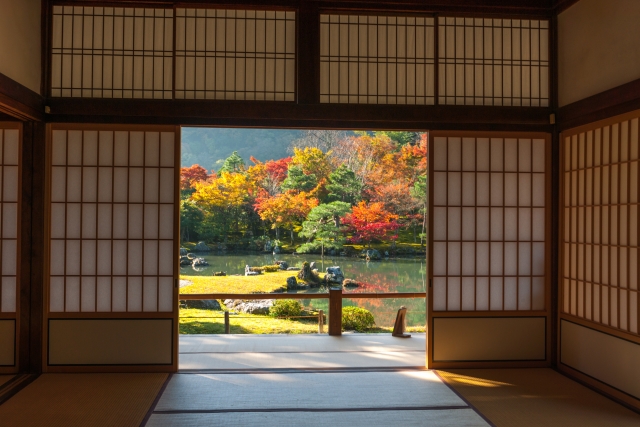
Shakkei (借景) borrows a distant mountain into the garden. How it works on site, its Chinese roots (jiejing), and how to apply…

Japanese Garden Techniques
Midori tsumi pinches a pine's spring candles in a 2-4 week window. How to read each candle, why it is harder than…

Japanese Garden Techniques
A submerged forest reshaped how I think about landscape design: ecology outlasts aesthetics. Field notes from an unusual site in Japan.

Japanese Garden Techniques
From samurai family crests to planting plans: how kamon botanical motifs quietly shaped Japanese garden design for centuries.
Japanese Garden Techniques
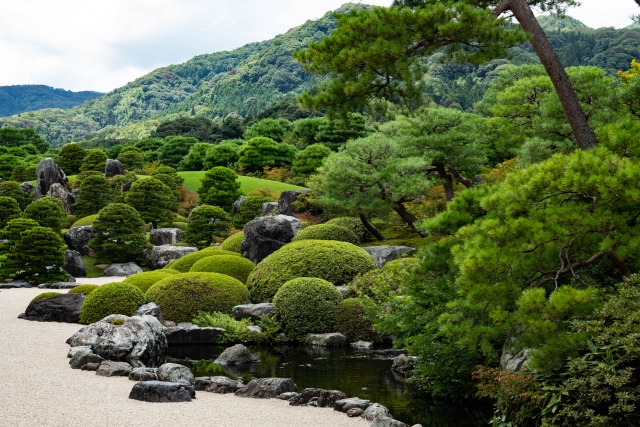
Karikomi shapes shrubs into rolling green waves. A Japanese arborist explains cloud pruning's history, tools, technique — and how it differs from…

Japanese Garden Techniques
Niwaki is not topiary. A Japanese arborist explains what Western gardens miss about Japan's garden trees — and how to train one…