Sacred & Heritage Trees
Higashine Great Zelkova — Caring for a Hollow Giant
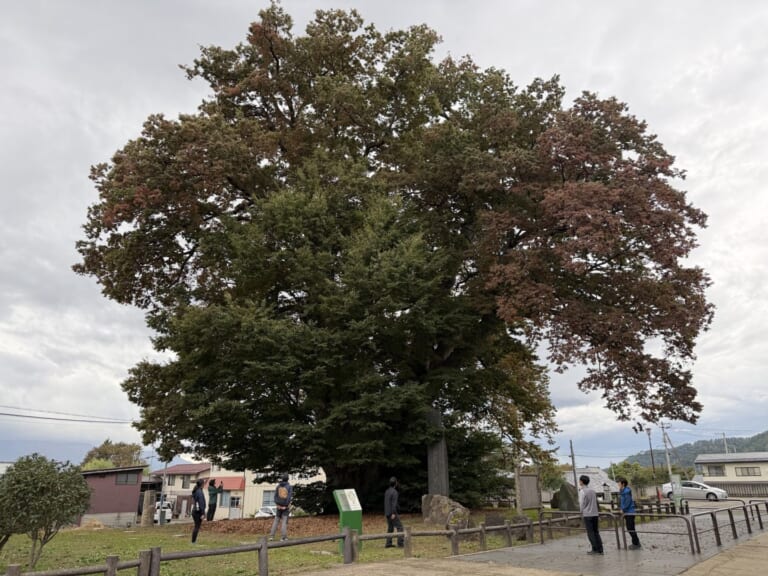
The Higashine Great Zelkova (東根の大ケヤキ, Higashine no Ō-keyaki) is a Japanese zelkova (Zelkova serrata, keyaki in Japanese) that stands in the schoolyard…

Journal
Most tree failures are not sudden. They begin inside the wood, where decay can hide behind a healthy-looking crown. This shelf collects articles on how trees are diagnosed and how risk is judged, from methods that need nothing more than eyes, hands and a mallet to instruments that read the inside of a trunk. I write from my work as an arborist in Tokyo.
The field-method article explains how Japanese arborists read decay before any machine arrives. Two articles then go one level deeper into instruments. The first explains how a resistograph works, using the IML-RESI PowerDrill: it records resistance along the path of a thin needle and nothing more, and that limit is the reason the tool is useful. The second explains sonic tomography with the ArborSonic 3D, which measures how long a stress wave takes to cross the trunk and turns that single measurement into a picture. A case article shows the result in practice, with ropework and sonic tomography used together on a temple's sacred trees in Tokyo.
Two pieces compare systems of judgement. One sets visual tree assessment (VTA) beside Japan's jumoku-i approach, and the other explains what a jumoku-i is, how the certification works and how it differs from ISA arborist certification.
Related articles cover how trees seal wounds after pruning, and what happens when ageing street trees fall in large numbers.
The shelf is for tree owners, managers and arborists who want to know what each method can and cannot show. These three are the clearest way in.
Start here
How to Read Tree Decay Without Technology: Japanese Field Methods
How a Resistograph Works: Reading the IML-RESI PowerDrill in Japan’s Tree Diagnosis
How Sonic Tomography Works: Reading the ArborSonic 3D in Japan’s Tree Diagnosis
Tree Diagnosis & Risk
Sacred & Heritage Trees
The Higashine Great Zelkova (東根の大ケヤキ, Higashine no Ō-keyaki) is a Japanese zelkova (Zelkova serrata, keyaki in Japanese) that stands in the schoolyard…
Tree Diagnosis & Risk
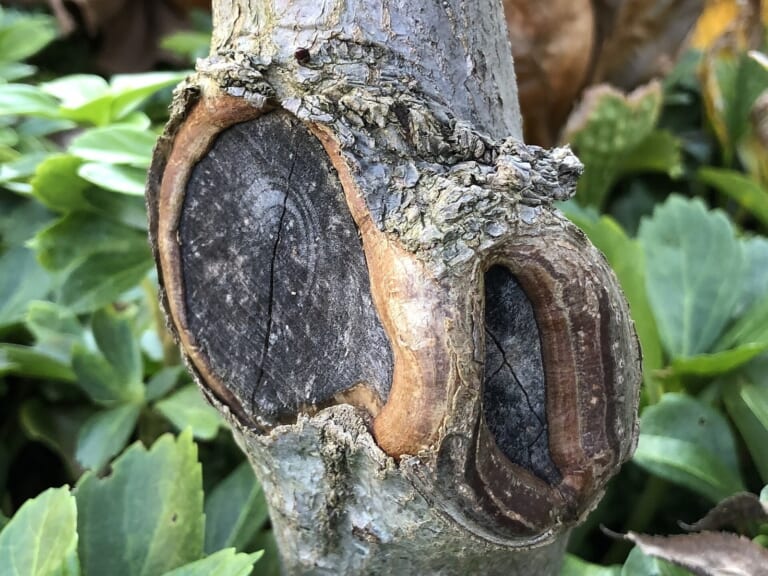
Trees do not heal wounds the way skin heals. They respond in two separate ways: on the outside they grow new tissue…

Tree Diagnosis & Risk
Introduction A sonic tomograph does not photograph the inside of a tree. It measures one thing only: how long a stress wave…

Tree Diagnosis & Risk
Introduction A resistograph does not show you the inside of a tree. It records resistance along a single line — the path…
Tree Diagnosis & Risk
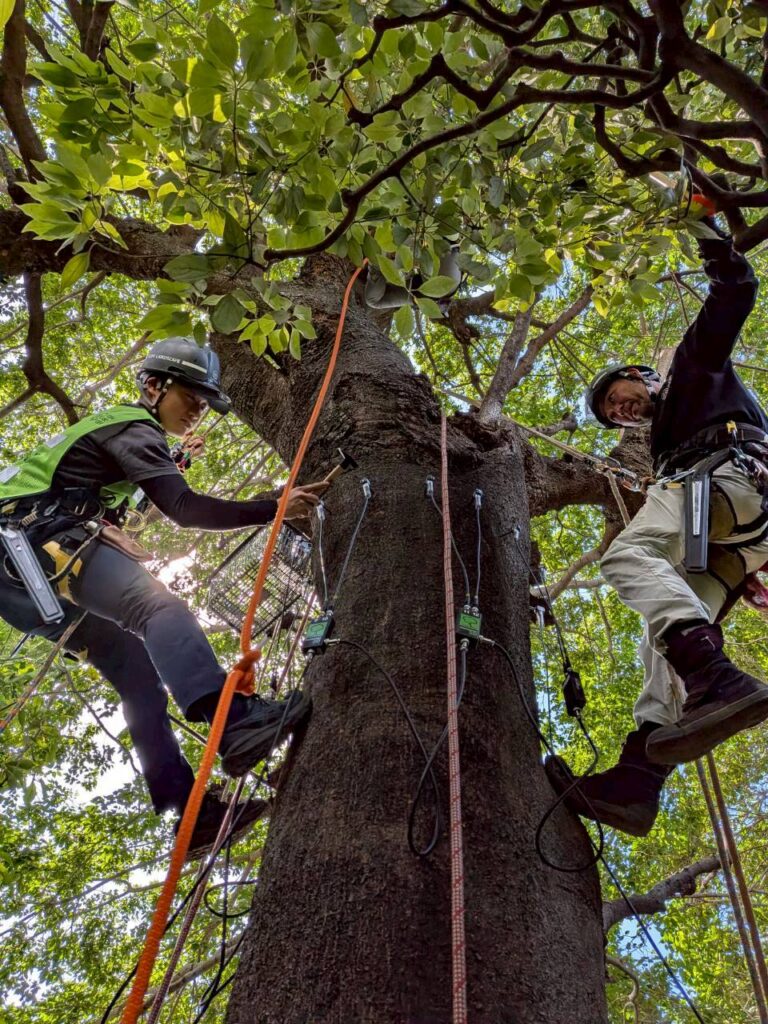
Climbing a temple's sacred trees with ArborSonic 3D: what sonic tomography plus ropework revealed inside — a real diagnostic case from Tokyo.

Tree Diagnosis & Risk
How Japanese arborists read decay with eyes, hands, plus a mallet — field diagnostic methods that work before any machine arrives.

Tree Diagnosis & Risk
VTA meets Japan's jumoku-i system: an arborist compares Western and Japanese tree diagnosis — strengths, blind spots, and how they combine.

Tree Diagnosis & Risk
What is a jumoku-i? Japan's certified tree doctor system explained — training, exams, and how it differs from ISA arborist certification.