Climbing a temple's sacred trees with ArborSonic 3D: what sonic tomography plus ropework revealed inside — a real diagnostic case from Tokyo.
Introduction
In Japan, a certified tree specialist known as a jumoku-i (樹木医) carries the responsibility of diagnosing and treating trees — from ancient sacred trees to urban street plantings. Yet despite this rich professional tradition, one critical practice remains almost entirely absent from the Japanese arboricultural landscape: climbing into trees to diagnose them from above. Most jumoku-i assessments are conducted from the ground, leaving the upper trunk, major limbs, and canopy interior as largely uncharted territory.
We recently had the opportunity to change that — at least for one remarkable site. At Yakuoji Temple (妙荘山薬王寺), a Nichiren Buddhist temple tucked into the quiet streets of Minato, Tokyo, near Keio University, we conducted an aerial tree diagnosis using rope climbing combined with Arborsonic 3D acoustic tomography. What we found confirmed what we have long believed: some of the most important information about a tree’s condition can only be discovered from within the tree itself.
Why This Temple, and Why Now
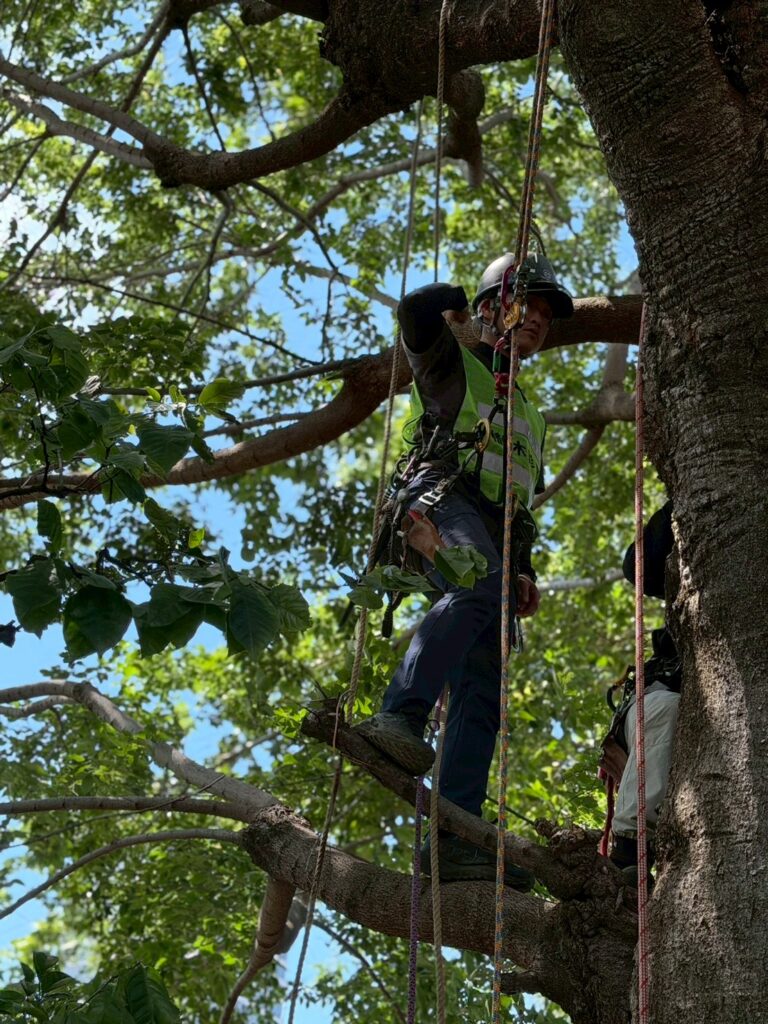
A Question of Preservation or Renewal
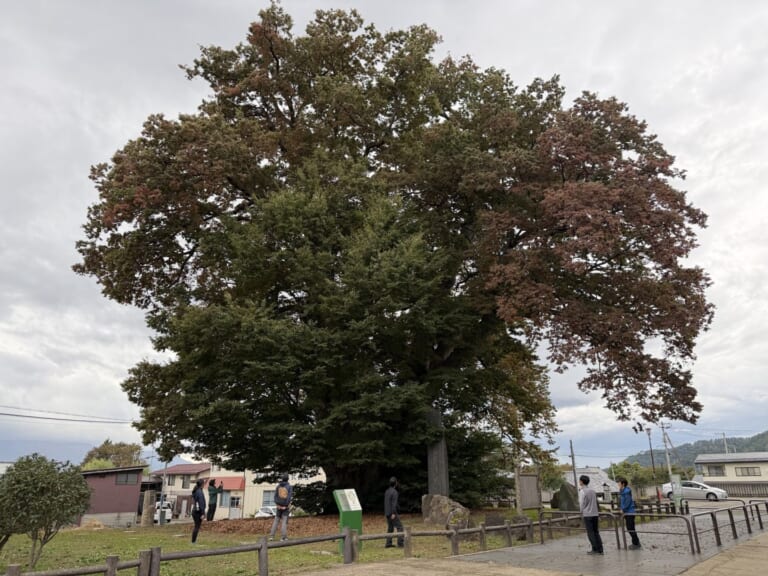
The grounds of Yakuoji are home to a remarkable collection of large-caliper trees — Sudajii (Castanopsis sieboldii), Ginkgo, Hackberry, Japanese Black Pine, Chinese Parasol, and Dogwood, among others. These trees have grown slowly over decades, shaping the atmosphere of the temple’s pathways and burial grounds. They are not simply plantings. They are part of the place itself.
The temple’s tree management team — certified jumoku-i professionals who have been involved in the site’s ongoing care — had accumulated careful observations about the trees’ exterior condition through years of pruning and visual monitoring. But they reached a point where visual assessment alone could not provide the clarity needed to make sound management decisions. The central question was one that many tree managers in Japan are now facing: preserve, or renew?
The framing that guided this project came from the jumoku-i overseeing the diagnosis: “The goal is not simply to determine whether something is wrong, but to gather the information needed to think carefully about how to live alongside these trees going forward.” That perspective shaped everything that followed.
The State of Tree Diagnosis in Japan
Japan’s jumoku-i certification system, established in 1991 and administered by the Japan Greening Center, currently counts approximately 3,200 registered practitioners (as of fiscal 2025) nationwide. It is one of the most rigorous tree care credentials in Asia, requiring a minimum of five years of professional experience and a demanding multi-stage examination.
Yet the diagnostic methodology at the heart of the system remains largely ground-based. Visual Tree Assessment (VTA) — examining bark, crown structure, root collar, and visible decay indicators — forms the foundation of most jumoku-i evaluations. Instrument-based methods such as resistance drilling (Resistograph) and acoustic tomography are used, but typically as supplements to ground-level observation.
The structural gap is this: jumoku-i expertise and arborist climbing skills tend to develop along separate professional tracks in Japan. The result is that very few practitioners combine high-level diagnostic knowledge with the rope access skills needed to carry it into the canopy. “Diagnosing while climbing” is not yet a standard mode of practice — and that gap has real consequences for tree risk assessment accuracy.
What Ground-Level Diagnosis Cannot See
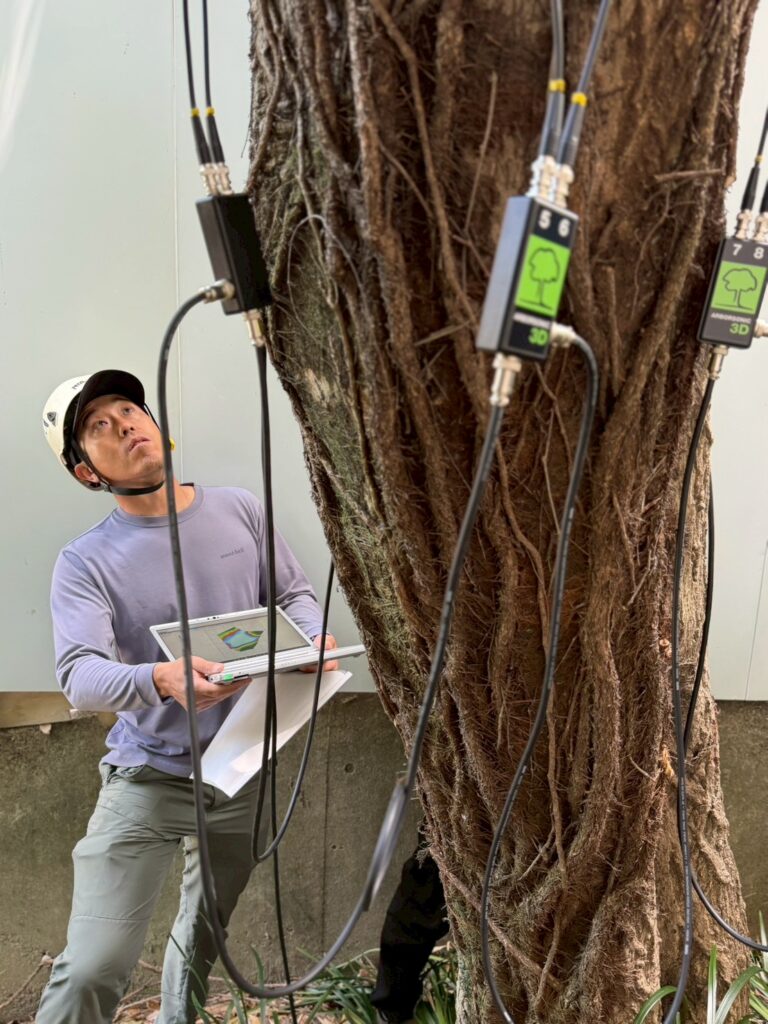
Decay and structural failure do not always originate at the base of a tree. In large, mature trees — particularly those that have been pruned over many decades — the most critical defects are often found well above ground: at branch unions, in old pruning wounds, at points of trunk curvature, and in the structural connections between major limbs and the main stem.
In a tree like a mature Ginkgo or Sudajii that has been growing for fifty or sixty years, the internal condition at three meters elevation may be entirely different from what a tomogram at breast height suggests. A single cross-section reading at ground level can produce a clean result while significant decay progresses silently above. That is not a failure of the technology — it is a failure of access.
This is exactly the scenario that climbing-integrated diagnosis is designed to address. By taking multiple cross-sectional measurements at different heights along the trunk, and by combining acoustic data with direct visual and tactile inspection of the canopy, a far more complete picture of the tree’s condition becomes possible.
Arborsonic 3D: Acoustic Tomography Explained
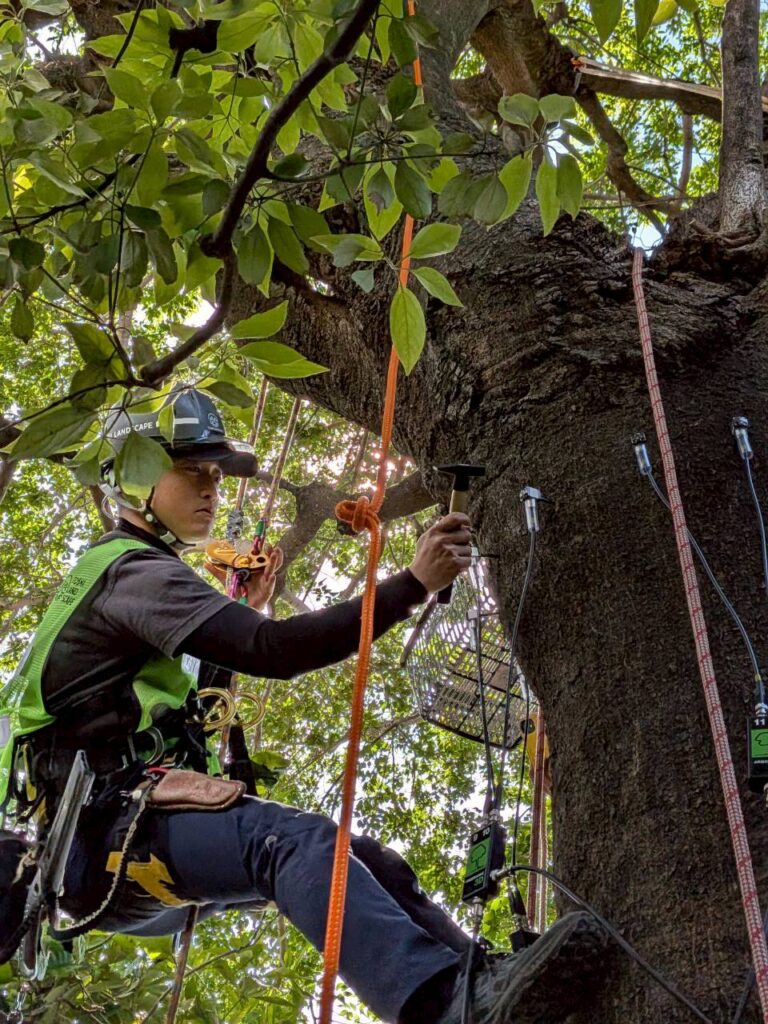
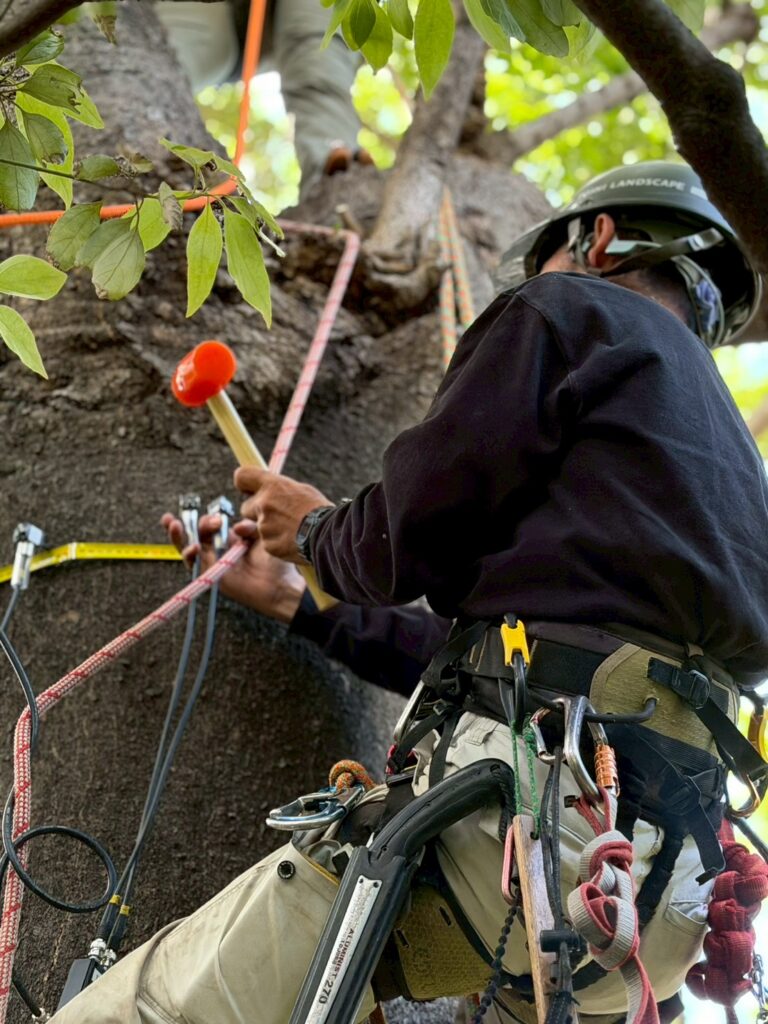
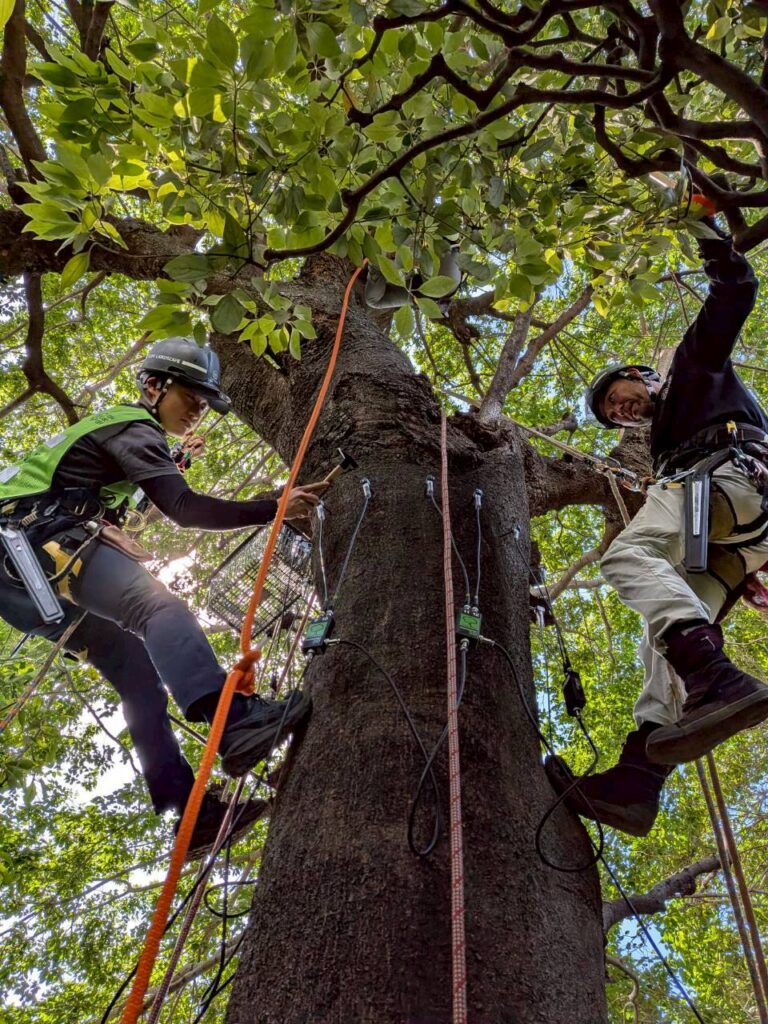
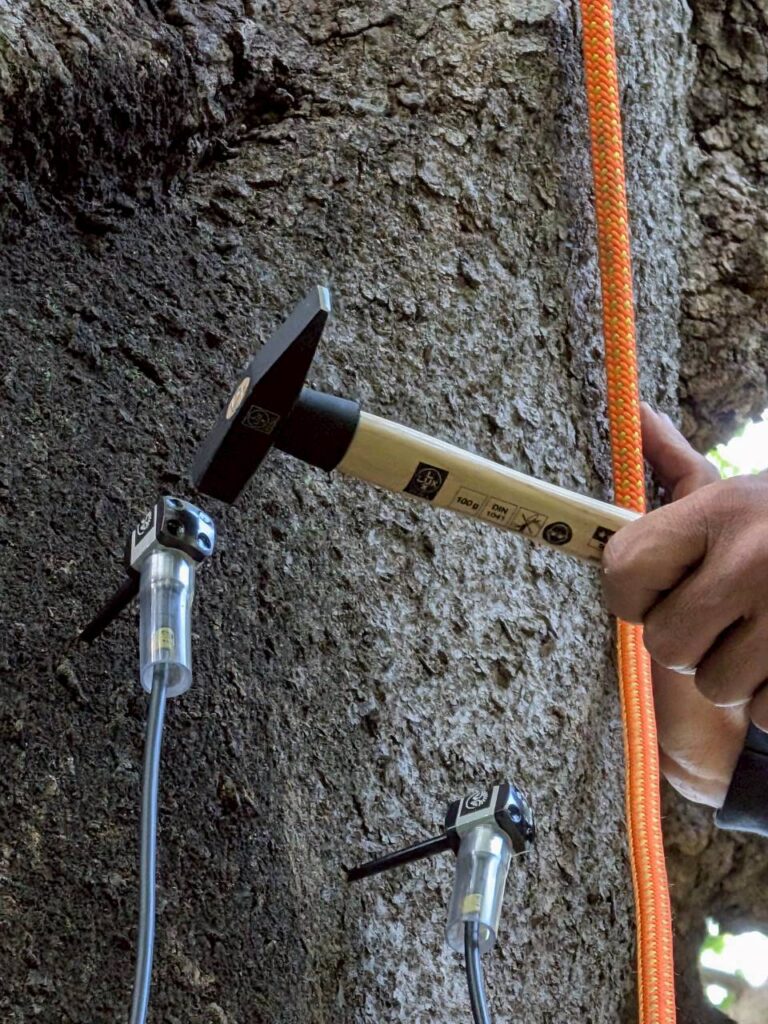
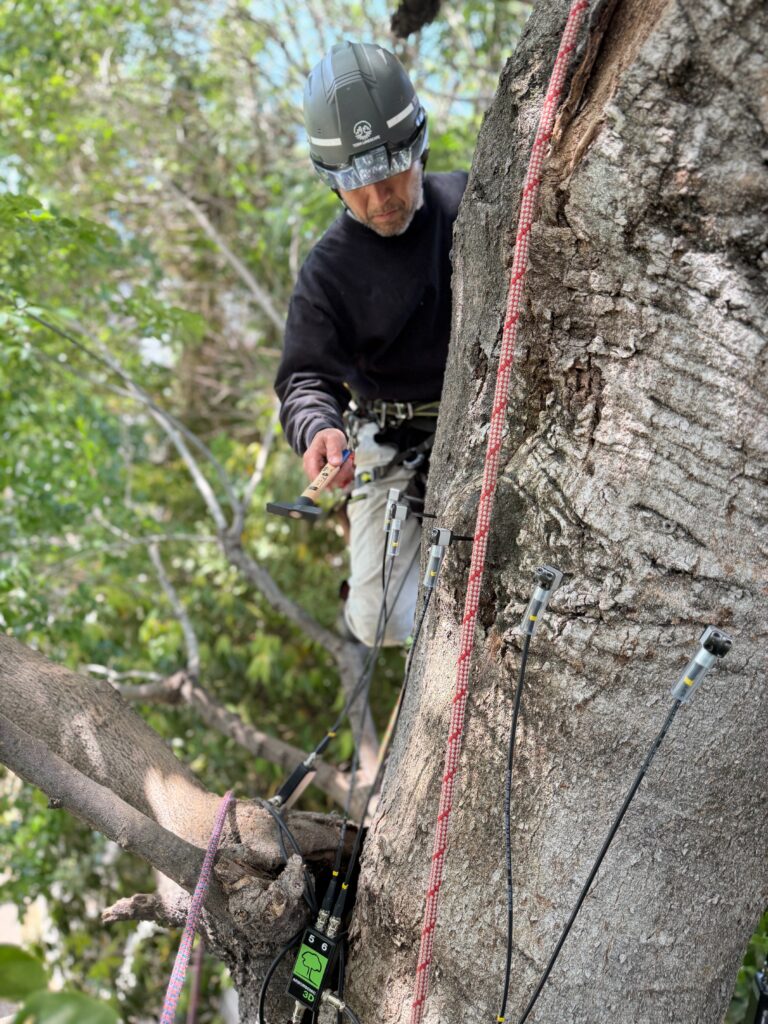
Arborsonic 3D, developed by FAKOPP Enterprise in Hungary, is an acoustic stress-wave tomograph designed specifically for standing trees. The operating principle is straightforward: sensors are placed at equal intervals around the circumference of the trunk, each one tapped in sequence with a steel hammer. The device measures, with microsecond precision, the time it takes for the resulting stress wave to travel from each sensor to every other sensor.
Sound moves quickly through dense, healthy wood. In areas of decay or hollow, where cellular structure has broken down, wave velocity slows. The Arborsonic 3D software translates these velocity differences into a color-mapped cross-sectional image — blue and green indicating sound wood, orange and red flagging areas of potential decay or cavity. When measurements are taken at multiple heights, the software compiles them into a full three-dimensional model of the trunk interior.
A single cross-section scan typically takes five to ten minutes to complete. The instrument requires no radiation and leaves no lasting damage to the tree beyond the small insertion points of the sensor pins — making it fully appropriate for use on ancient trees, heritage specimens, and sacred trees (goshimboku, 御神木) where invasive methods would be unacceptable.
Measurement accuracy depends heavily on what practitioners call “scan design”: the number of sensors used (eight or more is recommended), the circumference of the trunk at the scan height (ideally 100 cm or greater), and the even distribution of sensors around the trunk. These are not settings you find in a manual — they are judgments developed through field experience, and they matter enormously for the reliability of the output.
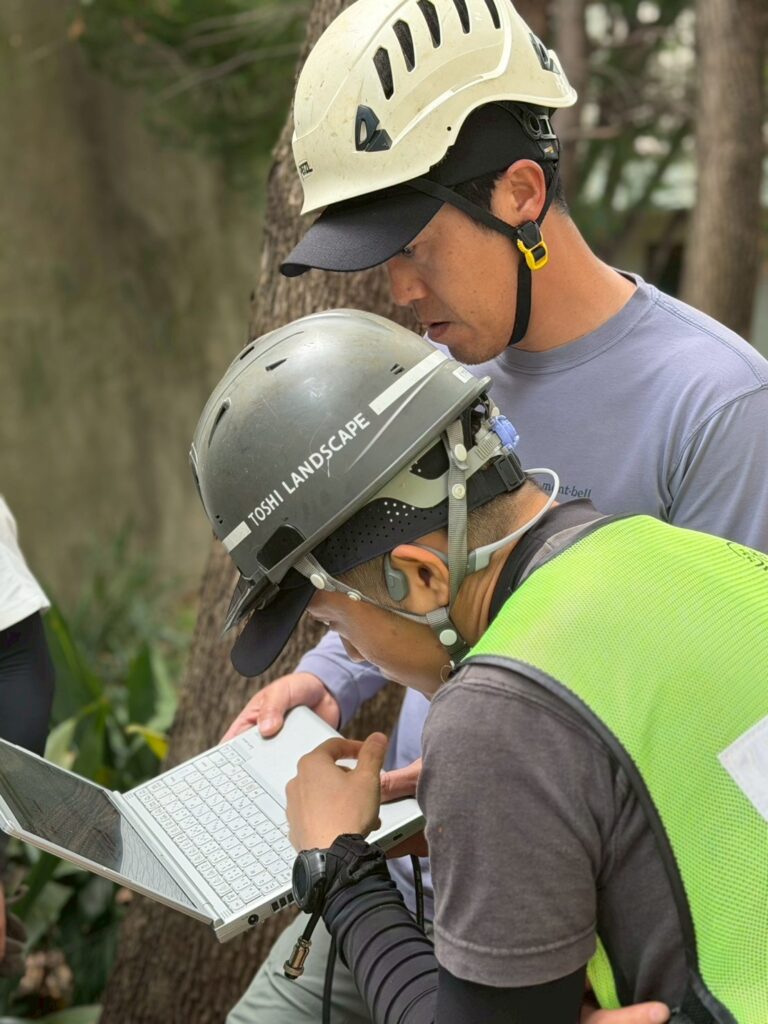
At Yakuoji, we used Arborsonic 3D as the primary diagnostic instrument, supplemented by Resistograph (RESI PD500) resistance drilling and PiCUS sonic tomography at selected points. Where Arborsonic 3D maps decay in two and three dimensions across a full cross-section, Resistograph drilling reads wood density along a single linear path with high local precision. Used together, the two methods provide a more complete and mutually verifying picture of internal condition than either can offer alone.
Climbing Diagnosis in Practice: Inside the Temple Grounds
Why Rope Access Works Here
Yakuoji’s grounds present exactly the conditions where conventional elevated access methods fall short. Pathways, grave markers, and temple structures are closely spaced throughout the site, and the canopy of the older trees extends over areas where an aerial work platform cannot safely maneuver. Even where a lift could reach, the fixed boom angle would limit access to specific points on the trunk rather than allowing flexible positioning around its full circumference.
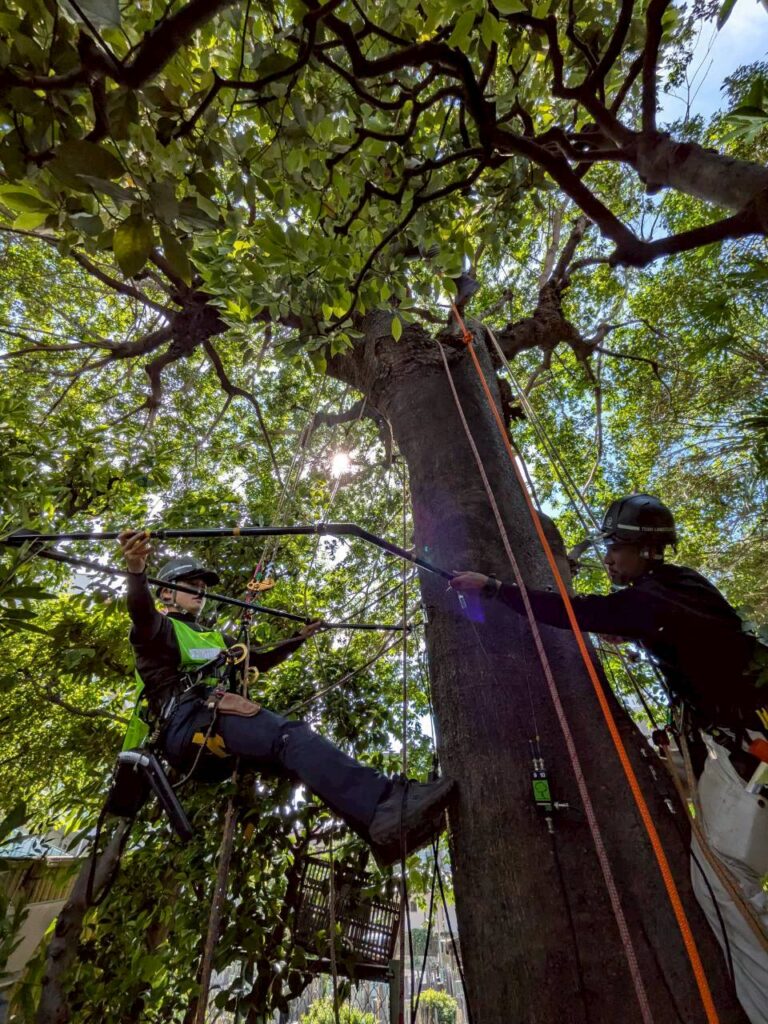
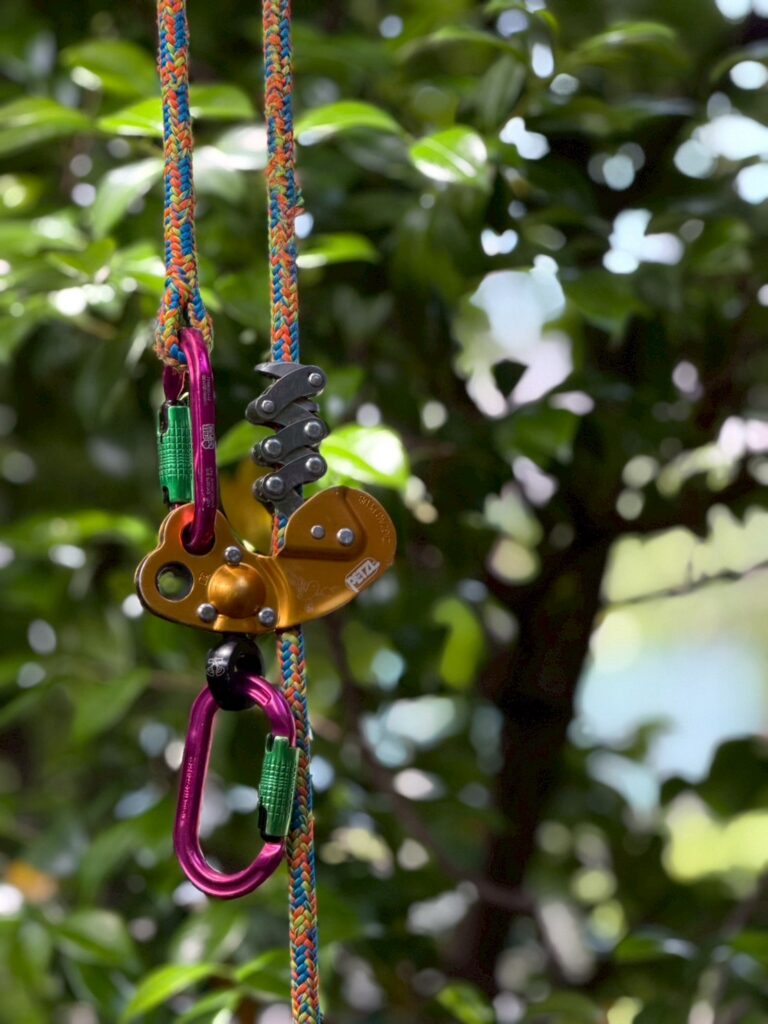
Rope climbing — using the tree itself as the anchor structure — changes the geometry of the problem entirely. A skilled climber with the right rigging can reach any point on the trunk at any height, adjust position in three dimensions, and maintain a stable working posture long enough to place sensors accurately, take measurements, and conduct a thorough visual examination of the surrounding wood and bark.
What the Climber Sees That Ground Assessment Misses
From a position three or four meters up the trunk of a mature temple tree, the quality of information available is qualitatively different from what a ground-level inspection provides. At that height, a jumoku-i can directly examine:
- Branch unions and structural attachments — feeling for included bark, checking for cracks or splits invisible from below
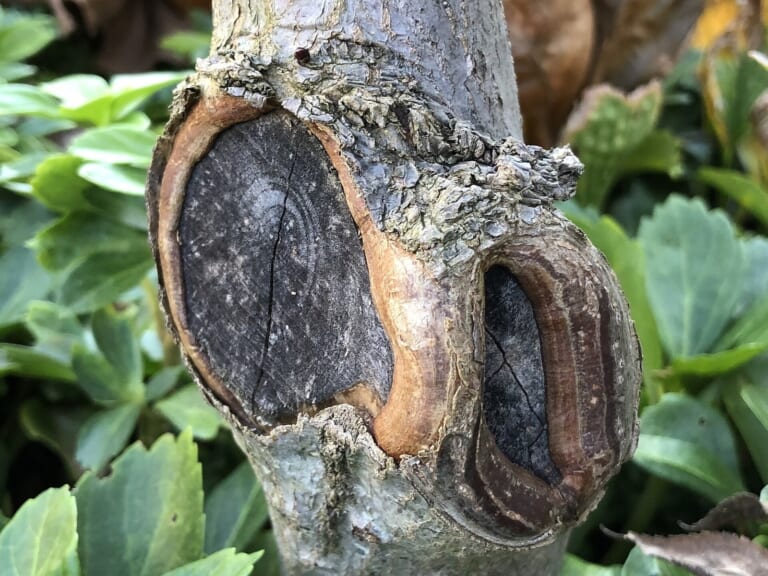
- Old pruning wounds — assessing the direction and extent of decay behind callus tissue, determining whether compartmentalization has been successful
- Fungal fruiting bodies — bracket fungi and conks sometimes develop on upper trunk sections or within the canopy interior, where they cannot be spotted from the ground
- Previous hardware and cabling — inspecting the condition of existing support systems installed during earlier management work
- Bark texture and color variations — anomalies that suggest internal stress or moisture changes beneath the surface
At Yakuoji, the combination of direct observation and Arborsonic 3D scanning at elevation revealed information about the upper trunk sections that a ground-level survey could not have produced. That information will directly inform the conservation and management decisions ahead.
The Three Skills Required
It is worth being explicit about what this kind of work actually demands. Placing Arborsonic 3D sensors accurately on a trunk while suspended from a rope, maintaining a stable enough position to collect clean data, and simultaneously evaluating the exterior condition of the wood — all of this requires three distinct competencies working in concert: rope access technique, instrument diagnostic knowledge, and the ability to read tree structure. Remove any one of the three and the quality of the diagnosis degrades.
This is also why anchor selection at a site like Yakuoji is not a simple task. The tree being diagnosed is simultaneously the anchor point for the climbing system. Every attachment decision has to account for the health and load-bearing capacity of the branch or stem being used — which means the diagnostic assessment and the climbing plan are inseparable from the first moment of setup.
What These Trees Mean in the Japanese Context
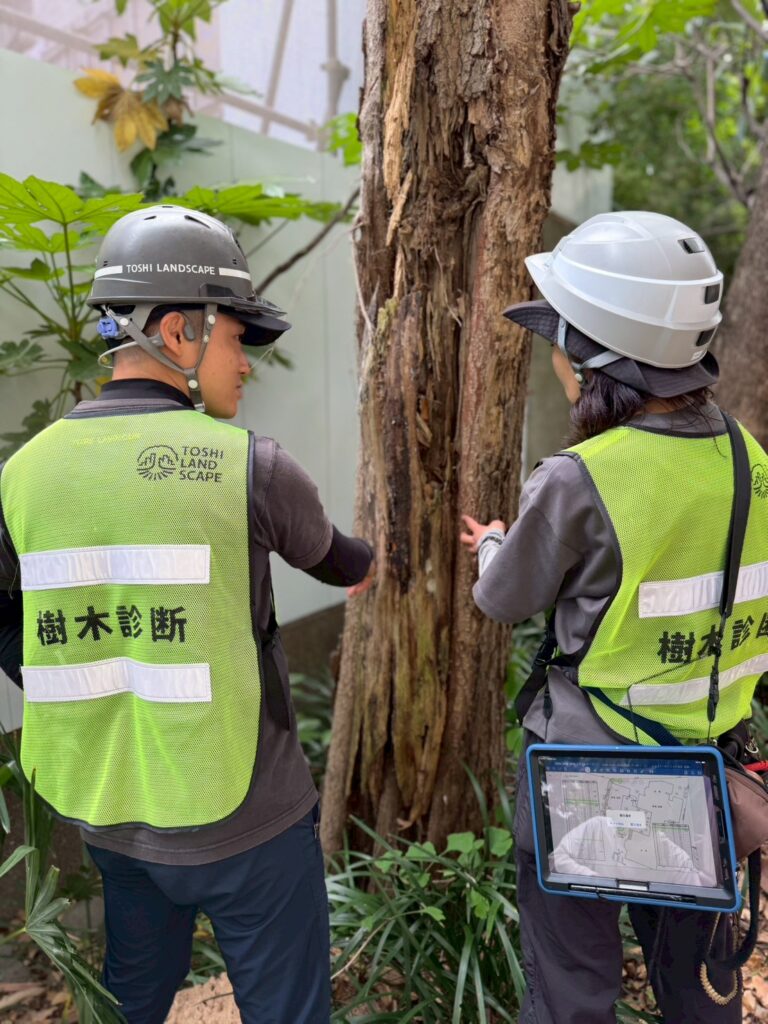
Western arboriculture has developed a rigorous framework for evaluating trees as risk objects — assessing the likelihood of failure, the consequences of failure, and the appropriate management response. That framework is valuable, and its logic is sound.
But the trees of a Japanese Buddhist temple carry a context that does not reduce easily to risk matrices. The old Ginkgo in the corner of the graveyard has stood through generations of worshippers. The Sudajii near the main hall has shaped the light and shadow of the approach path for decades. These trees are not simply vegetation. They are part of the living memory of the place — and of the community that gathers there.
The Japanese concept that comes closest to capturing this relationship is perhaps the idea of ki to ikiru (木と生きる) — living alongside trees, rather than simply managing them. A jumoku-i working within this tradition approaches the question of preservation or removal not as a binary decision, but as a conversation about how the tree and the people around it can continue to coexist. The diagnostic data — the Arborsonic 3D cross-sections, the Resistograph resistance profiles, the safety factor calculations — are inputs to that conversation. They are not the conclusion.
According to Japan’s Ministry of Land, Infrastructure, Transport and Tourism, tree-related accidents (falling trees and dropped branches) across urban parks and public roads exceeded 1,700 incidents nationally in the approximately three and a half years between April 2021 and November 2024. In urban parks alone, annual incident counts rose from 121 in fiscal year 2021 to 316 in fiscal year 2023 — an increase of 2.6 times in just two years. The aging of trees planted during Japan’s rapid economic growth era of the 1960s and 1970s is accelerating this trend. The case for more rigorous, evidence-based diagnosis has never been stronger.
Frequently Asked Questions
Q: What is Arborsonic 3D, and how does it differ from other tree tomography systems? A: Arborsonic 3D is an acoustic stress-wave tomograph produced by FAKOPP Enterprise in Hungary. It places multiple sensors around the trunk and measures the travel time of sound waves between them to map internal wood density. Unlike single-path sonic devices, it generates full cross-sectional images and, when measurements are taken at multiple heights, a three-dimensional model of the trunk interior. It is non-invasive, radiation-free, and suitable for heritage and sacred trees.
Q: How does aerial diagnosis differ from standard ground-level tomography? A: Ground-level tomography typically captures one or two cross-sections near breast height. Climbing access allows measurements at multiple elevations along the trunk, including at branch unions and areas of historical pruning — locations where significant decay is often found in mature trees. The difference in diagnostic completeness can be substantial, particularly for large-caliper heritage specimens.
Q: Why is aerial tree diagnosis so rare in Japan? A: In Japan, the professional paths of jumoku-i (diagnostic specialists) and arborists (climbing specialists) have historically developed separately. Very few practitioners combine both skill sets at a level sufficient to conduct instrument-based diagnosis while working at height. This is a gap that the field is beginning to recognize, but the practice remains uncommon.
Q: Is Arborsonic 3D appropriate for use on ancient or heritage trees? A: Yes. The sensors are inserted through the bark with minimal disturbance and removed cleanly after measurement. No radiation is used. The method is fully appropriate for ancient trees, nationally designated natural monuments, and sacred trees (goshimboku) where invasive techniques would not be acceptable.
Q: How are the diagnostic results used in management decisions? A: Results are presented as color-mapped cross-sectional images, three-dimensional trunk models, and calculated safety factors under modeled wind load conditions. These outputs provide evidence-based support for management options including preservation with monitoring, crown reduction, cabling and bracing, or removal — allowing site managers, temple administrators, and community stakeholders to make informed decisions with clear documentation.
Conclusion
“The goal is not simply to determine whether something is wrong, but to gather the information needed to think carefully about how to live alongside these trees going forward.” That framing, offered by the jumoku-i leading this project, reflects something important about how tree care is practiced — and should be practiced — in Japan.
At Yakuoji Temple, rope-access climbing combined with Arborsonic 3D acoustic tomography produced information about these trees that ground-level assessment could not have reached. The cross-sections taken at elevation, the visual observations made from within the canopy, the integrated picture assembled from multiple instruments — all of it becomes part of the foundation for decisions that will shape how these trees are managed for years to come.
As Japan’s urban tree population ages, and as the consequences of inadequate diagnosis become more visible in the form of fallen trees and public safety incidents, the case for climbing-integrated, instrument-supported assessment will only grow stronger. The technology exists. The methodology is proven in arboricultural practice internationally. What is needed now is the integration of diagnostic knowledge and climbing skill — and the professional culture that makes that integration normal rather than exceptional.
Tree diagnosis is not about passing judgment on a tree’s future. It is about gathering the knowledge needed to keep thinking carefully about that future together.
Field notes from Japan’s trees arrive a few times each month — subscribe via the form in the footer, or follow the work on LinkedIn.