

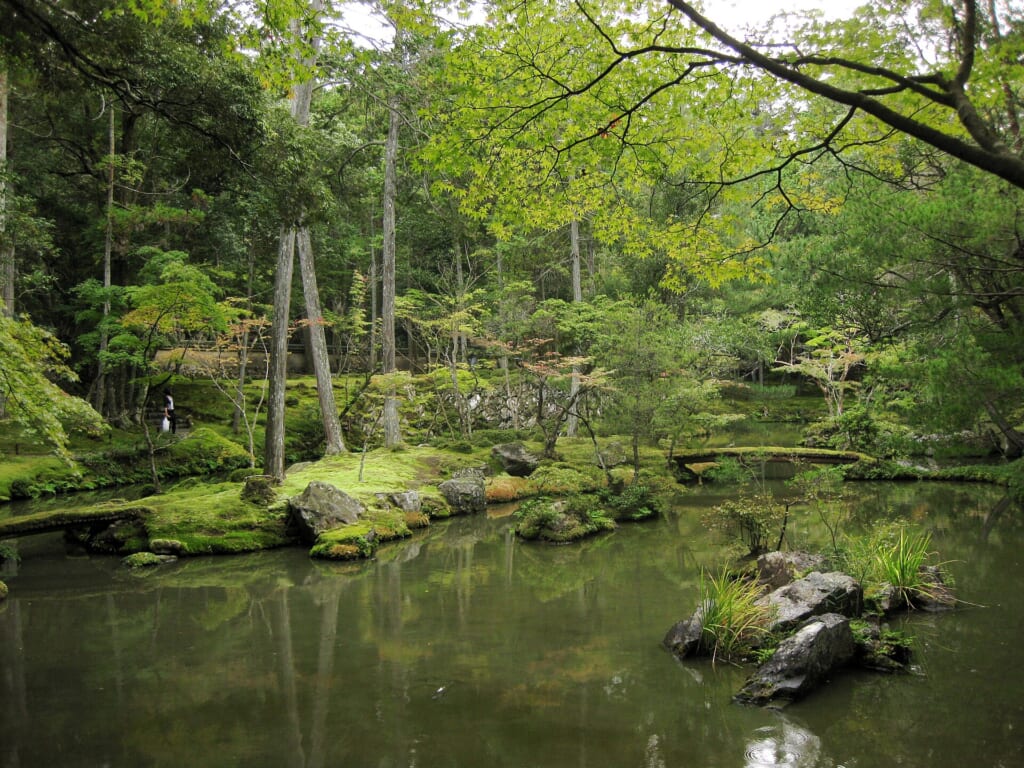
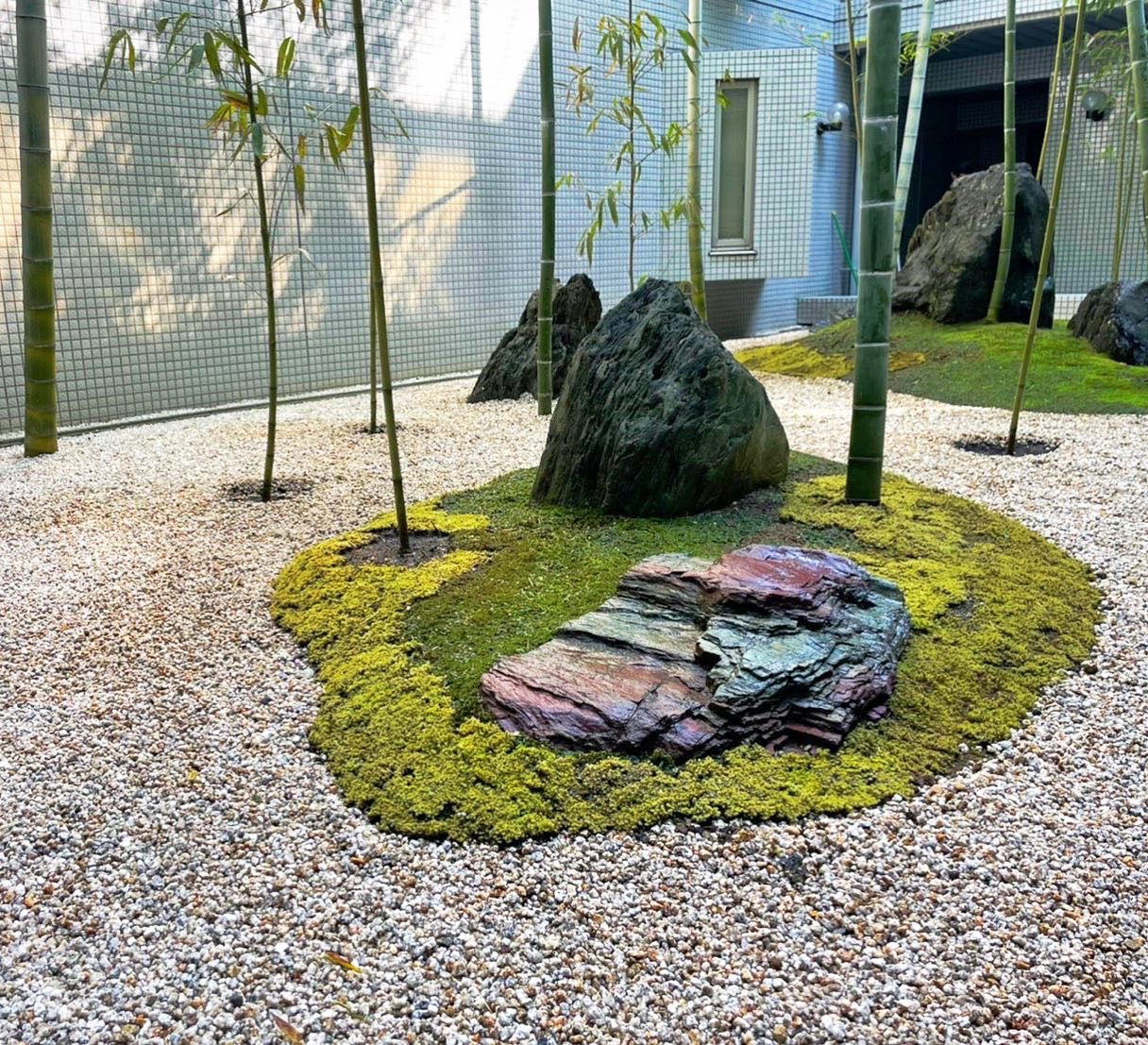
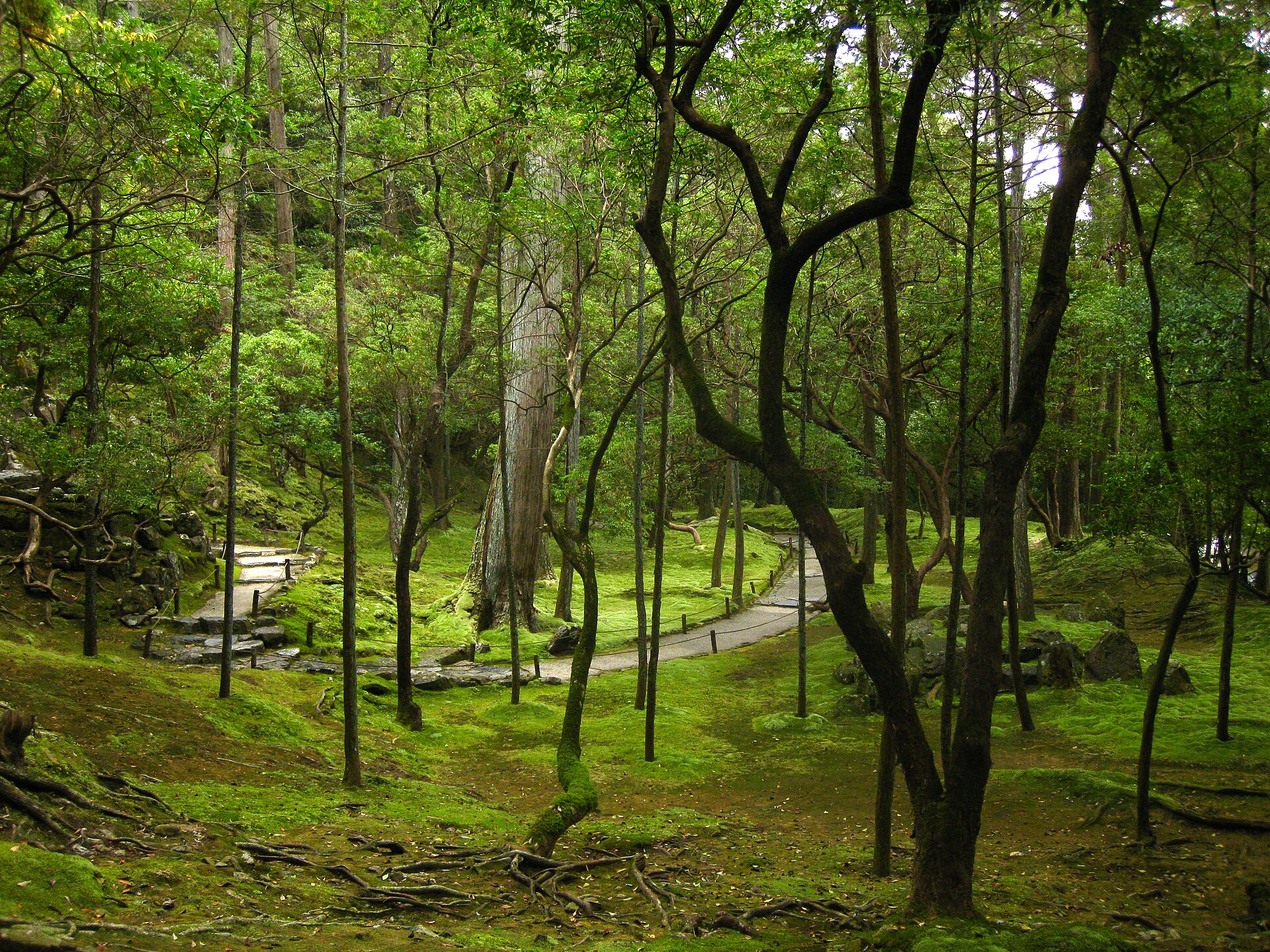
In many Japanese temple gardens, especially in Kyoto, moss rather than lawn covers the shaded ground beneath old trees, where lawn grasses — which need hours of direct sun — struggle to grow densely. Moss takes in water through its surface rather than relying on roots, and the right kinds can cover ground where a lawn grows thin. Moss has also been planted on purpose in Japanese gardens for more than five centuries. But not every temple chose it — some famous temple gardens are built from white sand, and some Japanese gardens have lawns — and at gardens such as Saihō-ji, the moss is kept by gardeners who sweep, weed and watch where they step.
A white-sand garden that turned green — Saihō-ji
The morning walk
At Saihō-ji, the “Moss Temple” in Kyoto, the gardeners’ day starts with a walk. In interviews the temple has published in English, the gardeners describe a morning walk around the grounds, and what they notice on it helps them decide the day’s work. It is a small detail, but it says a lot about one of Japan’s best-known moss gardens: the garden is looked at, closely and regularly, by the people who keep it.
What the founder built
The garden was not designed as a moss garden. Saihō-ji was restored as a Zen temple in 1339 by the priest Musō Soseki, and according to the temple’s own account, the garden he made was a Japanese garden of white sand.
The moss came later. The temple’s history tells of war and of repeated flooding, and of floods that carried fertile soil into the grounds. Moss colonised the garden naturally, and the temple believes that by the late Edo period the garden had taken on a moss-covered appearance close to what visitors see today. Exactly when the moss arrived and when it came to dominate is not recorded as a single date, and the temple does not pin it to one flood.
A garden that had to close its gate
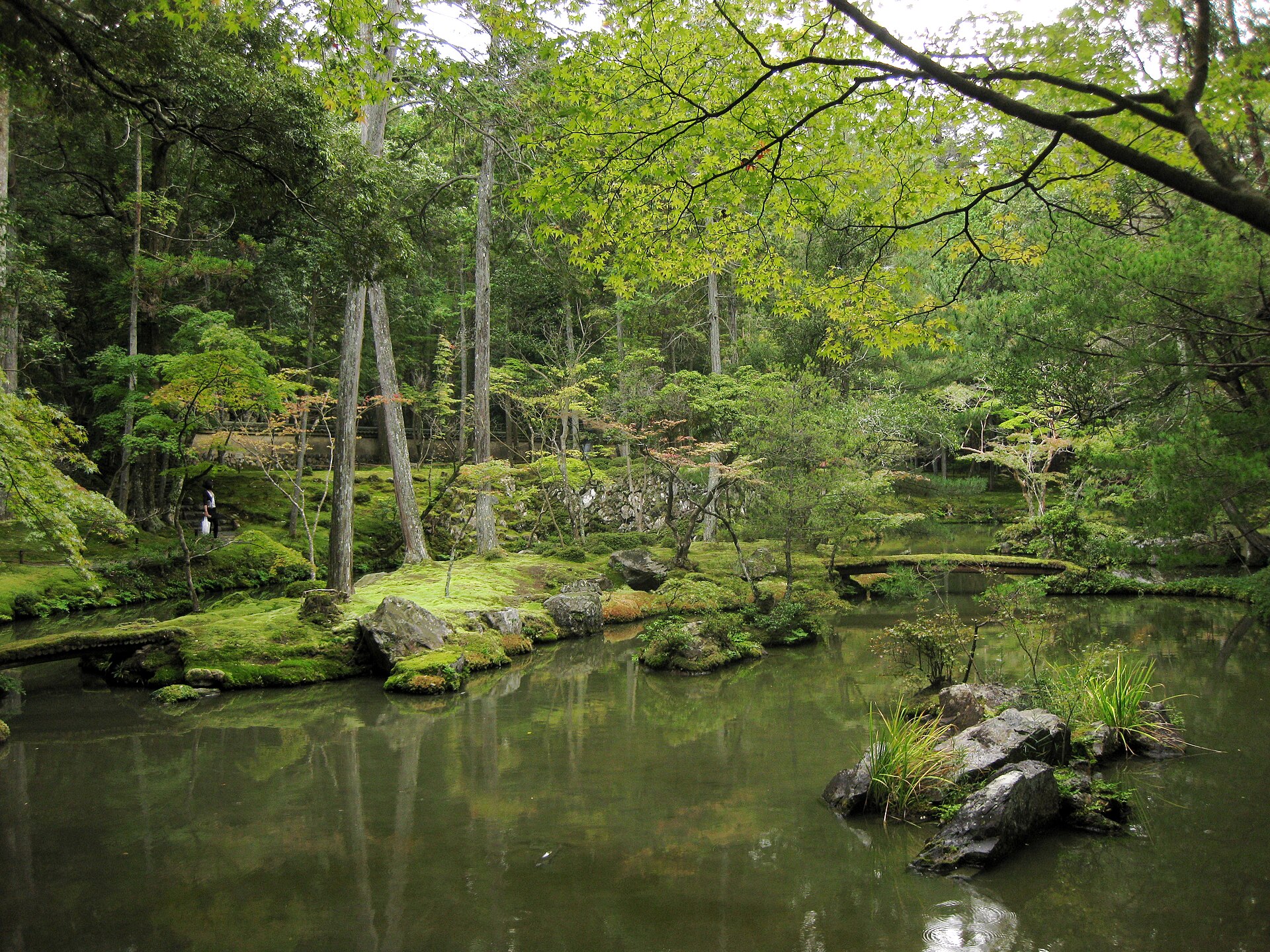
Today the temple describes its garden as containing more than 120 kinds of moss. Saihō-ji is one of the components of the World Heritage property “Historic Monuments of Ancient Kyoto”, inscribed in 1994.
Its fame came at a cost. The temple explains that it decided in 1977 to accept visitors only by advance reservation, sent by postcard, because of congestion, traffic jams, noise and littering — and to restore what it calls a tranquil and spiritual atmosphere. The temple’s own explanation is about the whole place — the crowds, the noise, the litter — not only about the moss.
Not every temple chose moss — sand, lawn and mixtures
White sand as the main material
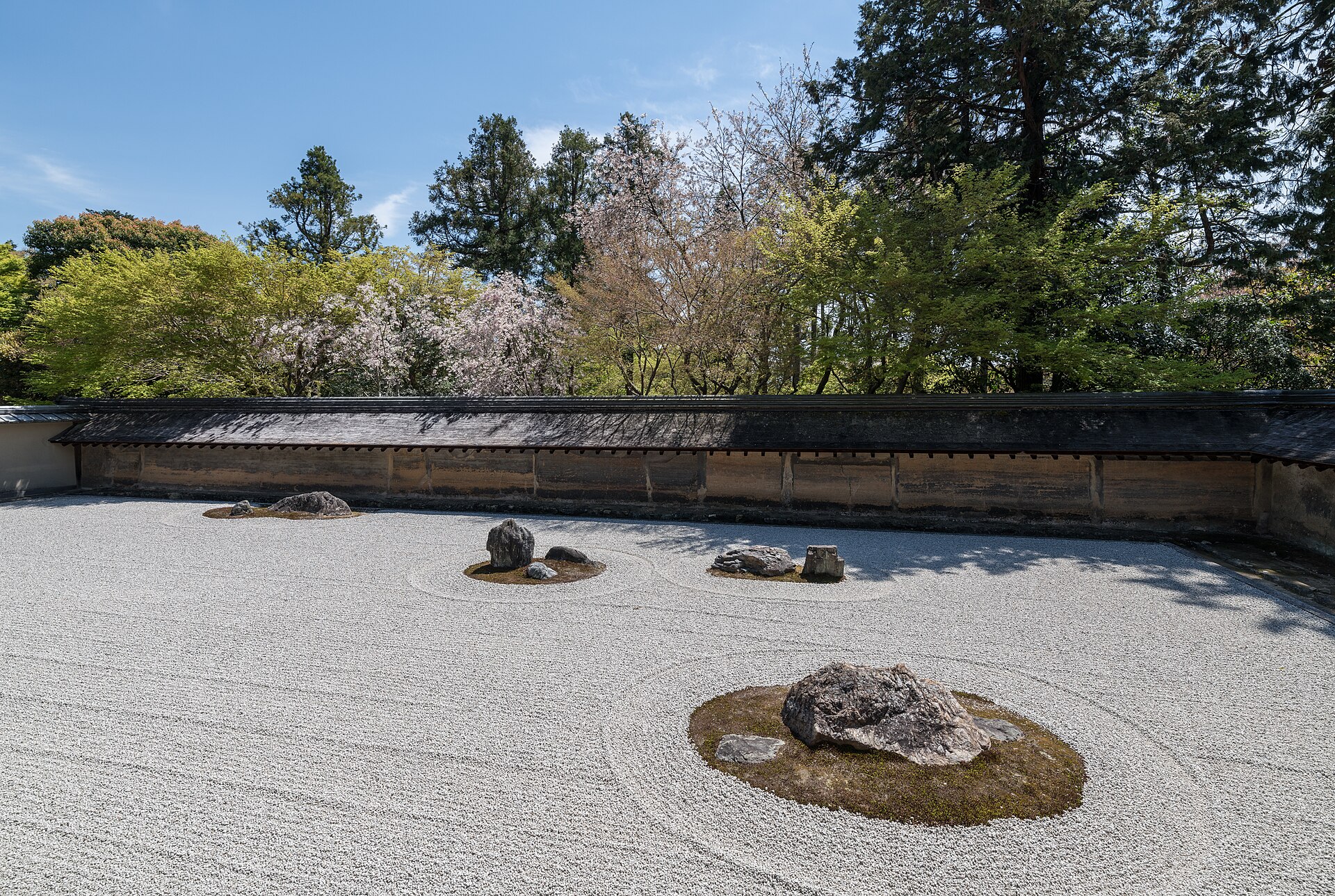
It would be wrong to say that Japanese temples, as a rule, grow moss. In some of the best-known temple gardens in Kyoto, the main material is white sand. The rock garden of Ryōan-ji places fifteen stones in a rectangular garden of white sand, according to Kyoto Prefecture. At Ryōgin-an, a sub-temple of Tōfuku-ji, the south garden is called the Garden of Nothingness, and the temple explains that it is simply white sand spread over the ground. At Ginkaku-ji, the official guide describes two white-sand features in front of the main hall: the Ginshadan, white sand built up in steps, and the Kōgetsudai, a truncated cone of sand.
Sand and moss side by side
Many gardens use both. In front of the Kaisandō at Shōkoku-ji, the temple’s guide describes a flat dry garden of white sand in the foreground and a gently rising mound covered with moss behind it — flat ground in sand, raised ground in moss.
Lawns in Japanese gardens
Lawn is not foreign to Japanese gardens either. At Kannon-in, a temple in Tottori, the official description of its scenic garden includes an inverted-fan-shaped area of lawn on the garden’s mound, left free of trees. In Kyoto, Murin-an — a villa garden rather than a temple garden — is described in its own leaflet as having a bright, open lawn.
| Garden (or part described) | Ground surface of that part | What the official source says |
|---|---|---|
| Saihō-ji (Kyoto) | Moss | More than 120 kinds of moss; originally white sand |
| Ryōan-ji (Kyoto) | White sand | Fifteen stones in a rectangular white-sand garden |
| Ryōgin-an south garden, Tōfuku-ji (Kyoto) | White sand | “Garden of Nothingness”: white sand spread over the ground |
| Ginkaku-ji, in front of the main hall (Kyoto) | White sand features | Ginshadan (stepped sand) and Kōgetsudai (sand cone) |
| Shōkoku-ji Kaisandō (Kyoto) | White sand and moss | Flat white-sand garden in front of a moss-covered mound |
| Kannon-in (Tottori) | Lawn on the mound | Inverted-fan-shaped lawn area without trees |
| Murin-an (Kyoto, villa garden) | Lawn and moss | Bright, open lawn space; moss repaired in damaged areas |
The question is really about one part of the garden: the ground under the trees.
Why grass gives up under the trees — light
What a lawn grass asks for
The answer starts with light. Zoysia japonica, which University of California guidance calls “Japanese lawn grass”, prefers full sun, though it will tolerate some shade. The University of Missouri’s extension guide on zoysiagrass lawns is more specific: zoysiagrass requires at least six to eight hours of sunlight, and in shady areas the turf will be thinner and less competitive. Even the cool-season grasses chosen for shade in New England need, according to the University of Connecticut, a minimum of four hours of direct sunlight a day.
| Grass | Light it needs | Source |
|---|---|---|
| Zoysiagrass (incl. Zoysia japonica) | Prefers full sun; tolerates some shade | University of California IPM |
| Zoysiagrass | At least 6–8 hours of sunlight; thinner in shade | University of Missouri Extension |
| Shade-tolerant fine fescues, turf-type tall fescue | At least 4 hours of direct sunlight per day (New England guidance) | University of Connecticut |
What shade does to turf
Kansas State University lists what happens to turfgrass in shade: reduced root growth and tillering — the side shoots that thicken a lawn — and thinner leaves, stems and turf density. In plain terms, the grass makes fewer new shoots and the lawn opens up.
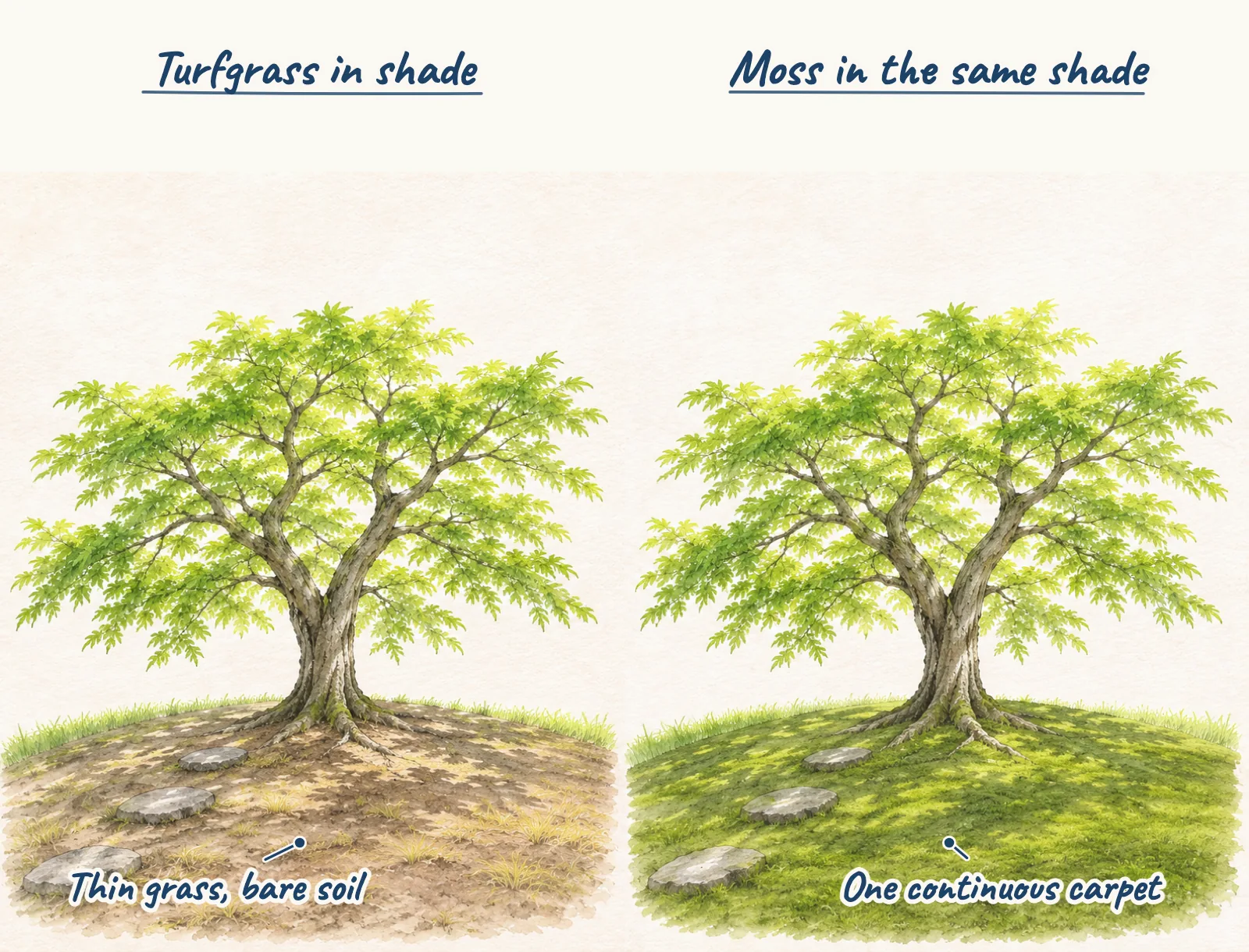
Now picture the ground of an old temple garden, under trees that have been growing for generations. Where that ground gets too little direct sun, a lawn grass will find it hard to stay dense.
What moss needs instead — water, air, poor soil
A plant that drinks through its skin
Moss works differently. Professor Yoshitaka Oishi, a bryologist, in a talk published by Saihō-ji, explains that moss absorbs water and nutrients directly through its surface. It does not depend on a deep root system the way a lawn grass does. Rain, mist and dew can supply water to its surface, though how much moisture a moss needs varies by species and site.
That is why a Saihō-ji gardener, explaining why fallen leaves have to be cleared, speaks of the moss needing enough sunlight and night dew. The leaves block both.
Kyoto’s air
Kyoto’s climate gives the background. The city lies in the Kyoto Basin, one of the lowlands surrounded by mountains in the Kinki region, as the Japan Meteorological Agency describes it. The agency’s 1991–2020 normals for the Kyoto station give these figures:
| Kyoto (JMA normals, 1991–2020) | Precipitation | Mean relative humidity |
|---|---|---|
| Year | 1,522.9 mm (about 60 in) | 65% |
| June | 199.7 mm (about 7.9 in) | 66% |
| July | 223.6 mm (about 8.8 in) | 69% |
| August | 153.8 mm (about 6.1 in) | 66% |
These are measurements from one weather station, not from the shaded ground of a temple garden, and they cannot tell you how humid any particular moss bed is. That has to be read on site. At Nanzen-ji, for example, a gardener reports in a booklet published by Kyoto Prefecture that the humid environment there means the moss usually needs no watering in summer, except in exceptionally hot weather.
Conditions that favour moss
In lawns, conditions that weaken turfgrass can let some mosses establish. The Royal Horticultural Society, writing about moss in British lawns, lists low fertility, acidic soil, wet conditions and excessive shade among the causes. In a lawn, those are problems to be corrected. In a moss garden under trees, shade at least is part of the design.
Which mosses — not all of them love shade
Hair-cap mosses
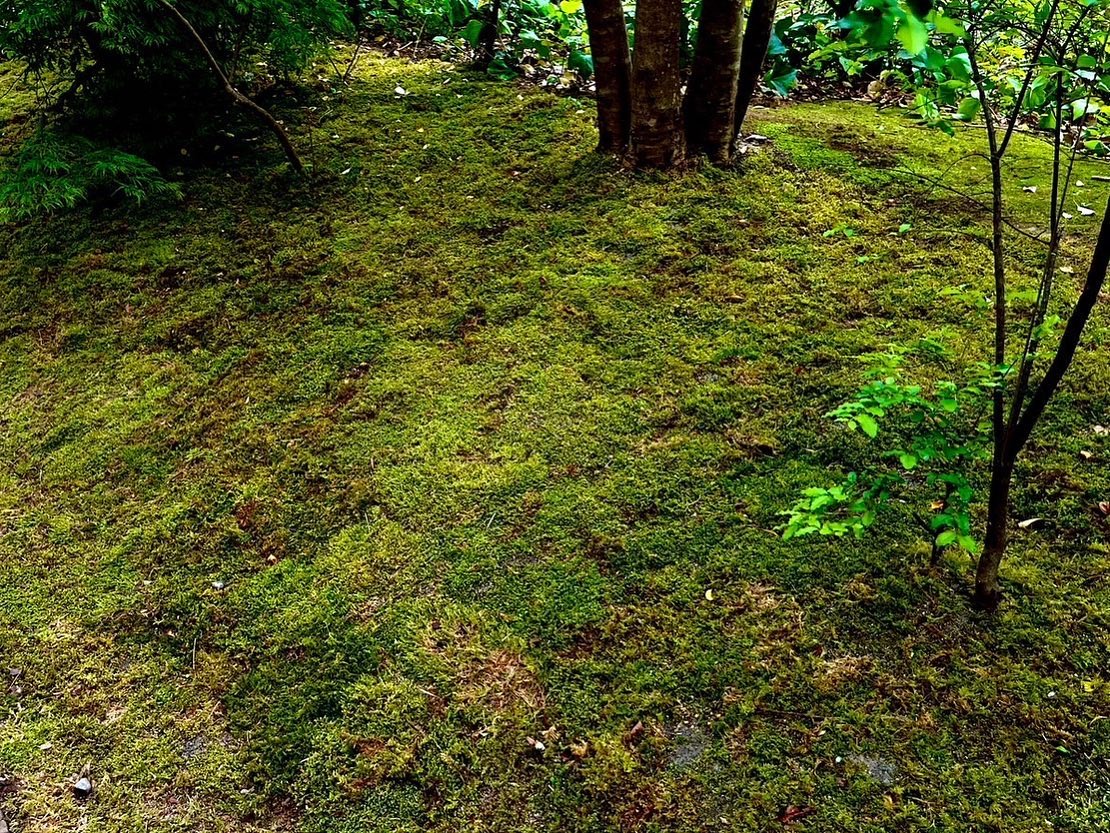
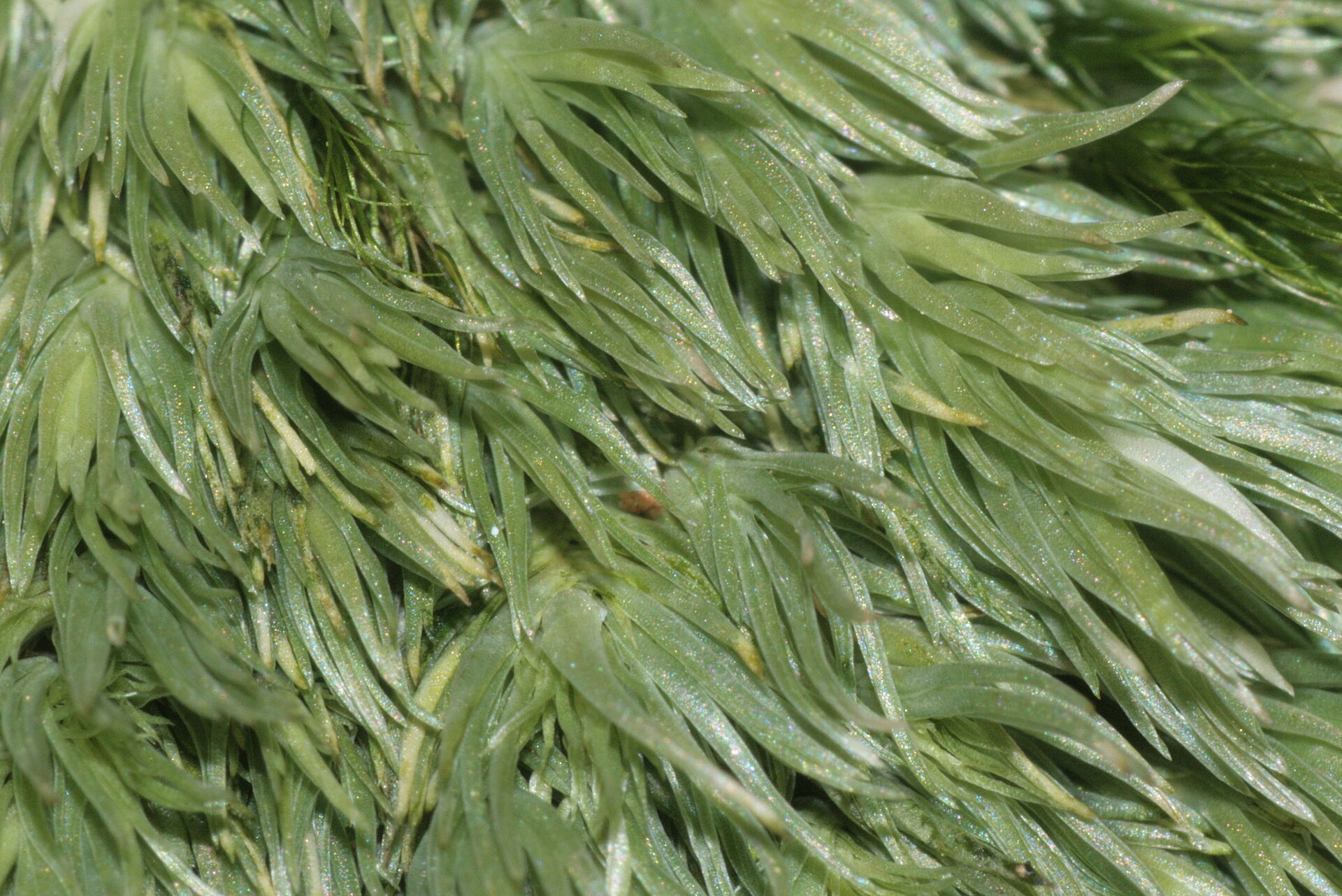
“Moss” in a Japanese garden is not one plant. At Saihō-ji, Professor Oishi identifies two hair-cap mosses, Polytrichastrum formosum and Polytrichum commune — both known in Japanese gardening as sugigoke (スギゴケ). A survey of mosses in Shiga Prefecture records ōsugigoke (Polytrichastrum formosum) from well-drained places, and umasugigoke (Polytrichum commune) from somewhat moist grassland and moss gardens.
Yamagoke, haigoke and sunagoke
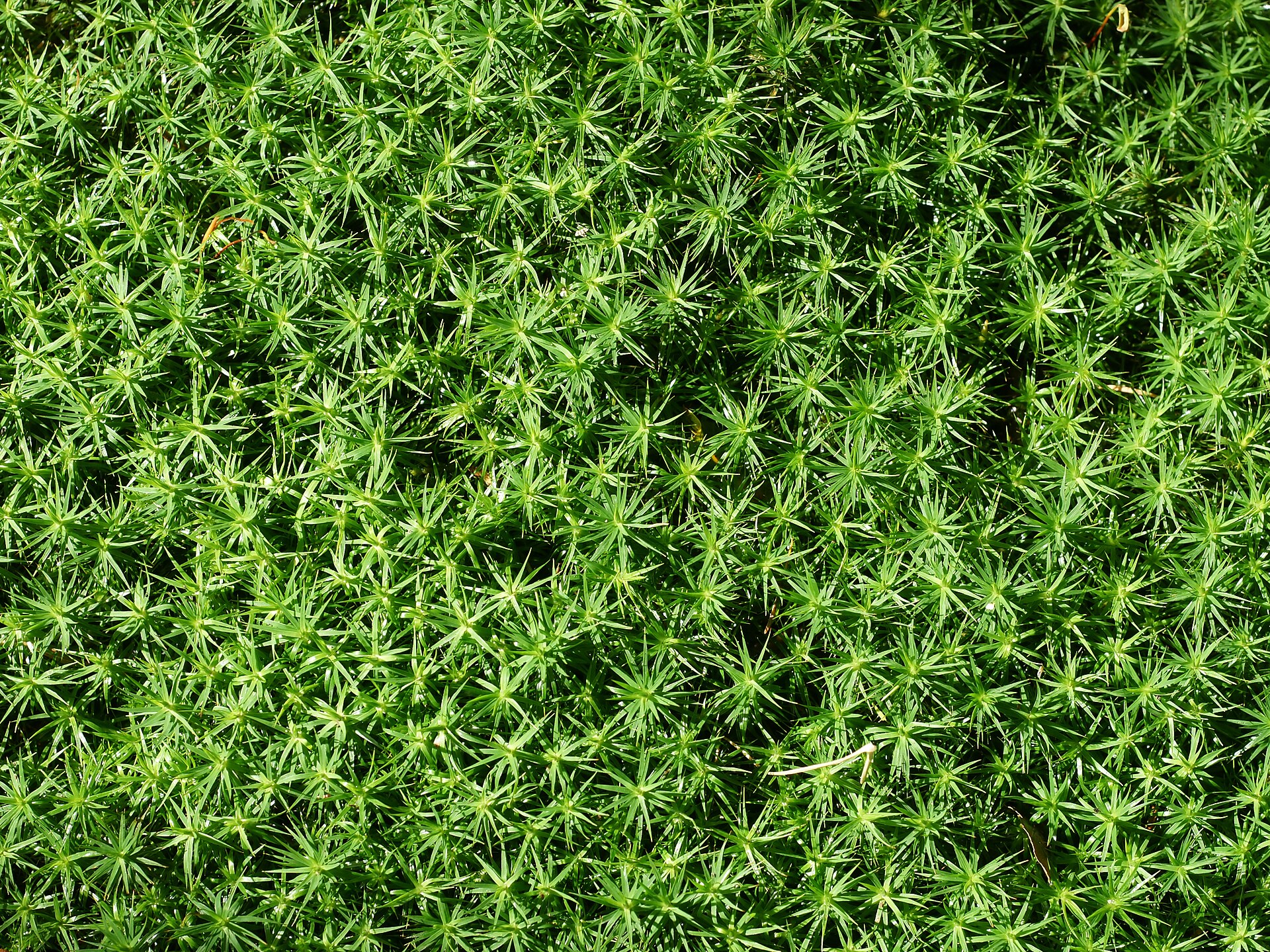
Three other names come up again and again in Japanese moss gardens:
| Garden name | Species (as listed in the source) | Where it grows | Source |
|---|---|---|---|
| Yamagoke (山苔) / Hosoba-okinagoke | Leucobryum juniperoideum | Often in bright secondary woodland | Okayama University of Science |
| Haigoke (ハイゴケ) | Hypnum plumaeforme | Bright places, from very dry rock to wet ground | Okayama University of Science |
| Ezosunagoke (エゾスナゴケ) | Niphotrichum japonicum (formerly Racomitrium japonicum) | Sunny, dry places such as sandy ground; used in moss gardens | Okayama University of Science; Mie Prefectural Museum |
The names need care. Okayama University of Science notes that hosoba-okinagoke is sold for gardens and bonsai under the horticultural name yamagoke. Sugigoke and sunagoke are used loosely for whole groups. And the scientific names keep moving: the sand moss long known as Racomitrium japonicum is now treated by the Mie Prefectural Museum as Niphotrichum japonicum.
A common misunderstanding
The table also corrects a common idea: that moss is simply a plant of deep shade. Ezosunagoke grows in sunny, dry places, and a research report published by Japan’s agricultural research organisation NARO describes sunagoke as favouring low-nutrient conditions. Haigoke grows in bright places. Hosoba-okinagoke is often found in bright secondary woodland rather than only in deep shade. Each kind has its own place. At Saihō-ji, Professor Oishi notes that the whitish Leucobryum mosses there like acidic water — and he connects the whitish moss at the foot of the temple’s cedar and cypress trees with the water that runs down their trunks. The tree above changes the moss below: what grows at the base of a cedar is not necessarily what grows in the open between trees, and a gardener needs to know which moss is growing where.
A long liking for moss — history and taste
Moss laid on purpose
Saihō-ji’s moss arrived on its own, and the temple dates its present look to the late Edo period. But Japanese gardeners were laying moss on purpose centuries earlier. Professor Oishi places the beginning of gardens extensively covered in moss in the Muromachi period. A 2002 lecture published by Japan’s bryological society quotes an entry in the Inryōken Nichiroku, a Zen temple diary, for 1492, recording that two men described as kawaramono (河原者) laid moss in a garden (敷庭苔). One diary entry does not prove that whole gardens were covered in moss, but it shows that moss was a material to be planted, not just tolerated.
Moss as a sign of time
The feeling for moss is older still. The poem behind Japan’s national anthem, Kimigayo, ends with an image of pebbles growing into a great rock “until moss grows on it” (苔のむすまで) — a wish for a very long life, as the National Diet Library’s reference database explains. In Japanese, moss growing over something is a measure of time passing.
Professor Oishi also connects the soft, translucent look of moss leaves with the plain beauty of wabi-sabi (侘び寂び). That is a modern interpretation, not evidence that gardeners of the past chose moss specifically to express wabi-sabi; the sources used here do not show Zen temples replacing lawns with moss for that reason.
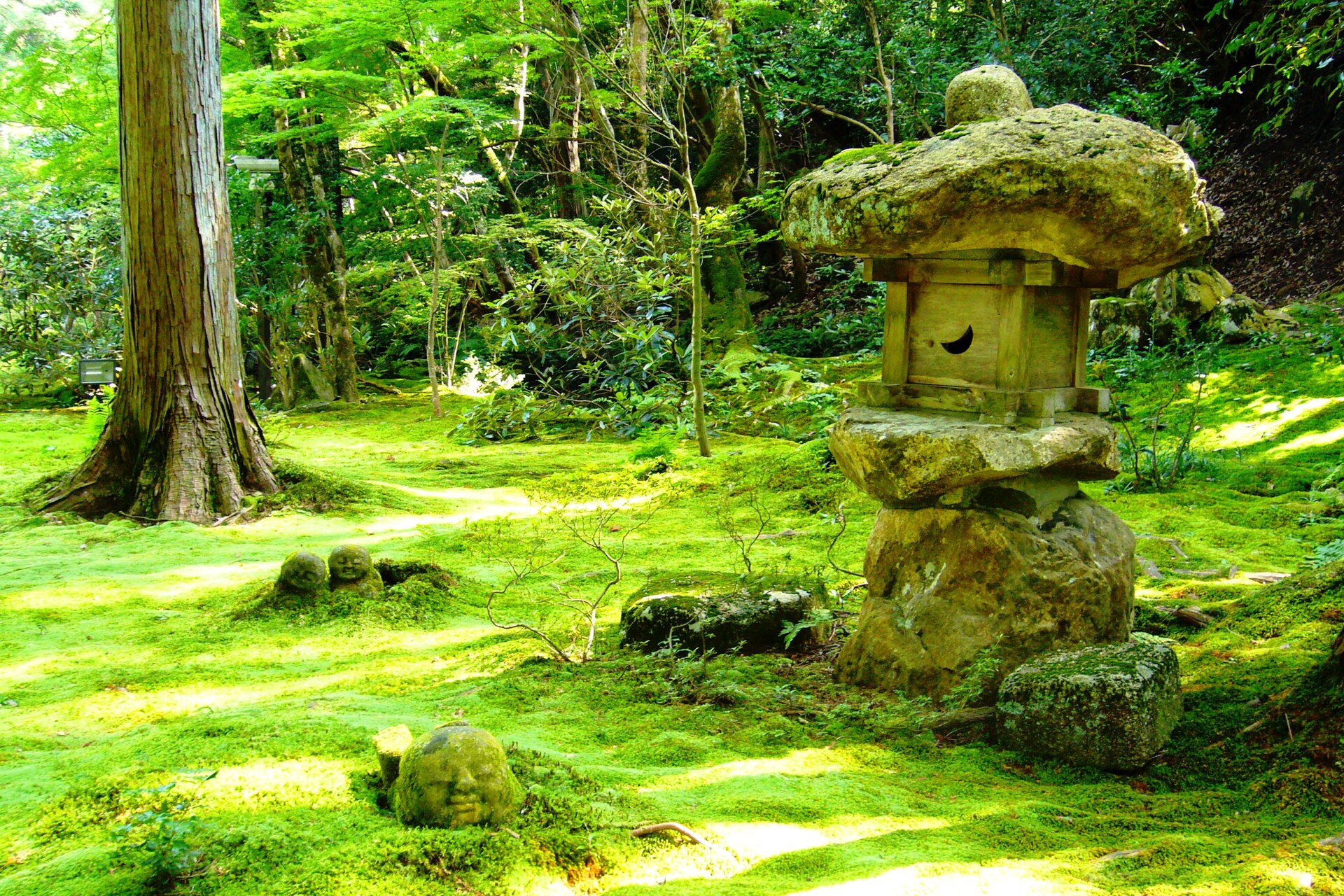
Other temples make the same choice in their own way. Sanzen-in, in Kyoto, describes its Yūseien as a pond-stroll garden where cedar and cypress stand in green moss. Giō-ji says that its grounds hold many different kinds of moss and keeps a moss shelf to show visitors representative ones. In autumn, fallen maple leaves cover the green moss — the autumn side of these gardens is told in Kyoto’s maple gardens and the work before the autumn crowds.
Leaves — the daily sweep
Why leaves have to go
A recurring job in a moss garden is removing fallen leaves. At Murin-an, a garden in Kyoto, the gardeners describe removing fallen leaves every day so that light can reach the moss. At Saihō-ji, the reason is put as sunlight and night dew: a layer of wet leaves shades the moss and keeps the dew off it.
Three brooms, and how hard to press
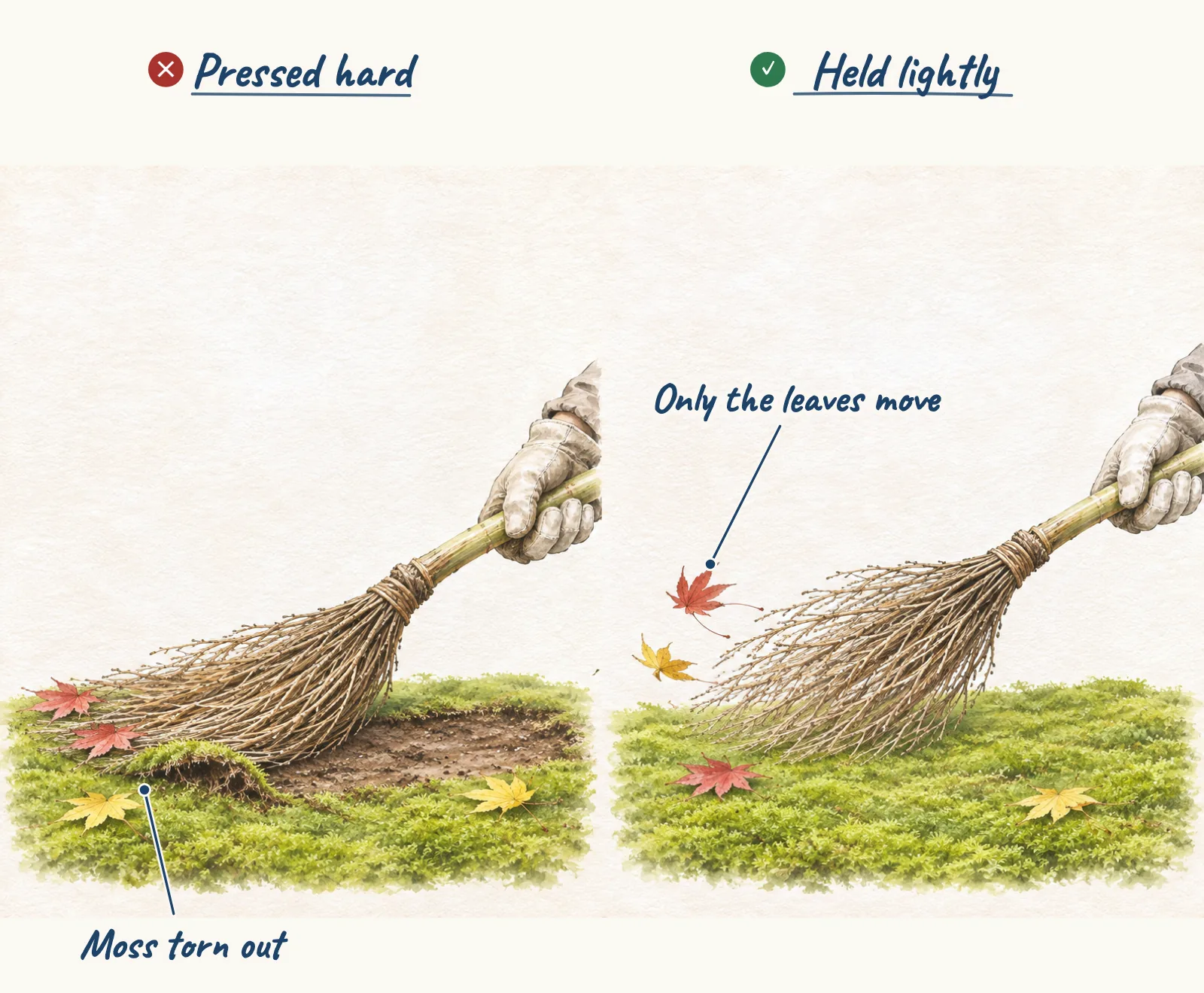
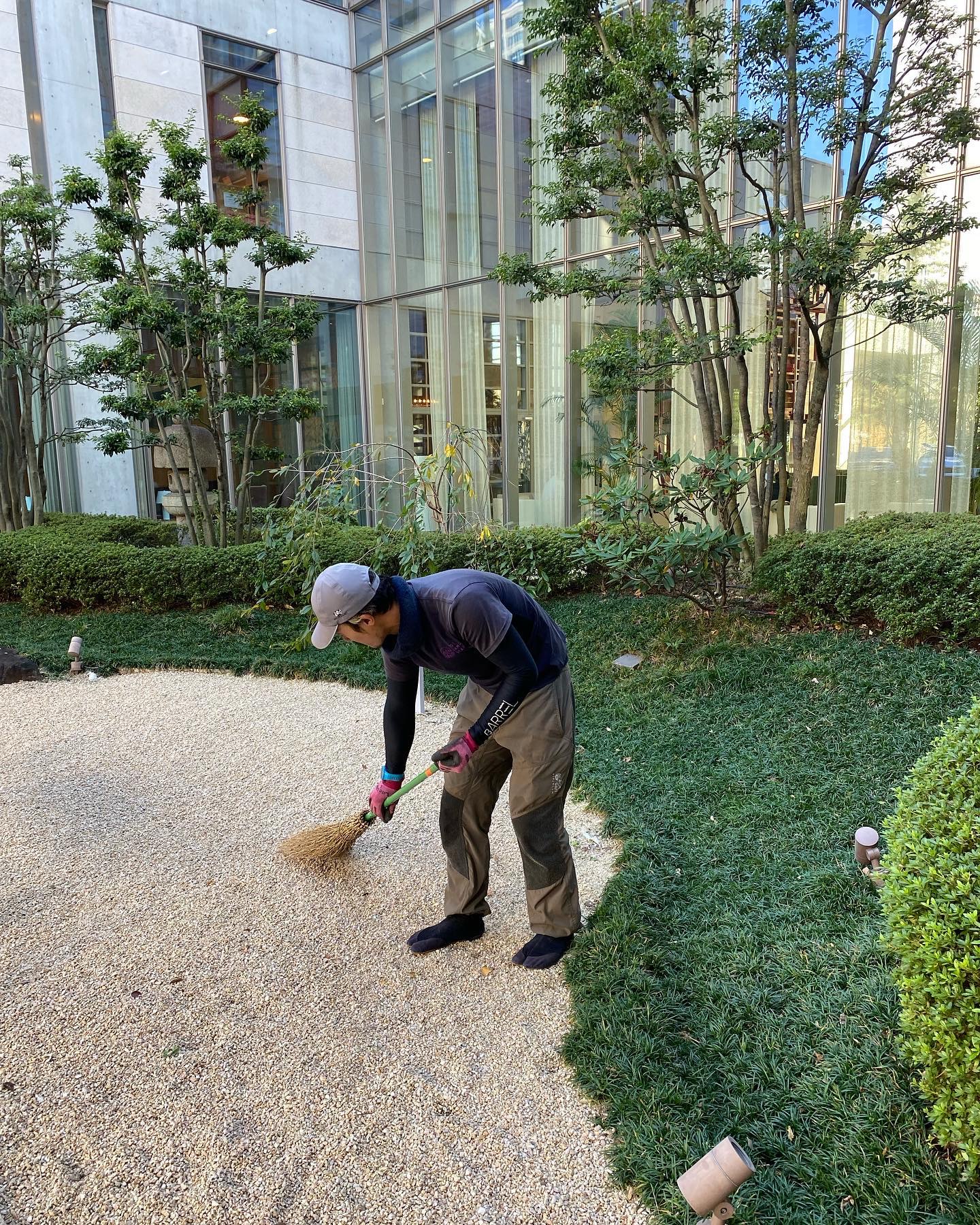
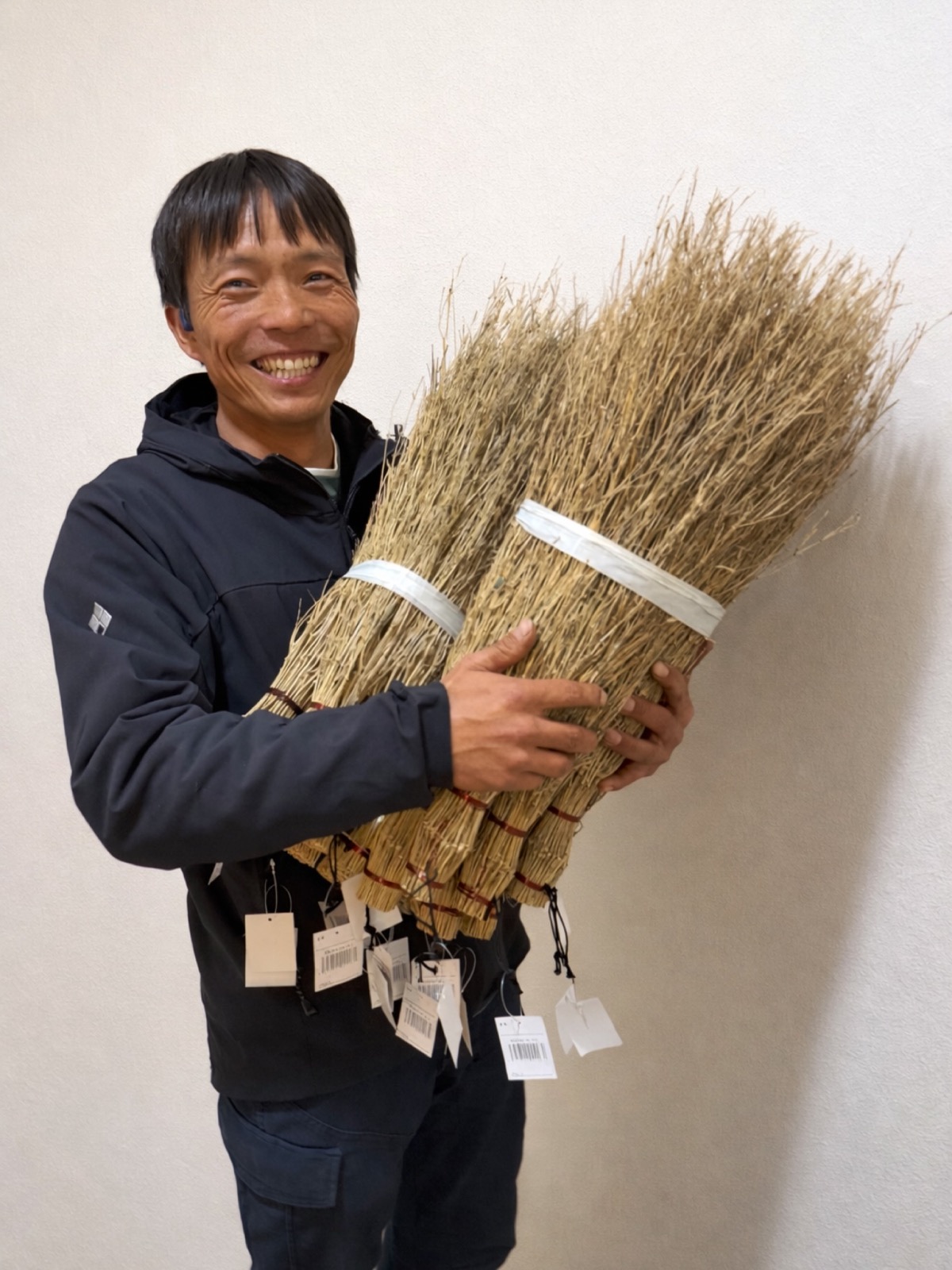
The tool is the takebōki (竹箒), a broom of thin bamboo twigs on a bamboo handle. Saihō-ji’s gardeners use three types of bamboo broom, each with a different stiffness. The reason is in one sentence from their interview: “If you sweep too hard, you will peel off the moss.”
The point is to catch the leaves, not to scrub the ground. Pressure is what tears moss away; a light stroke reduces the damage, though even light sweeping can bring up fragments of moss, as the gardeners say.
Not on rainy days
Saihō-ji’s gardeners also choose when not to sweep. In the gardener’s report published by Kyoto Prefecture, they avoid sweeping on rainy days: wet leaves stick to the moss, and getting them off would take enough force to damage it. In a separate interview published by the temple, the gardeners say that where young moss is still establishing itself, they sweep less. And when moss fragments come up in the broom, they gather them and return them to thinly covered ground, hoping they will establish and grow.
| Decision | What Saihō-ji’s gardeners do | Why |
|---|---|---|
| Which broom | Choose from three bamboo brooms of different stiffness | Too much force peels moss off |
| How hard | Sweep lightly | “If you sweep too hard, you will peel off the moss” |
| When | Avoid rainy days | Wet leaves stick; removing them needs damaging force |
| Where | Sweep less over young moss | It is still establishing |
| Fragments | Return swept-up moss to sparse ground | So it may grow there |
Leaves left on purpose
And then, in winter, Saihō-ji does the opposite. In a conversation published by the temple, Professor Oishi and a Saihō-ji priest explain that fallen leaves are deliberately left on the moss in winter, when they help the moss keep its moisture. Another temple article describes the winter leaves being swept away all at once in March. The rule is not “always remove every leaf”. It is “know what the leaves are doing to the moss this month”.
Weeds, seedlings and the wrong moss
Before the seeds fall
The second job is weeding. Saihō-ji’s gardeners, in the Kyoto Prefecture report, remove weeds quickly, before they can spread their seeds.
Tree seedlings count as weeds too. In March, Murin-an’s gardeners describe picking up fallen leaves while pulling out maple seedlings — young maples sprouting from the garden’s own trees.
When moss is the weed
Sometimes the weed is another moss. At Murin-an, where areas of sugigoke are kept, haigoke creeps in from the edges. The gardeners’ note is precise: invading haigoke is pulled straight up by hand, to protect the sugigoke around it.
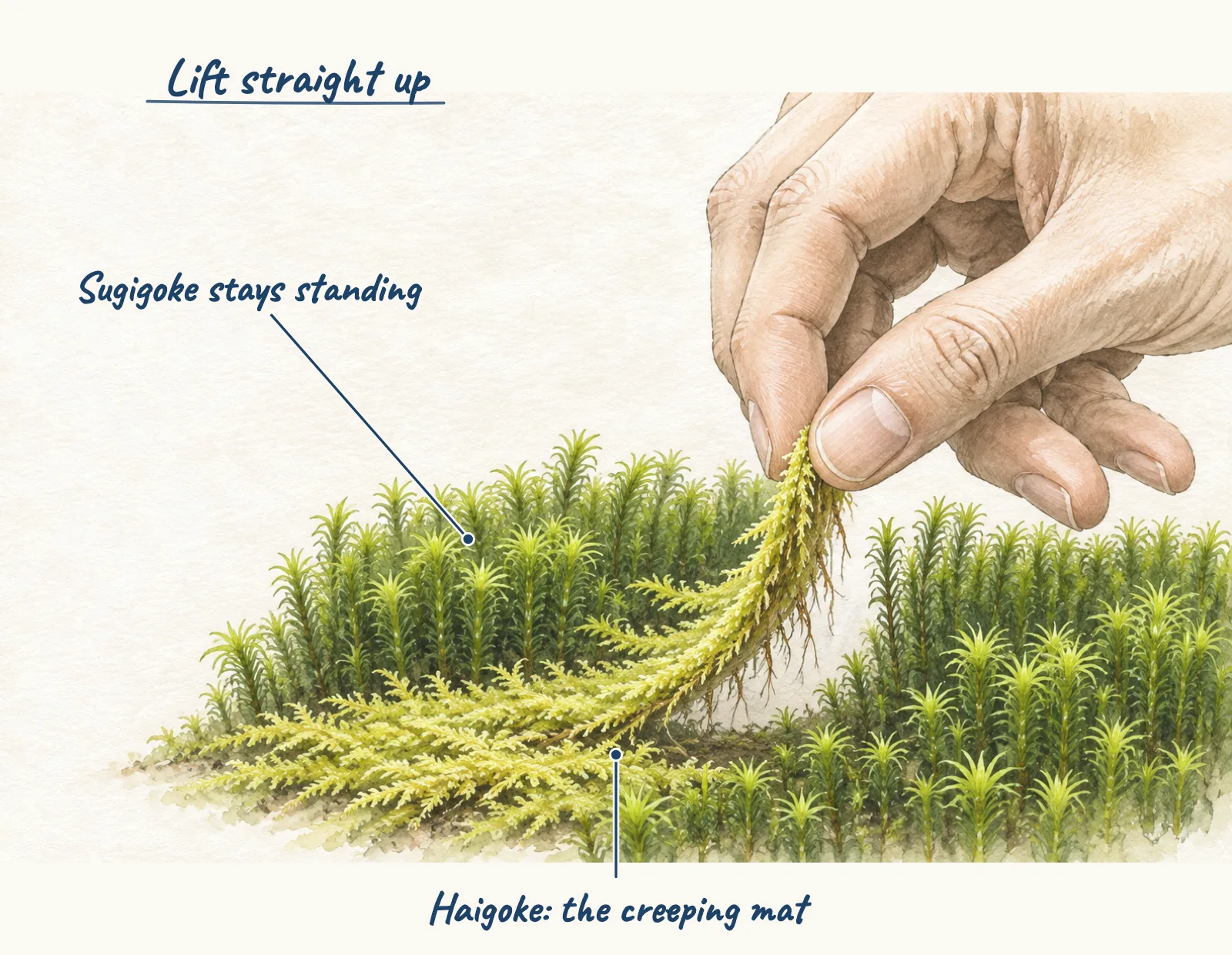
In a moss garden, then, not every moss is welcome: gardeners may choose which moss to keep and which to remove, side by side on the same ground.
Feet, water and repair
Varying routes to spread the footsteps
Repeated steps on the same line wear moss bare. Saihō-ji’s gardeners, as Professor Oishi and the temple’s priest describe it, take a different route each time they cross the moss, so that repeated steps do not wear bare patches into it. The garden’s visitors stay on the paths; its gardeners spread their own footsteps around.
Water — less than you might think
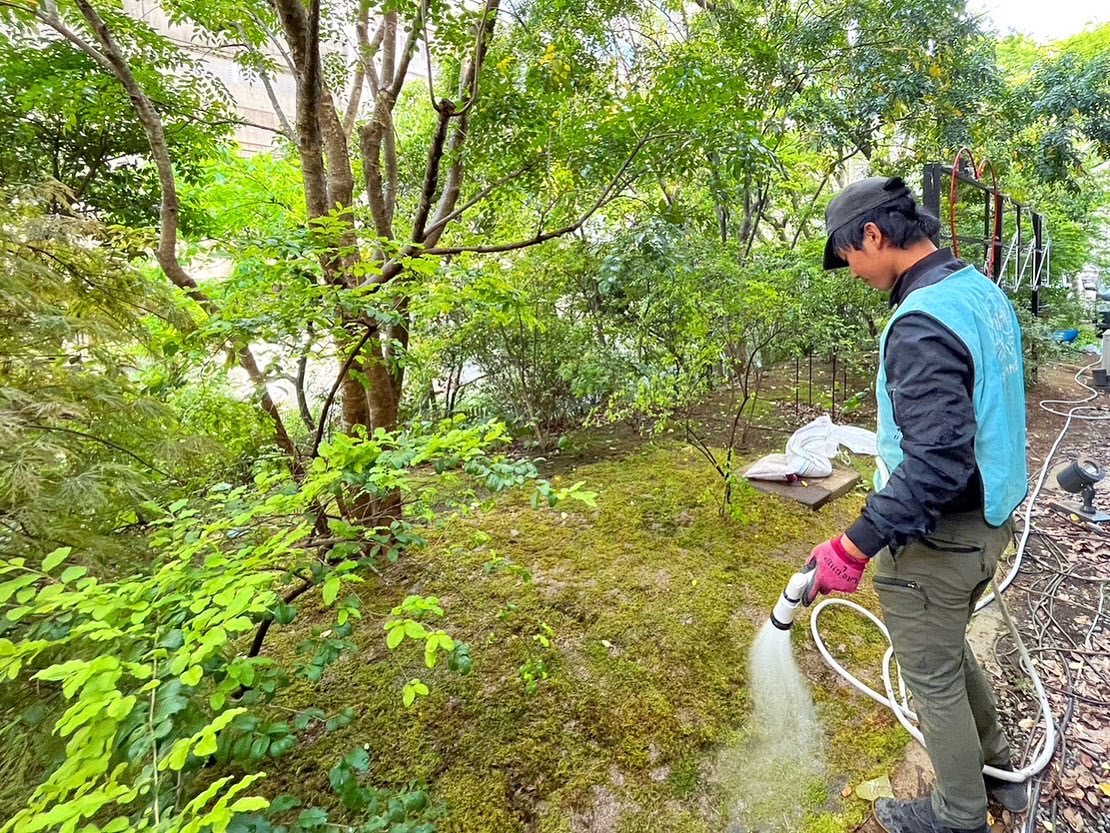
Watering is less of a routine than many visitors assume. At Nanzen-ji, as noted above, the moss usually needs no summer watering except in exceptional heat. When a new kind of moss appears at Saihō-ji, a gardener says that the response does not normally involve special steps such as transplanting it or watering it. What Saihō-ji has begun to do, on hot nights, is sprinkle water on the garden paths to cool the air around the moss. Conditions differ from garden to garden. There is no fixed figure — so many litres, so many times a day, so much humidity — that applies to every temple moss garden.
Patching and relaying
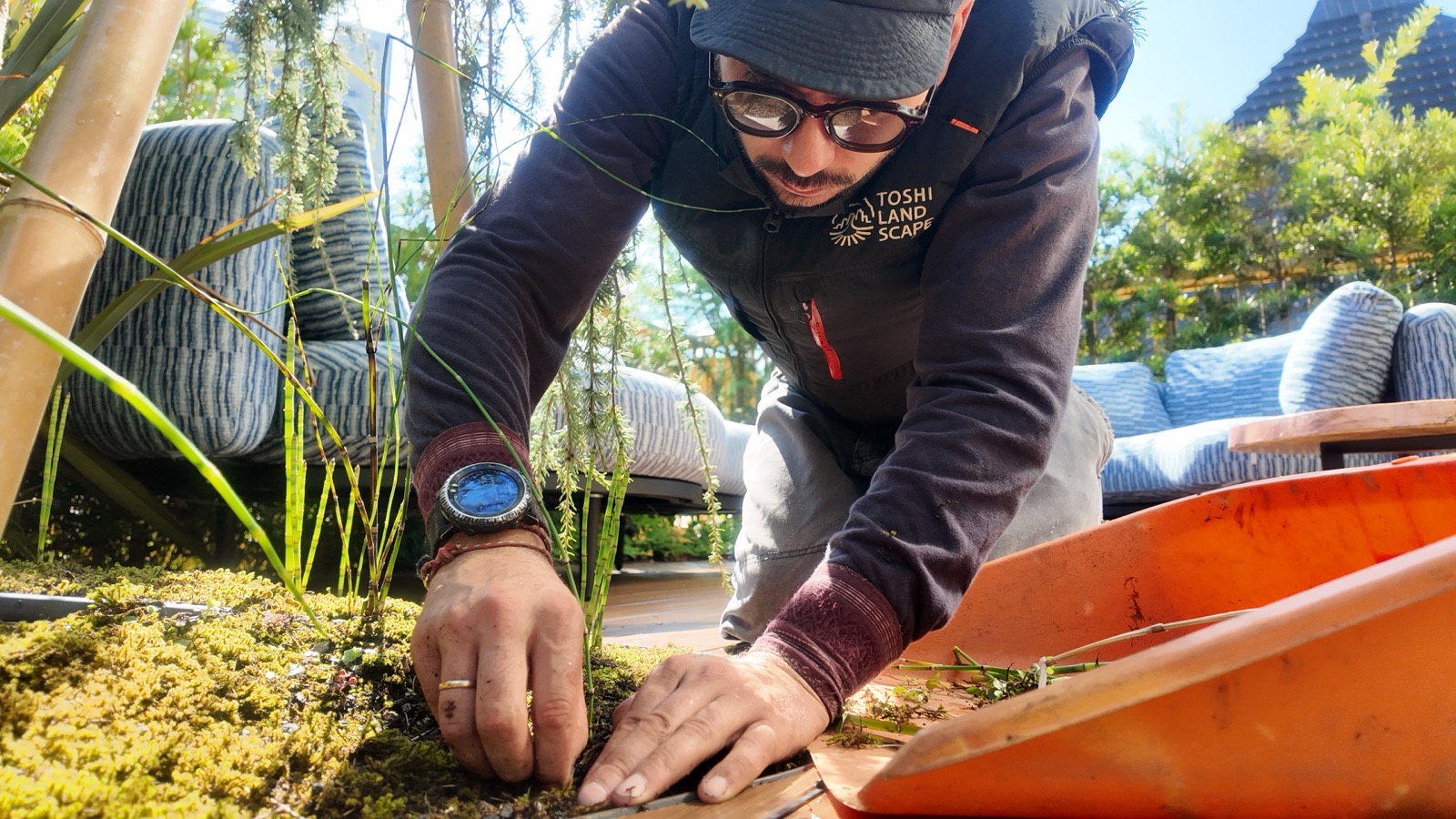
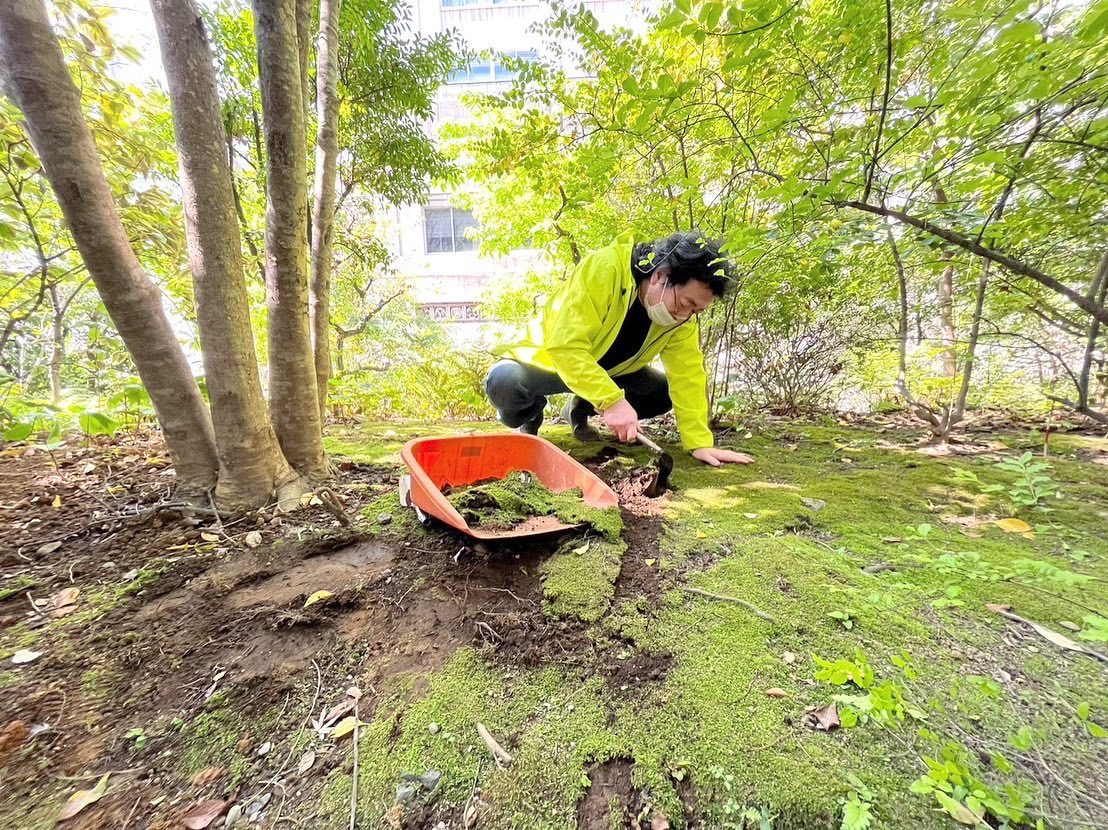
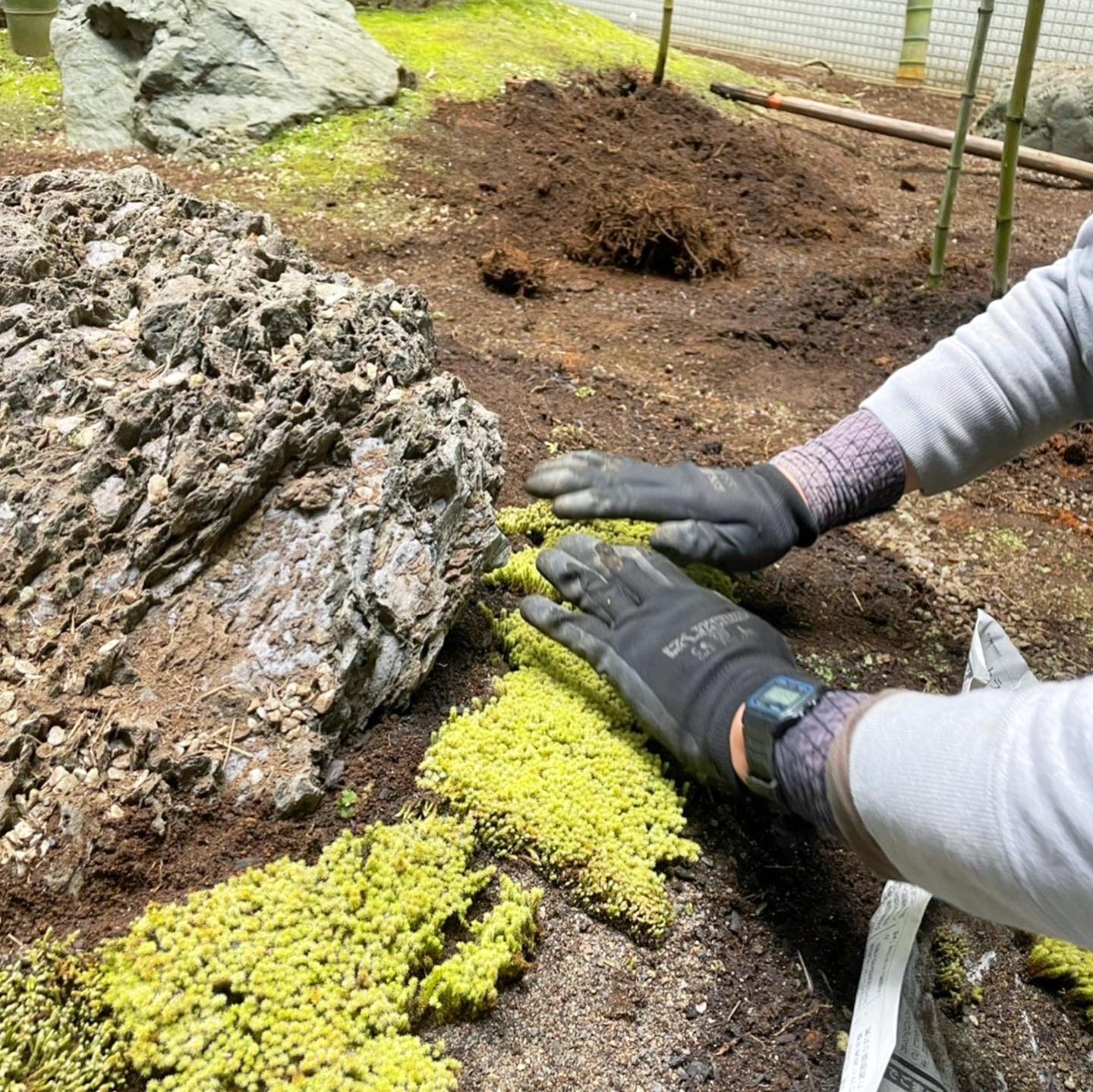
Moss also has to be repaired. At Murin-an, the gardeners plant yamagoke-type moss in damaged areas. At Nanzen-ji, after a typhoon in September 2013 carried sediment across the grounds, the moss was replaced during the restoration. In the photograph below, new moss is being laid by hand beside a garden stone, piece by piece.
A morning’s work, in order
Put together, the Saihō-ji accounts describe a sequence rather than a fixed timetable:
- Walk and look. The morning walk shows where leaves, weeds and thin moss are.
- Check the weather. On rainy days, sweeping waits; wet leaves would take too much force to lift.
- Choose the broom. One of three bamboo brooms, by stiffness, and a light stroke.
- Sweep less where moss is young. Newly establishing patches are left mostly alone.
- Weed early. Weeds come out before they seed.
- Put fragments back. Moss pieces caught in the broom go back onto thinly covered ground.
- Cross the moss on a new line. A different route each time, to spread the footsteps.
A year in a moss garden — what changes by season
The daily jobs shift with the seasons. Putting together what the temples and gardens above describe, the year looks roughly like this. It is a composite of several gardens, not one garden’s calendar.
| Season | Main work | Source |
|---|---|---|
| Winter | Leave fallen leaves on the moss to keep its moisture | Saihō-ji |
| March | Sweep the winter leaves away at once; pull maple seedlings while picking up leaves | Saihō-ji; Murin-an |
| Growing season | Weed quickly, before seeds spread; pull invading haigoke straight up (recorded at Murin-an in late November) | Saihō-ji; Murin-an |
| Hot summer nights | Sprinkle water on the paths to cool the air | Saihō-ji |
| Exceptionally hot summer days | Water the moss (otherwise usually unnecessary) | Nanzen-ji |
| Summer | Remove fallen leaves every day so light reaches the moss (July report) | Murin-an |
| As needed | Vary walking routes; repair damaged areas with new moss | Saihō-ji; Murin-an; Nanzen-ji |
Moss in the West — weed or alternative
“A weed” in a lawn
In British and American lawn advice, moss often appears as a problem. The RHS puts it plainly: gardeners who want a lawn of turfgrass alone are likely to regard moss as a weed, and such lawns are managed by correcting the conditions — shade, acid soil, wetness, low fertility — that let it in.
A sensible option in shade
But the same sources also make room for moss. The RHS says that where lawn conditions make moss hard to prevent, allowing it to grow is a sensible option. Virginia Cooperative Extension presents moss as a wonderful alternative to turfgrass in shaded landscapes. In Washington State, Bloedel Reserve created its Moss Garden in 1982, and its maintenance advice could have come from Kyoto: clean leaves, debris and weeds; water periodically through dry spells while a new moss garden establishes; and avoid walking in regular routes, because repeated wear creates bare patches.
| Japanese temple gardens (examples above) | UK/US guidance (RHS, Virginia Extension, Bloedel Reserve) | |
|---|---|---|
| Starting point | Moss is the planted or accepted ground cover under trees | In a turfgrass-only lawn, moss is a weed |
| In shade | Moss is kept | Moss can be accepted, or chosen as an alternative to turf |
| Leaves | Removed by hand and bamboo broom; left on in winter at Saihō-ji | Clean leaves, debris and weeds |
| Walking | Vary routes across moss | Avoid regular routes |
| Water | At Nanzen-ji, usually none in summer except exceptional heat | Water during dry spells while establishing |
Neither approach is better; they start from different goals. And in the examples above, once moss is kept, the core tasks — clearing leaves, removing weeds, spreading footsteps — look much the same in Kyoto and in Washington State. For other ways Japanese gardens work with what a site already offers, see shakkei, the borrowing of scenery, and for how garden trees are shaped, Niwaki vs Topiary.
What the moss garden really is
Go back to Saihō-ji’s morning walk. Seen from the path, the moss looks as if it simply grew there, undisturbed, for centuries — and in one sense it did, arriving on its own on ground that once held white sand. What keeps it looking that way is the walk itself, and the decisions that follow it: whether to sweep or wait, which broom, which weeds, which line to take across the moss. Like the old trees above it — whose survival is the subject of why Japan’s ancient trees live for a thousand years — a moss garden is the result of care repeated over many years.
Frequently asked questions
Why do Japanese temples use moss instead of grass? Many temple gardens sit under old trees, where the ground is shaded for much of the day. Lawn grasses such as zoysia need hours of direct sun and grow thin in shade; moss takes water in through its surface, and the right kinds can cover shaded ground. Kyoto is a humid basin city. Moss has also been planted on purpose in Japanese gardens since at least the fifteenth century.
Do all Japanese temples have moss gardens? No. Ryōan-ji’s rock garden and Ryōgin-an’s south garden are mainly white sand, Shōkoku-ji’s Kaisandō pairs white sand with a moss mound, and some Japanese gardens, such as Kannon-in in Tottori, include lawn.
Was Saihō-ji always a moss garden? No. According to the temple, Musō Soseki’s garden of 1339 was a white-sand garden. Moss colonised it naturally after wars and floods, and the garden is believed to have looked much as it does today by the late Edo period.
How do gardeners keep moss gardens clean? Mainly by removing fallen leaves with bamboo brooms and by hand, weeding before weeds seed, and pulling invading mosses. At Saihō-ji the gardeners use three bamboo brooms of different stiffness, sweep lightly, avoid sweeping on rainy days and leave leaves on the moss in winter.
Do moss gardens need watering? It depends on the place. A Nanzen-ji gardener reports that the moss there usually needs no summer watering except in exceptional heat. New moss gardens in drier places may need watering through dry spells while they establish.
Can you walk on a moss garden? Visitors should keep to the paths. Even gardeners at Saihō-ji vary their routes across the moss, because repeated steps along the same line wear bare patches.
Sources
– Agency for Cultural Affairs, Database of National Cultural Properties, “Saihōji” — https://kunishitei.bunka.go.jp/heritage/detail/911/14 (checked 2026-11-06) – Saihō-ji official site, “Goki (Five Seasons)” — https://intosaihoji.com/saihoji/goki/ (checked 2026-11-06) – Saihō-ji official site, “Advance Reservations” — https://intosaihoji.com/en/saihoji/jizen/ (checked 2026-11-06) – Agency for Cultural Affairs, Cultural Heritage Online, “Historic Monuments of Ancient Kyoto” — https://online.bunka.go.jp/special_content/hlink3 (checked 2026-11-06) – Saihō-ji Journal, “People Preserving Saihoji for Future Generations: Gardeners” and “Gardeners vol.2” — https://intosaihoji.com/en/journal/tsugu001/ ; https://intosaihoji.com/en/journal/tsugu005/ (checked 2026-11-06) – Saihō-ji Journal, “What Little Moss Teaches Us”, parts 1 and 2 (Prof. Yoshitaka Oishi) — https://intosaihoji.com/en/journal/kosaten004-1/ ; https://intosaihoji.com/en/journal/kosaten004-2/ (checked 2026-11-06) – Saihō-ji Journal, “Gardens which inspired Kagizen” — https://intosaihoji.com/en/journal/kagizen_kiyoraka/ (checked 2026-11-06) – Kyoto Prefecture, Koke kara kangaeru (moss pamphlet; reports by Saihō-ji and Nanzen-ji gardeners) — https://www.pref.kyoto.jp/kankyo/documents/kokepamphlet.pdf (checked 2026-11-06) – Murin-an official site, seasonal care diaries and “Gardener’s viewpoint” 2019-11-29; leaflet — https://murin-an.jp/fostering-report/fostering-story2/ ; https://murin-an.jp/fostering-report/fostering-story6-2/ ; https://murin-an.jp/news/staff-viewpoint/eyes-20191129/ ; https://murin-an.jp/wp/wp-content/uploads/2016/07/5d11872fd436797318301eb530e0b028.pdf (checked 2026-11-06) – Japan Meteorological Agency, Kyoto normals 1991–2020 — https://www.data.jma.go.jp/stats/etrn/view/nml_sfc_ym.php?prec_no=61&block_no=47759&year=&month=&day=&view= ; “Climate of the Kinki region” — https://www.data.jma.go.jp/cpd/j_climate/kinki/main.html (checked 2026-11-06) – University of California IPM, “Zoysiagrass” — https://ipm.ucanr.edu/TOOLS/TURF/TURFSPECIES/zoysia.html (checked 2026-11-06) – University of Missouri Extension, “Establishment and Care of Zoysiagrass Lawns” — https://extension.missouri.edu/sites/default/files/legacy_media/wysiwyg/Extensiondata/Pub/pdf/agguides/hort/g06706.pdf (checked 2026-11-06) – University of Connecticut, “Selecting an Appropriate Grass for Your Lawn” — https://homegarden.cahnr.uconn.edu/factsheets/selecting-an-appropriate-grass-for-your-lawn/ (checked 2026-11-06) – Kansas State University, “Shade-Tolerant Grasses” — https://bookstore.ksre.k-state.edu/download/shade-tolerant-grasses_MF2128 (checked 2026-11-06) – Royal Horticultural Society, “Moss in lawns” and “Algae, lichens, liverworts and moss” — https://www.rhs.org.uk/lawns/moss-on-lawns ; https://www.rhs.org.uk/biodiversity/algae-lichens-liverworts-moss (checked 2026-11-06) – Virginia Cooperative Extension, “Lawn Moss: Friend or Foe?” — https://www.soiltest.vt.edu/content/pubs_ext_vt_edu/en/430/430-536/430-536.html (checked 2026-11-06) – Bloedel Reserve, “The Moss Garden” and “Maintaining a Moss Garden” — https://bloedelreserve.org/moss-garden/ ; https://bloedelreserve.org/maintaining-moss/ (checked 2026-11-06) – Kyoto Prefecture, “Ryōanji” — https://www.pref.kyoto.jp/isan/ryoanji.html (checked 2026-11-06) – Tōfuku-ji, “Ryōgin-an special opening” — https://tofukuji.jp/special_event/%E5%9B%BD%E5%AE%9D%E9%BE%8D%E5%90%9F%E5%BA%B5-%E7%89%B9%E5%88%A5%E5%85%AC%E9%96%8B/ (checked 2026-11-06) – Shōkoku-ji, precinct guide; Ginkaku-ji, precinct guide — https://www.shokoku-ji.jp/guide/ ; https://www.shokoku-ji.jp/ginkakuji/guide/ (checked 2026-11-06) – Kannon-in, “Scenic garden” — https://kannonin33.jimdofree.com/%E5%90%8D%E5%8B%9D%E5%BA%AD%E5%9C%92/ (checked 2026-11-06) – Giō-ji, precinct guide; Sanzen-in, precinct map — https://www.giouji.or.jp/keidai/ ; https://www.sanzenin.or.jp/guide/ground (checked 2026-11-06) – Okayama University of Science (Y. Hada), plant dictionary: Haigoke, Hosoba-okinagoke, Ezosunagoke — https://www1.ous.ac.jp/garden/hada/plantsdic/bryophyta/hypnaceae/haigoke/haigoke.htm ; https://www1.ous.ac.jp/garden/hada/plantsdic/bryophyta/leucobryaceae/hosobaokinagoke/hosobaokinagoke.htm ; https://www1.ous.ac.jp/garden/hada/plantsdic/bryophyta/leucobryaceae/hosobaokinagoke/hosobaokinagoke2.htm ; https://www1.ous.ac.jp/garden/hada/plantsdic/bryophyta/grimmiaceae/ezosunagoke/ezosunagoke.htm (checked 2026-11-06) – Taoda & Kasai (2018), “Bryophytes of Shiga Prefecture and their distribution”, Hiroshima University Digital Museum — https://www.digital-museum.hiroshima-u.ac.jp/~main/images/5/5b/%E5%9E%B0%E7%94%B0%E3%83%BB%E7%AC%A0%E4%BA%95_2018_%E6%BB%8B%E8%B3%80%E7%9C%8C%E3%81%AE%E3%82%B3%E3%82%B1%E6%A4%8D%E7%89%A9%E3%81%A8%E3%81%9D%E3%81%AE%E5%88%86%E5%B8%83_compressed.pdf (checked 2026-11-06) – Mie Prefectural Museum, Bulletin No. 12 (2026) — https://www.bunka.pref.mie.lg.jp/common/content/001238739.pdf (checked 2026-11-06) – NARO, research report on cultivated sunagoke for greening — https://www.naro.go.jp/laboratory/brain/contents/minkan/results/files/h20seika_03.pdf (checked 2026-11-06) – Sakata, K. (2002), lecture on the aesthetic history of moss, Bryological Research 8(5) — https://www.jstage.jst.go.jp/article/bryologicalresearch/8/5/8_KJ00009203984/_article/-char/ja (checked 2026-11-06) – National Diet Library, Collaborative Reference Database (Kimigayo) — https://crd.ndl.go.jp/reference/detail?page=ref_view&id=1000184241 (checked 2026-11-06)