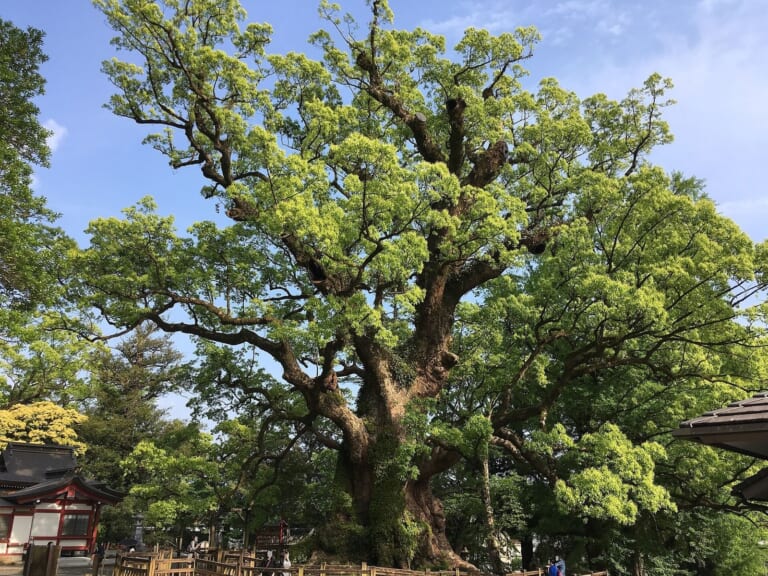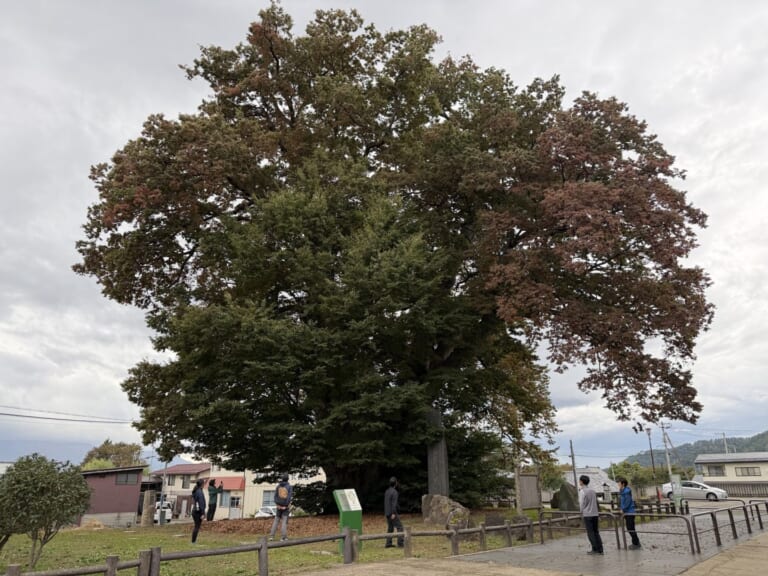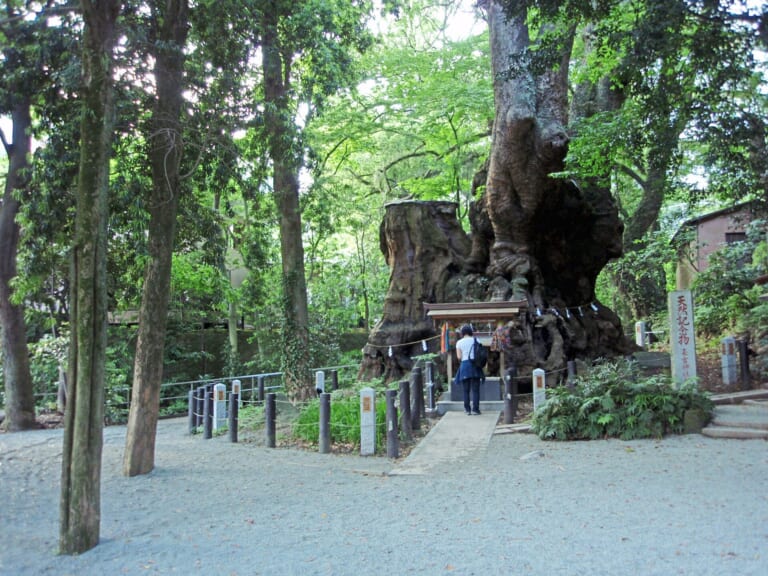
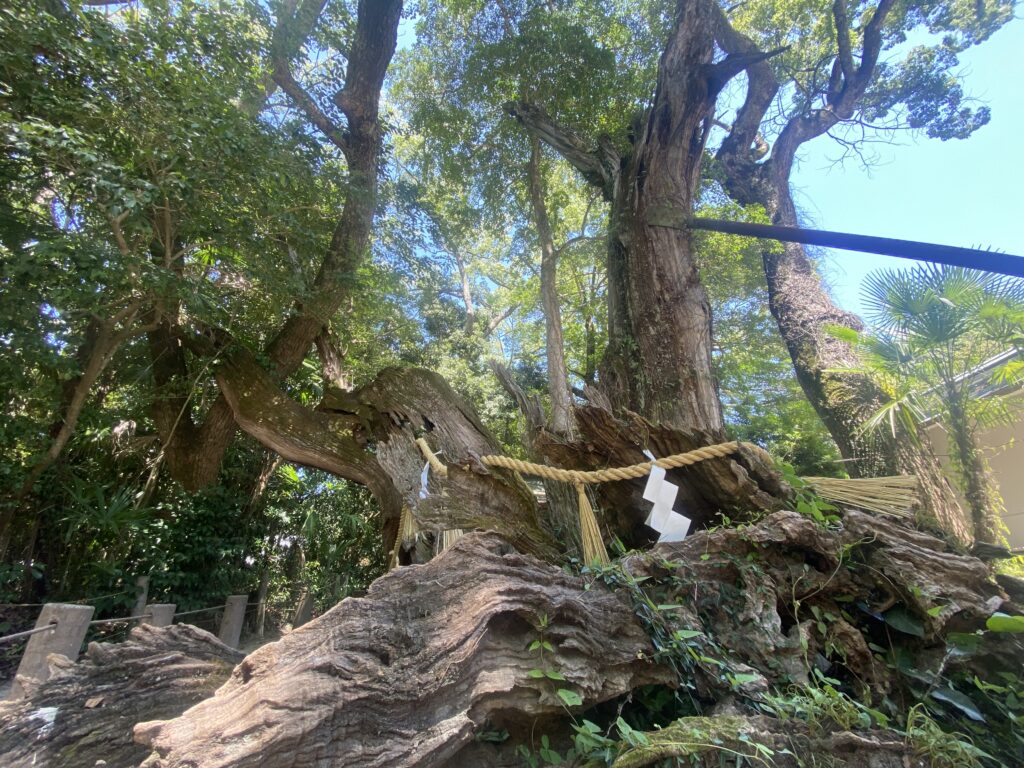
Why do Japan's sacred trees live a thousand years? Roots, genetics, and centuries of care — the science behind Japan's ancient giants.
Introduction
Imagine standing before a tree that was already old when Rome still ruled the Western world. In Japan, this is not a fantasy — it is a reality you can witness firsthand. The Jomon Sugi cedar on Yakushima Island is estimated to be anywhere between 2,170 and 7,200 years old. Ginkgo trees older than 1,000 years shade the courtyards of temples across Tokyo and Kyoto. Japan is home to an extraordinary number of trees that have outlived empires, survived earthquakes, and endured centuries of human history.
So why do Japan’s ancient trees live so long? The answer lies in a remarkable combination of factors: harsh environments that paradoxically strengthen trees at a biological level, cellular mechanisms that resist aging in ways science is only beginning to understand, underground fungal networks that sustain entire forest communities, and — perhaps most uniquely — a spiritual tradition that has protected individual trees as sacred beings for over a thousand years.
1. The Paradox of Poor Soil: How Harsh Conditions Create Extraordinary Trees
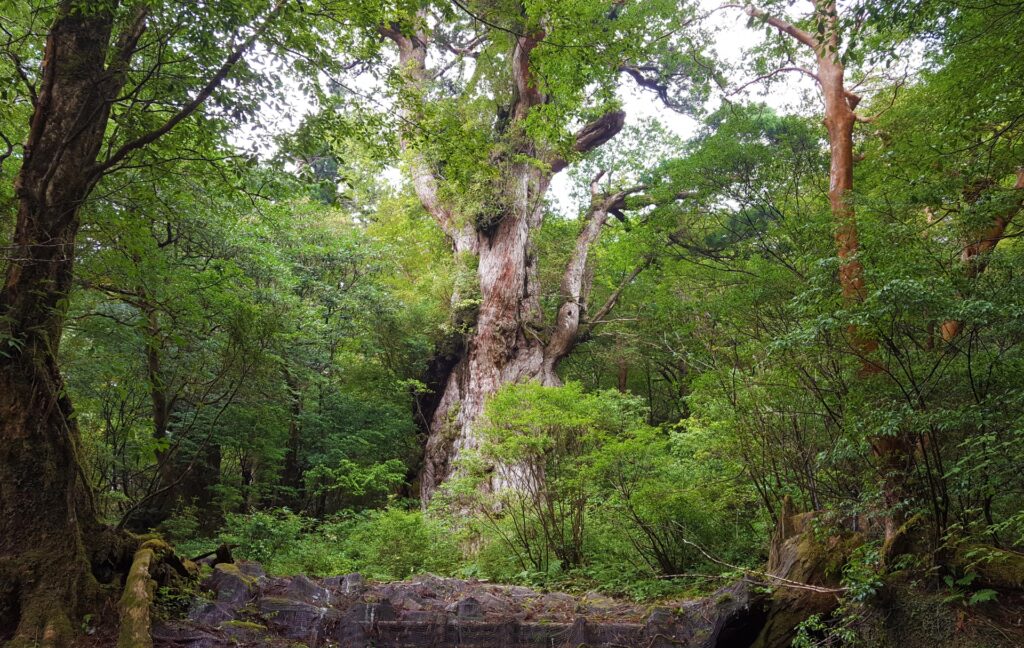
Yakusugi Cedars and the Secret of Slow Growth
Yakushima is a small, roughly pentagonal island located about 60 kilometers south of Kyushu, roughly the same area as Tokyo’s 23 wards. Despite its modest size, the island is geologically unusual: its bedrock is almost entirely granite, a nutrient-poor substrate that forces trees to fight hard for every ounce of growth.
Under normal conditions, Japanese cedar (Cryptomeria japonica) lives for roughly 500 years. Yet on Yakushima, cedars known as Yakusugi regularly exceed 2,000 years — and some are estimated to be far older. The reason, counterintuitively, is the very harshness of their environment.
In nutrient-poor granite soil, trees cannot grow quickly. Their annual growth rings become extraordinarily dense and tightly packed, producing wood of exceptional hardness and durability. At the same time, Yakushima receives more than 8,000 millimeters of rainfall per year in its mountain zones — one of the highest rates in Japan. To survive in this perpetually damp environment, the cedars produce large quantities of resin, a natural antibacterial and antifungal compound that permeates their wood and makes it nearly impervious to decay.
In short, slow growth plus resin-rich wood equals extraordinary longevity. What looks like adversity from the outside is, biologically speaking, the recipe for a near-immortal tree.
Jomon Sugi: One Tree That Changed a Nation
Discovered in 1966 and brought to wider public attention in 1968, the Jomon Sugi is the largest and most famous of Yakushima’s ancient cedars. Standing 25.3 meters tall with a trunk circumference of 16.4 meters, it is a tree of almost surreal scale. Its name comes either from its estimated age — dating back to Japan’s Jomon period (roughly 14,000 to 2,300 years ago) — or from the distinctive knotted patterns on its bark, which resemble the rope-impressed designs of ancient Jomon pottery.
The discovery of the Jomon Sugi sparked a national conversation about forest conservation, ultimately leading to Yakushima’s designation as a UNESCO World Natural Heritage Site in 1993. Today, tens of thousands of hikers make the roughly 10-kilometer mountain trek each year just to stand in its presence. Few trees in the world have had such a measurable impact on environmental policy.
2. The Tree That Does Not Age: What Science Reveals About Ginkgo Longevity
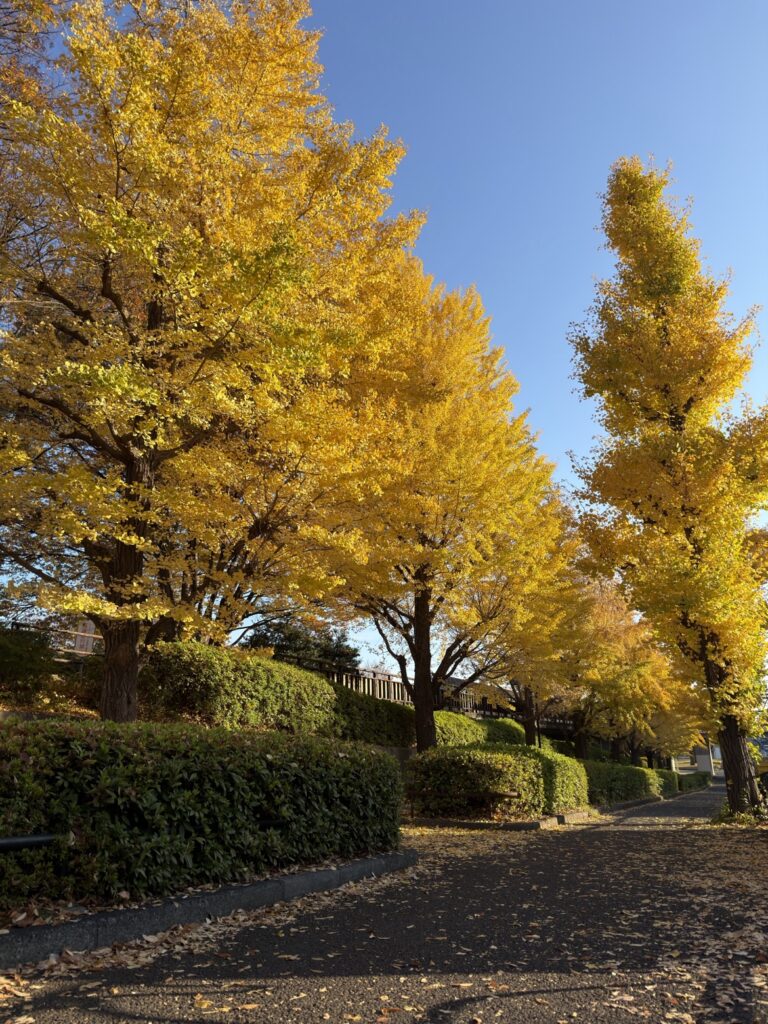
Immune Systems That Refuse to Decline
Across Japan’s shrines and temples, another species stands as a monument to botanical longevity: the ginkgo (Ginkgo biloba). This ancient tree — a living fossil with a lineage stretching back 270 million years — regularly lives beyond 1,000 years in Japan, with specimens at various Shinto shrines reaching several centuries in age.
In 2020, a landmark study published in PNAS by researchers from China revealed something extraordinary: a 1,000-year-old ginkgo tree shows virtually no signs of cellular aging compared to a young specimen. This challenges the fundamental assumption that all living organisms are programmed to deteriorate over time.
Specifically, the research found that older ginkgo trees:
– Continue to produce growth hormones** such as auxins and gibberellins at levels comparable to young trees
– Increase production of defensive compounds** including flavonoids and antioxidants as they age, rather than declining
– Maintain active cambium tissue** — the layer responsible for new cell growth — allowing them to repair damage and add girth indefinitely
The implication is striking: unlike mammals, some trees may not be subject to a fixed biological aging program. The ginkgo, in particular, appears to produce more defensive chemistry the older it gets — becoming, in effect, harder to kill with age.
3. Sacred Forests and Spiritual Protection: How Shinto Preserved Japan’s Trees
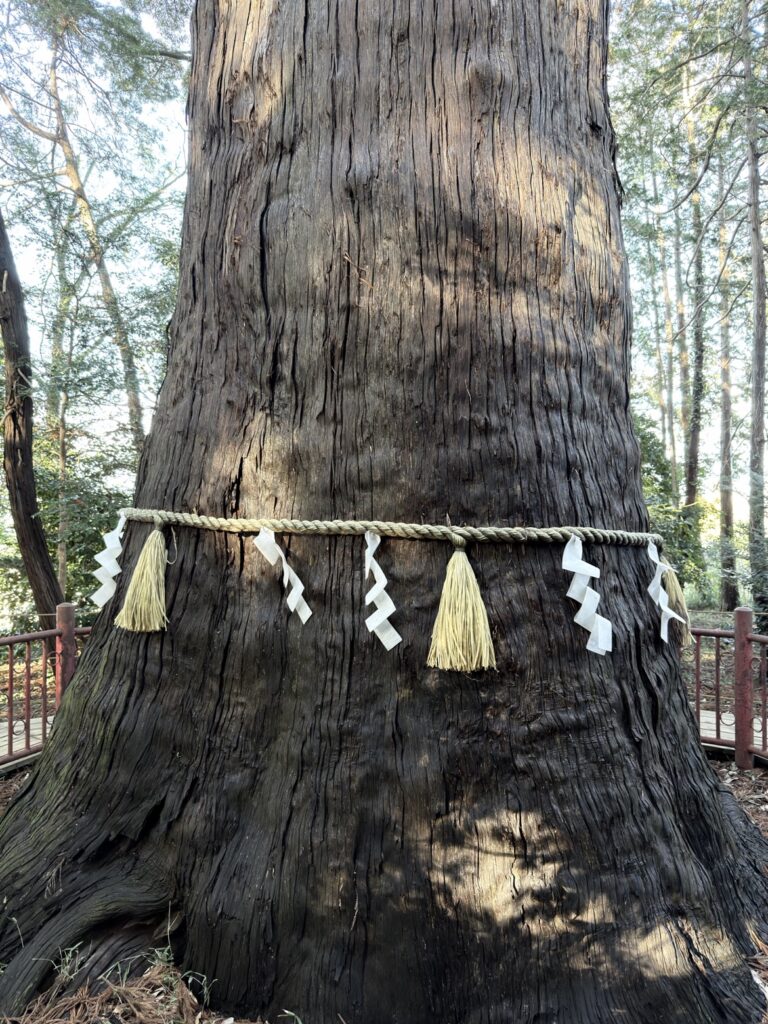
A Religion Built on the Living World
To understand why so many of Japan’s ancient trees are still standing, you must understand Shinto — Japan’s indigenous spiritual tradition. At its core, Shinto holds that spirits called kami inhabit the natural world: mountains, rivers, rocks, and above all, trees. According to traditional belief, trees that reach 100 years of age become home to kodama — tree spirits that give the tree a kind of personality and agency.
Harming a tree inhabited by a kodama was considered deeply taboo — an act that could bring misfortune on an individual or community. This belief system functioned, for centuries, as a grassroots tree protection law enforced not by government decree but by cultural reverence.
Chinju no Mori: The Shrine Forest as Living Sanctuary
One of the most consequential expressions of this reverence is the concept of chinju no mori, or “protective shrine forests.” Every Shinto shrine — and Japan has approximately 80,000 of them — is surrounded by a grove of trees considered sacred. These forests serve as a physical and spiritual buffer between the human world and the divine realm of the shrine.
Because chinju no mori are protected by religious custom, many have remained essentially untouched for centuries or even millennia. In heavily urbanized areas like Tokyo and Osaka, these shrine groves are often the last remnants of original forest ecosystems, functioning as critical biodiversity refuges for insects, birds, and plant species that have disappeared everywhere else. International conservation researchers have increasingly recognized chinju no mori as powerful models for urban green space protection.
Shinboku: Japan’s Ancient System of Individual Tree Protection
Beyond entire groves, Shinto tradition also designates specific trees as shinboku — divine trees that serve as physical vessels for kami. These trees are marked with shimenawa, thick ropes of twisted rice straw that signal sacred status to all who pass.
Shinboku trees are typically among the oldest and largest specimens in their region, and their protection has been maintained by local communities across generations. In practice, this tradition functioned as something remarkably close to a modern individual tree registry system — centuries before national natural monument designations existed. Japan officially began designating Natural Monuments in 1919; but many of the trees now protected under that law had already been safeguarded for hundreds of years by Shinto tradition.
4. The Underground Network: How Mycorrhizal Fungi Support Ancient Trees
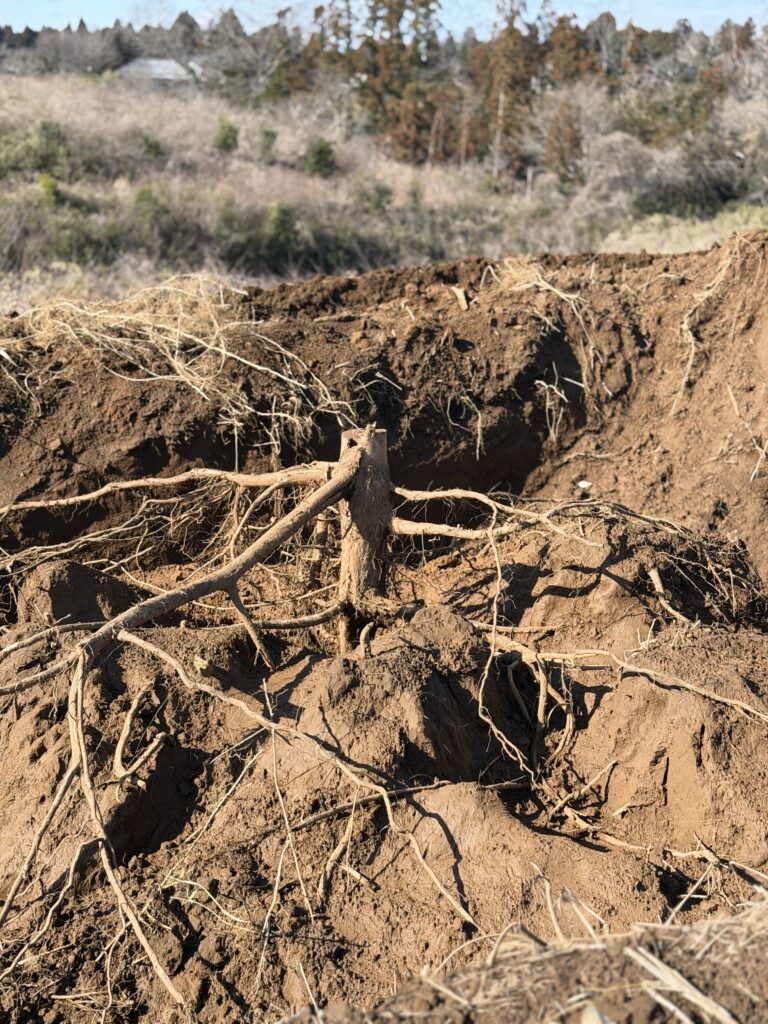
The Hidden Web Beneath the Forest Floor
No tree lives in isolation — and this is especially true of ancient trees. Beneath the soil of Japan’s old-growth forests lies an invisible network of mycorrhizal fungi, microscopic filaments that intertwine with tree roots and form one of the most sophisticated mutual support systems in the natural world.
In this relationship, fungi receive sugars produced through the tree’s photosynthesis, while providing the tree with water, phosphorus, nitrogen, and other minerals that roots alone cannot efficiently absorb. But the network goes further than simple exchange. Research has shown that mycorrhizal networks connect neighboring trees, allowing them to share nutrients and even chemical distress signals — effectively creating a form of forest-wide communication.
In old-growth forests like those of Yakushima, where this network has developed over hundreds of years without disturbance, it becomes extraordinarily complex and resilient. When an ancient tree is weakened by drought or disease, the network can redistribute resources from healthier neighbors. The longevity of Japan’s most ancient trees is not simply a product of individual toughness — it is the outcome of a collective ecosystem that sustains each member across centuries.
5. Japan’s Philosophy of Living with Trees
Jumoku-i: Japan’s Licensed Tree Doctors
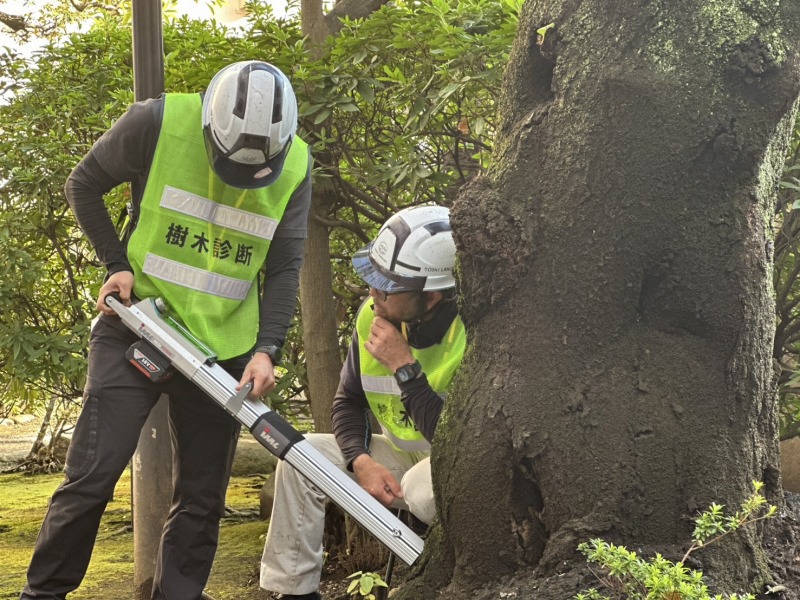
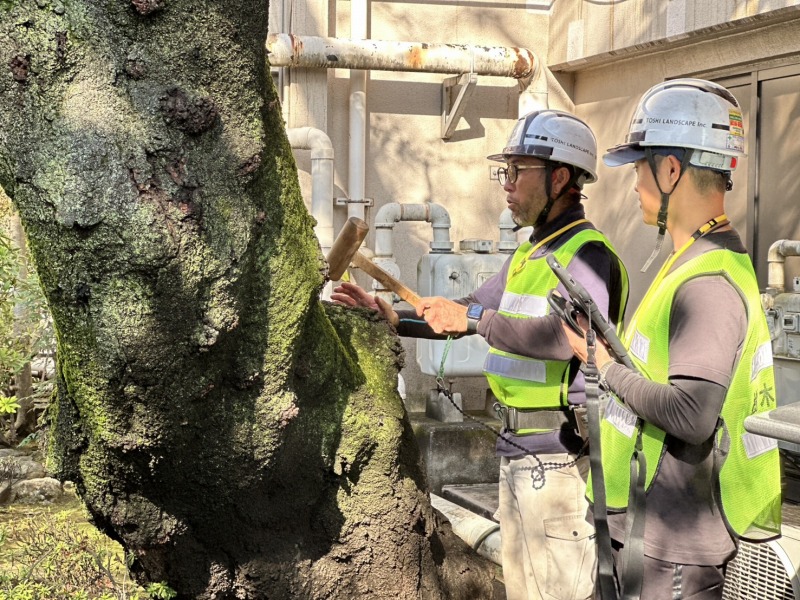
Japan’s commitment to tree longevity extends into professional practice. In 1991, the Japanese government established the jumoku-i certification — a national qualification for tree doctors who specialize in the diagnosis, treatment, and conservation of trees.
A certified jumoku-i uses Visual Tree Assessment (VTA) techniques along with acoustic tomography and other precision instruments to detect internal decay, cavities, and structural weakness in aging trees. Treatment may include surgical excavation of rotted tissue, installation of support cables, improvement of root zone conditions, and long-term monitoring plans. This profession has been instrumental in extending the lives of thousands of ancient trees at shrines, parks, and historic sites across Japan.
Satoyama: The Philosophy of Coexistence
The Japanese concept of satoyama — the semi-wild landscape between villages and deep forest — offers another lens through which to understand Japan’s relationship with long-lived trees. In satoyama management, humans neither fully protect nor fully exploit the forest. Instead, they engage in cyclical, moderate use: harvesting wood and undergrowth on a rotation that maintains forest vitality.
This philosophy of coexistence — neither pure preservation nor pure exploitation — has sustained forest ecosystems across Japan for centuries. By maintaining biodiversity, controlling invasive species, and allowing natural regeneration, satoyama management has indirectly supported the survival of individual ancient trees that might otherwise have been lost to disease or succession dynamics.
Frequently Asked Questions
Q: What is the oldest tree in Japan?
A: The Jomon Sugi cedar on Yakushima Island holds this distinction, with an estimated age of between 2,170 and 7,200 years. Due to the difficulty of core-sampling such a massive tree without causing damage, the exact age remains uncertain — but even the lower estimate makes it one of the oldest living trees on Earth.
Q: Why can ginkgo trees live for over 1,000 years?
A: Scientific research has found that ginkgo trees do not show the expected markers of biological aging. Their immune systems remain robust, they continue producing growth hormones, and they actually increase their production of protective antioxidant compounds as they age. Unlike mammals, ginkgos may not follow a fixed aging program.
Q: How do Shinto sacred forests (chinju no mori) help preserve biodiversity?
A: Japan’s approximately 80,000 Shinto shrine groves have been protected from development for centuries by religious custom. In urbanized areas, these groves often contain the last examples of native forest ecosystems, providing essential habitat for species that have been eliminated from surrounding landscapes. They are increasingly recognized as vital urban biodiversity reserves.
Q: What is a shinboku?
A: A shinboku is a sacred tree designated as the physical dwelling of a kami (divine spirit) at a Shinto shrine. These trees are marked with shimenawa rope and have been protected by local communities for generations, effectively functioning as an ancestral tree preservation system.
Q: What makes Yakusugi cedars live longer than ordinary Japanese cedars?
A: Three factors work together: first, nutrient-poor granite soil forces extremely slow growth, producing dense and durable wood; second, the humid environment triggers high resin production, which naturally resists decay and fungal attack; and third, the undisturbed old-growth forest ecosystem provides a complex mycorrhizal support network. Together, these create conditions where trees that survive their early centuries become almost exponentially harder to kill.
Related reading
- The 1,200-Year-Old Ginkgo of Hida Kokubunji: Japan’s Golden Giant of Takayama
- Japan’s Sacred Giant: The 2,000-Year-Old Camphor Tree of Kinomiya Shrine
- Miharu Takizakura: Japan’s 1,000-Year-Old Weeping Cherry Tree
- Ishiwari Zakura: The 360-Year-Old Cherry Tree Growing Through Stone in Morioka, Japan
- Cherry Tree Japan Was Told Could Never Recover
- Hiroshima’s Survivor Trees Still Lean Toward Ground Zero: What 81 Years of Scar Tissue Tells a Tree Doctor
Conclusion
Japan’s ancient trees are not simply lucky survivors. They are the product of a precise alignment between biology, ecology, and culture — each reinforcing the other across centuries.
Harsh environments that would kill a less adapted tree instead forge extraordinary resilience. Underground fungal networks that took centuries to develop now sustain their oldest members. And a spiritual tradition that sees the divine in living wood has shielded individual trees from the saw and the bulldozer in ways that no modern regulation alone could have achieved.
What Japan’s ancient trees ultimately teach us is that longevity — in forests as in communities — is never the achievement of a single individual in isolation. It grows from deep roots, complex relationships, and a culture that chooses to see the sacred in the living world around it.
The next time you walk past an old tree, consider how many hands, how many generations, and how many invisible partnerships have kept it standing. That tree is not just a tree. It is a living record of everything that chose to protect it.
Field notes from Japan’s trees arrive a few times each month — subscribe via the form in the footer, or follow the work on LinkedIn.