

By Isaki Kasahara, a Japanese arborist pruning, assessing and caring for Japan’s trees and gardens · Updated November 26, 2026
The Nikko Cedar Avenue (日光杉並木, Nikkō sugi namiki) exists because Matsudaira Masatsuna, a retainer who had served Tokugawa Ieyasu in person, spent more than twenty years from about 1625 planting Japanese cedar along the roads to Nikko and then dedicated the trees to Nikko Toshogu, the shrine where Ieyasu is enshrined. The popular story says he was too poor to give a stone lantern like the other lords; the monument his son erected after his death records only that he planted and dedicated, and Tochigi Prefecture explains his motive as gratitude. Why he chose cedar, and how he kept the work going for two decades, the records do not say.
This article follows one gift from the roadside to the present: what the inscription actually says, how large the avenue was and is, why so many trees have gone, and how the prefecture, the shrine and private owners now keep about 12,000 cedars standing beside working roads.
Walking under the cedars — a road that is also a monument
A corridor of trunks
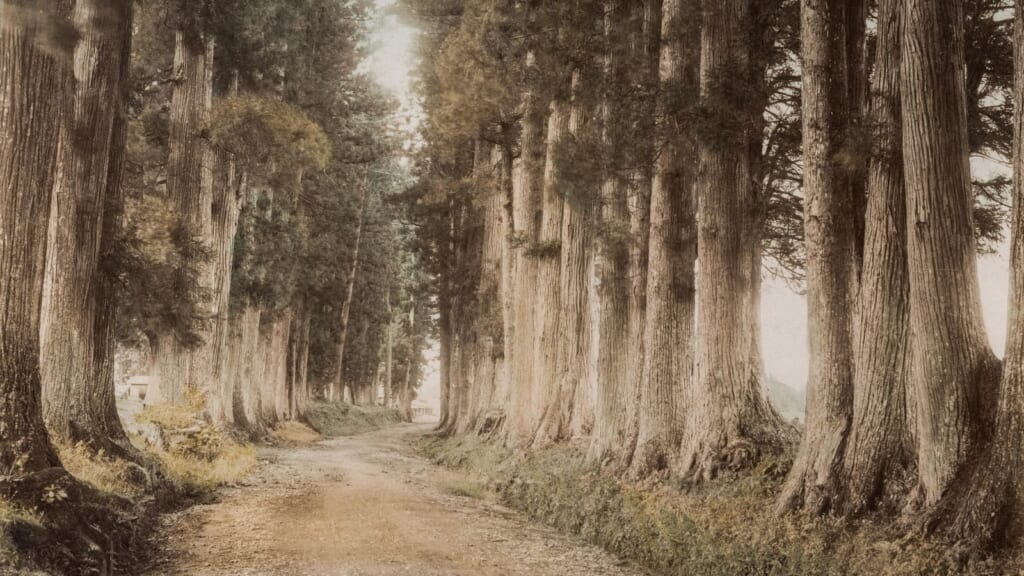
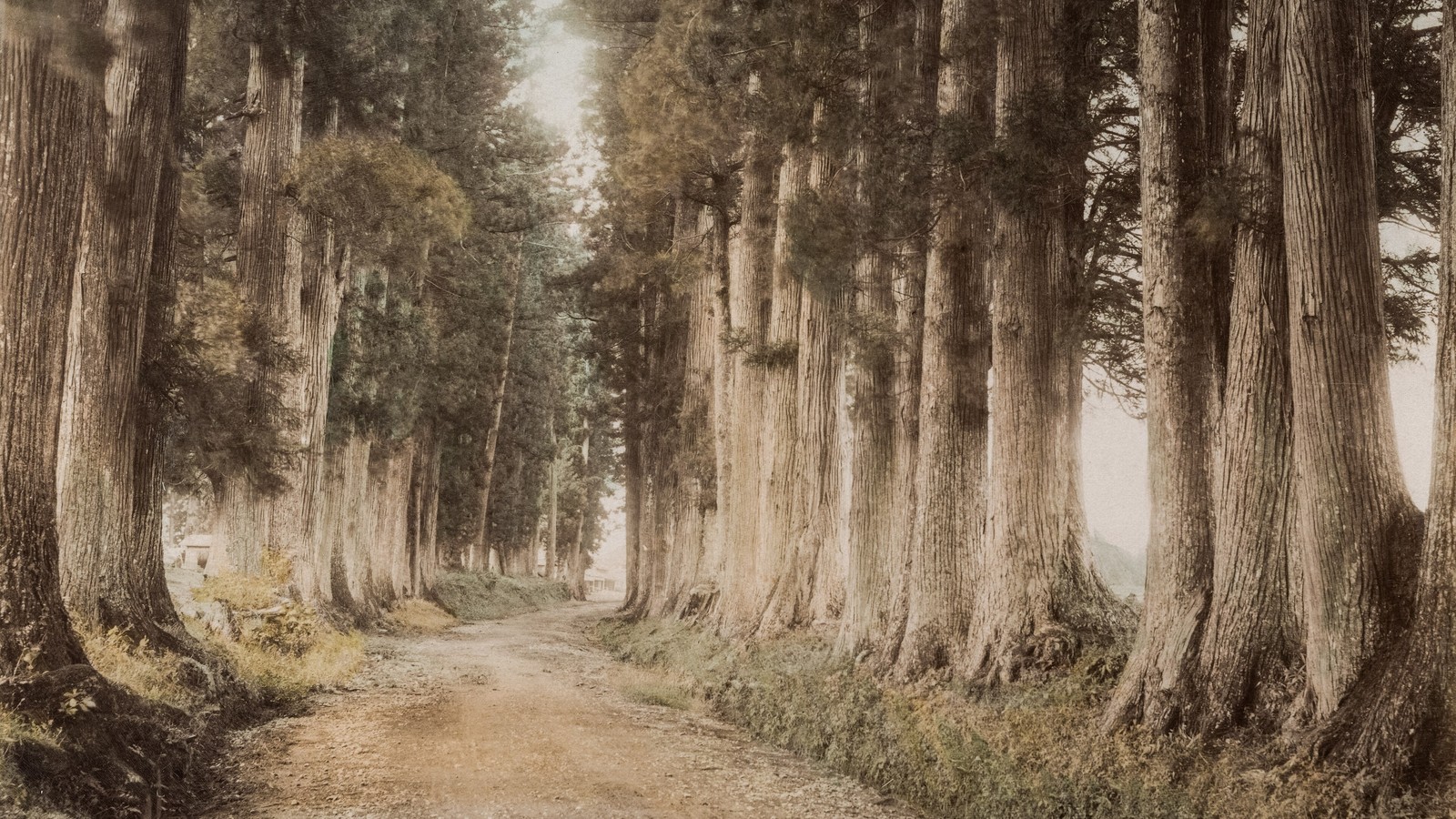
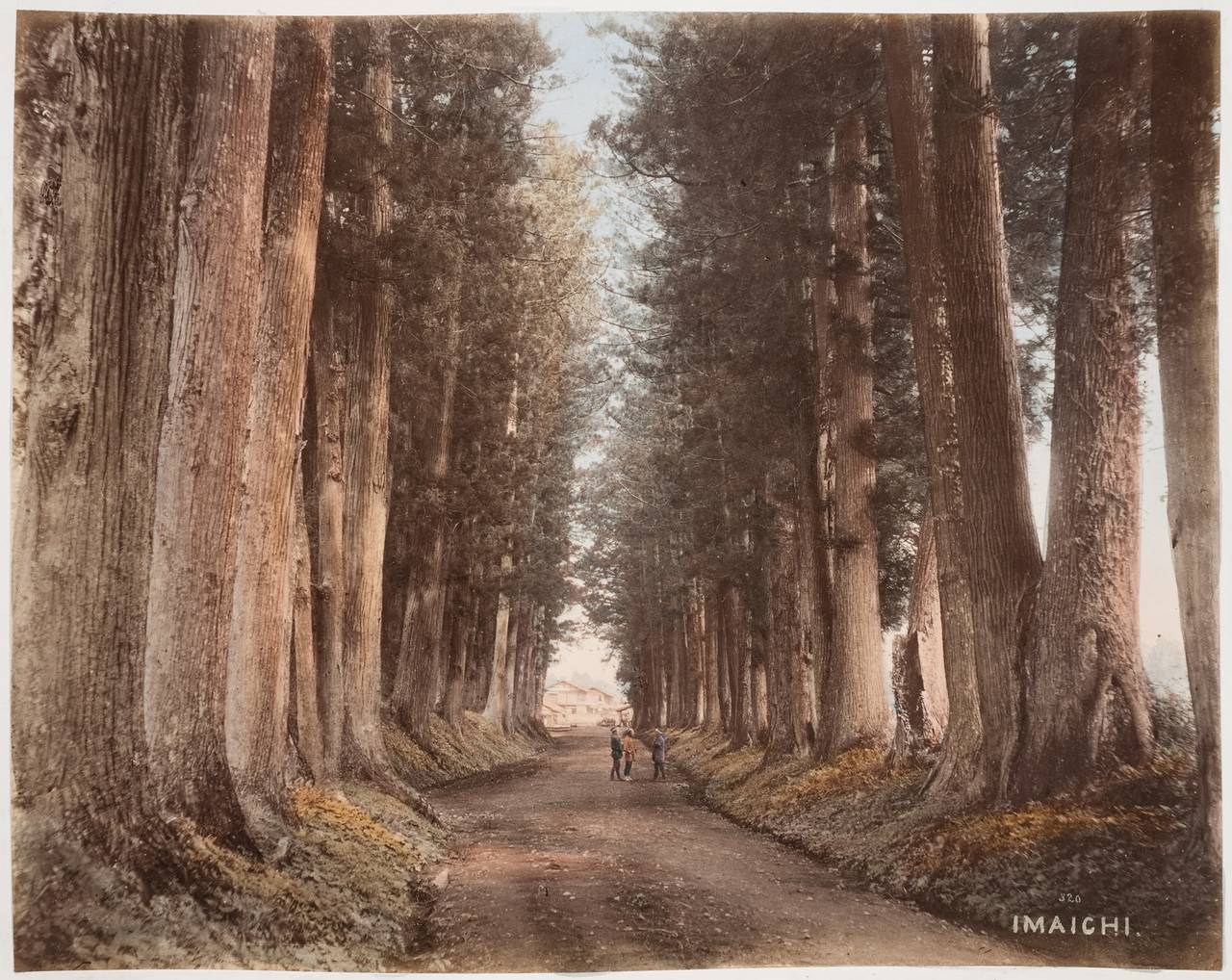
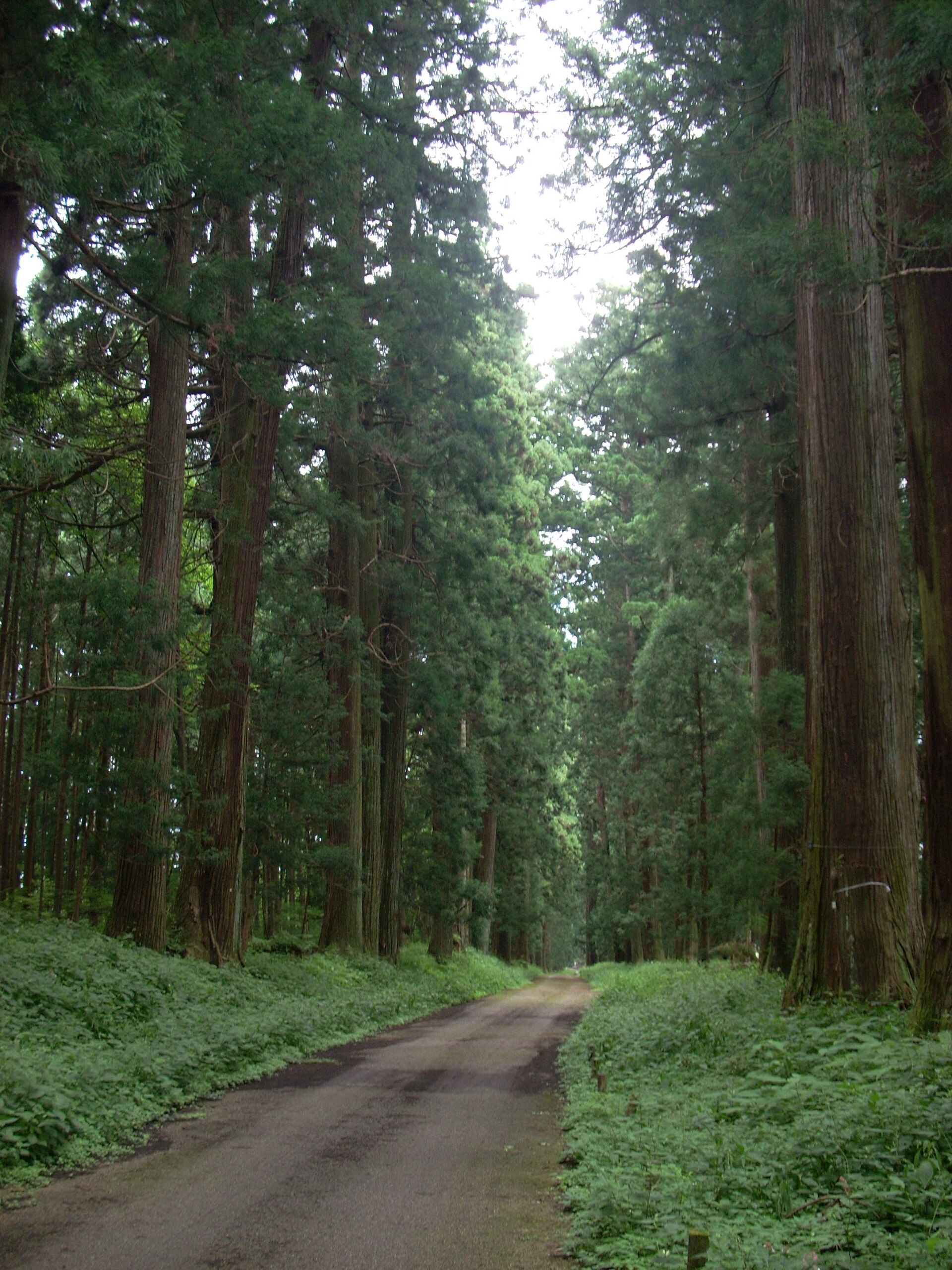
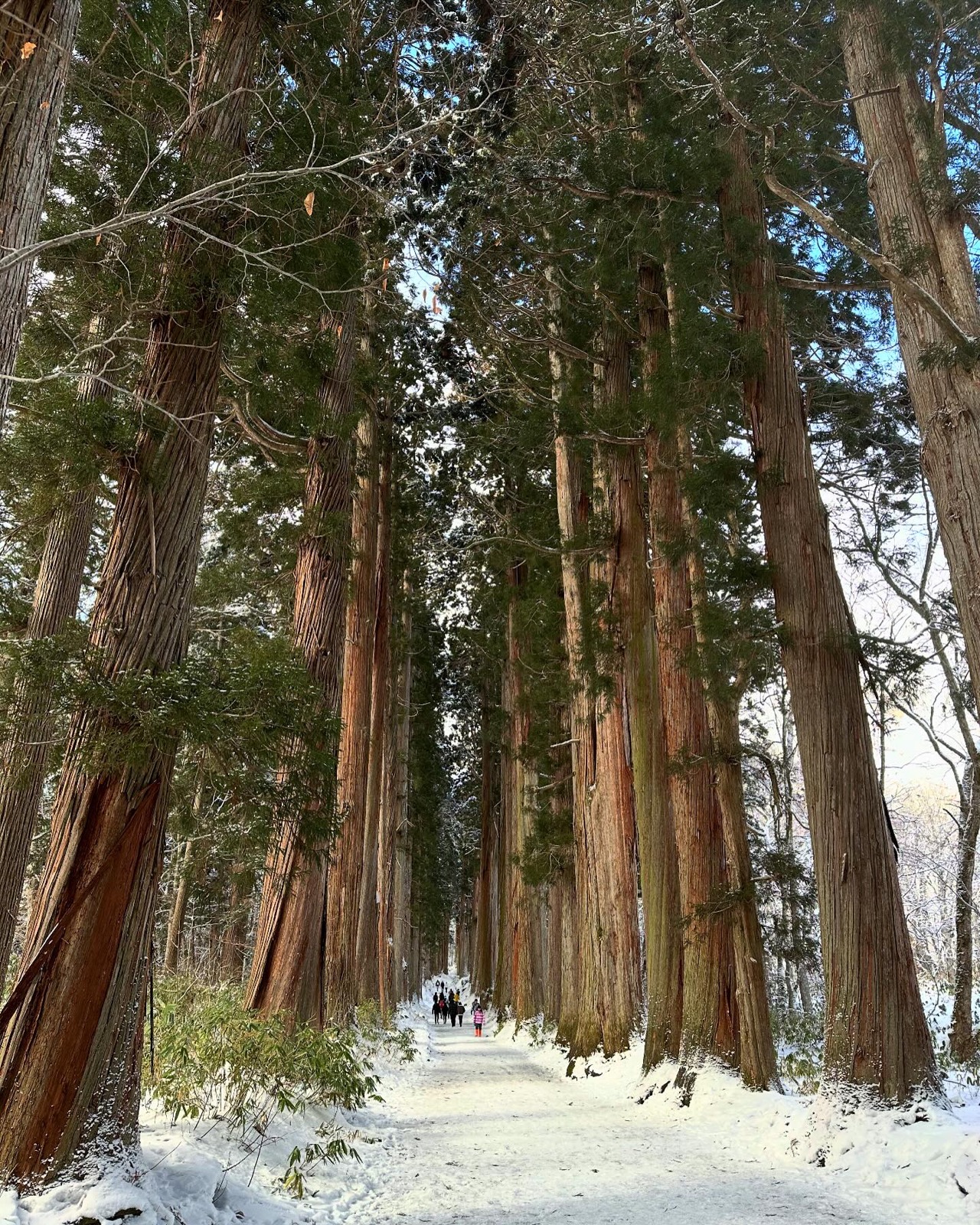
Picture the road into Nikko on an ordinary weekday. Cars and delivery vans run along a strip of asphalt, and on both sides, close enough to touch from a pavement, stand rows of straight reddish-brown trunks that rise far above the traffic before any branches begin. Tochigi Prefecture’s English guide names one of these trees Namiki Taro (並木太郎) and gives its height as 38 metres, about 125 feet.
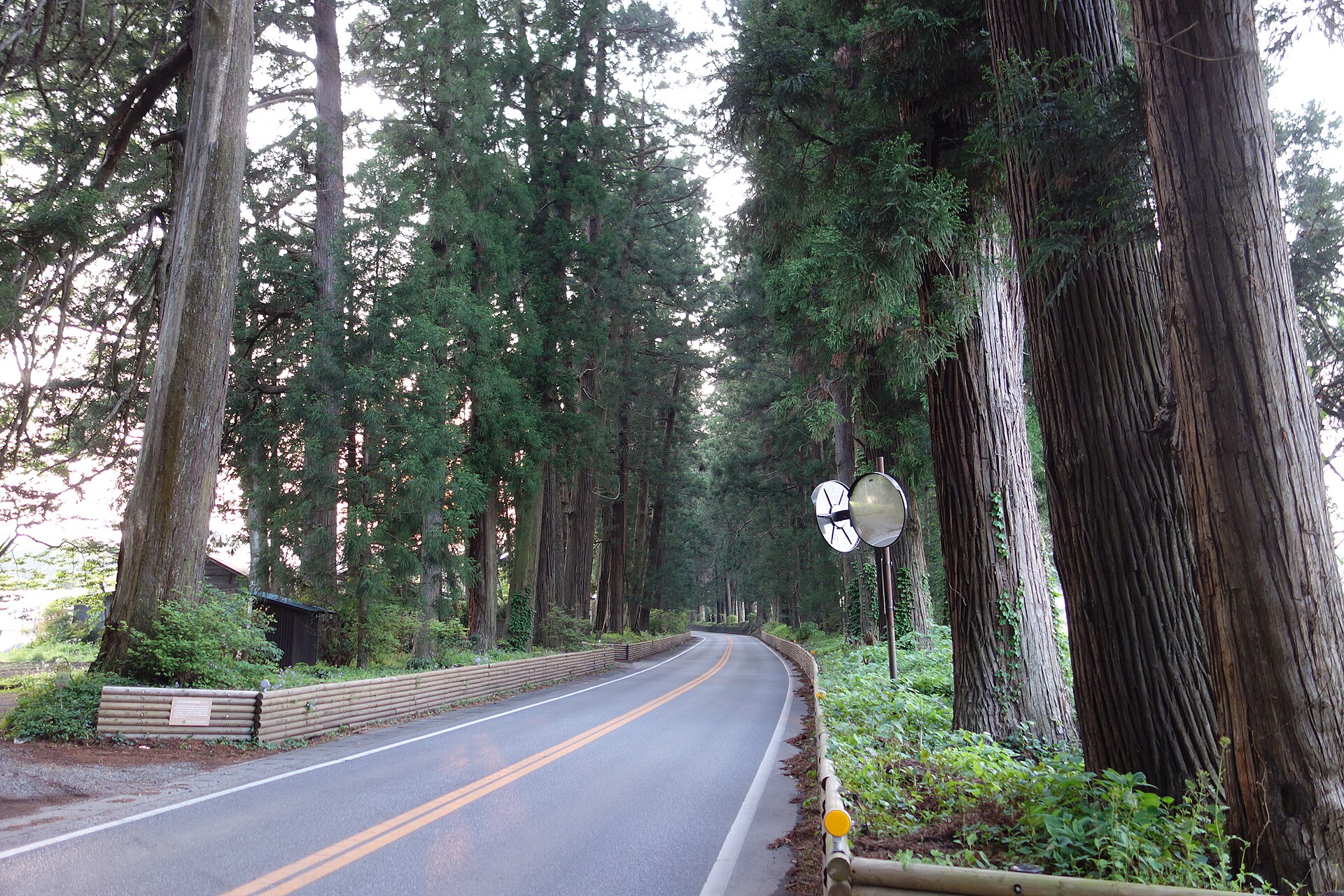
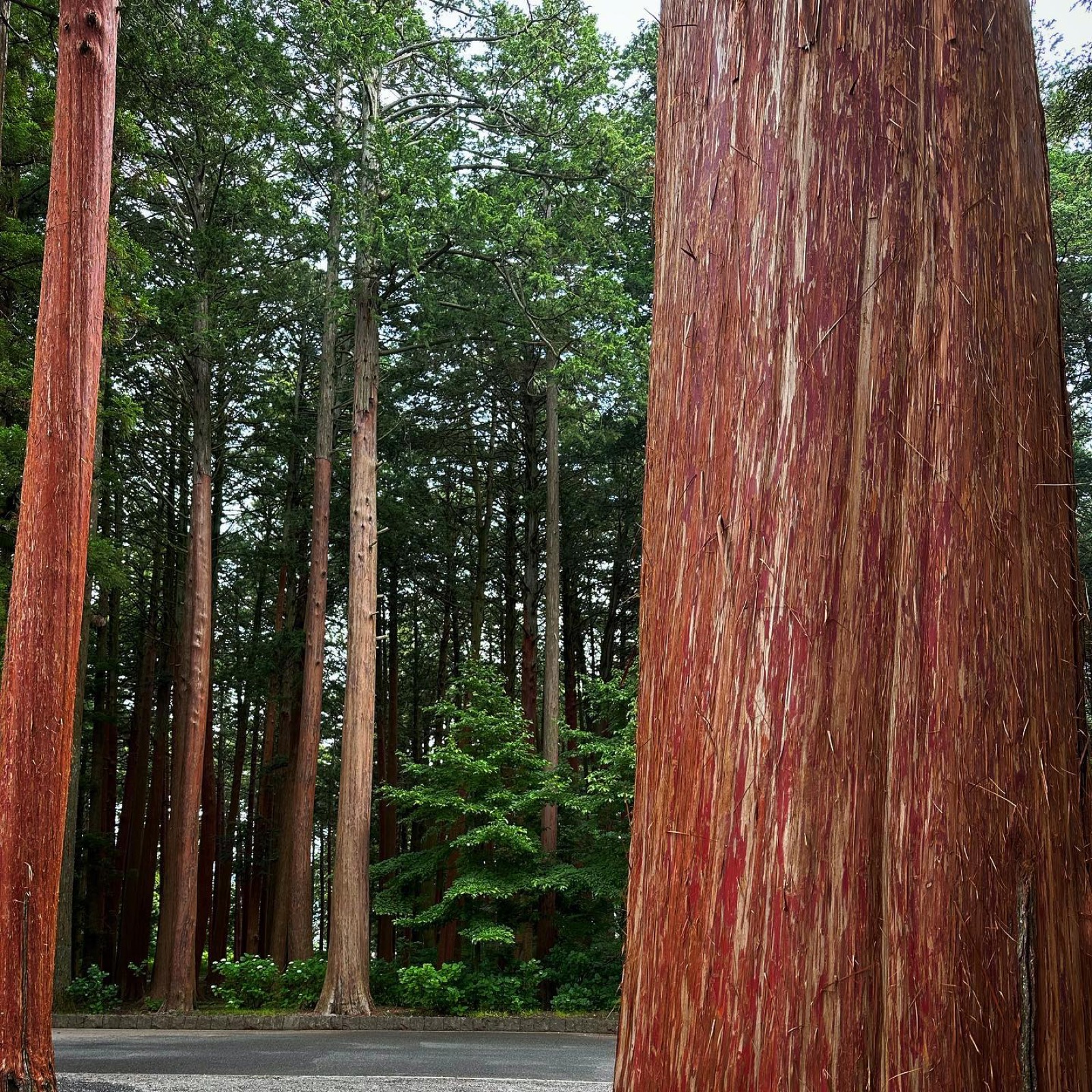
The trees are Japanese cedar, sugi (杉), Cryptomeria japonica. The Forestry and Forest Products Research Institute describes it as a plant found only in Japan. That matters for how the avenue is read abroad: this is not a European avenue planted with an imported ornamental, but a native forest tree lined up along a road.
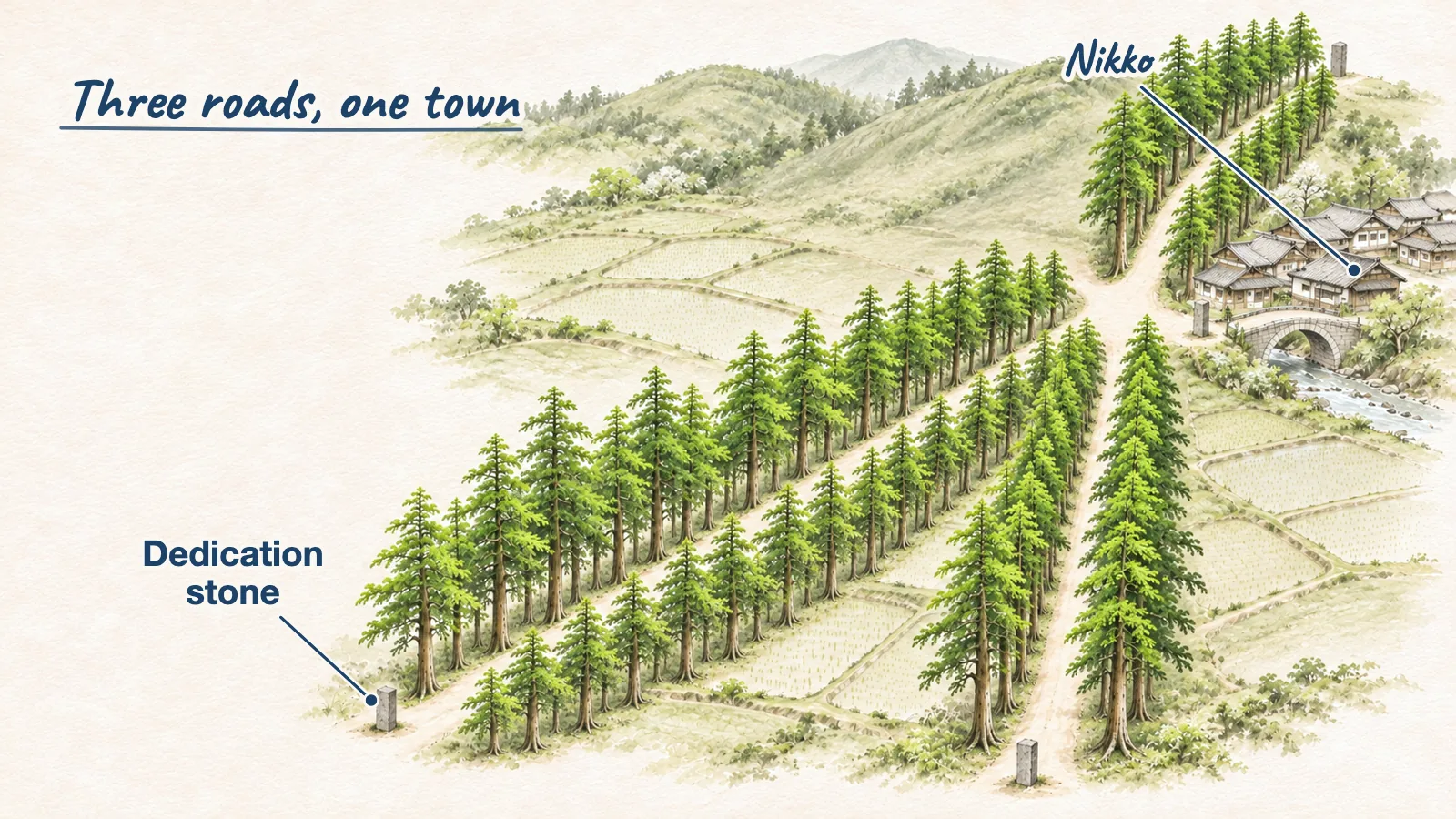
Three roads, 37 kilometres
The avenue is not one road but three. Tochigi Prefecture’s current figures give the total length as 37.0 km (about 23 miles):
| Road | Length (Tochigi Prefecture) | Trees on 31 March 2026 |
|---|---|---|
| Nikko Kaido (日光街道) | 19.2 km | 4,897 |
| Nikko Reiheishi Kaido (例幣使街道) | 13.9 km | 6,134 |
| Aizu Nishi Kaido (会津西街道) | 3.9 km | 994 |
| Total | 37.0 km | 12,025 |
The prefecture’s English pages use the same three road names under the heading “Cedar Avenue of Nikko”. Guinness World Records lists the avenue as the longest avenue of trees, with a total length of 35.41 km. The prefecture’s Nikko civil engineering office explains that the gap between 37 km and 35.41 km comes from measuring different things: the length of the designated zone, against the length over which trees actually stand in a row.
Two national designations
The avenue’s official name is Nikkō sugi namiki kaidō tsuketari namiki kishinhi (日光杉並木街道 附 並木寄進碑), “the Nikko cedar avenue roads, with the avenue dedication monuments”. The “with” in that title is the clue to this article. The monuments are listed together with the trees, because the stones are the record of the gift that put the trees there.
According to the prefecture’s conservation and utilisation plan, the dates are:
– Special Historic Site (特別史跡): 29 March 1952 – Natural Monument (天然記念物): 20 March 1954 – Special Natural Monument (特別天然記念物): 31 October 1956
Some accounts say the avenue became a Special Natural Monument in 1954. The prefecture’s plan shows that 1954 was the year of the ordinary Natural Monument listing, and the upgrade came in 1956.
Before the trees — Ieyasu, Nikko and a loyal retainer
A shogun moved to the mountains
Nikko City’s historical chronology records that Tokugawa Ieyasu, the first Tokugawa shogun, died at Sunpu on the 17th day of the fourth month of 1616. The following year he was moved from Kunōzan to Nikko, and on the fourth day of the fourth month of 1617 the shrine then called Tōshōsha (東照社) received him on Nikko’s mountain. It later became Nikko Toshogu.
Today Nikko Toshogu, Futarasan Shrine and Rinnoji Temple make up the World Heritage site “Shrines and Temples of Nikko”, which Nikko City describes as the two shrines and one temple together with the sites and landscape surrounding their buildings. The cedar avenue is explained separately, under its own national designations, which are older than the World Heritage listing.
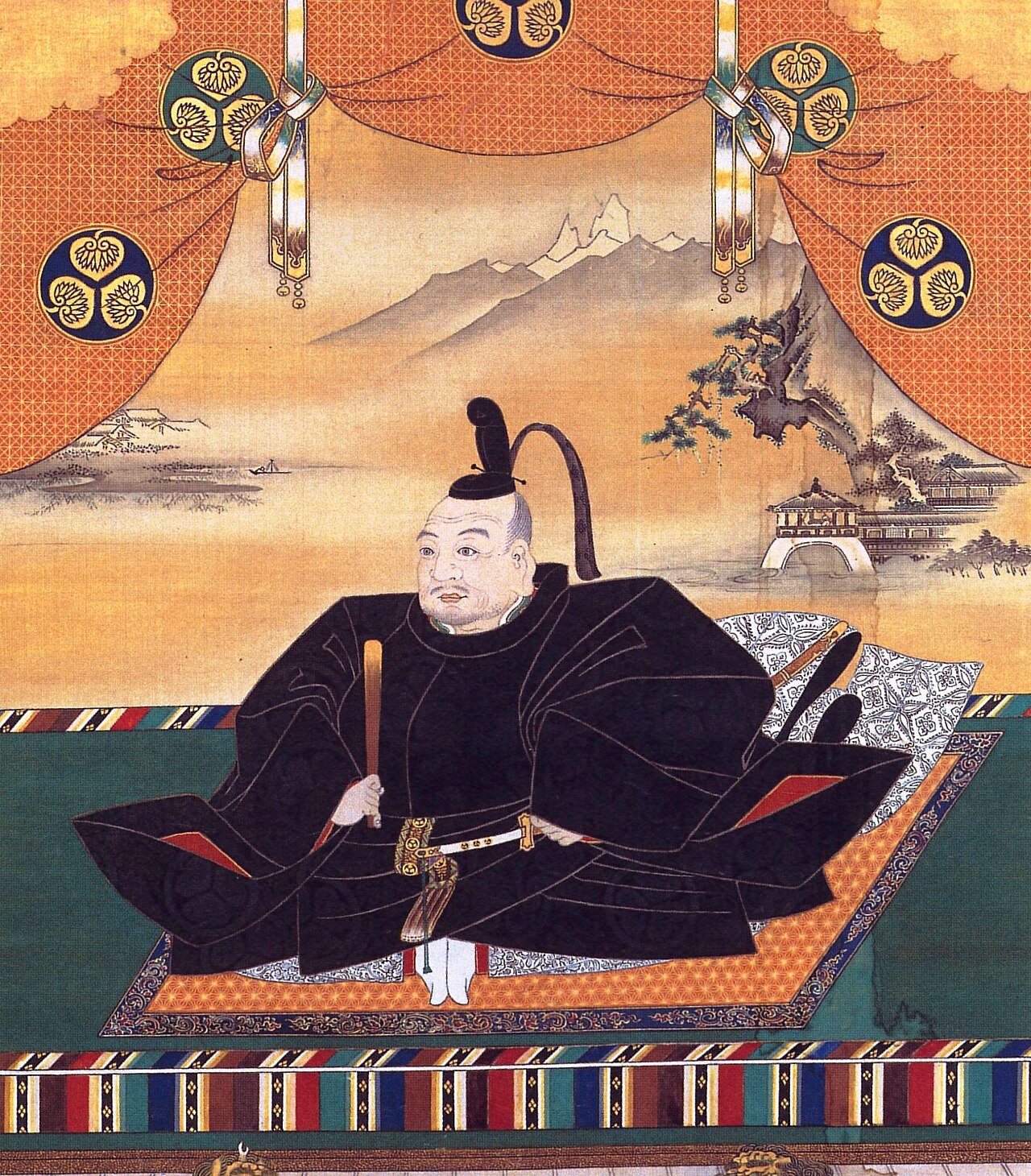
Who Matsudaira Masatsuna was
Matsudaira Masatsuna (松平正綱) lived from 1576 to 1648, according to Nikko City. Tochigi Prefecture’s conservation plan describes him as a close attendant (kinju shuttōnin, 近習出頭人) to Ieyasu at Sunpu, who later held duties corresponding to the office of kanjō bugyō (勘定奉行), the shogunate’s commissioner of finance. The plan adds that he was involved in construction and ceremonies at Nikko over many years.
In other words, he was not a distant lord paying a courtesy. He was a man who had worked at Ieyasu’s side and then handled money and building for the shogunate, including the work at Nikko itself.
Other gifts at the shrine
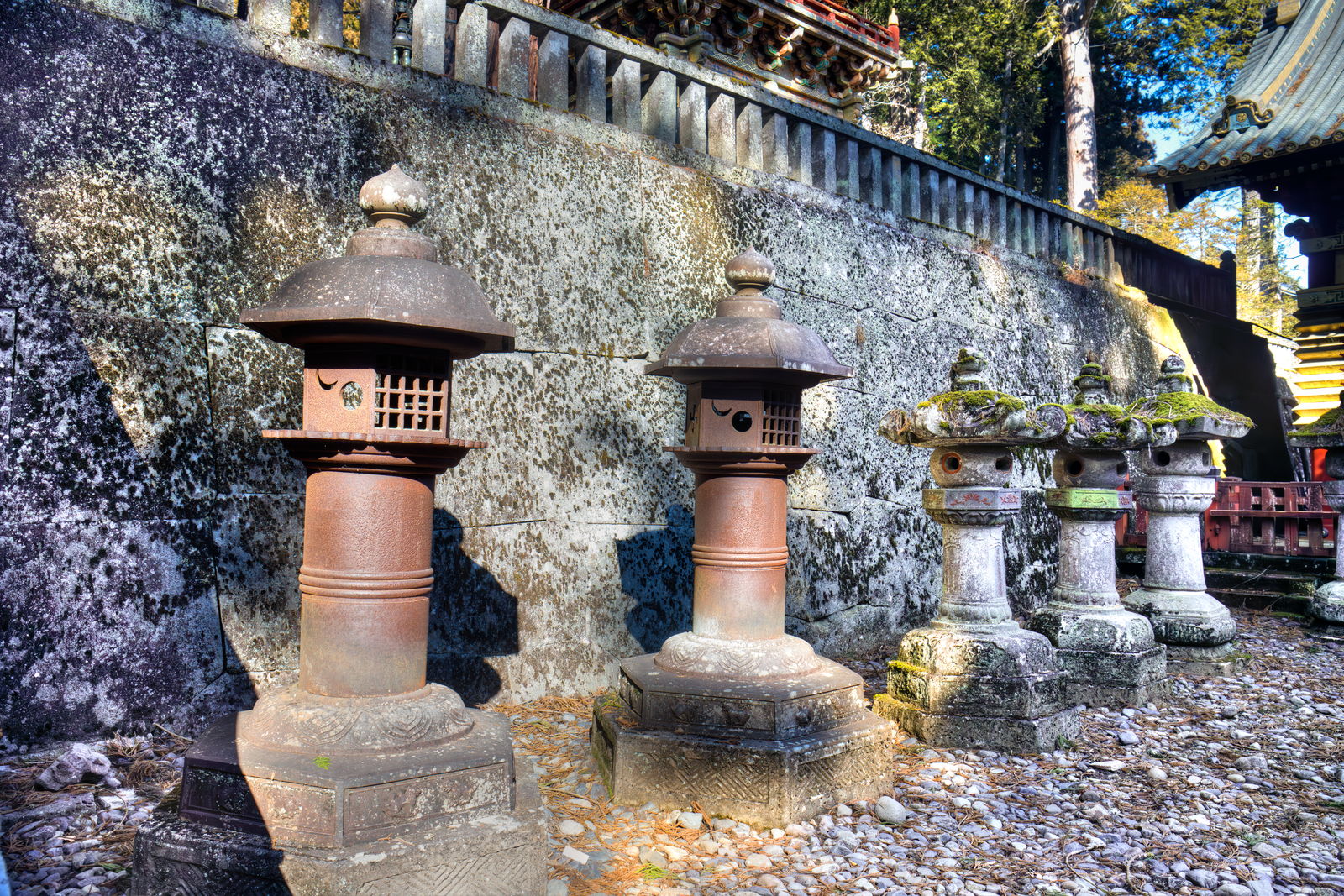
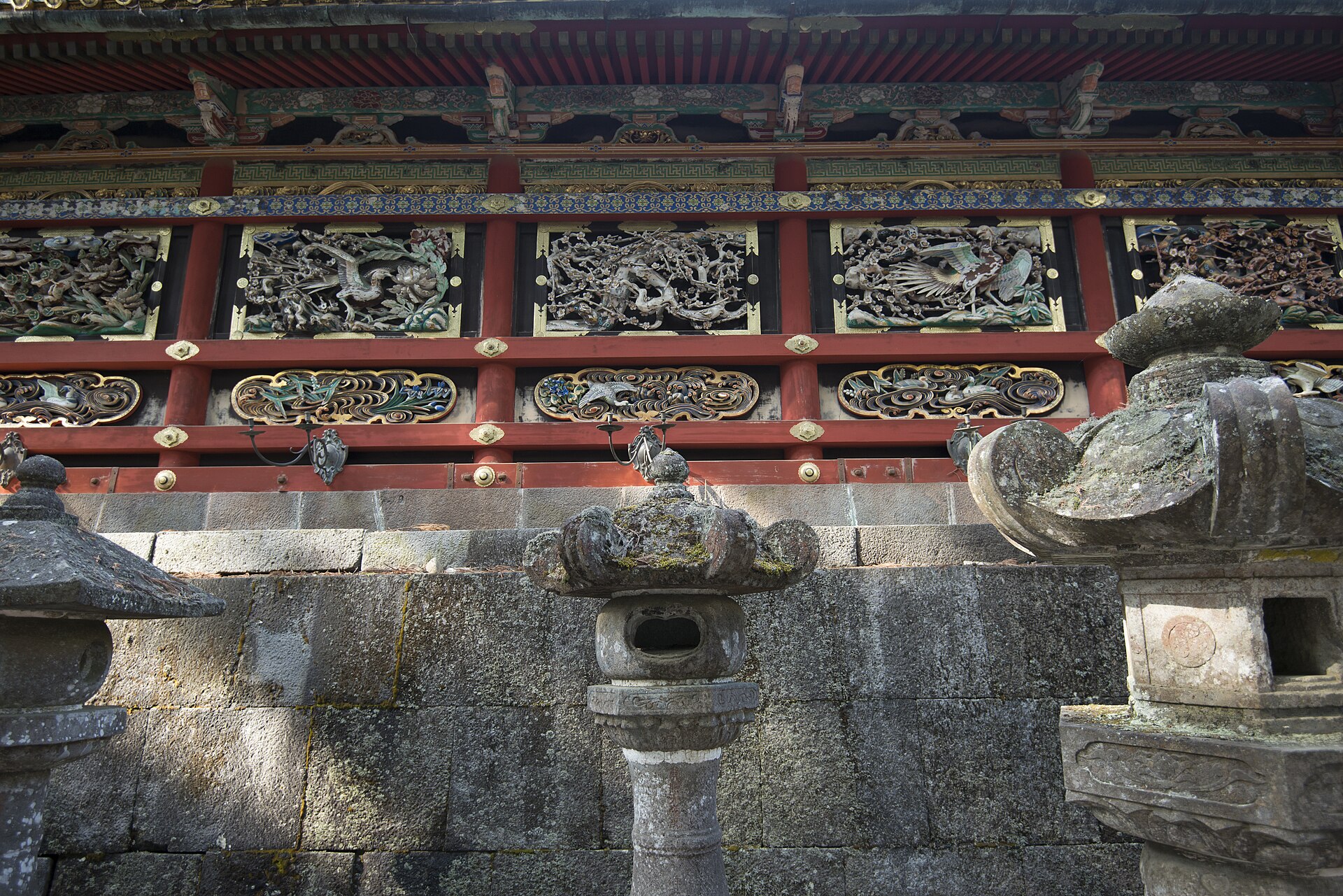
Gifts poured into the new shrine. Nikko City’s chronology records that Date Masamune gave a Nanban-tetsu tōrō (南蛮鉄燈籠), a lantern of imported “southern barbarian” iron, to Tōshōsha in 1617. In 1648 the itowappu (糸割符) merchants presented a large bronze lantern to Toshogu.
So lanterns are part of the real history. What the record does not give is a total count of lanterns from the lords, or any document setting Masatsuna’s cedars against them.
The planting — twenty years of cedar seedlings
When it began
Nikko City’s chronology gives a precise day: on the 25th day of the seventh month of 1625, “the finance commissioner Matsudaira Masatsuna planted cedar trees on the Nikko road”. Tochigi Prefecture is more cautious and says the planting began “around 1625”. Both agree on the start of the work in the mid-1620s.
Nikko City has since held an exhibition marking 400 years since the planting, which gives a sense of how the city now dates the avenue’s beginning.
Where it went
The prefecture’s plan says the planting ran along both sides of the three roads and was completed in 1648, the first year of the Keian era, after which the trees were dedicated to Nikko Toshogu. The three roads — the Nikko Kaido, the Reiheishi Kaido and the Aizu Nishi Kaido — all lead to Nikko, so the trees, in effect, line the ways a traveller arrived at the shrine.
How many were planted
Here the sources do not agree, and it is better to show that than to pick one.
| Source | Figure given for the original planting | Wording |
|---|---|---|
| Tochigi Prefecture, cultural properties database | 24,000 | “said to have been planted” |
| Tochigi Prefecture, current protection page | about 50,000 | “it is said” |
| Nikko City, introduction to the city | more than 200,000 | planted |
| Guinness World Records | 200,000 | “original” |
None of these is a counted record from the 1600s. The two prefecture figures are hedged — “said to”, “it is said”; the Nikko City and Guinness figures are stated plainly, but neither cites a count. The difference between 24,000 and 200,000 is not a measure of how many trees have died; it is a measure of how uncertain the starting number is. The only figures in this article that come from a count are the modern ones.
What I take from the timing
Masatsuna died in 1648, the same year the prefecture gives for completion. My reading — not something the sources state — is that the planting was a life’s work in a literal sense: it ran from his late forties until the year of his death.
The stone that speaks — what the dedication monument says
Four stones at the starting points
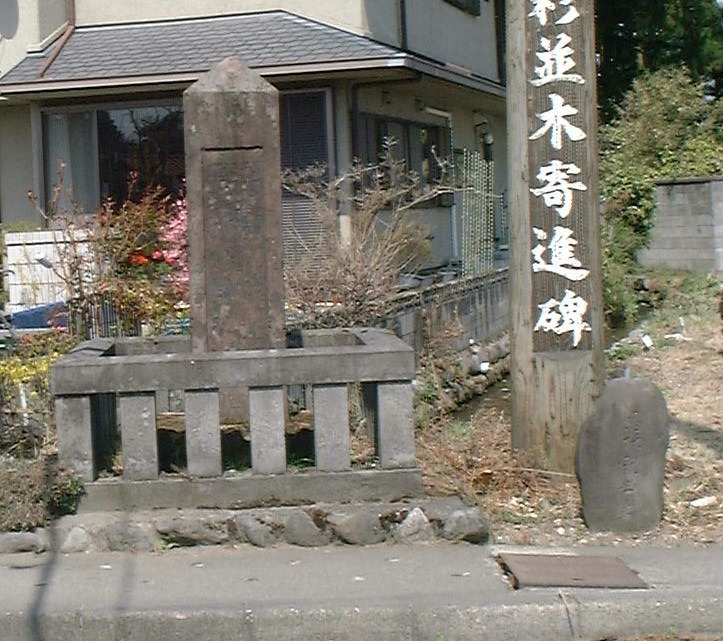
Tochigi Prefecture’s conservation plan says there are four dedication monuments. They stand in the Sannai area by the Shinkyo bridge, and at Ōsawa, Ogura and Ōkuwa — the points where the avenue begins on each approach. They were not put up by Masatsuna. After his death, his son Matsudaira Masanobu (正信) “carried on his father’s wish and erected monuments at four starting points of the avenue”.
The inscription
The prefecture quotes the inscription on the stone by the Shinkyo bridge, written in classical Chinese:
> 歴二十余年、植杉於路辺左右并山中十余里、以奉寄進東照宮、慶安元年戊子四月十七日
In plain English: “Over more than twenty years, [I] planted cedars on both sides of the roads and in the mountains for more than ten ri, and dedicate them to Toshogu. The 17th day of the fourth month, Keian 1 (1648).”
Three things stand out. First, it says “more than twenty years”, which fits the 1625–1648 span. Second, it says the planting was not only along roadsides but also in the mountains. Third, the date. The 17th day of the fourth month is the same day of the month on which, by Nikko City’s chronology, Ieyasu died in 1616. The inscription does not explain the choice of date, so I note the match without claiming a reason for it.
The son kept planting
The prefecture’s plan goes one step further. Drawing on the family’s genealogy, it says Masanobu also “continued his father’s practice of planting cedar, and for three or four years planted new trees in various places”. So the avenue did not stop growing on the day of the dedication. It is safer to say that the son extended the planting after 1648 than to say he finished his father’s.
The lantern story — legend and record
How the story is told
The version of the story told to visitors goes like this. When Toshogu was built, other lords dedicated lanterns. Masatsuna could not afford one, so he planted cedars instead.
A story about someone’s motive needs a source.
What the sources actually say
| What is said | Who says it | Status |
|---|---|---|
| Planted cedars for over twenty years and dedicated them to Toshogu | Inscription on the dedication monument, 1648 | Primary record |
| Did so “as a gesture of gratitude for the favors received during Ieyasu’s lifetime” | Tochigi Prefecture, English guide to the monument | Official explanation |
| Gave cedar seedlings rather than costly gifts like those of other lords | Niiza City Museum of History and Folklore | Local museum explanation |
| Could not afford a stone lantern, so planted trees instead | Popular retelling | No source found |
The research behind this article found no inscription, contemporary record or official document stating that Masatsuna lacked the money for a lantern. The Niiza City Museum of History and Folklore comes closest: it says he chose not to make a costly gift like the other lords. That is a choice, not poverty.
Why the story survives
The lantern story is better read as a moral than as a fact: the humble gift that lasts. It survives because it explains something real — that the gift still remembered along the roads to Nikko is a row of living trees — in a form people remember. This article keeps it as a legend and builds everything else on the stone and the prefecture’s records.
From 16,479 to 12,025 — why the cedars are disappearing
The modern count
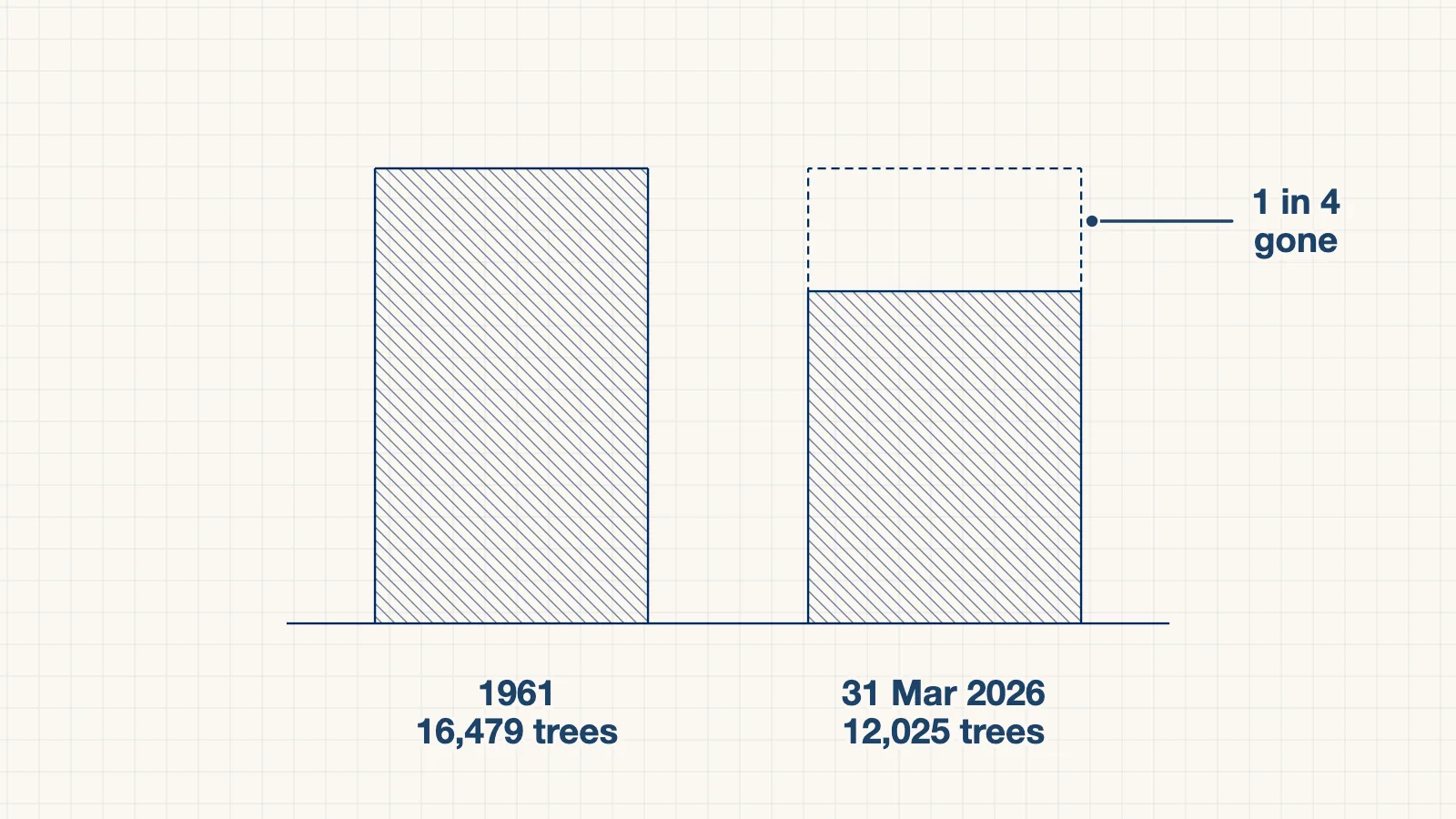
Tochigi Prefecture keeps a register of the trees. Its comparison gives 16,479 trees in 1961 and 12,025 on 31 March 2026, a loss of 4,454 trees in 65 years. Guinness World Records still cites “over 13,500” surviving trees, an older figure that should not be used as the current one.
That is the figure to hold on to: about one tree in four counted in 1961 has gone.
What harms a roadside cedar
The prefecture’s conservation plan lists the problems in plain terms:
– vibration and exhaust gas from vehicles – cutting of the root system by nearby development and road widening – old age – shade from neighbouring trees
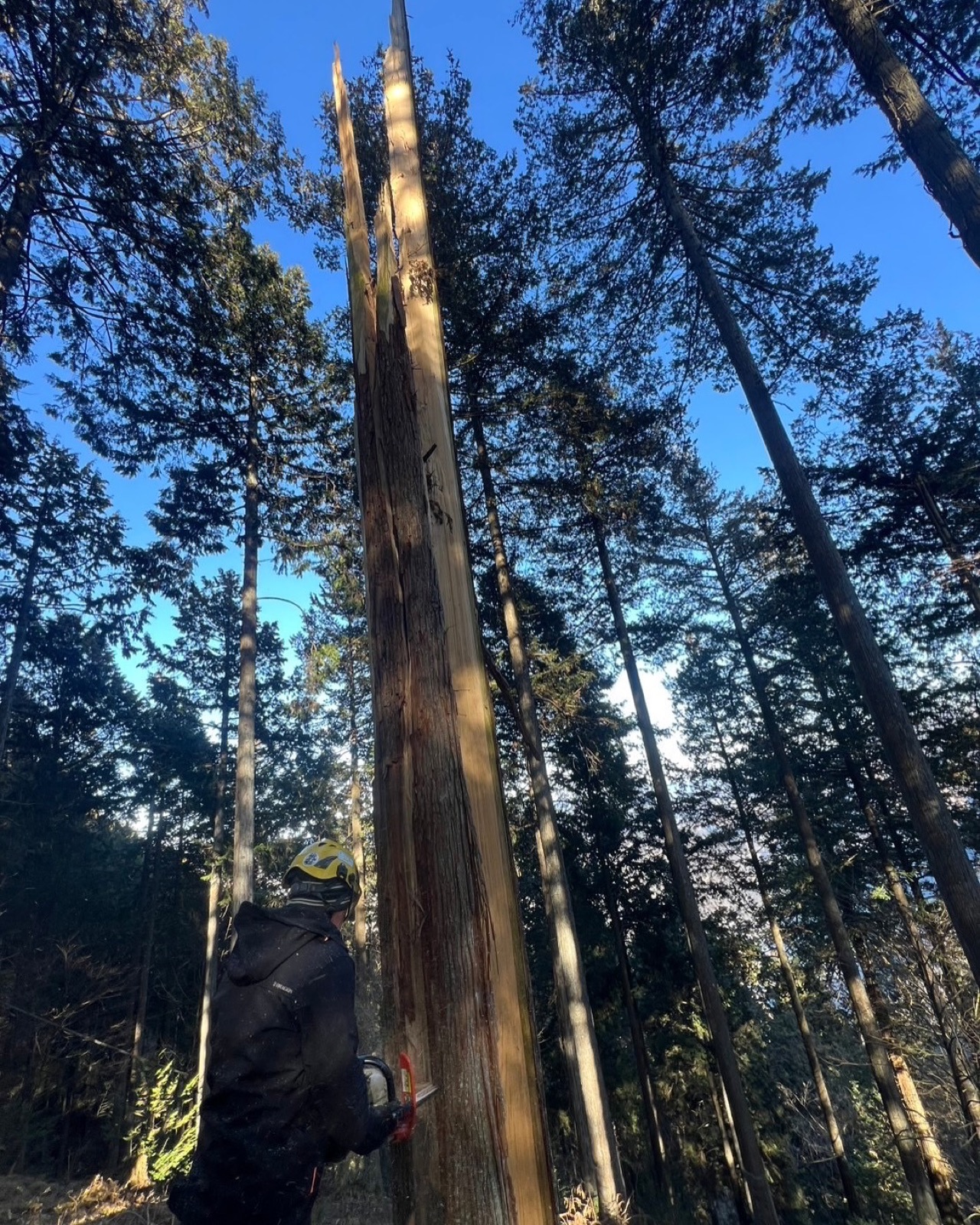
The plan also notes the other side of the problem: falling trees and branches are a hazard to passing vehicles and to the houses along the road. An avenue on a working road has to be safe as well as preserved.
Roots under a road
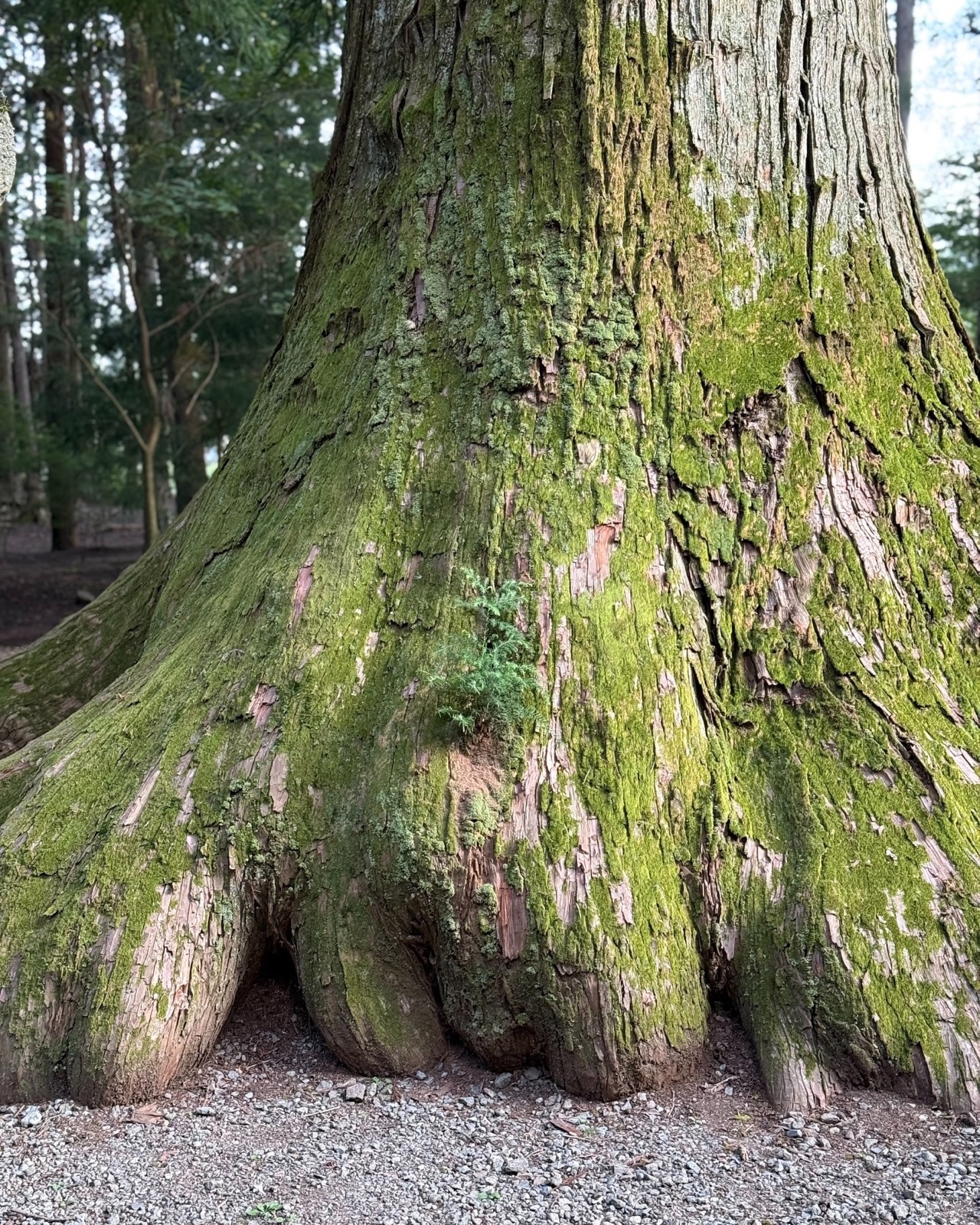
It is tempting to say that cedar is “shallow-rooted”, and that this is why traffic hurts it. The evidence does not support saying that so simply. A 2026 national survey by the Forestry and Forest Products Research Institute found that, among the main tree species it compared, sugi roots were “relatively deep”.
The issue at Nikko is not root depth but what happens in the ground around the trees. The prefecture’s list names roots cut by development and road widening. Its land-acquisition page speaks of protecting “the hinterland into which the roots extend”, and its restoration work, described below, treats soil compacted by traffic as a problem to solve.
13 October 2019
On 13 October 2019, Tochigi Prefecture’s disaster office reported that a cedar had fallen at each of two places on the avenue — near the pedestrian bridge at Ogura-machi in Nikko and at Shichihonzakura — and that the road was closed. Each fallen tree is a gap in a 400-year-old row that cannot be refilled with a tree of the same age.
Buying a 400-year-old tree — the owner system
How it works
In fiscal 1996 Tochigi Prefecture began the Nikkō sugi namiki ōnā seido (日光杉並木オーナー制度), the Nikko Cedar Avenue owner system. A company or individual buys one avenue cedar for ¥10 million. The prefecture places the purchase money in a protection fund, and the investment income from that fund pays for restoring the trees’ vigour.
The tree does not move, of course. The owner’s name goes with it, and the money works for the whole avenue.
The numbers
| Item | Figure | Date |
|---|---|---|
| Start of the system | Fiscal 1996 | Tochigi Prefecture |
| Price per tree | ¥10 million | Tochigi Prefecture |
| Trees under owner contracts | 558 | 31 March 2026 |
| Owners | 346 owners holding 561 trees | End of fiscal 2024 |
The owner count and the tree count are different things — 346 owners held 561 trees at the end of fiscal 2024 — so some owners hold more than one tree.
What happens when an owner leaves
The prefecture explains that if a contract ends, the owner returns the cedar and receives the purchase price back. The prefecture describes the arrangement as a sale, with the price repaid when the tree is returned. No published “expiry date” for contracts was found. What the system creates is a large, stable fund whose yield, rather than its principal, is spent on the trees.
Who owns the trees
The prefecture’s conservation plan names Nikko Toshogu as the owner of the avenue cedars and Tochigi Prefecture as the managing body for the cultural property. Since the owner system involves a sale contract for each tree, it is not accurate to say every tree is always owned by the shrine alone. The legal picture is layered: a shrine as owner, a prefecture as manager, the state as designator, and owners in the middle — 346 of them at the end of fiscal 2024.
Covering the roots — how the trees are helped
What the restoration work includes
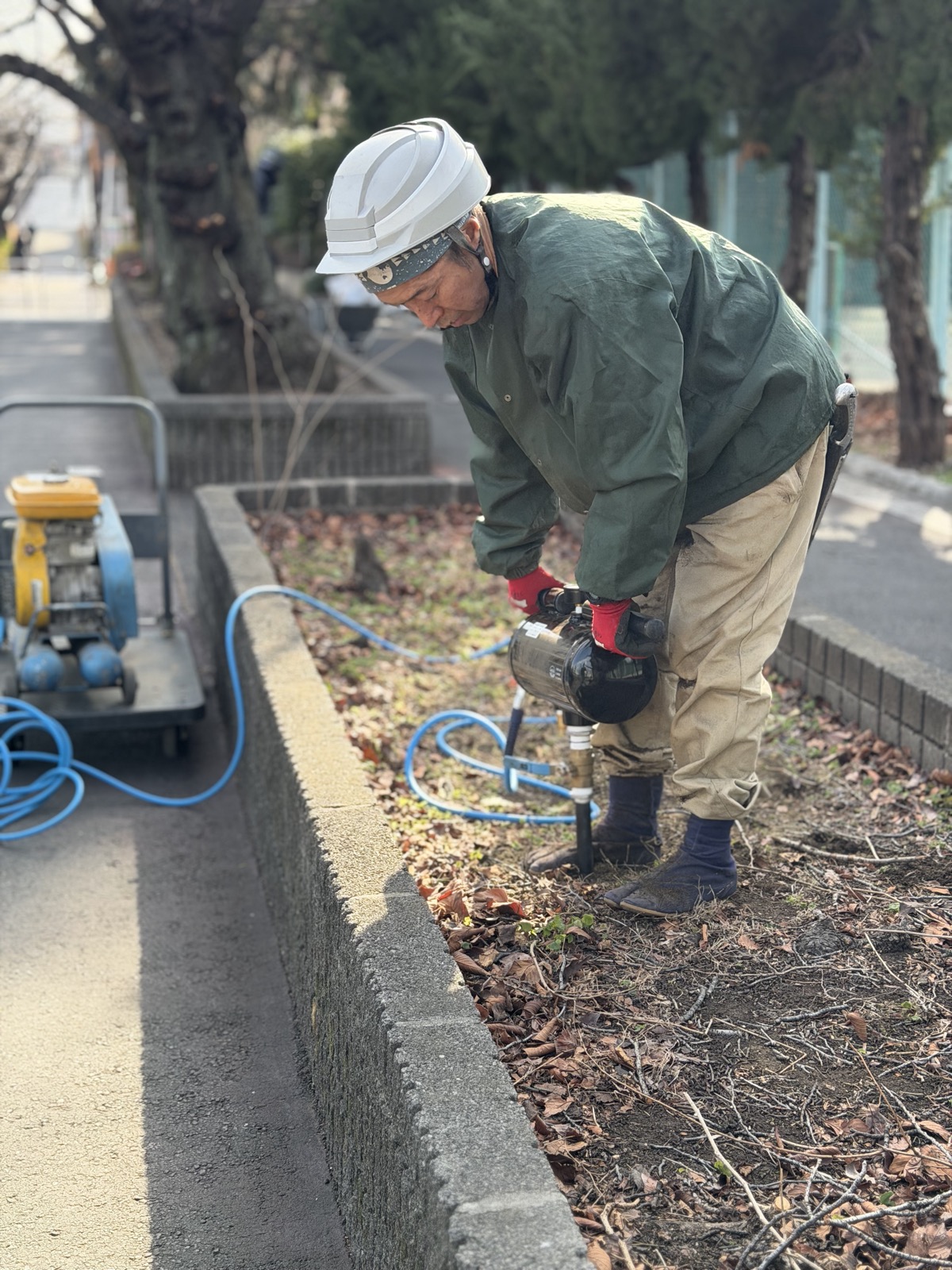
Tochigi Prefecture’s tree restoration project, described on its Japanese and English pages, works at ground level. The measures it describes include:
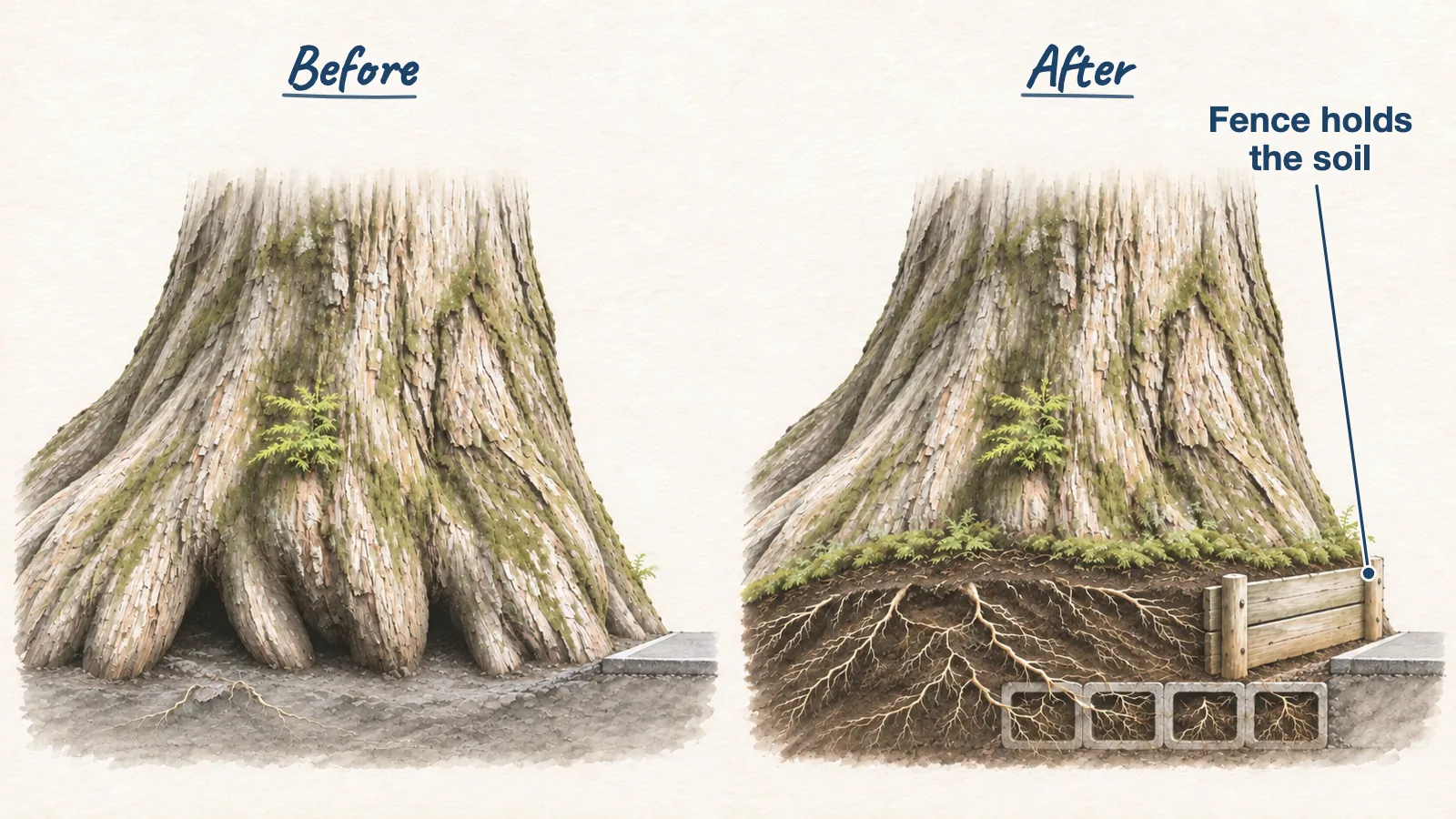
- Hold the soil. Wooden fences are set along the base of the row to keep soil in place against the trunks.
- Cover exposed roots. In the prefecture’s English words, the work involves “covering exposed cedar roots with soil” where traffic and erosion have bared them.
- Keep the soil loose under traffic. Where vehicles must still pass, hollow blocks called Pokara (ポカラ) are laid. The prefecture explains that the soil inside the blocks is less likely to be compacted.
- Let new roots form. The English guide describes new fine roots developing in the restored soil.
Why soil, not surgery
All of these measures work in the soil rather than on the crown. This is the logic of the whole project: an old cedar lives or dies by its fine roots, and fine roots live in soil that has air and water in it. Covering a bared root restores the layer it lives in. A block that carries the weight of a car while leaving its own interior soil loose keeps that layer open beneath the traffic.
A wider buffer
The prefecture has also gone beyond the row itself. To protect roots, it added a zone of about 20 metres (about 65 feet) outside each side of the roads to the designated area, which restricts development there, and it is buying up that protected land into public ownership. That is a judgement about where the tree ends: not at the trunk, not at the crown, but at the edge of the roots.
Taking the traffic away
The other lever is traffic. The prefecture is building bypasses around the avenue to reduce the number of through vehicles. A bypass does nothing for a single tree this year, but it changes the conditions for all of them over decades: fewer axles, less vibration, less exhaust.
The next 400 years — successor trees and a plan
A formal plan
On 26 August 2019 Tochigi Prefecture adopted the Nikkō sugi namiki kaidō hozon katsuyō keikaku (日光杉並木街道保存活用計画), the conservation and utilisation plan for the avenue, and on 17 April 2020 it was approved by the Commissioner for Cultural Affairs. Much of what this article has described — the list of harms, the land buffer, the restoration — sits inside that plan.
Successor trees
In 2026 the prefecture announced a project to prepare for planned replanting of successor trees: field surveys, drawing up a plan and preparing the sites. In a press conference, the governor raised the open question of where to plant seedlings of a lineage close to the present avenue cedars.
That is as far as the published record goes. It would be wrong to say that the successor trees have been planted, or that seedlings carrying the genes of Masatsuna’s trees are already in the ground. What is certain is that the prefecture now treats replacement as a planned task rather than an emergency.
Why lineage matters
Why not plant any cedar? Because the avenue is protected both as a historic site and as a natural monument. My reading is that a seedling from the existing trees carries the place forward in a way a nursery tree from elsewhere would not. The prefecture’s question about seedlings “of a lineage close to the present cedars” suggests the same concern, although it has not published a decision.
Avenues elsewhere — how Britain, Germany and the US frame it
Different laws for a similar problem
Old avenues elsewhere face a similar tension: the trees age, roads change, and replacing one tree breaks a line. The tools differ.
| Place | Tool | What it protects | Source |
|---|---|---|---|
| Japan, Nikko | Special Historic Site and Special Natural Monument | The avenue roads with their dedication monuments | Tochigi Prefecture |
| England | Tree Preservation Order (TPO) | “Specific trees, groups of trees or woodlands”; no cutting or damage without the local planning authority’s consent | UK government guidance |
| England, historic landscapes | Historic England advice | Keep veteran trees where possible; “arrangements for succession planting should be established” | Historic England |
| Germany, Brandenburg | State protection of road avenues (Alleen) | Care of existing avenues and planting of new trees | Brandenburg environment ministry |
| United States, Vancouver (Washington) | City Heritage Tree program | Criteria include “relation to a historical event”; heritage trees are “protected from unnecessary removal and aggressive maintenance actions” | City of Vancouver |
A TPO is not the same kind of law as Nikko’s double designation, and neither is a city heritage tree code. The comparison is about how each place frames the problem, not about which is stronger.
Veteran trees as habitat
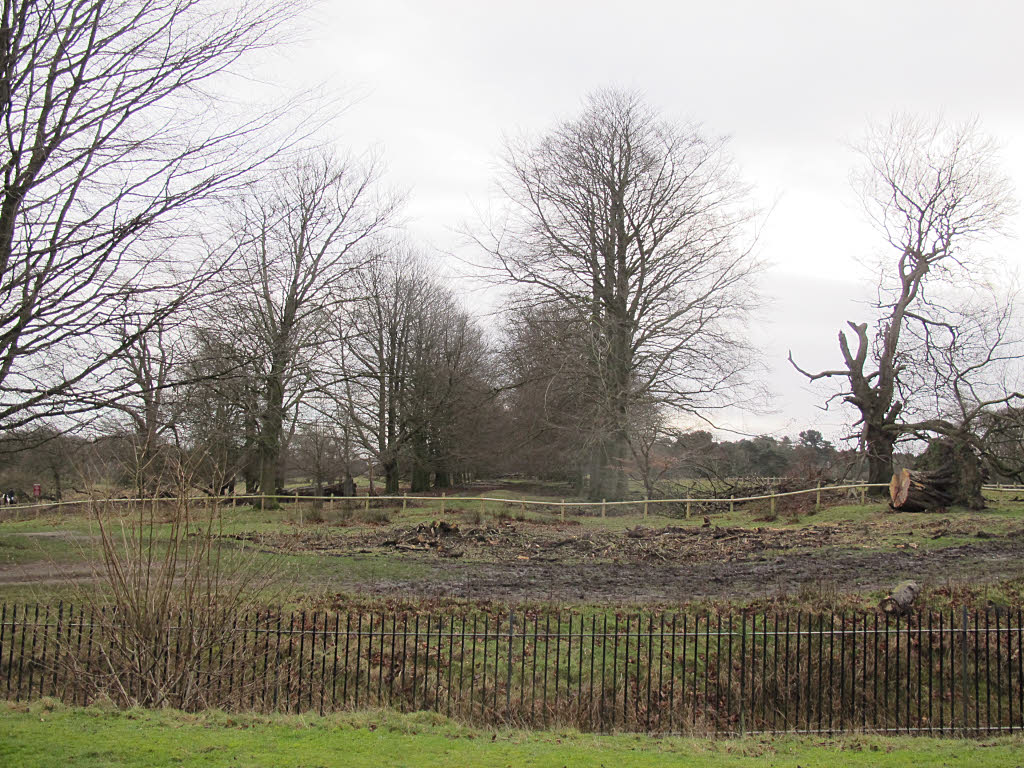
The National Trust’s guide to the Beech Avenue at Tatton Park, planted in 1739, says the surviving trees have reached old age and show decline and death, and also that “the veteran trees of Beech Avenue are a valuable habitat”. The guide puts weight on the old tree as a living thing in its own right, even as it fails.
Where Nikko differs
Two differences stand out to me. First, Nikko protects a gift: the stones that record the dedication are listed together with the trees, so the record of the gift is part of the monument. Second, Nikko funds the work in a distinctive way, through owners whose money sits in a fund and whose trees stay in place. Brandenburg and Historic England both name succession planting as part of avenue care; Nikko announced a planned project for successor trees in 2026.
What the cedar avenue is not — common misconceptions
“It was planted because he couldn’t afford a lantern”
As set out above, no source was found for this. The stone records a dedication; the prefecture speaks of gratitude; a local museum speaks of choosing not to make a costly gift.
“Two hundred thousand trees were planted, so most have died”
The original number is not known. The figures range from 24,000 to more than 200,000, and none cites a count. The only reliable trend is the modern count: 16,479 in 1961, 12,025 in 2026.
“It is part of the World Heritage site”
Nikko City describes the World Heritage site as the shrines and temples of Nikko and their surroundings. The avenue is explained separately, under its own national designations, as a Special Historic Site and Special Natural Monument.
“Cedar roots are shallow, so the trees are doomed”
A 2026 national survey found sugi roots relatively deep among the main species compared. What hurts the avenue is what happens to the roots that run under and beside the roads: compaction, cutting and exhaust, which is why the response is soil work, a land buffer and bypasses.
Seeing the avenue today — what to look for
At the start points
Look for the dedication monuments where the avenue begins — at Sannai by the Shinkyo bridge, and at Ōsawa, Ogura and Ōkuwa. They are the reason the avenue’s official name includes the word “with”.
At the base of the trees
Look down as well as up. Wooden fences holding soil, mounded earth over roots and hollow blocks in the verge are the visible signs of the restoration work. Soil heaped around a base may be part of that work rather than a sign of neglect.
At the gaps
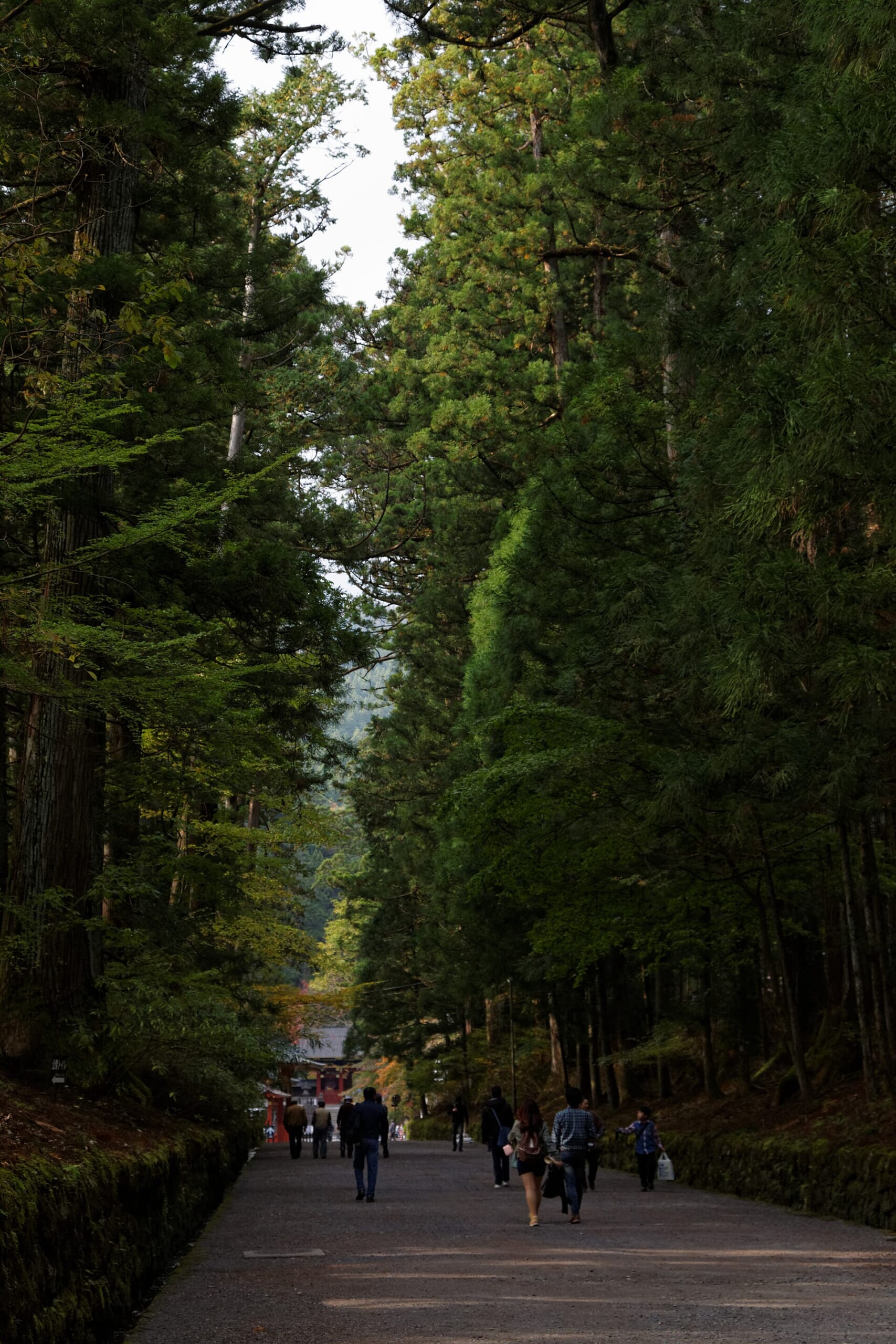
Notice where the row breaks. A gap may mark a lost tree; where successors go is what the prefecture’s new project is planning. Watching how the prefecture fills those gaps over the coming years will show how a 400-year-old gift is passed on.
For more on why old trees in Japan are kept for centuries, see why Japan’s ancient trees live for a thousand years. For a single giant cedar and the work done to protect its roots, read how old Jōmon Sugi is — and the deck built to save its roots. For another famous sugi on a sacred mountain, see Jijisugi, the grandfather cedar of Mount Haguro. And for a twentieth-century avenue planted as a deliberate view, see Jingu Gaien’s ginkgo avenue.
Frequently asked questions
Who planted the Nikko Cedar Avenue?
Matsudaira Masatsuna (1576–1648), who served Tokugawa Ieyasu as a close attendant and later held duties equal to the shogunate’s finance commissioner. Tochigi Prefecture says he began planting around 1625 and completed the planting along the three roads in 1648, then dedicated the trees to Nikko Toshogu. His son Masanobu put up the dedication monuments and planted further trees.
Why did Masatsuna plant cedars instead of giving a lantern?
The popular story says he could not afford a stone lantern, but no source was found for that. The dedication monument records only that he planted for over twenty years and dedicated the trees to Toshogu. Tochigi Prefecture explains his motive as gratitude for favours received during Ieyasu’s lifetime.
How long is the Nikko Cedar Avenue and how many trees are there?
Tochigi Prefecture gives a total length of 37.0 km over three roads, and 12,025 trees on 31 March 2026, down from 16,479 in 1961. Guinness World Records lists it as the longest avenue of trees, at 35.41 km, a different way of measuring.
What is the Nikko Cedar Avenue owner system?
Since fiscal 1996 Tochigi Prefecture has sold avenue cedars for ¥10 million each. The money goes into a protection fund whose investment income pays for restoring the trees. Owner contracts covered 558 trees on 31 March 2026. If a contract ends, the tree is returned and the price repaid.
Why are the cedars of the Nikko Cedar Avenue declining?
The prefecture lists vehicle vibration and exhaust, root cutting by development and road widening, old age and shade from neighbouring trees. Its response includes covering exposed roots, hollow blocks that keep soil from compacting, a protected zone of about 20 m beside the roads, and bypasses to reduce traffic.
Is the Nikko Cedar Avenue a World Heritage site?
Not in the sources checked. Nikko City describes the World Heritage site as the Shrines and Temples of Nikko and their surroundings; the avenue is protected separately as a Special Historic Site (1952) and a Special Natural Monument (1956).
Sources
– Nikko City, exhibition for 400 years of the planting (Matsudaira Masatsuna 1576–1648; planting begun 1625): https://www.city.nikko.lg.jp/kanko_bunka_sports/bunkazai/4/8/2/9875.html — checked 2026-11-14 – Nikko City, historical chronology of former Nikko City (1616, 1617, 1625, lanterns): https://www.city.nikko.lg.jp/city_nikko/shokai/2/1/6101.html — checked 2026-11-14 – Nikko City, shrines and temples, wetlands and the cedar avenue: https://www.city.nikko.lg.jp/city_nikko/shokai/6084.html — checked 2026-11-14 – Nikko City, outline of the Shrines and Temples of Nikko: https://www.city.nikko.lg.jp/soshiki/10/1041/1_1/2/1278.html — checked 2026-11-14 – Tochigi Prefecture, Nikko cedar avenue conservation and utilisation plan, summary: https://www.pref.tochigi.lg.jp/c10/education/bunkazai/suginamiki/documents/gaiyou.pdf — checked 2026-11-14 – Tochigi Prefecture, conservation and utilisation plan, main text (chapters 1–3): https://www.pref.tochigi.lg.jp/c10/education/bunkazai/suginamiki/documents/honpen1.pdf — checked 2026-11-14 – Tochigi Prefecture, conservation and utilisation plan, main text (chapters 4–10): https://www.pref.tochigi.lg.jp/c10/education/bunkazai/suginamiki/documents/honpen2.pdf — checked 2026-11-14 – Tochigi Prefecture, adoption and approval of the plan: https://www.pref.tochigi.lg.jp/c10/education/bunkazai/suginamiki/hozonnkatuyoukeikaku.html — checked 2026-11-14 – Tochigi Prefecture, protection of the Nikko cedar avenue (lengths, tree counts): https://www.pref.tochigi.lg.jp/c10/education/bunkazai/suginamiki/hogo.html — checked 2026-11-14 – Tochigi Prefecture, cultural properties database: https://bunkazai.pref.tochigi.lg.jp/cultural/%E3%80%90%E6%97%A5%E5%85%89%E6%9D%89%E4%B8%A6%E6%9C%A8%E8%A1%97%E9%81%93%E3%80%80%E9%99%84%E3%80%80%E4%B8%A6%E6%9C%A8%E5%AF%84%E9%80%B2%E7%A2%91%E3%80%91/ — checked 2026-11-14 – Tochigi Prefecture, owner system: https://www.pref.tochigi.lg.jp/c10/education/bunkazai/suginamiki/hogo3.html — checked 2026-11-14 – Tochigi Prefecture, audit document (owner system from fiscal 1996): https://www.pref.tochigi.lg.jp/k03/pref/kihon/kansa/documents/20240312152025.pdf — checked 2026-11-14 – Nikko Cedar Avenue Protection Foundation, newsletter no. 26: https://www.pref.tochigi.lg.jp/c10/education/bunkazai/suginamiki/documents/20260408164206.pdf — checked 2026-11-14 – Tochigi Prefecture, tree restoration project: https://www.pref.tochigi.lg.jp/c10/education/bunkazai/suginamiki/juseikaihuku.html — checked 2026-11-14 – Tochigi Prefecture, “Tree restoration project and ownership system of Cedar Avenue of Nikko” (English): https://www.pref.tochigi.lg.jp/c10/treerestorationprojectandownershipsystemofcedaravenueofnikko.html — checked 2026-11-14 – Tochigi Prefecture, public acquisition of protected land: https://www.pref.tochigi.lg.jp/c10/education/bunkazai/suginamiki/kouyuuka.html — checked 2026-11-14 – Tochigi Prefecture, bypass construction: https://www.pref.tochigi.lg.jp/c10/education/bunkazai/suginamiki/baipasuseibi.html — checked 2026-11-14 – Tochigi Prefecture, successor tree project (2026): https://www.pref.tochigi.lg.jp/c10/houdou/1019suginamiki.html — checked 2026-11-14 – Tochigi Prefecture, governor’s press conference: https://www.pref.tochigi.lg.jp/c05/pref/chiji/kishakaiken/r070827.html — checked 2026-11-14 – Tochigi Prefecture, disaster response document, October 2019: https://www.pref.tochigi.lg.jp/l01/kouhou/documents/saigaitaisakuhonbukaigi_01.pdf — checked 2026-11-14 – Tochigi Prefecture, Nikko civil engineering office (Guinness listing, length): https://www.pref.tochigi.lg.jp/h53/system/desaki/desaki/1182151825117.html — checked 2026-11-14 – Tochigi Prefecture, “Cedar Avenue of Nikko” (English): https://www.pref.tochigi.lg.jp/c10/education/bunkazai/suginamiki/translations.html — checked 2026-11-14 – Tochigi Prefecture, dedication monument at Sannai (English): https://www.pref.tochigi.lg.jp/c10/namiki-kishinhioblationmonument-sannai.html — checked 2026-11-14 – Tochigi Prefecture, “Namiki Taro” (English): https://www.pref.tochigi.lg.jp/c10/namikitaro.html — checked 2026-11-14 – Niiza City, “The Nikko cedar avenue and Matsudaira Masatsuna”: https://www.city.niiza.lg.jp/site/niiza-kenbunroku/bunkazai-kenbun020.html — checked 2026-11-14 – Forestry and Forest Products Research Institute, Kyushu branch, sugi: https://www.ffpri.go.jp/kys/business/jumokuen/jumoku/zukan/sugi.html — checked 2026-11-14 – Forestry and Forest Products Research Institute, press release on root distribution (2026): https://www.ffpri.go.jp/press/2026/20260407/index.html — checked 2026-11-14 – Guinness World Records, “Longest avenue of trees”: https://www.guinnessworldrecords.com/world-records/longest-avenue-of-trees — checked 2026-11-14 – UK government, Tree Preservation Orders and trees in conservation areas: https://www.gov.uk/guidance/tree-preservation-orders-and-trees-in-conservation-areas — checked 2026-11-14 – Historic England, tree management, consents and controls: https://historicengland.org.uk/advice/technical-advice/parks-gardens-and-landscapes/tree-management-consents-and-controls/ — checked 2026-11-14 – National Trust, Beech Avenue Conservation Trail, Tatton Park: https://static.nationaltrust.org.uk/trails/visit/cheshire-greater-manchester/tatton-park/beech-avenue-conservation-trail-walking.pdf — checked 2026-11-14 – Brandenburg Ministry for Agriculture, Environment and Consumer Protection, Alleen: https://mleuv.brandenburg.de/mleuv/de/umwelt/natur/arten-und-biotopschutz/gehoelze-und-alleen/alleen/ — checked 2026-11-14 – City of Vancouver (Washington), Heritage Trees: https://www.cityofvancouver.us/publicworks/page/heritage-trees — checked 2026-11-14