

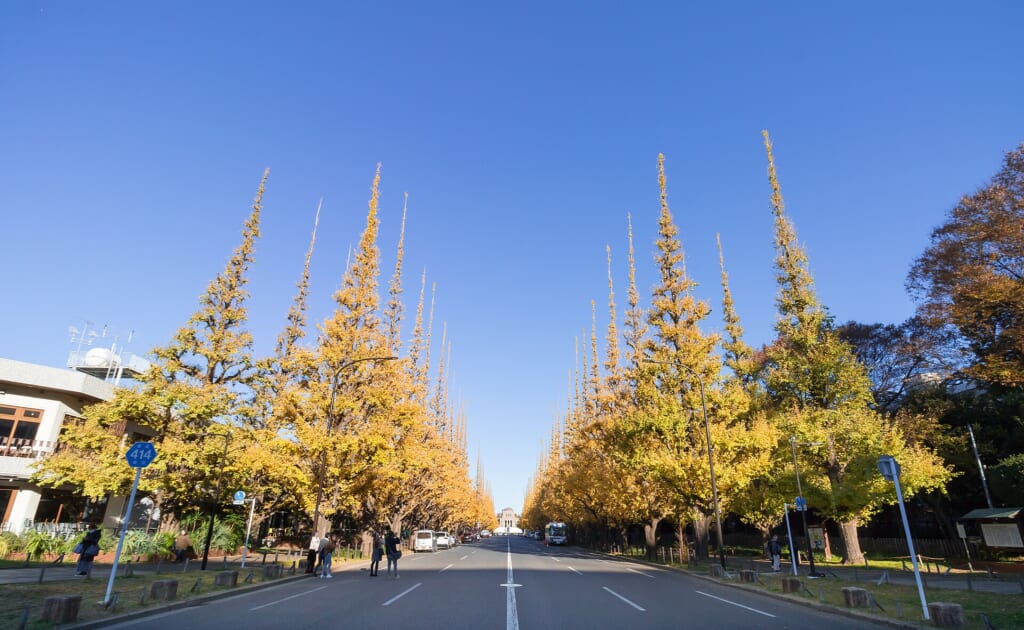
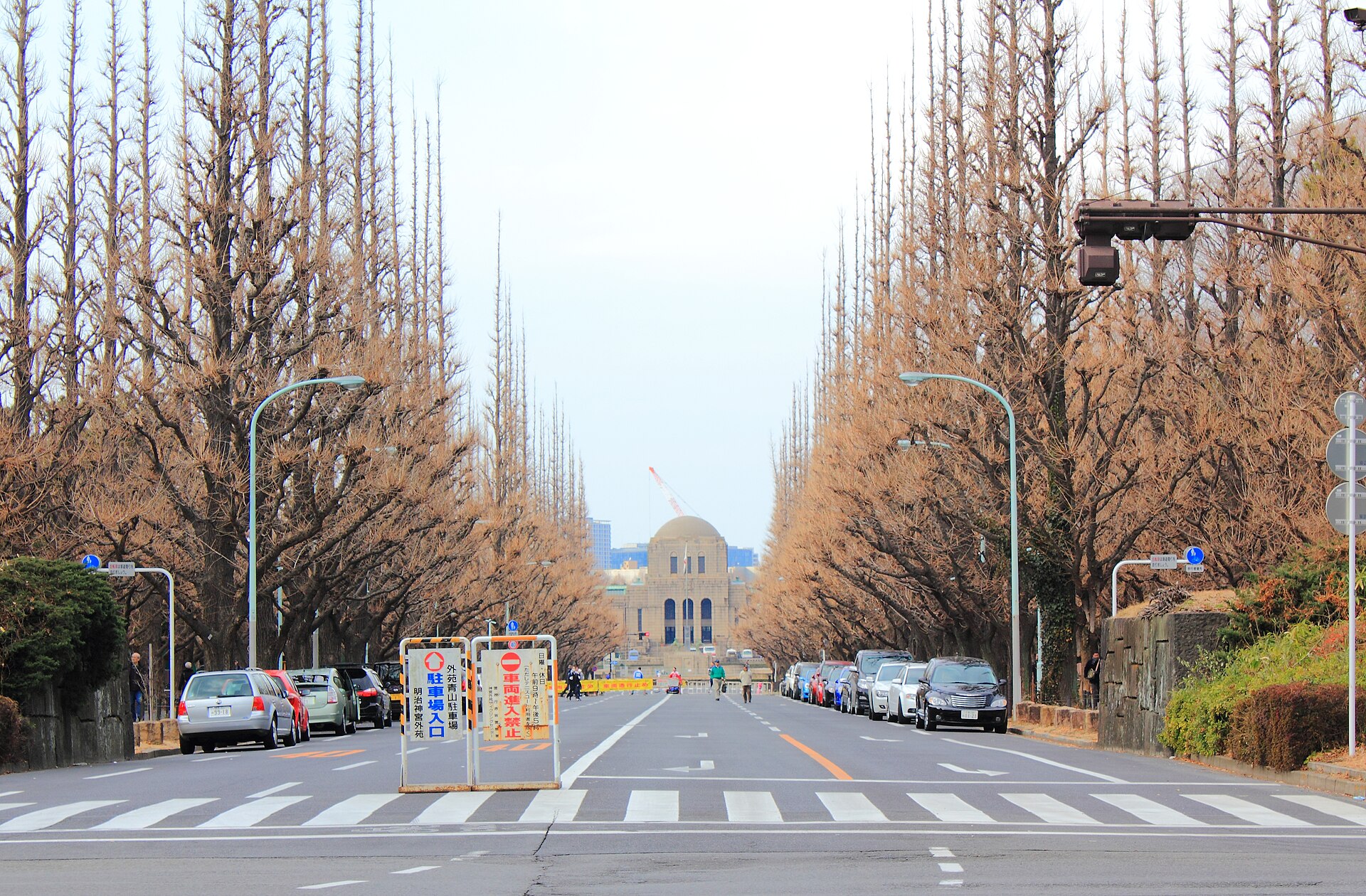
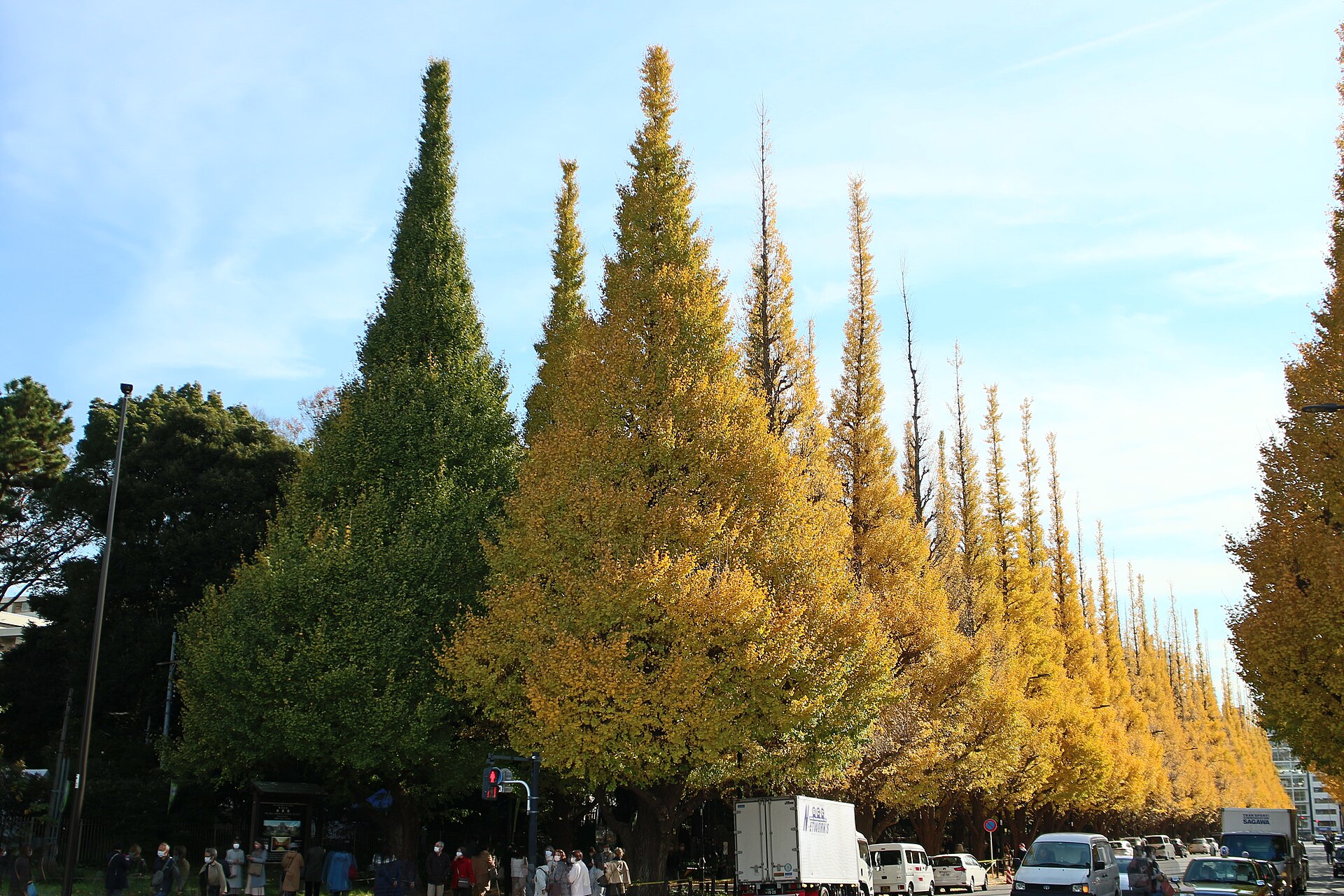
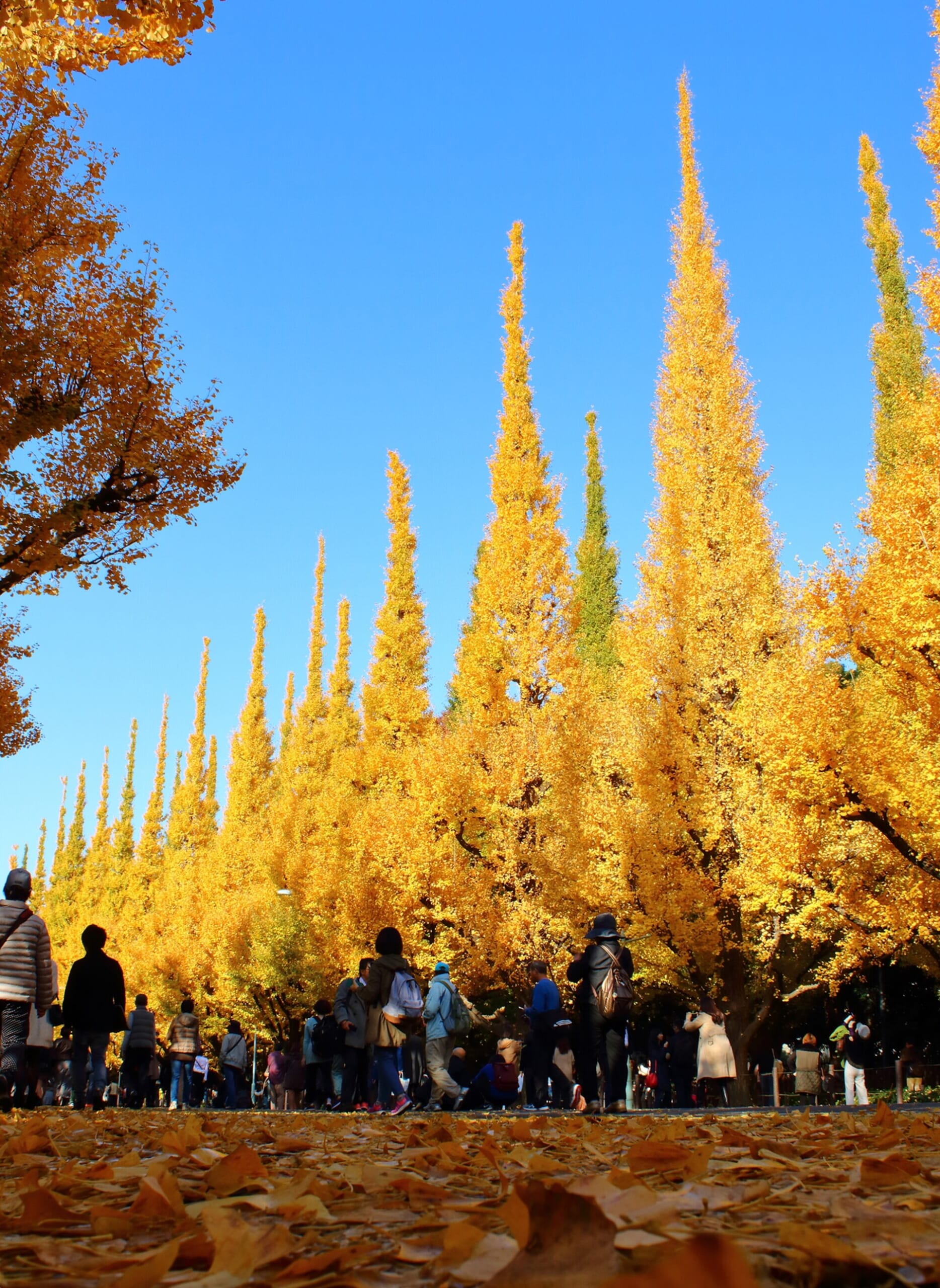
Jingu Gaien’s ginkgo avenue narrows to a point more sharply than an ordinary row because, according to the people who manage it, it was planted that way: the trees were set in order of height, taller at the Aoyama-dori end and lower toward the Meiji Memorial Picture Gallery, a use of perspective that the Meiji Jingu Gaien and the Tokyo Metropolitan Government both describe. The crowds come in November because that is when the four rows of pruned, cone-shaped trees turn gold: the Gaien has described the usual peak of the yellow leaves as mid-November to early December.
This article follows the trees from seeds collected in 1908 to the survey tables of 2024, and sets out what the redevelopment documents reviewed for it say about the four rows.
Four Rows of Gold — The View from Aoyama-dori
What you see from the entrance
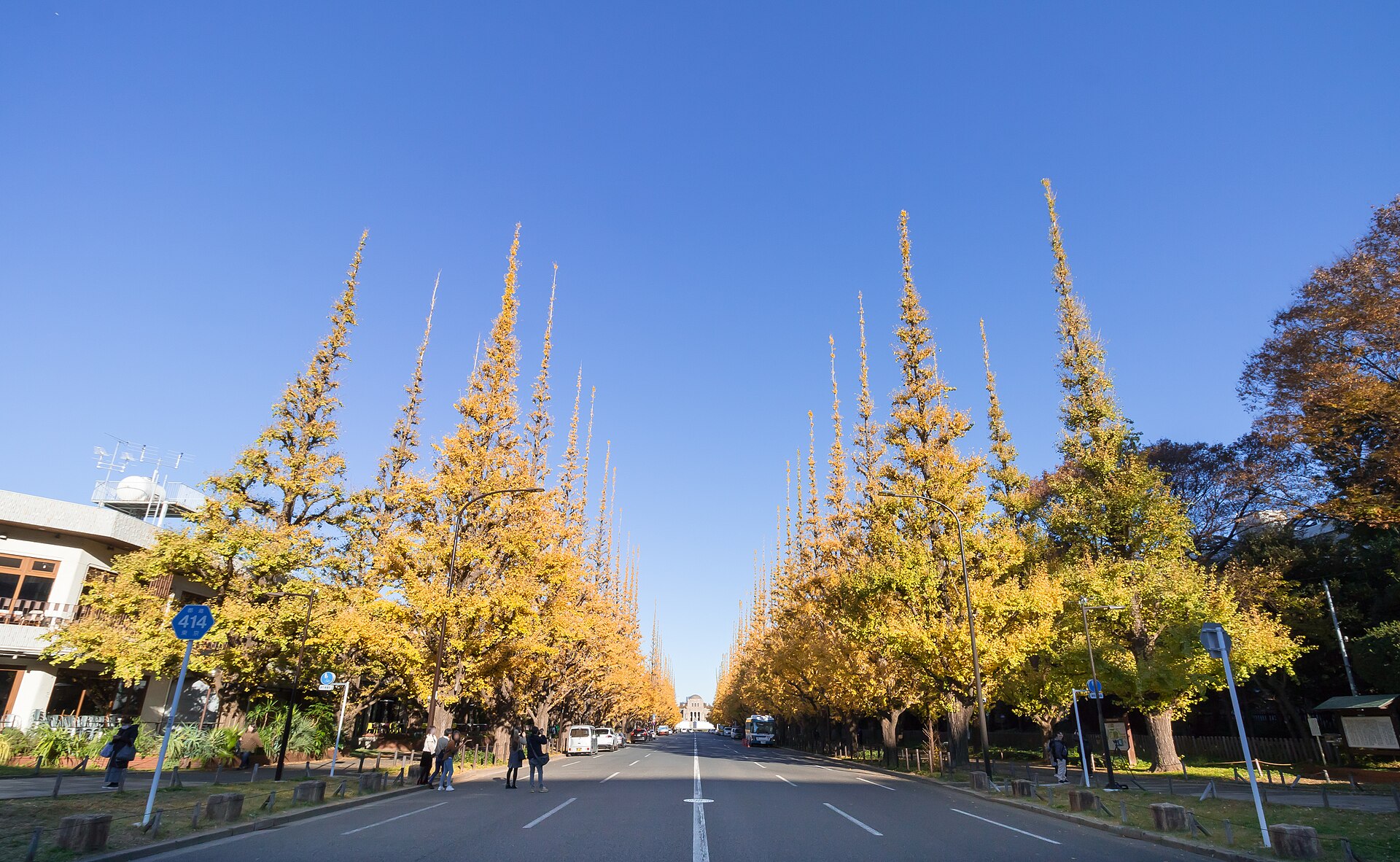
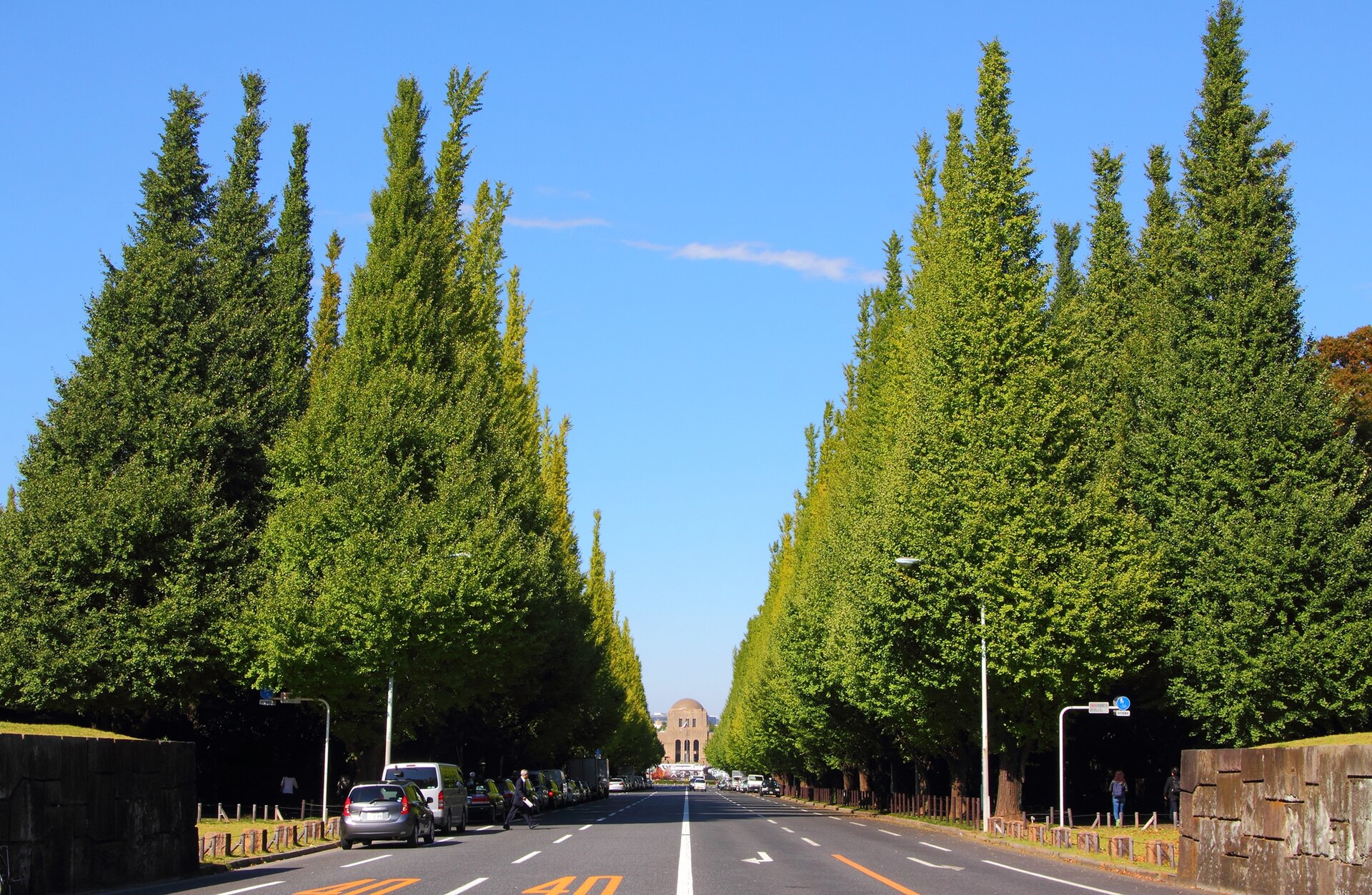
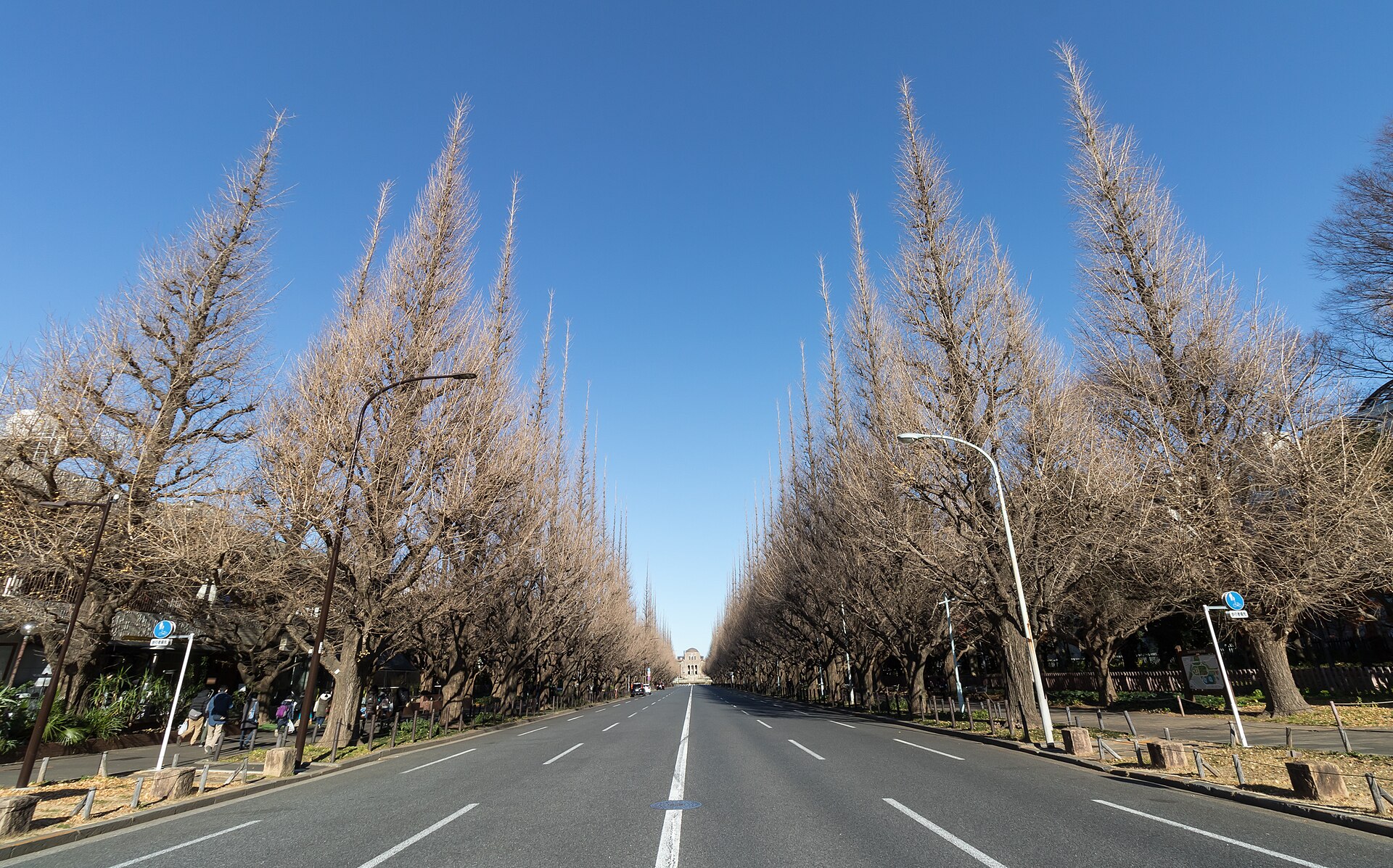
Stand at the Aoyama-dori entrance in the yellow-leaf season and the view is almost architectural. A straight road runs away from you. On each side, two rows of ginkgo trees (Ginkgo biloba, icho, イチョウ) stand in single file, each tree a tall, pointed cone. The four rows run in parallel, and at the far end, framed between them, sits a low stone building with a dome: the Seitoku Kinen Kaigakan (聖徳記念絵画館), the Meiji Memorial Picture Gallery.
The Meiji Jingu Gaien describes this stretch as a four-row line of street trees running from the Aoyama entrance to the circular road in front of the central plaza. Its own visitor page gives the length as 300 m, measured from the Aoyama entrance to the circular road, and the planting interval as 9 m.
The effect is that of a stage set: the rows close in on the gallery, and the gallery holds the centre of the view.
A Seed from Shinjuku Gyoen — Where the Trees Came From
1908: seeds from Shinjuku Gyoen
The story begins fifteen years before the avenue existed. According to the Meiji Jingu Gaien, the seeds were collected in 1908 (Meiji 41) from ginkgo trees already growing at Shinjuku Gyoen. The man who collected them was Orishita Yoshinobu (折下吉延), at the time working at Shinjuku Gyoen in the gardening section of the Takumi-ryō, the Imperial Household Ministry’s office of works.
The seeds were not planted where the avenue now stands. The Gaien explains that they were sown on land that is now part of the Meiji Jingu shrine grounds, and that the seedlings were raised there.
1,600 seedlings, 146 chosen
By the time the avenue was laid out, the nursery held about 1,600 young trees, grown to around 6 m tall. From these, the Gaien says, 146 trees were selected for the avenue, their forms having been carefully tended. The planting took place in 1923 (Taisho 12).
A nursery that large allowed a real choice of trees, but the sources reviewed here do not state the selection criteria.
Who designed it
The Gaien credits the landscaping of the avenue to Orishita Yoshinobu, who by then was the chief garden engineer for the construction of the Outer Garden. The man who collected the seed in 1908 later led the landscaping of the avenue.
| Year | Event | Source |
|---|---|---|
| 1908 | Seeds collected from Shinjuku Gyoen ginkgo by Orishita Yoshinobu | Meiji Jingu Gaien |
| 1918 | Ground-breaking ceremony for the Outer Garden (1 June); construction begins (December) | Meiji Jingu Gaien; NILIM |
| 1923 | Avenue planted, 146 trees selected from about 1,600 seedlings | Meiji Jingu Gaien |
| 1926 | Outer Garden dedicated; Picture Gallery completed (22 October) | Meiji Jingu Gaien |
| 1966 | Ginkgo chosen as the tree of Tokyo (decided 8 November) | Tokyo Metropolitan Government |
| 2026 | Centenary of the Meiji Jingu Gaien | Meiji Jingu Gaien |
The Trick of Perspective — Tallest First, Lowest Last
What the managers say
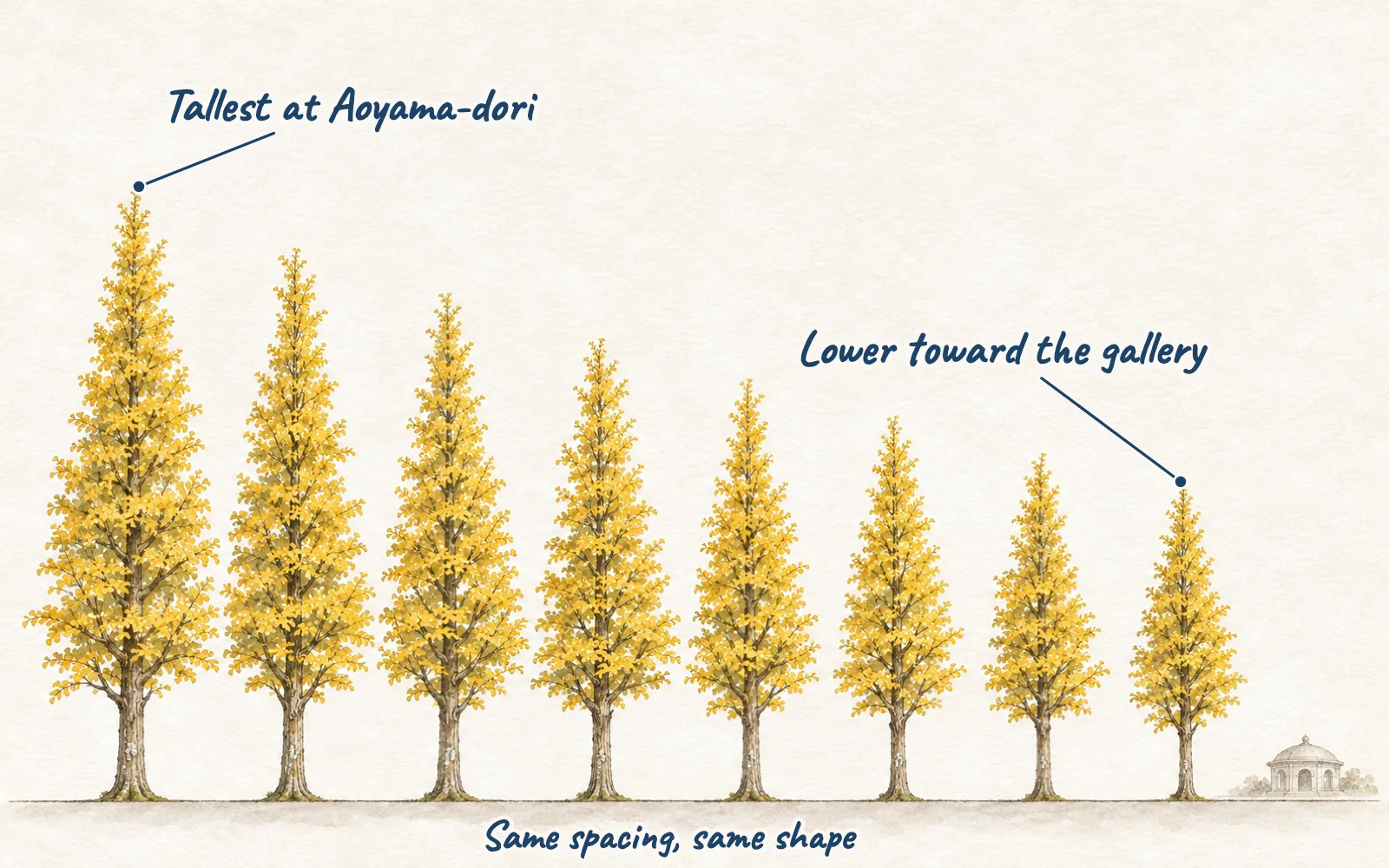
Two official sources describe complementary sides of the design. In a 2010 article, the Meiji Jingu Gaien explains that the trees were planted from Aoyama-dori in order of height, using perspective to make the Picture Gallery look larger. In 2008, answering a question at a committee of the Tokyo Metropolitan Assembly, the metropolitan government’s director in charge of park planning said that the sense of depth is emphasised by making the trees lower toward the gallery.
Neither source is a design drawing from 1923. No document written by Orishita at the time, setting out his intention in his own words, turned up in the research for this article. What can be said is that the bodies that own and manage the avenue today describe it as a graded planting.
How the effect can be read
A simple way to understand it: a row of similar trees seen end-on gets smaller toward the far end, and that shrinking is one of the cues we use to judge depth. If the far trees are also genuinely lower, the row narrows more than a row of equal trees would, and the eye tends to read the extra narrowing as extra distance. In the Gaien’s own account, the point was the building at the end: the gallery, framed by lower trees, is made to look larger.
Why the evenness helps
The trees stand at a regular 9 m interval, they are one species raised from seed collected at one site, and today they are kept in a similar shape. Regular spacing and similar crowns make the differences in height easier to notice.
Why a Picture Gallery Needed an Avenue — The Outer Garden of 1926
A memorial garden built by donation
The avenue belongs to a larger project, the Meiji Jingu Gaien, the Outer Garden of Meiji Jingu. Its ground-breaking ceremony was held on 1 June 1918, and a road-history study by Japan’s National Institute for Land and Infrastructure Management (NILIM) records construction as starting in December of that year. The Gaien states that the work was funded by donations and donated trees from across the country, with labour contributed by local youth associations.
The finished Outer Garden was dedicated to Meiji Jingu at a completion ceremony on 22 October 1926. The Picture Gallery’s official facility outline gives the same completion date. In 2026, the Gaien marks its centenary.
The gallery at the end of the axis
From Aoyama-dori the road runs straight toward the gallery, and the four rows make that axis visible from far away. There is a practical caution for readers who want to measure this on a map. The 300 m figure that the Gaien gives runs from the Aoyama entrance to the circular road, not all the way to the gallery building. The gallery sits beyond the circle.
Cones, Not Clouds — How the Shape Is Kept
Once every four years, January to March
The shape at Jingu Gaien is made and remade by people.
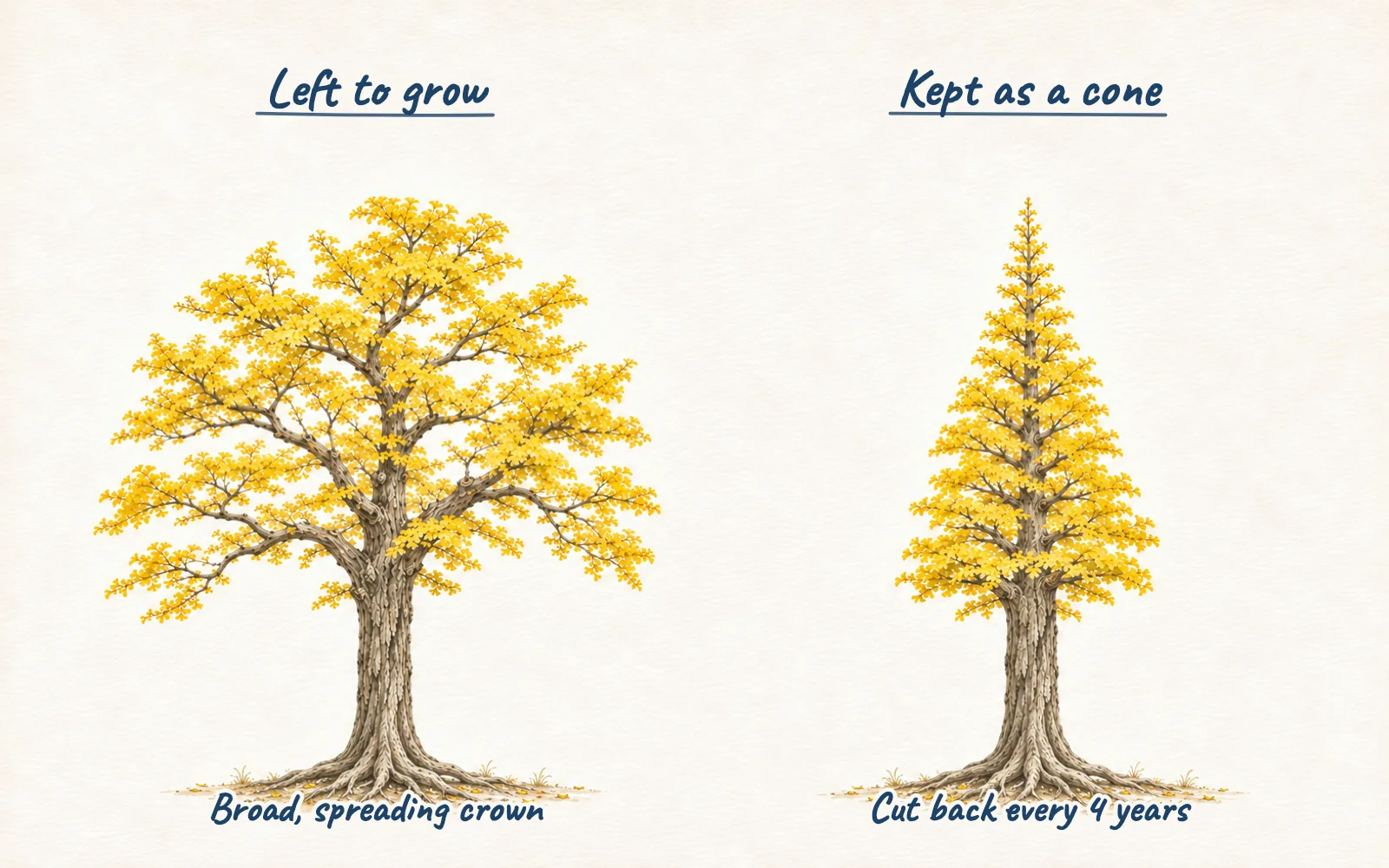
The Meiji Jingu Gaien states that pruning to keep the trees in shape is carried out once every four years, in the leafless months of January to March. One recorded round took place in February and March 2019. The Tokyo Metropolitan Government told the Assembly in 2008 that the trees are trained into a fine conical form to create a dignified landscape.
What a leafless season offers the pruner
A leafless season has one obvious advantage for shaping work: with the leaves gone, the whole branch structure is visible, so the outline of the cone and every branch that breaks it can be seen. The Gaien’s published pages give the frequency, the season and the purpose. No standard work specification, setting out which branches are cut back and by how much, was located in the sources reviewed, so that detail is not described here.
The other kind of ginkgo avenue
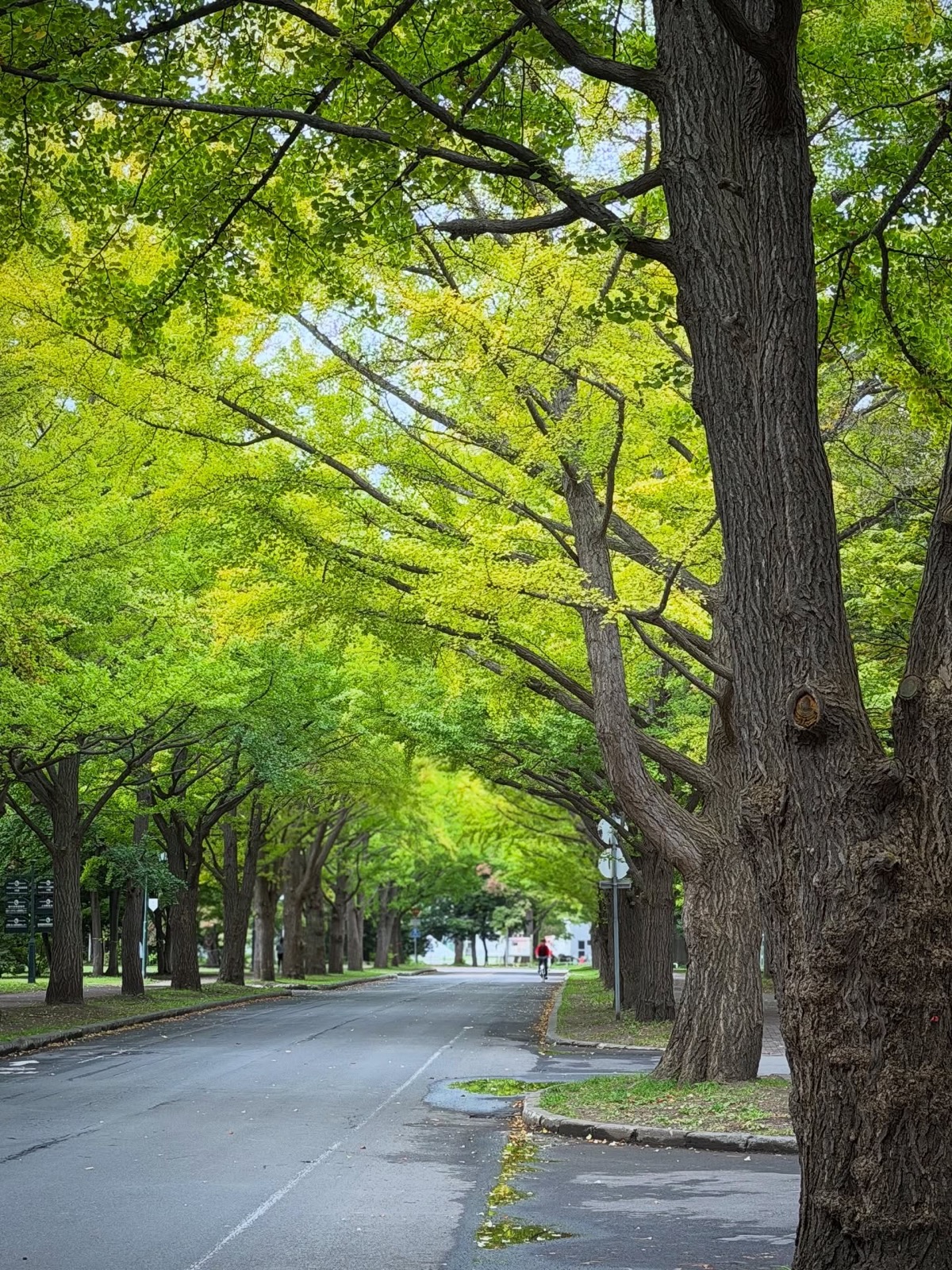
Not every ginkgo avenue in Japan looks like this. The photograph below shows another, with wide crowns that arch over the road. The difference is easy to feel: an arching avenue makes a tunnel you walk inside, while the cones at Jingu Gaien make a line you look along.
What repeated cuts leave behind
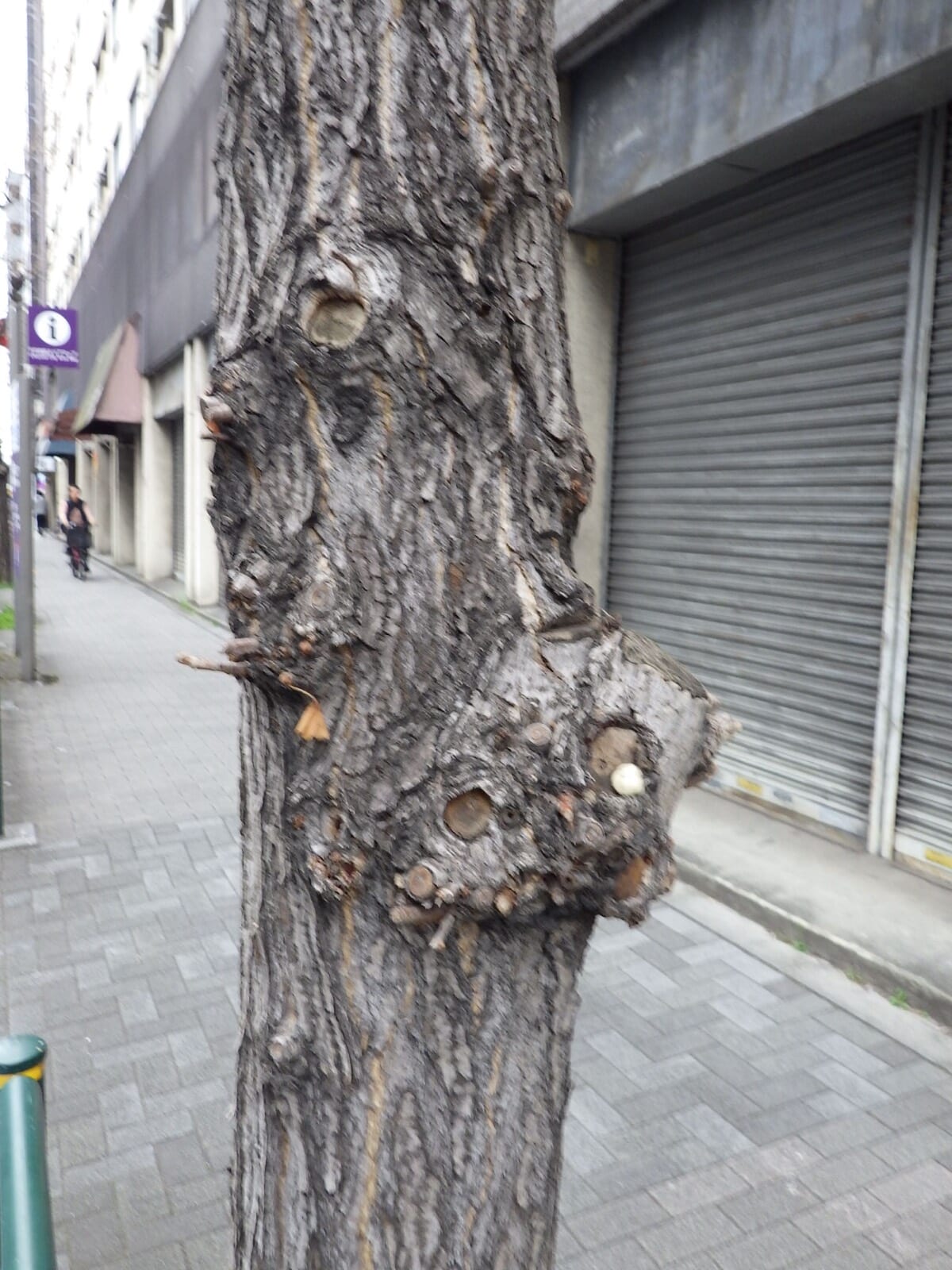
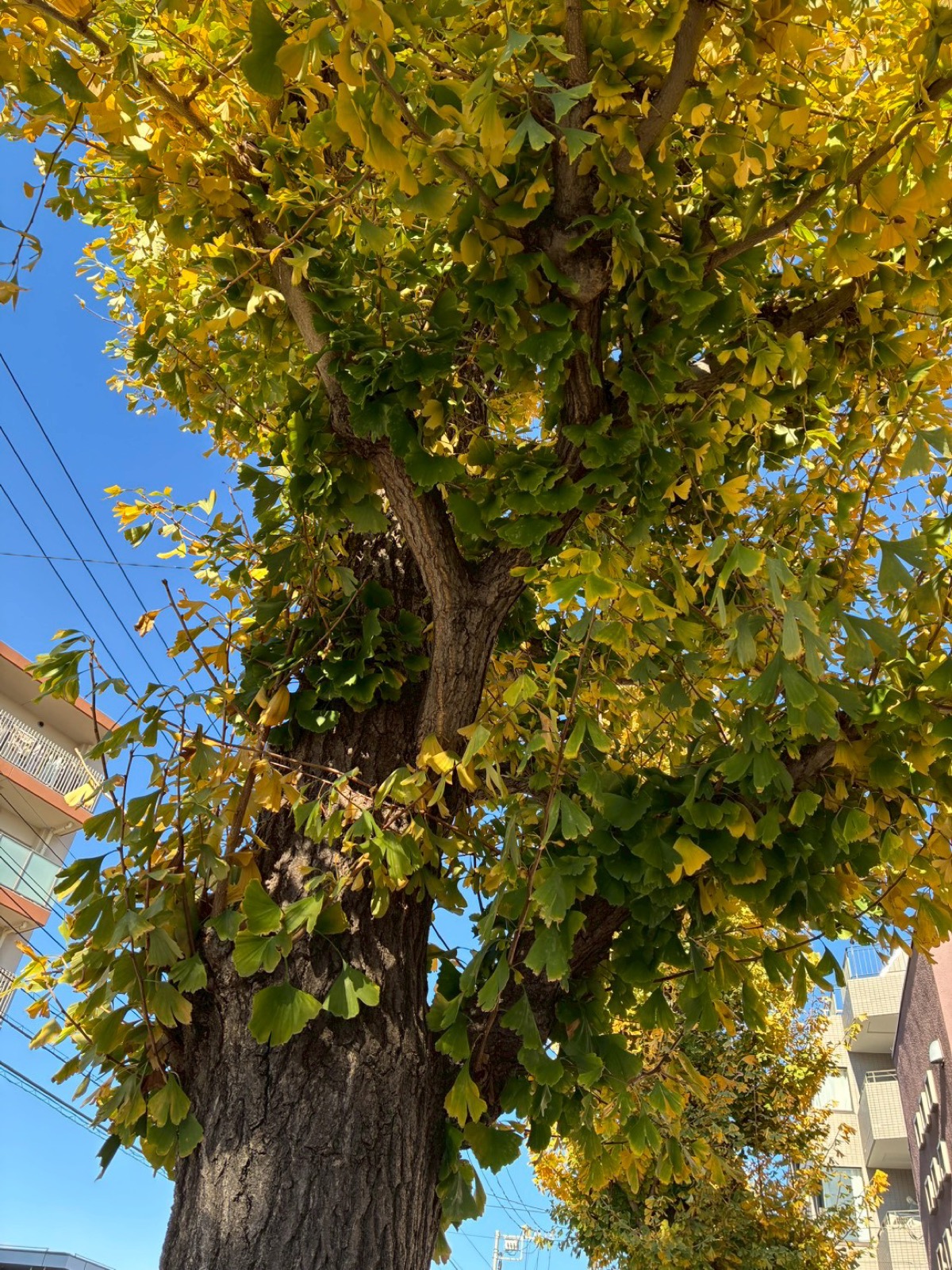
Pruning leaves marks. The street ginkgo below, photographed during a tree survey in central Tokyo, carries swellings around what appear to be old pruning points. It is not one of the Gaien trees, but it shows what a cut means to a tree: a wound it has to close. How trees wall off and close wounds is explained in how trees seal wounds.
Why Ginkgo — The Tree of Tokyo
The city’s tree since 1966
The choice of ginkgo looks inevitable now, partly because of avenues like this one. The Tokyo Metropolitan Government chose the ginkgo as the tree of Tokyo on 8 November 1966 and announced it on 14 November. For a single ginkgo grown to a giant, rather than a row kept in shape, see the great ginkgo of Hida Kokubunji.
The most numerous street tree in Japan
Ginkgo is not only a Tokyo tree. Japan’s National Institute for Land and Infrastructure Management publishes a periodic national survey of street trees. The latest edition located for this article, Street Trees in Japan IX (2023), counts trees as of 31 March 2022 on roads managed by the national government, prefectures, municipalities and local road corporations. Ginkgo comes first among tall trees.
| Rank | Tree | Number of street trees (31 March 2022) |
|---|---|---|
| 1 | Ginkgo (icho) | 521,075 |
| 2 | Cherries (sakura) | 521,053 |
| 3 | Japanese zelkova (keyaki) | 447,880 |
The margin over cherries is just 22 trees in more than half a million, so the ranking could change between editions. Either way, ginkgo is one of the backbone trees of Japanese streets. Related reading: why Japanese street trees are so small, and Tokyo street trees: why they look beautiful and why they are struggling.
The Smell of November — Male Trees, Female Trees
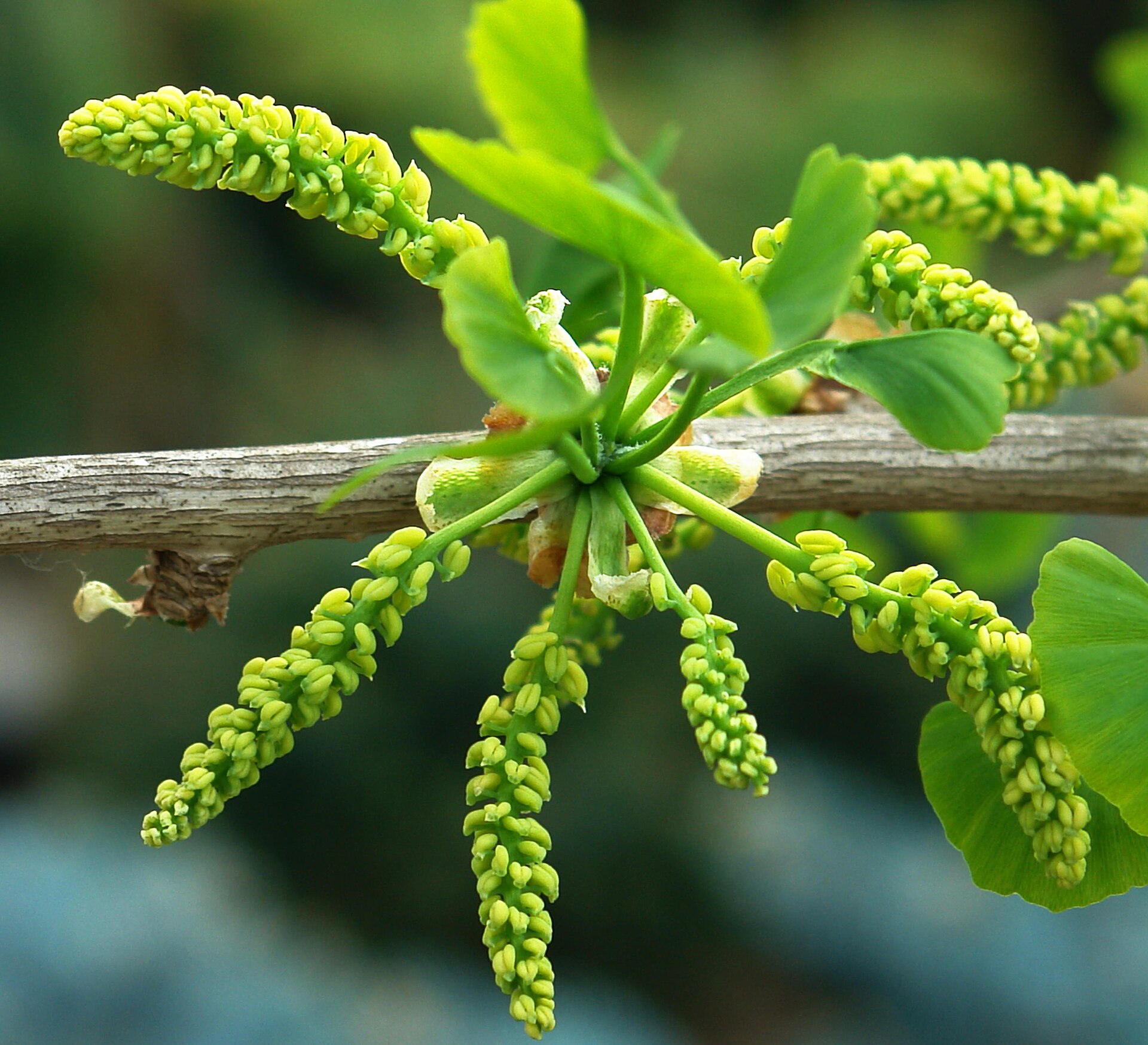
Ginkgo is dioecious
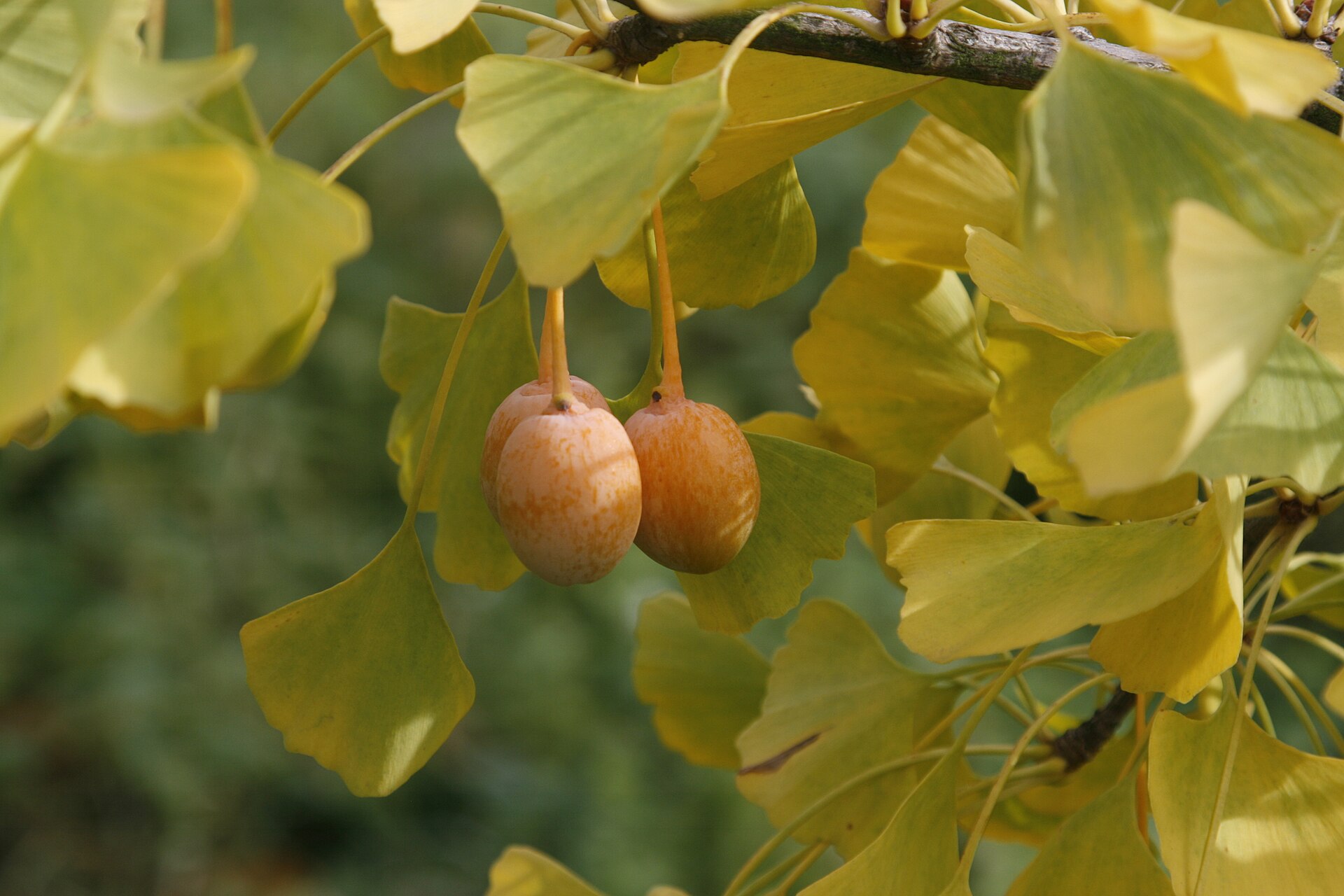
Anyone who has walked under a female ginkgo in autumn knows the smell. The source is the seed, ginnan (銀杏), and its soft outer coat.
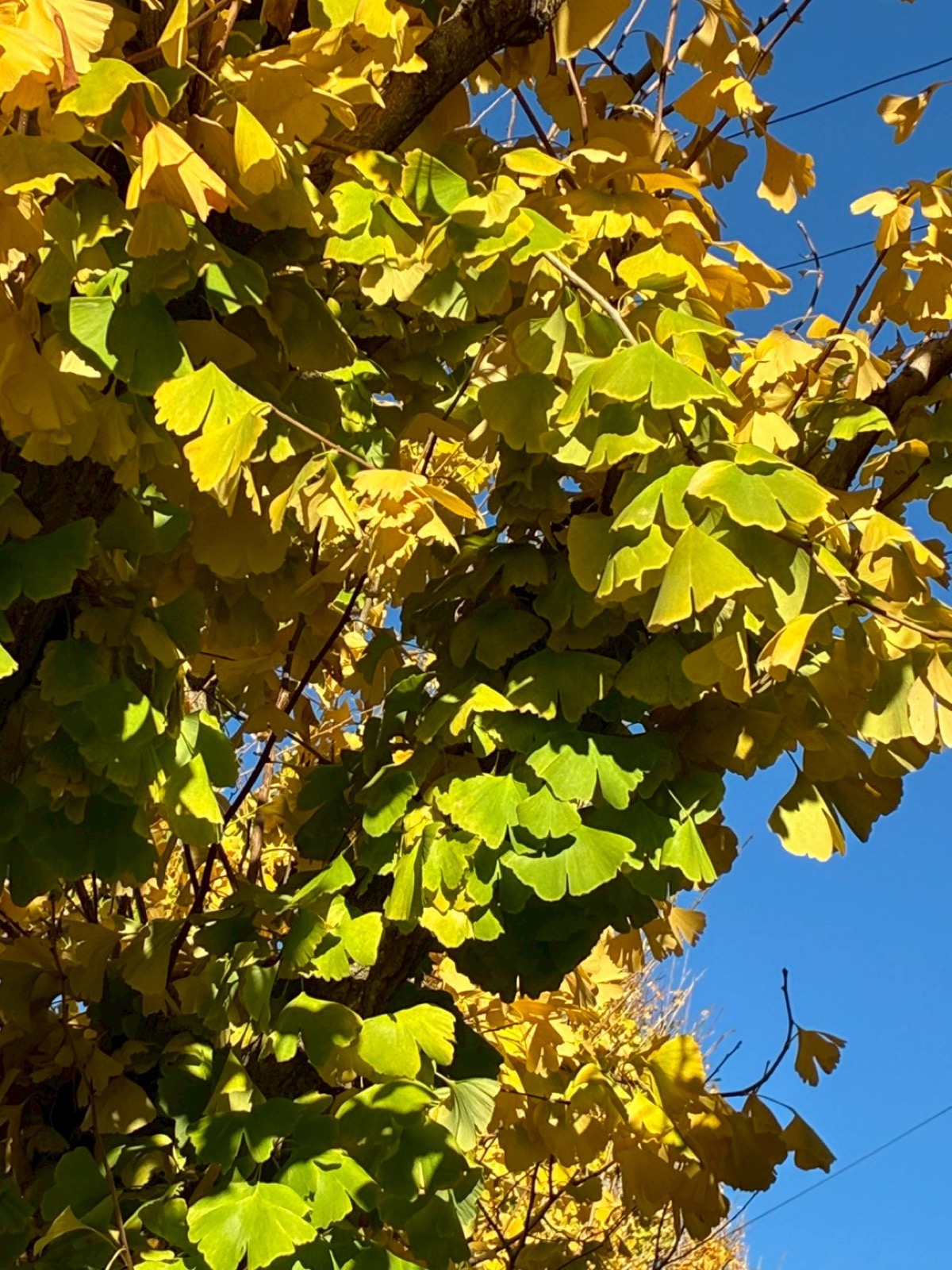
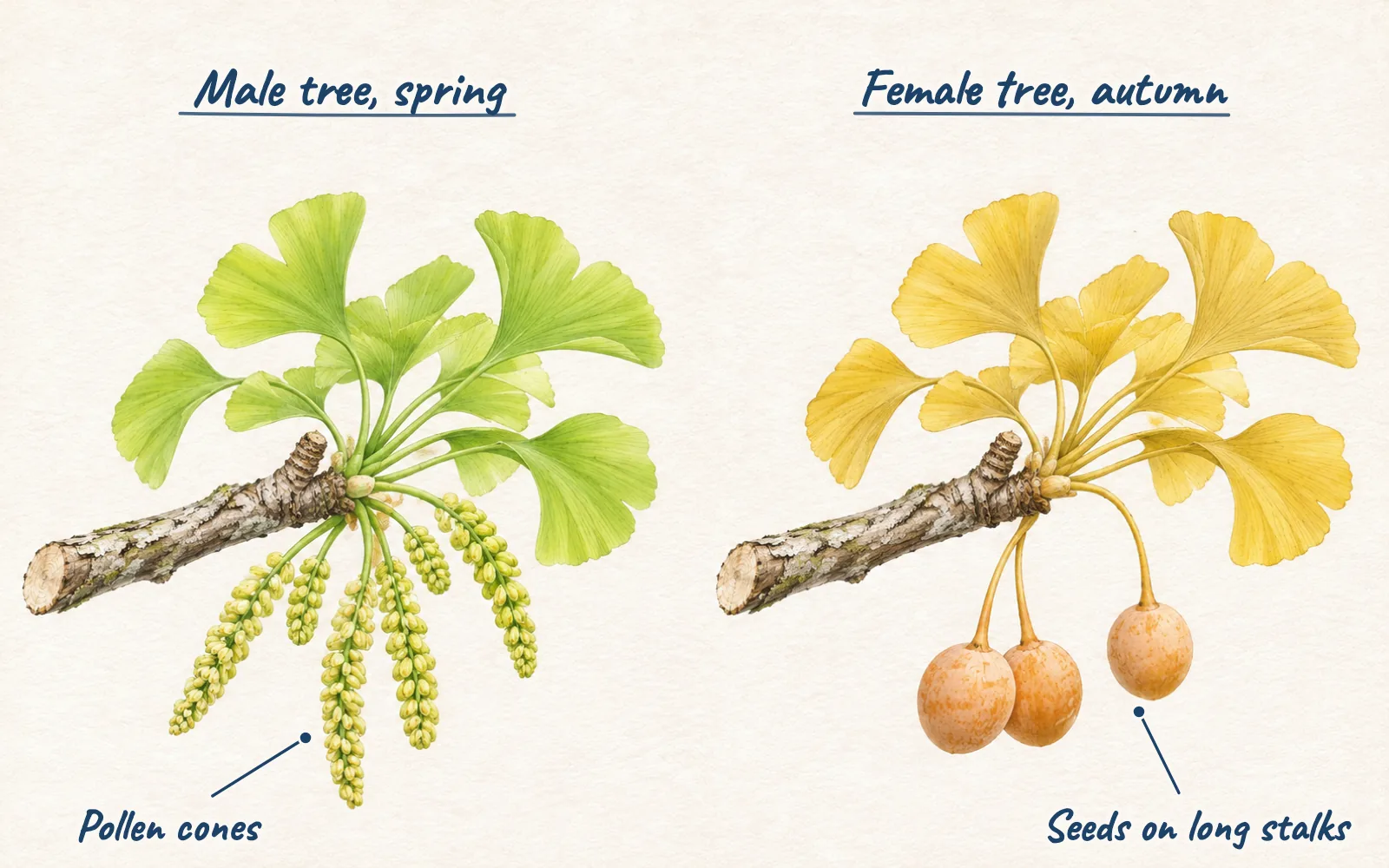
Ginkgo is dioecious: each tree is either male or female. As the Ministry of the Environment’s Kokyo Gaien office puts it, only female trees bear ginnan. The illustration and photographs below show the difference: pollen cones on a male tree, seeds hanging on stalks on a female.
Where the smell comes from
The odour comes from the fleshy outer layer of the seed. A 2012 analysis of volatile compounds in the outer layer of Ginkgo biloba seeds identified butanoic acid, hexanoic acid, methyl butyrate and methyl hexanoate among the compounds contributing most to the smell.
How many of the avenue’s trees are female?
The honest answer is that the published sources reviewed here do not say. The managers’ pages and the survey reports used for this article give heights, health ratings and ownership for the trees, but no register of male and female trees for the four rows. A count, row by row, was not found.
Why the Crowds Come in November — The Season of Gold
Mid-November to early December
The Meiji Jingu Gaien has described the usual peak of the yellow leaves as mid-November to early December. That is a guide, not a forecast for any given year. The Jingu Gaien Ginkgo Festival has been held in this season; its 2019 edition, for example, ran from 15 November to 1 December. Dates for any particular year should be checked with the organiser.
Not every tree turns at once
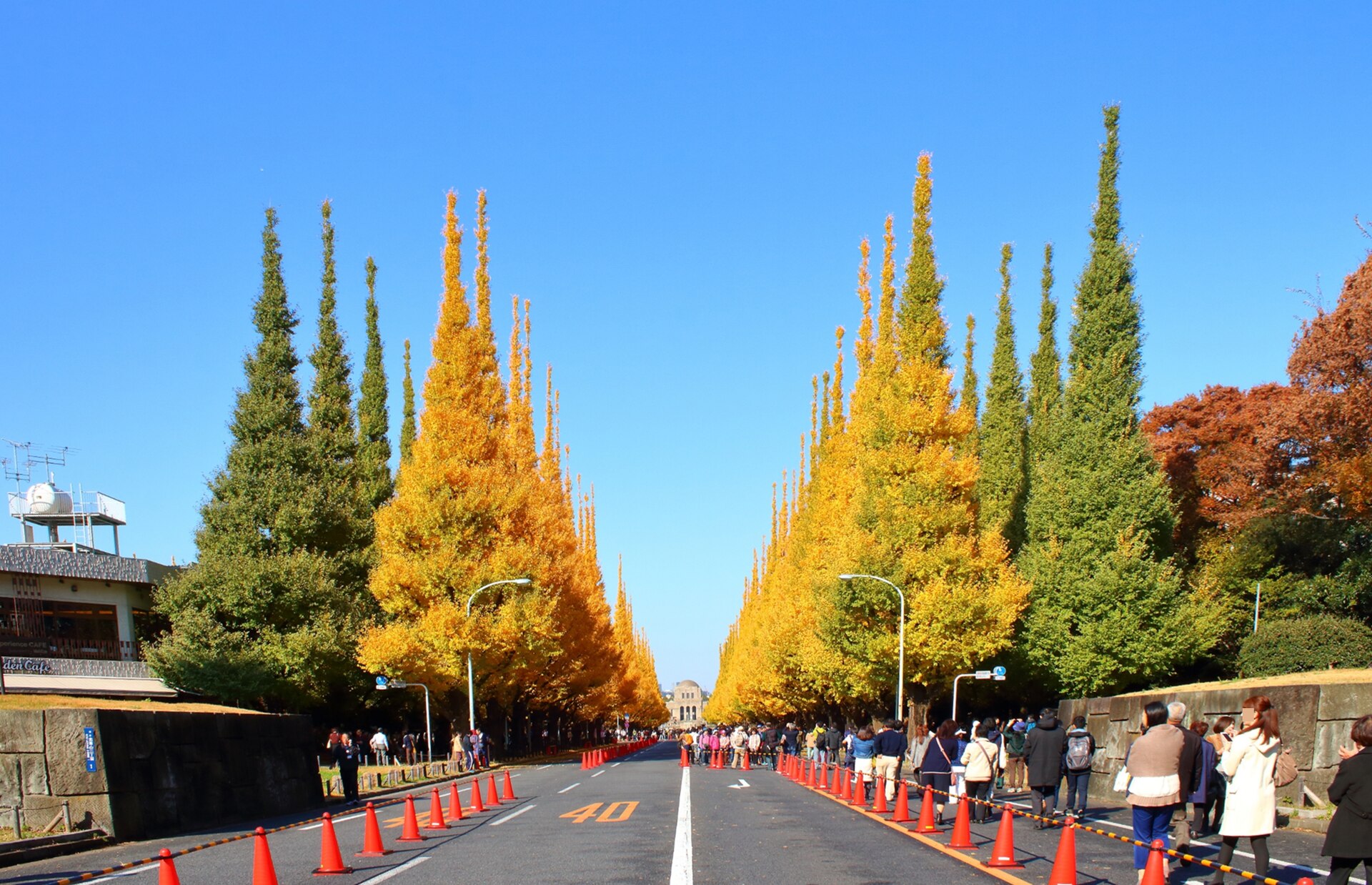
Photographs of the avenue in November, such as the one near the top of this article, show green cones standing between gold ones. Trees in the same row do not all turn on the same day, so the avenue can look patchy early in the season. For a photographer, there is no single right day.
Colour on top of geometry
In this writer’s reading, the colour alone is not the draw; Tokyo has a great many yellow ginkgos in November. What the avenue adds is geometry: four rows, a straight axis, a building at the end, and trees kept to one shape. For more on how Japan’s autumn colour shapes garden work and visitor seasons, see the work behind Kyoto’s maple gardens before the autumn crowds.
Recent Measurements — Height, Age and Health
Who owns which row
Four rows of trees do not have a single owner. According to the redevelopment project’s published Q&A, the inner two rows are owned and managed by the Tokyo Metropolitan Government and the outer two rows by Meiji Jingu. Ginkgos continuing west along a Minato City road (18 trees) are owned and managed by Minato City.
Counts of “the avenue” also differ because sources draw its boundary differently. The Gaien’s own figure of 146 trees includes two rows that turn west partway along toward the Chichibunomiya Rugby Stadium. The environmental impact survey reports count 128 trees in the straight four-row section.
How tall the trees are
A 2023 survey of the avenue’s vitality, carried out by Ibiden Green Tech and published by the project, measured the trees in October 2023. Average heights by row were:
| Row (from east to west) | Owner | Average height, October 2023 |
|---|---|---|
| East outer row | Meiji Jingu | 30.6 m |
| East inner row | Tokyo | 28.0 m |
| West inner row | Tokyo | 26.8 m |
| West outer row | Meiji Jingu | 29.0 m |
In the report’s measurement table (section 3-2), the lowest tree measured 23.5 m (excluding trees with bent forms) and the tallest 34.0 m; the report’s own text elsewhere gives the maximum as 33.5 m. Those are roughly four to six times the 6 m of the seedlings chosen in 1923. The Gaien’s visitor page gives different maximum and minimum heights, without a date or method, so the two sets of figures are not directly comparable.
The published averages are by row, not by position along the row. They do not show how height changes along the avenue today, and no figures for the original 1923 gradient were found to compare with.
How old they are
The Gaien’s visitor page gave the trees’ age as 100 years “as of 2008”, counting from the seeds of 1908 rather than from the planting of 1923. By that reckoning the original trees are well over a century old. Individual trees may have been replaced over the decades, so the age of any one tree should not be assumed from the founding date.
How healthy they are
A vitality survey assigns each tree one of four grades, A to D. In the October 2024 assessment of the 128 trees in the four rows, reported in the project’s monitoring report issued during construction (No. 3, March 2025), the overall ratings were:
| Overall vitality | Meaning in the report | Number of trees, October 2024 |
|---|---|---|
| A | Normal | 75 |
| B | Fair, close to normal | 49 |
| C | Considerable decline | 4 |
| D | Marked decline | 0 |
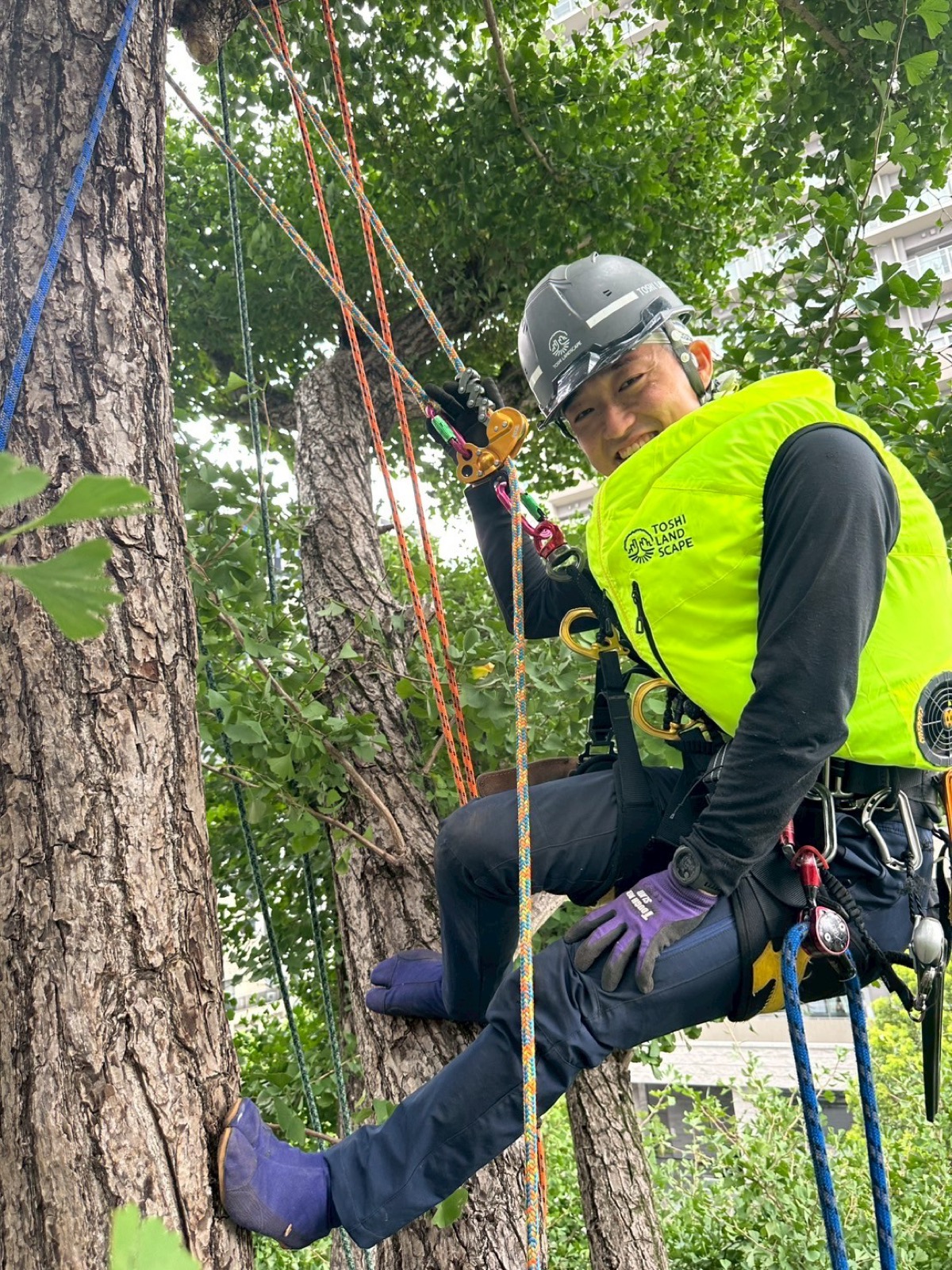
The survey rated the crown top separately from the rest of the tree. The four trees rated C overall had tops rated C to D. That is a reminder of how to read such tables: zero trees in D does not mean no tree has a declining top. These are 2024 results, not a statement of the trees’ condition in 2026. In our team’s survey work on large trees, the crown top is often checked from inside the tree on a rope, as in the photograph below of a different ginkgo; the avenue report does not say how its assessors viewed the tops. For how tree assessments are done in Japan, see what VTA and the jumoku-i system each look for.
The Avenue and the Redevelopment — What the Plans Say About the Four Rows
The Jingu Gaien area is being redeveloped. This section sets out what the published documents say about the four rows of ginkgo, and keeps them separate from the other trees in the project area.
The project in brief
The city planning decision for the Jingu Gaien district was published on 10 March 2022, and the approval of the first-class urban redevelopment project was announced on 17 February 2023. The project is promoted by four parties: Mitsui Fudosan, the religious corporation Meiji Jingu, the Japan Sport Council and Itochu Corporation. Under the plan, the baseball stadium and the rugby stadium are rebuilt with their positions swapped, and the new baseball stadium is planned west of the four rows. The area in front of the Picture Gallery is part of the wider plan but, the parties state, is not within the 2023 approved project area or the Tokyo environmental impact assessment.
What the environmental impact assessment says
The environmental impact assessment for the project, published for public inspection by the Tokyo Metropolitan Government, states as a policy of the plan that the four rows of ginkgo are to be preserved into the future. It also states that buildings to the west of the rows will be set back from their current position to take the growth of the ginkgos into account. These are commitments in the plan; they are not proof of what the construction will or will not do to the trees, and the monitoring reports exist to check that over time.
Root surveys and the setback
In January 2023 and January 2024, roots were surveyed along the western row of the four. These were sample surveys, not excavations of the whole root system of every tree. The second survey report records a root of survey tree No. 34 reaching 22.0 m from the kerb of the pavement.
In September 2024, the parties announced that the distance from the pavement kerb to the underground structure of the new baseball stadium would be increased from about 8 m to about 18.3 m. They gave as the basis for a root-protection zone of about 17 m the finding that no roots of 30 mm diameter or more were found beyond about 17 m west of the kerb. That is a statement about roots of that size, not a statement that no roots extend beyond 17 m, as the 22.0 m root shows.
Which trees are which
Tree numbers in the documents refer to different groups of trees.
| Group of trees | What the documents say |
|---|---|
| The four straight rows (128 trees) | To be preserved; buildings to the west set back; vitality monitored |
| 619 trees in the September 2024 revised plan | Trees 3 m tall or more planned for felling across the whole project area; not the four rows |
| 7 trees “around the ginkgo avenue” | Listed for felling and stated to be trees other than ginkgo |
| 19 ginkgos (18 on the Minato City road, 1 on the Gaien grounds to the north) | Being studied for possible transplanting; a January 2025 notice proposed first examining the roots and soil of 2 trees, with limited preparatory root work (nemawashi) |
The 19 ginkgos under study are not part of the four straight rows. The preparatory root work mentioned in the notice is known in Japan as nemawashi (根回し), preparing a tree’s roots ahead of a possible move.
The ICOMOS Heritage Alert
On 7 September 2023, ICOMOS, the International Council on Monuments and Sites, issued a Heritage Alert on the Jingu Gaien redevelopment, calling for the project to be withdrawn. That is ICOMOS’s assessment and request. This section has summarised what the project documents say about the four rows; ICOMOS’s own reasoning is set out in its alert, linked in the sources.
What remains open
The sources reviewed here show a stated policy of preserving the four rows, root-survey results, a widened setback, and a vitality rating for each tree. They do not establish the long-term effect of construction on the trees, and they do not confirm a final transplanting decision for the 19 ginkgos. Further monitoring reports are listed on the Tokyo Metropolitan Government’s publication page; their findings are not assessed here.
What the Avenue Teaches — Design Kept by Maintenance
A design that lives in a routine
The avenue was planted in 1923, and its managers describe the graded heights as a deliberate use of perspective. What keeps it legible today is a routine: pruning in the leafless months every four years, trees measured and rated, and the rows managed by their owners. A row of cones is a made shape, and it keeps that form only as long as the work goes on.
What a visitor can look for
When you stand at Aoyama-dori, look for three things. First, the cones: every crown narrow and pointed, the result of repeated pruning. Second, the line: how quickly the rows seem to close on the gallery, and whether the trees near you are visibly taller than the ones at the far end. Third, the branches in autumn: trees with seeds hanging from them are female.
The avenue is often described as a place for autumn photographs. It is also a clear example of a landscape whose distinctive form depends on continuing care. The shrine’s inner forest, a few kilometres away, tells a very different planting story, told in Meiji Jingu’s planted forest.
Frequently asked questions
When is the best time to see the ginkgo avenue at Jingu Gaien? The Meiji Jingu Gaien has described the usual peak as mid-November to early December. Trees in the same row turn at slightly different times, so check current reports before you go.
Why does the ginkgo avenue look like it narrows to a point? According to the managers, the trees were planted in order of height, taller at the Aoyama-dori end and lower toward the Meiji Memorial Picture Gallery. The Gaien describes this as perspective that makes the gallery look larger; the Tokyo Metropolitan Government has said that lowering the trees toward the gallery emphasises the sense of depth.
Why are the Jingu Gaien ginkgo trees shaped like cones? They are pruned into that shape. The Gaien states that pruning to keep the trees in form is done once every four years, in the leafless months of January to March, and the Tokyo Metropolitan Government has described training them into a conical form.
Why does the ginkgo avenue smell in autumn? Female ginkgo trees drop seeds whose soft outer coat releases strong-smelling compounds, including butanoic acid. Male trees do not bear seeds. The published sources reviewed here do not give a count of male and female trees in the avenue.
How many trees are in the Jingu Gaien ginkgo avenue? The Gaien’s figure is 146 trees, which includes two rows that turn west toward the rugby stadium. Survey reports count 128 trees in the straight four-row section from Aoyama-dori.
Will the ginkgo avenue be cut down in the redevelopment? The environmental impact assessment states that the four straight rows are to be preserved, with buildings to the west set back. The September 2024 revised plan lists other trees in the project area for felling. Separately, 19 ginkgos (18 on a Minato City road and one on the Gaien grounds to the north) are being studied for possible transplanting; the sources reviewed do not confirm a final decision. ICOMOS issued a Heritage Alert in 2023 calling for the project to be withdrawn.
Sources
– Meiji Jingu Gaien, “Introducing the ginkgo avenue” (15 October 2012): https://www.meijijingugaien.jp/gaien-news/_2012_1/101531.html (checked 2026-11-06) – Meiji Jingu Gaien, “How old are the ginkgo avenue trees?” (22 September 2010): https://www.meijijingugaien.jp/gaien-news/2010_2/092257.html (checked 2026-11-06) – Meiji Jingu Gaien, sights: https://www.meijijingugaien.jp/walk/sight/ (checked 2026-11-06) – Meiji Jingu Gaien, “The ginkgo avenue through the seasons”: https://www.meijijingugaien.jp/walk/sight/season.html (checked 2026-11-06) – Meiji Jingu Gaien, news of the 2019 pruning (10 April 2019): https://www.meijijingugaien.jp/gaien-news/_2019/041013.html (checked 2026-11-06) – Meiji Jingu Gaien, history and chronology: https://www.meijijingugaien.jp/history/chronology.html and https://www.meijijingugaien.jp/history/import.html (checked 2026-11-06) – Meiji Jingu Gaien, Meiji Memorial Picture Gallery: https://www.meijijingugaien.jp/art-culture/seitoku-gallery/ (checked 2026-11-06) – Meiji Jingu Gaien, events (2019 Ginkgo Festival) and “Two weeks to the Ginkgo Festival” (2009): https://www.meijijingugaien.jp/event/ and https://www.meijijingugaien.jp/gaien-news/2009_1/110234.html (checked 2026-11-06) – Meiji Jingu Gaien Ice Skating Rink, centenary notice (3 July 2026): https://meijijingugaien-iceskating.com/topics/100thevent/ (checked 2026-11-06) – Tokyo Metropolitan Assembly, Environment and Construction Committee minutes, 2008 No. 17: https://www.gikai.metro.tokyo.lg.jp/record/environmental-construction/2008-17.html (checked 2026-11-06) – Tokyo Metropolitan Government, the flower, tree and bird of Tokyo: https://www.seikatubunka.metro.tokyo.lg.jp/bunka/bunka_seisaku/0000000232 (checked 2026-11-06) – NILIM, Technical Note No. 433, road history (Gaien approach roads): https://www.nilim.go.jp/lab/bcg/siryou/tnn/tnn0433pdf/ks043309.pdf (checked 2026-11-06) – NILIM, Technical Note No. 1246, Street Trees in Japan IX (2023): https://www.nilim.go.jp/lab/bcg/siryou/tnn/tnn1246.htm and https://www.nilim.go.jp/lab/bcg/siryou/tnn/tnn1246pdf/ks1246_04.pdf (checked 2026-11-06) – Ministry of the Environment, Kokyo Gaien, “Ginkgo” (2023): https://www.env.go.jp/garden/kokyogaien/news/2022/06/post_486_00067.html (checked 2026-11-06) – Han et al. (2012), Extraction and analysis of volatile flavor constituents from Ginkgo biloba exocarp, Food Science 33(14): 146–149: https://www.spkx.net.cn/CN/Y2012/V33/I14/146 (checked 2026-11-06) – Jingu Gaien district project parties, planning overview and Q&A: https://www.jingugaienmachidukuri.jp/planning/ and https://www.jingugaienmachidukuri.jp/faq/ (checked 2026-11-06) – Project parties, notice dated 19 May 2022 on the city planning decision of 10 March 2022: https://www.jingugaienmachidukuri.jp/pdf/jinguugaien.pdf (checked 2026-11-06) – Project parties, notice of project approval (17 February 2023): https://www.jingugaienmachidukuri.jp/pdf/jingugaienmachidukuri_news_2023021701.pdf (checked 2026-11-06) – Tokyo Metropolitan Government (public inspection), environmental impact assessment, flora and ecosystems: https://assess-toshokohyo.metro.tokyo.lg.jp/uploads/web_public/357_jinngugaien/06/06202235712.pdf (checked 2026-11-06) – Project parties, further tree conservation measures (9 September 2024): https://www.jingugaienmachidukuri.jp/pdf/jingugaienmachidukuri_news_2024090901.pdf (checked 2026-11-06) – Project parties, second ginkgo root survey report: https://www.jingugaienmachidukuri.jp/pdf/jingugaienmachidukuri_news_2024090906.pdf (checked 2026-11-06) – Ibiden Green Tech, ginkgo avenue vitality assessment annual report (2023): https://www.jingugaienmachidukuri.jp/pdf/jingugaienmachidukuri_news_2024090905.pdf (checked 2026-11-06) – Project parties, monitoring report issued during construction, No. 3 (March 2025): https://www.jingugaienmachidukuri.jp/pdf/jingugaienmachidukuri_kankyo_2025032601.pdf (checked 2026-11-06) – Project parties, survey for the transplanting study of ginkgos on the Minato City road (27 January 2025): https://www.jingugaienmachidukuri.jp/pdf/jingugaienmachidukuri_news_2025012701.pdf (checked 2026-11-06) – ICOMOS, Heritage Alert: Jingu Gaien (7 September 2023): https://landscapes.icomos.org/wp-content/uploads/HA_JinguGaien_Japan_PressRelease_EN_FINAL.pdf (checked 2026-11-06)