

By Isaki Kasahara, a Japanese arborist pruning, assessing and caring for Japan’s trees and gardens · Updated November 25, 2026
Japanese homes plant nandina (南天, nanten) because its name sounds like nan o tenzuru (難を転ずる), “turning trouble around”, and Japanese sources record it planted by gateways, front entrances, wash basins and toilets as a charm against misfortune, while its red berries dress the New Year. In parts of the southeastern United States, extension services and invasive plant councils advise against the same shrub, Nandina domestica, because it escapes from gardens into woodland, and its berries have been linked to the deaths of cedar waxwings.
By the front door — the shrub you meet first in November
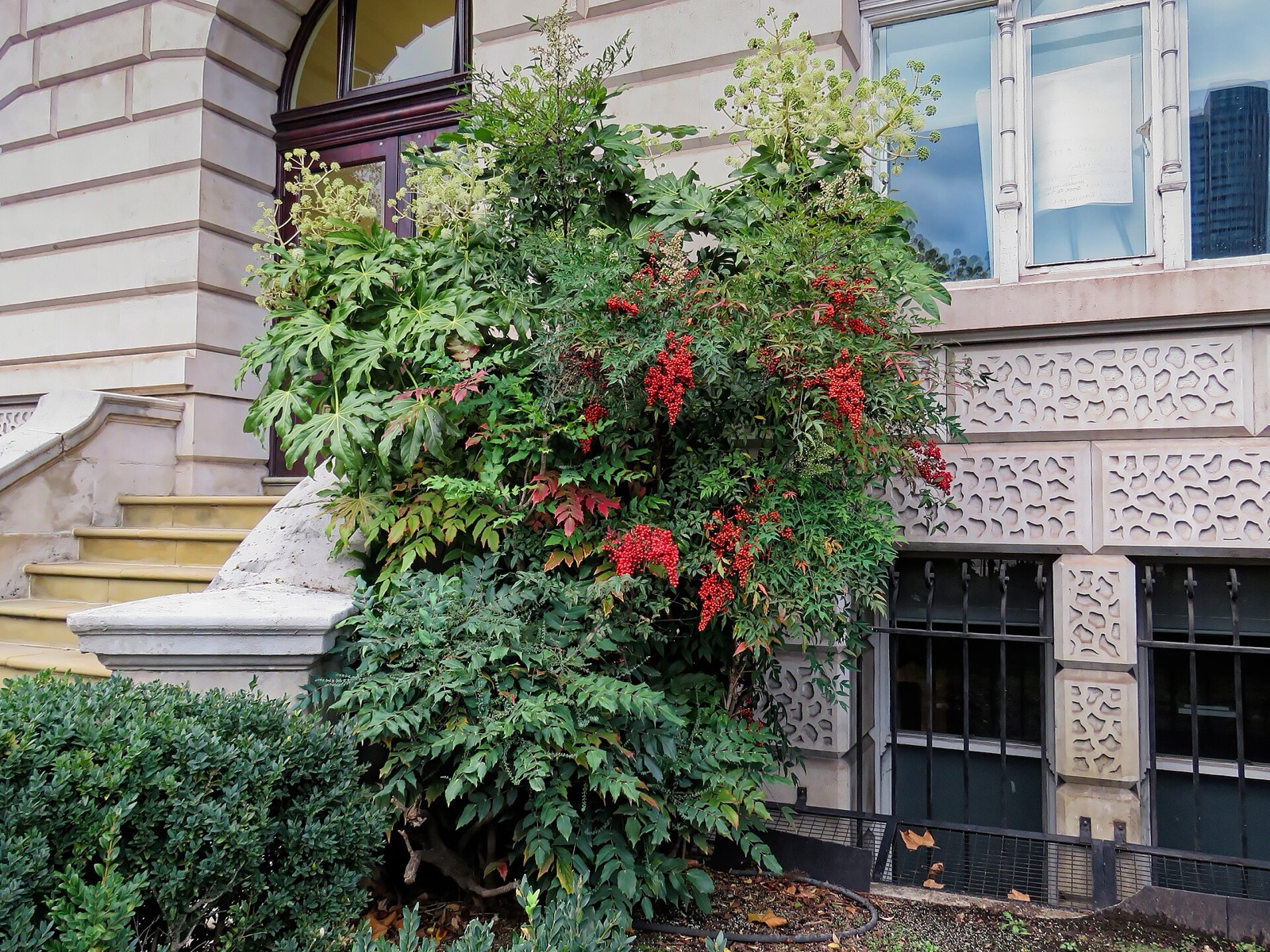
Red berries at the entrance
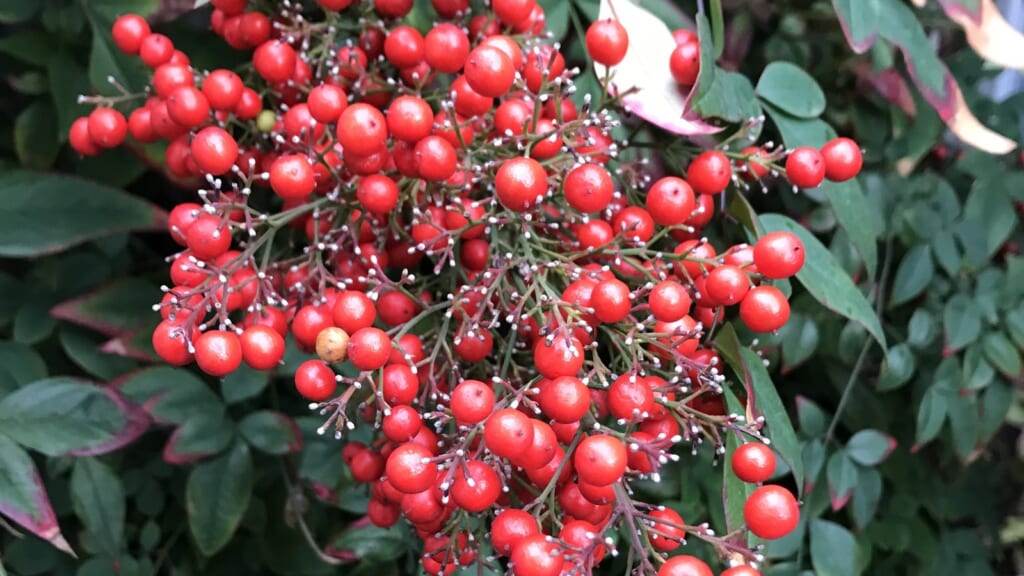
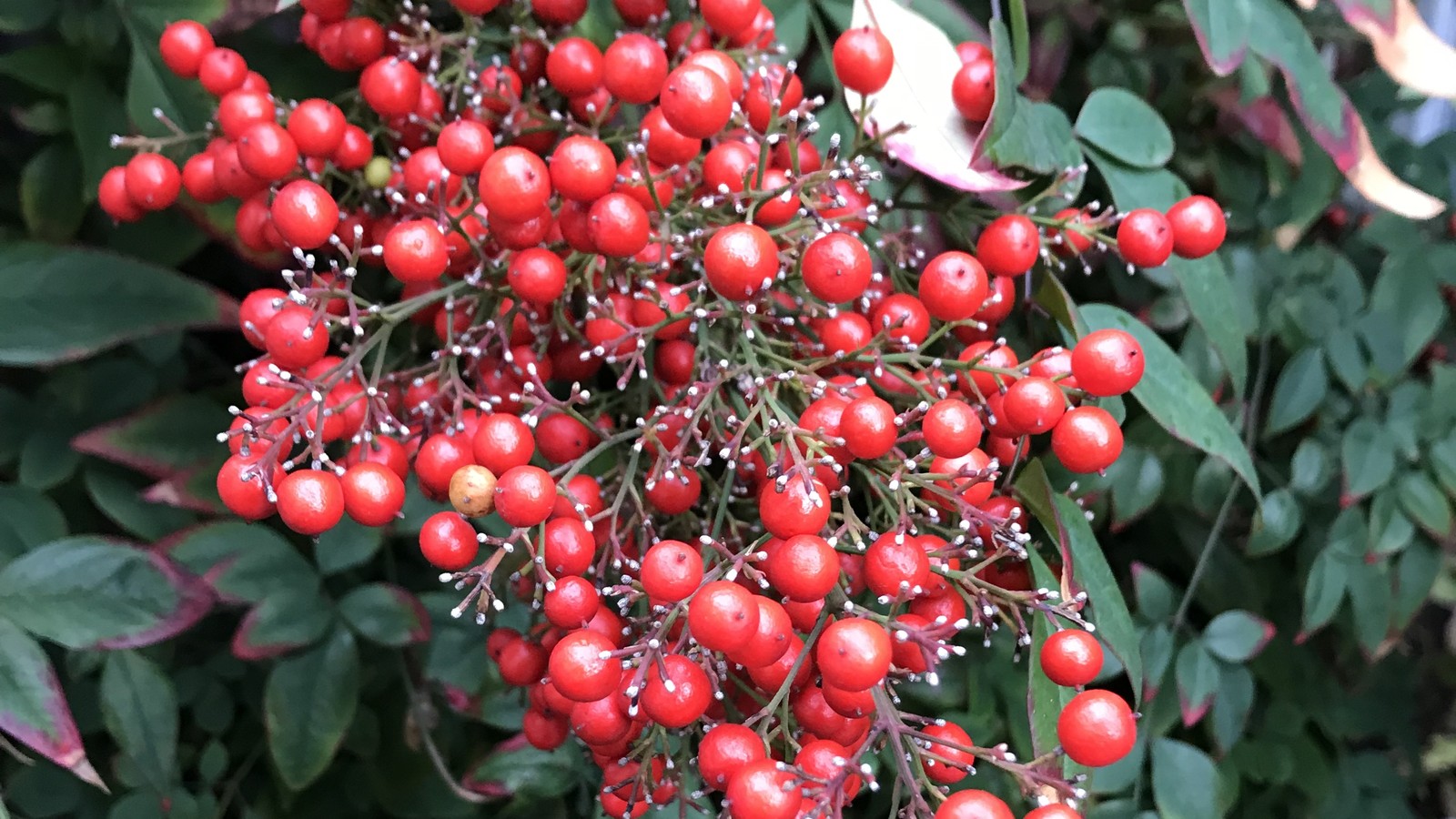
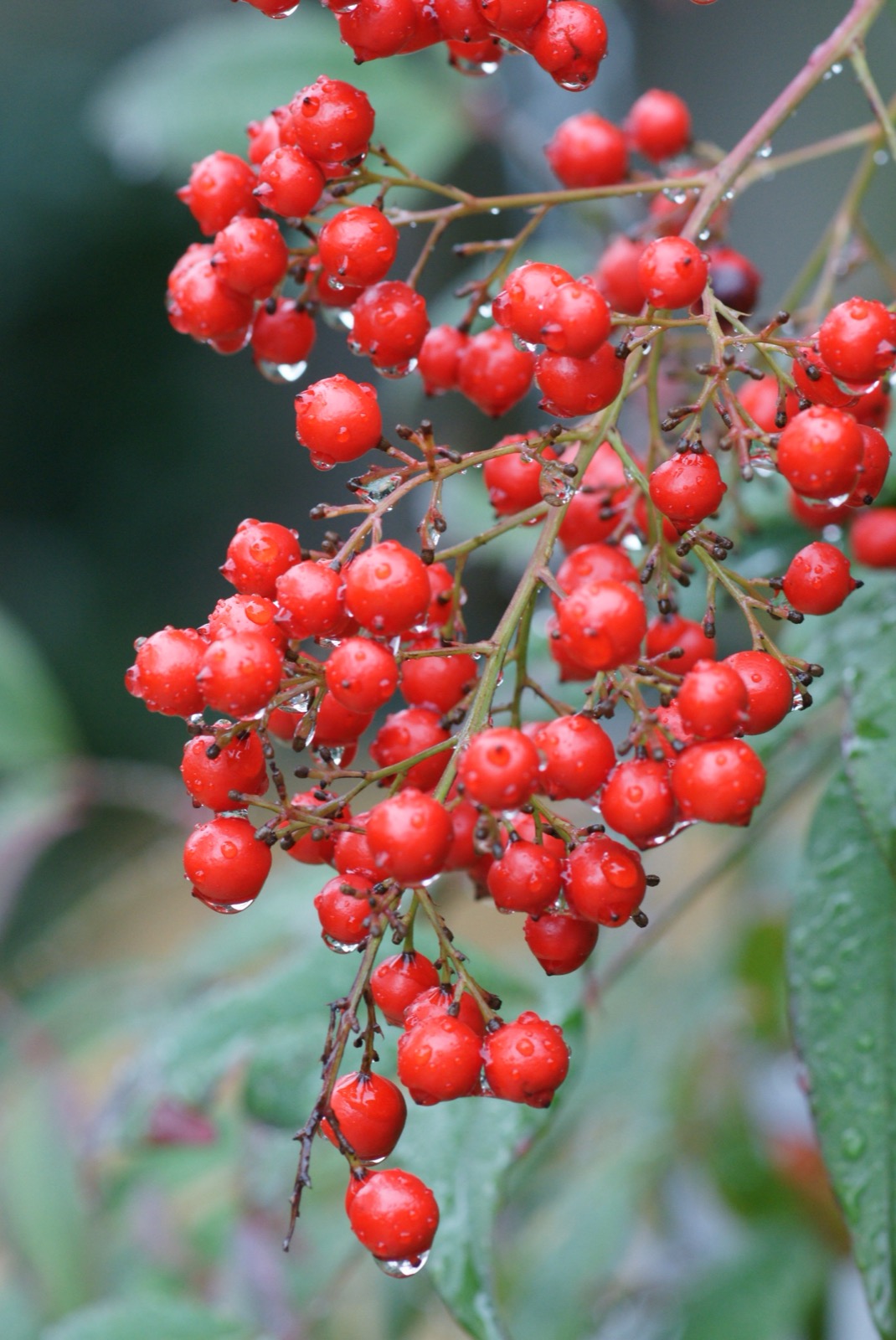
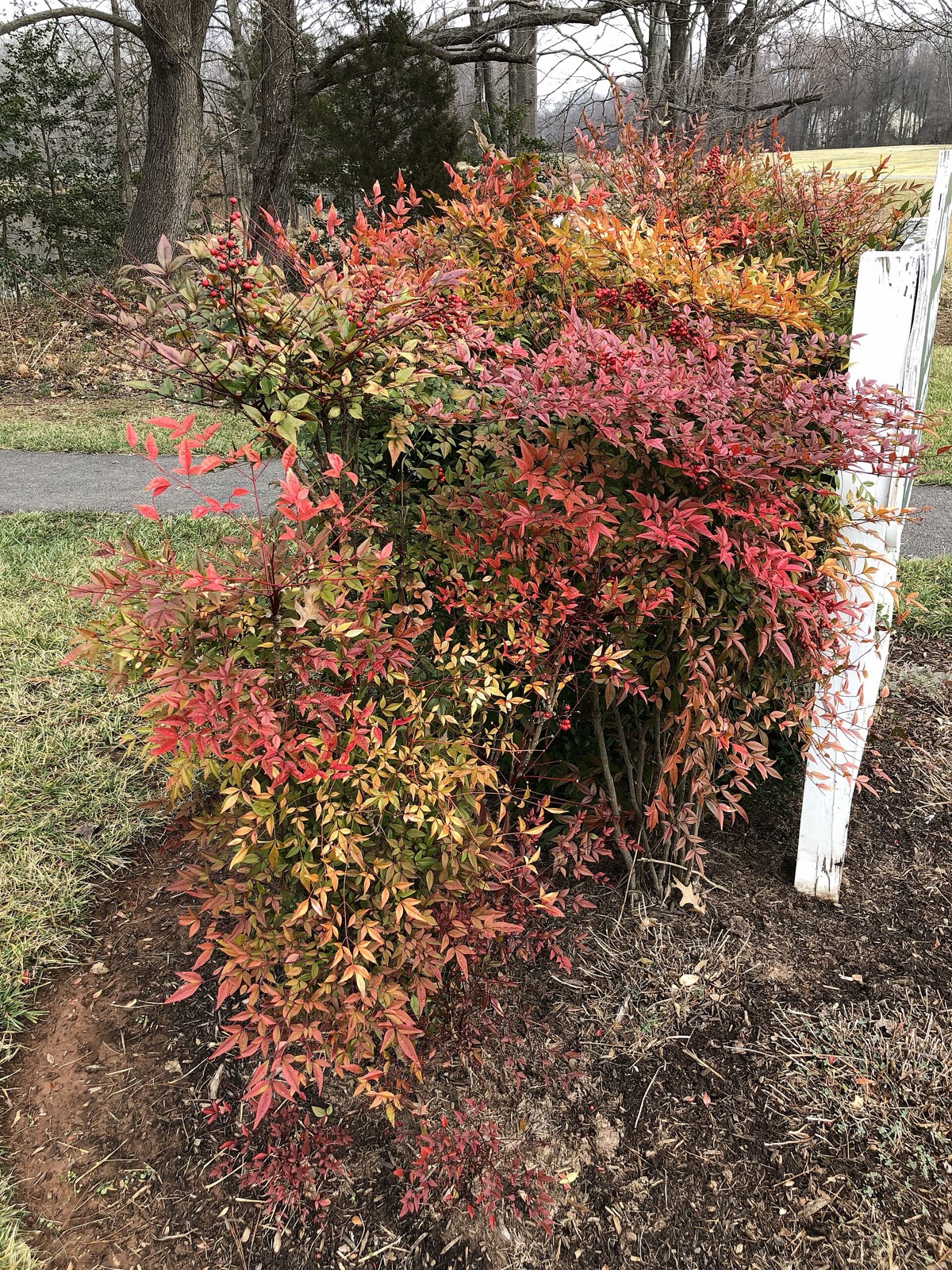
Picture a typical Japanese house front in late November. Beside the gate or next to the step up to the front door, a slender shrub with several thin, cane-like stems holds out heavy clusters of red berries, above leaves divided into many small leaflets.
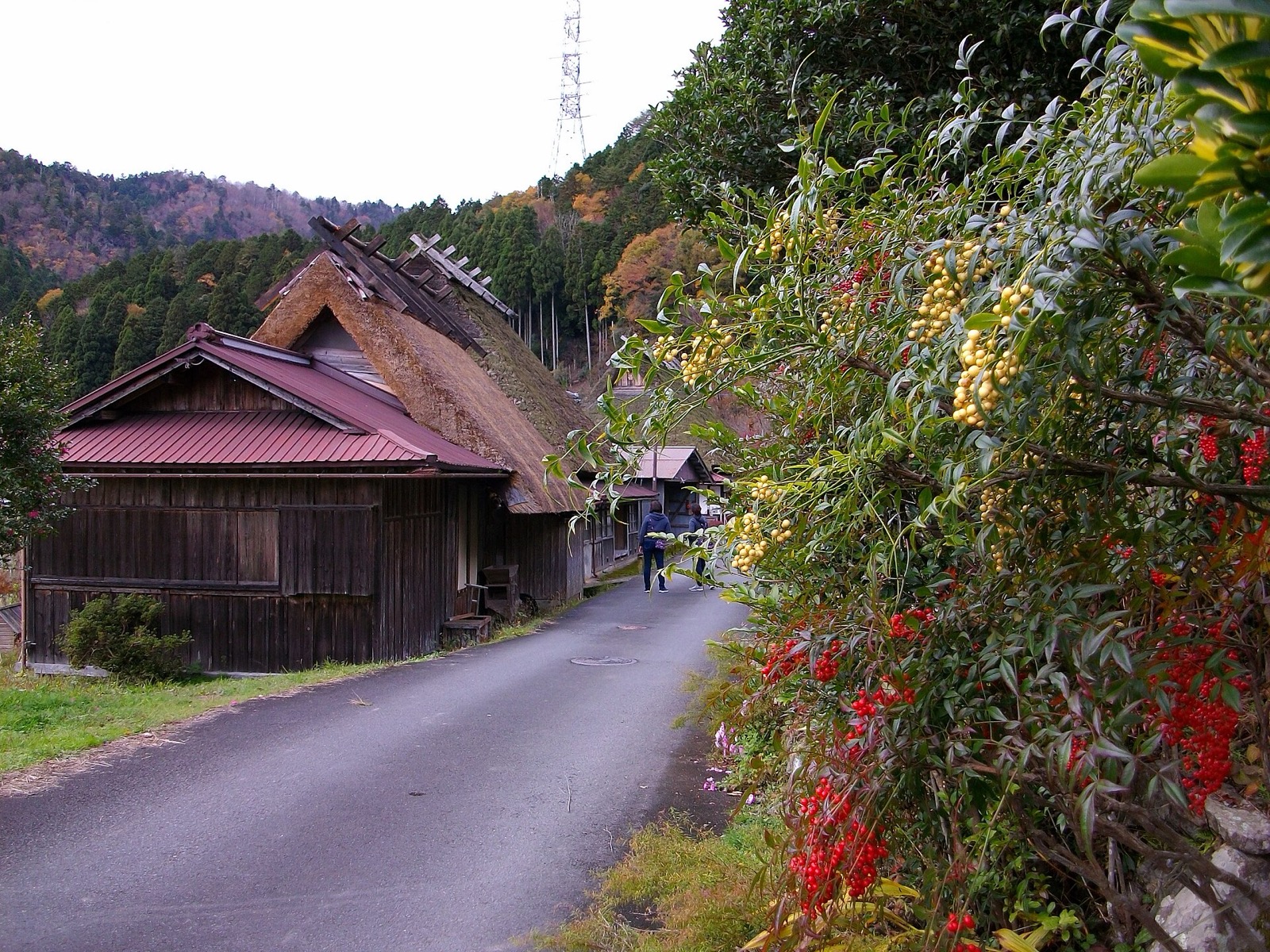
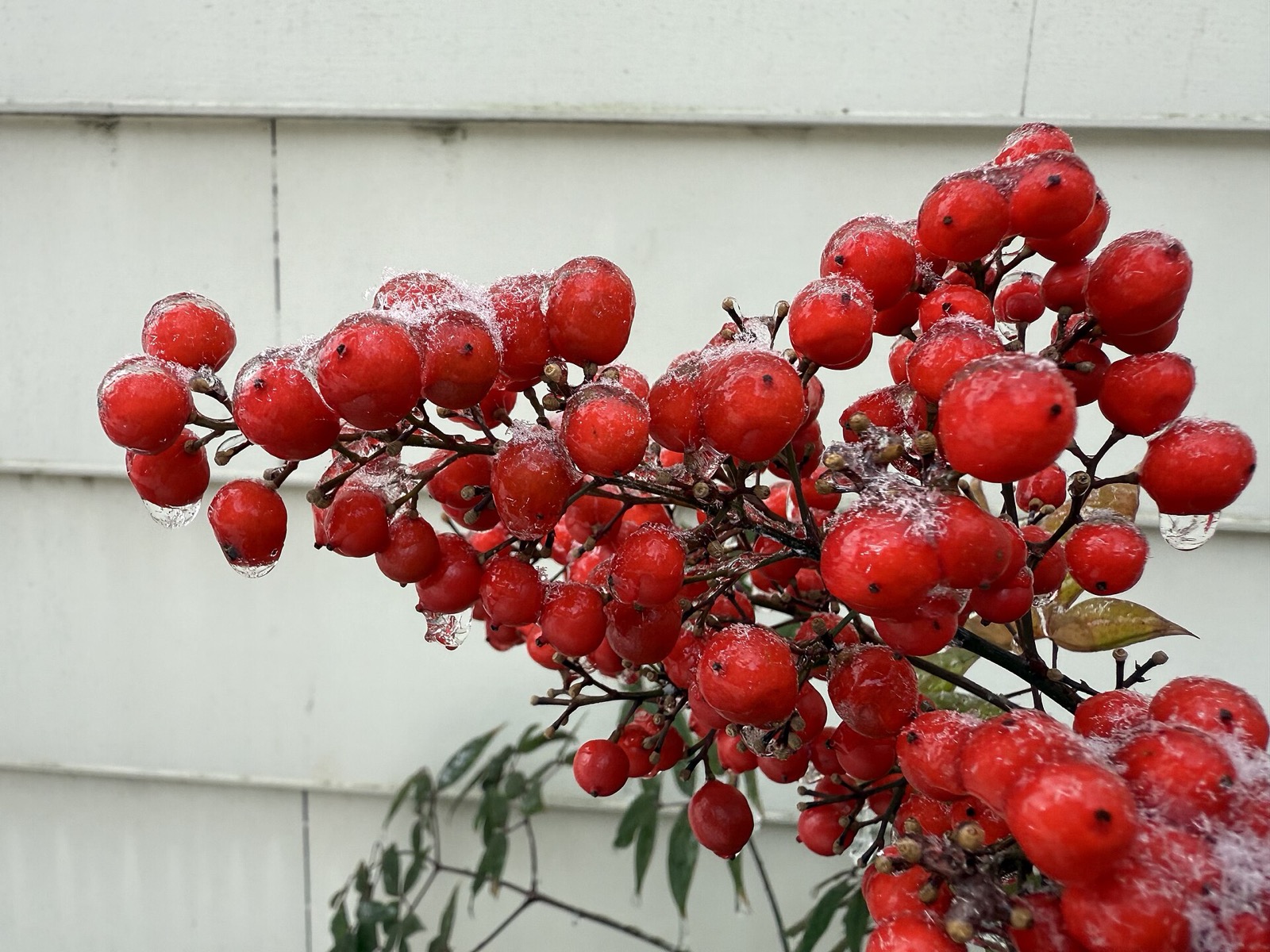
That is nandina. The Kyushu branch of Japan’s Forestry and Forest Products Research Institute (FFPRI) describes it as an evergreen shrub that flowers from May to June and ripens its fruit from November to December. So the berries are ripe as Japanese households prepare for the New Year.
One genus, one species
Botanically, nandina is easy to pin down. Toho University’s campus plant guide places Nandina domestica in the barberry family, Berberidaceae, and notes that its genus contains only one species. There is no family of nandinas to choose from, only one species and its garden forms.
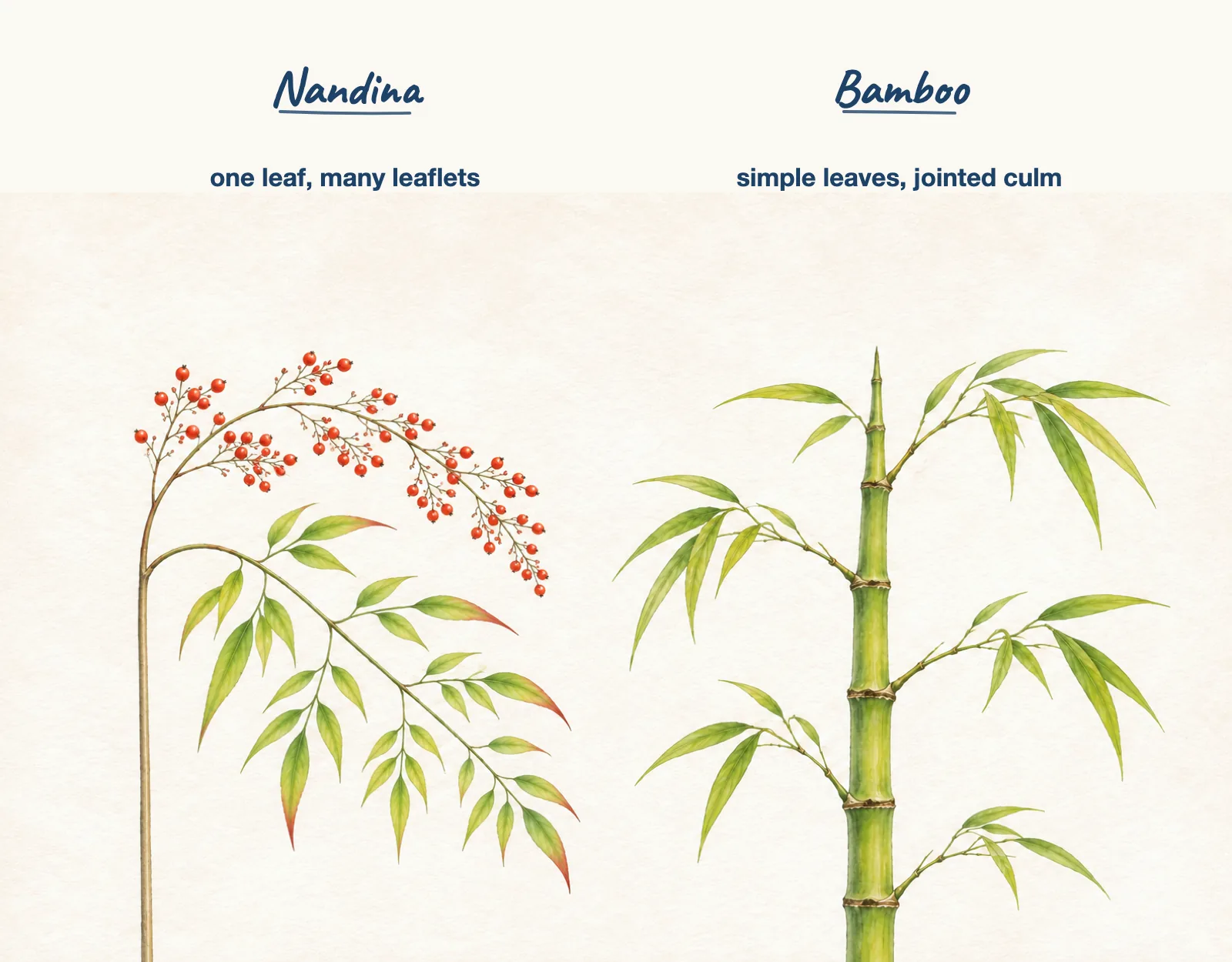
The common English names, “heavenly bamboo” and “sacred bamboo”, are misleading. The plant is not a bamboo; it belongs to the barberry family. The Japanese name, as the next section shows, comes from a Chinese one.
Where it came from is still argued
Where the plant is native is less clear than you might expect. FFPRI’s Kyushu branch says simply that it is native to China and has gone wild in western Japan. Tokyo University of Agriculture and Technology writes that whether Japan’s plants are natural or arrived from abroad “is a matter of debate”. Noda City in Chiba Prefecture, describing nandina in its local plant guide, says it is unknown whether its plants are truly wild. Other Japanese university pages describe it as growing wild in warm parts of the country.
A name that turns trouble around — nanten and nan o tenzuru
From a Chinese name to a Japanese pun
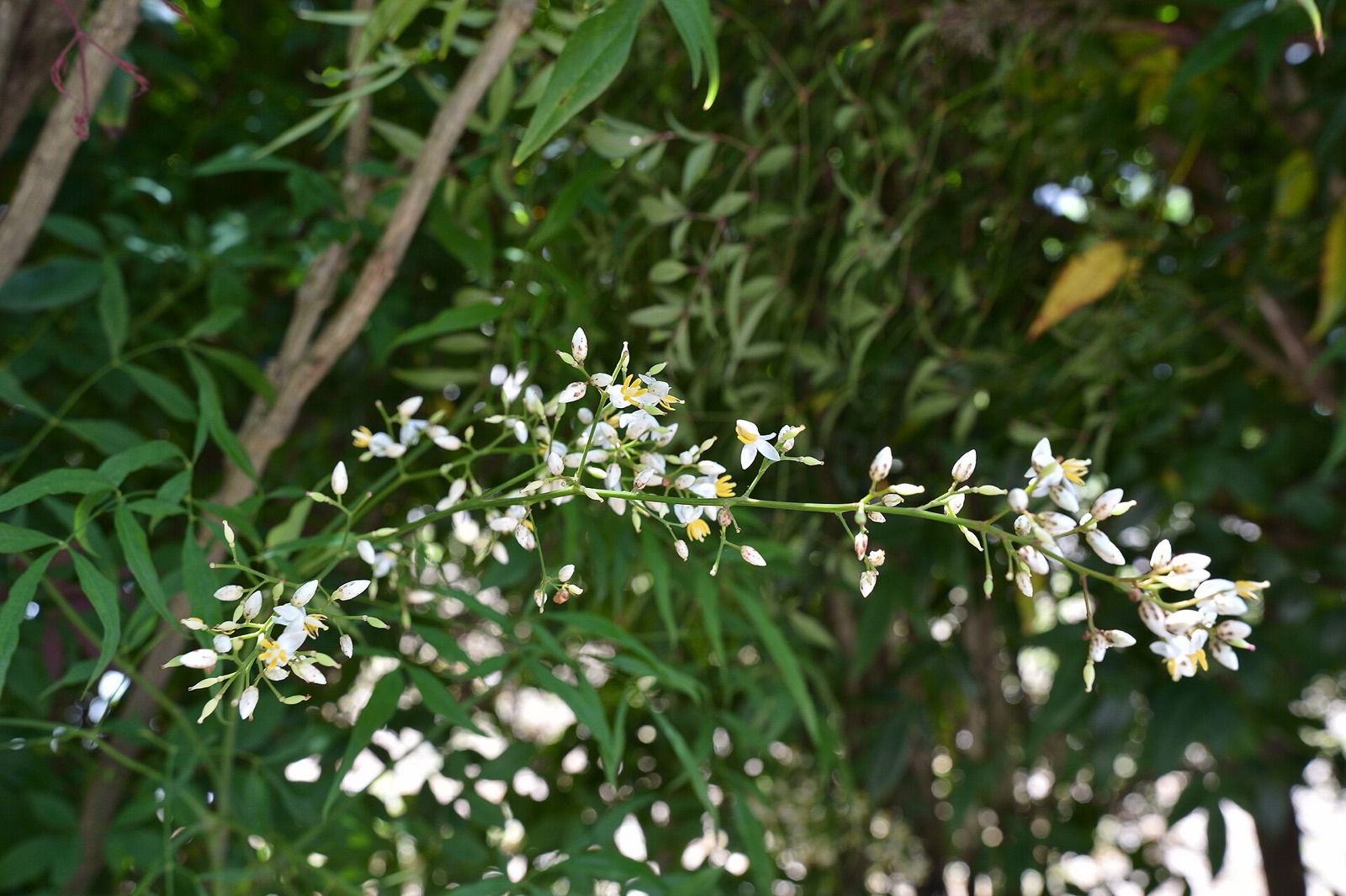
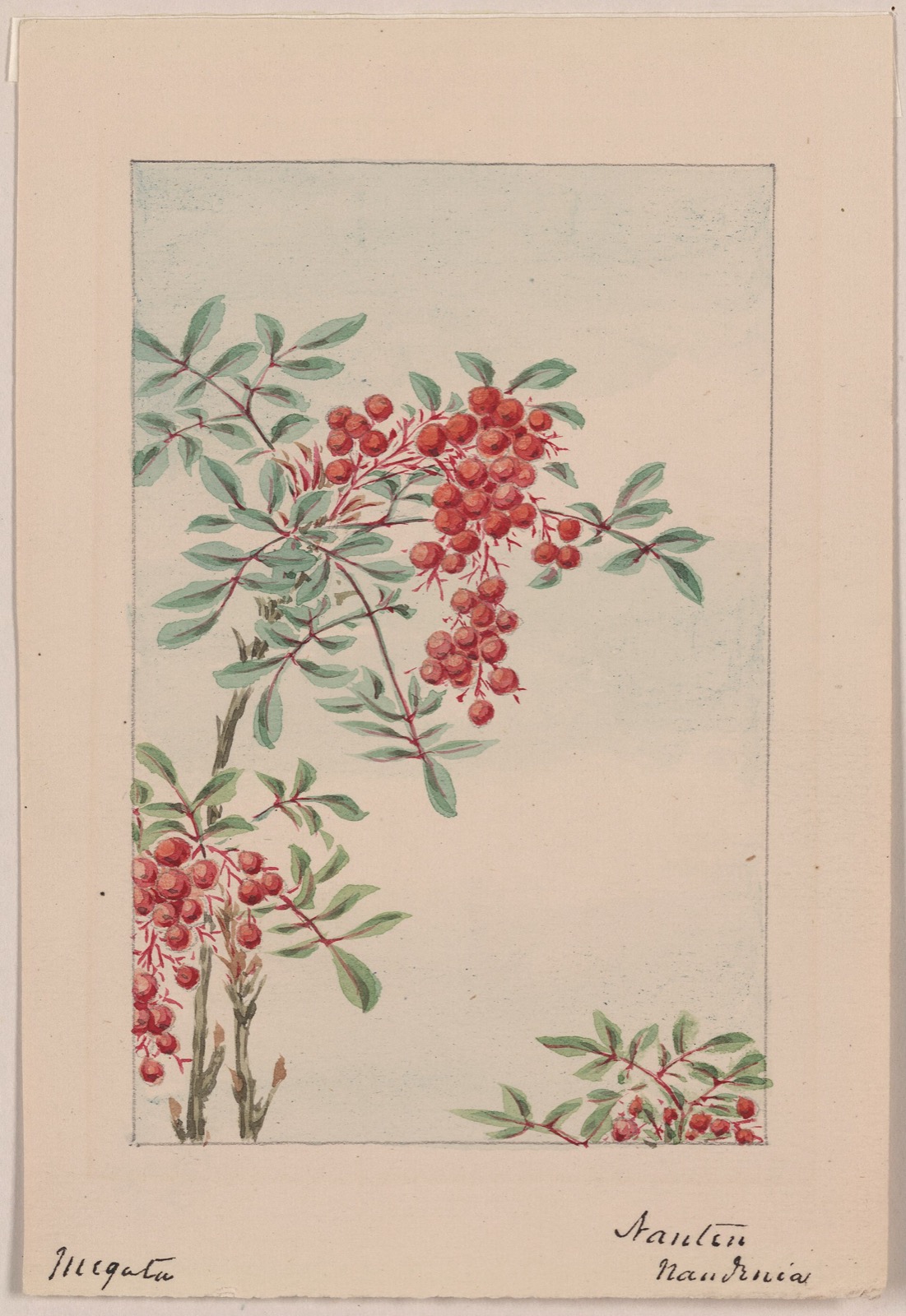
The Nagoya University Museum’s plant notes explain the name in one line: nanten is short for the Chinese name 南天燭 (nantenshoku), and it also “connects to nan o tenzuru”. In Japanese, nan (難) means difficulty or misfortune, and tenzuru (転ずる) means to turn or change. Say nanten aloud and a Japanese listener hears “turn the trouble”.
Why a pun is enough
A plant chosen for what its name says is not unusual in Japan; I looked at plants carried on family crests in the article on kamon and garden plants. For nandina, the pun helps explain several of the recorded placements below: spots where a household felt exposed to bad luck or impurity.
| Element | Japanese | Reading | Meaning |
|---|---|---|---|
| Plant name | 南天 | nanten | Nandina |
| Chinese source name | 南天燭 | nantenshoku | The Chinese name that nanten shortens |
| Misfortune | 難 | nan | Difficulty, trouble |
| To turn | 転ずる | tenzuru | To turn, to change |
| The pun | 難を転ずる | nan o tenzuru | “Turning trouble around” |
Doors, devil’s gates and wash basins — where the shrub goes
The front entrance
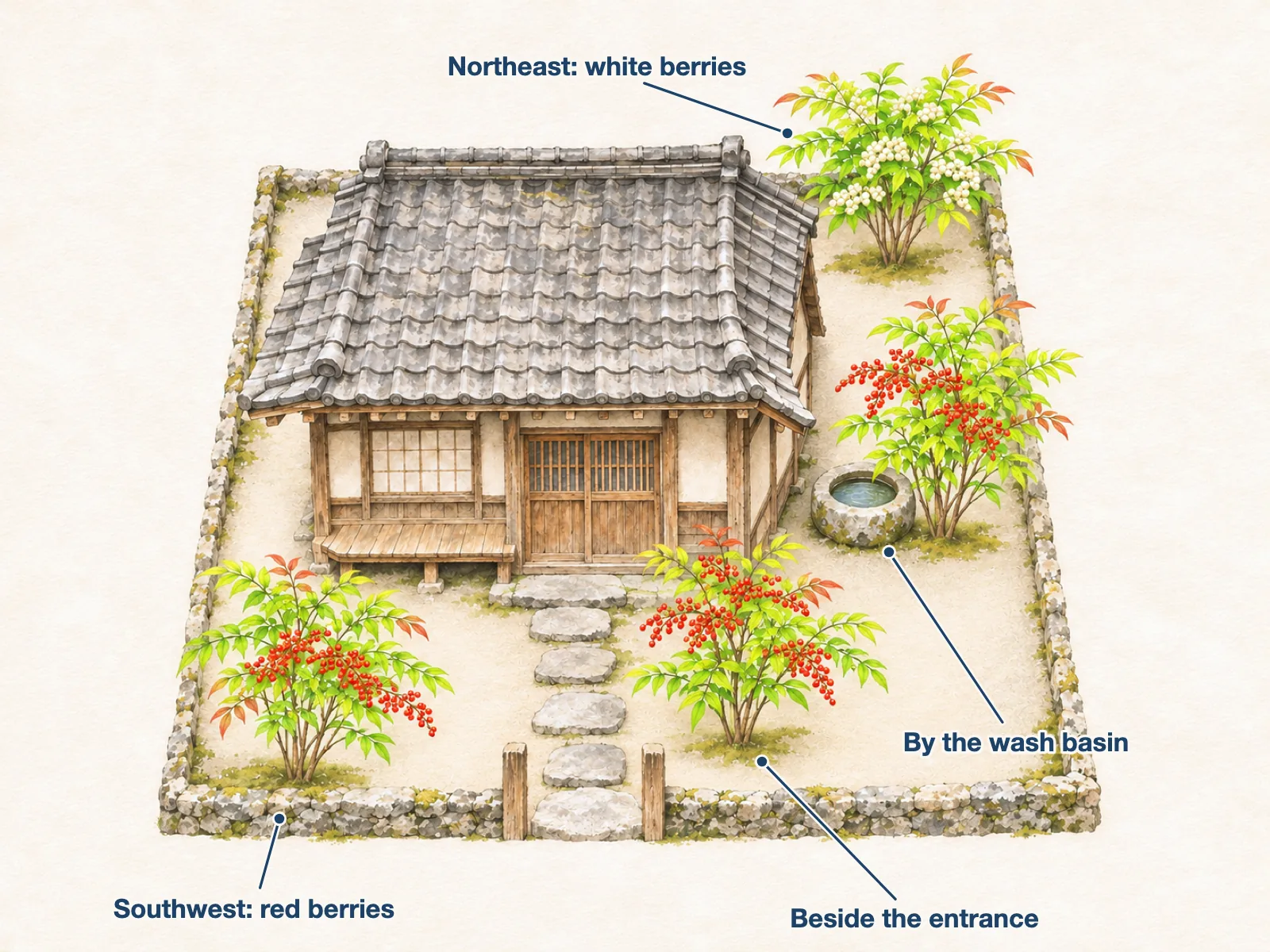
A teaching resource from Ehime University’s Faculty of Education records that nandina was planted around gateways and front entrances “to drive away evil”. Of the placements in the sources, this is the one a visitor walking past a house can see from the street.
Kimon and ura-kimon
A second placement belongs to directional belief. In Japanese directional lore the northeast is the kimon (鬼門), the “devil’s gate”, and the southwest is the ura-kimon (裏鬼門), the “back devil’s gate”. Kyoto City Zoo’s plant notes give one version of the custom: white-fruited nandina in the northeast, red-fruited nandina in the southwest.
I have not found a source showing that this was a single rule across Japan; I read it as one version among several.
Beside the wash basin and the toilet
The third placement surprises many readers. The Ehime University resource also records nandina being planted near the chōzubachi (手水鉢), the stone wash basin, and near the toilet, with the sense of purifying what is unclean. The International Research Center for Japanese Studies holds a folklore record collected in Kanagawa Prefecture in 1940 that states it plainly: “Plant nandina beside the toilet.”
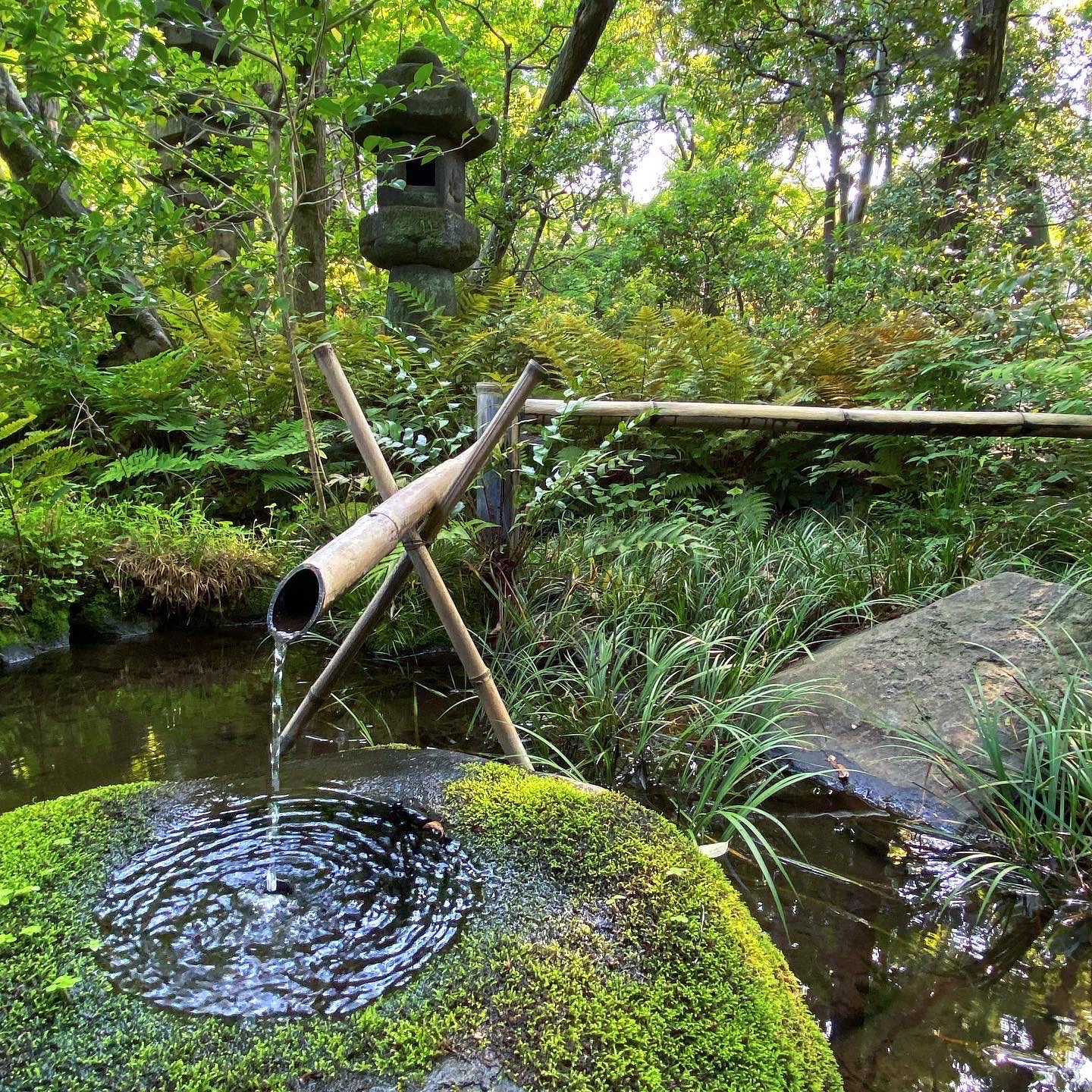
That record is evidence of a belief, not of any effect.
| Where it is planted | Traditional reason | Source |
|---|---|---|
| Gateway, front entrance | To drive away evil | Ehime University teaching resource |
| Northeast (kimon) | White-fruited form, one version of directional lore | Kyoto City Zoo |
| Southwest (ura-kimon) | Red-fruited form, same version | Kyoto City Zoo |
| Beside the wash basin | To purify what is unclean | Ehime University teaching resource |
| Beside the toilet | Same; recorded as folk belief in Kanagawa, 1940 | International Research Center for Japanese Studies |
A pillar at Kinkaku-ji — the Sekkatei tea house
The tea house above the Golden Pavilion
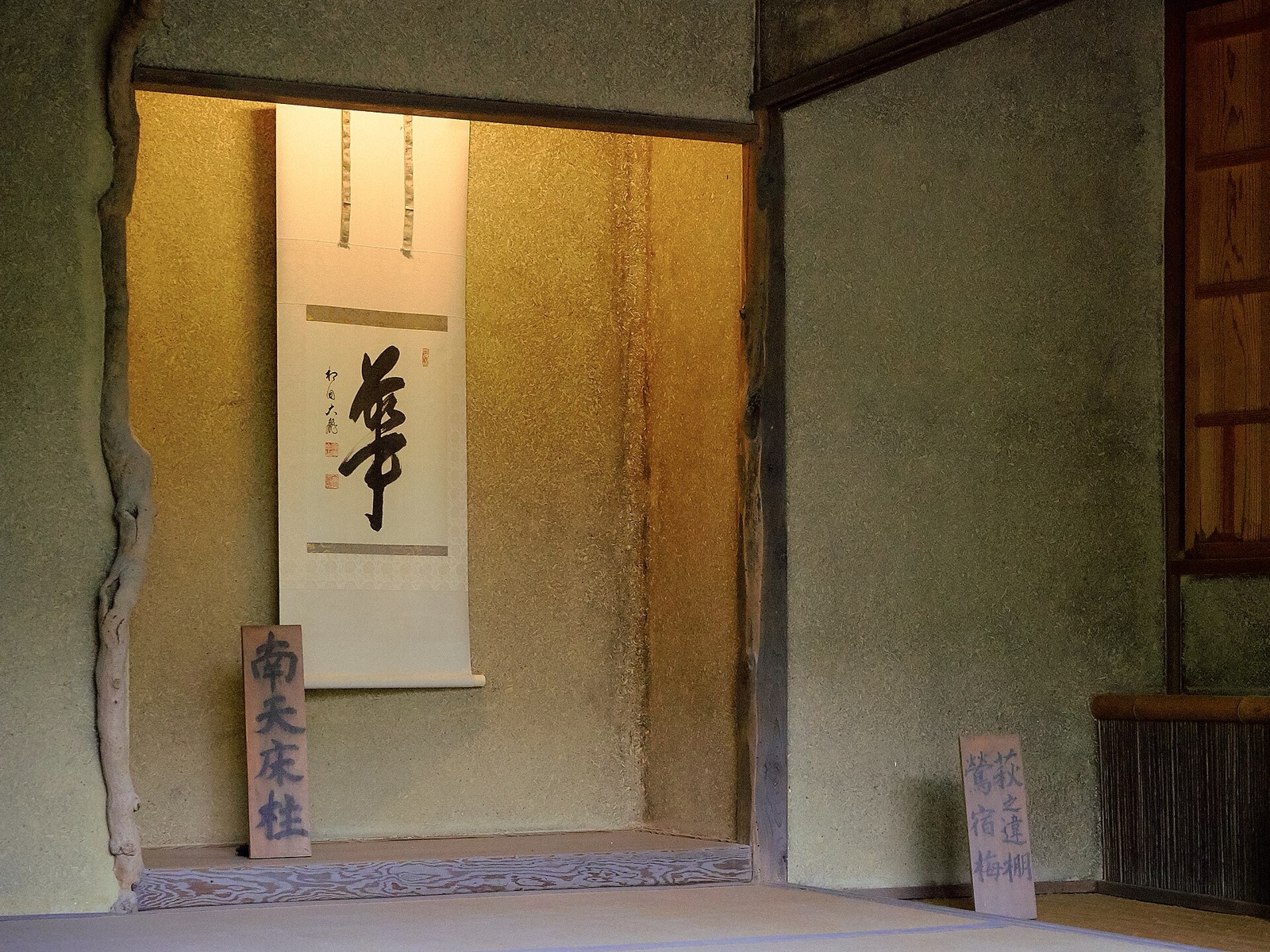
One of the best-known uses of nandina in Japan is not a shrub at all. In the grounds of Kinkaku-ji (金閣寺, Rokuon-ji) in Kyoto stands the Sekkatei (夕佳亭), a small tea house. A Kyoto Prefecture cultural document states that its tokobashira (床柱), the decorative post of the alcove, is made of “thin, winding nandina”.
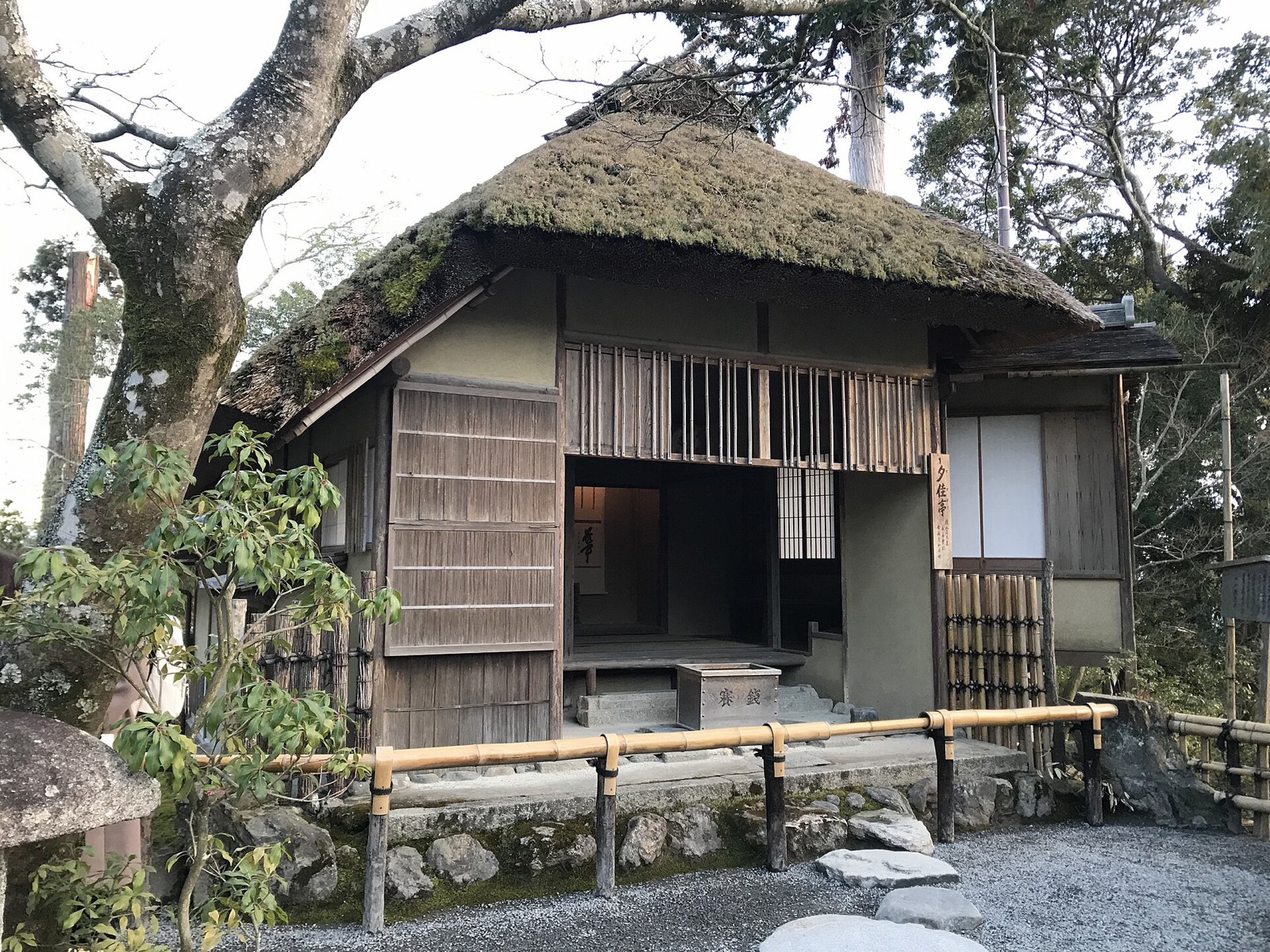
A tokobashira is the post at the side of the tokonoma, the alcove where a scroll or flowers are displayed.
What the records say, and how they say it
The same prefectural document dates the present building to a rebuilding in 1874 and says it was originally in the taste of Kanamori Sōwa (金森宗和), the tea master, and is said to be the room where tea was offered to Emperor Go-Mizunoo. The Shōkoku-ji school’s own magazine, Enmyō, says the abbot of the time, Hōrin Shōshō (鳳林承章), is said to have had Kanamori Sōwa build it, that it was lost in the early Meiji period, and that it was rebuilt in Meiji 7 (1874).
Both sources say “is said to”. The link to Sōwa and the emperor is recorded as tradition.
Is the pillar really nandina?
I could not find a published wood identification, by anatomy or DNA, that confirms the prefecture’s description. The fairest statement is that the Sekkatei is known for its nandina alcove post: a temple tea house that features the wood of a lucky shrub beside its alcove.
Red berries for the New Year — kadomatsu, shimenawa and a leaf on the rice
A flower-arranging material for winter
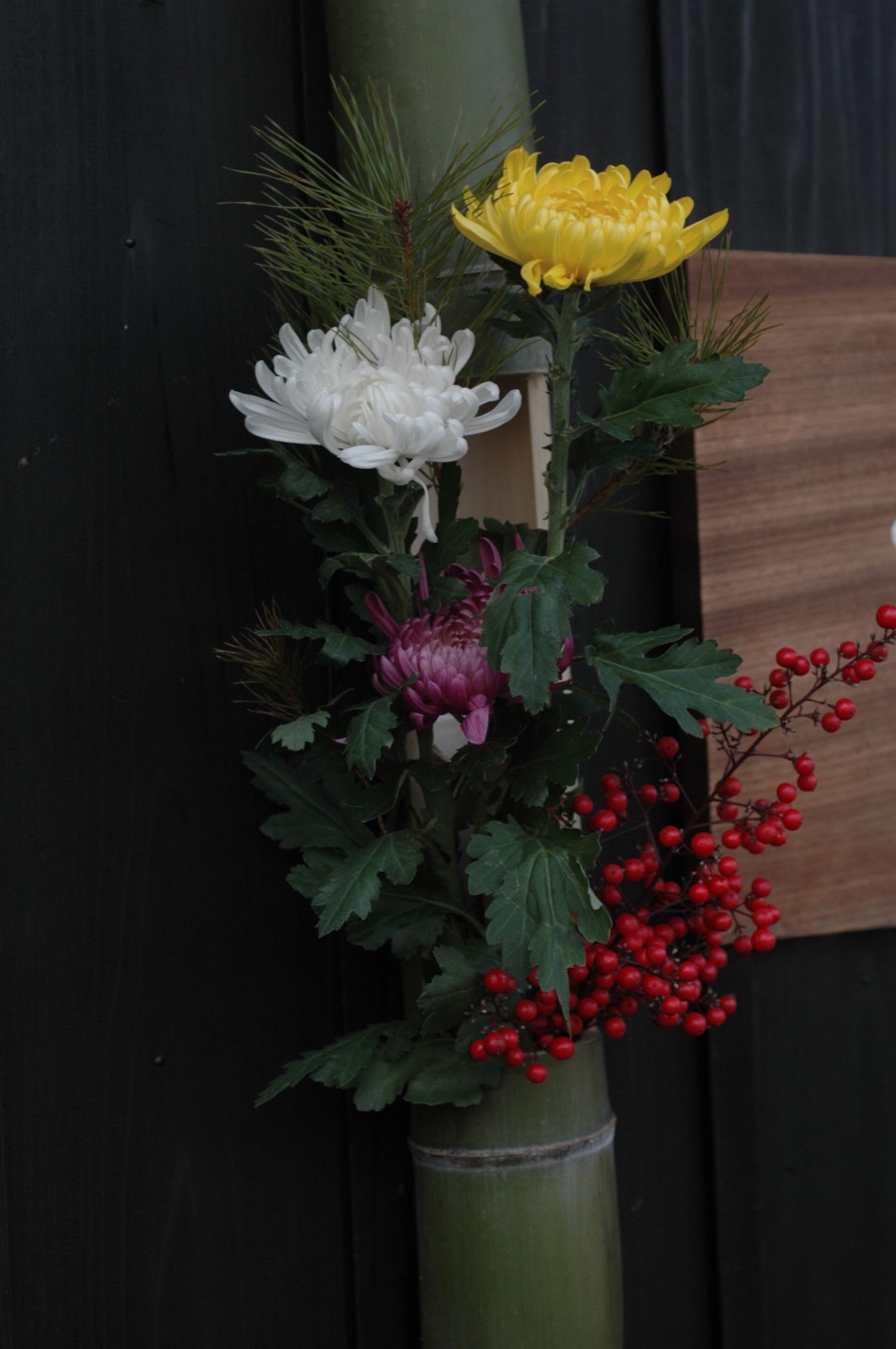
Japan’s Ministry of the Environment, reporting on the berries at the Kokyo Gaien National Garden in Tokyo, calls nandina a material that colours the Japanese winter “in New Year decorations and the like”. The timing explains why. The fruit ripens from November to December, so the berries are ripe around the New Year.
In the kadomatsu and the rope decorations
Nandina turns up in the pine-and-bamboo gate decorations of the New Year. The Chugoku-Shikoku office of the Ministry of the Environment, describing how to make a kadomatsu (門松), lists black pine, white plum and, if available, white nandina for the left-hand piece. A Nara City kindergarten reports children finishing their shimenawa (しめ縄) rope decorations with rice ears and nandina berries.
If you want the full anatomy of a kadomatsu, and why the bamboo is cut the way it is, see the kadomatsu article. Nandina is one of the accent plants; the pun travels with it.
A leaf on the sekihan
The custom most visitors never notice is a single leaf. Kumamoto University’s medicinal plant pages record that a nandina leaf is laid on New Year osechi dishes and on sekihan (赤飯), the red rice served at celebrations. FFPRI’s Kansai branch gives the traditional reason carefully: the leaf was believed to have the power to prevent food from spoiling and to neutralise poison.
Here the evidence needs a clear line. There is laboratory work on the antibacterial activity of nandina leaf extract, including a 2018 study by Guo and colleagues that tested extract added to culture plates. That is not the same as showing that one leaf laid on a box of rice keeps it fresh longer. I found no controlled study of that. So the honest summary is: the leaf is part of a custom built on a belief, and the belief has a plausible chemical background, but the practical effect has not been demonstrated.
| Use | What is done | What the sources support |
|---|---|---|
| Kadomatsu | White nandina beside pine and plum | Ministry of the Environment instructions |
| Shimenawa | Berries added to the rope decoration | Nara City kindergarten report |
| New Year material | Berried branches in arrangements | Ministry of the Environment |
| Leaf on sekihan and osechi | A single leaf on top | Custom recorded by Kumamoto University; preservative power “believed”, per FFPRI |
| Laboratory evidence | Leaf extract tested on bacteria | Guo et al. 2018; not a test on food |
From the doorway to the pharmacy — nantenjitsu
A crude drug from the berries
The berries also have a medical life. Nantenjitsu (南天実), the dried fruit, is listed in the Japanese Standards for Non-Pharmacopoeial Crude Drugs 2022, published by the Ministry of Health, Labour and Welfare. The standard defines it as the fruit of the white-fruited form or of ordinary nandina. It is worth being precise: this is a standard for crude drugs outside the Japanese Pharmacopoeia, not the Pharmacopoeia itself.
What is in the fruit
Chemists have studied the berries for decades. The Tokyo Crude Drug Association lists alkaloids in the fruit including domestine and methyldomesticine, along with protopine. A 1957 paper on the alkaloids of white nandina fruit treats nantenine as a synonym of domestine, so the names in older and newer sources overlap. Kumamoto University’s medicinal plant garden lists nantenine, isocorydine and higenamine among the fruit’s alkaloids.
Nanten throat drops
One familiar form of nantenjitsu is a sweet. Tokiwa Pharmaceutical describes its Nanten Nodo Ame (南天のど飴, “nanten throat drops”) as a medicine containing dried nantenjitsu extract as its active ingredient, indicated for coughs and symptoms of throat inflammation. A shrub planted by the toilet to turn misfortune around also ends up in a regulated cough medicine, which says a lot about how fully Japan has absorbed it.
The fruit’s chemistry comes back later in this article: the berries also contain compounds that can release cyanide, which is the basis of the American concern for birds.
Edo collectors — kinshi nanten and the cult of odd leaves
Leaves, not flowers
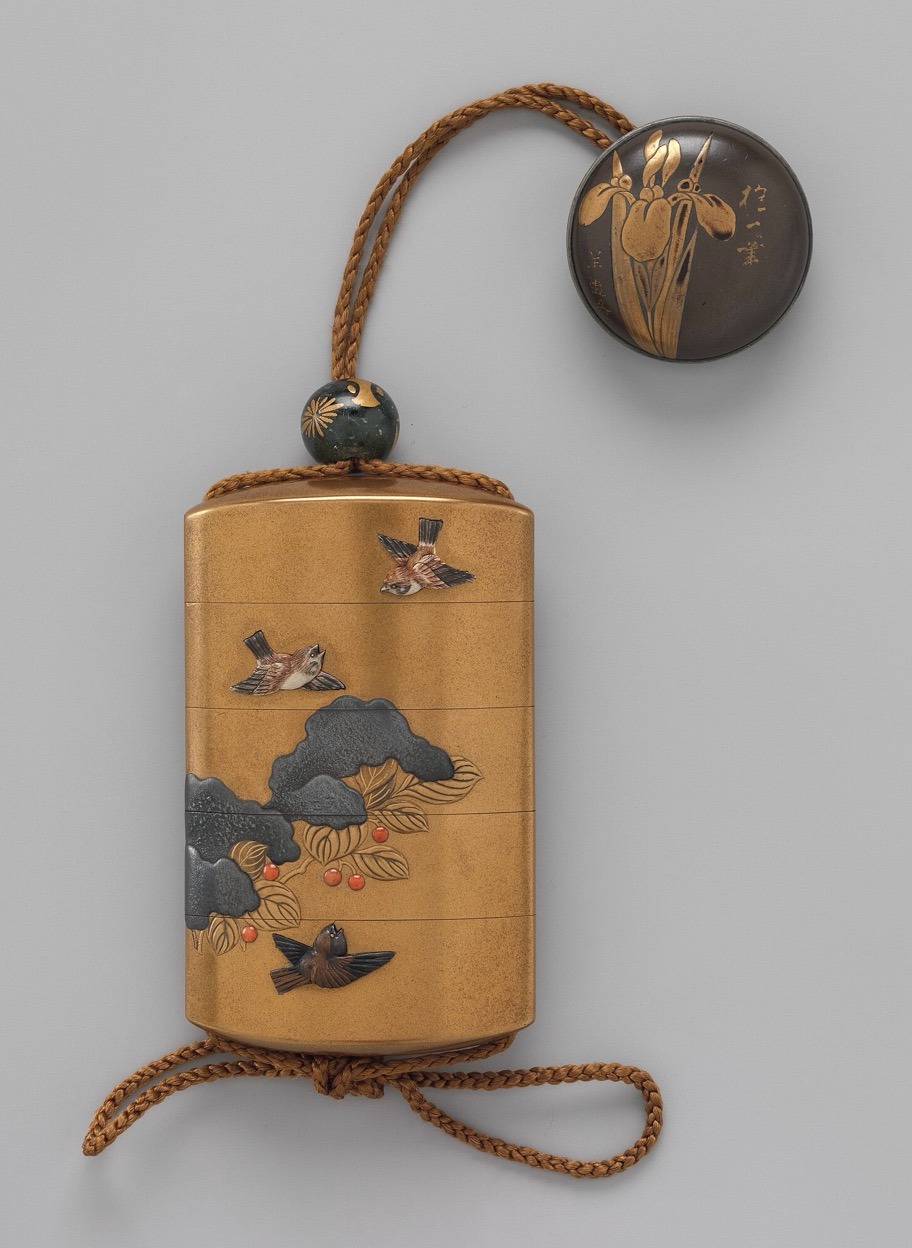
In the Edo period, nandina became a collector’s plant. Tokyo University of Agriculture and Technology notes that many forms were developed, including kinshi nanten (錦糸南天), whose leaves are reduced to threads. The Edo-Tokyo Museum, reporting on its exhibition of Edo horticulture, placed kinshi nanten among the plants of kihin engei (奇品園芸), “odd-plant gardening”, in which collectors prized the pattern of the leaves and the plant’s posture above its flowers.
A fashion of the Bunsei years
A horticultural history timeline from Nihon University lists nandina among the plants in fashion in the Bunsei era (1818–1830), alongside karatachibana, podocarpus, holly olive and omoto. The same timeline gives morning glories for the preceding Bunka era, so it is the Bunsei years, not the whole period, that the source ties to nandina.
How Japanese gardeners keep it — renewal from the base
Usually little pruning; thin crowded plants in spring
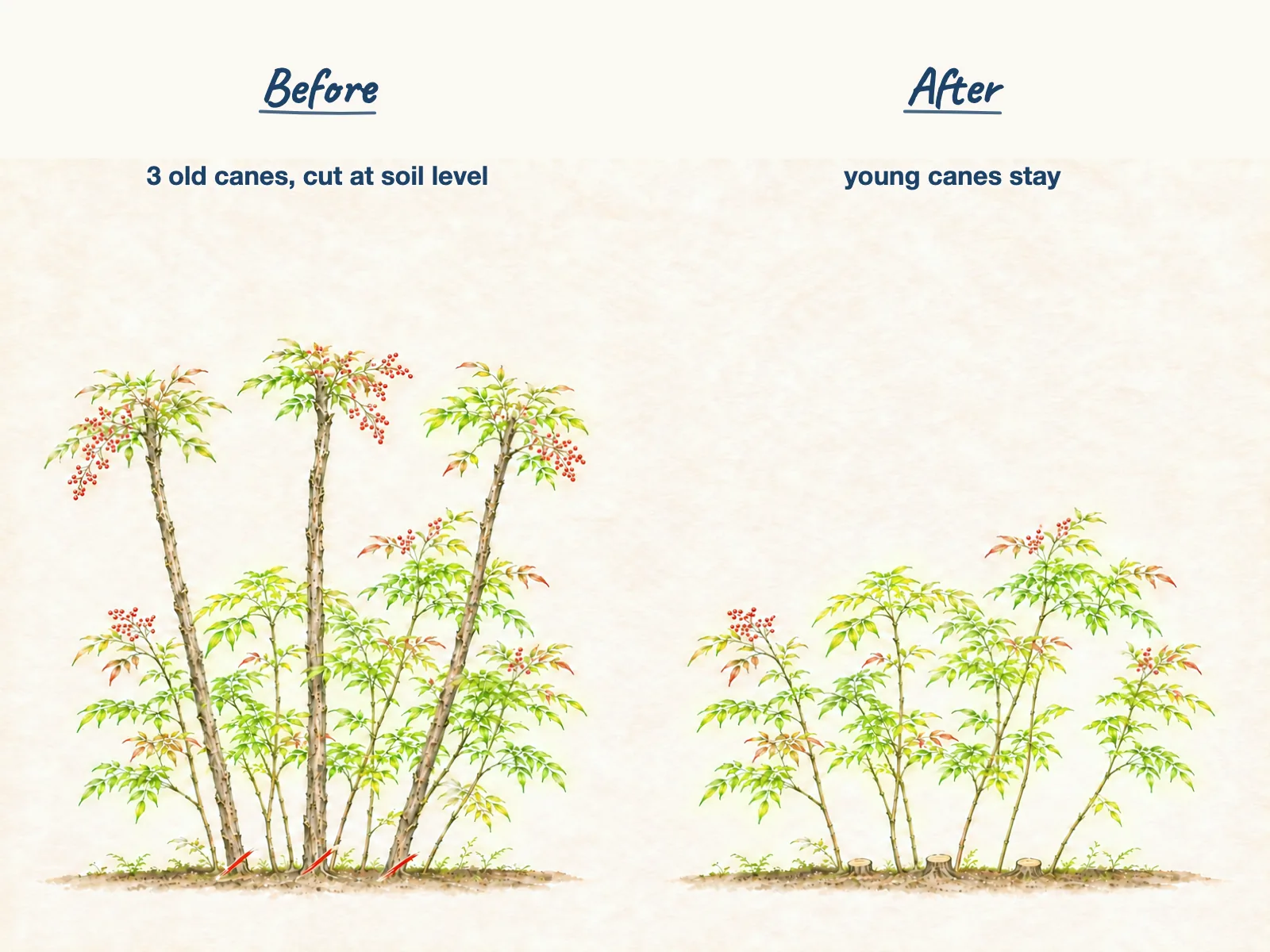
A Toshima City growing guide says that nandina normally needs almost no pruning. If the plant becomes crowded or leggy, the guide recommends cutting stems back, or cutting them at ground level, in March or April.
Swap old canes for new ones
Tottori Prefecture’s planting maintenance manual treats nandina as a multi-stemmed shrub and gives a single instruction: replace old stems with the new stems that rise from the base. This is renewal pruning. Instead of shortening every cane, the gardener removes the oldest canes completely, and the young ones that have come up from the roots take their place.
What the calendar implies for berries
Combine the two calendars. Flowers come in May and June; berries ripen in November and December. A March or April cut comes before flowering, so the canes that are left can still bloom and fruit that year. A clipping in early summer, after the flowers open, would remove the clusters, and with them the berries. I did not find a Japanese municipal guide that spells out this second point, so treat it as a reading of the calendar, not a quoted rule.
| Step | When | What | Source |
|---|---|---|---|
| Usual care | Year-round | Little or no pruning | Toshima City |
| Thinning crowded plants | March–April | Shorten stems or cut at ground level | Toshima City |
| Renewal | When stems age | Replace old stems with new basal shoots | Tottori Prefecture |
| Flowering | May–June | Leave the clusters if berries are wanted | FFPRI (season) |
| Berries | November–December | Cut branches for New Year use | FFPRI (season); Ministry of the Environment (use) |
Across the Pacific — how nandina became an American favourite
Early 1800s
The USDA Forest Service’s species review says nandina came to the United States in the early 1800s. A USDA document posted by the Natural Resources Conservation Service gives 1804 for its introduction as an ornamental, but other American extension sources give 1804 as the year it reached Britain or Europe. Since the sources disagree on what happened in 1804, “early 1800s” is the safe statement for America.
Why gardeners loved it
The reasons are Japan’s, minus the pun. The USDA document points to the evergreen foliage, white spring flowers and attractive bright red berries. Clemson University’s Home & Garden Information Center (HGIC) adds that it is heat- and drought-tolerant. In a hot southern garden, a shrub that stays green, needs little pruning and turns out red berries in winter is an easy sell.
And then it left the garden
By 2009, the Forest Service review reports, forest surveys had detected nandina in 9 of the 12 southern states they covered. That is a record of the plant in forests, not a current national map, but it shows the direction of travel: from foundation planting to woodland understorey.
Why America pulls it out — the invasive case
What Clemson says
Clemson HGIC states that nandina has “naturalized in forests and woodlands” in the Southeast and that the South Carolina council lists it as a “significant threat”. Its advice on planting is direct: cultivars that produce abundant fruit “are not recommended”. It also suggests using low-fruiting cultivars, and removing flowers or fruit clusters from plants you keep.
A patchwork of lists
Outside the extension services, the main voices are the regional invasive plant councils. Their lists are assessments, not laws, and several say so on the page.
| State | Body | Status of Nandina domestica | Legal force |
|---|---|---|---|
| Florida | Florida Invasive Species Council (2025 list) | Category I in north and central Florida | Council list; see note on state rules below |
| South Carolina | SC Exotic Pest Plant Council | Significant Threat (shrubs) | Council list |
| Georgia | UGA Extension, citing Georgia EPPC | Category 2 invasive plant | GA-EPPC states its list has no regulatory authority |
| Tennessee | Tennessee Invasive Plant Council | Emerging (natural areas list) | TN-IPC states its lists have no regulatory authority |
| Alabama | Alabama Invasive Plant Council | Watch list A; scattered, local infestations in natural areas | Council list |
| Texas | Texas Invasives database | Listed | Federal and Texas noxious weed fields both 0 |
Where the law has moved
Two states have gone further than lists. Maryland’s Department of Agriculture includes the species on its prohibited invasive plant list, with dates for ending sales of existing stock: 15 January 2027 for container stock and 15 January 2028 for field-grown stock. Three cultivars are exempt: ‘AKA’ (Blush Pink), ‘Firepower’ and ‘Lemon-Lime’.
Virginia takes a labelling route. Under Virginia Code §3.2-3801.1, from 1 January 2027 retail sales of listed plants for outdoor use, nandina among them, must carry a warning. The plant can still be sold.
Florida is the case to be careful with. The University of Florida’s IFAS Assessment page, updated in 2026, shows the straight species as “Prohibited” across the state. But the state rule history that could be checked, and the state’s noxious weed field guide, did not show nandina, and a 2026 rule committee meeting with nandina on its agenda was announced without a confirmed outcome. So I will not write that Florida has banned its sale; the accurate statement is that UF/IFAS advises against the species everywhere in Florida.
So “America bans nandina” is wrong. Across much of the Southeast the pressure is advice; Maryland is phasing out sales with exemptions, and Virginia lets it be sold with a warning.
The waxwing question — what the bird deaths do and do not show
Thomas County, Georgia, April 2009
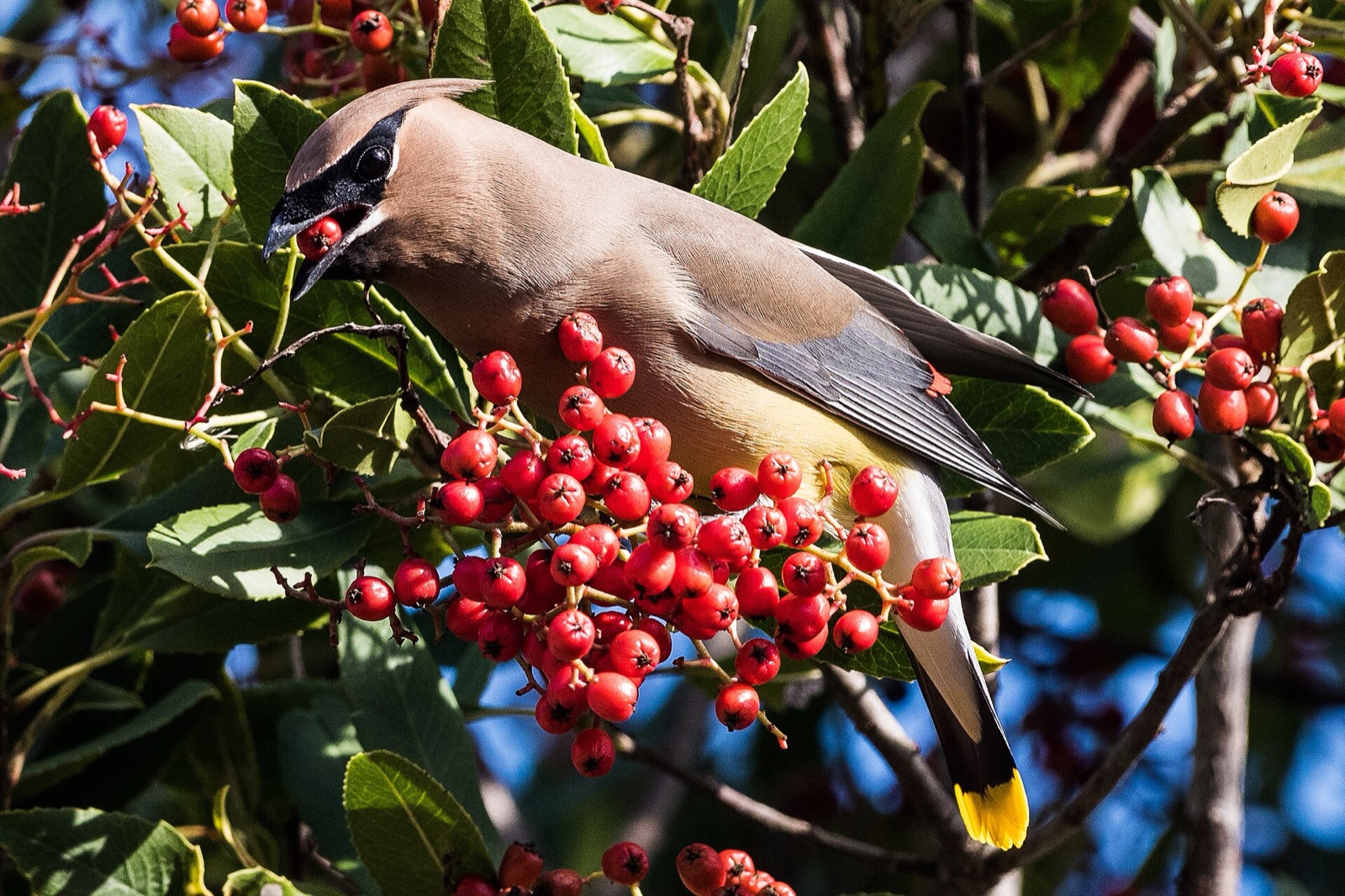
The best-known evidence on birds is a single case report. Woldemeskel and Styer, writing in Veterinary Medicine International in 2010, describe an event in April 2009 in Thomas County, Georgia, in which “dozens of cedar waxwings were found dead”. Five of the birds were examined. Their digestive tracts contained only nandina berries, and the birds showed haemorrhages in organs including the lungs.
The authors concluded that the findings were consistent with cyanide poisoning and that cyanogenesis, the release of cyanide from compounds in the fruit, was the most important factor. They also note that tissue cyanide levels were not measured. That is a sound case report with a stated limit, not a population study.
Why waxwings
Clemson explains why this species in particular: cedar waxwings are “most susceptible to poisoning”, because they eat large quantities of fruit at one time. The concern is a large amount eaten at once; the sources do not give a safe number of berries.
Ripeness matters
A 2022 study by Zona measured how readily nandina fruits release cyanide and found that it varies with ripeness and with the individual plant. Green fruits were “strongly and rapidly cyanogenic”; most ripe fruits were weak, older fruits tended to be weaker still, and some fruits tested negative. So “every red berry is equally poisonous” is not what the measurements show.
Pets
The ASPCA lists nandina as toxic to dogs, cats and horses, names cyanogenic glycosides as the toxic principle, and lists signs including weakness, incoordination, seizures, coma and respiratory failure. It also notes that death is rare in pets.
Same shrub, opposite verdicts — Japan, the American Southeast and Britain
Birds spread it in Japan too
It would be easy to assume Japanese birds leave nandina alone. They do not. Kyoto City Zoo’s plant notes record that wild birds, almost all of them brown-eared bulbuls (ヒヨドリ, hiyodori), eat the berries, and seedlings come up around the grounds from the seeds in their droppings. The Kinki Regional Development Bureau’s plant guide for the Rokko mountains says that most of the nandina found there is thought to have gone wild from garden and park plantings. Noda City notes the same spread by birds.
But no national alarm
What I did not find in Japan is a national verdict against the plant. The Ministry of the Environment’s 2026 list of alien species that damage ecosystems, in its plant section, does not include nandina, and I found no Japanese primary source describing serious ecological damage. I found no source explaining why. My guess, and it is only a guess, is that the unresolved question of whether nandina is native to Japan makes it an awkward candidate for an alien-species list.
Britain grows it for awards
The Royal Horticultural Society treats nandina as an ordinary garden shrub. Its trial running from 2024 to 2028 is testing 18 cultivars, with an Award of Garden Merit planned for the best, and the trial page also notes that the berries can be toxic to some birds. ‘Richmond’ received the award in 2012 and is shown on the RHS site as “RHS Recommended”. I did not find nandina in the UK government’s guidance on regulated invasive non-native plants. That is a statement about Britain, not about all of Europe.
| Japan | US Southeast | UK | |
|---|---|---|---|
| How it is seen | Lucky household shrub, New Year material, crude drug | Invasive in woodland, risk to some birds | Garden shrub under trial for awards |
| Found outside gardens | Yes; bird-sown seedlings recorded (bulbuls), wild in the Rokko mountains | Yes; detected in forests in 9 of 12 southern states by 2009 | Not found in the sources checked |
| Official listing | Not on the 2026 ecosystem-damage list | Council lists in several states; law in Maryland, labelling in Virginia | Not on the regulated invasive plant guidance |
| Origin question | Native or long-naturalised, debated | Introduced in the early 1800s | Introduced ornamental |
The differences are not about who is right. They come from different premises. In Japan the plant may be native or so long established that it sits inside local ecosystems and customs. In the American Southeast it is an introduced plant, brought in the early 1800s, that has moved from gardens into forests, and the councils that list it judge it a threat to natural areas. In Britain, the sources I checked treat it as a garden plant, and it is not on the regulated invasive plant guidance.
If you grow nandina outside Japan — practical choices
Choose low-fruiting cultivars
If you want the look without the berries, cultivar choice is the first step. Clemson’s list of cultivars that produce “little to no fruit” includes ‘Firepower’, ‘Harbour Dwarf’, ‘Gulf Stream’ and ‘SEIKA’ (Obsession). UF/IFAS assesses ‘Firepower’, ‘Harbour Dwarf’, ‘Blush Pink’, ‘Firehouse’, ‘Firestorm’ and ‘Monfar’ (Sienna Sunrise) as “Not a problem species (un-documented)” across Florida.
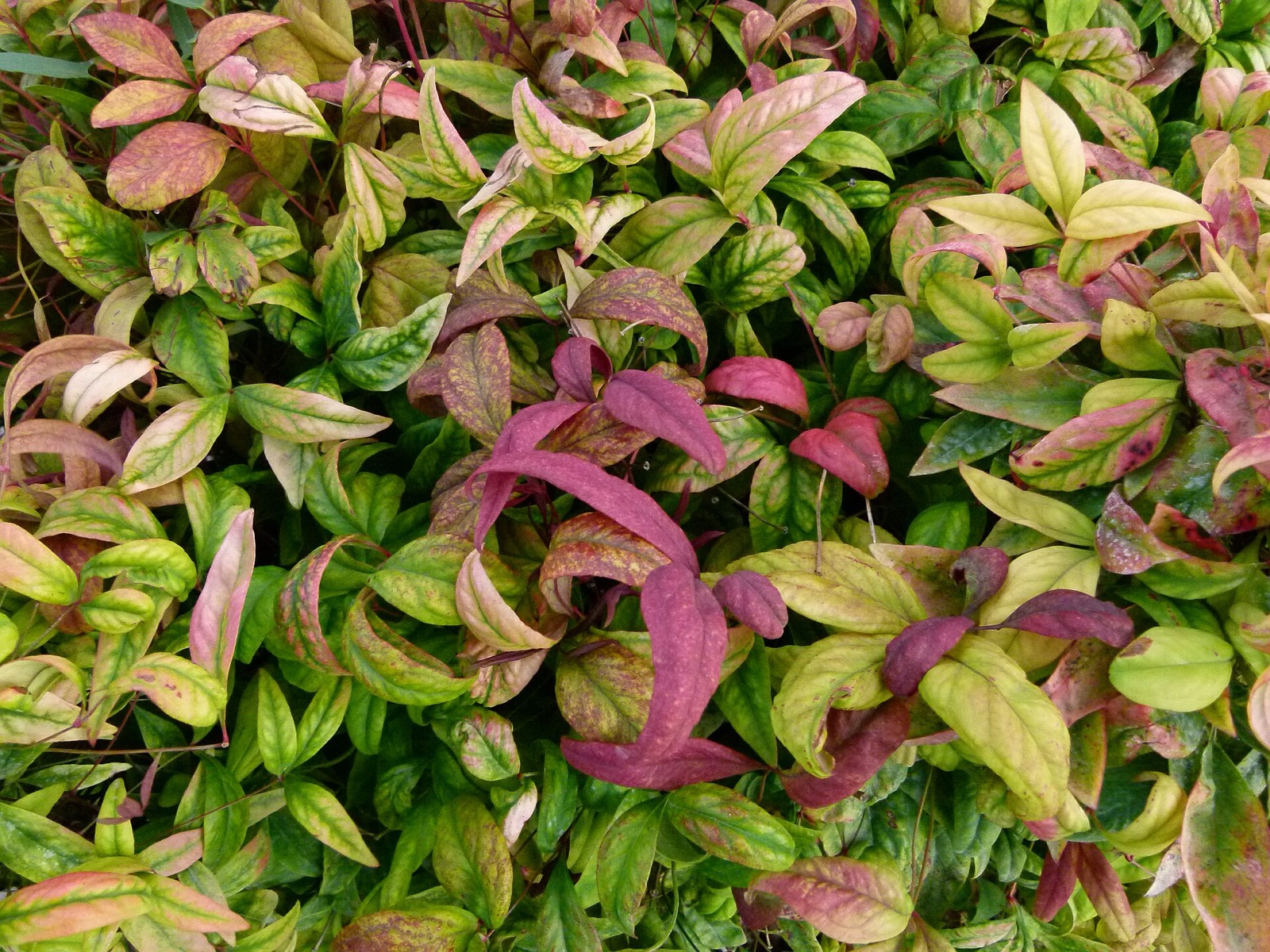
The sources do not all agree. ‘Gulf Stream’ is on Clemson’s low-fruit list but is assessed by UF/IFAS as “Invasive (No Uses)” in north and central Florida, and ‘Jaytee’ (Harbour Belle) is assessed the same way there. Check the list for your own state, not just the label at the nursery.
Keep the plant, lose the fruit
If you are keeping an older, fruiting plant, Clemson suggests removing flowers or fruit clusters. This connects directly to the Japanese pruning calendar earlier in this article. Anyone who wants berries at New Year leaves the flower clusters in May and June; an American gardener worried about birds can remove the same clusters at the same time, for the opposite reason.
Removing a plant
Taking nandina out is harder than cutting it down. Clemson and UF/IFAS both note that plants regrow from the root crown and rhizomes, which need to be dug out. Because of that regrowth, a cleared spot is worth checking again the following season for new shoots. The UF/IFAS home guide names glyphosate as a foliar treatment and triclopyr as a basal bark treatment as the main herbicides, with late summer to early autumn as the timing, and as with any herbicide the product label for your area governs its use.
What to plant instead
For fruit in a southeastern garden, Clemson suggests native shrubs such as American beautyberry (Callicarpa americana), winterberry (Ilex verticillata) and rabbiteye blueberry (Vaccinium virgatum). For flowers and foliage it lists Florida leucothoe, sweetshrub, summersweet and Virginia sweetspire. The same question, which native plant can do the job of a popular imported shrub, sits behind the article on Japanese holly as a boxwood alternative.
| Situation | Option | Source |
|---|---|---|
| New planting, want the look | Low-fruiting cultivar assessed for your state | Clemson; UF/IFAS |
| Existing fruiting plant | Remove flower or fruit clusters | Clemson |
| Remove the plant | Dig out root crown and rhizomes | Clemson; UF/IFAS |
| Herbicide | Glyphosate (foliar), triclopyr (basal bark), late summer to early autumn, per label | UF/IFAS |
| Want a fruiting native shrub | American beautyberry, winterberry, rabbiteye blueberry | Clemson |
What nandina is not — common misconceptions
“Japan does not have a problem because the shrub stays put there”
Not quite. Birds spread it in Japan as well, and it has gone wild in places such as the Rokko mountains. The difference is that Japan has not listed it as an ecosystem-damaging alien, and its native status is unresolved.
“The US has banned nandina”
There is no nationwide ban. Most listings are by councils without legal force. Maryland has a prohibition with phase-out dates and cultivar exemptions, and Virginia requires a warning label from 2027.
“A nandina leaf keeps sekihan from spoiling”
That is the traditional belief, and leaf extract has antibacterial activity in the laboratory. I found no controlled test on food showing that the leaf on a box of rice makes a practical difference.
“Every berry will kill a bird”
The Georgia event involved birds that had eaten nothing but nandina berries, and the 2022 measurements found that cyanide release varies with ripeness. The risk comes from large quantities, and green fruit is the strongest.
Frequently asked questions
Why do Japanese people plant nandina by the front door?
Because its name, nanten, sounds like nan o tenzuru, “turning trouble around”. Japanese sources record it being planted around gateways and entrances to drive away evil, and also near wash basins and toilets.
Which direction is nandina planted in a Japanese garden?
There is no single national rule. One version, recorded by Kyoto City Zoo, places white-fruited nandina in the northeast (kimon, the “devil’s gate”) and red-fruited nandina in the southwest (ura-kimon).
Is the alcove post at Kinkaku-ji’s Sekkatei really nandina?
Kyoto Prefecture describes it as a thin, winding nandina post. I could not find a published scientific identification of the wood, so it is best described as the post the tea house is known for.
Is nandina invasive in the United States?
In the Southeast, yes, according to Clemson University and several state invasive plant councils. Florida’s council lists it as Category I in the north and centre of the state. Most of these lists have no legal force; Maryland and Virginia have passed rules.
Are nandina berries poisonous to birds?
They contain compounds that can release cyanide. In a 2009 event in Georgia, dozens of cedar waxwings died with only nandina berries in their digestive tracts; the findings were consistent with cyanide poisoning, though tissue cyanide was not measured. Green fruit is the most strongly cyanogenic.
Which nandina cultivars produce few or no berries?
Clemson lists ‘Firepower’, ‘Harbour Dwarf’, ‘Gulf Stream’ and ‘SEIKA’ (Obsession) as low-fruiting. UF/IFAS assesses ‘Firepower’, ‘Harbour Dwarf’, ‘Blush Pink’, ‘Firehouse’, ‘Firestorm’ and ‘Monfar’ as “Not a problem species (un-documented)” in Florida, but rates ‘Gulf Stream’ invasive in north and central Florida.
Sources
– Toho University, campus plants (Nandina, one genus one species): https://www.mnc.toho-u.ac.jp/v-lab/campus/kadan/kadan05.html — checked 2026-11-14 – Forestry and Forest Products Research Institute, Kyushu branch, Nandina (origin, season): https://www.ffpri.go.jp/kys/business/jumokuen/jumoku/zukan/nanten.html — checked 2026-11-14 – Forestry and Forest Products Research Institute, Kansai branch, Nandina (leaf on food, belief): https://www.ffpri.go.jp/fsm/business/jumokuen/05_na/nanten.html — checked 2026-11-14 – Tokyo University of Agriculture and Technology, campus tree 85 (origin debate, kinshi nanten): https://web.tuat.ac.jp/~nokotree/tree2/tree85.html — checked 2026-11-14 – Nagoya University Museum, plants of January (name and pun): https://www.num.nagoya-u.ac.jp/media/plants/jan.html — checked 2026-11-14 – Ehime University Faculty of Education, plant teaching resource (placements): https://www.ed.ehime-u.ac.jp/~muko-lab/img/file11.pdf — checked 2026-11-14 – Kyoto City Zoo, plant notes 13, Nandina (directions, bulbuls): https://zoo.city.kyoto.lg.jp/zoo/enjoy/blog/rescue-blog/20190617-35082.html — checked 2026-11-14 – International Research Center for Japanese Studies, folklore database (Kanagawa, 1940): https://www.nichibun.ac.jp/cgi-bin/YoukaiDB3/simsearch.cgi?ID=2181136 — checked 2026-11-14 – Kyoto Prefecture, cultural landscape document (Sekkatei): https://www.pref.kyoto.jp/nosei/documents/ujisekai201308032-4.pdf — checked 2026-11-14 – Shōkoku-ji, Enmyō no. 122 (Sekkatei history): https://www.shokoku-ji.jp/wp-content/themes/shokokuji/assets/img/reference/book/pdf/enmyo_122.pdf — checked 2026-11-14 – Ministry of the Environment, Kokyo Gaien National Garden, nandina berries: https://www.env.go.jp/garden/kokyogaien/news/2016/12/132017_1.html — checked 2026-11-14 – Ministry of the Environment, Chugoku-Shikoku office, making kadomatsu: https://chushikoku.env.go.jp/blog/setonaikai/a-takamatsu/index_9.html — checked 2026-11-14 – Nara City, Tsukigase kindergarten (shimenawa): https://www.city.nara.lg.jp/site/tsukigase-k/50387.html — checked 2026-11-14 – Kumamoto University, medicinal plant of the month (leaf on osechi and sekihan): https://www.pharm.kumamoto-u.ac.jp/flower/H1301.html — checked 2026-11-14 – Kumamoto University medicinal plant garden, Nandina (fruit alkaloids): https://www.pharm.kumamoto-u.ac.jp/yakusodb/detail/003528.php — checked 2026-11-14 – Guo et al., 2018, antibacterial activity of nandina leaf extract: https://pmc.ncbi.nlm.nih.gov/articles/PMC5822912/ — checked 2026-11-14 – Ministry of Health, Labour and Welfare, Japanese Standards for Non-Pharmacopoeial Crude Drugs 2022: https://www.mhlw.go.jp/web/t_doc?dataId=00tc6530&dataType=1 — checked 2026-11-14 – Tokyo Crude Drug Association, Nantenjitsu: https://www.tokyo-shoyaku.com/wakan.php?id=183 — checked 2026-11-14 – Ōta et al., alkaloids of white nandina fruit (1957), National Diet Library: https://dl.ndl.go.jp/view/prepareDownload?itemId=info%3Andljp%2Fpid%2F10755916 — checked 2026-11-14 – Tokiwa Pharmaceutical, about Nanten Nodo Ame: https://www.tokiwayakuhin.co.jp/cojp/faq/nanten.aspx — checked 2026-11-14 – Edo-Tokyo Museum, bulletin, report on the Edo horticulture exhibition: https://edo-tokyo-museum.repo.nii.ac.jp/record/199/files/kiyo4_137-147.pdf — checked 2026-11-14 – Nihon University, horticultural history timeline: https://www.cst.nihon-u.ac.jp/research/gakujutu/61/pdf/F2-39.pdf — checked 2026-11-14 – Toshima City, growing nandina: https://www.city.toshima.lg.jp/documents/8282/08nanten.pdf — checked 2026-11-14 – Tottori Prefecture, pruning of medium and low shrubs: https://www.pref.tottori.lg.jp/secure/1116466/04_chapter4_1.pdf — checked 2026-11-14 – Kinki Regional Development Bureau, Rokko mountains plant guide: https://www.kkr.mlit.go.jp/rokko/rokko/vegetation/sp/046/index.html — checked 2026-11-14 – Noda City, Nandina: https://www.city.noda.chiba.jp/shisei/1016739/1016740/kusakoho/kusazukan/1024963.html — checked 2026-11-14 – Ministry of the Environment, list of alien species that damage ecosystems (plants), 2026: https://www.env.go.jp/nature/intro/2outline/list/list2_plants.pdf — checked 2026-11-14 – Clemson University HGIC, Nandina: https://hgic.clemson.edu/factsheet/nandina/ — checked 2026-11-14 – USDA NRCS, invasive species document (South Carolina): https://efotg.sc.egov.usda.gov/references/public/SC/invasivespecies1.pdf — checked 2026-11-14 – USDA National Invasive Species Information Center, sacred bamboo: https://www.invasivespeciesinfo.gov/terrestrial/plants/sacred-bamboo — checked 2026-11-14 – USDA Forest Service, Fire Effects Information System, Nandina domestica: https://research.fs.usda.gov/feis/species-reviews/nandom — checked 2026-11-14 – Florida Invasive Species Council, 2025 invasive plant species: https://www.floridainvasives.org/plant-list/2025-invasive-plant-species/ — checked 2026-11-14 – UF/IFAS Assessment, Nandina domestica and cultivars: https://assessment.ifas.ufl.edu/assessments/nandina-domestica/ — checked 2026-11-14 – UF/IFAS, Nandina management guide: https://plants.ifas.ufl.edu/media/plantsifasufledu/homepage/resources/management-guides/Nandina.pdf — checked 2026-11-14 – UGA Extension, Think Outside the Boxwood: https://fieldreport.caes.uga.edu/publications/C1107/think-outside-the-boxwood-alternative-plants-for-gardens-and-landscapes/ — checked 2026-11-14 – Georgia EPPC, invasive plant list: https://bugwoodcloud.org/mura/gaeppc/assets/File/Curriculum/gaeppclist.pdf — checked 2026-11-14 – Tennessee Invasive Plant Council, invasive plants (lists have no regulatory authority): https://www.tnipc.org/?page_id=21 — checked 2026-11-14 – Tennessee Invasive Plant Council, natural areas list (CSV): https://www.tnipc.org/wp-content/plugins/Plants/DownloadCSV.php — checked 2026-11-14 – Alabama Invasive Plant Council, plant list: https://www.se-eppc.org/alabama/ALIPCplantlist.pdf — checked 2026-11-14 – South Carolina Exotic Pest Plant Council, plant list: https://www.se-eppc.org/southcarolina/SCList.pdf — checked 2026-11-14 – Texas Invasives, Nandina domestica: https://www.texasinvasives.org/plant_database/detail_print.php?symbol=NADO — checked 2026-11-14 – Maryland Department of Agriculture, prohibited invasive plants: https://mda.maryland.gov/plants-pests/plant-protection-weed-management/maryland-prohibited-invasive-plant-law-and-regulations — checked 2026-11-14 – Virginia Code §3.2-3801.1: https://law.lis.virginia.gov/vacode/title3.2/chapter38/section3.2-3801.1/ — checked 2026-11-14 – Woldemeskel and Styer, 2010, Veterinary Medicine International: https://pmc.ncbi.nlm.nih.gov/articles/PMC3005831/ — checked 2026-11-14 – Zona, 2022, cyanogenesis in nandina fruit, Poisonous Plant Research: https://digitalcommons.usu.edu/poisonousplantresearch/vol5/iss1/1/ — checked 2026-11-14 – ASPCA, Nandina: https://www.aspca.org/pet-care/aspca-poison-control/toxic-and-non-toxic-plants/nandina — checked 2026-11-14 – Royal Horticultural Society, Nandina trial 2024–2028: https://www.rhs.org.uk/plants/trials-awards/ongoing-plant-trials/nandina — checked 2026-11-14 – Royal Horticultural Society, ‘Richmond’: https://www.rhs.org.uk/plants/93938/nandina-domestica-richmond/details — checked 2026-11-14 – UK Government, invasive non-native plant rules in England and Wales: https://www.gov.uk/guidance/invasive-non-native-alien-plant-species-rules-in-england-and-wales — checked 2026-11-14