

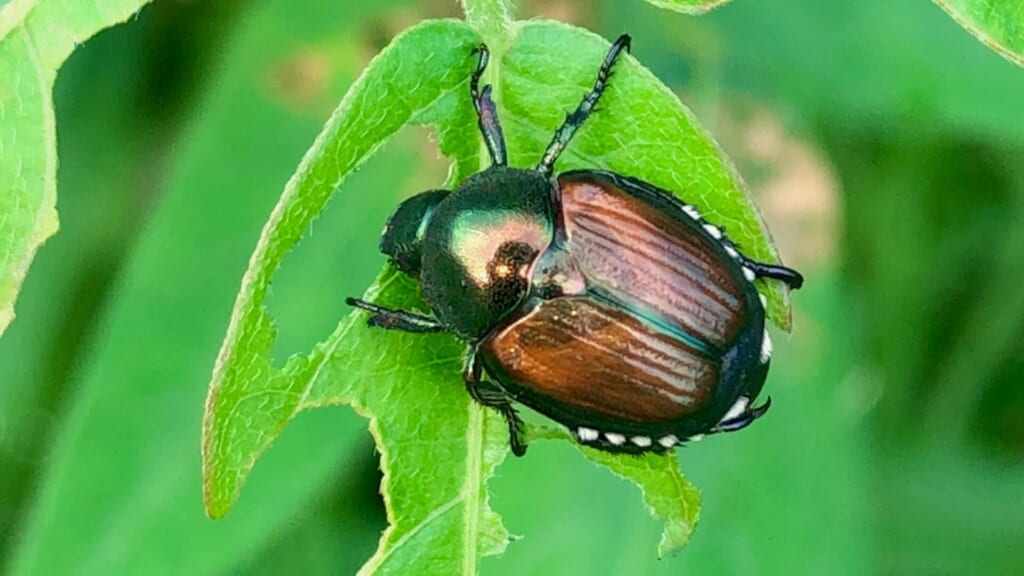
In Japan, the Japanese beetle (Popillia japonica, mamekogane) is a native insect that a 1972 USDA monograph called “a pest of minor importance in its native Japan”, and Japanese entomologists described its past status the same way. The reasons American entomologists proposed after searching Japan from 1920 are probable, not proven: parasites that attack both the adult and the grub, and farmland — intensively cropped fields and flooded rice paddies — that left the grubs little grassland. Where lawns and grassland have spread in Japan, as at Hirosaki from 1976, the beetle has become a local problem too.
A Dozen Beetles in a New Jersey Nursery — 1916
The inspection at Riverton
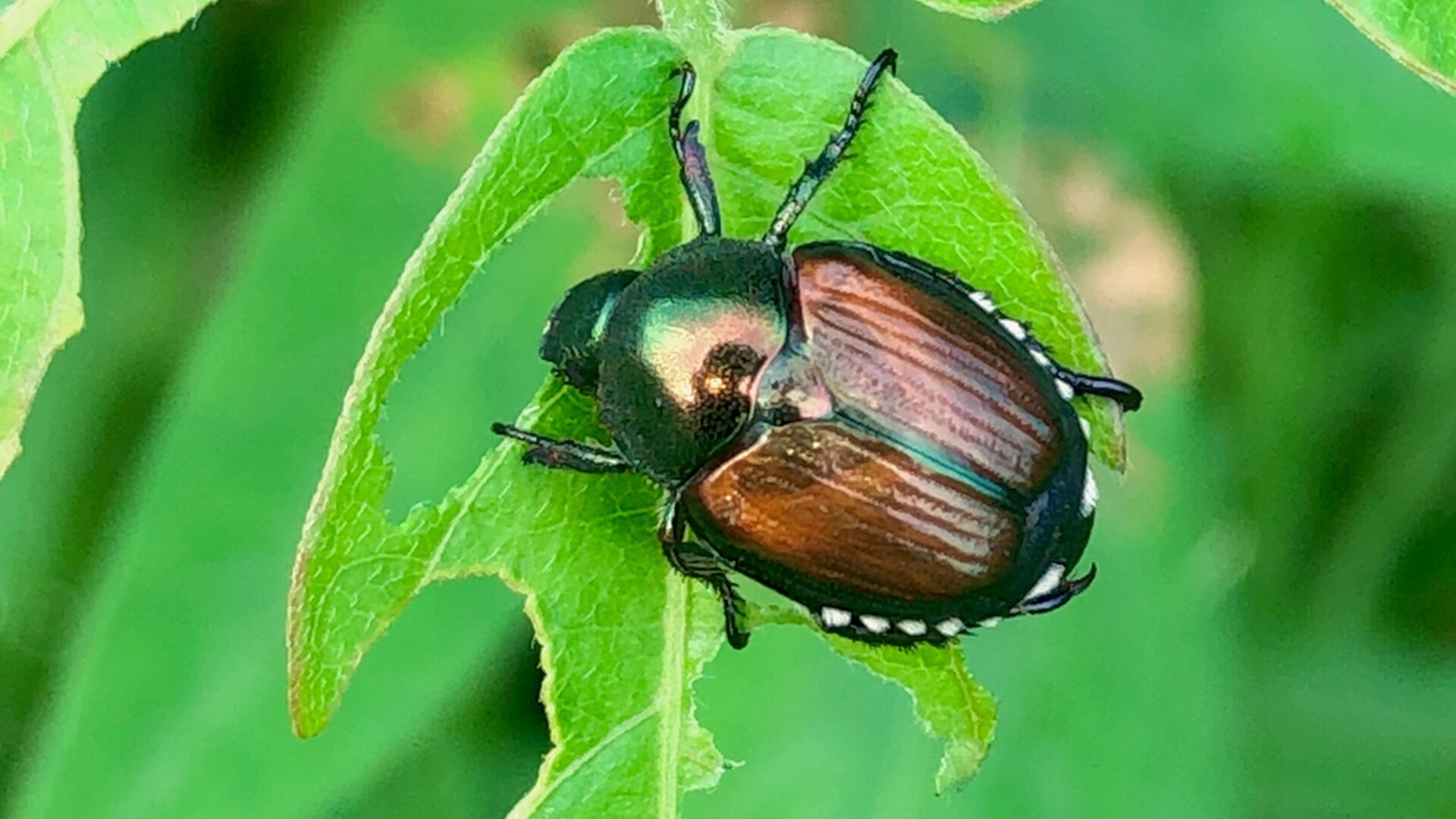
In mid-August 1916, two inspectors from the New Jersey state agriculture department, E. L. Dickerson and H. B. Weiss, were making a routine check of the Henry A. Dreer nursery, between Riverton and Moorestown. They collected about a dozen beetles that nobody in the United States had recorded before: a shiny green head, coppery wing covers, and small tufts of white hair along the sides. The USDA’s later history gives “about a dozen”; the 1927 report by Clausen and colleagues says about twenty. Either way, it was a handful of insects on a nursery lot.
No one has proved how they arrived. The USDA’s 1968 history suggests that grubs travelled as larvae in the soil around the rhizomes of Japanese iris, an ornamental then being imported, but it treats the route and the date as unsettled. A 2002 review in the Annual Review of Entomology by Daniel Potter and David Held estimates that the beetle had probably arrived around 1911, several years before anyone noticed it.
What came with it, and what did not
If Potter and Held are right, the beetle had several summers in New Jersey before anyone noticed it. The parasites that USDA entomologists would soon find attacking it in Japan were not known to be present with it in New Jersey.
How to Recognise the Beetle — Green, Copper, White Tufts
The adult
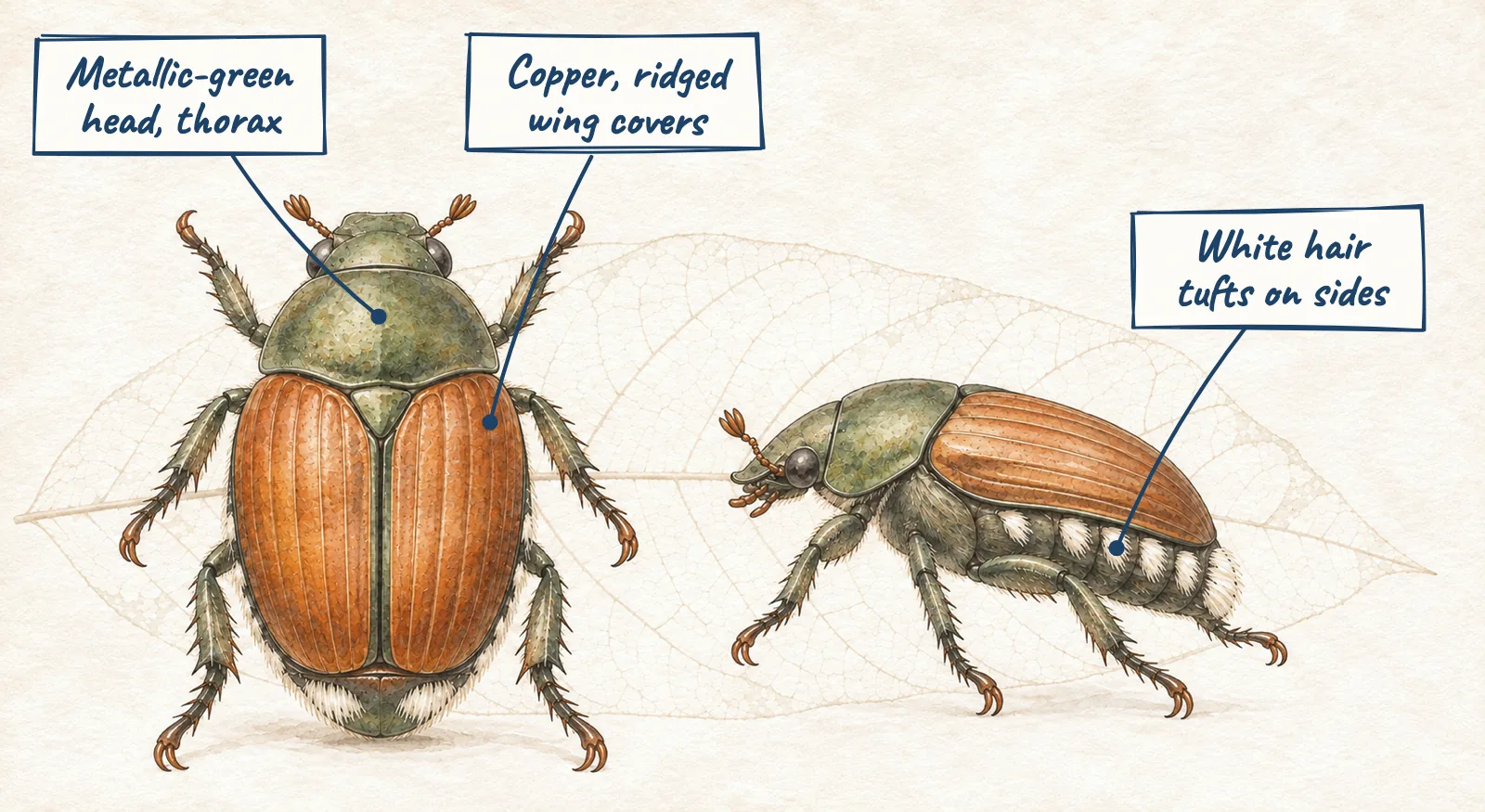
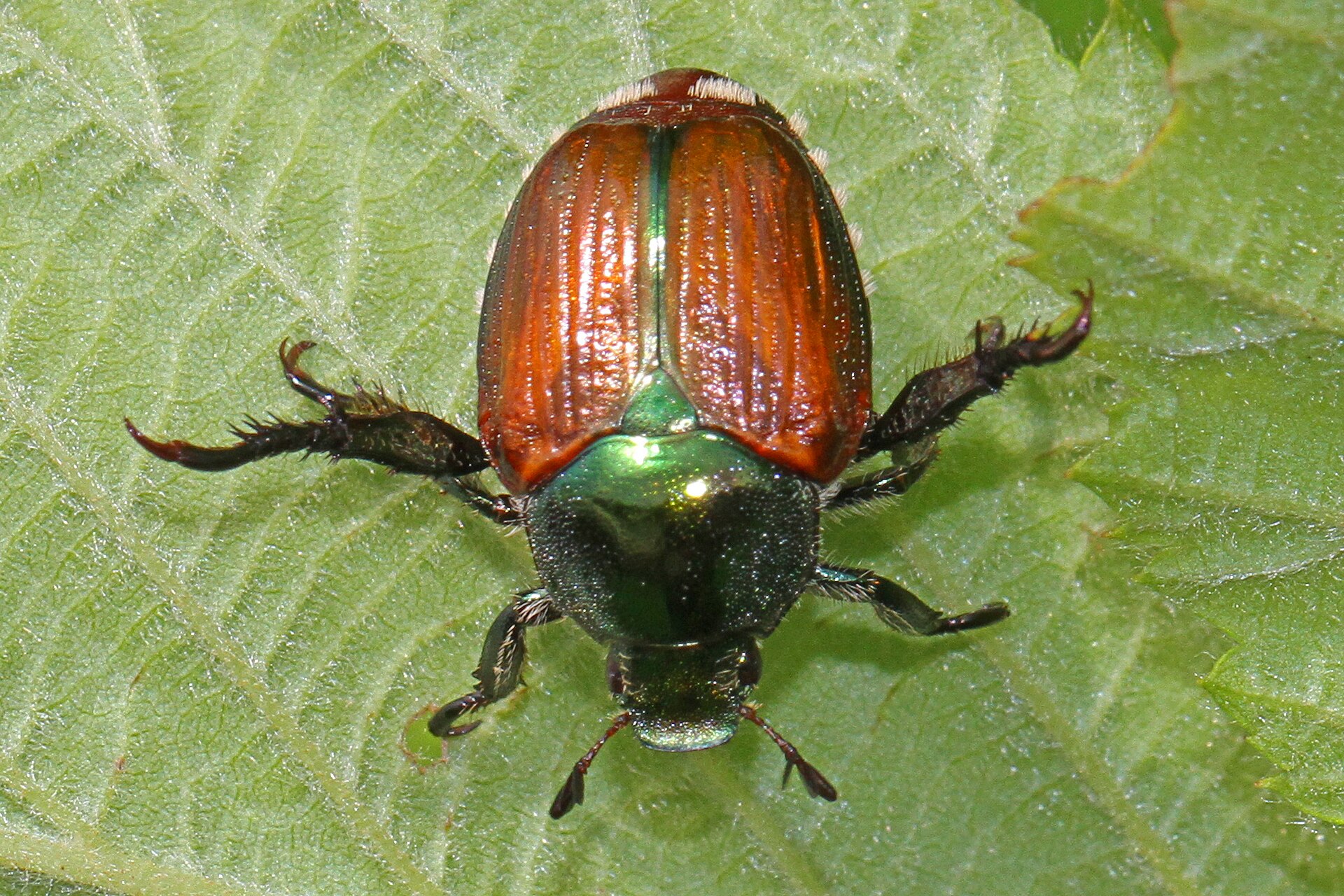
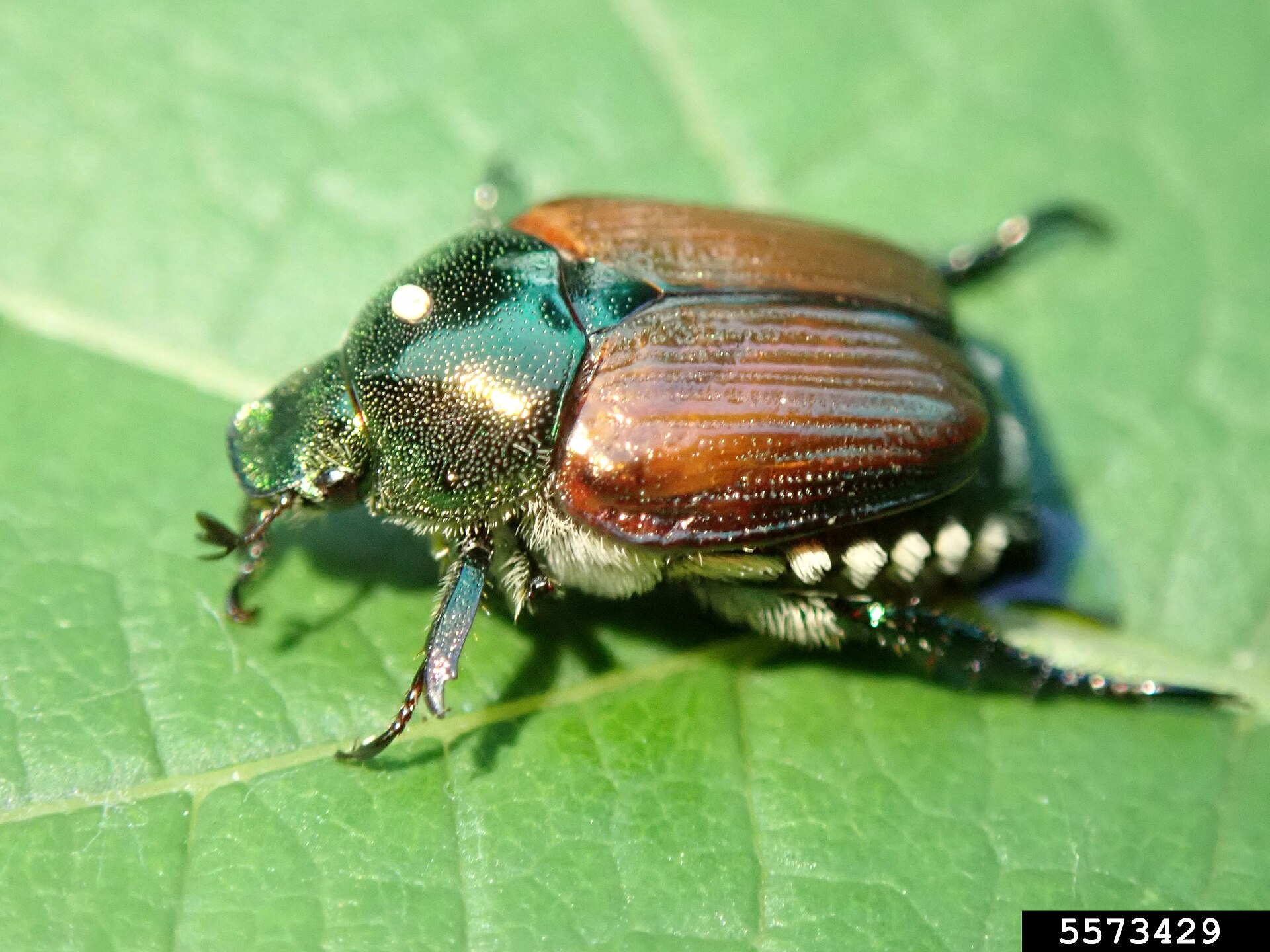
The USDA–APHIS homeowner’s handbook describes the adult as “a little less than half an inch long” — about 1 cm — with a shiny, metallic-green body and bronze-coloured wing covers. The handbook also points to the small tufts of white hair along the sides of the body, under the edges of the wing covers. These tufts are the mark to look for, together with the two-tone green and copper body.
The damage it leaves
Adults feed on leaves, flowers and fruit. APHIS lists “several hundred species” of fruit trees, ornamental trees, shrubs, vines and crops, and a 2022 review in the Journal of Integrated Pest Management puts the number of host plants above 300. The beetle eats the soft tissue between the veins, so the typical damage is a skeletonised leaf — a lace of veins — along with large, irregular holes.
Beetles also gather. Potter and Held describe how the beetles use the scent given off by leaves that are already being eaten as an aggregation signal. One beetle feeding on a rose makes the rose more attractive to the next, which is why damage in American gardens tends to come in clusters, not spread thinly.
The grub
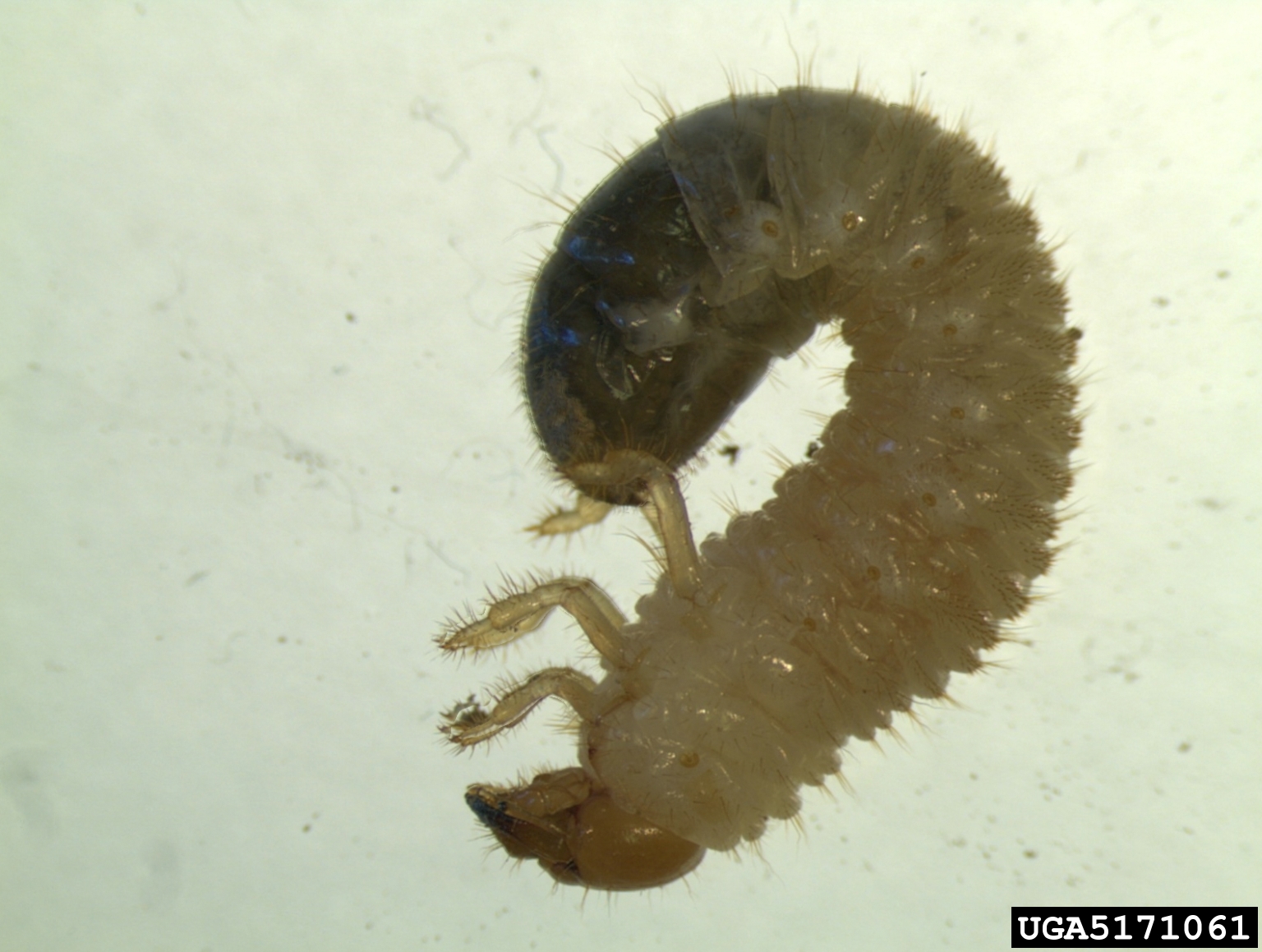
The larva is a white grub that lives in the soil and feeds on grass roots. APHIS notes that a fully grown grub is about an inch (2.5 cm) long and lies in a curled position. The grubs, not the adults, are what kill lawns: Althoff and Rice’s 2022 review describes larvae consuming turf roots, leaving brown, dying patches on golf courses, sports fields and home lawns.
| Stage | Where it lives | What it eats | What you see |
|---|---|---|---|
| Adult | On leaves, flowers, fruit | Leaf tissue between the veins, petals, fruit | Skeletonised leaves, beetles in clusters |
| Egg | In soil under grass | — | Nothing above ground |
| Grub (larva) | In soil, in the root zone | Grass roots | Brown, loose patches of turf |
| Pupa | In soil, near the surface | — | Nothing above ground |
How It Spread Through America — Turf, Hosts, Enemies Left Behind
From one nursery to 28 states
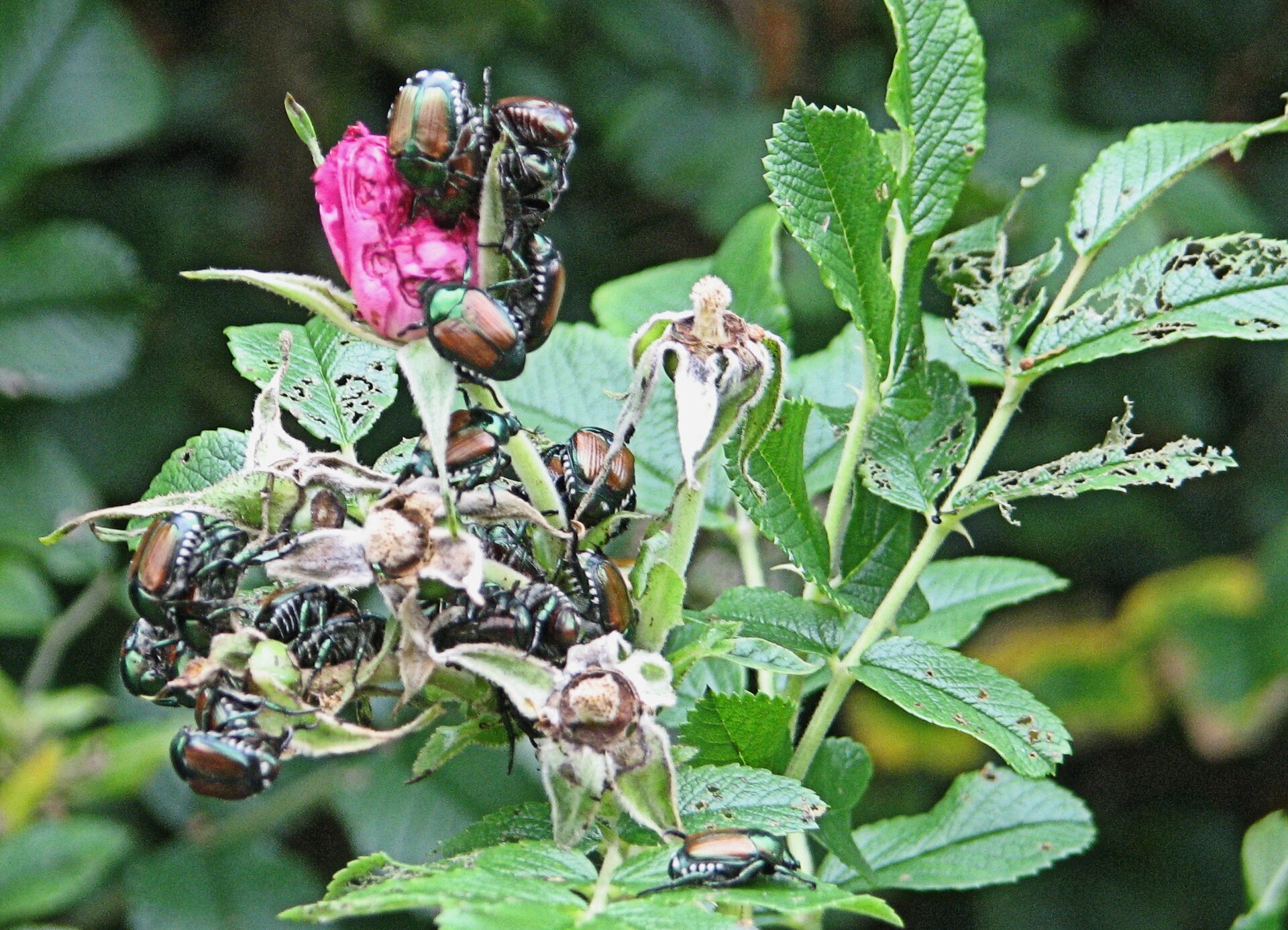
From that nursery near Riverton, the beetle spread across the eastern United States and beyond. The 2022 review by Althoff and Rice records it as established in 28 states, with detections in 13 more. With more than 300 host plants, adults rarely lacked food, and many lawns, pastures and fairways offered grubs suitable ground.
What it costs
The numbers attached to the beetle are large, but each comes from a particular year and a particular method, so they should be read with their dates.
| Source | Published in | Estimate |
|---|---|---|
| USDA–APHIS homeowner’s handbook | 2015 edition (year of estimate not stated) | More than $460 million a year to control adults and grubs |
| USDA–APHIS homeowner’s handbook | 2015 edition (year of estimate not stated) | About $234 million a year in losses from grubs: $78 million for control, $156 million to replace damaged turf |
| Althoff & Rice review | 2022, citing a 2002 estimate | About $450 million a year in damage to turf and ornamentals, including control |
None of these is a 2026 figure, and they are not adjusted for inflation. What they agree on is the scale: in the United States, this is a costly pest of gardens and turf.
Why America suited the beetle
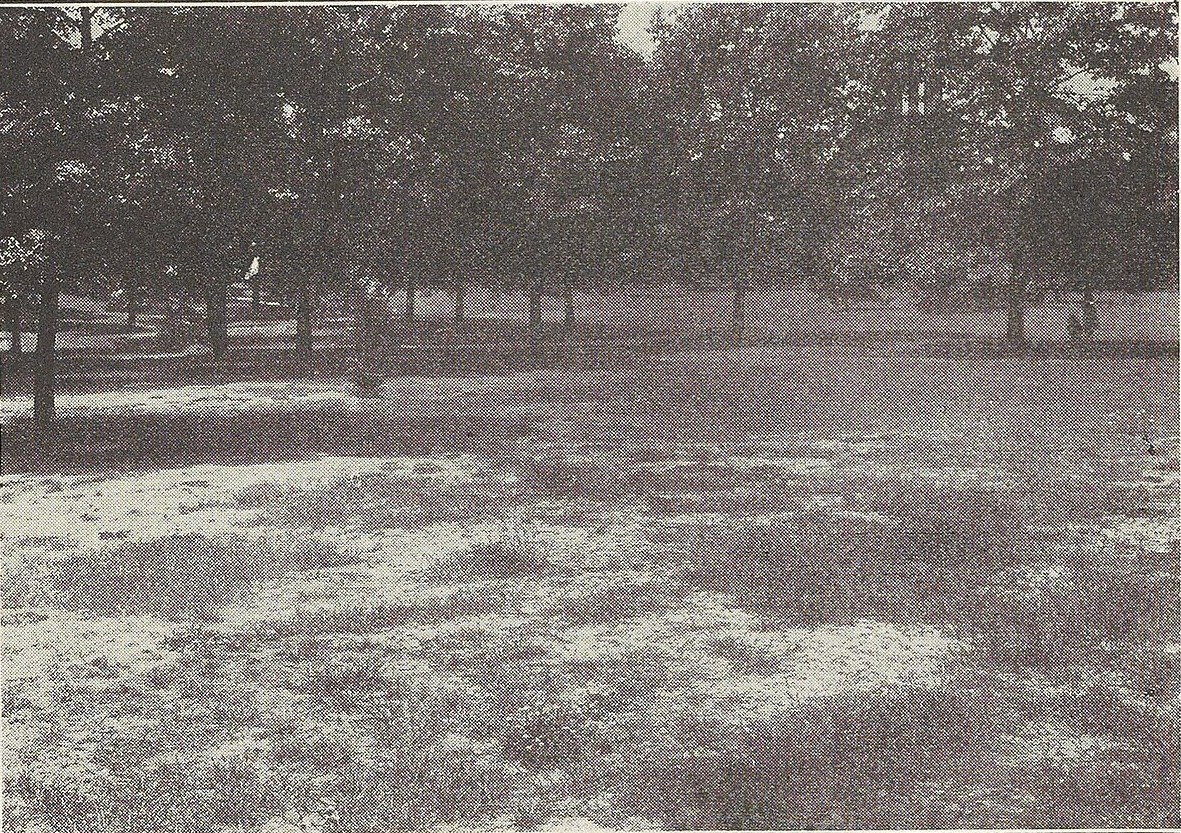
Researchers give the same short list. Potter and Held point to “lush turf and pasture grasses” for the grubs, “hundreds of species of adult food plants”, and the fact that the beetle met “no native natural enemies”. APHIS adds a favourable climate and an abundant food supply.
Europe Now — Azores, Ticino, Kloten
The islands, then the mainland
Europe’s first population was on the Azores. The European and Mediterranean Plant Protection Organization (EPPO) records the beetle on Terceira in 1970, after which it spread to other islands. A link to the US air base on Terceira is often suggested, but EPPO treats it as an assumption.
On the European mainland, the first record came in July 2014, and not from an official trap. A nature enthusiast posted photographs to an insect forum, and the beetle was identified from the pictures. The outbreak lay along the river Ticino, within the Ticino Valley Natural Park, straddling Lombardy and Piedmont. EPPO’s report states that the source is unknown.
Switzerland: Ticino, then Kloten
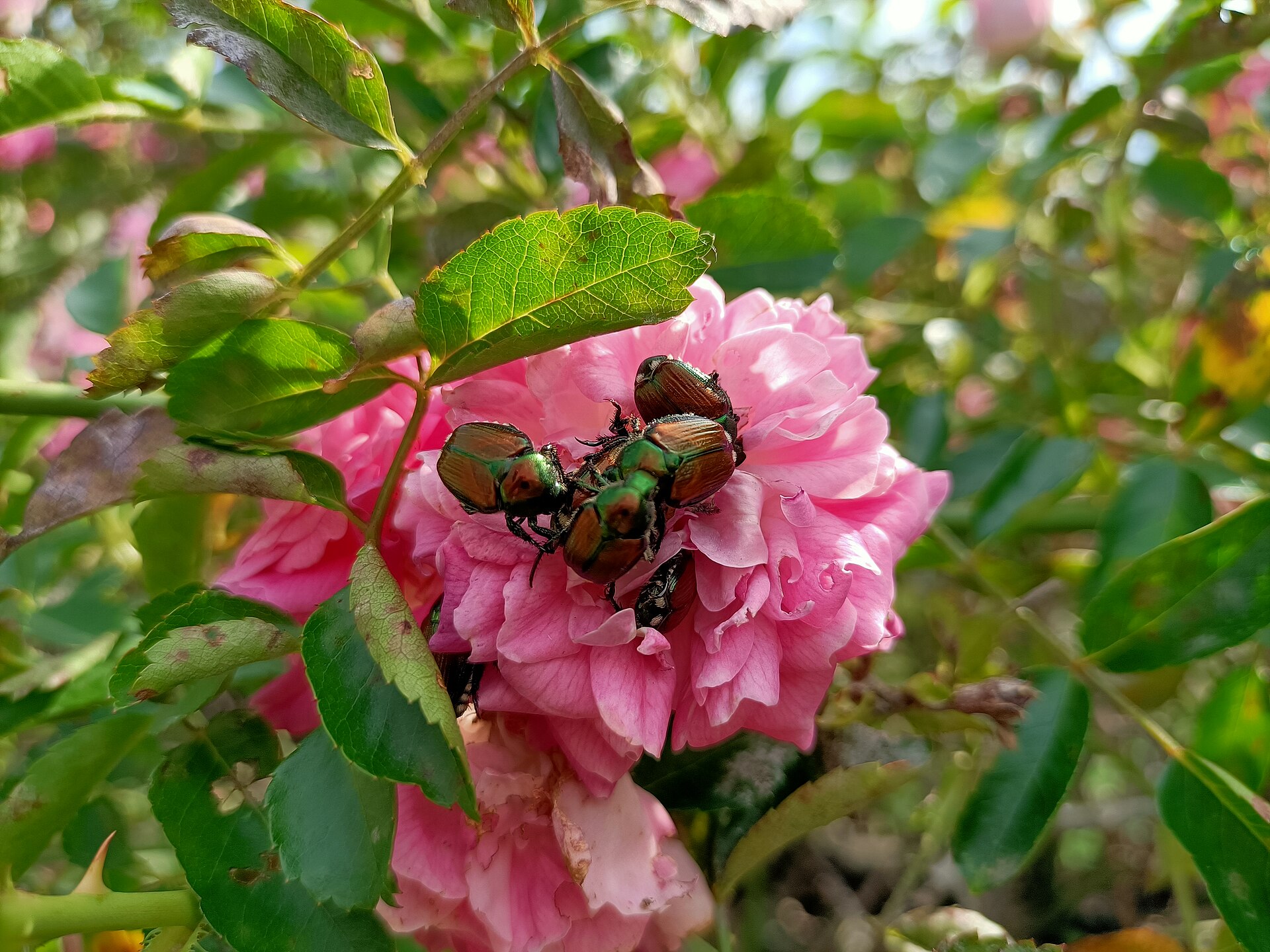
Switzerland’s first beetles were caught in Ticino in 2017, during an official survey near the Italian border. North of the Alps the story became more tense. In mid-July 2023, four beetles turned up in a lure trap at Kloten, in the canton of Zurich, and further searching found a small population.
The canton of Zurich’s response shows how seriously Europe treats the insect. The canton announced a single targeted insecticide treatment of host plants around the outbreak by the end of July, and a ban on watering lawns and green spaces — sprinklers included — until the end of September. In July 2024 the canton reported about 1,500 beetles, concentrated around a sports ground, and said that covering the football pitches with plastic sheeting had worked. Over 2024 about 2,700 beetles were trapped, but the infested area extended only about 100 m further. In August 2025 the canton reported that the area had again expanded only slightly and that eradication was still the goal.
A priority pest
Elsewhere, scattered beetles have been caught around Freiburg in Germany since 2021, and a demarcated area was set up there in July 2025. France caught two single males in Haut-Rhin in July 2025, judged to be hitchhikers, not an outbreak. In June 2025 a female beetle was found in a suitcase in Oleiros, Galicia, brought home by a traveller returning from Milan.
| Year | Where | What happened |
|---|---|---|
| 1970 | Terceira, Azores (Portugal) | First appearance; later spread to other islands |
| 2014 | Ticino Valley Natural Park, Italy | First mainland record, from photos on an insect forum |
| 2017 | Ticino, Switzerland | First Swiss finds in an official survey |
| 2023 | Kloten, canton of Zurich | Four beetles in a trap; eradication begins |
| 2025 | Freiburg area, Germany | Demarcated area after isolated catches since 2021 |
| 2025 | Haut-Rhin, France; Oleiros, Spain | Single beetles, judged to be carried by traffic |
The EU now lists Popillia japonica as a priority pest under Commission Delegated Regulation (EU) 2019/1702.
The Puzzle at Home — A Common Beetle, Not a Plague
“A pest of minor importance”
Here is the puzzle. The same insect that costs America hundreds of millions of dollars a year is, in Fleming’s words in the 1972 USDA monograph, “a pest of minor importance in its native Japan”. Fleming adds that the beetle is “common but not abundant” in Kyushu, Shikoku and southern Honshu, most abundant in northern Honshu and Hokkaido where grasslands occur, “but its population density never reaches that in the Eastern United States.”
Japanese researchers wrote something similar. In a 1986 paper in the Japanese Journal of Applied Entomology and Zoology, Kiichi Ando of Hirosaki notes that the mamekogane had not been an especially important agricultural pest (“農業害虫としてさほど重要でなかった”).
Where it lives in Japan
The Hokkaido Research Organization lists the beetle from Hokkaido, Honshu, Shikoku and Kyushu. It has one generation a year, overwinters as a grub, and the adults feed from June to August. In Ando’s records on grapevines at Hirosaki, the first beetle appeared on average on 30 June over seven years, and the last was caught on average on 17 August over four years. In Fukuoka in the south, the prefecture’s crop guide says early adults feed on wild roses and willows from late May, then on summer soybeans from late June to late August.
Further north the timetable stretches. Clausen, King and Teranishi reported “a pronounced two-year life cycle in Hokkaido”, with some grubs taking two winters to mature.
The beetle needs grass
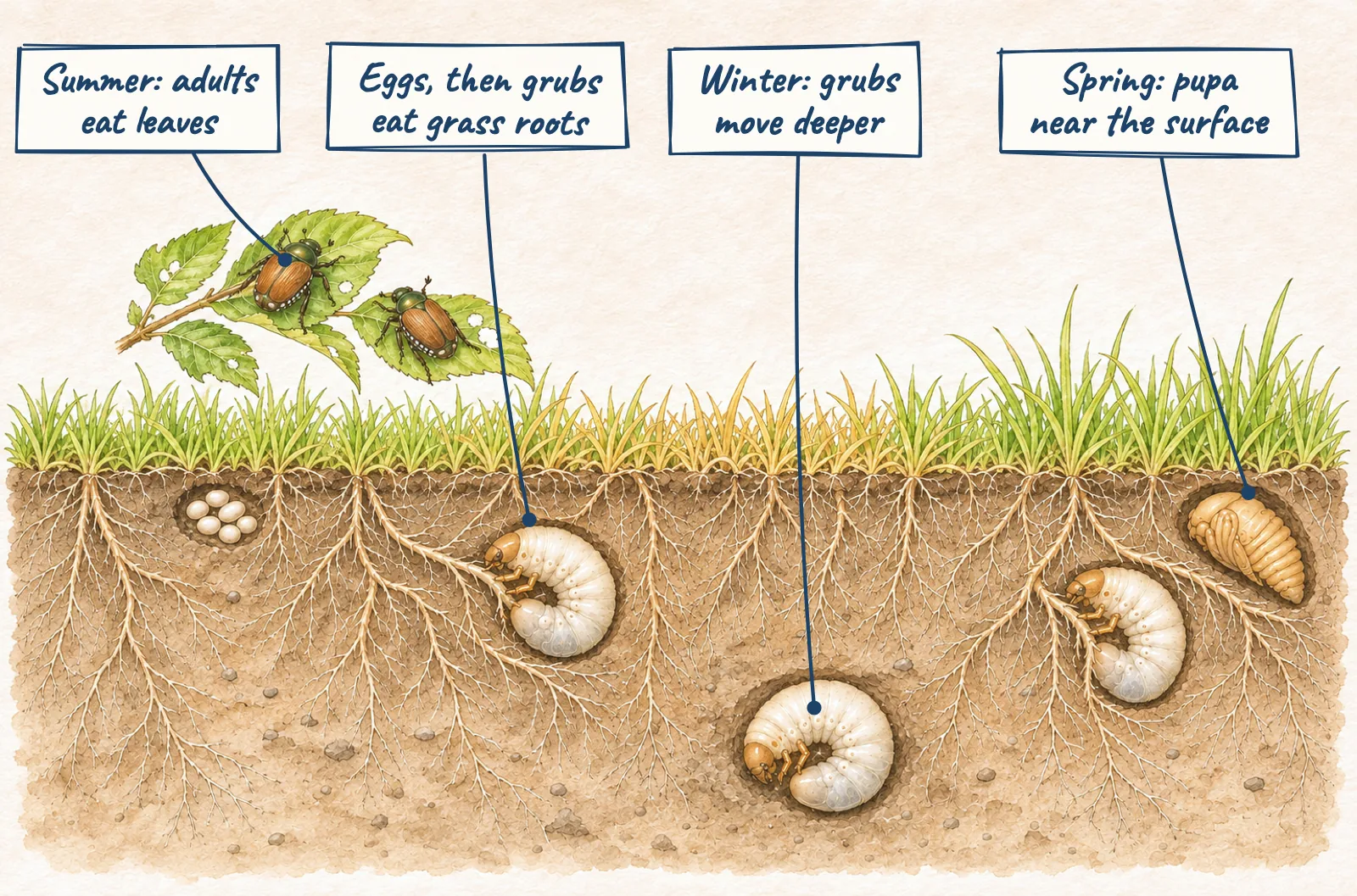
Every stage but the adult lives in the soil, and the grubs feed on grass roots. That fact runs through everything that follows. Extensive grassland offers grubs more habitat; intensive cultivation and flooded paddies offer less, as the next sections show.
Yokohama, 1920 — The USDA Goes Looking
The men who were sent
Once the beetle had settled into New Jersey, the US Department of Agriculture sent entomologists to the beetle’s homeland to find out what was keeping it down. Curtis P. Clausen went to Japan in spring 1920, and J. L. King joined him that autumn. Working with Cho Teranishi, they set up headquarters at Yokohama. Their main study sites were Yokohama, Koiwai and Sapporo, and from 1922 Suigen in Korea.
Their 1927 report, USDA Department Bulletin 1429, is a detailed contemporary account of the beetle in its native landscape a century ago. At Yokohama, they wrote, “Popillia is common but not abundant enough to be of any importance as a plant pest.”
What they found in Japanese fields
They identified and studied nine species of parasites and one predator of the Japanese beetle and its close relatives. The most striking was a tachinid fly, then called Centeter cinerea. Today it is Istocheta aldrichi; older papers also call it Hyperecteina aldrichi. The female fly lays an egg on the back of the beetle’s thorax. The beetle dies within days: in Clausen’s observations the host died on average 5.2 days after the egg was laid for females, and 5.8 days for males.
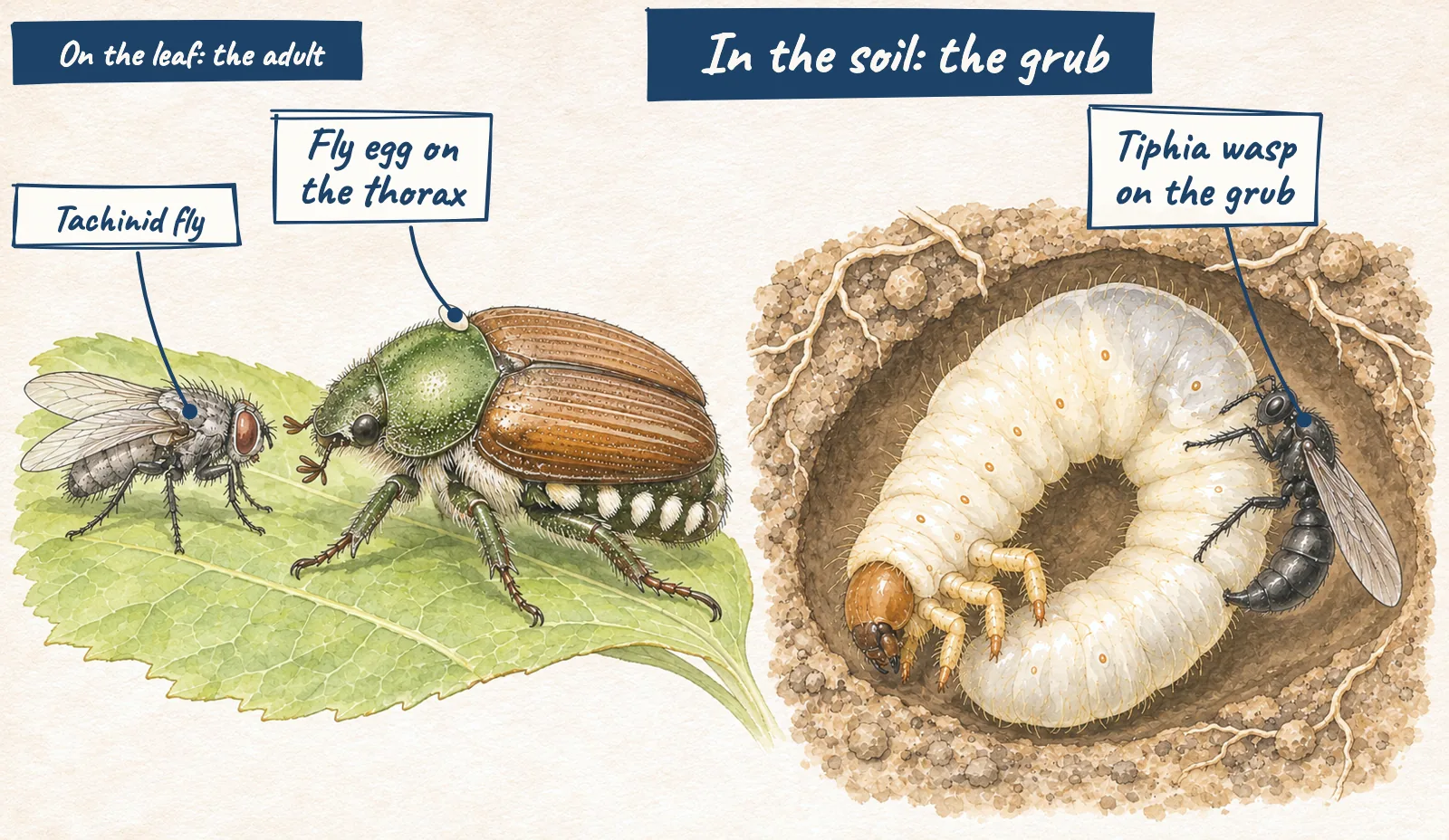
The fly could be devastating. At Sapporo in 1920, parasitism of newly emerged females exceeded 90%. But it was also variable from year to year:
| Place | Year | Females carrying fly eggs |
|---|---|---|
| Sapporo | 1921 | 19.5% |
| Sapporo | 1922 | 87.8% |
| Sapporo | 1923 | 18.9% |
| Koiwai | 1921 | 42.1% |
| Koiwai | 1922 | 58.4% |
Underground, a wasp attacked the grubs. Tiphia popilliavora finds a grub in the soil, stings it, and lays an egg in the crease between two abdominal segments; Clausen timed the egg-laying itself at about 15 seconds. At Koiwai, though, field parasitism by this wasp “at no time” exceeded 20%. A second fly, Prosena siberita, parasitised about 10% of grubs in Japan.
What the numbers do and do not show
No single enemy was a silver bullet. The fly’s success swung between about 19% and almost 90% in the same place; the wasp stayed at 20% or less. What Clausen’s team recorded was several enemies at work at once, with success that varied by year and place.
Shipping the Enemies to New Jersey — 1921 to 1933
Dead beetles in damp moss
Moving a parasite across the Pacific in the 1920s was a craft. For the tachinid fly, the team packed dead host beetles containing the fly’s puparia in damp sphagnum moss and shipped them to New Jersey. Flies that arrived in 1921 were not released, but in late June and early July 1922, 704 adult flies were let go near Riverton. In 1923 about 7,000 flies emerged and were released there, and by 1924 parasitised beetles were being found two miles from the release point.
Tiphia popilliavora was introduced from Japan in 1921–23. At Riverton its population started from about 50 females; when it was first reliably recovered in 1926 it occupied about four acres, and by 1929 about 3.5 square miles.
A wasp from Korea
Another important introduced parasite did not come from Japan. Tiphia vernalis was found in Korea in 1922, and between 1924 and 1933 the USDA shipped 69,237 adult females and 49,835 cocoons from Korea and southern China. The first releases were made at Moorestown in 1925 and the first field recovery came in 1928. Overall, between 1920 and 1933 the USDA brought insects of 49 predatory and parasitic species to its New Jersey laboratory from Japan, Korea, Taiwan, China, India, Australia and Hawaii.
Five that stayed
Five imported parasites established in the eastern United States: the tachinid fly now called I. aldrichi, Dexilla ventralis, Prosena siberita, T. popilliavora and T. vernalis. Under good conditions T. vernalis parasitised more than 60% of grubs in a local area.
Even so, Potter and Held conclude that these enemies are patchy and “cannot be relied on for site-specific control.” The enemies are there and they contribute, but they are not a reliable control at any single site.
| Enemy | Attacks | Origin of US stock | First US release or introduction | Status in the US |
|---|---|---|---|---|
| Istocheta aldrichi (fly) | Adults, egg on thorax | Japan | 1922, near Riverton | Established |
| Tiphia popilliavora (wasp) | Grubs | Japan | 1921–23, Riverton | Established |
| Tiphia vernalis (wasp) | Grubs | Korea, southern China | 1925, Moorestown | Established |
| Prosena siberita (fly) | Grubs | Imported | — | Established |
| Milky disease bacteria | Grubs | Probably native to the US | Found 1933, New Jersey | Registered for turf in 1948 |
Milky Disease — The Bacterium That Was Probably Already There
White grubs in New Jersey
In 1933, abnormally white grubs turned up in New Jersey. They were dying of a bacterial infection, milky disease. In 1940, Dutky described two forms of the bacterium, naming them Bacillus popilliae and B. lentimorbus. In 1999 both were moved to the genus Paenibacillus. Milky spore was first registered in the United States for suppressing the beetle’s grubs in turf in 1948.
Not imported from Japan
It would make a neat story if milky disease had also come from Japan. The USDA’s own 1968 history says otherwise: the origin is unknown, there is no evidence it arrived with grubs from Japan, and it is “probably indigenous to the United States”. If so, a bacterium already in America found a new host.
Japan does have its own strains. Matsuki and colleagues isolated milky disease bacteria from grubs, including Japanese beetle grubs, collected at golf courses in Sapporo in 1993, and reported it in 1997 as the first such report in Japan. A strain isolated from another chafer in Chiba, the Semadara strain of Paenibacillus lentimorbus, also infected P. japonica in laboratory tests published in 2003.
A second disease, also found in America
A microsporidian parasite, Ovavesicula popilliae, was formally described in 1987 by T. G. Andreadis and J. L. Hanula; it multiplies in the grub’s Malpighian tubules. A 2011 study found that infected females carried 50% fewer mature eggs. A 2007 paper notes that it has not been reported from the beetle’s native range. So neither of these two diseases of the beetle in America is known to have come from Japan.
Grass Is the Lever — Paddies, Pastures and Golf Courses
What Clausen saw in the 1920s
Clausen’s team did not think enemies alone explained Japan. South of Sendai, they wrote, the beetle’s lack of abundance “may be the result of the intense cropping of the soil and the flooding of the paddy fields, practices which are most unfavorable for soil-inhabiting insects.” They added that there were very few grasslands in that region. Further north, agriculture was less intensive, and “sod or pasture lands in which Popillia breeds are not uncommon.”
Fleming’s 1972 summary combines the two: densities in Japan never reach those in the United States, “probably because of the agricultural conditions in certain areas and the presence of its natural enemies”. The European Food Safety Authority’s 2018 assessment adds resistant plants to natural enemies as the presumed reasons.
Hirosaki, 1976: what happens when grass increases
Then the evidence from Japan itself. On the Hirosaki University campus in northern Honshu, Ando recorded that the beetle had become abundant every year from 1976. At a peak in mid-July, it fed heavily on peaches, cherries, flowering cherry, roses and Japanese knotweed (itadori) on the campus. His conclusion: the biggest factor in the outbreak was likely the increase in lawns and grassland. EFSA’s review also links the beetle’s growing pest importance in Japan to expanding grassland, and notes damage to fruit such as peaches and cherries.
It is a local observation, not a controlled experiment, but it supports the link Clausen proposed: where grassland expands, even in Japan with its native parasites, the beetle can increase.
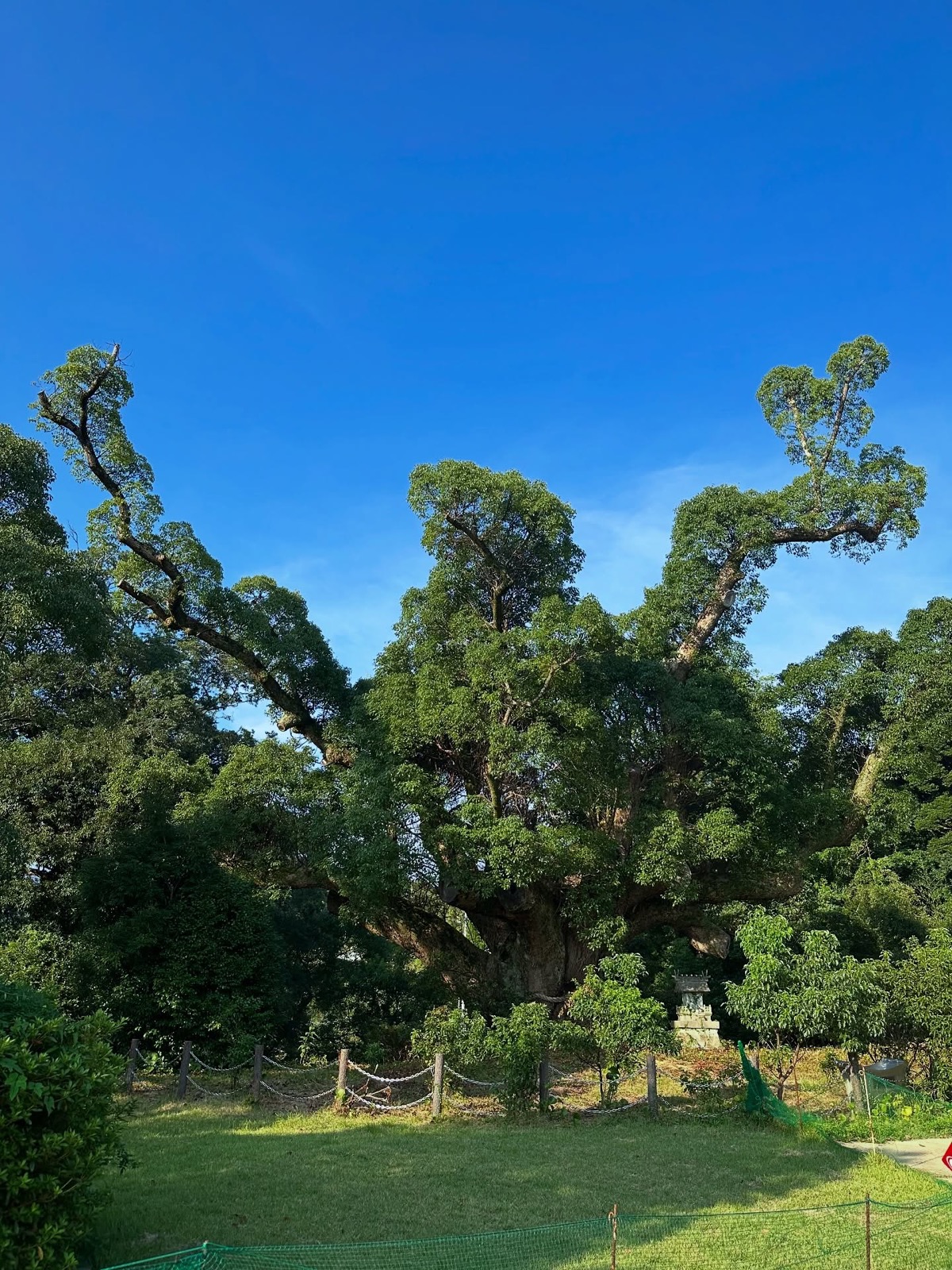
On Japanese golf courses
Golf courses give the beetle what Clausen’s farmland did not: wide, continuous turf. The beetle is there, as one chafer among several. A survey of golf courses in Nagano Prefecture, published in 1992, named the mamekogane among five dominant chafer species, with the himekogane, the dōganebuibui and others. A 1998 review from the Chiba Prefectural Agricultural Experiment Station lists it among the main turf-damaging chafers, alongside the semadarakogane and others.
But proportions depend on the place and the method. At one new golf course, lure traps from 1991 to 2002 caught 1,603,546 semadarakogane — 92.5% of the catch — and 48,454 mamekogane, 2.8%. That is a trap catch, not a measure of grub damage, but it is a reminder that in Japanese turf the Japanese beetle shares the soil with other grubs.
| Explanation for low numbers in Japan | Evidence | How strong |
|---|---|---|
| Parasites of adults and grubs | Clausen et al. 1927 field data (fly 19–90%, wasp up to 20%) | Observed, but variable by year and site |
| Little grassland; intensive cropping; flooded paddies | Clausen et al. 1927; Fleming 1972 | Field observation, “probably” in the original |
| Resistant plants | EFSA 2018 | Presumed |
| More grass leads to more beetles | Ando 1986, Hirosaki from 1976; EFSA 2018 | Local field record, author’s interpretation |
| Competition with other chafers | — | Not demonstrated in the sources checked |
What Japanese Guidance Says — Gardens and Turf
A Hokkaido guide for gardens
Japanese official advice for gardens is short. The Hokkaido Forestry Research Institute’s 2001 guide notes that when the beetle is abundant it eats the leaves and flowers of broadleaved plants such as roses, cherries and grapes. Its control advice has two parts: go round the trees and catch the beetles, and, where turf damage calls for chemical control, use a pesticide registered for chafers. Shimane Prefecture’s plant protection office lists the mamekogane among fruit-damaging chafers, but notes that damage on grapes is mainly from a different species, the dōganebuibui.
Checking a garden, step by step
Put together, the Japanese and American sources give a simple order of work.
- Confirm the beetle. Green head and thorax, copper wing covers, and white tufts along the sides (APHIS).
- Read the leaves. Skeletonised leaves and large irregular holes in summer point to adults (APHIS); in Japan, adults are active from about June to August, earlier in the south (Hokkaido Research Organization, Fukuoka Prefecture).
- Deal with adults by hand. Catch the beetles on the trees, as the Hokkaido guide advises.
- Check the turf separately. Dying turf is only a grub problem if grubs are found in the soil beneath it, which is how the Hokkaido species note describes the damage (“芝が枯れる。土中に幼虫がいる”).
- Keep chemicals for that case. For turf damage that warrants chemical control, the Hokkaido guide advises a product registered for chafers.
| What you see | Likely stage | Response in the Hokkaido guide |
|---|---|---|
| Beetles with white side tufts on roses, cherries, grapes | Adults | Catch them on the trees |
| Skeletonised leaves, large holes | Adults | Catch them; check neighbouring plants |
| Dead patches of turf, grubs in the soil below | Larvae | Registered chafer pesticide, if control is needed |
| Dead patches of turf, no grubs found | Cause unconfirmed | Check other causes |

Golf courses: lures, nematodes, bacteria
Several Japanese studies have examined control in turf. In 1989 Masami Hatsukade tested traps on a golf course and found that combining a synthetic pheromone with a food lure gave excellent attraction. In 1995 Japanese researchers showed that three insect-killing nematodes — Steinernema glaseri, S. anomali and S. kushidai — were effective against the grubs at 1,000 infective juveniles per larva in tests. And in 1996 Walter Leal, then at Japan’s National Institute of Sericultural and Entomological Science, reported that the two mirror-image forms of the sex pheromone japonilure have reverse roles in the pheromone systems of P. japonica and a related chafer, the ōsaka-sujikogane.

What this means for a gardener
None of this makes the beetle harmless in Japan: the Hokkaido guide is plain that in years of high numbers it eats roses, cherries and grapes. What the guidance shows is a proportionate response, with hand-picking for adults and chemicals kept for turf where grubs are causing damage.
What Gardeners Elsewhere Can Take From Japan
Common mistakes in the story
Several versions of this story circulate, and some are wrong.
– “It is harmless in Japan.” Not true. It is a recognised pest of soybeans, roses, fruit and turf; it is the numbers that are usually lower. – “America imported the cure from Japan.” Partly. The tachinid fly and T. popilliavora came from Japan, but T. vernalis came from Korea and southern China, and milky disease was probably native to the US. – “Natural enemies explain everything.” Clausen, Fleming and EFSA all hedge with “probably” or “presumably”. Land use is part of every explanation, and no source checked here measures how much each factor contributes. – “It arrived in iris bulbs in 1916.” The USDA says the route is unproven and refers to soil around iris rhizomes; Potter and Held estimate arrival around 1911.
Look at the grass
The Japanese record and the Swiss response point the same way. At Hirosaki, the beetle increased where lawns and grassland increased. At Kloten, the canton’s measures went straight to the grass: a ban on watering lawns, then plastic sheeting over football pitches. For a planting design, that suggests a way of looking at a site rather than a proven remedy: how much irrigated lawn sits next to roses and fruit trees is worth a second look. None of the sources checked here measures what changing it would achieve in a single garden.
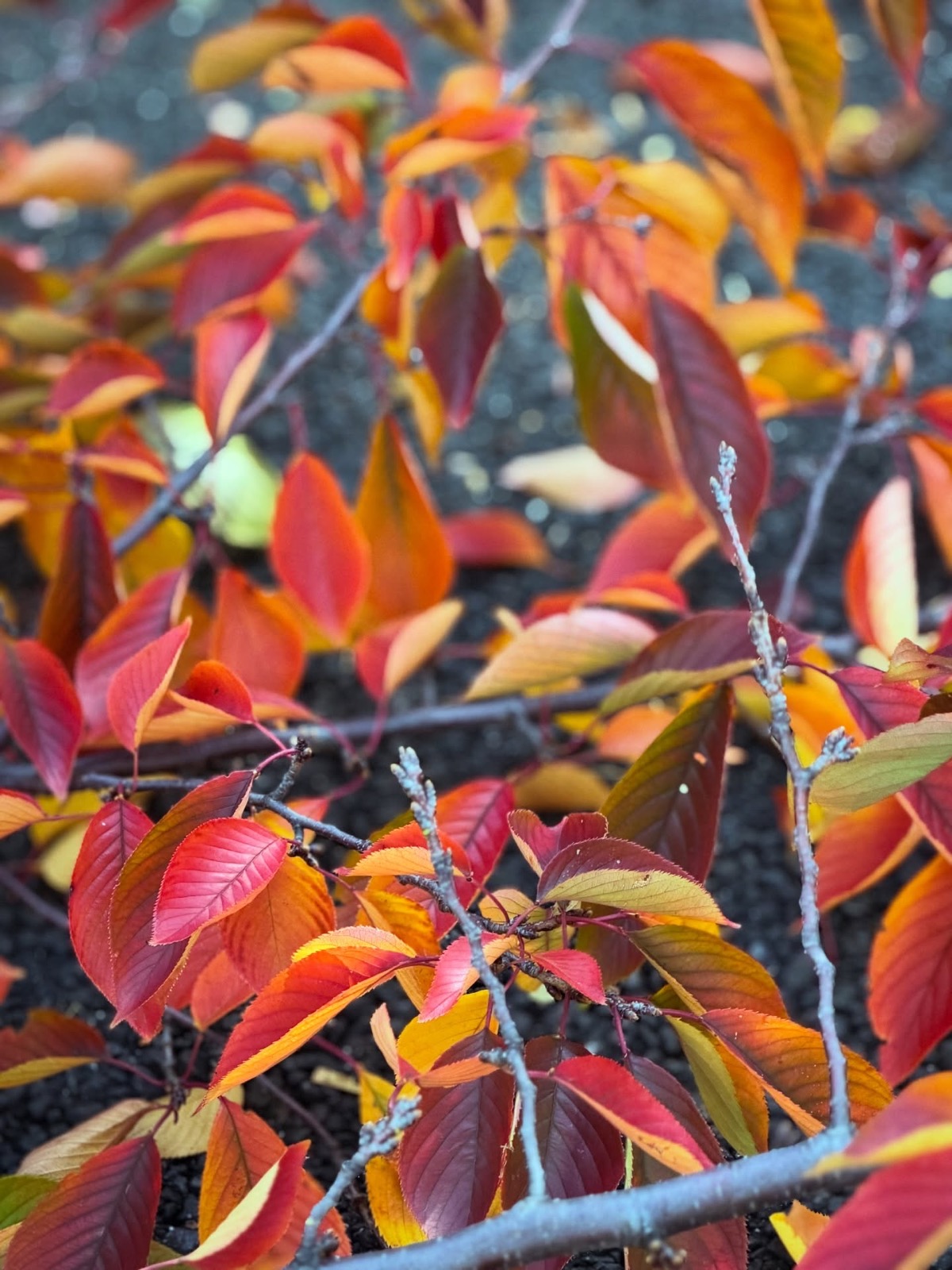
Two landscapes, one beetle
In 1920s Japan, Clausen’s team found it “common but not abundant” around Yokohama, among intensively worked fields and flooded paddies. In 2024, the canton of Zurich counted about 1,500 beetles around one sports ground at Kloten. Japan also has an invasive-insect story running the other way: pine wilt disease, caused by a nematode native to North America and first recorded in Japan in 1905, still kills pines here.
For anyone designing planting, the lesson runs close to the one in what a submerged forest teaches about landscape design: the ground layer helps shape what can thrive there. And in cities, where lawns sit beside flowering cherries, the same choice shows up in how Tokyo’s street trees are planted and kept.
Frequently asked questions
Is the Japanese beetle a pest in Japan? Yes, but historically a minor one. Japanese sources list it as a pest of soybeans, roses, cherries, grapes and turf, and it can be abundant locally, as at Hirosaki from 1976. A 1972 USDA monograph calls it “a pest of minor importance in its native Japan”.
Why are there fewer Japanese beetles in Japan than in the United States? Studies since the 1920s suggest a combination of natural enemies, such as a tachinid fly and Tiphia wasps, and land use: intensive cropping, flooded rice paddies, little grassland. Their relative contributions have not been measured.
What is the Japanese name for the Japanese beetle? Mamekogane (マメコガネ). It is one of several kogane-mushi, or chafers, found in Japanese gardens and turf.
Did the USDA bring natural enemies from Japan? Yes. USDA entomologists began work in Japan in 1920 and extended it to Korea in 1922. The tachinid fly now called Istocheta aldrichi and the wasp Tiphia popilliavora came from Japan; Tiphia vernalis came from Korea and southern China. Five imported parasites established in the eastern US.
Is milky spore from Japan? There is no evidence that it is. Milky disease was found in New Jersey in 1933, and the USDA considered the bacterium probably native to the United States. Milky disease bacteria have since also been isolated from grubs in Japan.
When was the Japanese beetle first found in Europe? On Terceira in the Azores in 1970. On the mainland it was first recorded in Italy’s Ticino Valley in 2014, then in Ticino, Switzerland, in 2017, and at Kloten near Zurich in 2023.
Sources
– Fleming, W. E. (1968). Biological Control of the Japanese Beetle. USDA Technical Bulletin 1383. https://ageconsearch.umn.edu/record/171592/files/tb1383.pdf (checked 2026-10-30) – Fleming, W. E. (1972). Biology of the Japanese Beetle. USDA Technical Bulletin 1449. https://webdoc.agsci.colostate.edu/bspm/JapaneseBeetle/Fleming1972.pdf (checked 2026-10-30) – Fleming, W. E. (1962). The Japanese Beetle in the United States. USDA Agriculture Handbook 236. https://www.govinfo.gov/content/pkg/GOVPUB-A-PURL-gpo21252/pdf/GOVPUB-A-PURL-gpo21252.pdf (checked 2026-10-30) – Clausen, C. P., King, J. L. & Teranishi, C. (1927). The Parasites of Popillia japonica in Japan and Chosen (Korea) and Their Introduction into the United States. USDA Department Bulletin 1429. https://doi.org/10.5962/bhl.title.108287 (checked 2026-10-30) – Smith, L. B. & Hadley, C. H. (1926). The Japanese Beetle. USDA Department Circular 363. https://upload.wikimedia.org/wikipedia/commons/c/c7/The_Japanese_beetle_%28IA_japanesebeetle363smit%29.pdf (checked 2026-10-30) – Clausen, C. P. (1956). Biological Control of Insect Pests in the Continental United States. USDA Technical Bulletin 1139. https://ageconsearch.umn.edu/record/157130/files/tb1139.pdf (checked 2026-10-30) – King, J. L. & Holloway, J. K. (1930). Journal of Economic Entomology 23: 266–274. https://doi.org/10.1093/jee/23.1.266c (checked 2026-10-30) – Potter, D. A. & Held, D. W. (2002). Biology and management of the Japanese beetle. Annual Review of Entomology 47. https://webdoc.agsci.colostate.edu/bspm/JapaneseBeetle/PotterHeld2002.pdf (checked 2026-10-30) – Althoff, E. R. & Rice, K. B. (2022). Japanese Beetle (Coleoptera: Scarabaeidae) Invasion of North America: History, Ecology, and Management. Journal of Integrated Pest Management 13(1): 2. https://academic.oup.com/jipm/article/13/1/2/6503655 (checked 2026-10-30) – USDA–APHIS (2015). Managing the Japanese Beetle: A Homeowner’s Handbook. https://www.aphis.usda.gov/sites/default/files/JBhandbook.pdf (checked 2026-10-30) – Pettersson, B. et al. (1999). International Journal of Systematic Bacteriology 49: 531–540. https://doi.org/10.1099/00207713-49-2-531 (checked 2026-10-30) – Matsuki, N. et al. (1997). Applied Entomology and Zoology 32: 583–588. https://doi.org/10.1303/aez.32.583 (checked 2026-10-30) – Yokoyama, T. et al. (2003). Applied Entomology and Zoology 38(4): 523–528. https://www.jstage.jst.go.jp/article/aez/38/4/38_4_523/_article/-char/en (checked 2026-10-30) – Andreadis, T. G. & Hanula, J. L. (1987). Journal of Protozoology 34: 15–21. https://doi.org/10.1111/j.1550-7408.1987.tb03123.x (checked 2026-10-30) – Smitley, D. R. et al. (2011). Environmental Entomology 40(3): 589–596. https://academic.oup.com/ee/article/40/3/589/351639 (checked 2026-10-30) – Vossbrinck, C. R. & Andreadis, T. G. (2007). Journal of Invertebrate Pathology. https://portal.ct.gov/-/media/caes/documents/biographies/vossbrinckandreadisjip2007pdf.pdf (checked 2026-10-30) – O’Hara, J. E. et al. (2009). Zootaxa 2190. https://www.mapress.com/zootaxa/2009/f/zt02190p236.pdf (checked 2026-10-30) – EPPO Global Database, Popillia japonica distribution in Portugal. https://gd.eppo.int/taxon/POPIJA/distribution/PT (checked 2026-10-30) – EPPO Reporting Service 2014/179, 2017/160, 2025/167, 2025/168, 2025/192. https://gd.eppo.int/reporting/article-3272 ・ https://gd.eppo.int/reporting/article-6128 ・ https://gd.eppo.int/reporting/article-8181 ・ https://gd.eppo.int/reporting/article-8183 ・ https://gd.eppo.int/reporting/article-8207 (checked 2026-10-30) – Canton of Zurich press releases on Kloten, 2023-07, 2024-07-16, 2025-05-07, 2025-08-22. https://www.zh.ch/de/news-uebersicht/medienmitteilungen/2023/07/schaedliche-japankaefer-in-kloten-gefunden-tilgungsmassnahmen-sind-eingeleitet.html ・ https://www.zh.ch/de/news-uebersicht/medienmitteilungen/2024/07/japankaefer-in-kloten-befallenes-gebiet-nach-wie-vor-begrenzt.html ・ https://www.zh.ch/de/news-uebersicht/medienmitteilungen/2025/05/japankaefer-in-kloten-tilgung-des-befalls-ist-weiterhin-das-ziel.html ・ https://www.zh.ch/de/news-uebersicht/medienmitteilungen/2025/08/japankaefer-erneut-nur-geringfuegige-ausdehnung-des-befalls-in-kloten.html (checked 2026-10-30) – Commission Implementing Regulation (EU) 2023/1584. https://eur-lex.europa.eu/legal-content/EN/TXT/?uri=CELEX:32023R1584 (checked 2026-10-30) – EFSA PLH Panel (2018). Pest categorisation of Popillia japonica. EFSA Journal. https://efsa.onlinelibrary.wiley.com/doi/10.2903/j.efsa.2018.5438 (checked 2026-10-30) – Hokkaido Research Organization, Forestry Research Institute. マメコガネ (species note; 2001 guide by 原秀穂). https://www.hro.or.jp/forest/research/fri/database/zukanf/00top/kochu/kogane/mamekoga/note.html ・ https://www.hro.or.jp/forest/research/fri/kanko/fukyu/jumoku/konchu/data/kochu/kogane/mamekoga/kaisetu.pdf (checked 2026-10-30) – NARO. マメコガネ (soybean pests). https://www.naro.go.jp/org/carc/daizu2020/mushi/mamekogane.html (checked 2026-10-30) – Fukuoka Prefecture. 普通作 病害虫・雑草の発生生態と防除, p. 87. https://www.pref.fukuoka.lg.jp/uploaded/life/805964_62798286_misc.pdf (checked 2026-10-30) – Shimane Prefecture Plant Protection Office. コガネムシ類 (grapes). https://www.pref.shimane.lg.jp/industry/norin/gijutsu/nougyo_tech/byougaityuu/byougaityuu-index/budou/bu-kogane.html (checked 2026-10-30) – 安藤喜一 (1986). マメコガネの発生消長と多発生. 日本応用動物昆虫学会誌 30(2): 111. https://www.jstage.jst.go.jp/article/jjaez1957/30/2/30_2_111/_article/-char/ja/ (checked 2026-10-30) – 桑澤久仁厚 (1992). 長野県におけるゴルフ場芝害虫の発生状況 (1). https://www.jstage.jst.go.jp/article/ktpps1954/1992/39/1992_39_285/_pdf/-char/en (checked 2026-10-30) – 藤家梓 (1998). 芝草におけるコガネムシ類の生物的防除法. https://jppa.or.jp/archive/pdf/52_10_16.pdf (checked 2026-10-30) – 山本久仁夫 (2019). 新設ゴルフ場におけるコガネムシ類の発生動態. https://www.jstage.jst.go.jp/article/turfgrass/48/1/48_40/_pdf/-char/en (checked 2026-10-30) – 廿日出正美 (1989). マメコガネ成虫に対する誘引餌と合成フェロモンの併用効果について. https://www.jstage.jst.go.jp/article/turfgrass1972/18/1/18_1_5/_article/-char/ja/ (checked 2026-10-30) – 山中・田辺・武内 (1995). Japanese Journal of Nematology 25: 24–32. https://www.jstage.jst.go.jp/article/jjn1993/25/1/25_1_24/_article/-char/en (checked 2026-10-30) – Leal, W. S. (1996). PNAS 93: 12112–12115. https://pmc.ncbi.nlm.nih.gov/articles/PMC37951/ (checked 2026-10-30)