

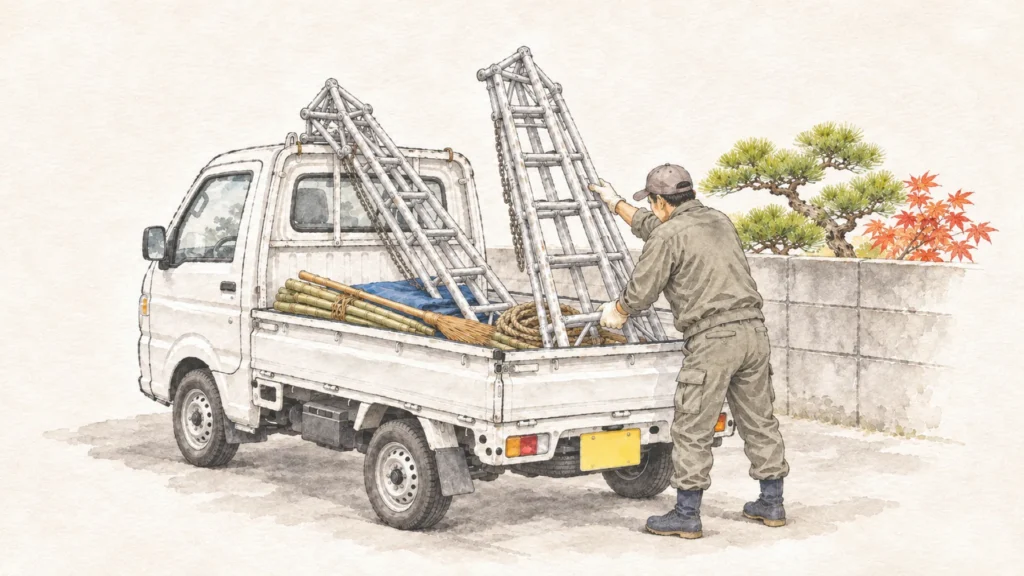
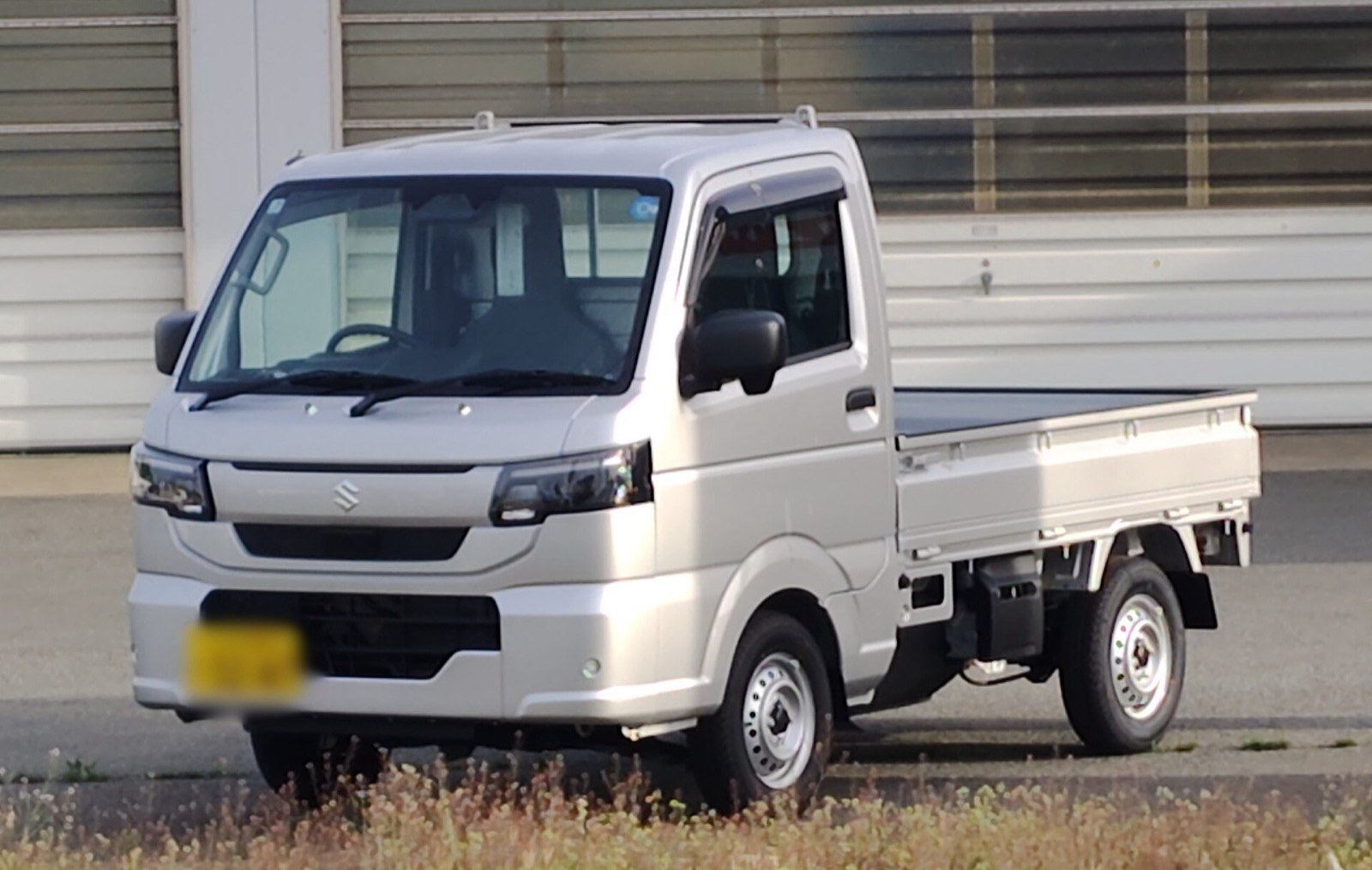
A kei truck suits Japanese gardeners because the size limits in Japanese law make it fit the narrow residential lanes where much of their work happens. A kei vehicle can be no wider than 1.48 m, yet a standard Suzuki Carry still carries 350 kg on a 1.94 m bed — room for ladders, tools and a load of clippings. It also costs less to tax and inspect than a standard truck, and an ordinary driving licence covers it.
What follows starts on the back of the truck, then works outward: the law that fixes its size, the lanes it has to fit, the costs that keep it on the road, and the American farms now importing old ones.
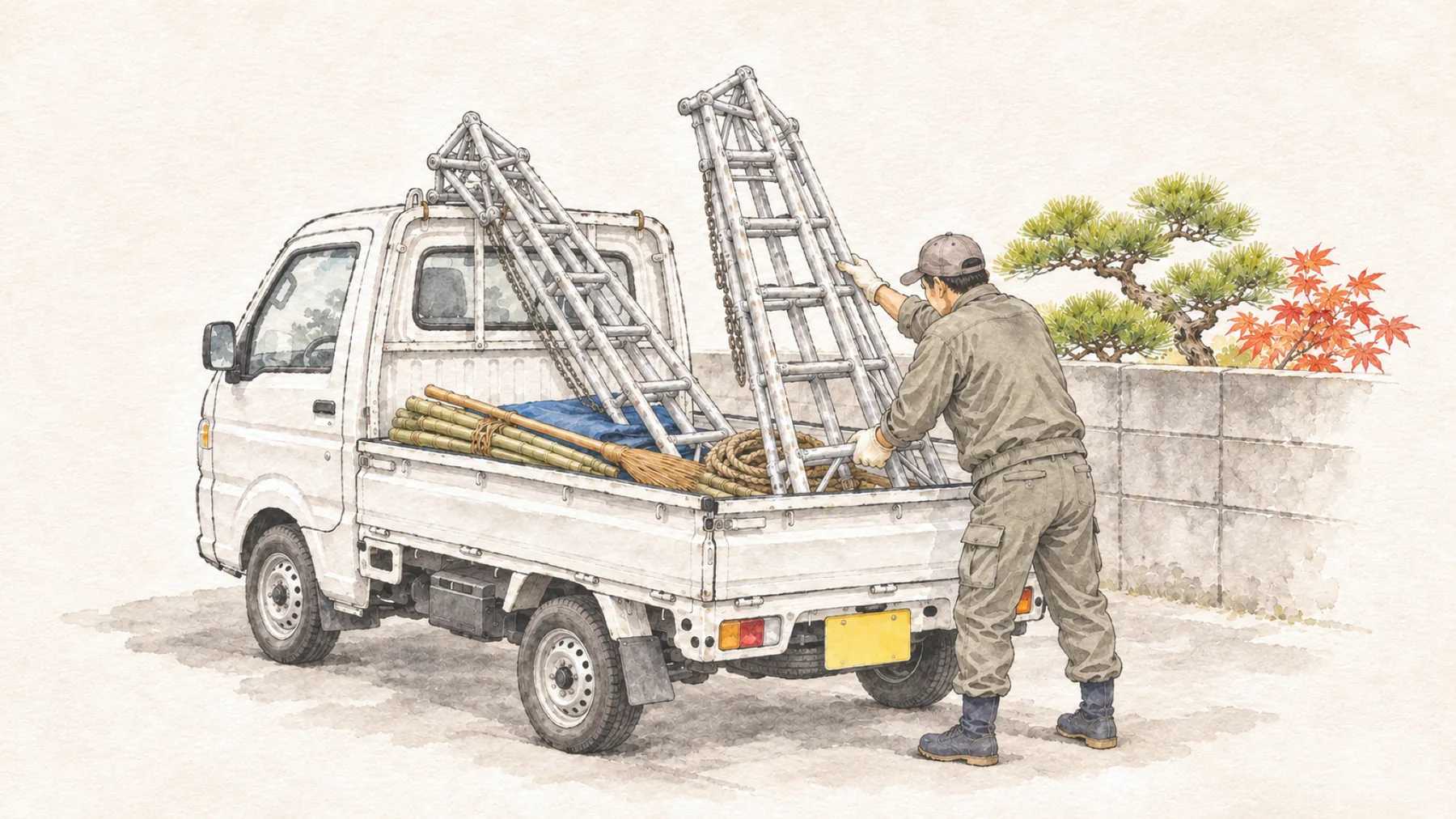
The morning load — what fits on a 1.94-metre bed
A small bed, loaded in layers
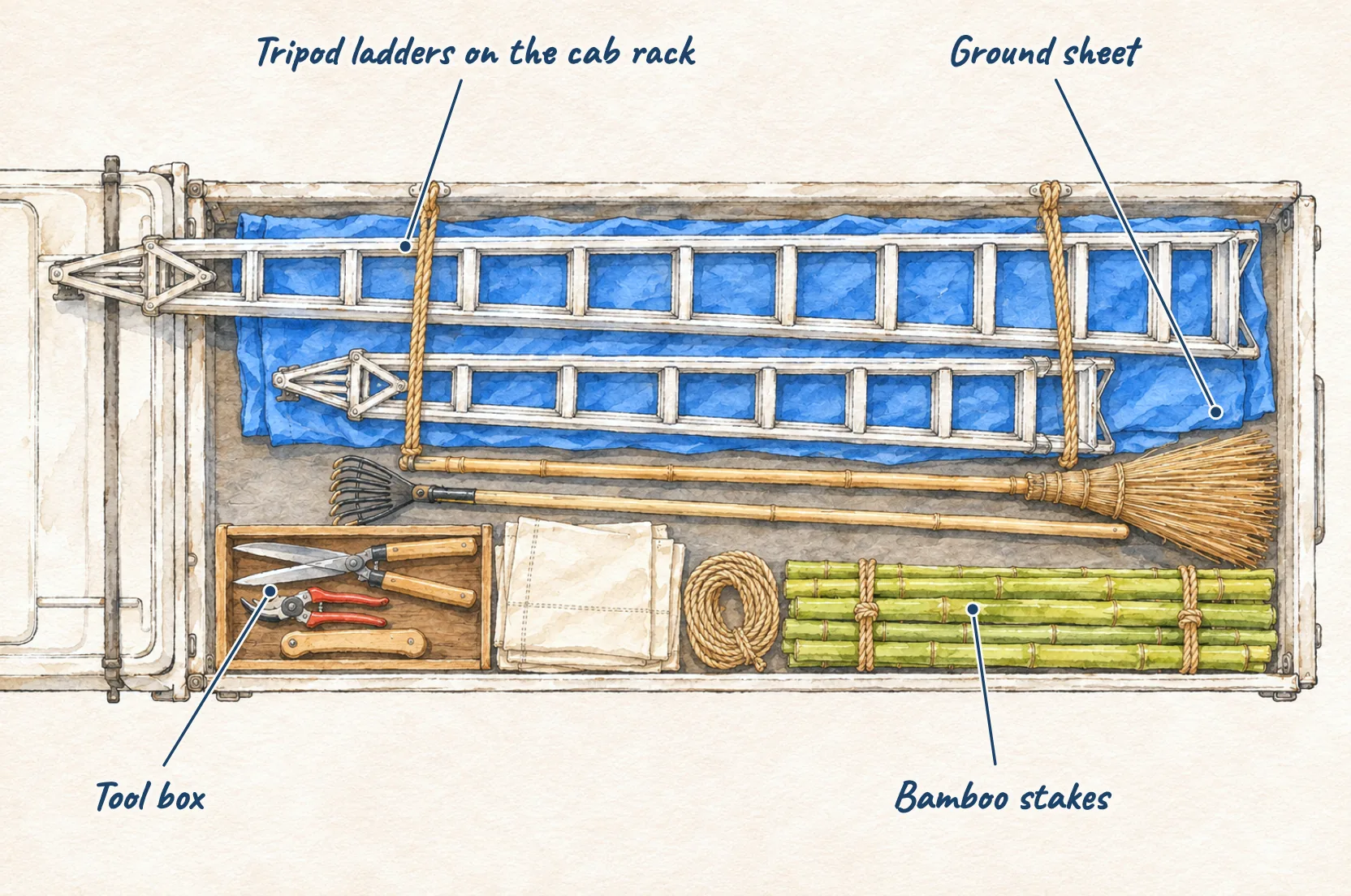
Picture a white mini pickup outside a gardener’s yard early in the morning, before a day of pruning. A practical way to load it is from the floor up. Folded ground sheets go down first, flat on the bed. The tripod ladders go on top, lying along the bed or on a rack over the cab, and are roped down. Rakes and brooms go along the sides. Hand tools travel in a box. The last things in are whatever that day’s job needs: a pole saw, a hedge trimmer, a bundle of bamboo stakes.
The bed of a standard Suzuki Carry measures 1,940 mm long and 1,410 mm wide. The standard-cab Daihatsu Hijet Truck, its direct rival, has a bed of the same length and width (the long-cab Jumbo version has a shorter 1,650 mm bed). That is about 6 ft 4 in by 4 ft 7 in. On the current Hijet the sides of the bed are 285 mm high and the floor is 660 mm above the ground, so long items can be slid on over the low sides as well as from the back.
| An example morning load | Where it rides |
|---|---|
| Folded tarps, ground sheets | Flat on the floor, under everything else |
| Tripod ladders | Along the bed or on a rack over the cab, roped down |
| Rakes, brooms | Along the sides |
| Hand tools — scissors, secateurs, saw | In a box behind the cab |
| Power tools — hedge trimmer, pole saw | Wedged between the box, the ladders |
| Empty bags, rope | On top, within reach |
| Job-specific material — bamboo stakes, soil | Loaded last |
Why the tripod ladder shapes the load
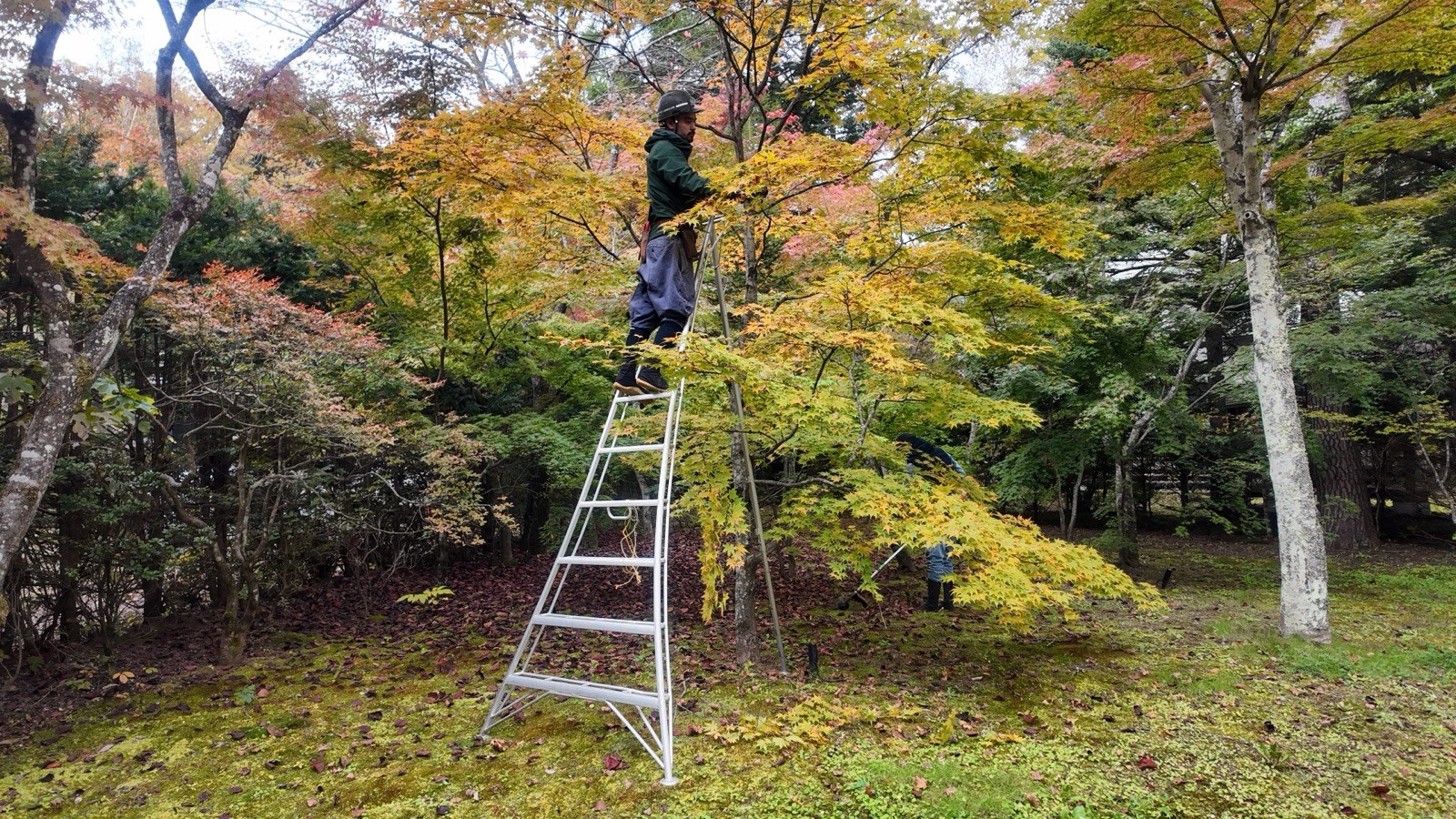
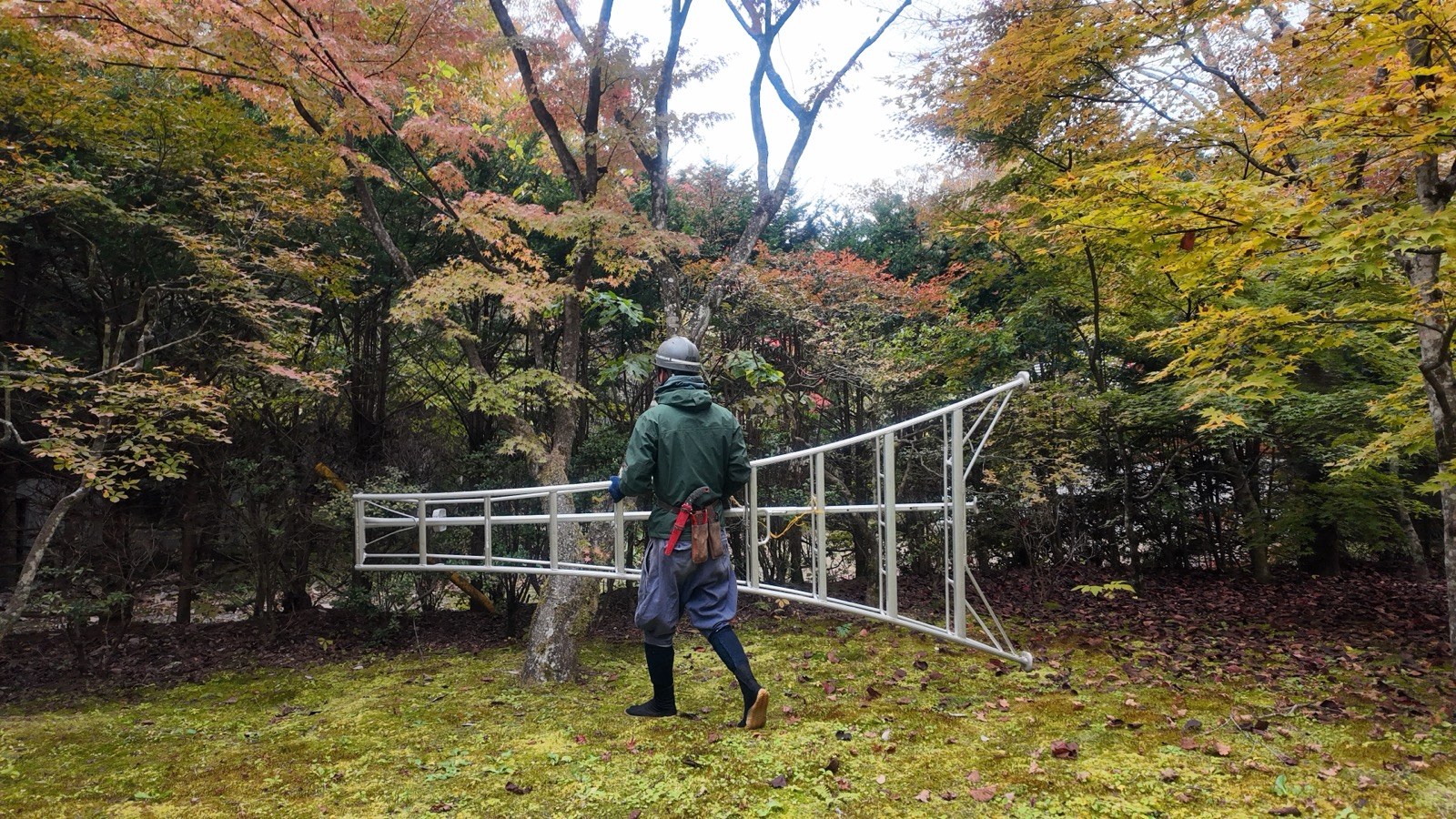
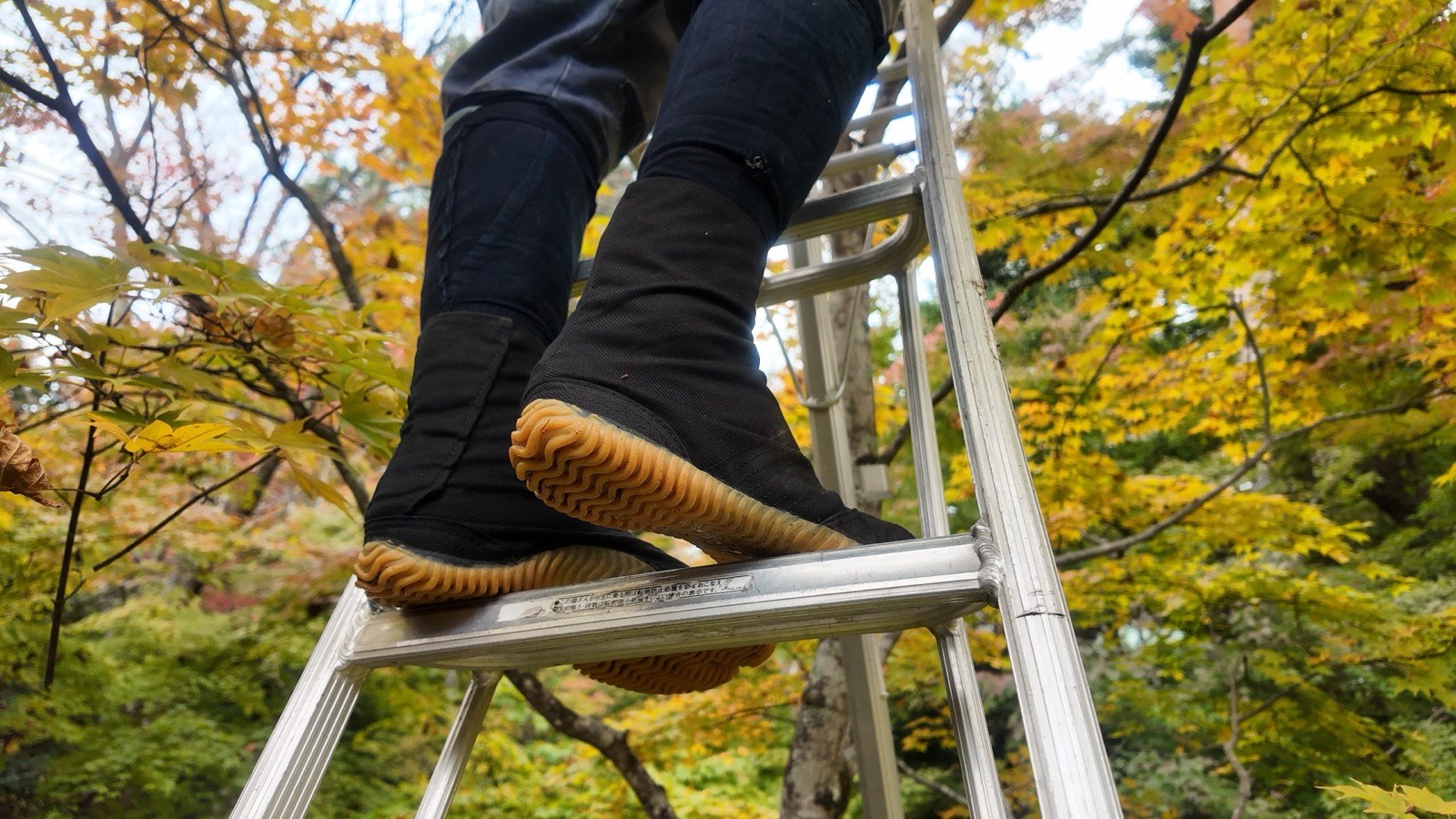
The bulkiest item is usually the sankyaku kyatatsu (三脚脚立) — the three-legged gardener’s ladder. Hasegawa, an Osaka ladder maker, describes its GSC “Green Step” as the standard type of gardening tripod; the range includes models with platform heights of 1.81 m, 2.41 m and 3.01 m. Niwaki, which sells Hasegawa-made tripod ladders outside Japan, lists six-, eight- and ten-step versions at 1.8, 2.4 and 3.0 m.
A tripod ladder is made for garden trees. Niwaki’s own description puts it simply: “that single back leg is great for poking into hedges, letting you get right up close to the action.” It is also long and awkward to carry. A 3 m ladder is longer than a 1.94 m bed even when folded, which is why many gardeners fit a rack over the cab: the ladder can rest on the rack at one end and the tailgate at the other.
For anyone buying one, note that the platform height is not the height you stand at. Hasegawa lists the 3.01 m model with a maximum standing height of 2.11 m. PiCa, another Japanese ladder maker, lists its 3 m GMK model at 2.90 m vertical height with a maximum standing height of 2.03 m. Setting the ladder up safely is a separate subject; here, the point is that a 3 m class ladder decides how the whole load is arranged.
The work the load is for
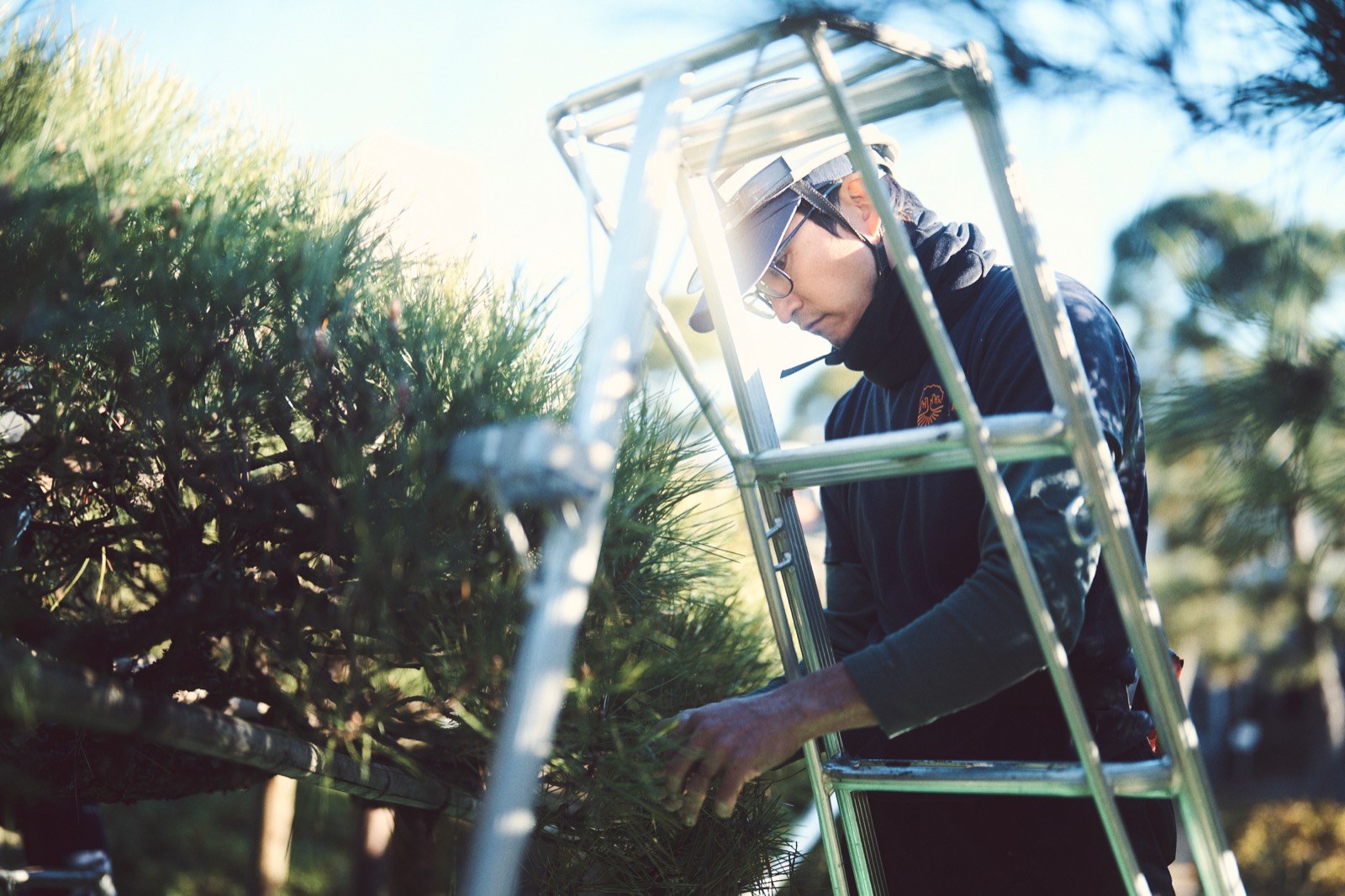
Most of what this load serves is maintenance, not construction. Japan’s official occupational guide, job tag, describes landscape work this way: “近年、造園工の仕事は、庭園、公園、緑地を一から作る仕事よりも維持管理の仕事が多くなっており、定期的な樹木の剪定、伐採、刈込、除草、芝刈りなどを行う機会が多い” — in recent years landscapers do more maintenance of gardens, parks and green space than building them from scratch, with frequent regular pruning, felling, hedge clipping, weeding and mowing. Maintenance means returning to the same gardens on a cycle, with the same kit each time. That is the job a kei truck is loaded for.
What “kei” means — a legal box, not a model
The kei class in one sentence
Kei (軽, “light”) is not a brand. It is a category of vehicle written into Japanese law. The Road Transport Vehicle Act’s enforcement regulations limit a four-wheeled kei vehicle to 3.40 m long, 1.48 m wide and 2.00 m high; for internal-combustion models, engine displacement is limited to 0.660 litres. Every kei truck sold in Japan is built within that box.
How the box grew
The category was created on 8 July 1949, when the limits were 2.80 m by 1.00 m by 2.00 m and 150 cc for a four-stroke engine. It has been enlarged in small steps since:
| From | Length | Width | Height | Engine |
|---|---|---|---|---|
| 8 Jul 1949 | 2.80 m | 1.00 m | 2.00 m | 150 cc (4-stroke) / 100 cc (2-stroke) |
| 26 Jul 1950 | 3.00 m | 1.30 m | 2.00 m | 350 cc / 200 cc |
| 16 Aug 1951 | 3.00 m | 1.30 m | 2.00 m | 360 cc / 240 cc |
| Apr 1955 | 3.00 m | 1.30 m | 2.00 m | 360 cc (either cycle) |
| 1 Jan 1976 | 3.20 m | 1.40 m | 2.00 m | 550 cc |
| 1 Jan 1990 | 3.30 m | 1.40 m | 2.00 m | 660 cc |
| 1 Oct 1998 | 3.40 m | 1.48 m | 2.00 m | 660 cc |
Sources: Zenkeijikyo (National Light Motor Vehicle Association), Light Motor Vehicle Inspection Organization.
Two things stand out. The height limit has never moved from 2.00 m. And the width — the dimension that decides whether a vehicle fits a lane — went from 1.00 m in 1949 to 1.48 m in 1998, and has not changed since.
The names that started in the 1960s
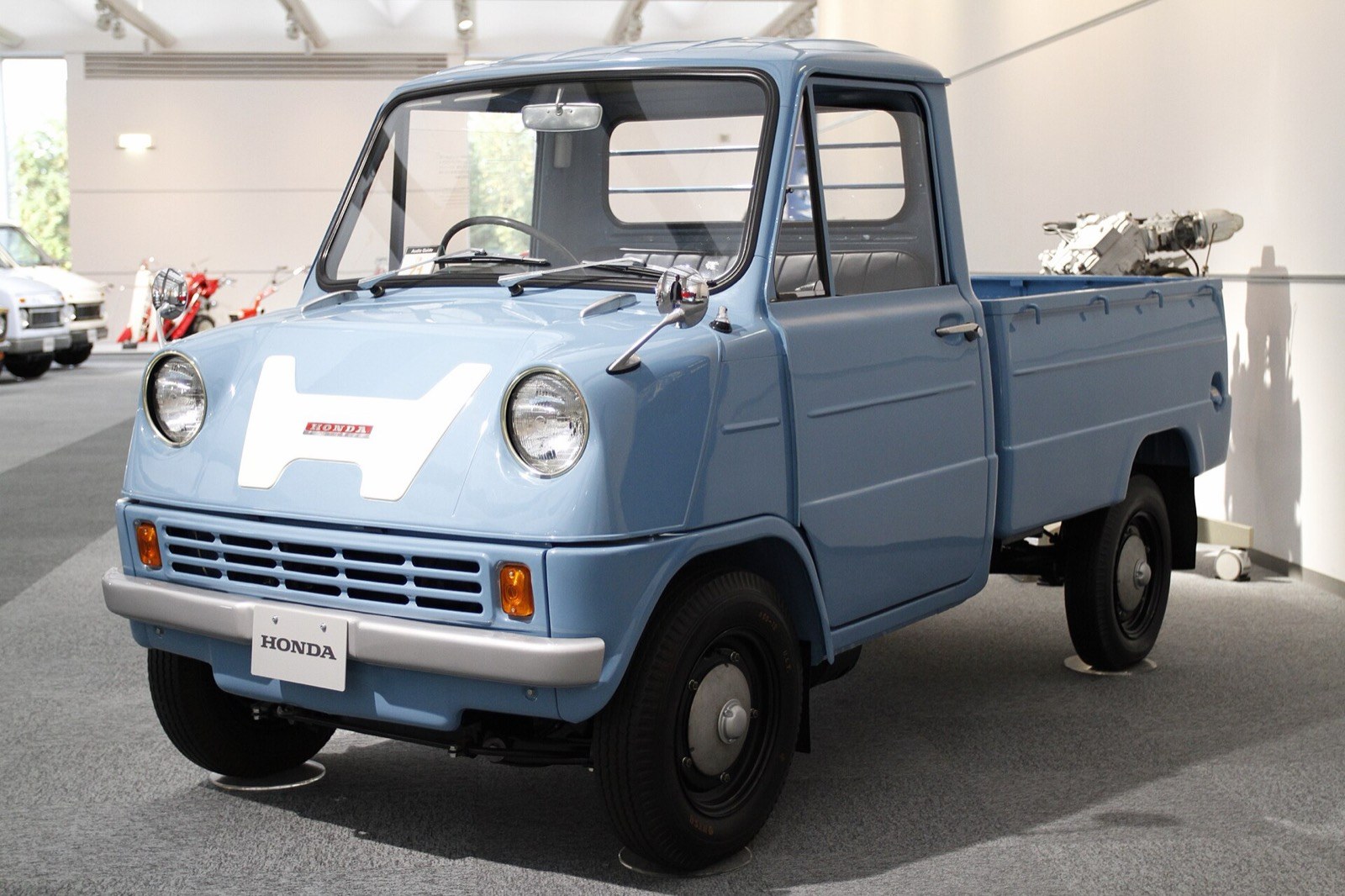
Two of today’s best-known kei truck names date from the early 1960s. Daihatsu launched the Hijet in November 1960 as its first four-wheeled kei vehicle. Suzuki followed in 1961 with the Suzulight Carry FB, the first Carry. Honda’s T360 mini truck went on sale in August 1963. All three were built to the 360 cc limit of the time, inside a body no wider than 1.30 m.
The lanes the box was built for
Most municipal road is narrower than 5.5 metres
The kei truck makes sense once you look at the streets it drives on. Japan’s National Police Agency, in a 2024 regulatory assessment, put the total length of municipal roads with a carriageway narrower than 5.5 m at 832,693 km at the end of fiscal 2022. The Cabinet Office’s traffic safety white paper gives the total length of municipal roads as 1,035,760 km. Put together, about 80 percent of Japan’s municipal road length has a carriageway under 5.5 m. Municipal roads include the residential streets where private gardens sit.
In Tokyo the picture is sharper. Setagaya Ward reports that roads narrower than 4 m make up 25 percent of all its roads, and that in its Kitazawa district roads narrower than 6 m make up more than 80 percent. The ward explains that many of its areas were built up as housing “without comprehensive infrastructure such as land readjustment” (区画整理等による面的な基盤整備が行われないまま宅地化が進んだ).
The 4-metre rule and the lanes that do not meet it
Japanese building law tries to widen these lanes one house at a time. Article 42 of the Building Standards Act defines a road, for building purposes, as one that meets one of several conditions and is, as a rule, at least 4 m wide (6 m in some designated districts). Article 43 requires, as a rule, that a building plot touch such a road for at least 2 m.
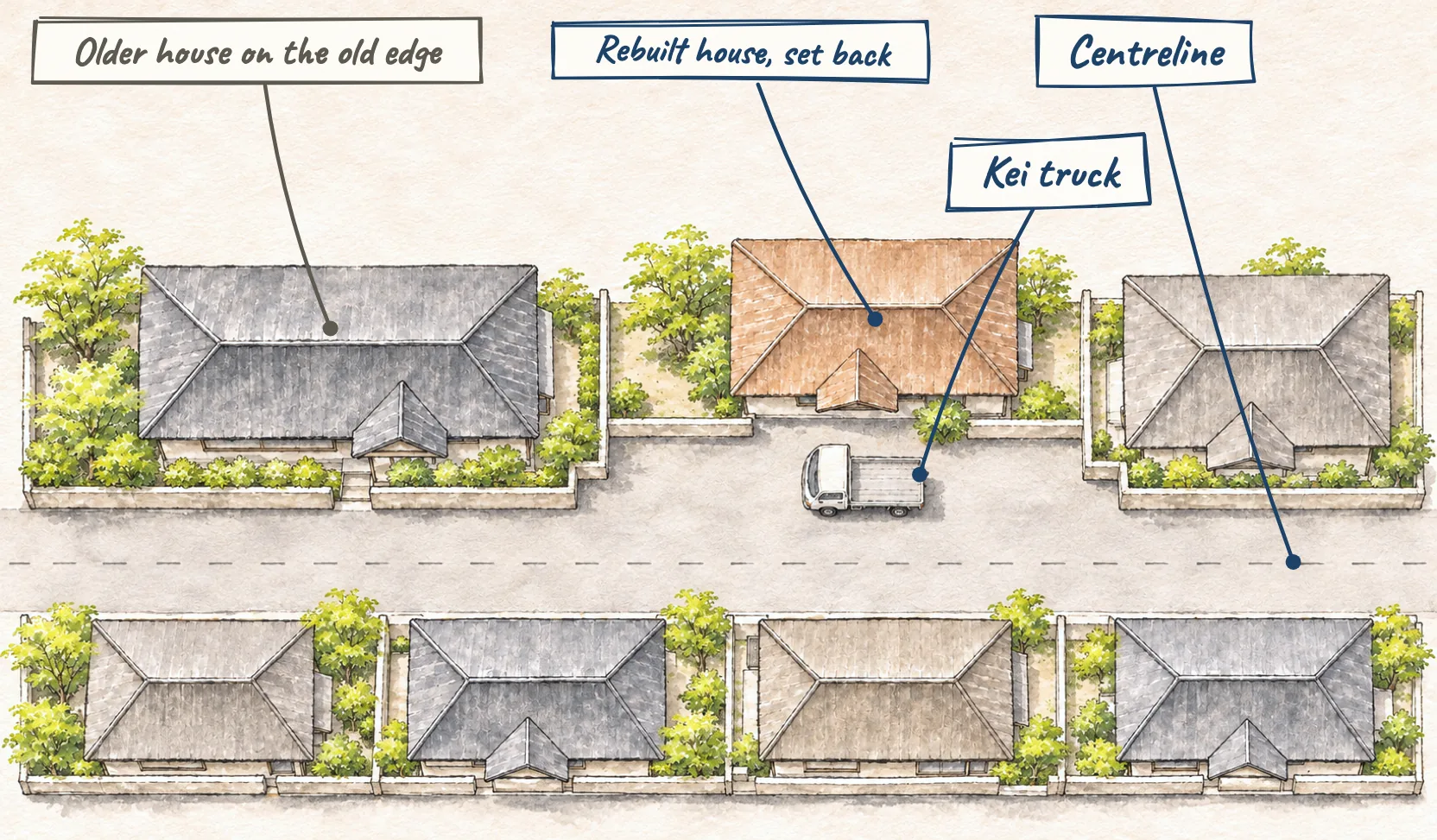
Many lanes were already lined with buildings when these rules first applied to them. Article 42(2) lets designated lanes of this kind count as roads even though they are narrower than 4 m. Their legal edge is normally set 2 m from the centreline (with a special rule where a lane runs along a cliff, river or railway). When a house on such a lane is rebuilt, the new building has to stand back from that line. In Japanese practice this is called setback, and the lanes are often called nikō dōro (2項道路), “paragraph-2 roads.”
Because houses are rebuilt one at a time, setbacks appear one at a time. A lane can have a rebuilt house set back on one side, while its neighbours still stand on the old edge. The width a vehicle can use changes from gate to gate, and a gardener’s truck has to fit the narrowest point on the route, not the average.
Width is what matters at the gate
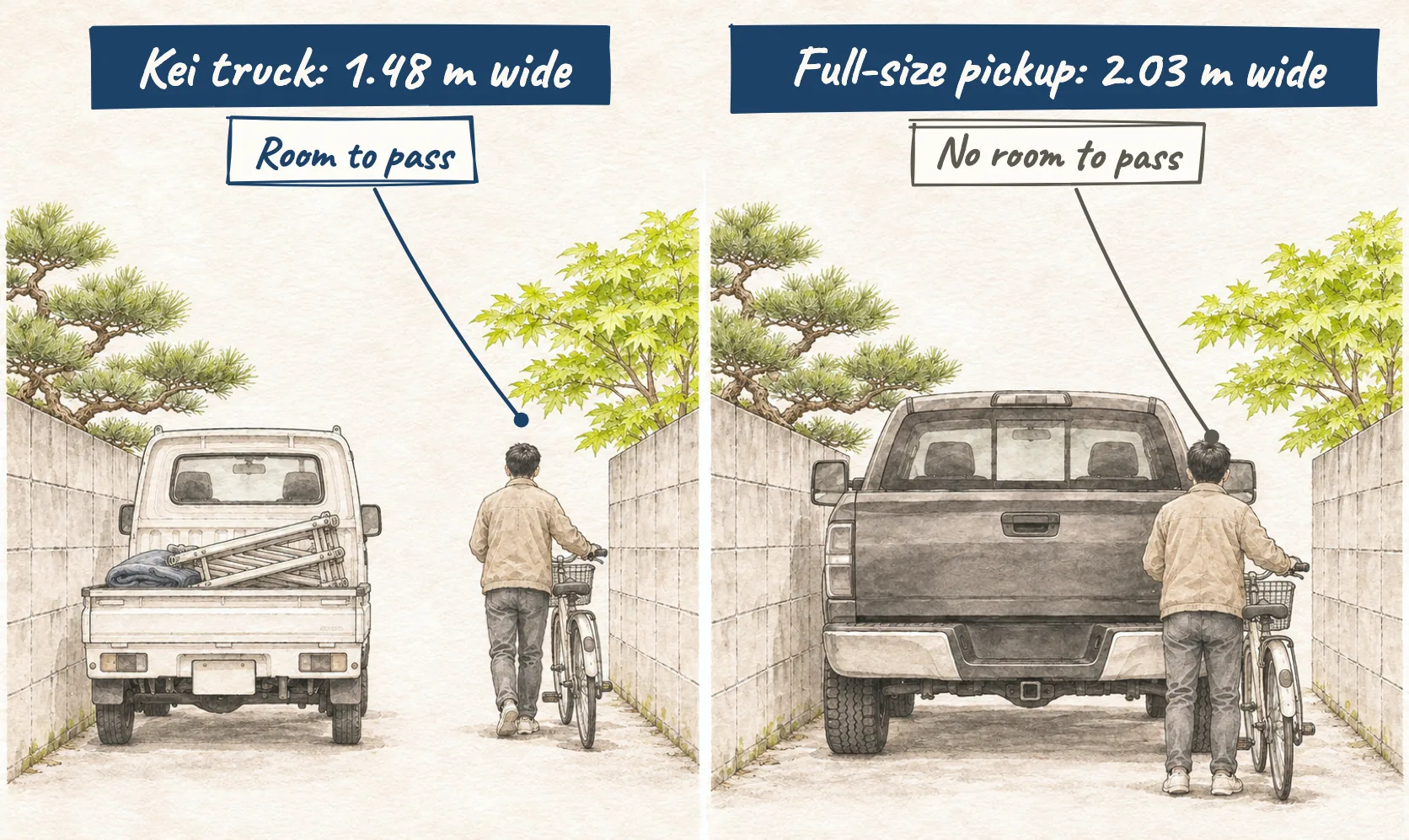
On a lane like this, every centimetre of vehicle width is taken from the space a passer-by, a bicycle or a delivery van needs to get past. Here is the simple subtraction, ignoring mirrors and any gap to the wall:
| Vehicle (published width) | Clear width left on a 4 m lane | On a 3 m stretch |
|---|---|---|
| Kei truck — 1.48 m (legal maximum) | about 2.5 m | about 1.5 m |
| Isuzu Elf 2-tonne standard-cab flatbed (one listed model) — 1,695 mm | about 2.3 m | about 1.3 m |
| 2026 Ford F-150 Regular Cab — 79.9 in (2,029 mm), excluding mirrors | about 2.0 m | under 1 m |
The real clearance is less once mirrors and the gap to the wall are counted. But the order does not change: the narrower the stretch, the more the kei truck’s extra half-metre decides whether someone can walk past.
The drive in — a 3.6-metre turning radius
Turning into the lane
The current Carry and the standard-cab Hijet both have a minimum turning radius of 3.6 m. On a grid of narrow lanes, the ability to turn tightly matters as much as width: many residential lanes meet the next street at a right angle between block walls, and a small turning radius makes a tight corner easier to take without reversing.
Arriving at the gate
At the house, a common sequence is quick. The truck is pulled in as close to the gate as the lane allows and as tight to the wall as possible. A sheet goes down where branches will land. Ladders come off first, because nothing else can start until they are standing. The truck then usually stays where it is for the job, so the bed is next to the work area and the clean-up.
The garden behind the gate
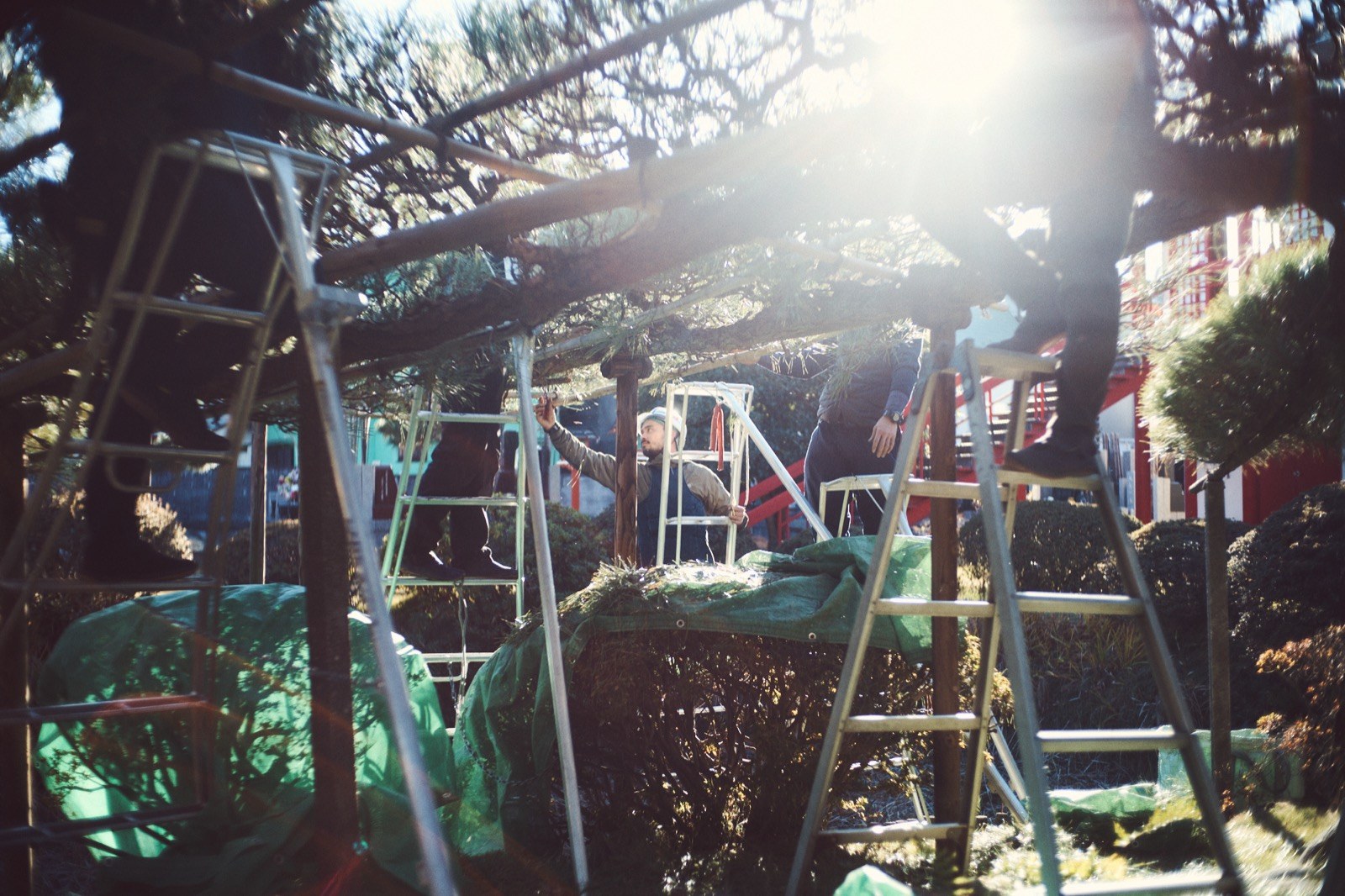
Many town gardens behind these gates are small. A tripod ladder goes up between a wall and a pine, its back leg in the shrubs. Branches come down onto the sheet, are cut into short lengths and carried out to the truck. Seen this way, the kei truck parked at the gate is the gardener’s workshop: the place where tools are swapped, clippings are sorted and the next job’s kit waits.
The bed as a workshop
Tools within reach
The hand tools on the bed are few: ueki-basami (植木鋏, gardener’s scissors), secateurs, a pruning saw, long-bladed hedge shears. Keeping them in one box behind the cab means a gardener coming down the ladder can swap a tool without searching. We cover how to choose between Japanese scissors, secateurs and hedge shears in Japanese pruning shears, and the pull-stroke saw in the Japanese pruning saw.
A low, open work surface
With a floor 660 mm off the ground and sides only 285 mm high (current Hijet figures), the bed also works as a low work surface. Bamboo stakes can be cut to length on it before they are carried in, and branches trimmed into tidy bundles before they are tied. For staking work, the stakes and the rope ride on the bed until the moment they are needed; we covered the methods themselves in Japanese tree staking.

In the job listings
The kei truck turns up in Japan’s public job listings for landscapers. A Hello Work (public employment service) listing from a landscaping company in 2026 states, for site work, “現場への移動等、小型移動式クレーン車、塵芥車、又は、ダンプ(3トン)又は、軽トラックを使用します” — for travel to sites and similar, the company uses a small mobile crane, a refuse truck, a 3-tonne dump truck or a kei truck. The kei truck sits on the same list as a crane and a dump truck: one vehicle among several, chosen for the day’s work.
The afternoon load — branches, weight and volume
350 kilograms, and why space can run out first
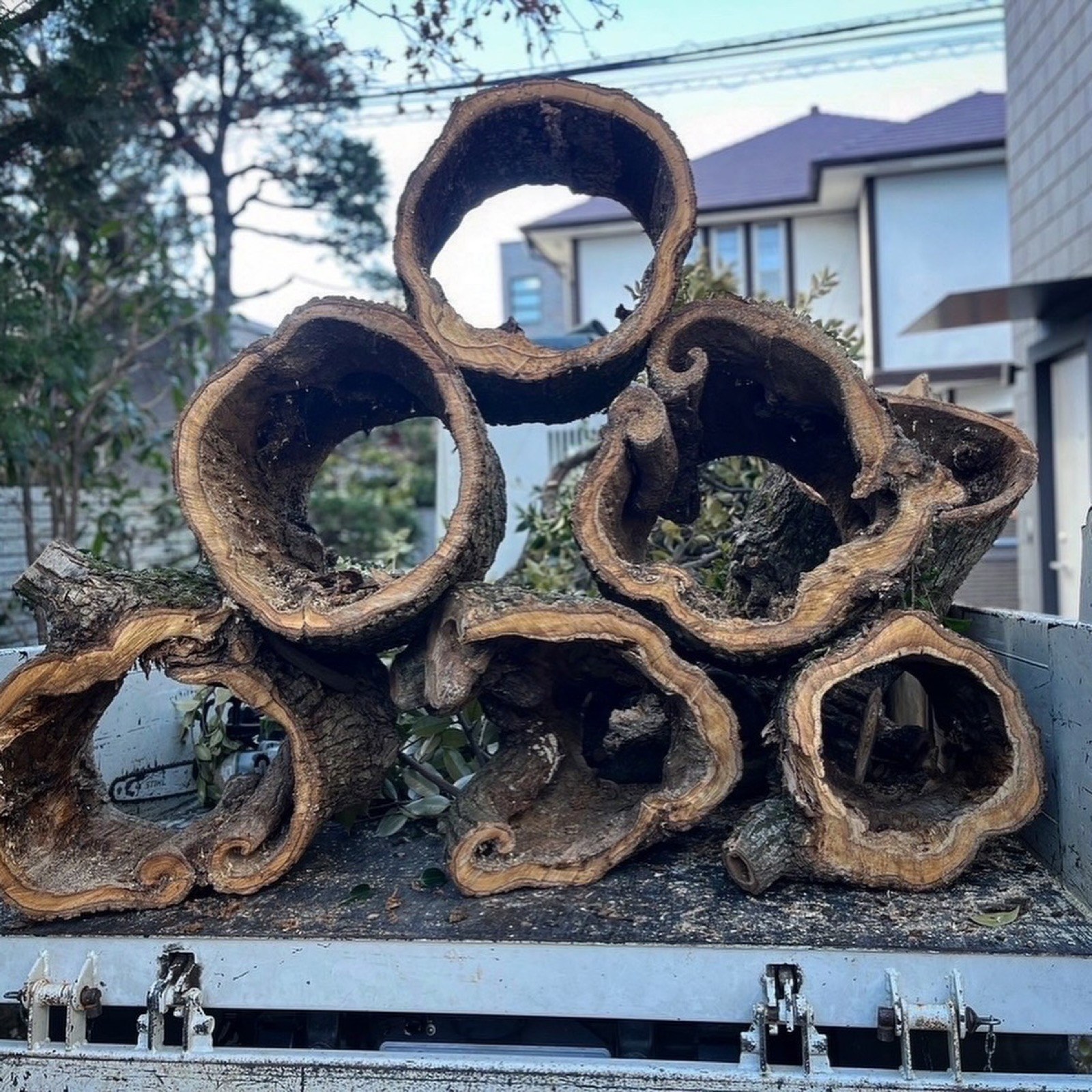
The standard Carry and the standard-cab Hijet are both rated by their makers for a maximum payload of 350 kg. That figure is a manufacturer rating; the legal definition of a kei vehicle sets size and engine limits, not a payload. With leafy prunings, the space on a 1.94 by 1.41 m bed can run out before the weight rating does, because fresh foliage is bulky for its weight. With heavy wood — trunk sections, large limbs — the weight rating comes into play much sooner.
Packing the load
What decides the afternoon is how much can be packed safely onto the bed. Long branches are cut into short lengths so they lie flat. Leafy material is pressed into bags or bundles. Heavy wood goes low, toward the front of the bed. A sheet or net goes over the top and is roped down before the truck moves. A well-packed bed saves a second trip.
When one kei truck is not enough
Some jobs produce more than a kei truck can carry: felling a large tree, moving a pine with its root ball, clearing a long hedge. The company in the Hello Work listing above also lists a refuse truck and a 3-tonne dump truck. Three questions are worth asking before bringing a larger vehicle: can it reach the gate without blocking the lane, is there somewhere to stand it while the crew works, and does the volume justify a second vehicle for the day.
| Kei truck | Larger truck (2–3 t class) | |
|---|---|---|
| Width | 1.48 m maximum | e.g. 1,695 mm (Isuzu Elf 2 t standard cab, one listed model) |
| Bed (standard Carry, standard-cab Hijet) | 1.94 × 1.41 m | Longer, often with a tipper or crane |
| Payload | 350 kg (manufacturer rating) | About 2 t or more |
| On a 4 m lane | About 2.5 m left, before mirrors | Less room to pass |
| Licence | Ordinary licence | May need a semi-medium licence, depending on gross weight |
Where the branches go
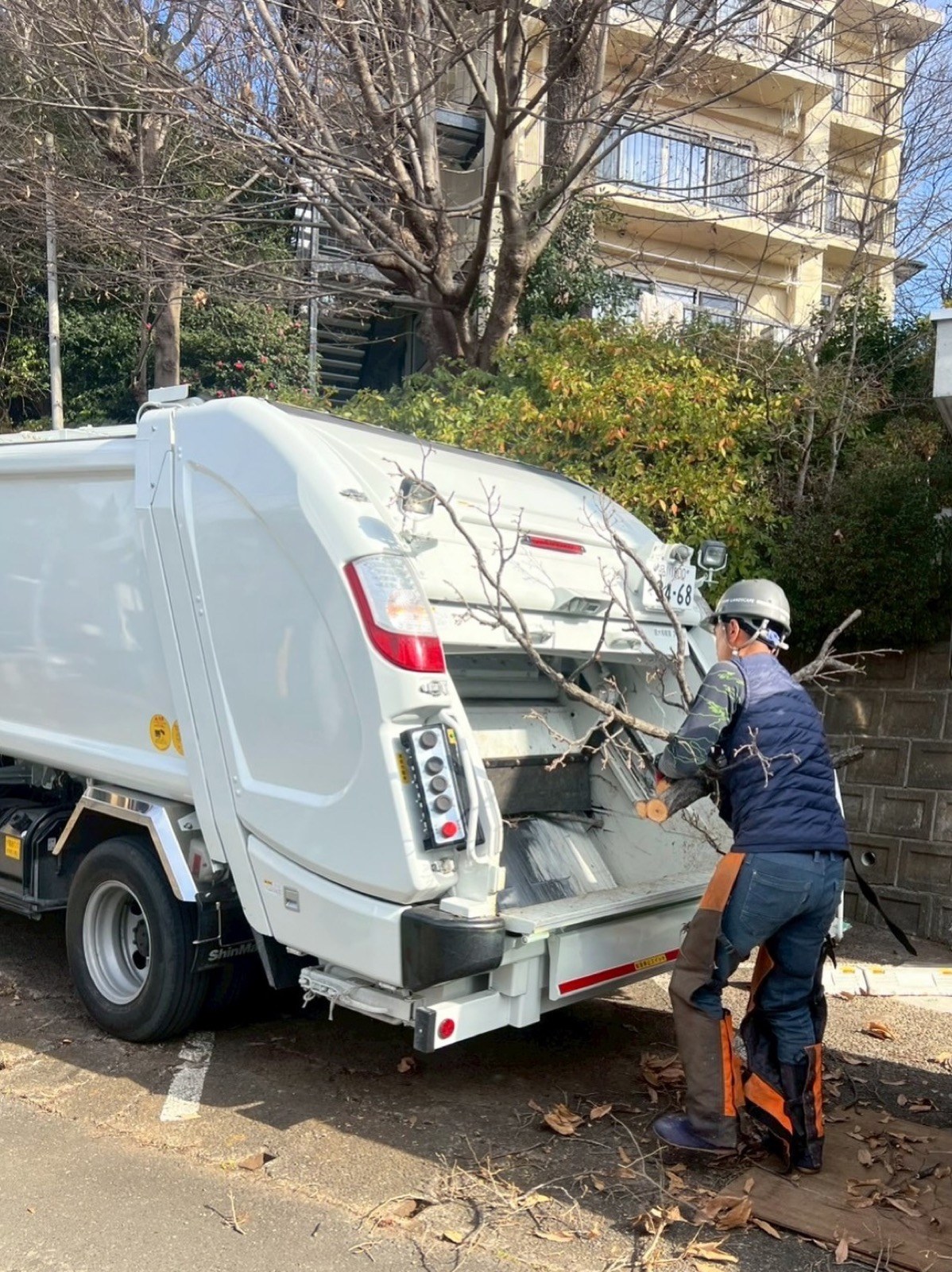
Garden waste from paid work is the business’s responsibility, not the client’s household rubbish. Japan’s Ministry of the Environment summarises Article 3 of the Waste Management Act: a business must properly dispose of waste produced by its business activities under its own responsibility. How the branches are classified depends on where they come from and on local rules. Toyoake in Aichi and Minoh in Osaka both list pruned branches from landscaping businesses as jigyōkei ippan haikibutsu (事業系一般廃棄物) — business general waste — rather than industrial waste. A national notice, on the other hand, treats wood waste from construction work — building, altering or demolishing structures — as industrial waste. A gardener working across town lines has to know which rule applies to which job, and arrange a proper route for the load.
Running costs — tax, inspection, licence
A smaller tax bill
The kei classification also sets its own tax and inspection rules. A privately registered four-wheeled kei truck first inspected on or after 1 April 2015 pays a standard annual kei vehicle tax of ¥5,000. Older ones pay the earlier rate of ¥4,000, and once 13 years have passed since first inspection the rate rises to ¥6,000. For comparison, Tokyo’s automobile tax schedule lists ¥8,000 a year for a privately registered standard truck seating three or fewer and carrying up to one tonne (the base rate, before green-vehicle adjustments).
Using the truck for a gardening business does not change the rate. Mishima City states plainly that as long as the vehicle inspection certificate says “private use,” the private-use rate applies even when the truck is used for business. The commercial rate — a standard ¥3,800 for a kei cargo vehicle first inspected on or after 1 April 2015 — is for trucks registered for commercial use.
The difference shows on the plate. Standard kei plates are yellow with black characters for private use and black with yellow characters for commercial use. The Kanto District Transport Bureau notes that a business that starts a kei cargo transport service (貨物軽自動車運送事業) must switch to the black commercial plate.
Inspection every two years
Kei cargo vehicles are inspected every two years from new. A standard cargo vehicle under eight tonnes gross weight is inspected after two years and then every year.
Licence
For drivers who obtained an ordinary licence on or after 12 March 2017, the licence covers vehicles under 3.5 tonnes gross weight and under 2 tonnes payload; heavier vehicles need a semi-medium or larger licence, the semi-medium class having been created that day. A kei truck falls within the ordinary range, so licence class is not a barrier for a new employee. Licence conditions such as automatic-only still have to match the truck.
Parking: notification instead of a certificate
Registering most standard vehicles in Japan requires a parking-place certificate, the shako shōmei (車庫証明), obtained through the police. Kei vehicles instead need a parking-place notification, and only in designated areas. The obligation itself does not go away: the National Police Agency states that every vehicle owner must secure a parking place off the road.
| Kei truck, private use | Standard truck up to 1 t, private use | |
|---|---|---|
| Annual vehicle tax | ¥5,000 (standard rate, first inspected from April 2015) | ¥8,000 (Tokyo, seating ≤3, base rate) |
| Inspection | Every 2 years | 2 years, then every year (under 8 t) |
| Parking | Notification, designated areas only | Certificate, as a rule, for registration |
| Off-street parking space | Required | Required |
A vehicle Japan still buys
Sales and ownership
The kei truck is a current product. Japan sold 140,577 new kei trucks in calendar 2025 and 122,236 in the first nine months of 2026, including 15,057 in September alone. At the end of July 2026, 8,596,157 kei cargo vehicles were registered in Japan — a figure that also includes kei vans, so the number of trucks alone is lower.
Farm use
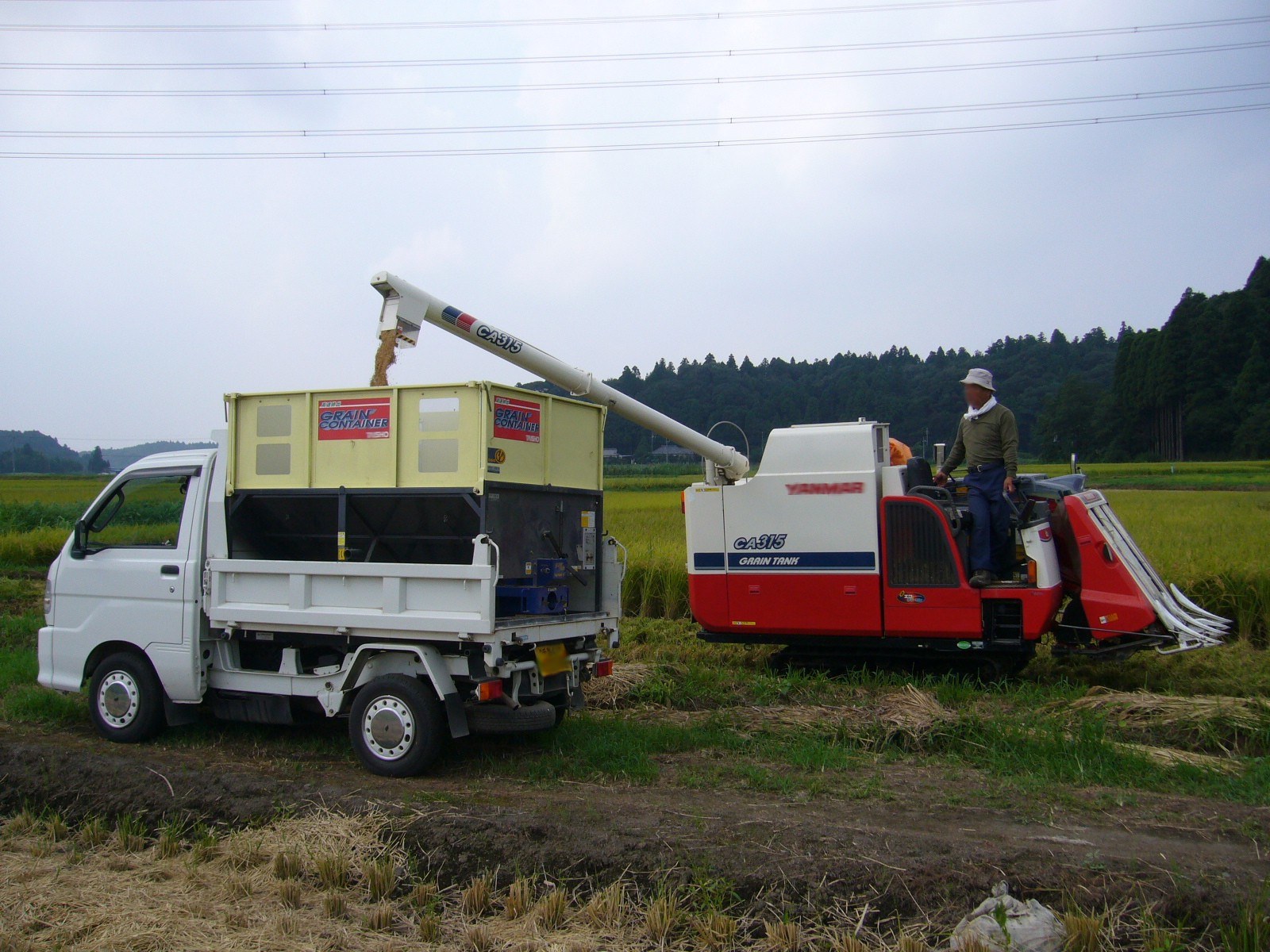
In the Japan Automobile Manufacturers Association’s fiscal 2025 survey of kei vehicle owners, 42 percent of 513 kei truck respondents said they used the truck for trips to their fields or to carry farm equipment and crops. The survey allows several answers, so uses overlap; it shows how common farm use is among respondents, not how all kei trucks are used nationally.
Kei trucks in America — the 25-year rule
How they get in
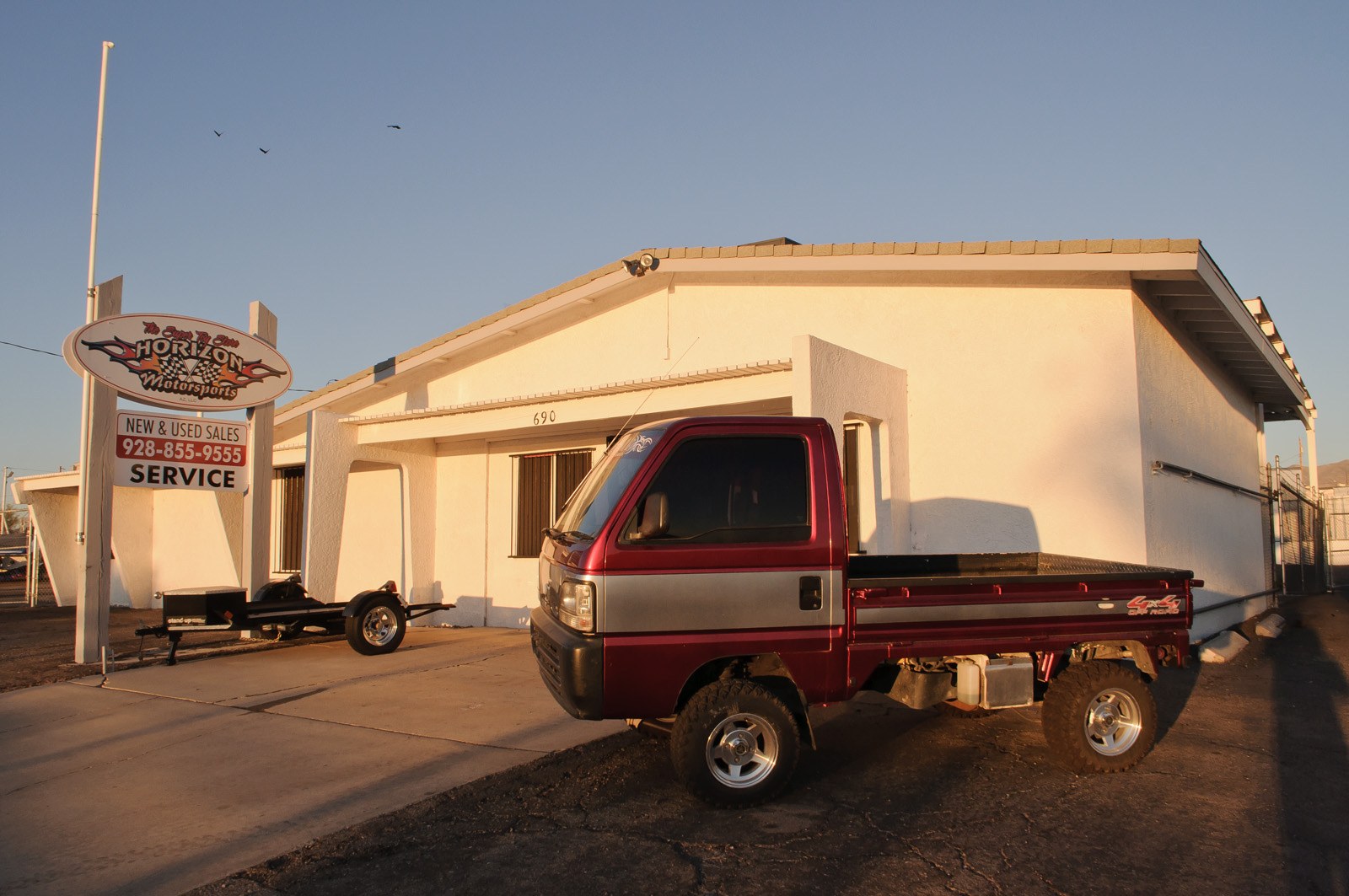
The kei truck has found a second life in the United States. The route in is an exemption. Under federal rules, a vehicle at least 25 years old, counted from its date of manufacture, can be imported without meeting the Federal Motor Vehicle Safety Standards. The Environmental Protection Agency has its own exemption for vehicles at least 21 years old in their original, unmodified configuration, counted as the calendar year of import minus the calendar year of manufacture.
What the states decide
Importing a vehicle is not the same as being allowed to drive it on a public road. Each state decides, and the answers differ:
| State | Position (as published) |
|---|---|
| Maine | Classifies mini trucks as off-road vehicles: cannot be registered, cannot be used on a public way |
| Rhode Island | Refuses new kei vehicle registrations; renewals allowed for those validly registered before 1 June 2024 |
| Georgia | 2023 policy bulletin directs county offices to refuse titles, registrations for kei vehicles, minitrucks |
| Massachusetts | Resumed kei vehicle registrations from 18 September 2024 |
Anyone thinking of buying one should check their own state’s motor vehicle agency first.
Why farmers like them
KUOW, Seattle’s NPR station, reported in 2025 that “in the last 10 years, kei trucks and vans have become more popular on American farms, in cities, and as utility vehicles.” Fast Company noted in 2024 that “ranchers and farmers are also big fans” of the trucks. The dimensions suggest why: a kei truck is about 55 cm narrower than a 2026 F-150 Regular Cab, with a low, flat bed — the same qualities that make it useful on a Japanese garden lane.
What the kei truck teaches about choosing a vehicle
Size the vehicle to the narrowest place
The lesson of the kei truck is not that small is better. It is that a daily vehicle can be chosen for the narrowest place it has to reach, with bigger vehicles brought in for the jobs that need them. The landscaping employer quoted above lists exactly this mix: a kei truck alongside a crane, a refuse truck and a dump truck. For a Western crew, the useful check is the same one: measure the lanes and gateways you work in, not only the loads you carry.
Four common mix-ups
– “350 kg is the legal limit for a kei truck.” It is the manufacturers’ rating for current models. The legal definition of a kei vehicle covers size and engine capacity. – “Platform height is the height you stand at.” On a 3 m class tripod ladder, the maximum standing height is about 2 m. – “A 25-year-old import is road-legal everywhere.” The federal exemption covers importation. Registration for public roads is up to each state. – “A full bed means a full payload.” With leafy prunings, the bed can fill well before 350 kg; with trunk wood, the opposite.
Different work, different loads
The load changes with the work. Momiage (もみあげ), the winter job of plucking old needles from pines by hand, produces fine needles and short twigs; see Momiage — plucking old pine needles. Sukashi (透かし, thinning) on broadleaf trees produces bulkier leafy branches; see Sukashi pruning. Staking and planting days put bamboo, rope and soil on the bed instead of taking clippings off it. The truck stays the same; what changes is whether the bed fills by weight or by volume.
Frequently asked questions
What is a kei truck? A kei truck is a small pickup built to Japan’s kei vehicle limits: no more than 3.40 m long, 1.48 m wide and 2.00 m high, with a 660 cc limit on internal-combustion engines. A standard Suzuki Carry carries 350 kg on a bed of 1.94 by 1.41 m.
Why do Japanese gardeners use kei trucks? Because much of their work is maintenance in small gardens on narrow residential lanes. About 80 percent of Japan’s municipal road length has a carriageway under 5.5 m. A kei truck fits these lanes, turns in a 3.6 m radius, and still carries tripod ladders, tools and clippings.
How much can a kei truck carry? The current standard Suzuki Carry and standard-cab Daihatsu Hijet Truck are rated for a maximum payload of 350 kg. With leafy garden waste, the space on the bed often runs out before the weight rating does.
Is a kei truck cheaper to tax in Japan? Yes. A privately registered kei truck first inspected from April 2015 pays a standard ¥5,000 a year in kei vehicle tax, against ¥8,000 base rate for a comparable private standard truck up to one tonne in Tokyo. It is inspected every two years, and it needs only a parking notification, in designated areas, instead of a parking certificate.
Can I drive a kei truck in the United States? Kei trucks at least 25 years old can be imported without meeting federal safety standards, but registration for public roads depends on the state. Maine treats them as off-road vehicles; Rhode Island refuses new registrations; Georgia’s 2023 policy bulletin directs offices to refuse them; Massachusetts resumed registrations in 2024.
What is a Japanese tripod ladder? A three-legged ladder with a single back leg, used for pruning garden trees. Hasegawa’s standard GSC range includes platform heights of 1.81, 2.41 and 3.01 m. The single back leg can go into a hedge so the gardener stands close to the work.
Sources
All pages checked 30 October 2026.
– e-Gov, Road Transport Vehicle Act Enforcement Regulations, Appended Table 1 — https://laws.e-gov.go.jp/law/326M50000800074 – Zenkeijikyo (National Light Motor Vehicle Association), “軽自動車の規格” — https://www.zenkeijikyo.or.jp/kei/standards – Light Motor Vehicle Inspection Organization, “軽自動車とは” — https://www.keikenkyo.or.jp/information/knowledge/what.html – Suzuki, Carry specifications (PDF) — https://www.suzuki.co.jp/car/carry/detail/pdf/detail.pdf – Daihatsu, Hijet Truck specifications (PDF) — https://www.daihatsu.co.jp/lineup/truck/pdf/specifications.pdf – Daihatsu, Hijet 60th anniversary history — https://www.daihatsu.com/jp/company/history/hijet60th/index.html – Suzuki Digital Library, Carry — https://www.suzuki.co.jp/suzuki_digital_library/1_auto/carry.html – Honda, “Launching the S360 and T360” — https://global.honda/en/heritage/episodes/1962autoproduction.html – e-Gov, Building Standards Act, Articles 42–43 — https://laws.e-gov.go.jp/law/325AC0000000201 – National Police Agency, regulatory assessment (2024, PDF) — https://www.npa.go.jp/policies/evaluation/04jigo-hyouka/R6_doukouhousekourei_jizen.pdf – Cabinet Office, Traffic Safety White Paper 2025, road conditions — https://www8.cao.go.jp/koutu/taisaku/r07kou_haku/zenbun/genkyo/h1/h1b1s2_1.html – Setagaya Ward, “せたがや道づくりプラン(素案)” (PDF) — https://www.city.setagaya.lg.jp/documents/22553/honpen.pdf – Isuzu, Elf 2 t standard-cab flatbed specifications (PDF) — https://www.isuzu.co.jp/support/data/pdf/elf/01shogen.pdf – Ford, 2026 F-150 technical specifications (PDF) — https://www.fromtheroad.ford.com/content/dam/fordmediasite/us/en/library/2026/specs/2026_Ford_F150_Specs.pdf – Ministry of Health, Labour and Welfare, job tag, “造園工” — https://shigoto.mhlw.go.jp/Occupation/Detail?occupationId=222 – Hello Work, landscaping job listing 12080-13066861 — https://www.hellowork.mhlw.go.jp/kensaku/GECA110010.do?action=dispDetailBtn&kJKbn=1&kJNo=12080-13066861&screenId=GECA110010 – Hasegawa Kogyo, tripod ladders — https://www.hasegawa-kogyo.co.jp/product/category/tripod-ladder – Hasegawa Kogyo, GSC tripod ladder — https://www.hasegawa-kogyo.co.jp/product/GSC – PiCa Corporation, GMK tripod ladder — https://www.pica-corp.jp/products-02/gmk-150a/ – Niwaki, “Strong and stable … and sharp” — https://www.niwaki.com/strong-stable-and-sharp – Niwaki, tripod ladders — https://www.niwaki.com/us/tripod-ladders/?sku=P00325-9 – Ministry of the Environment, business waste responsibility — https://www.env.go.jp/recycle/waste/haisyutsu.html – Toyoake City, business waste — https://www.city.toyoake.lg.jp/1482.htm – Minoh City, business general waste — https://www.city.minoh.lg.jp/shigen/07_jigyoukei/04_ippai_shigenka.html – Ministry of the Environment (former Ministry of Health and Welfare notice, 1999), stumps, felled trees from construction work — https://www.env.go.jp/hourei/11/000113.html – Awaji City, kei vehicle tax rates — https://www.city.awaji.lg.jp/soshiki/zeimu/45971.html – Himeji City, kei vehicle tax — https://www.city.himeji.lg.jp/kurashi/0000000689.html – Mishima City, kei vehicles used for business — https://www.city.mishima.shizuoka.jp/page/1120.html – Tokyo Metropolitan Government Bureau of Taxation, automobile tax rates — https://www.tax.metro.tokyo.lg.jp/kazei/automobiles/shubetsu – Kanto District Transport Bureau, kei cargo transport business (PDF) — https://wwwtb.mlit.go.jp/kanto/content/000275970.pdf – National Agency for Automobile and Land Transport Technology, inspection periods — https://www.naltec.go.jp/business/inspection/category.html – National Police Agency, licence classes (PDF) — https://www.npa.go.jp/bureau/traffic/menkyo/junchuu/semimedium.pdf – Metropolitan Police Department, semi-medium licence — https://www.keishicho.metro.tokyo.lg.jp/menkyo/menkyo/chugata.html – Metropolitan Police Department, parking-place procedures — https://www.keishicho.metro.tokyo.lg.jp/tetsuzuki/kotsu/hokan/syako_tetsuzuki/ – National Police Agency, parking-place notification — https://www.npa.go.jp/bureau/traffic/seibi2/shinsei-todokede/hokanbasyo-todokede.html – Zenkeijikyo, ownership statistics — https://www.zenkeijikyo.or.jp/statistics/4own – Zenkeijikyo, annual new kei vehicle sales — https://www.zenkeijikyo.or.jp/statistics/4new-yearsui – Zenkeijikyo, September 2026 sales — https://www.zenkeijikyo.or.jp/statistics/4kaku-14176 – Japan Automobile Manufacturers Association, FY2025 kei vehicle usage survey (PDF) — https://www.jama.or.jp/release/docs/release/2026/20260414_2025LightCars.pdf – NHTSA, Importation and Certification FAQs — https://www.nhtsa.gov/importing-vehicle/importation-and-certification-faqs – 49 CFR § 591.5 — https://www.ecfr.gov/current/title-49/subtitle-B/chapter-V/part-591/section-591.5 – EPA, Automotive Imports Facts Manual — https://nepis.epa.gov/Exe/ZyPURL.cgi?Dockey=P100A6AS.TXT – Maine Bureau of Motor Vehicles, off-road vehicles — https://www1.maine.gov/sos/bmv/vehicles/registering-other-than-passenger-vehicle/off-road-vehicles-motorized-scooters-mopeds-and-motorcycles – Rhode Island General Laws § 31-3-5 — https://webserver.rilegislature.gov/Statutes/TITLE31/31-3/31-3-5.htm – Georgia Department of Revenue, Policy Bulletin MVD-2023-05 — https://dor.georgia.gov/media/35411/download – Massachusetts RMV, kei vehicle policy update (17 September 2024) — https://www.mass.gov/news/advisory-massachusetts-rmv-announces-update-to-kei-vehicle-policy-in-massachusetts – KUOW, “Why Pacific Northwesterners are driving tiny, right-hand drive firetrucks from Japan” (20 May 2025) — https://www.kuow.org/arts-life/2025-05-20/why-pacific-northwesterners-are-driving-tiny-japanese-firetrucks – Fast Company, electric mini-truck article (2 December 2024) — https://www.fastcompany.com/91236969/this-electric-mini-truck-is-the-length-of-a-mini-cooper-but-can-carry-as-much-as-a-bigger-truck