

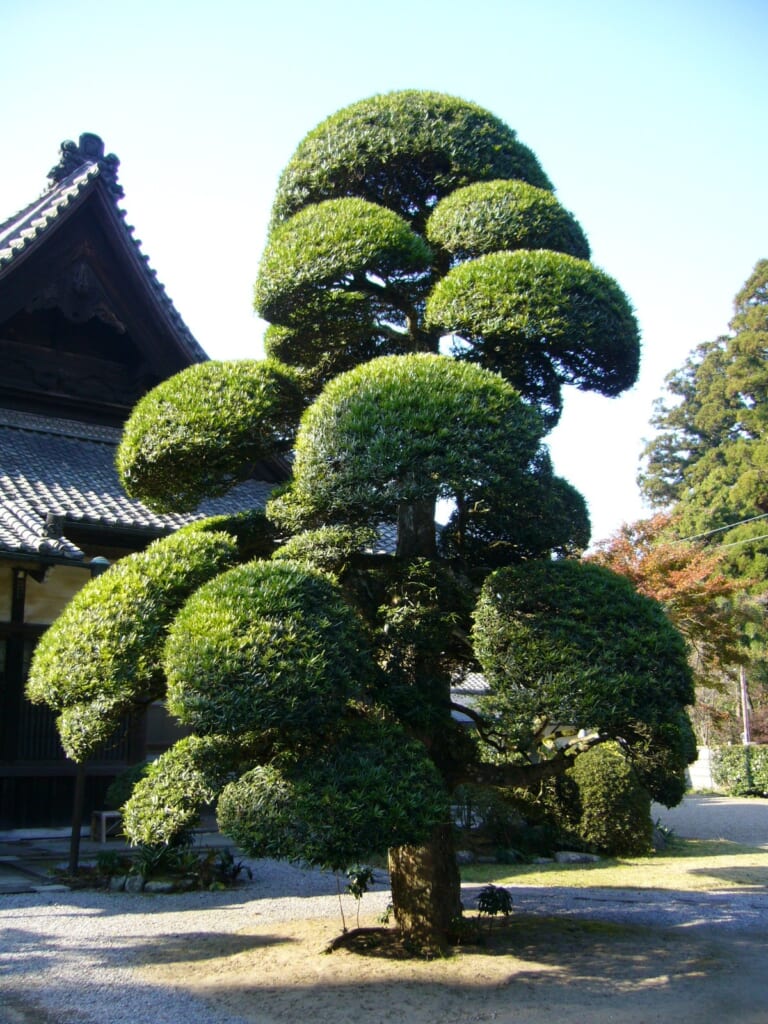
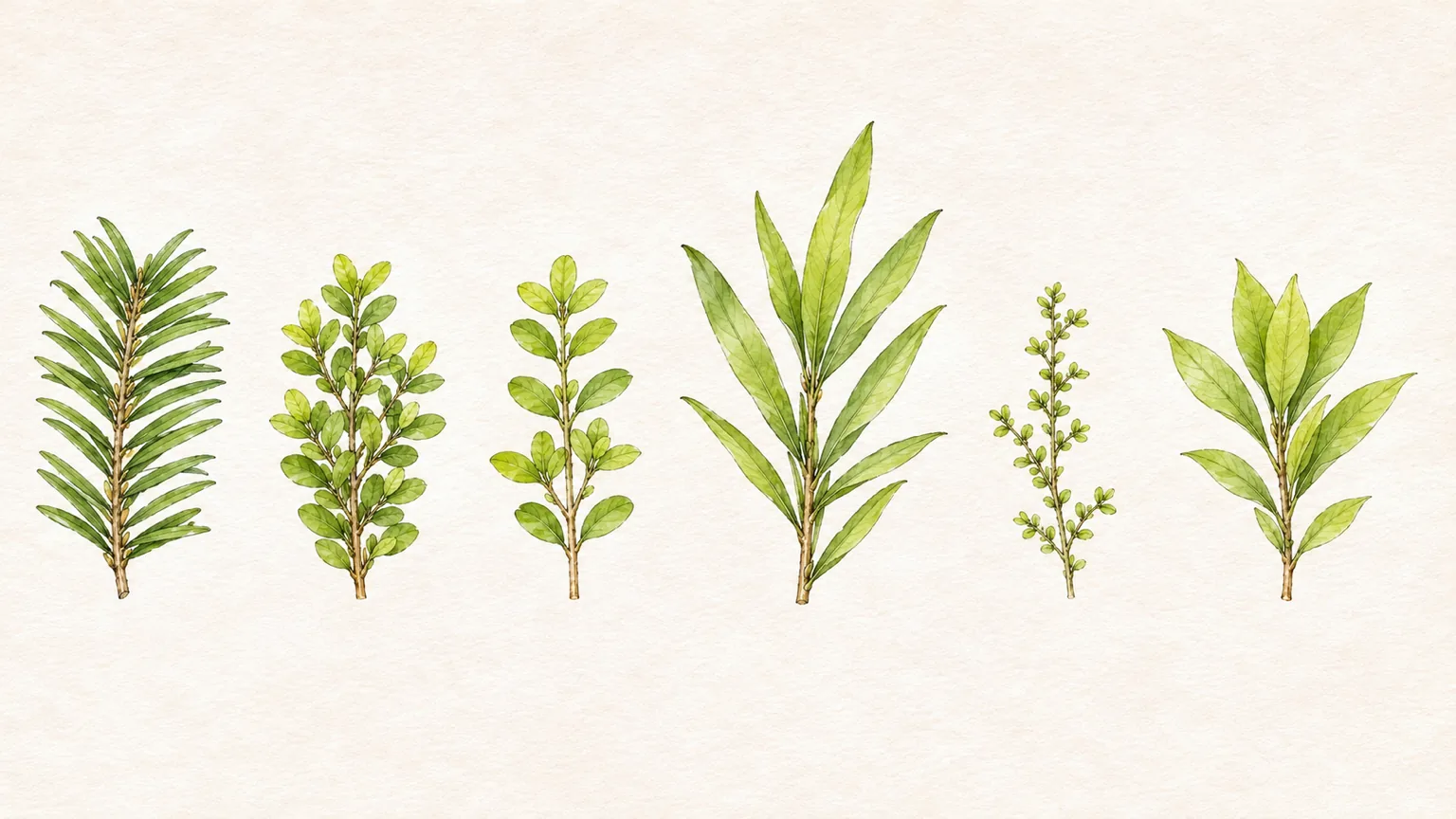
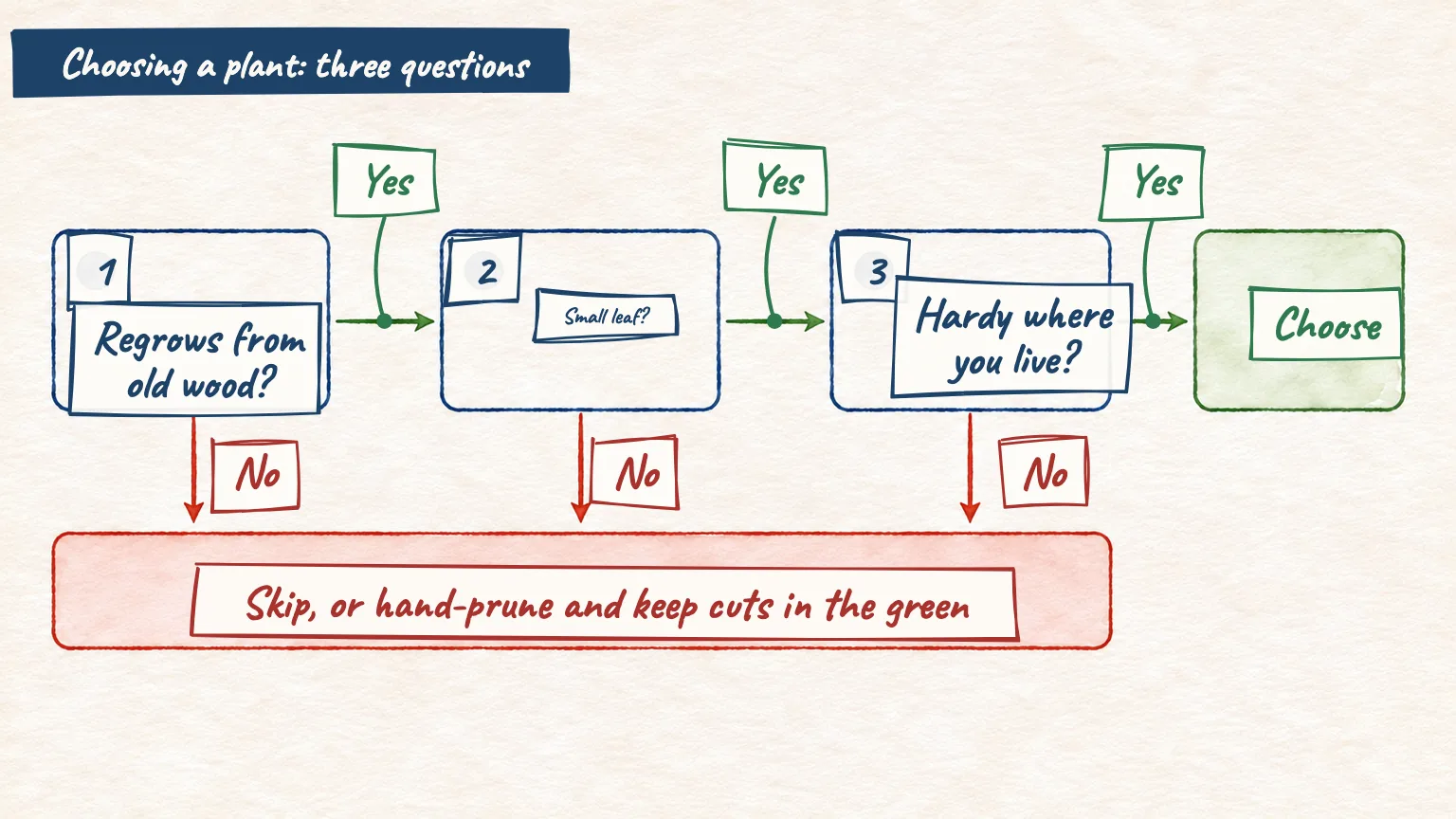
The best plants for cloud pruning are dense, small-leaved evergreens that sprout again from old wood: yew, Japanese holly, box and Lonicera nitida. Satsuki azaleas and Podocarpus are also used for clipped shapes in Japan, but regrowth from old wood is not confirmed in the sources checked for these two plants. The trees to skip are most conifers, which will not regrow from bare branches, large-leaved shrubs whose leaves are cut across by shears, and species prized for their branch structure, such as Japanese maple. The plants differ mainly in four things: whether they reshoot from old wood, how big the leaves are, how fast they grow and how cold a winter they survive.
This article answers one question: which plants take a cloud-pruned form well, which do not, and why. It compares the common species side by side, explains the old-wood rule that sorts them, and then covers timing, climate and the mistakes that ruin a shape. It is a companion to our explainer on Karikomi (刈込) — the Japanese art of cloud pruning, which covers history and technique. This one covers only the choice of plant.
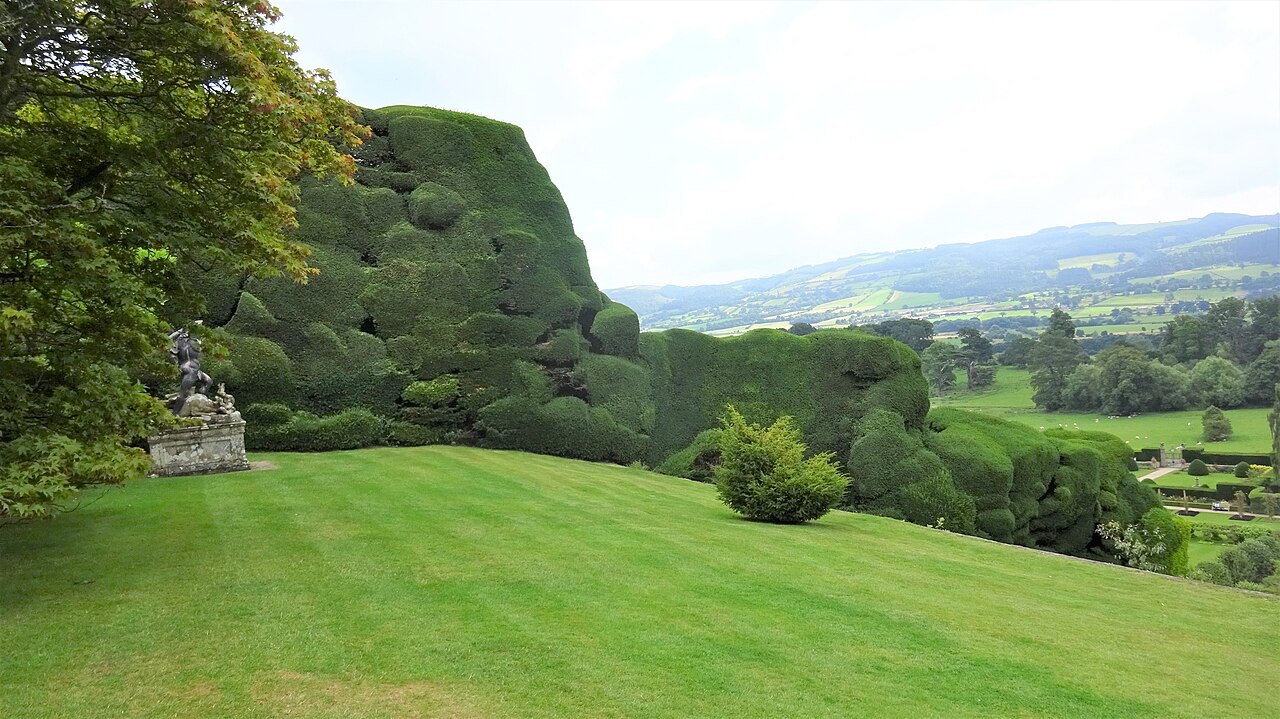
Cloud pruning, niwaki and karikomi — which word means what
Three words are used for overlapping things, and the difference matters for plant choice.
Three words for related jobs
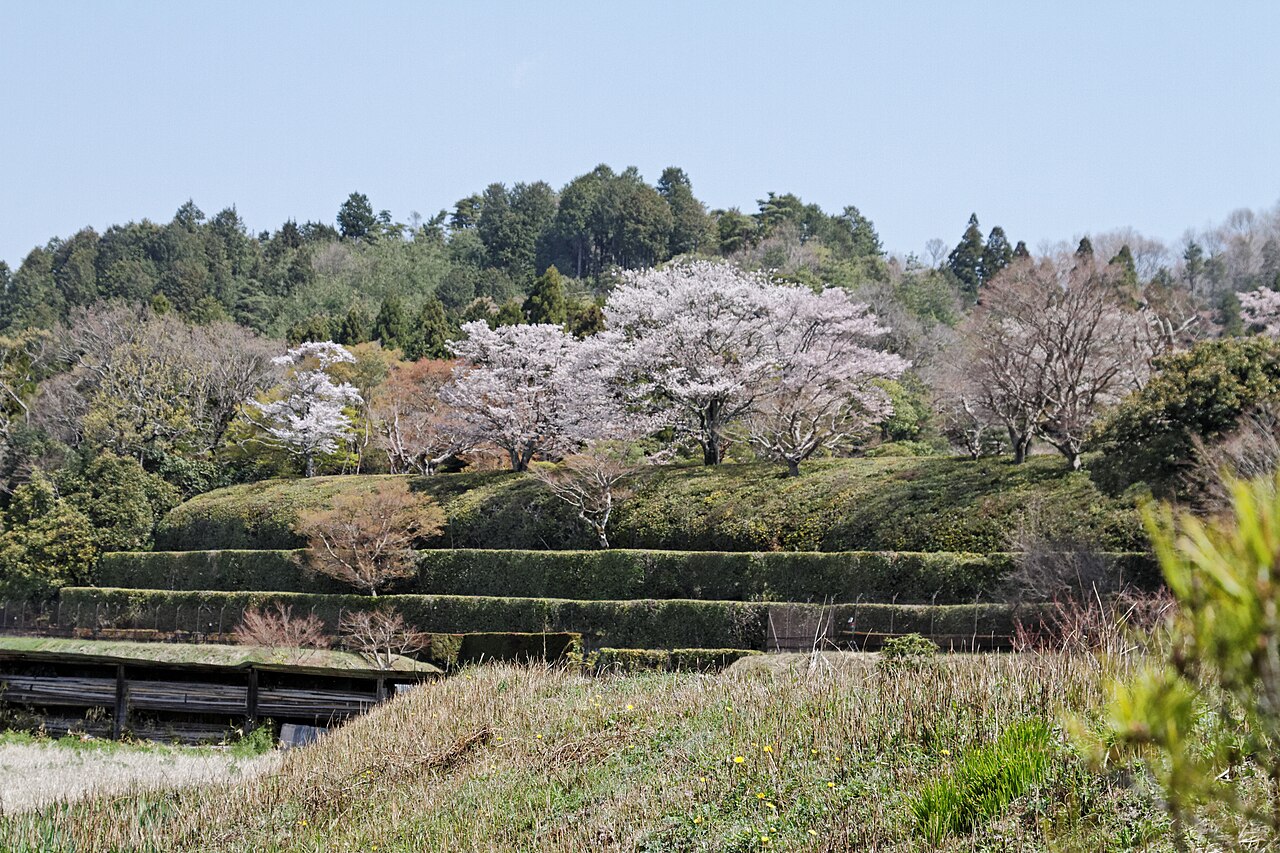
“Cloud pruning” is the English name for shaping a tree or shrub into rounded, layered pads. Niwaki (庭木, “garden tree”) is the general Japanese word for trees planted and trained in a garden. Karikomi (刈込) is the Japanese term for clipping a plant into a smooth form, and tamamono (玉物) is a single shrub clipped into a low dome. A large mass of several clipped shrubs, often stepped along a slope, is okarikomi (大刈込).
Clipped pads and hand-shaped pads
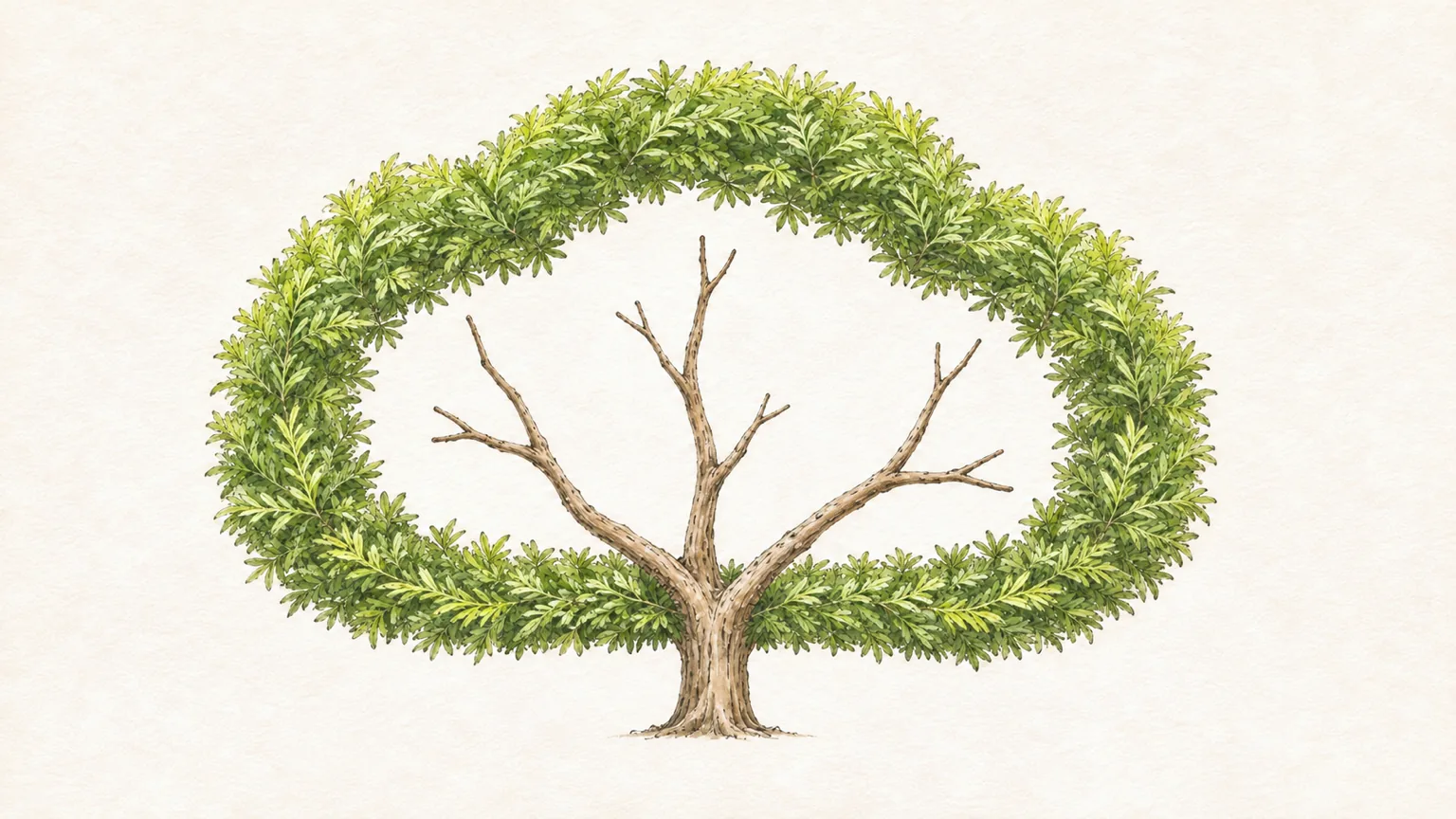
In Japanese practice, karikomi is applied mostly to shrubs and small trees that take shears well. The layered, hand-shaped pines that many people picture when they hear “cloud pruning” are a different job, done with fingers and secateurs, one branch at a time. The Royal Horticultural Society (RHS) describes the Western version as an annual trim with “secateurs or shears” of a plant whose main branches have first been exposed and shaped.
Why the method sets the plant
That difference drives plant choice. Pads that are clipped need a plant that tolerates being cut across its leaves and back into last year’s growth. Pads that are hand-pruned can use a wider range of trees, but at much higher cost in time. The rest of this article is mostly about clipped pads, because that is where the wrong plant fails fastest.
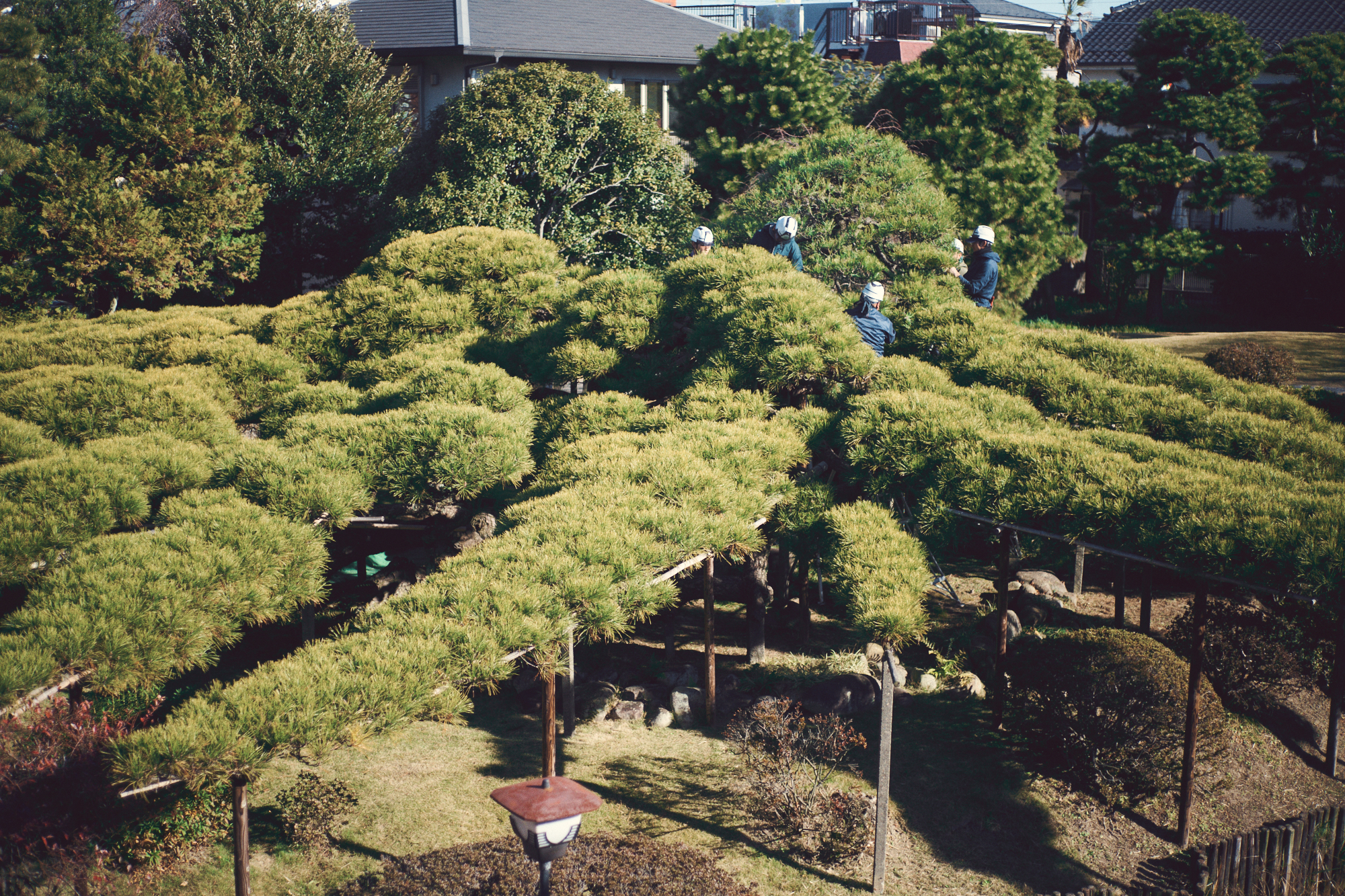
What a plant needs for cloud pruning — five traits
Japanese gardeners and the RHS point to similar qualities, even if they word them differently. Five traits decide whether a species holds a clipped form.
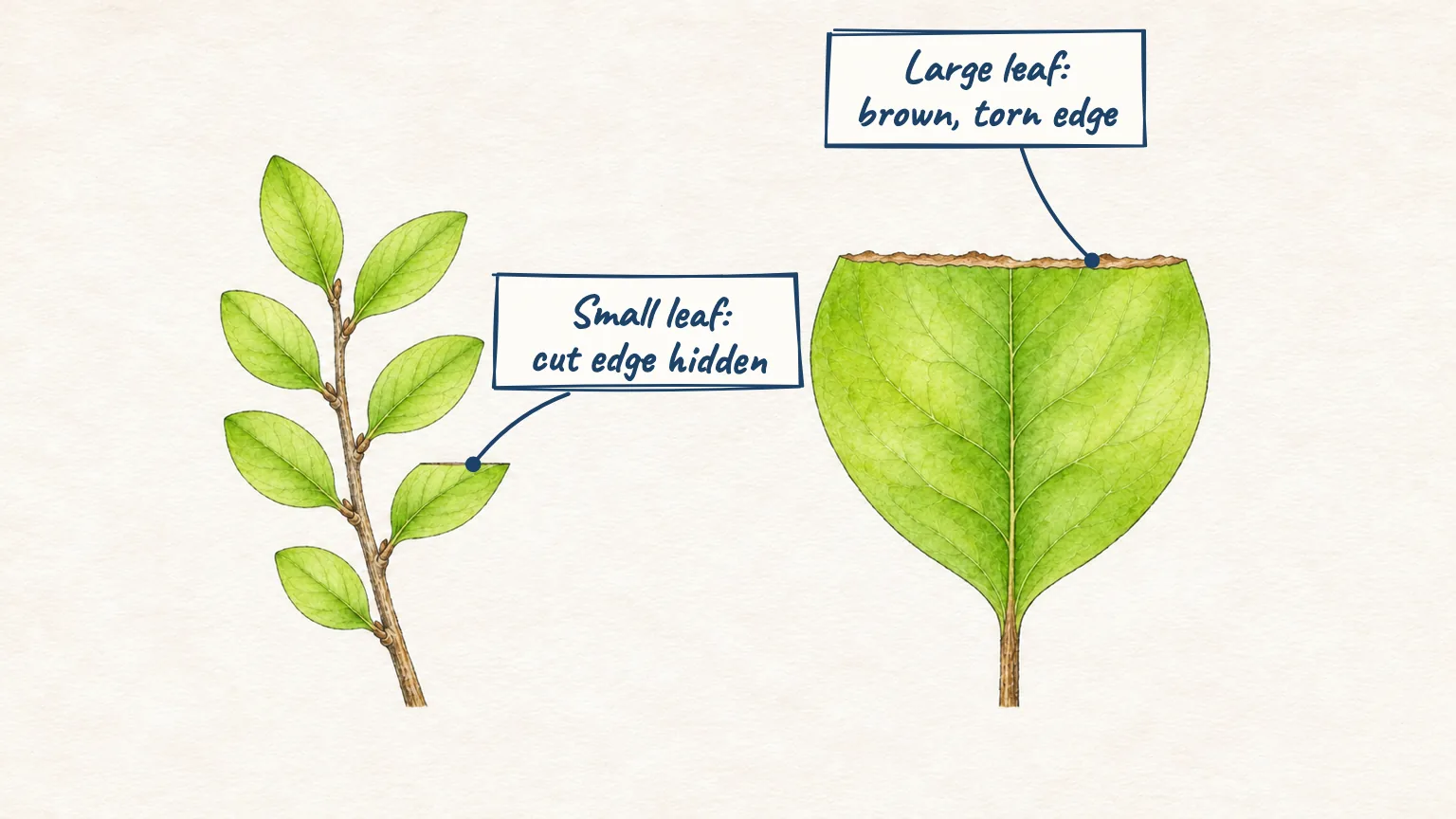
Small, fine leaves
Clipping with shears cuts across leaves. On small leaves the cut edges are invisible. On big leaves they turn brown and look ragged. The RHS advises pruning cherry laurel stem by stem with secateurs or loppers because hand shears and hedge trimmers leave cut leaf edges that look unsightly. NC State Extension gives the scale of the difference: cherry laurel leaves can reach about 10 inches (25 cm) long, while the leaves of Lonicera nitida are 0.2 to 0.6 inches (5 to 15 mm).
Regrowth from old wood
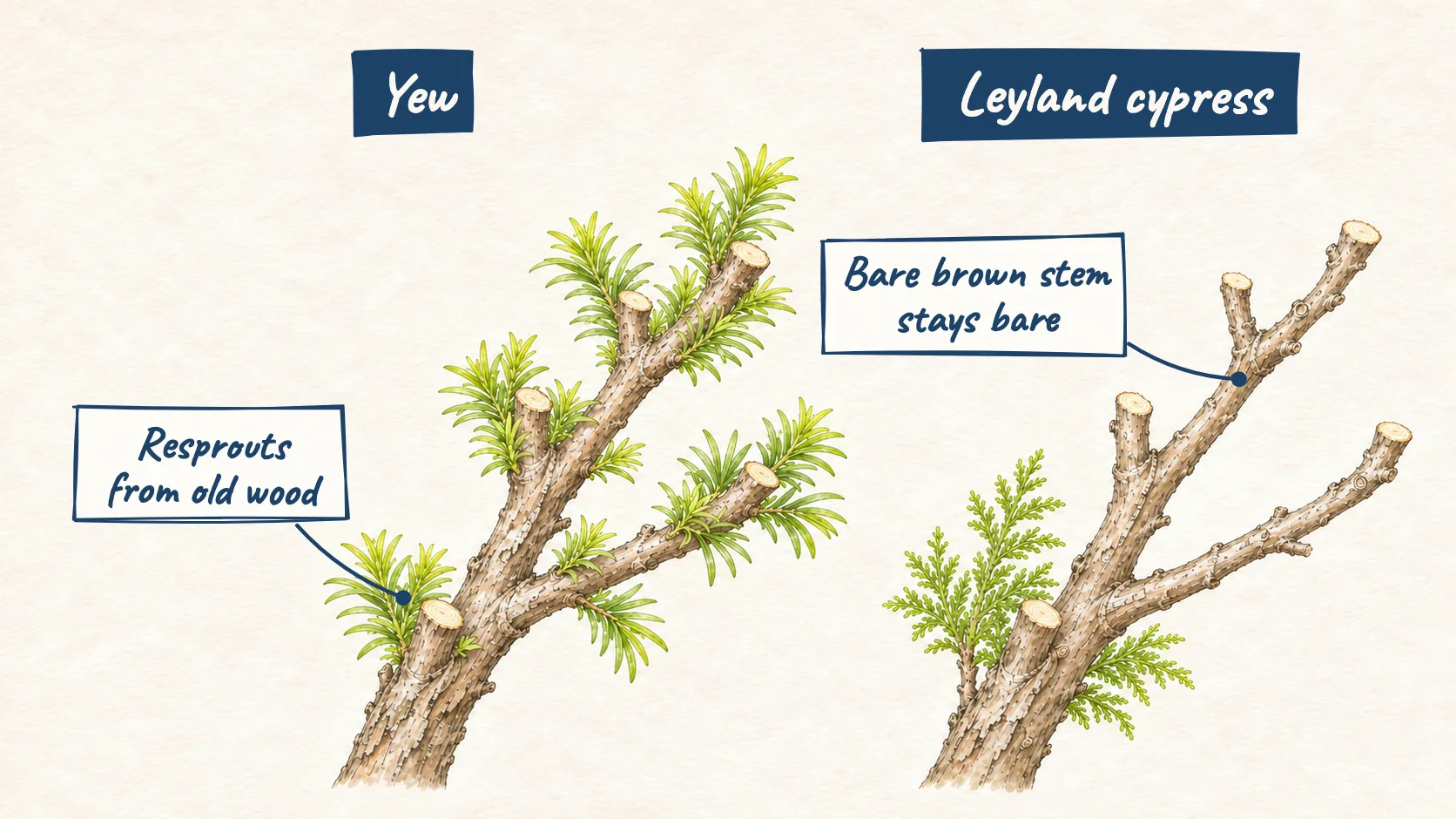
A cloud shape is maintained by cutting back into last year’s growth, and eventually into older wood. A plant that cannot reshoot from bare stems will, sooner or later, show brown gaps. The RHS says most conifers will not regrow from old wood, with yew as the exception. This single trait sorts the plants more cleanly than any other, and the next section returns to it.
Growth rate
Fast and slow growers fail in different ways. A fast grower such as Lonicera nitida fills a form quickly but loses it within weeks: the RHS says faster-growing species may need trimming twice a year, and the RHS lists Japanese privet (Ligustrum japonicum) as quick-growing and therefore cheaper, but needing frequent trimming. A slow grower such as yew or Podocarpus takes longer to fill a form, and a mistake takes years to heal. Slow growth still calls for regular trimming: the RHS schedule for yew is summer, then autumn. The RHS warns that regrowth after removing branches is slow, so the final shape should be decided before the first cut.
Cold and wet tolerance
A clipped shape only stays tight if the plant is healthy. A shrub marginal for your winter or your drainage will thin out and lose its outline. Hardiness zones are listed in the species table below. NC State, for example, notes that Podocarpus is intolerant of wet soils, and the University of Illinois describes lack of cold hardiness as a major limiting factor for Japanese holly in the US Midwest and Northeast.
Patience
The RHS rates cloud pruning as “moderate” in difficulty and says it “can take a long time”, adding that the only thing required in large quantities is “patience and sharp shears or secateurs”. It also advises making the structural cuts while the plant is young.
Why old wood decides everything — the regrowth rule
Of the five traits, old-wood regrowth is the one that cannot be fixed by care. A gardener can feed, water and shelter a plant, but cannot make a cypress reshoot from bare stems.
What the RHS rule says
The RHS hedge renovation guidance names beech, box, hawthorn, holly, hornbeam, Lonicera nitida and yew as plants that respond well to hard cutting, and says they can be reduced by as much as 50 percent in height and width in a single cut. It says most conifers, with the exception of yew, “do not re-shoot from old wood”, and names Cupressus, Chamaecyparis and Leyland cypress (× Cuprocyparis leylandii) as examples. Note that this guidance is written for hedges, not for sculpted pads, but the biology is the same: the plant can only grow from buds that are still alive.
The usual explanation
The RHS gives the rule rather than the mechanism. The explanation generally given is that a broadleaf shrub keeps dormant buds along its older stems, ready to wake after a hard cut, whereas the typical cypress carries its living buds only near the green shoot tips, so a cut into brown wood removes everything that could regrow. Treat that as a working model, not a measurement; the practical test below is more reliable than the theory.
A simple test on a spare branch
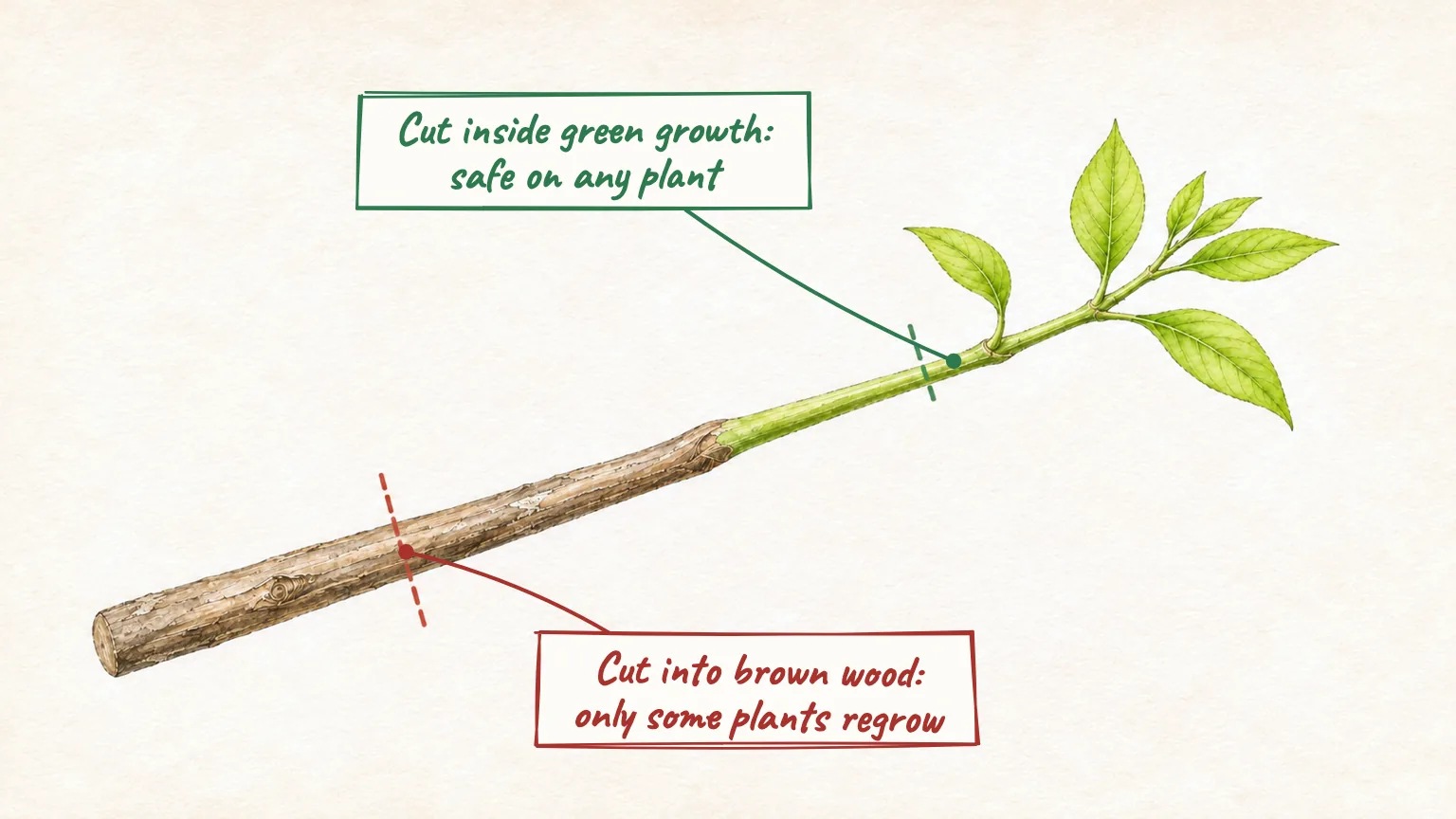
Before committing to a shape on an unfamiliar plant, cut one inconspicuous branch back into leafless wood in the growing season and wait a full season. If it reshoots, the plant forgives mistakes. If the stub stays brown, every later cut must stay inside the green growth. The RHS suggests a conifer that has grown too large is better replaced than renovated, or reduced in height by up to one-third in April.
Keeping cuts inside the green
The practical rule for a conifer you already own is to shape it from the beginning and keep every cut inside the green growth. A conifer shaped this way can hold a cloud form for years, but it has no safety net: one hard cut and the brown patch stays.
Best plants for cloud pruning — the species compared
The table puts the common candidates side by side on the traits above. Hardiness zones and leaf sizes are those listed by NC State Extension; where NC State gives more than one figure for a leaf, the smaller range from its description is shown. The old-wood column follows the RHS.
| Plant | Japanese name | Regrows from old wood | Leaf | Growth | Hardiness (USDA zone) | Cut at |
|---|---|---|---|---|---|---|
| English yew (Taxus baccata) | — | Yes (RHS) | Needle, 0.4–1.6 in | Slow | 6–7 | Summer, again autumn (RHS) |
| Japanese holly (Ilex crenata) | Inutsuge (イヌツゲ) | Yes (RHS, as holly) | ½–1¼ in | Slow | 5–8 | Late summer (RHS, for holly) |
| Box (Buxus sempervirens) | Seiyō-tsuge (西洋ツゲ) | Yes (RHS) | 0.5–1.5 in | Slow | 5–8 | Two or three times in the season (RHS) |
| Japanese yew (Podocarpus macrophyllus) | Inumaki (イヌマキ) | Not stated in the sources checked | 1–3 in, narrow | Slow | 7–9 | Not stated in the sources checked |
| Box honeysuckle (Lonicera nitida) | — | Yes (RHS) | 0.2–0.6 in | Rapid | 7–9 | After flowering, twice in summer for hedges |
| Satsuki azalea (Rhododendron indicum) | Satsuki (サツキ) | Not stated in the sources checked | Narrow, small | Slow | 7–8 | Right after flowering |
| Japanese privet (Ligustrum japonicum) | Nezumimochi (ネズミモチ) | Listed for cloud pruning (RHS) | 2–4 in | Rapid | 7–10 | Frequent trims (RHS) |
Two cautions on reading the table. First, the figures come from US extension databases, so the zones are American ones; British and Japanese gardeners will use their own rating systems. Second, Japanese privet is the one fast, cheap option on the RHS list, but NC State classes it as an invasive species in North Carolina, so check local rules before planting it.
Yew — the benchmark
Yew is the plant against which the others are judged. It is the only conifer the RHS says regrows from old wood, it is on the RHS cloud pruning list, and NC State says its pruning “is well tolerated”. The trade-offs are time and safety: the foliage is highly poisonous to people and livestock (NC State), and the plant is slow, so buying larger plants saves years. It also carries a hardiness window of only zones 6 to 7 in NC State’s listing.
Japanese holly and box — the same job, different risks
Japanese holly is the Japanese answer to box. The University of Illinois notes that because it tolerates heavy pruning, it is often sheared to keep its shape very formal and dense, and NC State says it can be severely pruned and works as topiary. Box has the finer leaf and the classic tight outline, but NC State lists it as susceptible to boxwood blight and leaf spot diseases, and it is attacked by leafminer, boxwood mite and boxwood psyllid. In Europe and North America box tree moth is a further problem. If those pests are present where you live, holly is the plant to try first. Our article on Japanese holly as a boxwood alternative covers the soil and drainage conditions it needs and the Japanese shearing calendar.
Box honeysuckle and privet — fast and cheap
Lonicera nitida is the plant for covering ground quickly. NC State describes a rapid grower with tiny leaves that “grows rather quickly once pruned”. The price is frequency: the same source says a hedge should be trimmed twice during summer. It is a stopgap form rather than a long-lived structure, and the RHS lists it among the plants that can be hard-renovated.
Azaleas and Podocarpus — the plants Japan relies on
Two plants that Western lists often skip carry much of the clipped work in Japanese gardens.
Satsuki azaleas and the okarikomi
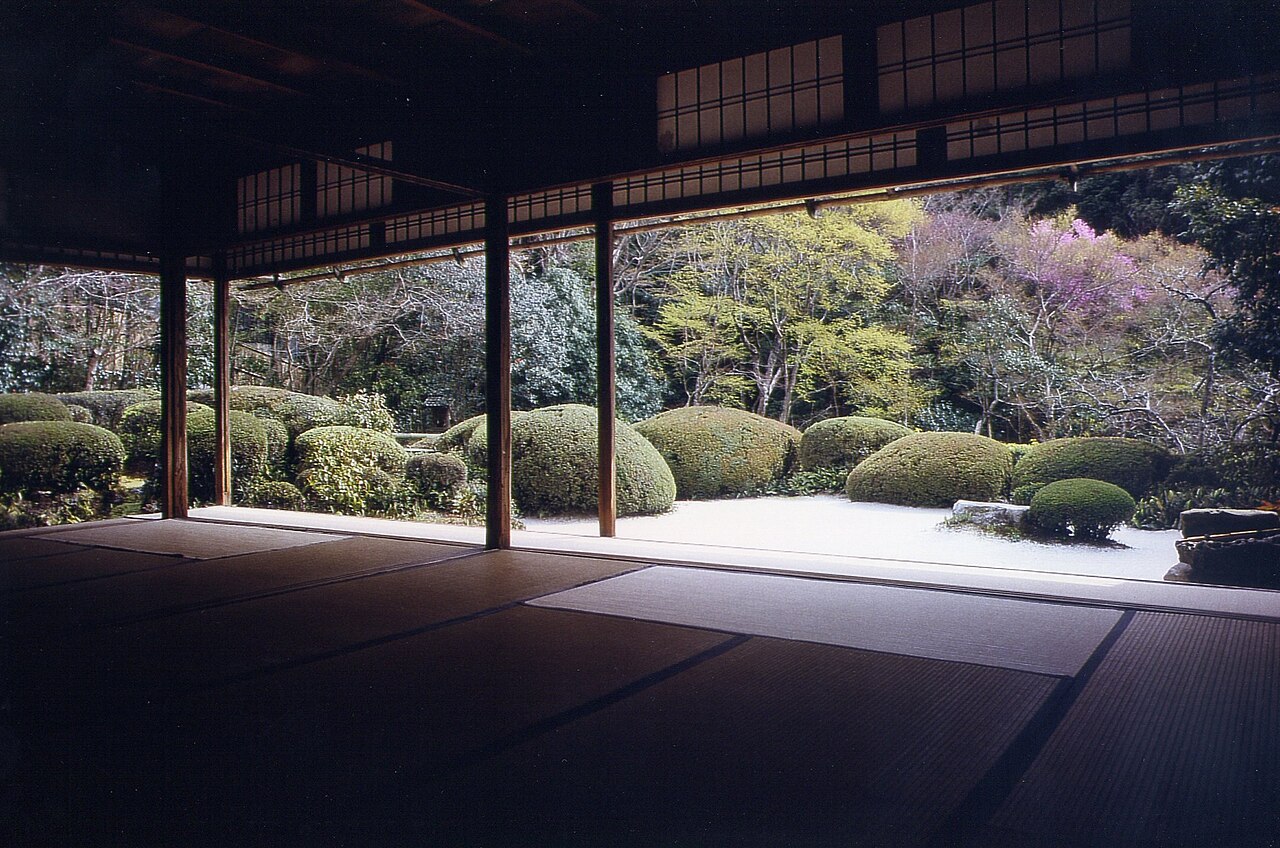
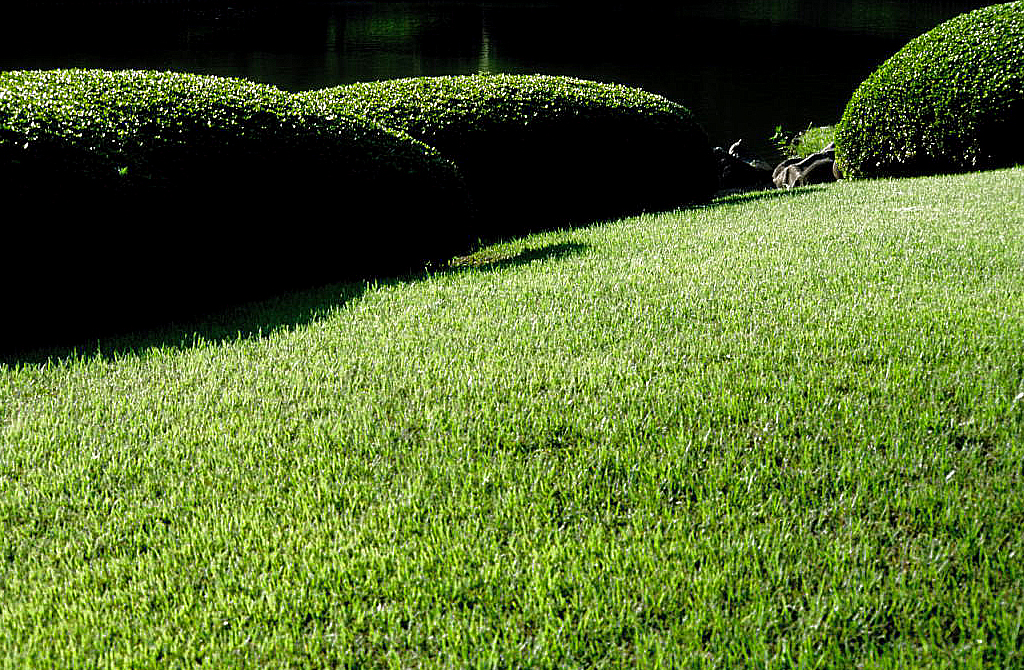
In Japanese gardens the large clipped masses (okarikomi, 大刈込) are often built from Satsuki and Kurume azaleas, because they take shears well and flower heavily when cut at the right moment. Western gardeners often overlook azaleas for cloud pruning, yet they are a frequent choice for Japan’s clipped masses. NC State describes Satsuki (Rhododendron indicum) as slow growing with narrow leaves, hardy in zones 7 to 8.
The flowering rule: cut right after the bloom
The timing rule is the same one the RHS gives for any flowering shrub: prune right after flowering, or you remove next year’s show. A Japanese gardening-service site gives the Satsuki calendar: the plant flowers from late May to mid June, flower buds start forming in late June to July, so the cut should be finished by July. Cutting later, or cutting hard in autumn and winter, removes flower buds. The same site warns that hard cutting in hot weather stresses the plant.
Podocarpus — Japan’s tiered evergreen
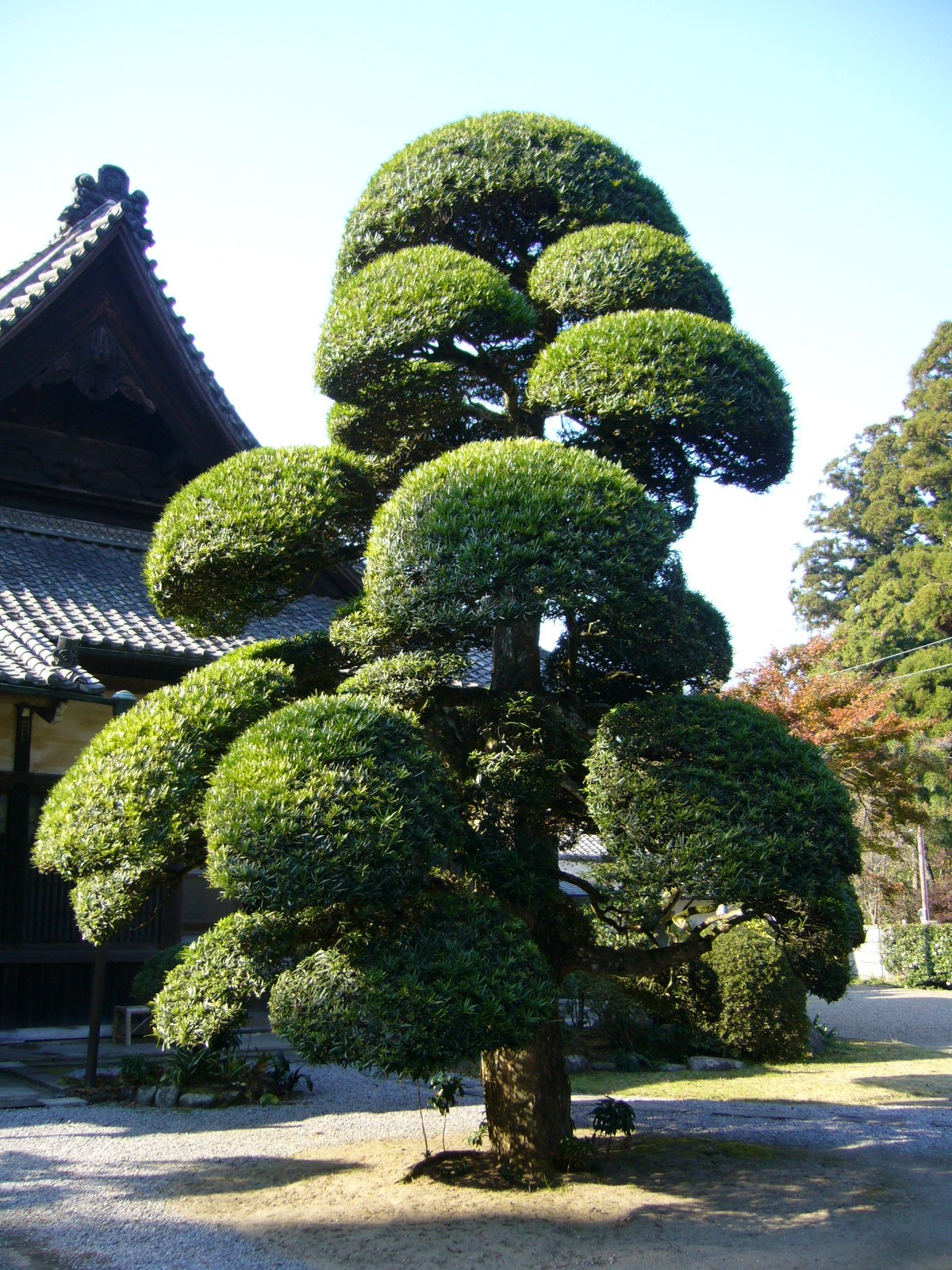
Plant shops often sell Podocarpus macrophyllus as “Japanese yew”. It is not a true yew. The true yew, Taxus, is the plant the RHS singles out as the conifer that regrows from old wood. In Japanese gardens, Podocarpus (inumaki, イヌマキ) is a common clipped evergreen, often shaped as tiered pads. NC State says it “adapts well to shearing” and is sometimes used in topiary, but it is slow growing, hardy only in zones 7 to 9 and intolerant of wet soils. Check the Latin name when buying, because the two plants differ in hardiness.
Trees to skip — and what to do instead
The skip list is shorter than the works list, but the failures on it are expensive because they show late.
| Plant | Why it is a poor fit | What to do instead |
|---|---|---|
| Leyland cypress, Cupressus, Chamaecyparis | Will not reshoot from old wood (RHS) | Grow as a tall hedge and trim only the new green growth |
| Cherry laurel and other large-leaved shrubs | Shears leave brown cut edges across the leaves (RHS) | Prune stem by stem with secateurs, or choose a small-leaved plant |
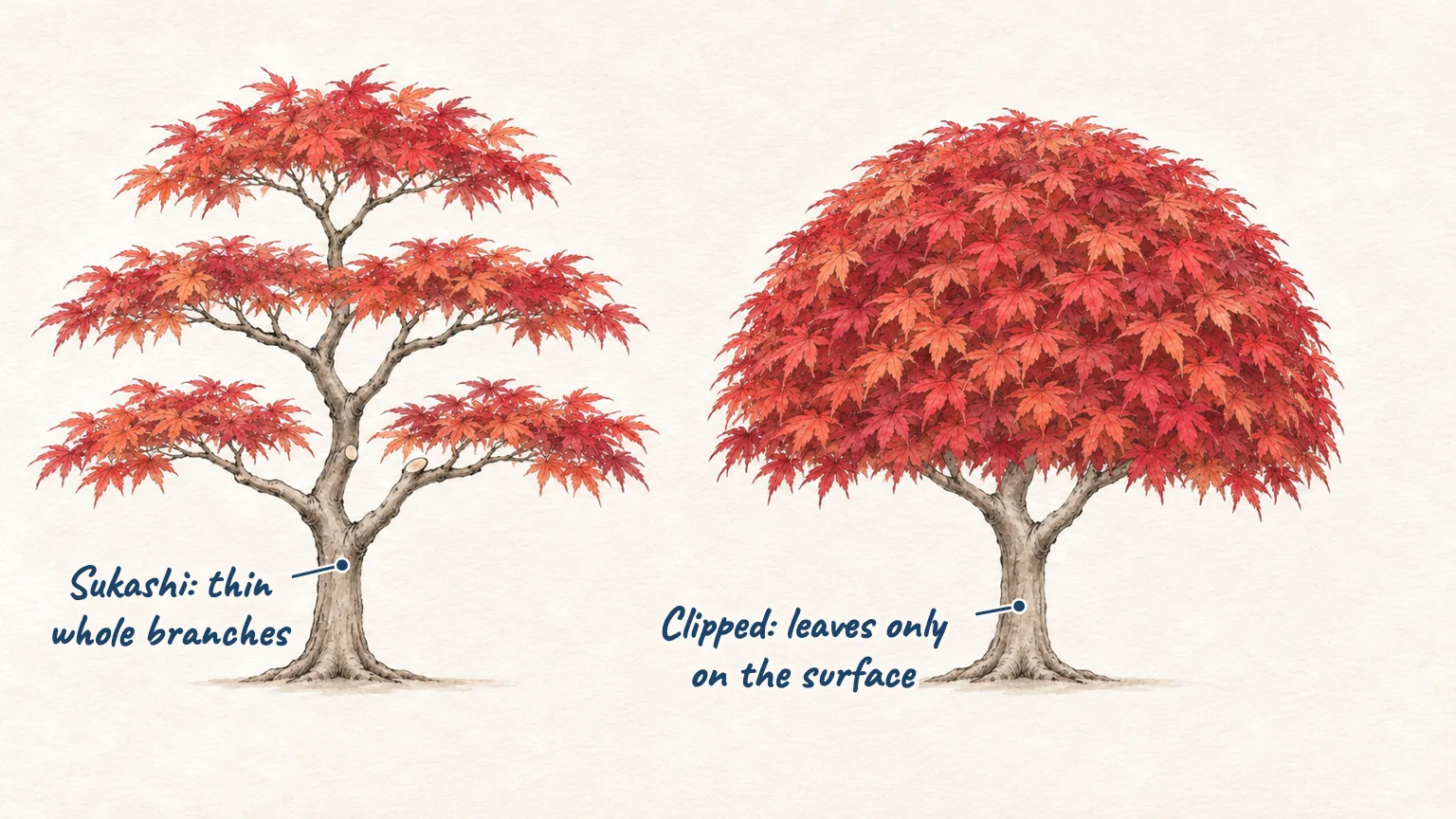
| Japanese maple (Acer palmatum) | The beauty is in the branch structure and leaf layers, which clipping destroys | Thin branch by branch (sukashi, 透かし) in Japanese practice, keeping the natural tiers |
| Pine (Pinus) | Can be cloud-pruned, but normally by hand rather than with shears | Hand-work on candles and needles (below) |
Cypresses and false cypresses
Cypress and false cypress appear on many “best plants” lists, yet most of them will not regrow from bare old wood, so they only suit clipping that stays inside the green growth. The RHS notes that cutting into old wood leaves bare brown stems, and advises against conifer trimming after August, because it can encourage bare patches.
Cherry laurel and other large leaves
A large-leaved evergreen can look healthy at the base and ragged on the surface. With leaves up to 10 inches long (NC State), every pass of shears cuts several leaves in half. The edges brown over the following weeks, which is why the RHS recommends hand pruning for it. Cherry laurel does tolerate heavy pruning, so it is a fine hedge, just not a good clipped form.
Japanese maple — thin, don’t clip
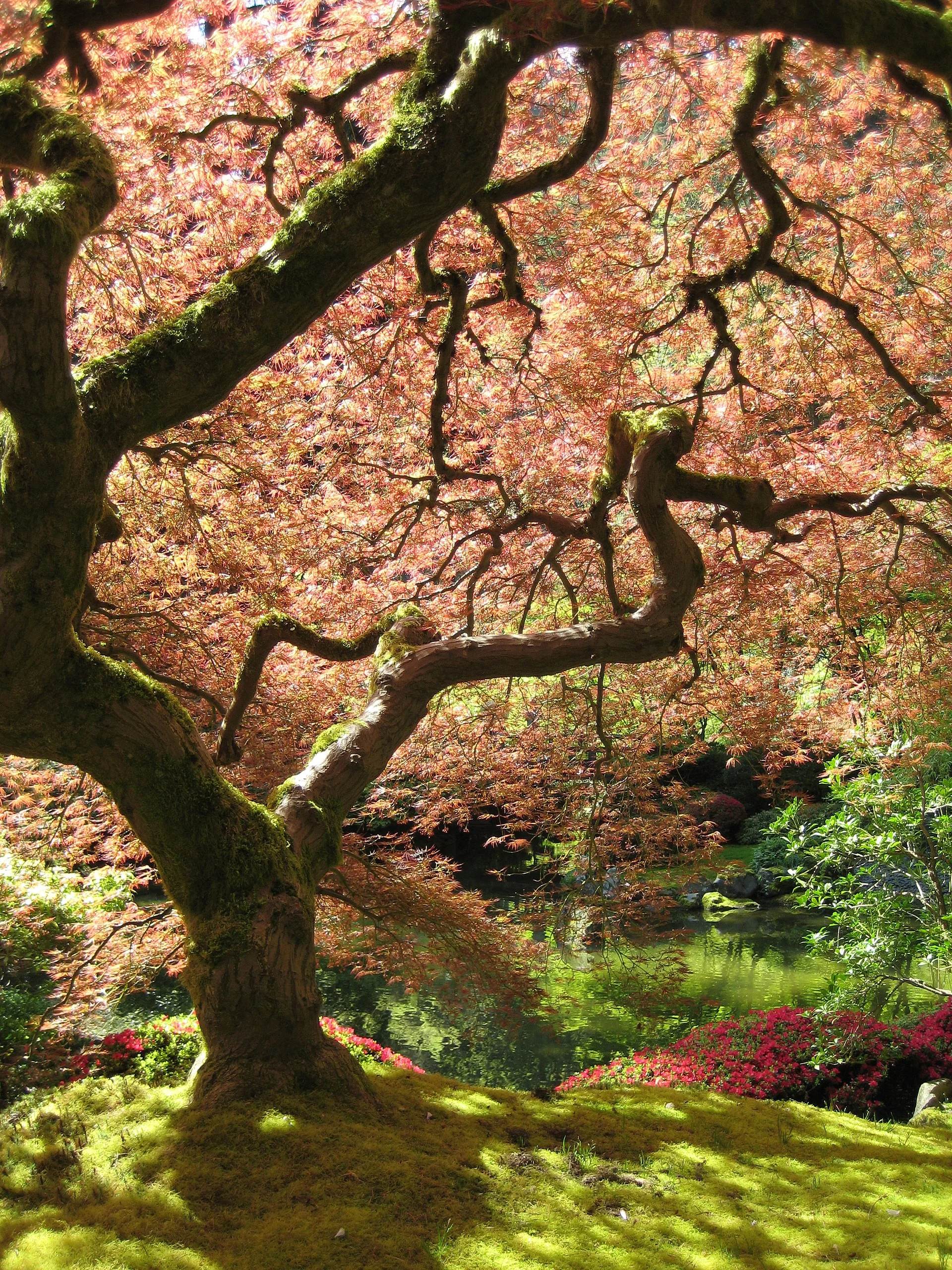
Japanese maple turns up often in cloud-pruning searches, but in Japan it is sometimes clipped, and that is not the proper way to care for one. Horticulture Magazine (UK) advises that small Japanese maples are usually best left to grow naturally. In Japanese practice, the cut that suits a maple is sukashi: removing whole branches so light passes through and the layered silhouette stays readable. Clipping would turn those layers into a dense twiggy shell with leaves only on the surface.
Pines — the great niwaki exception
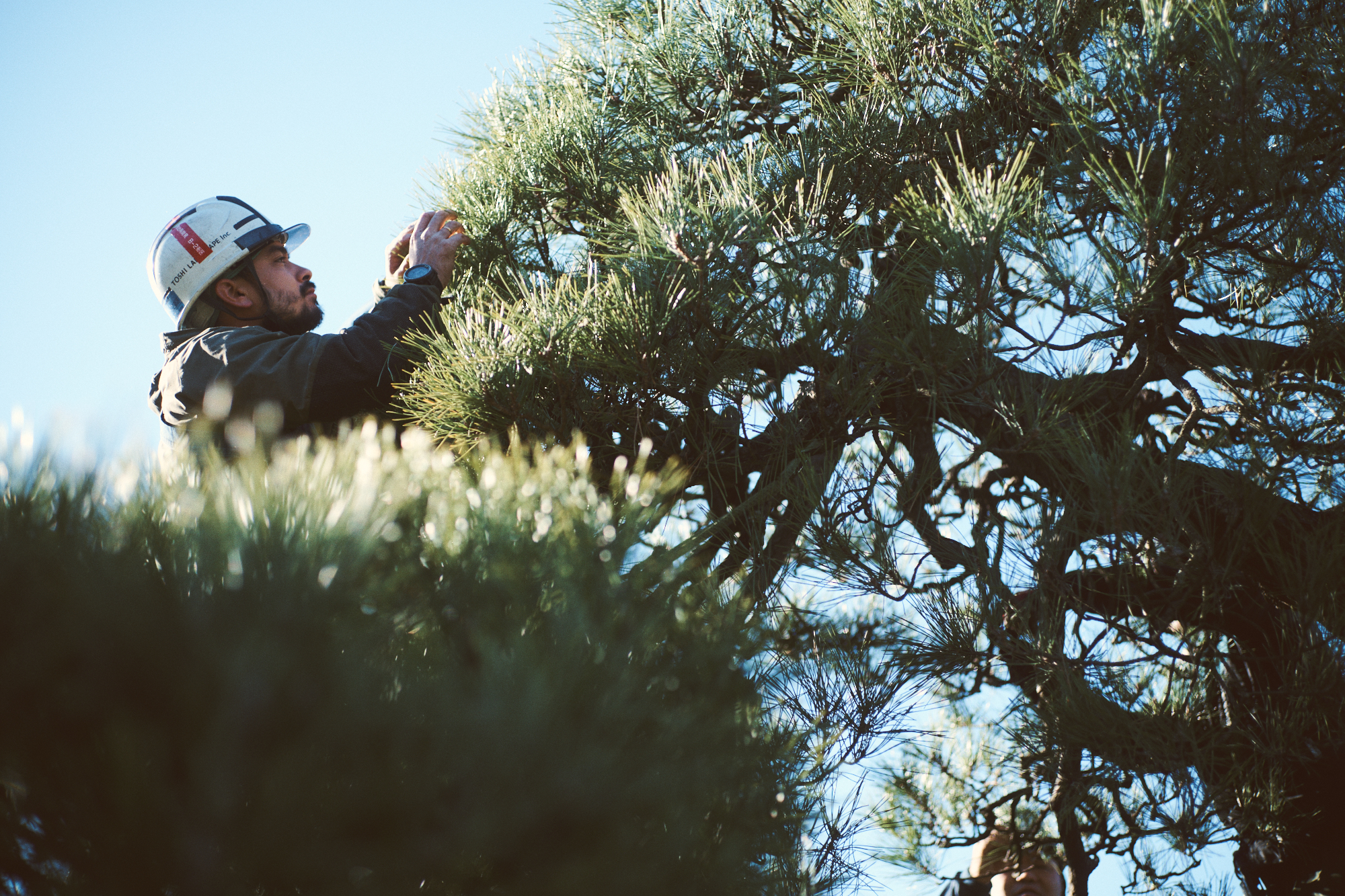
Pine is on the RHS list, and in Japan it is the classic niwaki tree. But a cloud-pruned pine is normally shaped by hand rather than sheared. Its pads are built over years by hand: pinching candles in spring (midori-tsumi, 緑摘み) and pulling old needles in winter. That is a skilled and slow process, which is why the plant list above is the better place to start.
When to cut — a calendar by plant group
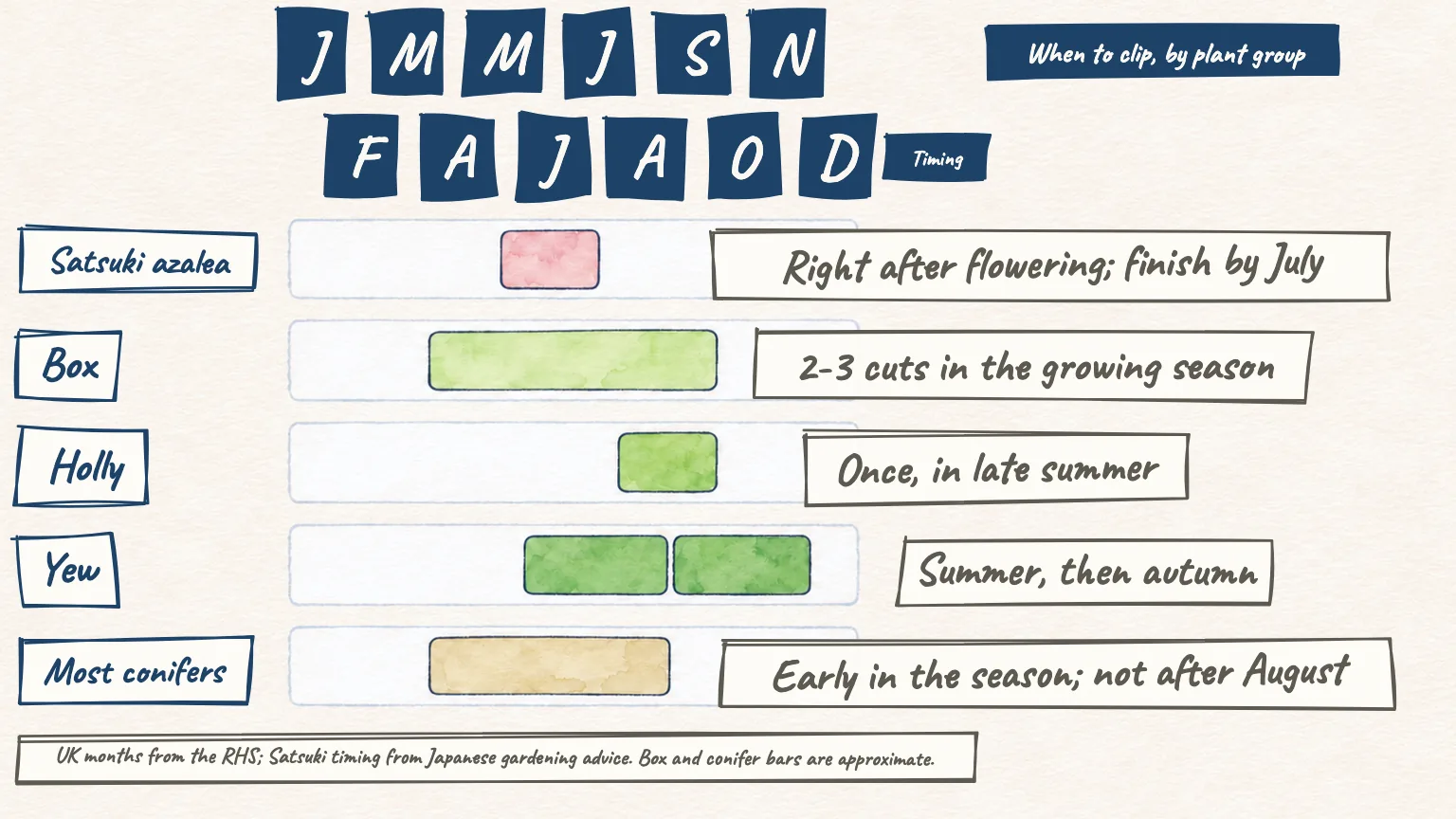
Timing differs by plant group, and the sources give different months because climates differ. The table gathers what the sources checked actually say; where a source is silent, the cell says so.
| Group | Plants | When to clip | Source |
|---|---|---|---|
| Evergreen broadleaf, formal | Box | Two or three times in the growing season | RHS |
| Evergreen broadleaf, formal | Holly | Once, in late summer | RHS |
| Conifer | Yew | Twice, in summer and in autumn | RHS |
| Conifer | Most others | Earlier in the season; after August can leave bare patches | RHS |
| Spring-flowering shrub | Azalea, Lonicera nitida | Immediately after flowering | RHS, NC State |
| Spring-flowering shrub | Satsuki azalea in Japan | May to June, finished by July | Japanese gardening-service site |
| Hard renovation | Evergreen hedges, if they regrow | Mid-spring | RHS |
| Hard renovation | Deciduous hedges | Midwinter, when leafless | RHS |
One rule behind the months
Almost every row follows the same logic: cut when the plant can recover and before it sets the thing you want to keep. For a flowering shrub that thing is next year’s buds. For a conifer it is the late-season growth that has no time to harden. Because the RHS months are written for the UK and Satsuki dates for Japan, the sensible approach is to learn the plant’s cycle in your own climate rather than to copy a month.
Cut early in life
The RHS advice to expose the main branches while the plant is young is the other half of timing. Structural cuts made in the first years leave marks that fade; the same cuts made in an old plant leave scars and slow regrowth.
Climate matters — hardiness and the plants that fail quietly
Hardiness decides whether a plant will keep its shape through winter, and the zone ranges overlap less than the plant lists suggest.
Reading the zone ranges
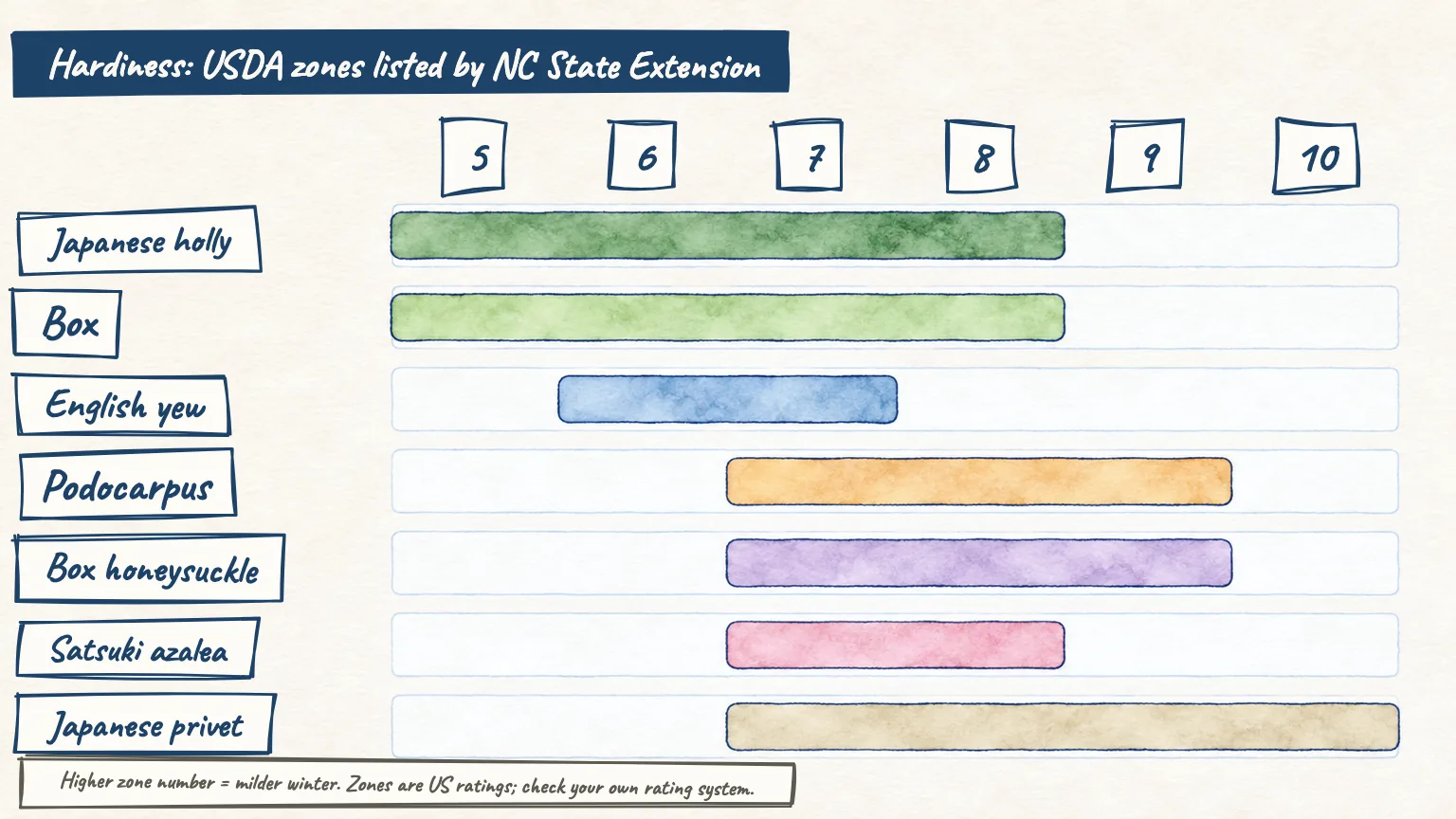
From NC State’s listings: Japanese holly and box are listed for zones 5 to 8, English yew for 6 to 7, Podocarpus for 7 to 9, Lonicera nitida for 7 to 9, Satsuki azalea for 7 to 8, Japanese maple for 5 to 8 and Japanese privet for 7 to 10. A gardener in a cold zone has a short list, while a gardener in a warm zone has to look at heat and humidity as well.
How a marginal plant fails
A plant at the edge of its range rarely dies. It thins, drops inner leaves and exposes the framework, which is exactly what a cloud shape cannot afford. Winter burn is one example: NC State lists winter burn and twig blights for English yew, and warns that sun and wind can cause dehydration and bronzing in box.
Common mistakes — and what actually goes wrong
Buying by label, not by Latin name
The “Japanese yew” confusion is the best known: a Podocarpus bought as a yew is hardy only to zone 7 in NC State’s listing, while the true yew is rated 6 to 7. A second is the name “box”: Japan’s own tsuge is Buxus microphylla var. japonica, while the common Western box is Buxus sempervirens (Seiyō-tsuge, 西洋ツゲ, “Western box”).
Expecting azaleas to behave like holly
Holly can be sheared at the grower’s convenience in summer. An azalea cut in the wrong month loses its flowers for a year. The two plants look alike once clipped, but the calendar is not interchangeable.
Clipping a conifer into a shape it cannot hold
The commonest failure is a cypress cut hard after years of loose growth. The brown core that shows is permanent. The only repair is to wait for new growth to cover the gap, which for most conifers it will not do.
Shearing a plant that wants thinning
Japanese maple, and any plant chosen for the line of its branches, is ruined by a hedge-trimmer. The approach that preserves it is thinning, not shaping.
Choosing a plant — a short decision path
| If you want | Start with | Why |
|---|---|---|
| Tight domes or a low hedge | Japanese holly, box, or Podocarpus where the climate allows | Small leaf, tolerates shearing |
| A long-lived structure on a European site | Yew | Slow, but regrows from old wood and improves with age |
| Colour and the Japanese look | Satsuki azalea masses, cut after flowering | The classic Japanese karikomi shrub |
| Ground covered fast | Lonicera nitida | Rapid growth, with more frequent trimming |
| To work with an existing conifer | Keep every cut inside the green growth | Cannot recover a shape from bare wood |
| A showpiece tree to admire for its branches | Do not clip; thin it | Clipping would destroy the structure |
For the wider contrast between Japanese shaping and Western clipping, see Niwaki vs Topiary. For the hand-work that pine needs, see Momiage — plucking old pine needles.
Frequently asked questions
What is the best plant for cloud pruning for a beginner? Japanese holly or box give the most forgiving start where they are hardy and healthy, because both have small leaves and take clipping well. Yew rewards patience over many years.
Can I cloud prune a deciduous tree? The RHS says the method can be used on deciduous or evergreen plants, but evergreens “produce a more striking specimen and give all-year-round interest”. Species chosen for their branch structure, such as Japanese maple, are better thinned than clipped.
When should I cloud prune? The RHS advises trimming once a year in early or late summer, and twice a year for faster growers. Flowering shrubs are pruned straight after flowering. These months are the RHS’s guidance for the UK; in Japan the timing shifts with region and species.
Is Podocarpus the same as yew? No. Podocarpus macrophyllus is sold as “Japanese yew” but is a different genus from the true yew, Taxus. The two differ in hardiness: NC State lists Podocarpus for zones 7 to 9 and English yew for zones 6 to 7.
Why do some conifers go brown after clipping? Most conifers do not reshoot from old wood (RHS), so a cut into leafless stems leaves a permanent bare patch. Yew is the exception.
Can I cloud prune a plant with large leaves? Not with shears. Large leaves are cut across and brown at the edge. The RHS suggests pruning cherry laurel stem by stem with secateurs or loppers.
Sources
All pages checked 29 October 2026 unless noted. Hardiness zones and leaf sizes in the tables are NC State Extension figures.
– Royal Horticultural Society, “Cloud pruning” — https://www.rhs.org.uk/advice/profile?PID=540 – Royal Horticultural Society, “Hedge renovation” — https://www.rhs.org.uk/plants/types/hedges/renovation – Royal Horticultural Society, “Pruning hedges” — https://www.rhs.org.uk/plants/types/hedges/pruning-guide – NC State Extension Gardener Plant Toolbox, Podocarpus macrophyllus — https://plants.ces.ncsu.edu/plants/podocarpus-macrophyllus/ – NC State Extension Gardener Plant Toolbox, Ilex crenata — https://plants.ces.ncsu.edu/plants/ilex-crenata/ – NC State Extension Gardener Plant Toolbox, Taxus baccata — https://plants.ces.ncsu.edu/plants/taxus-baccata/ – NC State Extension Gardener Plant Toolbox, Buxus sempervirens — https://plants.ces.ncsu.edu/plants/buxus-sempervirens/ – NC State Extension Gardener Plant Toolbox, Rhododendron indicum — https://plants.ces.ncsu.edu/plants/rhododendron-indicum/ – NC State Extension Gardener Plant Toolbox, Lonicera nitida — https://plants.ces.ncsu.edu/plants/lonicera-nitida/ – NC State Extension Gardener Plant Toolbox, Ligustrum japonicum — https://plants.ces.ncsu.edu/plants/ligustrum-japonicum/ – NC State Extension Gardener Plant Toolbox, Prunus laurocerasus — https://plants.ces.ncsu.edu/plants/prunus-laurocerasus/ – NC State Extension Gardener Plant Toolbox, Acer palmatum — https://plants.ces.ncsu.edu/plants/acer-palmatum/ – University of Illinois, Woody Plants Database, Ilex crenata — https://woodyplants.nres.uiuc.edu/plant/ilecr80 – Horticulture Magazine (UK), “Acer pruning” — https://horticulture.co.uk/blogs/growing/acer-pruning (checked 23 October 2026) – Curama (Japanese gardening-service site), Satsuki pruning timing — https://curama.jp/magazine/1078/