

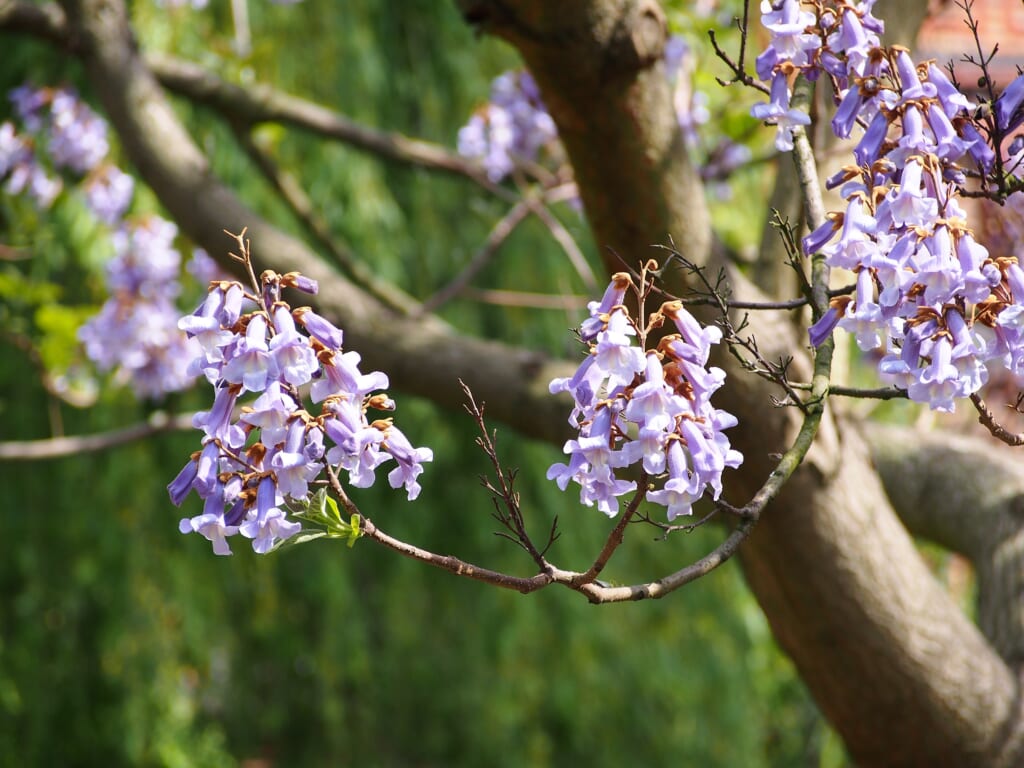
Japanese families are said to have planted a paulownia (kiri, 桐) when a daughter was born, so that by the time she married the tree could be made into her dowry chest. The idea was recorded in print in 1709, and it rests on two real things: kiri can yield furniture timber within about two decades, and its wood, the lightest in Japan, has long been used for chests.
What no record checked for this article shows is a family planting a tree at a birth and later building their daughter’s chest from that same trunk. The custom is best read as a saying that carried real forestry knowledge — and this article separates the saying from what the forestry records, the wood tests and the trade statistics actually show.
The tree by the farmhouse — a saying, not a ledger
Fields and house yards
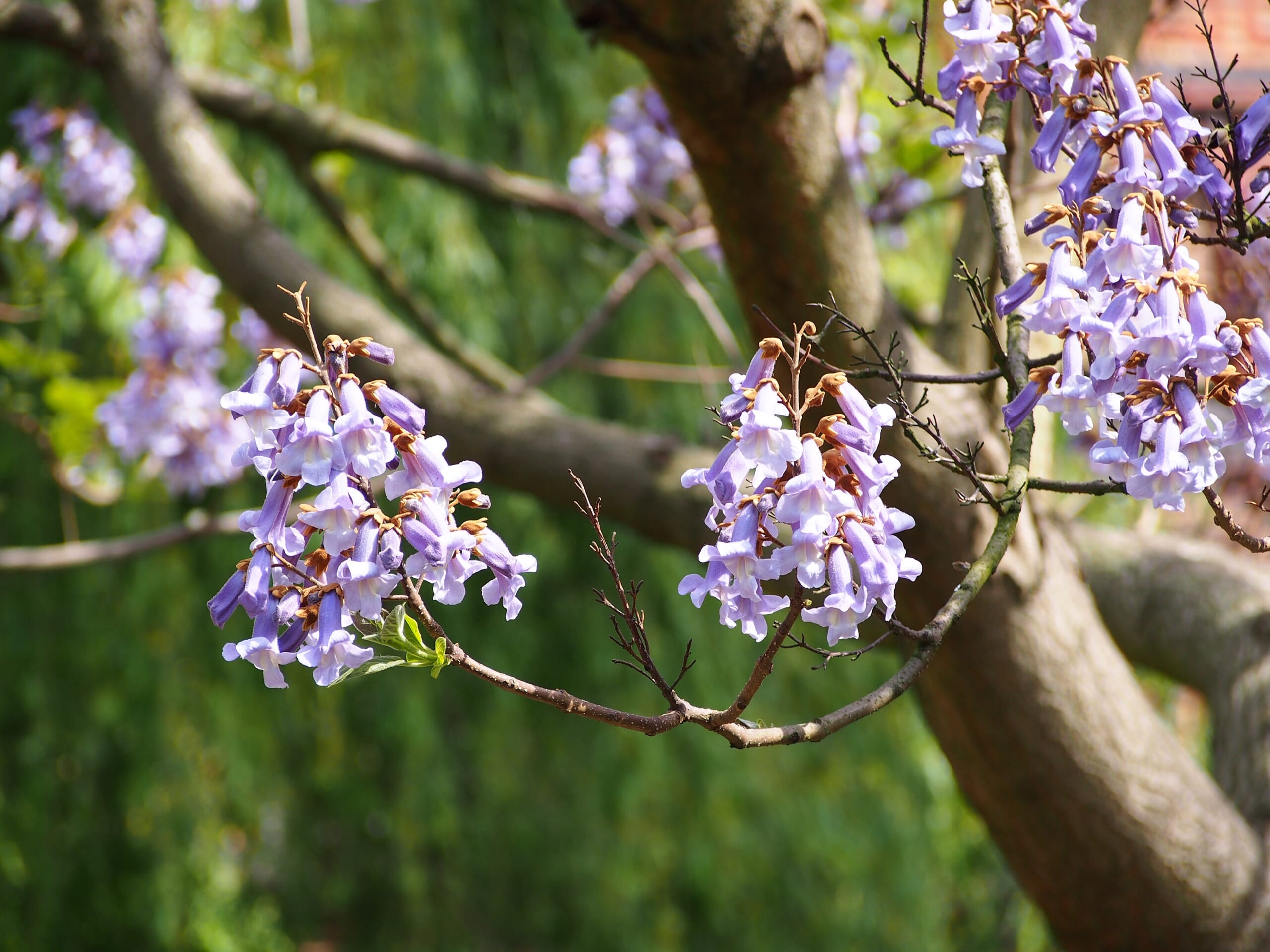
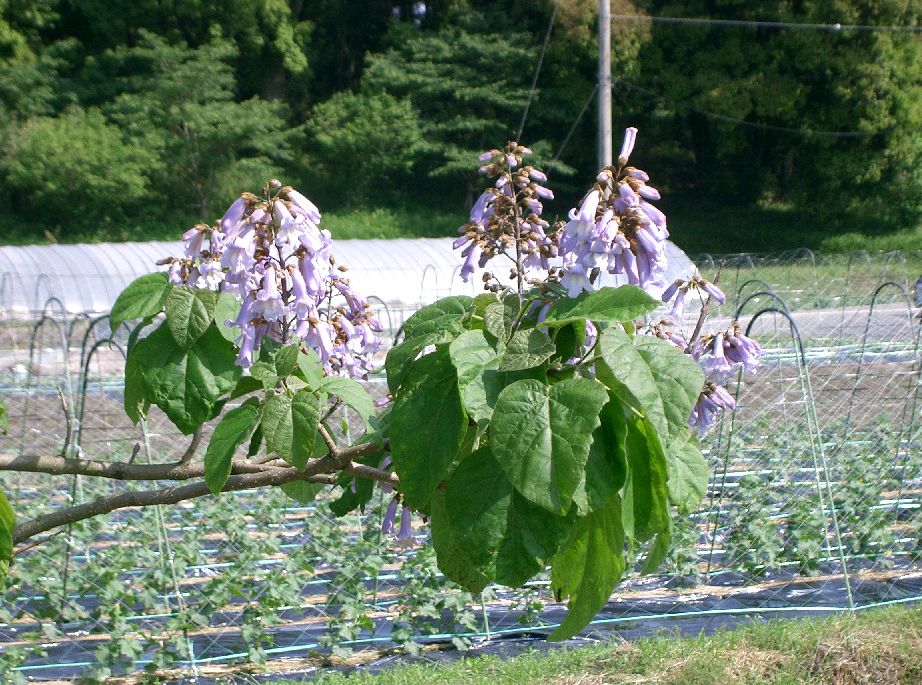
In the Aizu region of Fukushima, the mountain town of Nishiaizu chose kiri as its town tree. Its official profile says the tree was planted “not only in fields but also around houses.” That is where the custom lives: a fast-growing tree at the edge of a field or beside a farmhouse, close enough for a family to watch it grow.
Fukushima Prefecture’s official forestry history explains why. Aizu kiri was “carefully grown as material for chests and long storage boxes (nagamochi), and as a cash crop.” The same tree could furnish a household or be sold. The saying remembers the first use; the forestry record keeps both.
What the saying says
A newsletter of the Forestry Agency’s Chubu Regional Forest Office puts the custom in one line: in Japanese tradition, a kiri was planted when a girl was born, and about 20 years later, when she married, it was made into a kiri chest for her to take. The Association for the Promotion of Traditional Craft Industries describes the same practice as a custom of the Tōhoku region and Niigata Prefecture. Neither gives a start date or a count of households.
So the honest reading is this. Several sources describe the custom, as a saying and as a regional practice. The step that makes it memorable — this tree, this daughter, this chest — is not something the sources checked here can confirm for any individual family.
The oldest written trace — Kaibara Ekiken, 1709
A coffer, not yet a chest of drawers
The earliest text found for this article is in Yamato Honzō (大和本草), the natural-history encyclopaedia published in 1709 by Kaibara Ekiken. In the entry for white paulownia he writes that if you plant kiri seed when a daughter is born, it will become the wood for a chest for her trousseau when she marries (女子ノ初生ニ桐子ヲウフレバ嫁スル時其装具ノ櫃材トナル). The original is held by the National Diet Library and can be viewed page by page online.
Two details matter. First, Ekiken writes hitsu (櫃), a lidded storage chest, not tansu, a chest of drawers. Second, he records the idea; he does not say when it began or how widely it was practised. “Recorded by 1709” is supported. “Began in 1709” is not.
When the chest of drawers arrives
The kiri tansu appears in the record later. In Kasukabe, north of Tokyo, a kiri chest of drawers with an inscription dated Meiwa 9 (1772) survives and is cited by the national crafts association as evidence of the town’s history of chest-making. In Kamo, in Niigata, the chest-makers’ cooperative separates the start of chest-making (a cedar chest in 1783) from kiri chests, made from 1810 onwards. Ekiken’s coffer and the drawer chest that later became the classic bridal piece belong to the same idea, but they are not the same object.
| Source | Date | What it records | What it does not show |
|---|---|---|---|
| Yamato Honzō, Kaibara Ekiken | 1709 | Planting kiri at a daughter’s birth to make her trousseau chest (hitsu) | When the custom began; how many families did it |
| Kasukabe kiri chest with inscription | 1772 | A dated kiri chest of drawers | Any link to a birth-tree |
| Kamo chest-makers’ cooperative | 1783 / from 1810 | Cedar chest-making, then kiri chests | Any link to a birth-tree |
| Forestry Agency, Chubu office newsletter | 2013 | The custom: plant at birth, make a chest at marriage about 20 years later | A record of a specific tree and wedding |
A tree that races — how fast kiri really grows
Fifteen to twenty years, or thirty
The saying works only if the tree is ready in roughly the time it takes a girl to reach marrying age. Two Japanese public sources give two different answers. Educational material published by Hokkaido Prefecture says kiri “grows large enough to yield furniture timber in 15 to 20 years.” A report by the Aizu Kiri Promotion Council, published by the Forestry Agency, says Aizu kiri “is said to” become usable as timber “in about 30 years.”
The two sources describe different regions and do not state the timber size or quality they have in mind, so the reason for the gap cannot be settled from them. Neither sets a national felling age, and this article does not invent one.
Same age, different trees
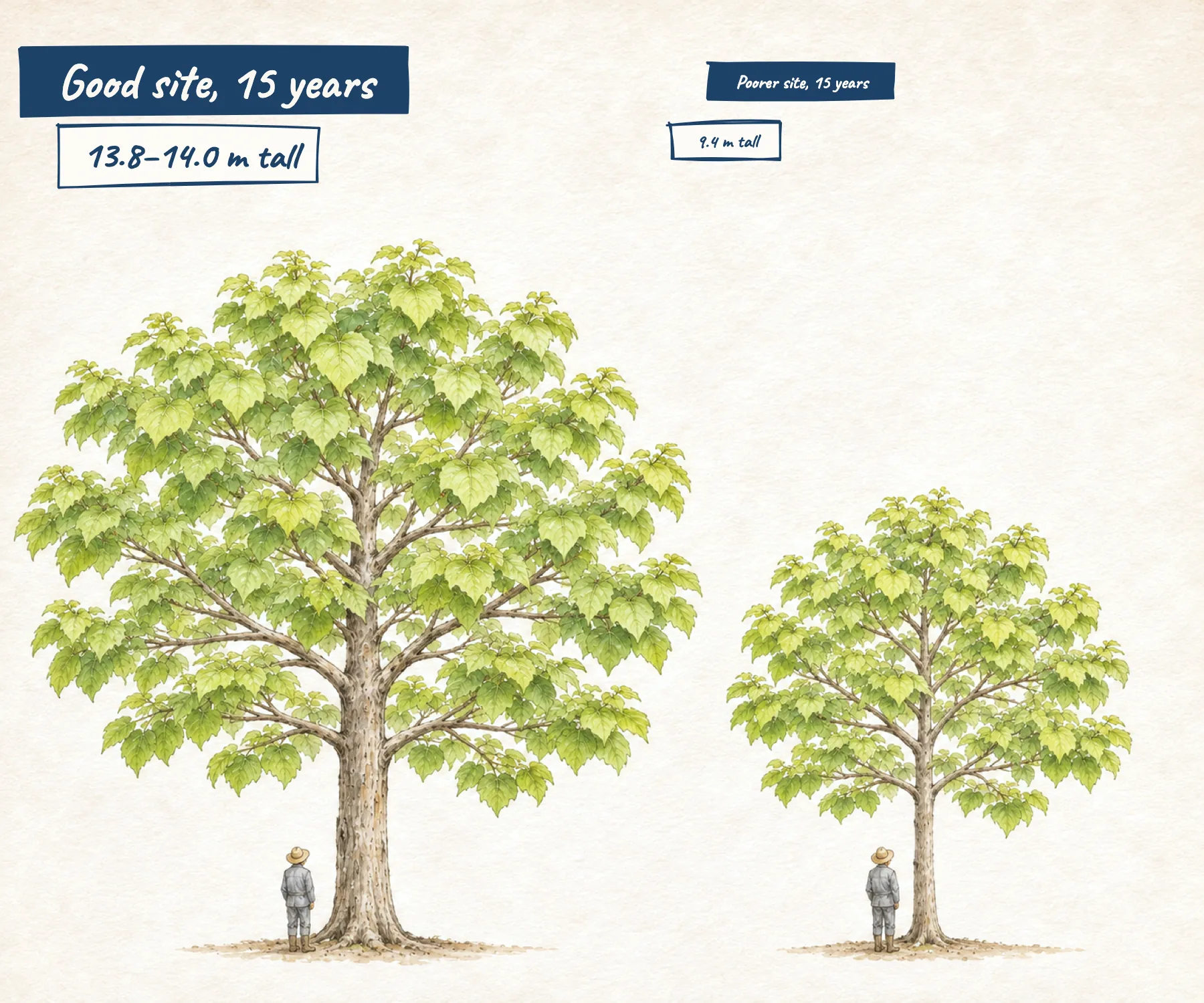
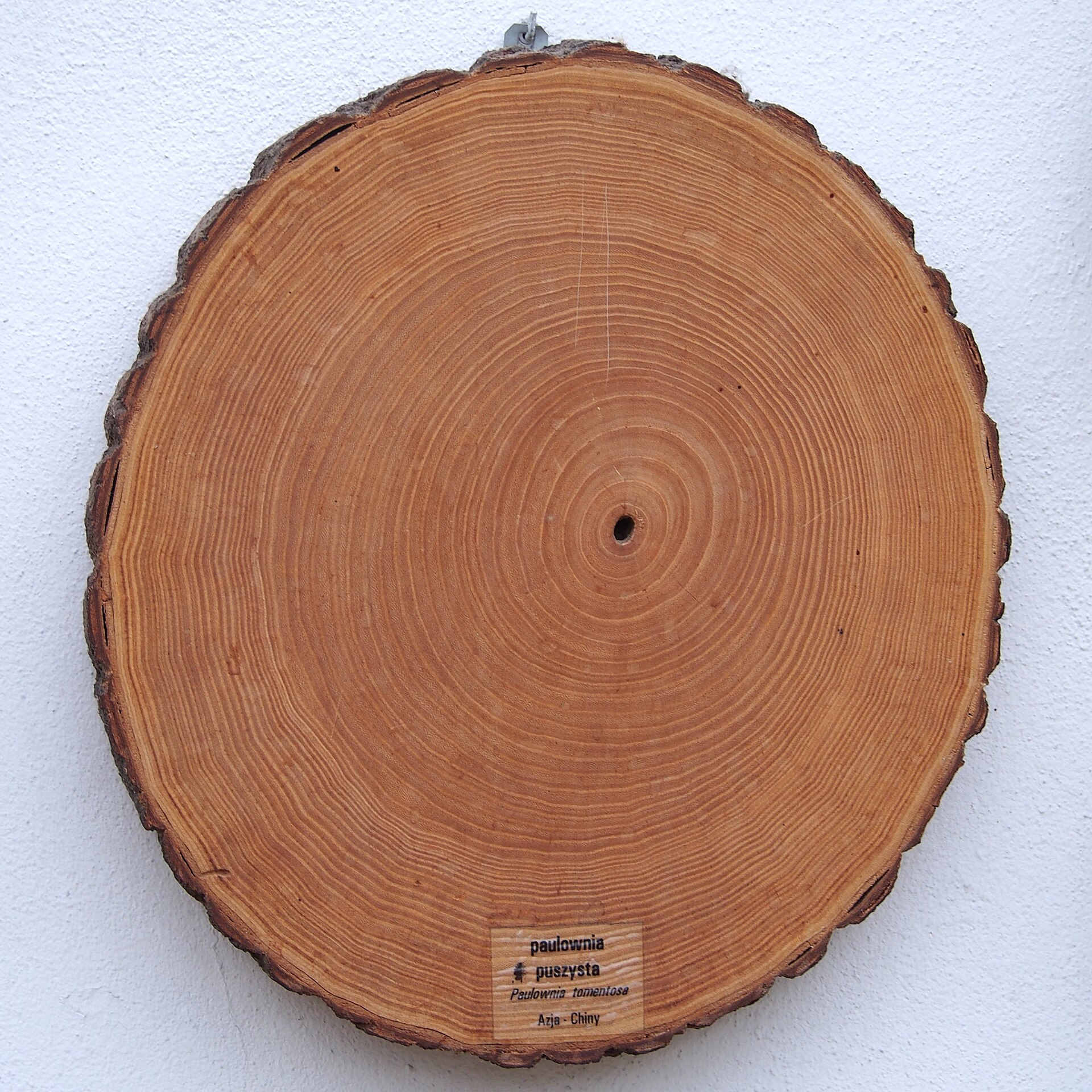
Field data from Akita Prefecture show how much the site matters. In a 1999 study by the Akita Prefectural Forestry Research Center, two well-grown 15-year-old kiri stands averaged 13.8–14.0 metres tall, with trunk diameters of 28.1–31.8 cm at breast height (about 11–12.5 inches). Another 15-year-old stand averaged only 9.4 metres and 21.0 cm. Same age, same species, very different trees.
Growth rings vary just as widely. A 1956 study in the Journal of the Japanese Forestry Society compared planted kiri from Murakami in Niigata with naturally regenerated kiri from Fukushima. The planted wood averaged ring widths of 19.1 mm — about three-quarters of an inch of radial growth a year in the sampled wood. The natural wood averaged 7.58 mm. The two groups differed in origin as well as in site, so the gap is not a measure of site alone.
| Measurement | Value | Source |
|---|---|---|
| Time to furniture timber | 15–20 years | Hokkaido Prefecture teaching material |
| Time to usable Aizu kiri | About 30 years (“is said to”) | Aizu Kiri Promotion Council (Forestry Agency) |
| 15-year-old stands, good sites | 13.8–14.0 m tall, 28.1–31.8 cm diameter | Akita Prefectural Forestry Research Center, 1999 |
| 15-year-old stand, poorer site | 9.4 m tall, 21.0 cm diameter | Same study |
| Average ring width, planted (Murakami) | 19.1 mm | Kitamura, 1956 |
| Average ring width, natural (Fukushima) | 7.58 mm | Kitamura, 1956 |
Reading the saying as a timetable
One way to read the custom — and this is an interpretation, not a finding — is as a timetable. A tree planted at a birth on a good site could plausibly reach a usable size around the age at which a daughter married. On a poorer site, the same tree might take longer to reach the size needed. The saying compresses a grower’s judgement — fast growth, a felling window measured in decades, and a strong dependence on site — into a sentence a parent could remember.
Why the wood suits a chest — light, steady, and slow to pass heat
The lightest timber in Japan
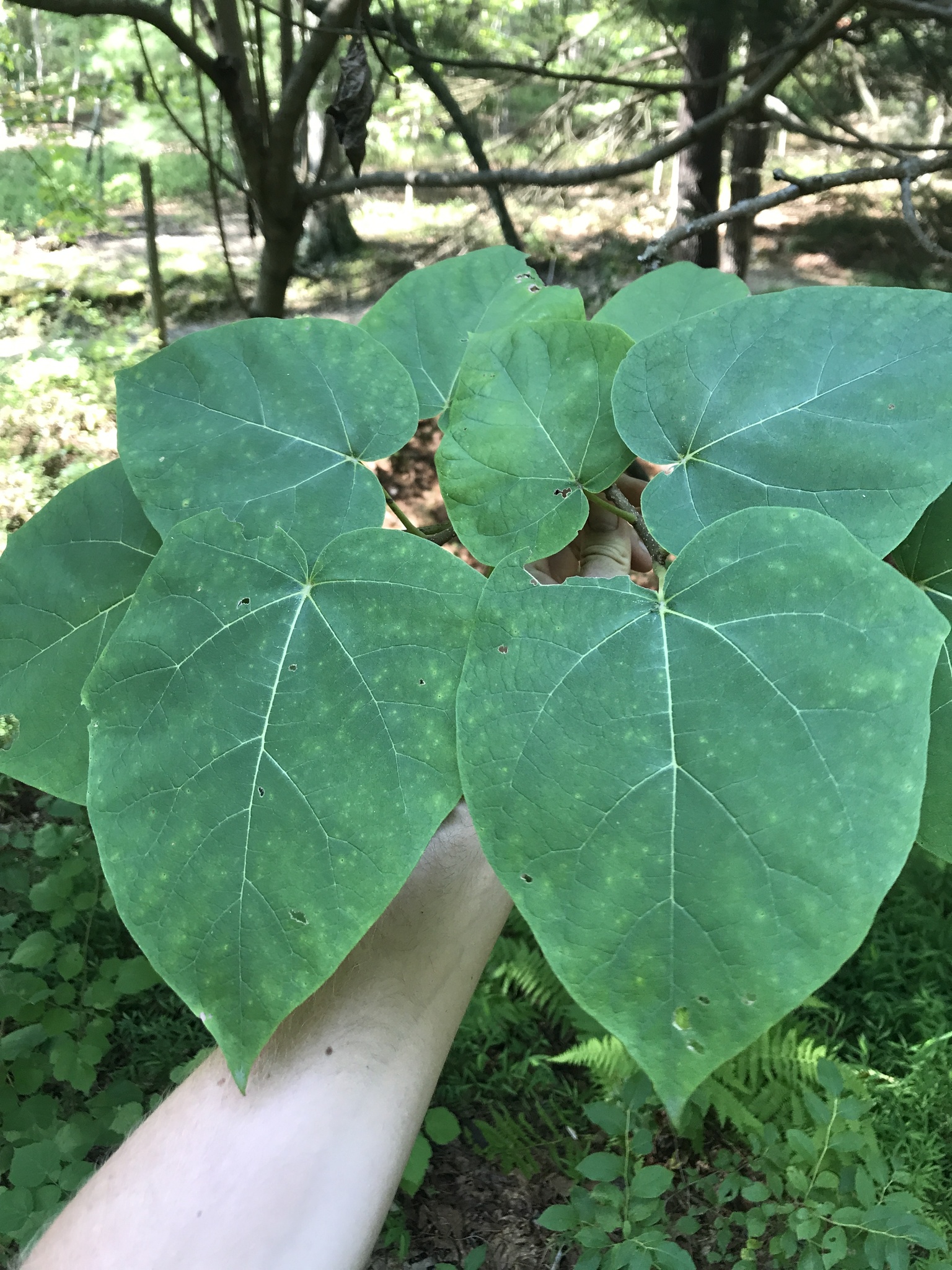
The Kyushu Research Center of the Forestry and Forest Products Research Institute (FFPRI), Japan’s national forest research body, describes kiri as having a specific gravity of about 0.3 — “the lightest of Japan’s timbers.” The Japan Wood Information Center gives an air-dry range of 0.19 to 0.40, with an average of 0.30. Light wood keeps a large piece of furniture light, which matters for an object that moved house with a bride.
FFPRI also describes kiri as a wood with little tendency to warp. That does not mean it never moves. Stability of this kind is useful in drawer-making, though the fit of a drawer also depends on how it is built and on the humidity of the room.
Swelling with the weather
A City of Nagoya booklet on its local craft, the Nagoya kiri chest, explains that the wood “responds sensitively to humidity, swelling and shrinking, so airtightness increases.” That is the makers’ explanation of why a kiri chest is said to protect clothes: in damp air the wood swells and the gaps close.
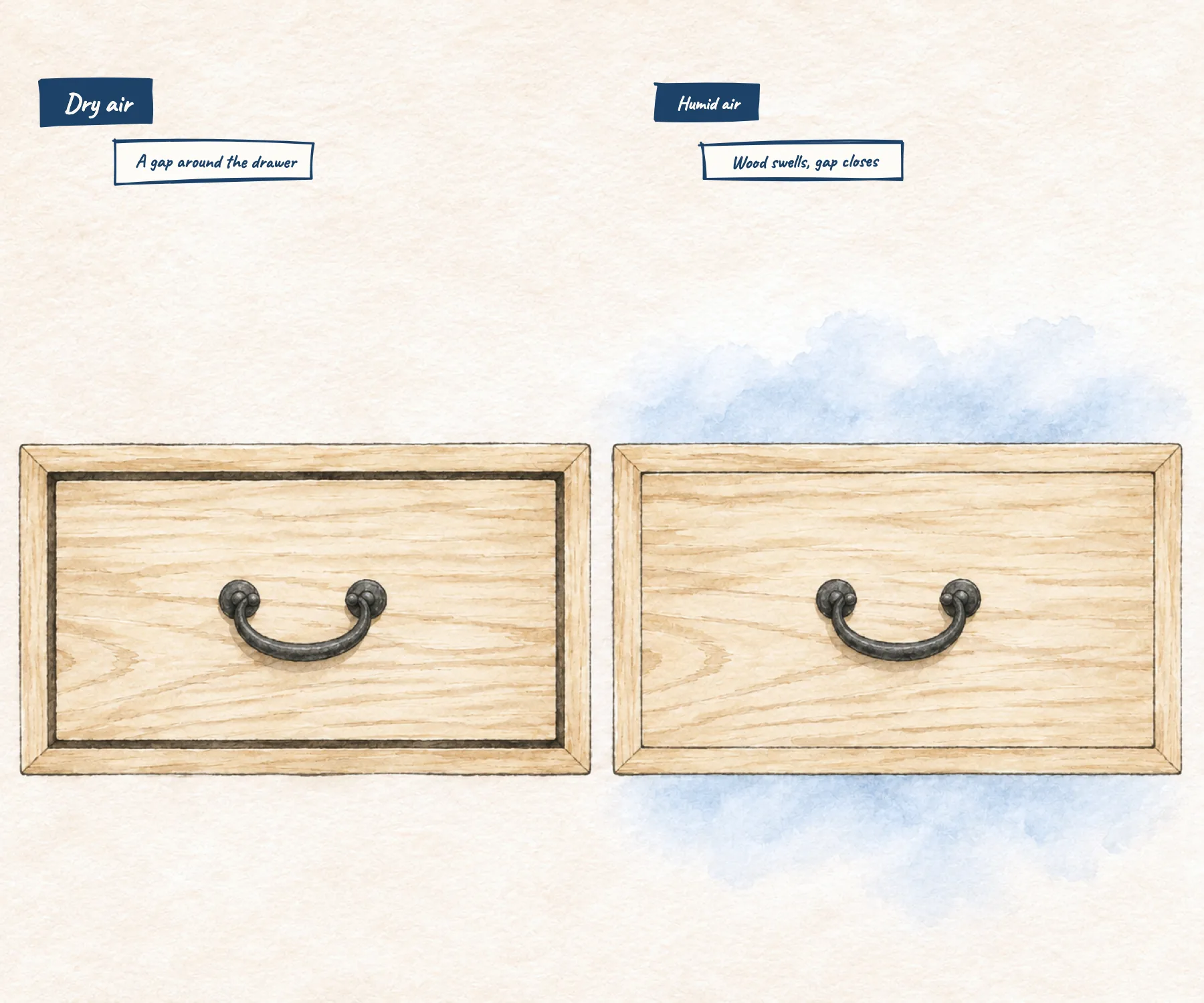
The booklet describes the principle rather than measuring it. A different measurement exists for kiri boxes, and it concerns humidity rather than airtightness. The Fukushima Technology Centre placed boxes in air at 25 °C and 50 per cent relative humidity, put 1 gram of distilled water inside, and compared materials. Under those conditions, humidity inside the kiri box stayed steady at 50–65 per cent. That is one test of one kind of box, not a general rating of the wood.
Slow to pass heat
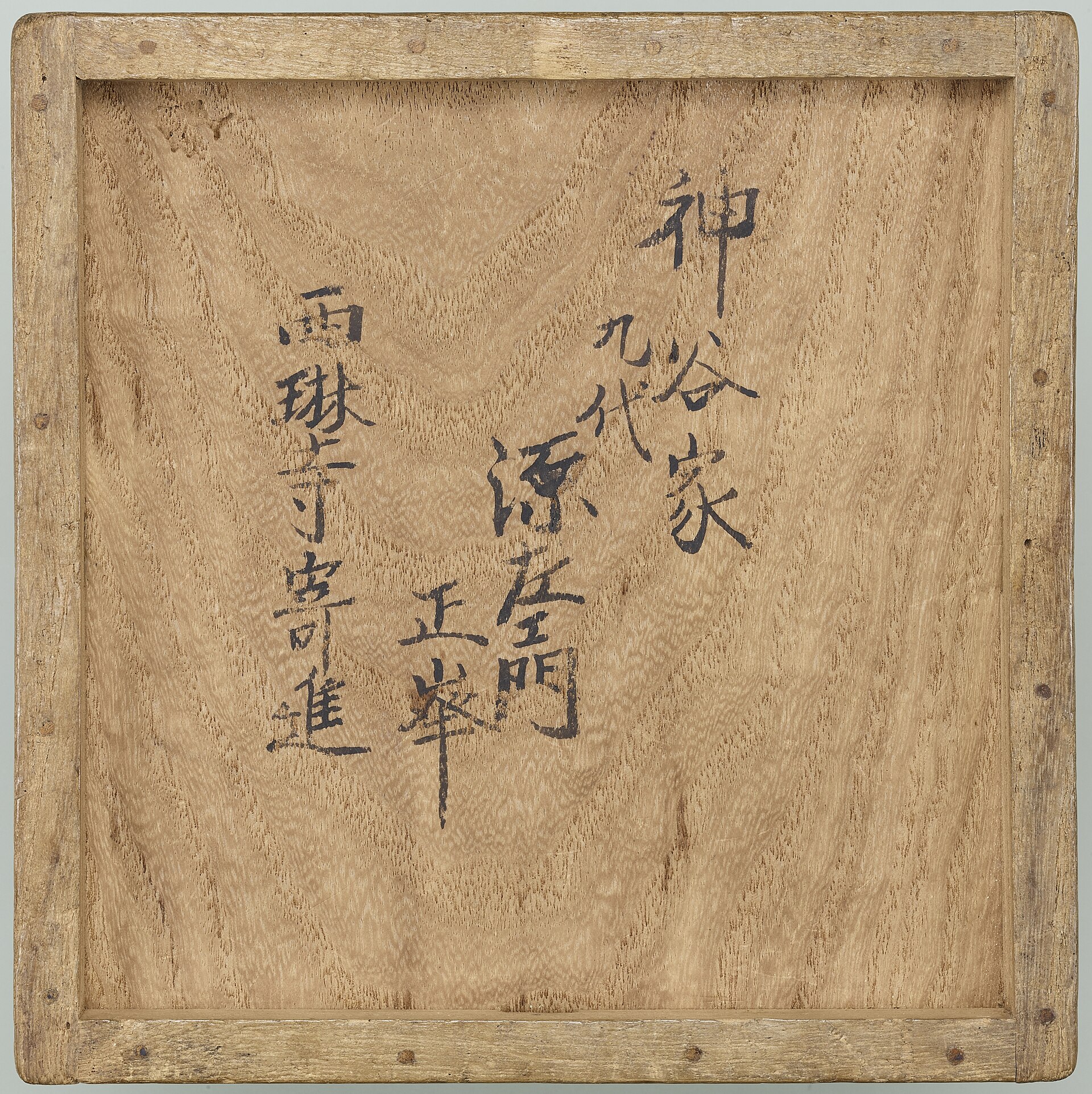
The Japan Special Forest Products Promotion Association publishes thermal-conductivity figures attributed to Niigata Prefecture’s Kamo testing centre. Kiri is listed at 0.063 kcal/(m·h·°C), lower than Japanese cedar and well below oak and zelkova. The original test report could not be located for this article, so the figures are given as the association publishes them.
| Wood | Thermal conductivity, kcal/(m·h·°C) |
|---|---|
| Kiri (Paulownia tomentosa) | 0.063 |
| Sugi (Japanese cedar) | 0.075 |
| Mizunara (Japanese oak) | 0.122 |
| Keyaki (zelkova) | 0.123 |
Figures as published by the Japan Special Forest Products Promotion Association.
Fireproof and insect-proof? What the tests actually show
“Hard to burn” — and a test that complicates it
Ask about kiri chests in Japan and someone will mention fire. FFPRI’s description of the wood says it “does not pass moisture and is hard to burn.” The US Forest Service’s Fire Effects Information System (FEIS) likewise notes paulownia wood’s “low combustibility relative to other species.”
A burn test by Niigata Prefecture complicates that. Using kiri imported from China, researchers exposed boards of several furniture woods to fire. After 25 minutes, a 30 mm kiri board was almost entirely charred, while cedar had charred to a depth of about 20 mm and Douglas fir and Japanese oak to about 15 mm. In that test kiri showed deeper charring, not shallower. One test measures one thing — char depth at 25 minutes — and does not settle how a closed chest behaves in a house fire. But it is enough to show that “hard to burn” is not a guarantee.
The chest that came out of the fire
The fire story people tell is narrower: a kiri chest scorched on the outside with the clothes inside unharmed. The Kasukabe kiri chest cooperative says such cases exist — chests where “only the surface was burnt and the garments inside were saved.” It gives no dates, places or fire reports. One possible explanation is that a thick, closed box that passes heat slowly protects what is inside for a while, even if the wood itself chars. That is an inference, not a tested finding.
Insects
The Kamo cooperative says compounds in the wood are “said to prevent damage by bacteria and insects.” The phrasing is careful, and so it should be. A 1962 study in the Journal of Home Economics of Japan, part of research on insect-control agents for clothing, put varied carpet beetles (himekatsuobushimushi) in containers of different materials and found “no significant difference in damage by material.” It was a limited side experiment, but it is the only test found here, and it does not support a strong claim.
| Claim | What supports it | How strong |
|---|---|---|
| Lightest Japanese timber | FFPRI; Japan Wood Information Center (0.19–0.40, avg. 0.30) | Published wood-property values and descriptions |
| Little warping | FFPRI description | Expert description |
| Swells to seal in humidity | Nagoya craft booklet | Craft explanation, not measured |
| Steadies humidity inside a box | Fukushima box test (50–65% RH) | One test under set conditions |
| Low thermal conductivity | Association figures (0.063) | Published figure, original report not seen |
| Hard to burn | FFPRI; FEIS (“low combustibility”) | Description; one Niigata test showed deeper charring |
| Contents survive house fires | Kasukabe cooperative | Anecdotes, no records |
| Prevents insect damage | Kamo cooperative (“said to”) | One 1962 test: no significant difference |
Where the chests are made — Kamo, Kasukabe and Aizu
Kamo, Niigata
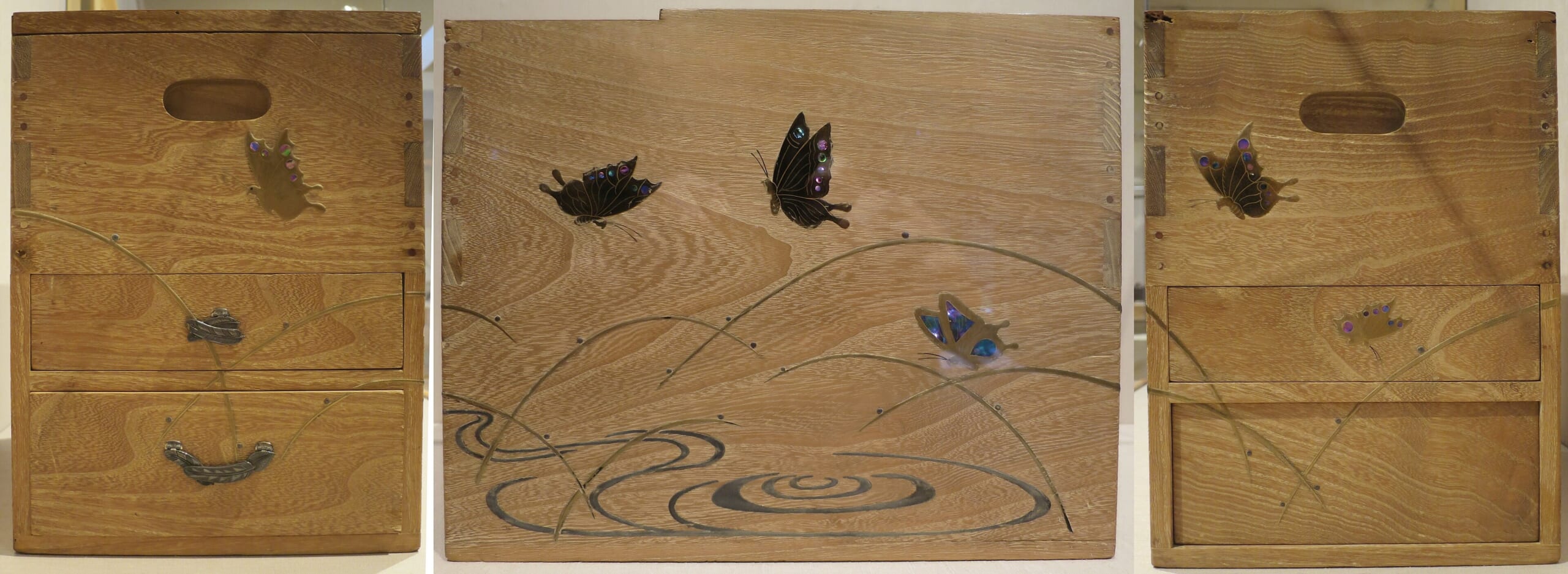
Kamo kiri tansu (加茂桐箪笥) was designated a Traditional Craft of Japan on 15 December 1976, by what was then the Minister of International Trade and Industry. Kamo City dates the start of its furniture trade to the Tenmei era; the cooperative’s own map separates cedar chests (1783) from kiri chests (from 1810). Public educational sources describe Kamo as making about 70 per cent of Japan’s kiri chests, but they give no base year or method, so it is an undated figure whose basis is unclear.
Kasukabe, Saitama
Kasukabe kiri tansu was designated on 3 August 1979. Its strongest piece of history is physical: the 1772 inscribed chest mentioned earlier.
Aizu, Fukushima — the wood itself
For Aizu, the records focus on the timber. The Aizu Kiri Promotion Council describes its wood by “its golden colour and fine, beautiful grain.” Fukushima’s forestry history records that the Aizu domain tried in 1842 to raise kiri seedlings from seed and did not succeed. It was one episode in a long effort, recorded by the prefecture, to grow the tree on purpose rather than leave it to chance.
From backyard tree to imported timber
The numbers fall
The custom describes a country in which the wood for a chest could come from your own field. The statistics describe a different situation. Forestry Agency figures, compiled by Ibaraki Prefecture, put domestic kiri production at 33,750 cubic metres in 1965, 21,717 in 1975 and 12,680 in 1985. By 2023 it was 275 cubic metres. The Forestry Agency reports 416 cubic metres for 2025, up 33.3 per cent on the year before — a rise, but from a very small base.
Timber from elsewhere
In 2024 Japan produced 312 cubic metres of kiri timber, imported 9,337 and consumed 9,649, according to national supply figures for special forest products. Imports were therefore roughly 97 per cent of the kiri timber used that year — a calculation from the published numbers, covering all uses, not only chests. The Forestry Agency names China as the main supplier. The Japan Special Forest Products Promotion Association dates large-scale imports from China to around 1972 and the start of American kiri log imports to around 1975.
| Year | Domestic production (m³) | Note |
|---|---|---|
| 1965 | 33,750 | Forestry Agency, via Ibaraki Prefecture |
| 1975 | 21,717 | Same |
| 1985 | 12,680 | Same |
| 2023 | 275 | Same |
| 2024 | 312 | Imports 9,337; consumption 9,649 |
| 2025 | 416 | Forestry Agency, +33.3% on 2024 |
The paulownia crest — from the emperor’s robe to the government
Kiri on the robe
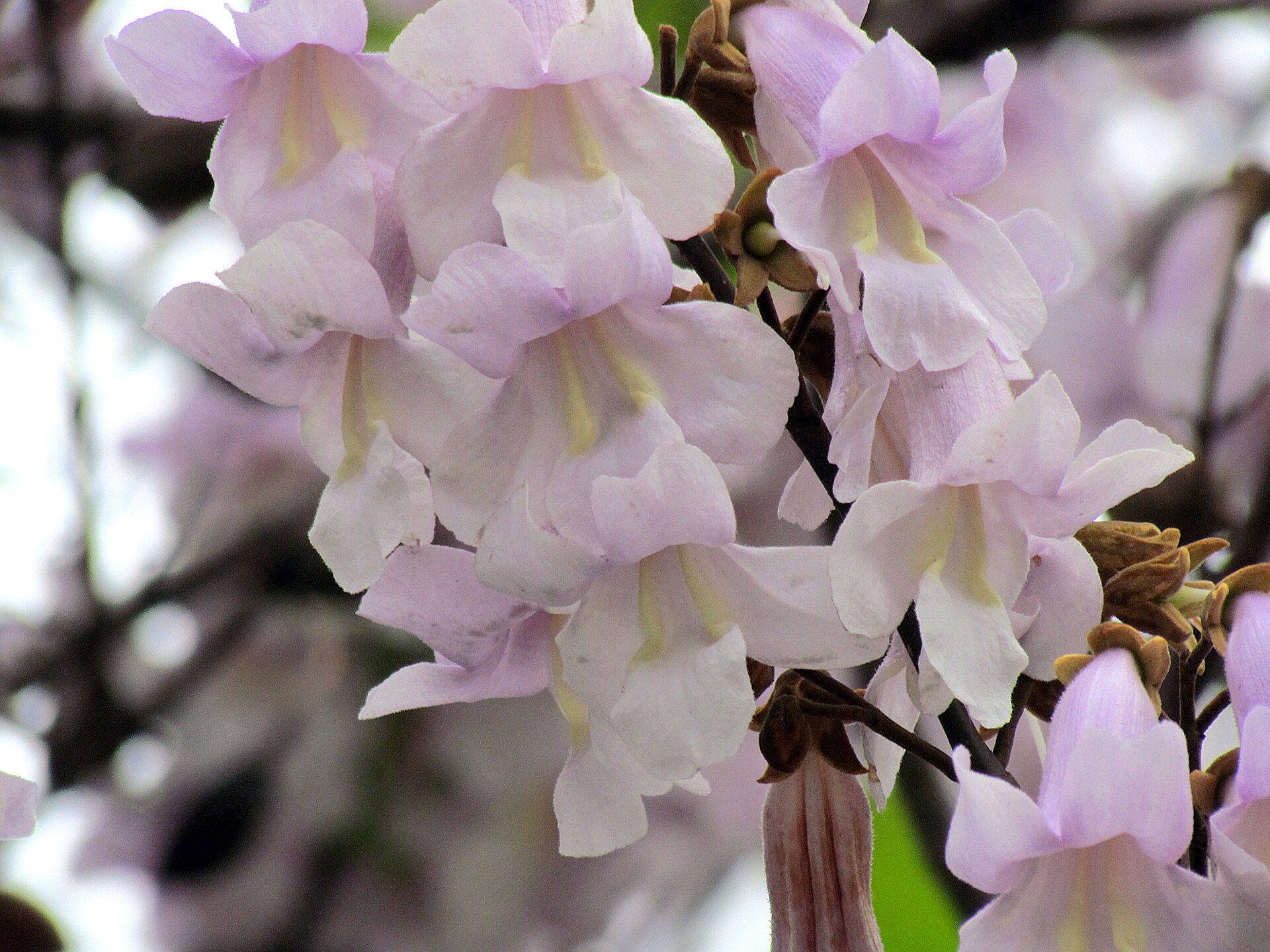
The Kyoto National Museum describes the kiri-take-hōō (桐竹鳳凰) pattern — paulownia, bamboo and phoenix, with a mythical kirin worked in — as a design reserved for a robe worn by the emperor. The Tokyo National Museum explains a Chinese legend that the phoenix lodges in the kiri tree.
The sources do not agree on which tree that is. The Imperial Household Agency, describing paintings in the Kyoto Imperial Palace, says the phoenix lodges in the gotō (梧桐), also called aogiri — Firmiana simplex, a different genus from Paulownia. The character 桐 appears in both names, and the two trees should not be treated as the same plant.
The crest of rulers
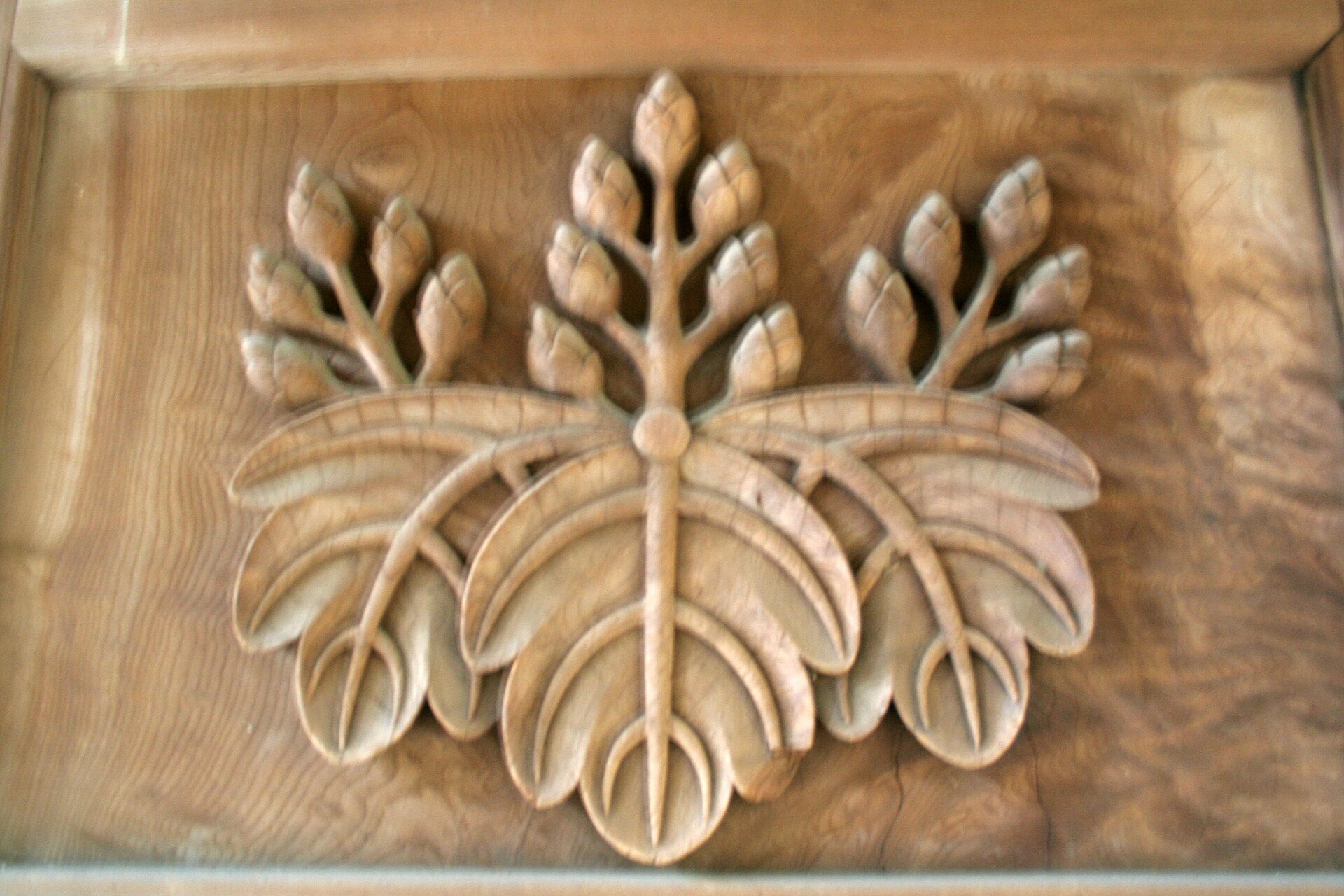
A study published by the Kyoto National Museum notes that the go-shichi no kiri (五七桐), the five-seven paulownia, appears “overwhelmingly” on lacquerware associated with Toyotomi Hideyoshi. In this design three upright flower stems rise above the leaves, the central one carrying seven buds and the two at the sides five each.
The same five-seven paulownia is the emblem of the Government of Japan, as the Yamanashi Prefectural Archaeological Center notes. The obverse of the 500-yen coin listed by the Ministry of Finance shows paulownia.
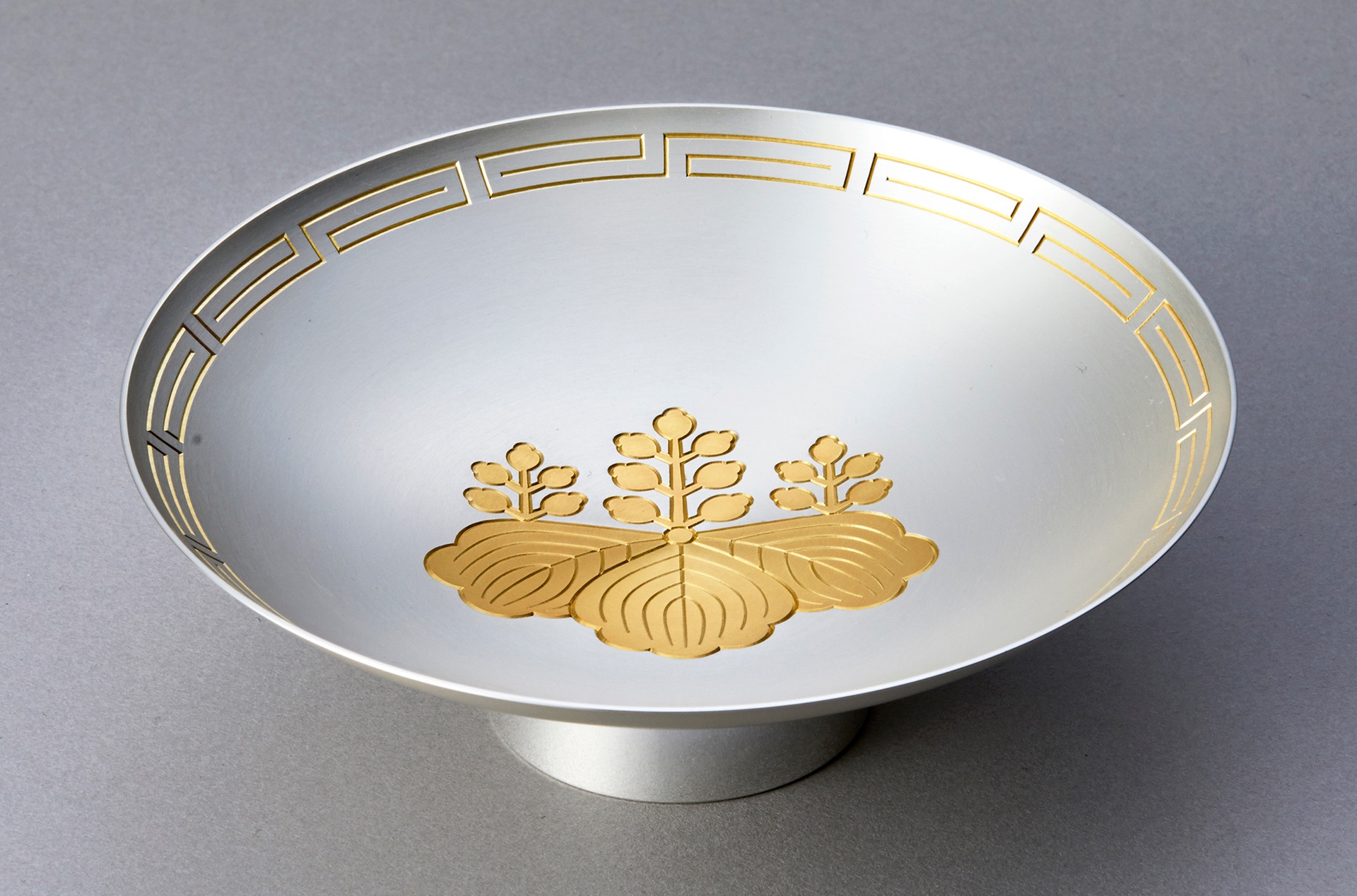
The family-crest tradition behind these emblems is the subject of our article on kamon, the plant crests of Japanese families and gardens. Here the point is simpler: the tree a farming family planted for a daughter’s chest was the same tree that stood for authority on a ruler’s lacquerware and in the emblem of government.
A Dutch princess’s name — how kiri became Paulownia
Siebold and Zuccarini name the genus
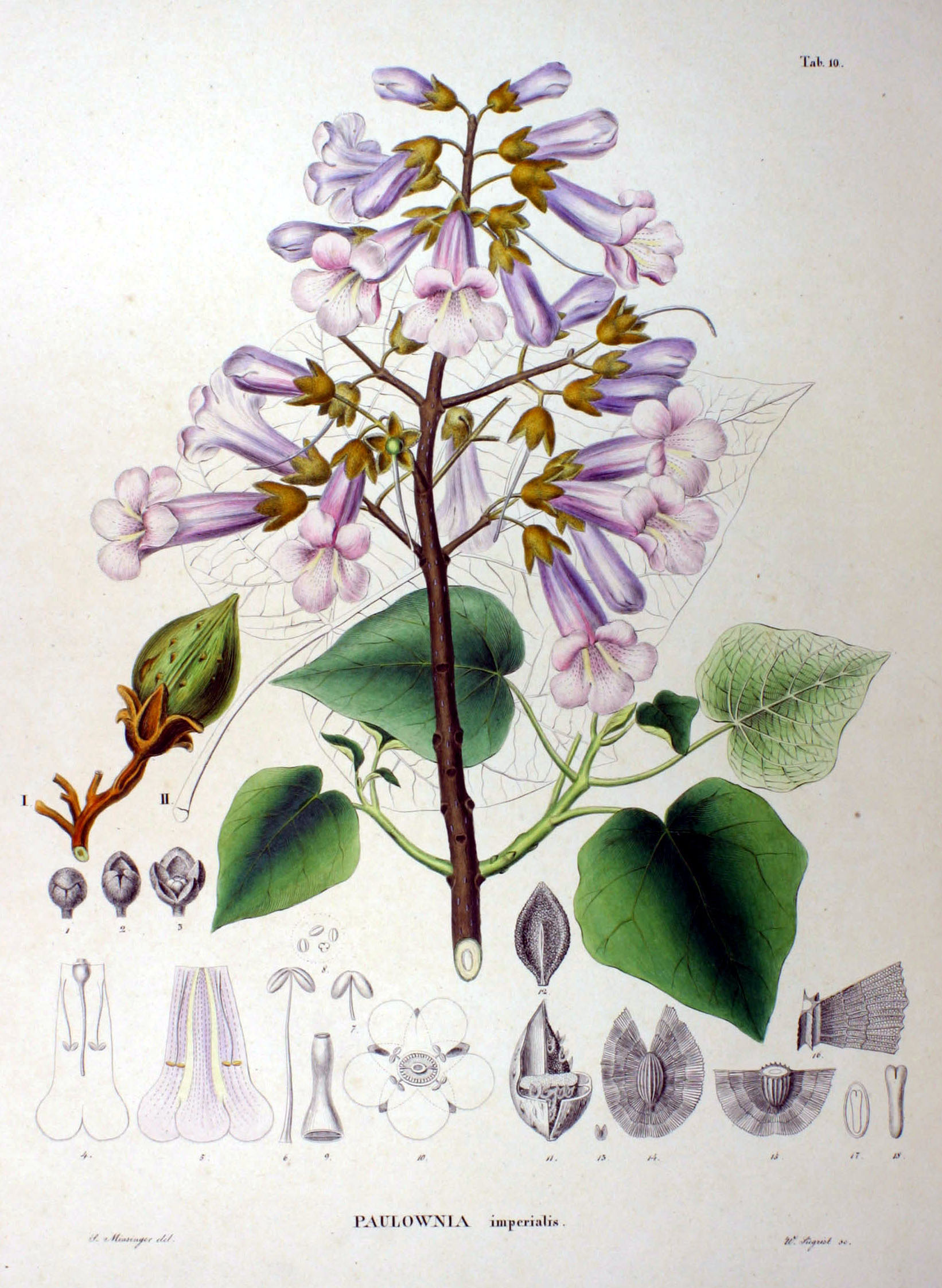
The Western name of the tree also comes from Japan, by a roundabout route. Philipp Franz von Siebold and Joseph Gerhard Zuccarini, in the first volume of their Flora Japonica, explain why they created a new genus for the kiri, a tree, they wrote, that “until now was wrongly taken for a Bignonia.” They named it Paulownia “to pay homage to the name of Her Imperial and Royal Highness, the Hereditary Princess of the Netherlands.” The book’s dedication names her: Anne Paulowna, Grand Duchess of Russia, Princess of Orange.
The botanists honoured a princess with the tree. In Japan, by tradition, the same tree had been planted for ordinary girls.
The name botanists use
The International Plant Names Index credits the genus Paulownia to Siebold and Zuccarini. The species name, Paulownia tomentosa (Thunb.) Steudel, has a different authority, so the Siebold story belongs to the genus, not to the full species name.
The same tree, a different setting — paulownia in the United States and Europe
An ornamental that escaped
In the United States, Paulownia tomentosa is known as princess tree or empress tree. The USDA’s National Invasive Species Information Center records its introduction in the 1840s as an ornamental. A widely repeated story says it arrived as seed used for packing Chinese porcelain; an Oxford University plant profile mentions this, but the horticultural historian Arthur O. Tucker reported that he “searched and searched for period references to this story” and found none. It is best treated as another legend about the tree.
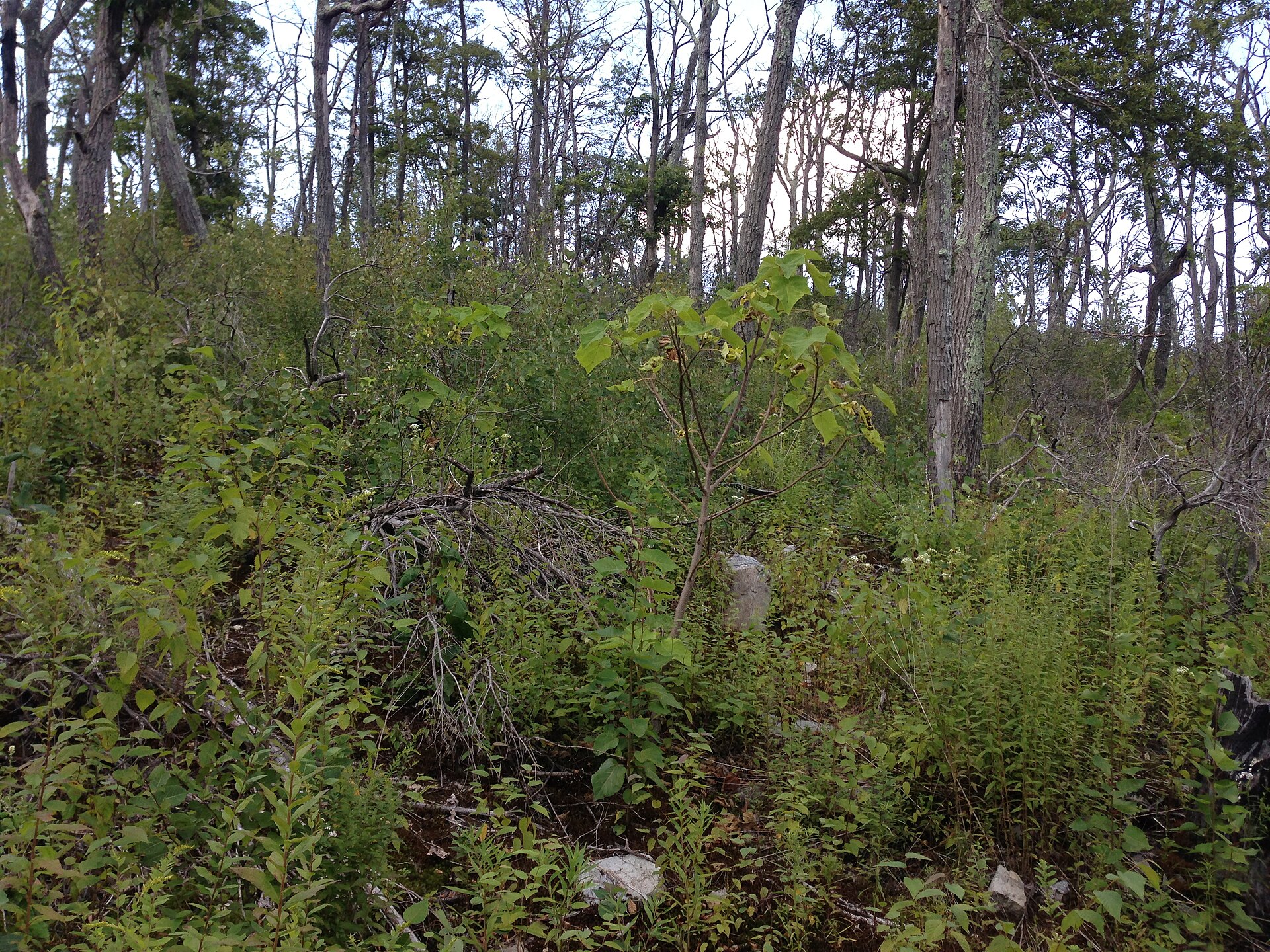
The ecology is not a legend. FEIS classifies the species as nonnative and invasive. The National Park Service lists princess tree among the highly invasive plants that are top priorities for control at Colonial National Historical Park in Virginia. Pennsylvania’s Department of Conservation and Natural Resources lists it as invasive on state lands, and Tennessee’s forest-protection programme warns of its harm to native habitat.
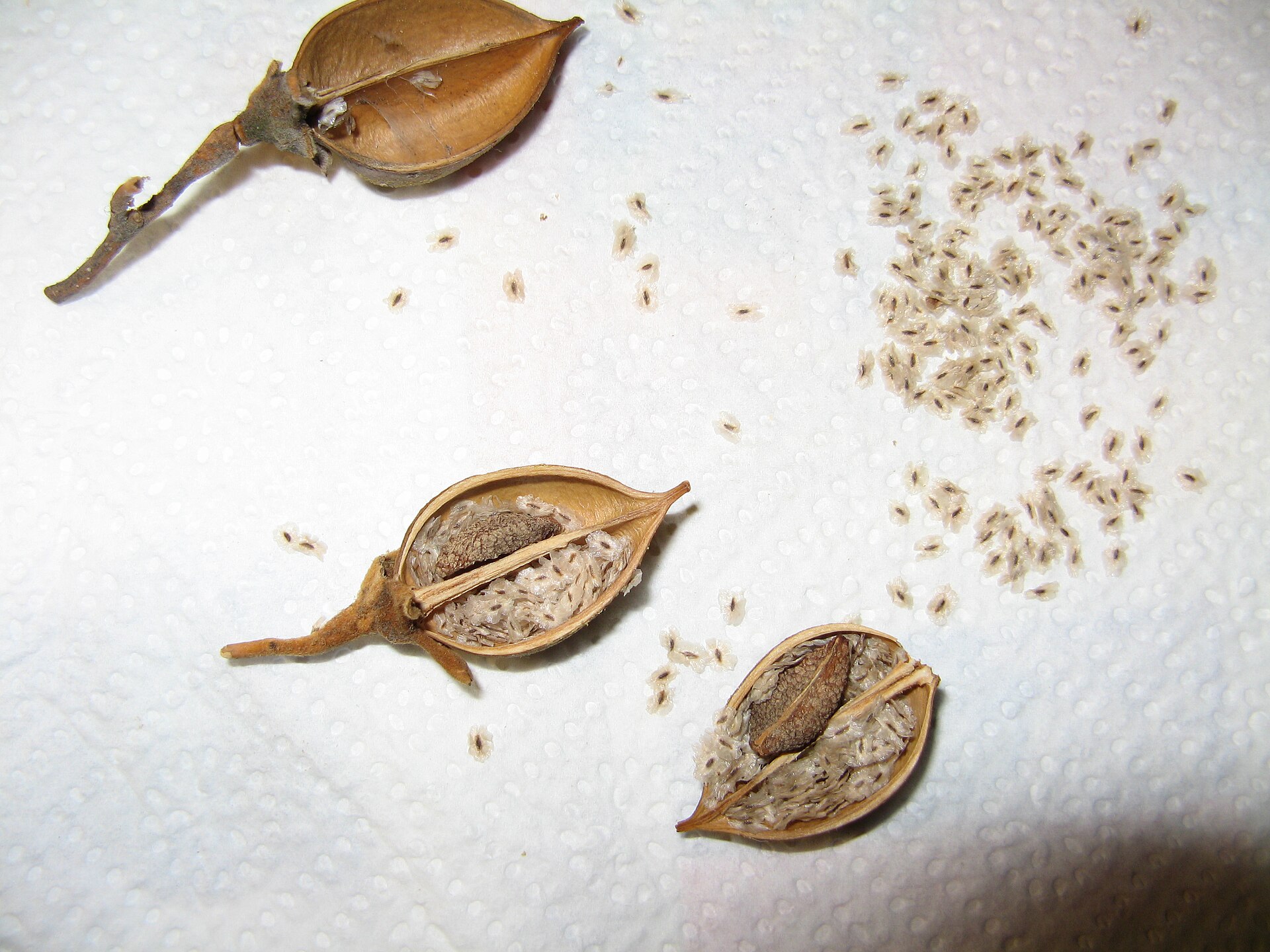
Fast growth helps kiri as a timber crop; in eastern American woodlands, seed output and sprouting help it spread. The USDA’s Silvics of North America says a large tree may produce as many as 20 million seeds a year, with up to 2,000 seeds in each capsule. FEIS describes ideal seedbeds as “exposed mineral soil, high light, and little to no litter” — conditions left after fire, logging or construction. A University of Georgia management guide notes that root sprouts can grow more than 15 feet (about 4.6 metres) in a year.
The American logs that went to Japan
For a time the two settings met in the timber trade. A 1989 paper in the Journal of Forestry traces American exports of paulownia to Japan to 1972, when a Japanese representative of the Hokusan Lumber Company spotted wild paulownia trees near Staunton, Virginia. (Japanese sources date the start of American log imports to around 1975; the two accounts differ.) Writing in 1989, the authors reported that high-quality logs from wild trees, 13 feet long and at least 20 inches across, fetched as much as $7 per board foot by the Doyle rule. A University of Kentucky extension guide from the same year notes that “Japanese buyers have begun to buy US grown logs” and that prices “often exceed those paid for black walnut.” A New Zealand forestry handbook gives average prices paid in Japan in 1990 of ¥217,000 per cubic metre for American logs against ¥47,000 for Chinese ones.
Seen from a Japanese timber yard, the escaped American trees were a source of fine wood for chests. Seen from the parks and state lands that list them for control, they are an invasive plant.
Europe, and a Chinese parallel
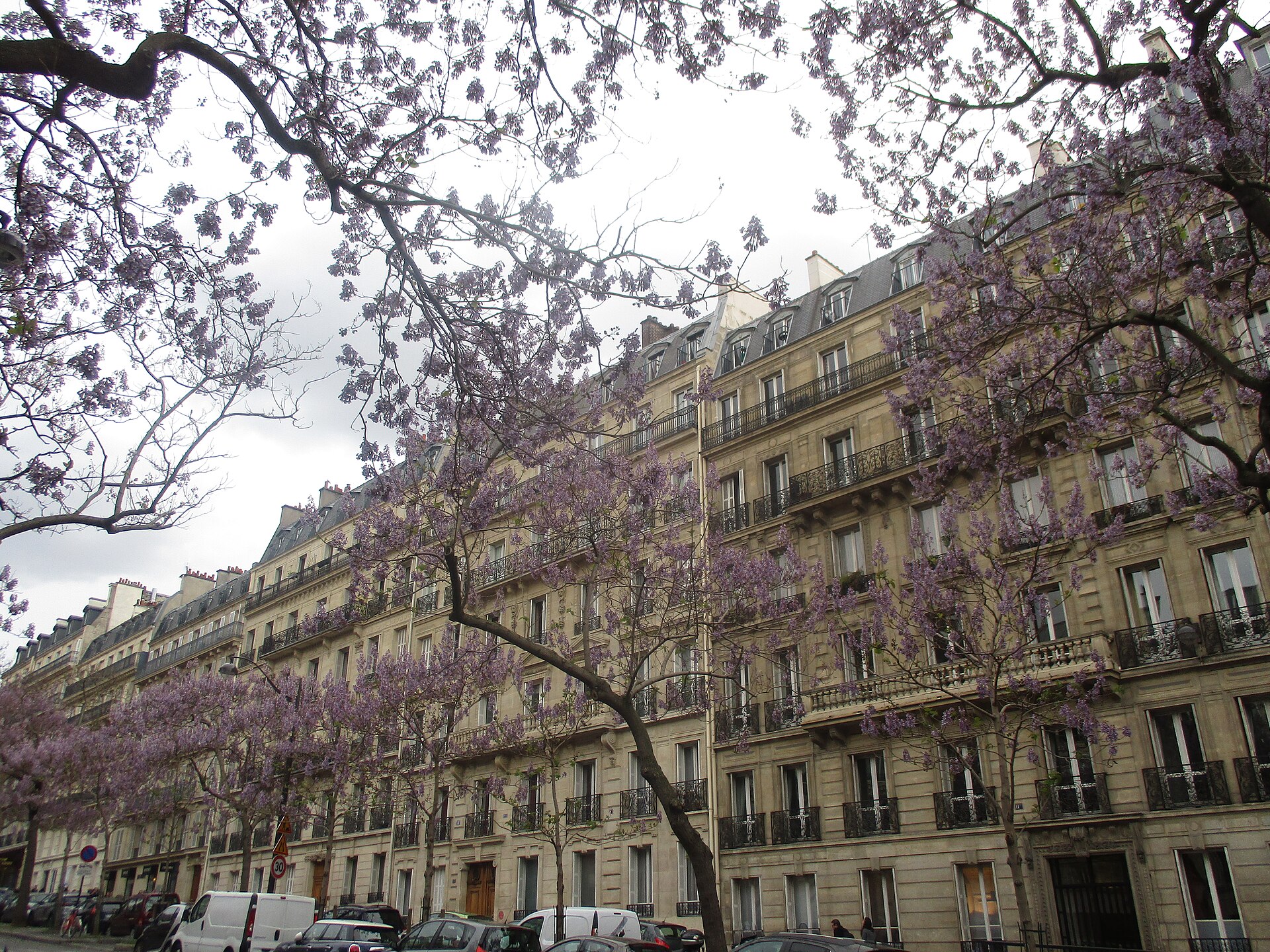
In Britain, the Royal Horticultural Society lists P. tomentosa as the foxglove tree and gives advice on growing it. When checked for this article, it was not on the government’s list of 36 invasive plant species for England and Wales, nor on the EU’s list of invasive alien species of Union concern. The European and Mediterranean Plant Protection Organization, however, has had it on its Alert List since 2021, and Switzerland banned the sale, giving away, renting out or import of the princess tree from 1 September 2024. Separately, in Spain, the hybrid Cotevisa 2 (P. elongata × P. fortunei) is grown in plantations near Valencia and Granada and studied for timber and energy.
The dowry idea also has a Chinese version. An Oxford University plant profile and the World Agroforestry tree database both describe a Chinese custom of planting paulownia at the birth of a daughter and using it for furniture in her dowry. Neither gives a region or a period, so it is a parallel worth noting, not proof of where the idea began.
| Japan | Eastern United States | England, Wales and EU | Switzerland | |
|---|---|---|---|---|
| How P. tomentosa is treated | Cultivated for timber; source of chest wood | Nonnative, invasive (FEIS); control priority in some parks and state lands | Garden ornamental (RHS); not on the England–Wales or EU Union lists when checked | Sale and import banned from 1 Sept 2024 |
| Value most often cited | Light, stable wood; crest and craft | Once an export log | Flowering ornamental | — |
| What drives the view | Planted, tended and felled on purpose | Spreading on its own into native woodland | Grown in gardens and streets | Precaution against spread |
What the saying carries
Strip away the parts no record confirms and something solid remains. The saying holds a growth rate (furniture timber in 15 to 20 years by one source, usable Aizu wood in about 30 by another, with large differences between sites), a material choice (the lightest Japanese timber, with little tendency to warp), and an economic fact (a tree in the field that could furnish a home or be sold). It also holds a sense of time familiar to foresters and woodworkers: a rotation that fits inside a human life.
When you hear the custom told — in a shop in Kamo, in a guidebook, or on a garden tour — three things are worth keeping apart. The saying is recorded, back to 1709. The properties of the wood are partly measured and partly craft explanation, and the fire and insect claims are the weakest. And the story of one tree becoming one bride’s chest is a story; no document checked here shows it.
That does not make the tree less interesting. It is a tree that Japan has grown as a family asset, that parts of the United States manage as an invasive, and that botanists named for a princess.
For more on how Japanese forestry turned fast growth into exact timber, see our article on daisugi, the technique of growing trees on trees. For how Japan’s planted forests have aged since the war, read Japan’s falling-trees crisis. And for how the same plant is shaped differently in Japanese and Western gardens, see niwaki vs topiary.
Frequently asked questions
Did Japanese families really plant a paulownia when a daughter was born?
The custom is recorded. Kaibara Ekiken described it in Yamato Honzō in 1709, the national crafts association describes it for Tōhoku and Niigata, and a Forestry Agency newsletter calls it a Japanese tradition. What has not been found is a record that follows a specific tree from a birth to a wedding chest.
Is a kiri tansu fireproof?
The sources checked here do not show that it is. Japanese and American agencies describe paulownia as hard to burn, but a Niigata Prefecture test found deeper charring in a 30 mm kiri board after 25 minutes than in cedar, Douglas fir or oak. Makers tell of clothes surviving inside scorched chests, but the accounts cited here give no fire reports.
Why is paulownia invasive in the United States but prized in Japan?
In eastern American woodlands, where it is nonnative, its seed output — up to 20 million seeds a year on a large tree — and its sprouting let it colonise disturbed ground. In Japan it has long been planted, tended and felled for timber on purpose. The contrast reflects different settings and management more than any difference in how the tree is described.
What is the paulownia crest used by the Japanese government?
It is the go-shichi no kiri, the five-seven paulownia: three flower stems above the leaves, with seven buds on the central stem and five on each side. It appears heavily on lacquerware associated with Toyotomi Hideyoshi and is now the emblem of the Government of Japan.
Why is the tree called Paulownia?
Siebold and Zuccarini named the genus in Flora Japonica in honour of Anne Paulowna (Anna Pavlovna), Grand Duchess of Russia and Hereditary Princess of the Netherlands. Before that, they wrote, the kiri had been wrongly classed as a Bignonia.
Sources
– Kaibara Ekiken, Yamato Honzō, vol. 11, “White paulownia” (1709), National Diet Library Digital Collections — https://dl.ndl.go.jp/info:ndljp/pid/2557473/24 (checked 2026-10-31) – Forestry Agency, Chubu Regional Forest Office, newsletter, May 2013, p. 9 — https://www.rinya.maff.go.jp/chubu/koho/koho_si/pdf/mokuzai-1305g.pdf (checked 2026-10-31) – Association for the Promotion of Traditional Craft Industries, kiri chest workshop notice — https://kougeihin.jp/wp/wp-content/uploads/20190912_seisaku.pdf (checked 2026-10-31) – Association for the Promotion of Traditional Craft Industries, list of designated crafts — https://kyokai.kougeihin.jp/wp/wp-content/uploads/2025/10/shitei-specified-order_20251027.pdf (checked 2026-10-31) – Association for the Promotion of Traditional Craft Industries, “Kasukabe kiri tansu” — https://kougeihin.jp/craft/0607/ (checked 2026-10-31) – Fukushima Prefecture, History of Forestry Administration in Fukushima, “Aizu kiri timber” — https://www.pref.fukushima.lg.jp/uploaded/attachment/57994.pdf (checked 2026-10-31) – Nishiaizu Town, “Town profile” — https://www.town.nishiaizu.fukushima.jp/soshiki/1/5.html (checked 2026-10-31) – Hokkaido Prefecture, wood-education material “The bridal chest” — https://www.pref.hokkaido.lg.jp/fs/5/4/0/5/8/9/0/_/meisternyumon-2.pdf (checked 2026-10-31) – Aizu Kiri Promotion Council, “Reviving Aizu kiri,” Forestry Agency — https://www.rinya.maff.go.jp/j/ken_sidou/fukyuu/attach/pdf/rinken-32.pdf (checked 2026-10-31) – Akita Prefectural Forestry Research Center, Research Bulletin No. 6 (1999) — https://www.pref.akita.lg.jp/uploads/public/archive_0000085810_00/%E7%AC%AC%EF%BC%96%E5%8F%B7%E7%A0%94%E7%A9%B6%E5%A0%B1%E5%91%8A.pdf (checked 2026-10-31) – Kitamura, “Studies on kiri wood (5),” Journal of the Japanese Forestry Society 38(10), 1956 — https://www.jstage.jst.go.jp/article/jjfs1953/38/10/38_10_400/_pdf (checked 2026-10-31) – FFPRI Kyushu Research Center, “Kiri” — https://www.ffpri.go.jp/kys/business/jumokuen/jumoku/zukan/kiri.html (checked 2026-10-31) – FFPRI Kyushu Research Center, “Aogiri” — https://www.ffpri.go.jp/kys/business/jumokuen/jumoku/zukan/aogiri.html (checked 2026-10-31) – Japan Wood Information Center, “Kiri” — https://www.jawic.or.jp/woods/sch.php?nam0=kiri (checked 2026-10-31) – City of Nagoya, traditional crafts booklet — https://www.city.nagoya.jp/_res/projects/default_project/_page_/001/012/475/sassi.pdf (checked 2026-10-31) – Fukushima Technology Centre, humidity inside kiri boxes — https://www.pref.fukushima.lg.jp/uploaded/attachment/632978.pdf (checked 2026-10-31) – Japan Special Forest Products Promotion Association, “Kiri” — https://nittokusin.jp/bunkazai_iji/kiri/ (checked 2026-10-31) – Niigata Prefecture, performance tests of furniture woods — https://www.pref.niigata.lg.jp/uploaded/attachment/346669.pdf (checked 2026-10-31) – Kasukabe Kiri Tansu Cooperative — https://kasukabe-kiritansu.site/about (checked 2026-10-31) – Kamo Tansu Cooperative, map of Kamo kiri chest makers (2021) — https://www.kamokiritansu.com/cms/wp-content/themes/kamokiritansu/assets/pdf/kamokiritansu_map.pdf (checked 2026-10-31) – Kamo City, “A woodworking town” — https://www.city.kamo.niigata.jp/docs/30181.html (checked 2026-10-31) – Niigata Prefecture Elementary School Principals’ Association, “Kamo” — https://www.niigataken-shokocho.jp/niigata/kyoudo/kfdk004.html (checked 2026-10-31) – Morita and Yudate, study on clothing insect protection, Journal of Home Economics of Japan 13(1), 1962 — https://www.jstage.jst.go.jp/article/jhej1951/13/1/13_1_34/_pdf (checked 2026-10-31) – Ibaraki Prefecture, special forest products statistics, FY2024 — https://www.pref.ibaraki.jp/nourinsuisan/ringyose/kinoko/documents/r6toukeino2.pdf (checked 2026-10-31) – Forestry Agency, “Production trends of special forest products” — https://www.rinya.maff.go.jp/j/tokuyou/tokusan/ (checked 2026-10-31) – Fukushima Prefecture, national supply table of special forest products (from MAFF, 2024 data) — https://www.pref.fukushima.lg.jp/uploaded/attachment/726530.pdf (checked 2026-10-31) – Yamanashi Prefectural Archaeological Center, “Five-seven paulownia” — https://www.pref.yamanashi.jp/maizou-bnk/mai-bun_center/yogoshu_kagyo/gositinokiri.html (checked 2026-10-31) – Kyoto National Museum, Gakusō No. 23 — https://www.kyohaku.go.jp/jp/learn/assets/publications/knm-bulletin/23/023_sakuhin_a.pdf (checked 2026-10-31) – Kyoto National Museum, court textile patterns — https://www.kyohaku.go.jp/jp/learn/home/dictio/senshoku/186/ (checked 2026-10-31) – Ministry of Finance, “Circulating coins” — https://www.mof.go.jp/policy/currency/coin/general_coin/list.htm (checked 2026-10-31) – Tokyo National Museum News No. 742 — https://www.tnm.jp/uploads/r_db/publication_news/news201704-05_88_2.pdf (checked 2026-10-31) – Imperial Household Agency, Kyoto Imperial Palace guide, Sandaiden — https://www.kunaicho.go.jp/event/kyotogosho/pdf/16sandaiden.pdf (checked 2026-10-31) – Siebold and Zuccarini, Flora Japonica, vol. 1, p. 28 — https://www.zum.de/stueber/siebold/flora1/high/CRW_6271_RT8.jpg and dedication — https://www.zum.de/stueber/siebold/flora1/high/CRW_6239_RT8.jpg (checked 2026-10-31) – International Plant Names Index, Paulownia — https://www.ipni.org/n/30013788-2 (checked 2026-10-31) – USDA Forest Service, FEIS, Paulownia tomentosa — https://research.fs.usda.gov/feis/species-reviews/pautom (checked 2026-10-31) – USDA Forest Service, Silvics of North America, “Royal paulownia” — https://research.fs.usda.gov/silvics/royal-paulownia (checked 2026-10-31) – USDA National Invasive Species Information Center, “Princess tree” — https://www.invasivespeciesinfo.gov/terrestrial/plants/princess-tree (checked 2026-10-31) – National Park Service, Colonial NHP, “Nonnative species” — https://www.nps.gov/york/learn/nature/nonnativespecies.htm (checked 2026-10-31) – Pennsylvania DCNR, “Invasive plant fact sheets” — https://www.pa.gov/agencies/dcnr/conservation/wild-plants/invasive-plants/invasive-plant-fact-sheets (checked 2026-10-31) – Tennessee, “Invasive plants” — https://www.tn.gov/protecttnforests/invasive-plants.html (checked 2026-10-31) – University of Georgia, Invasive Plant Responses to Silvicultural Practices in the South (2006) — https://www.invasive.org/silvicsforinvasives.pdf (checked 2026-10-31) – Tucker, “The introduction of princess tree into North America,” Magnolia, Summer 2003 — https://southerngardenhistory.org/wp-content/uploads/2015/12/Magnolia_Summer_2003.pdf (checked 2026-10-31) – Hardie, Kundt and Miyasaka, “Economic feasibility of U.S. paulownia plantations,” Journal of Forestry 87(10), 1989 — https://academic.oup.com/jof/article/87/10/19/4634846 (checked 2026-10-31) – University of Kentucky, Paulownia: A Guide to Establishment and Cultivation, FOR-39 (1989) — https://publications.mgcafe.uky.edu/sites/publications.ca.uky.edu/files/for39.htm (checked 2026-10-31) – Barton, Nicholas and Ecroyd, Paulownia (2007) — https://www.nzffa.org.nz/system/assets/2650/Paulownia-handbook.pdf (checked 2026-10-31) – Royal Horticultural Society, Paulownia tomentosa — https://www.rhs.org.uk/plants/21410/paulownia-tomentosa/details (checked 2026-10-31) – GOV.UK, invasive non-native plant species rules in England and Wales — https://www.gov.uk/guidance/invasive-non-native-alien-plant-species-rules-in-england-and-wales (checked 2026-10-31) – Consolidated list of invasive alien species of Union concern — https://invasivespeciesni.co.uk/wp-content/uploads/2025/07/Consolidated-List-of-IAS-of-Union-Concern.pdf (checked 2026-10-31) – EPPO Global Database, Paulownia tomentosa — https://gd.eppo.int/taxon/PAZTO/categorization (checked 2026-10-31) – Swiss Federal Office for the Environment, changes to regulation on invasive alien plants — https://www.bafu.admin.ch/en/changes-to-regulation-on-invasive-alien-plants (checked 2026-10-31) – Fos et al., hybrid Cotevisa 2, European Journal of Wood and Wood Products (2023) — https://link.springer.com/article/10.1007/s00107-023-01941-8 (checked 2026-10-31) – Kulak et al., COTEVISA-2 fuel properties, European Journal of Wood and Wood Products (2024) — https://link.springer.com/article/10.1007/s00107-024-02108-9 (checked 2026-10-31) – Oxford University Plants 400, Paulownia tomentosa — https://herbaria.plants.ox.ac.uk/bol/plants400/profiles/OP/Paulownia (checked 2026-10-31) – World Agroforestry, Agroforestry Database 4.0, Paulownia imperialis — https://apps.worldagroforestry.org/treedb2/AFTPDFS/Paulownia_imperialis.PDF (checked 2026-10-31)

