

In September 2026, the people of Arbocare — a tree care business in Freising, Bavaria — gave a whole day to one arborist from Japan. Ingo von Wurmb wrote to me before I left Tokyo and then spent the day showing me the trade around them: a specialist supplier, a garden centre and an Arbocare job site. This is the story of that day and of what I learned from colleagues who did not need to make the time, and did.
I am Isaki Kasahara, an arborist working in Tokyo. This article follows the day in the order my photographs record it, introduces the people who hosted me as far as I can describe them from my own notes, and ends with what I took home.
Before the trip — an email from Bavaria
An offer of a day
The trip was mostly personal: about two weeks through Germany, Switzerland and Italy, starting in Munich. I had added one aim to it — to see how arborists in Europe actually work, and to meet some of them.
Before I left, Ingo von Wurmb contacted me. Ingo is a former BMW engineer who now supports Arbocare, the tree care business owned by Moritz von Wurmb. He offered to spend a day with me and show me the work and the places around it.
I have ordered climbing and tree care equipment from Europe for years. This was a chance to meet the people who do the work, on their own ground. I said yes.
Who Arbocare are
Before the day, I read what Arbocare says about itself. Its website lists four kinds of work in four German words:
– Baumpflege — tree care. – Baumkontrolle — tree inspection. – Baumgutachten — tree assessment, the expert report. – Baumkataster — the tree inventory.
The site also says the company is a member of ISA Germany, and that “Wir arbeiten nach den Richtlinien der ZTV Baumpflege” — we work according to the ZTV-Baumpflege guidelines, the German tree care contract standard published by the FLL. Its address is Kleinbachern 10 in Freising, with Moritz von Wurmb named as proprietor.
Seeing the four words side by side was useful to me, because in Japan we do all four kinds of work but rarely sell them under four separate names. Japanese tree work is usually specified client by client.
| Arbocare’s service | In English |
|---|---|
| Baumpflege | Tree care |
| Baumkontrolle | Tree inspection |
| Baumgutachten | Tree assessment |
| Baumkataster | Tree inventory |
Freising lies north of Munich; the city’s own economic report puts Munich about 30 km to the south. It is also home to Weihenstephan, a campus shared by the Technical University of Munich and the Hochschule Weihenstephan-Triesdorf, where students take degrees in forest science, landscape architecture and horticulture. According to the Weihenstephan brewery’s history, a Benedictine monastery was founded on the hill in 725, and brewing officially began there in 1040. Arbocare’s team includes graduates of Weihenstephan.
The day at a glance
My photographs carry their own timestamps, so the shape of the day is easy to reconstruct. Every picture in this article was taken on 17 September 2026.
| Time (photo timestamps) | Place | What the photos show |
|---|---|---|
| 11:05–12:43 | Freeworker, Gilching | The shop under renovation, conversations in the aisles, group photos, the Freelogic building |
| 13:12 | A garden | Ingo von Wurmb in an Arbocare hoodie, me in an Arbocare hi-vis shirt |
| 13:34–14:35 | Pflanzen-Kölle, Munich | The tree aisle, the feed shelves, the STIHL section, the tool walls |
| 15:42–16:17 | An Arbocare job site in Bavaria | The warning signs, the crew, the climbing gear, a photo together under the tree |
Seen as a table, it is a full working day given to a visitor: four stops across more than five hours.
Why Freising suits a tree care firm
The location of Arbocare is part of the story of the people. Weihenstephan is one of Germany’s main places to study the green professions. TUM teaches forest science and resource management, landscape architecture and landscape planning, and agricultural and horticultural sciences there, while the Hochschule Weihenstephan-Triesdorf runs its own horticulture degree on the same campus. A tree care company a few kilometres away can draw on people trained in wood biology, site and species, and Arbocare’s team includes Weihenstephan graduates.
The morning — Freeworker, where I had only ever been a customer
Meeting the people behind the parcels
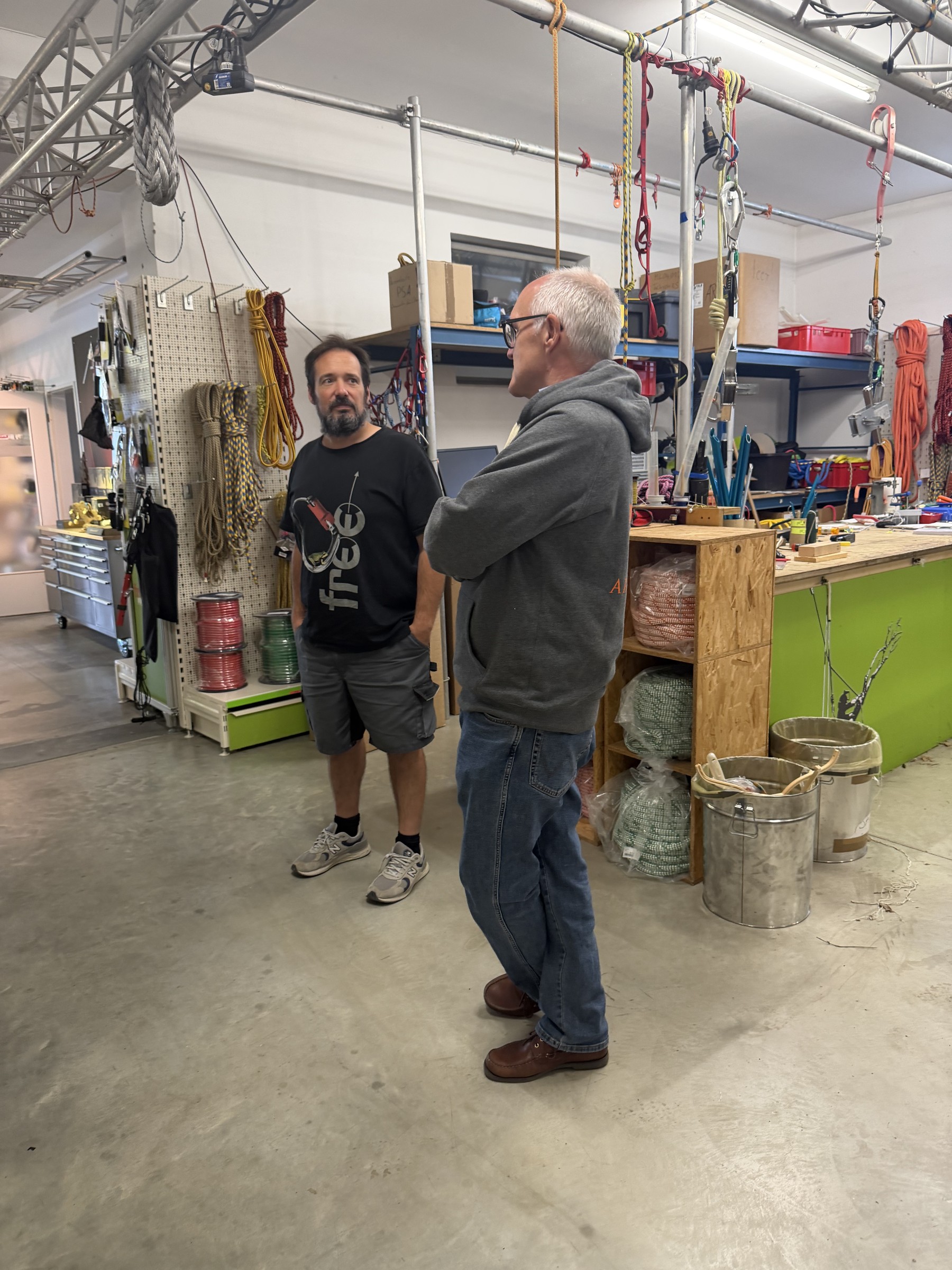
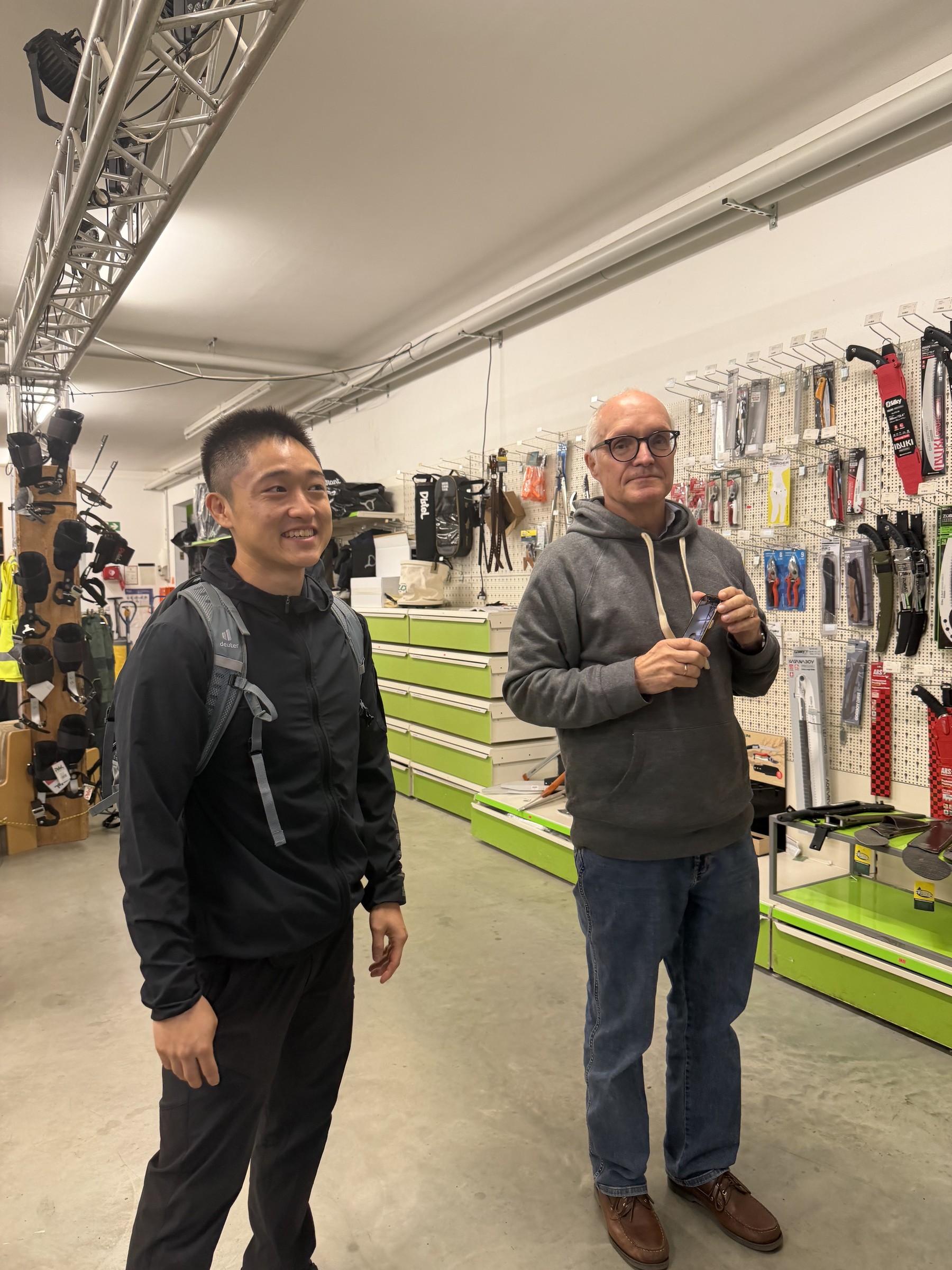
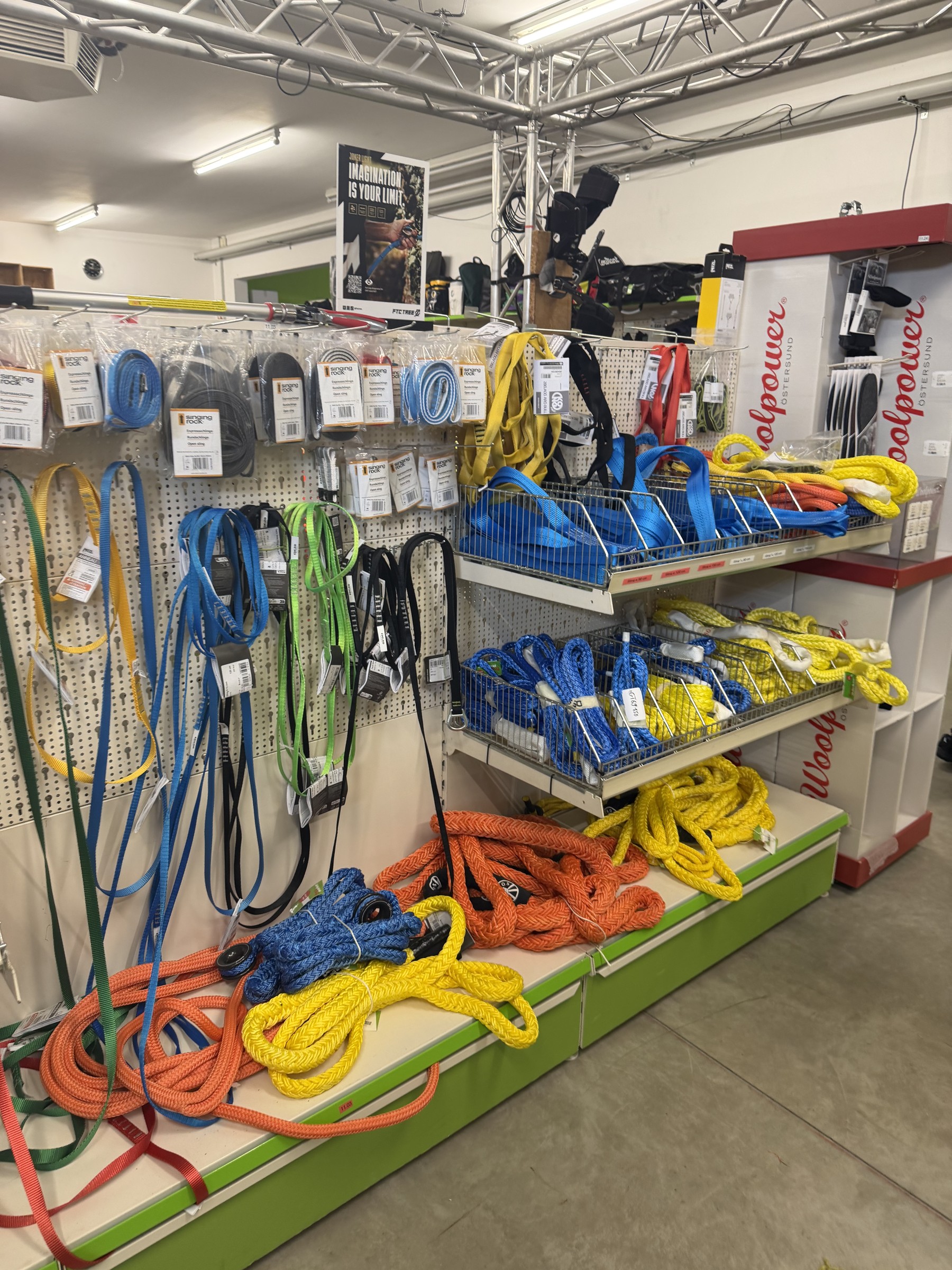
My first photographs of the day are from Freeworker in Gilching, near Munich. Freeworker has supplied tree climbing and tree care equipment since 1999, and I have ordered from it many times from Japan. Until that morning, it had been a website and a box at my door.
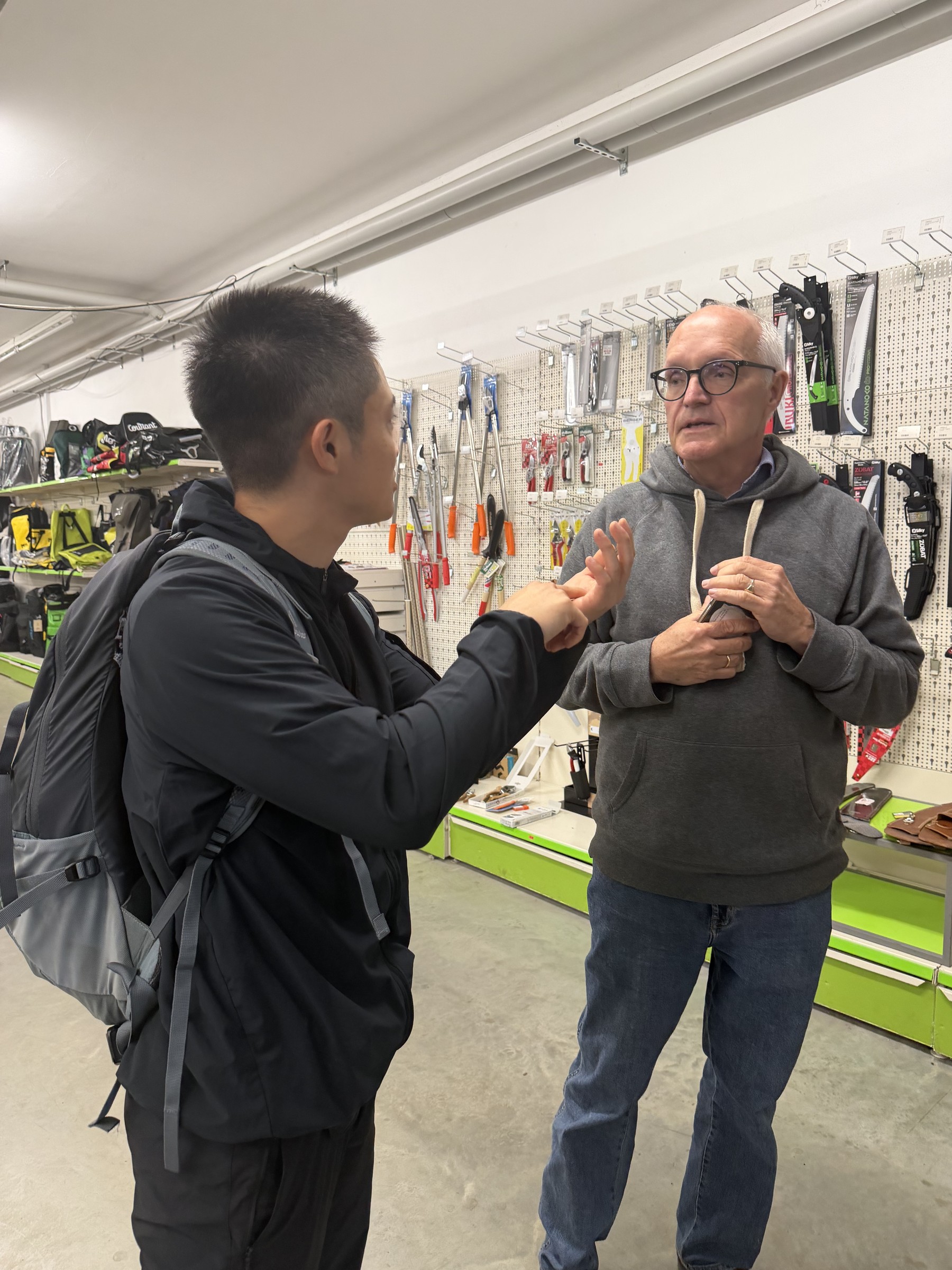
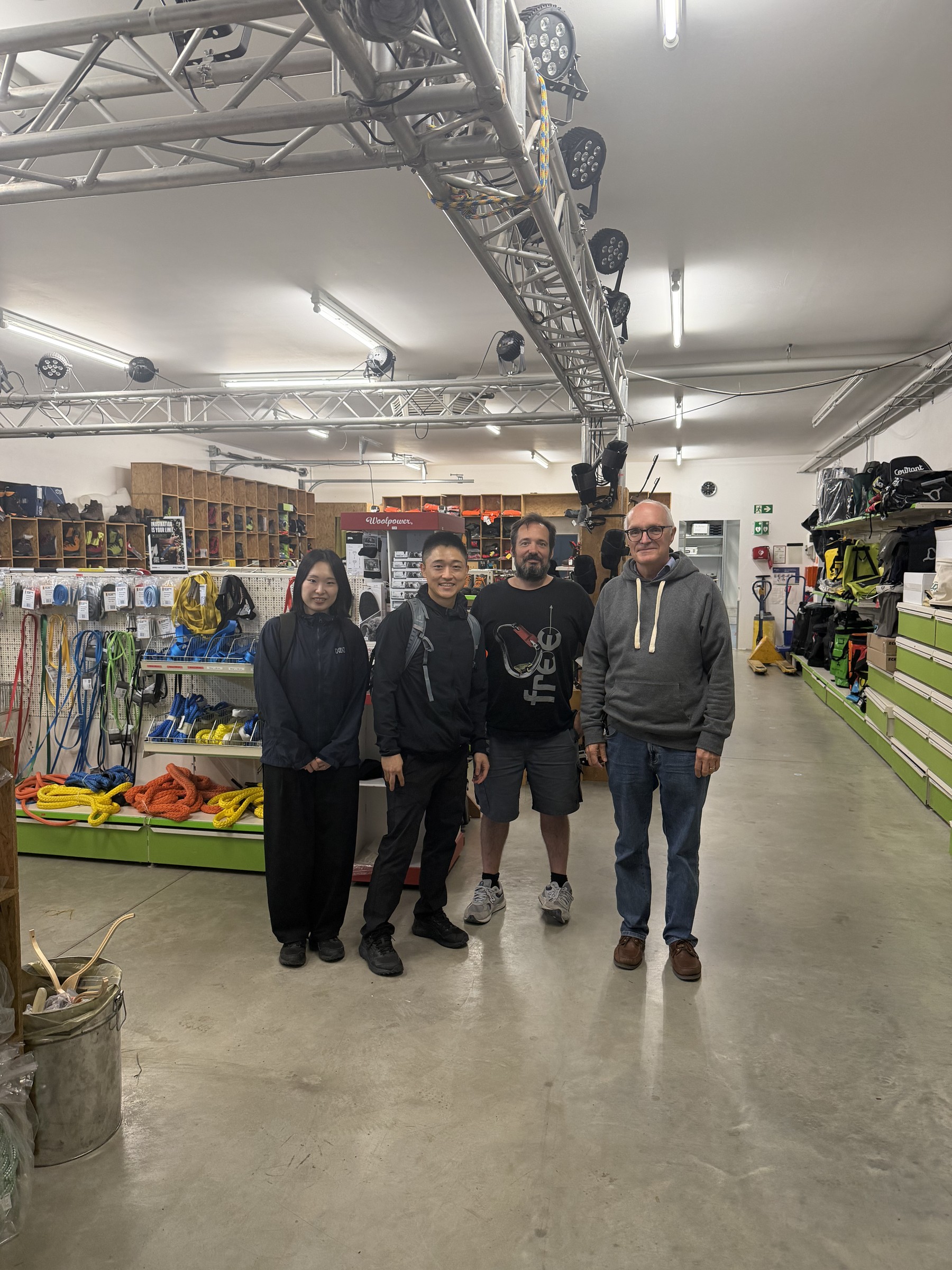
That morning it became people. Several of my photographs from the shop are not of products at all, but of conversations: Ingo with the staff, Ingo with me, and a group photograph in the aisle. The shop was being renovated, so we walked through a temporary sales floor full of rope, hardware and saws. My host for the day talked with the staff as we went.
Behind the shop
Holger Fink, Freeworker’s COO, showed us the warehouse and distribution side of the business. Photography was not allowed in the warehouse, so I have no pictures of it, and I will describe Freeworker properly in a separate article.
What I can say here is what I wrote down afterwards: logistics is the foundation of the business; a good supplier does not only sell, but also advises, trains and supports competitions; and the choice of equipment shapes the quality of the work.
More than a shop
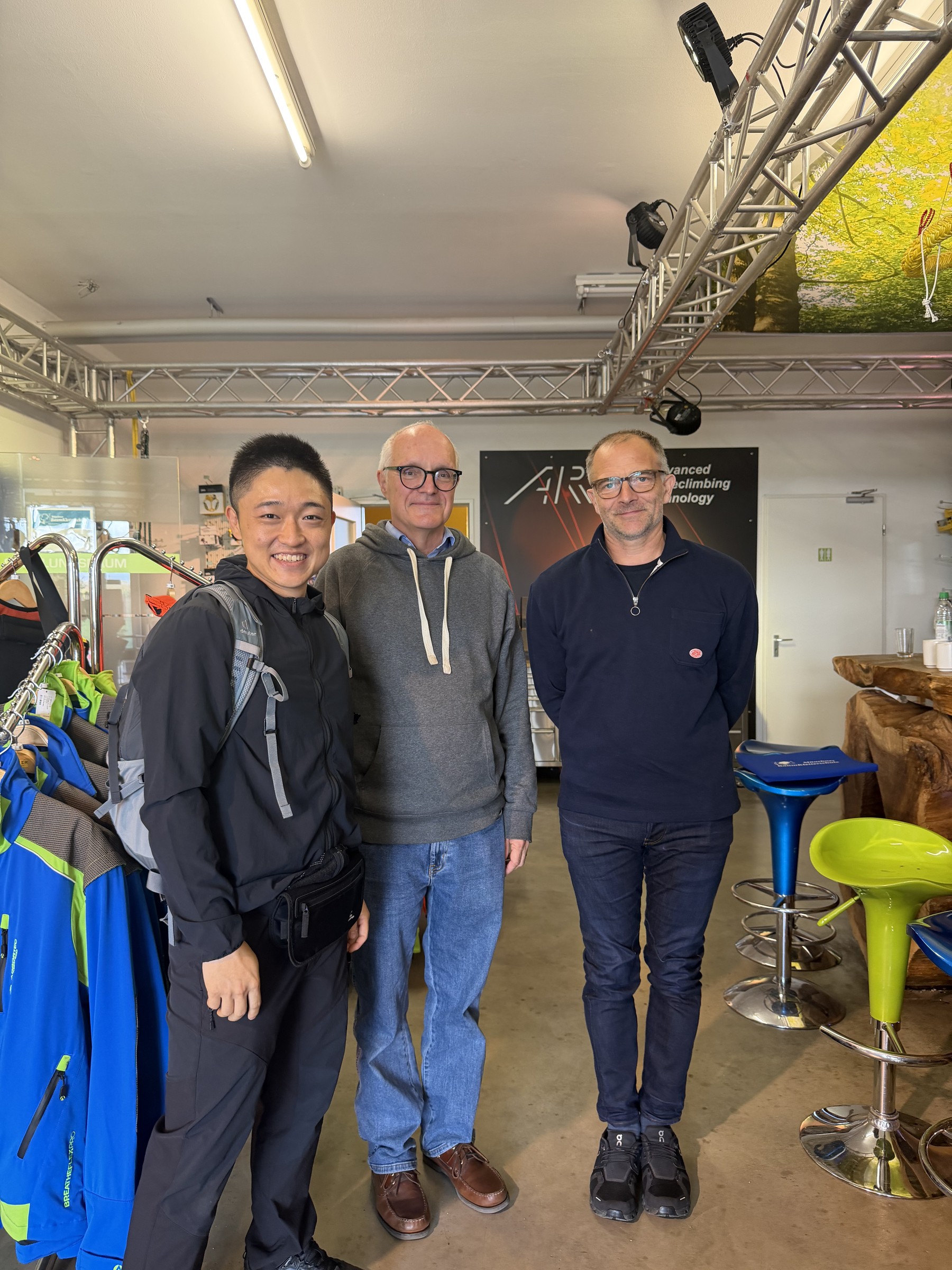
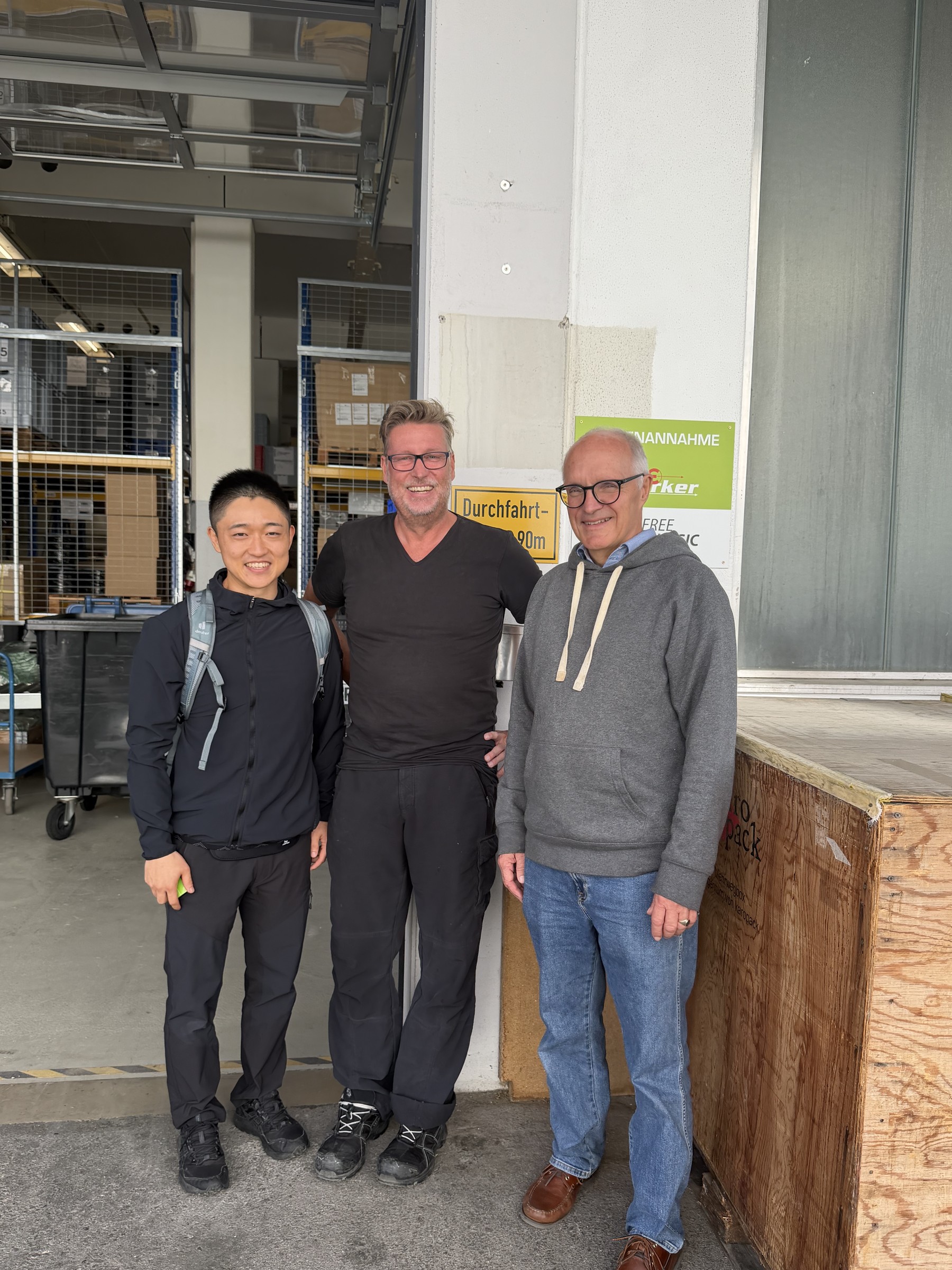
The privacy policy of the Münchner Baumkletterschule, a Munich tree climbing school, lists Freeworker, Freelogic and MBKS, the company that runs the school, together as one group. In the photographs, the building next to the shop carries the Freelogic name, and a sign for the climbing school stood at the shop entrance. Even before the warehouse tour, the layout of the site matched what I learned on the tour: a supplier here sits beside a logistics business and a climbing school.
From a catalogue to people
From Japan, a supplier is a catalogue. That morning it was a shop floor, a warehouse tour and a group photograph. The three lessons above are what I wrote down; the photographs are the record of the people who taught them.
Midday — in the Arbocare colours
A shirt and a hoodie
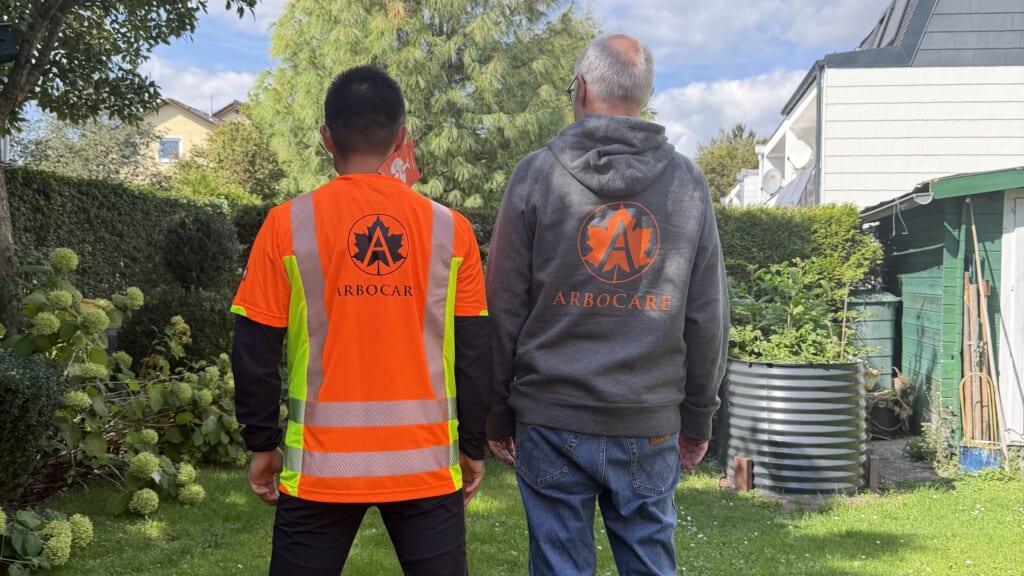
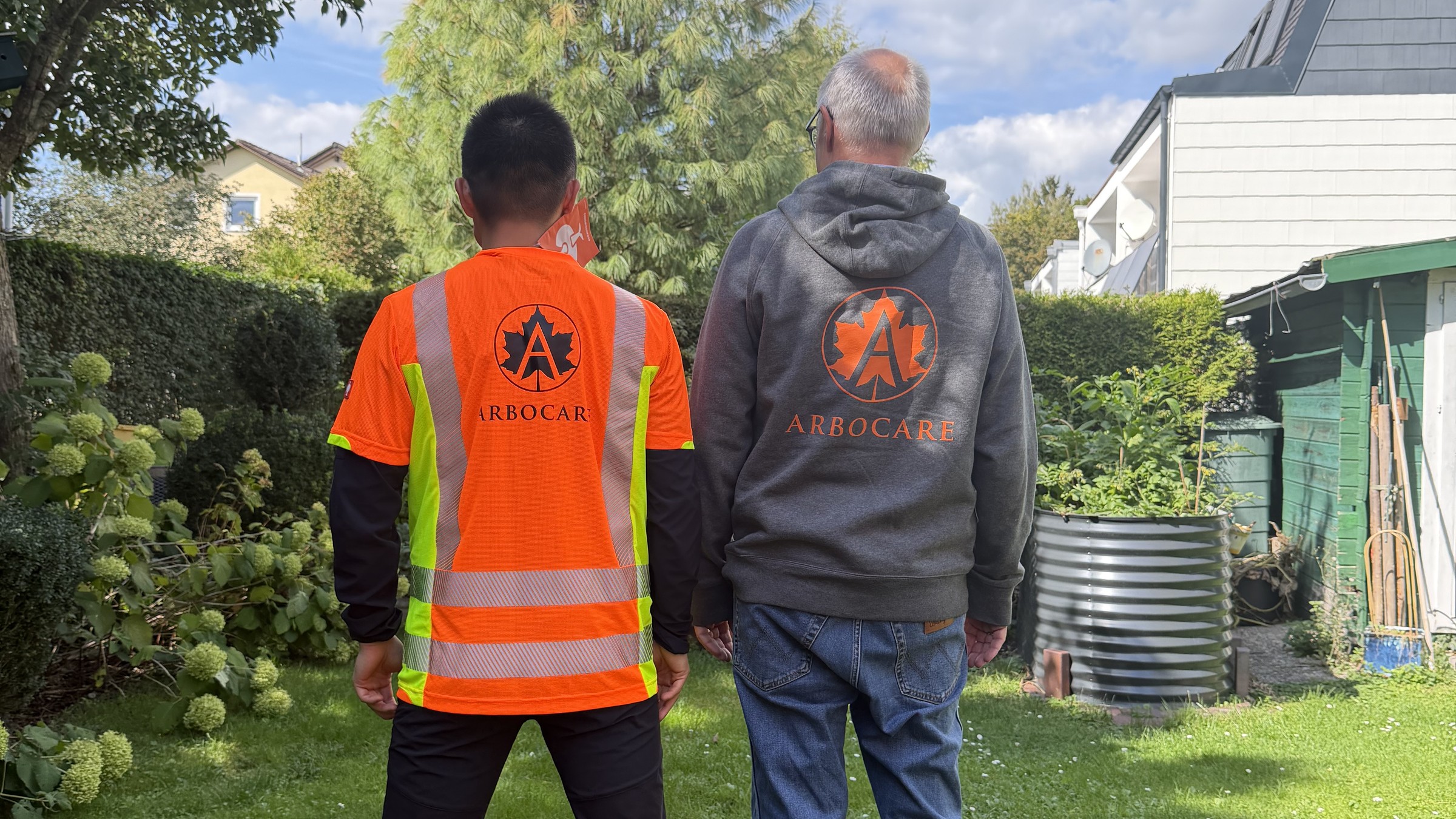
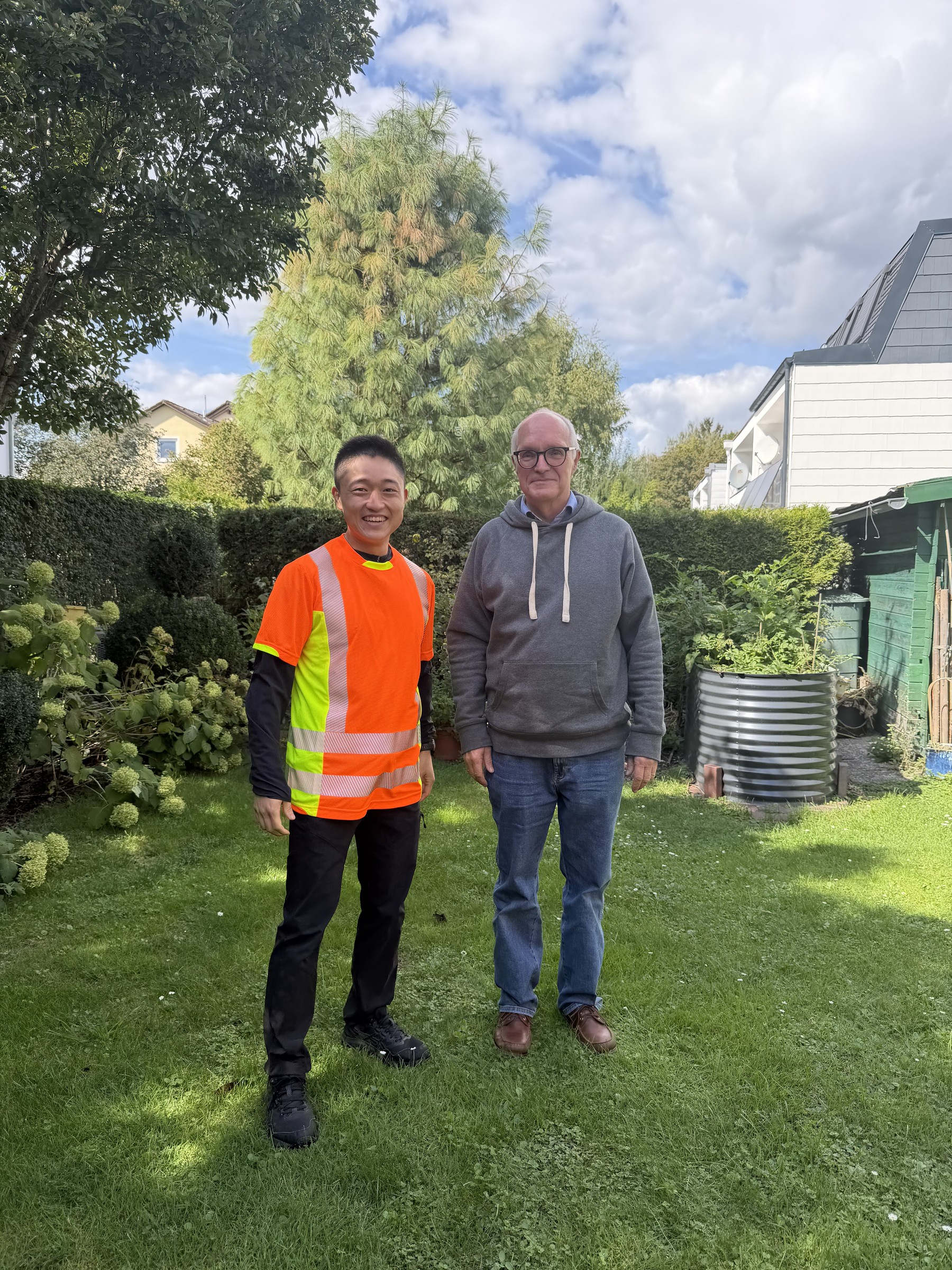
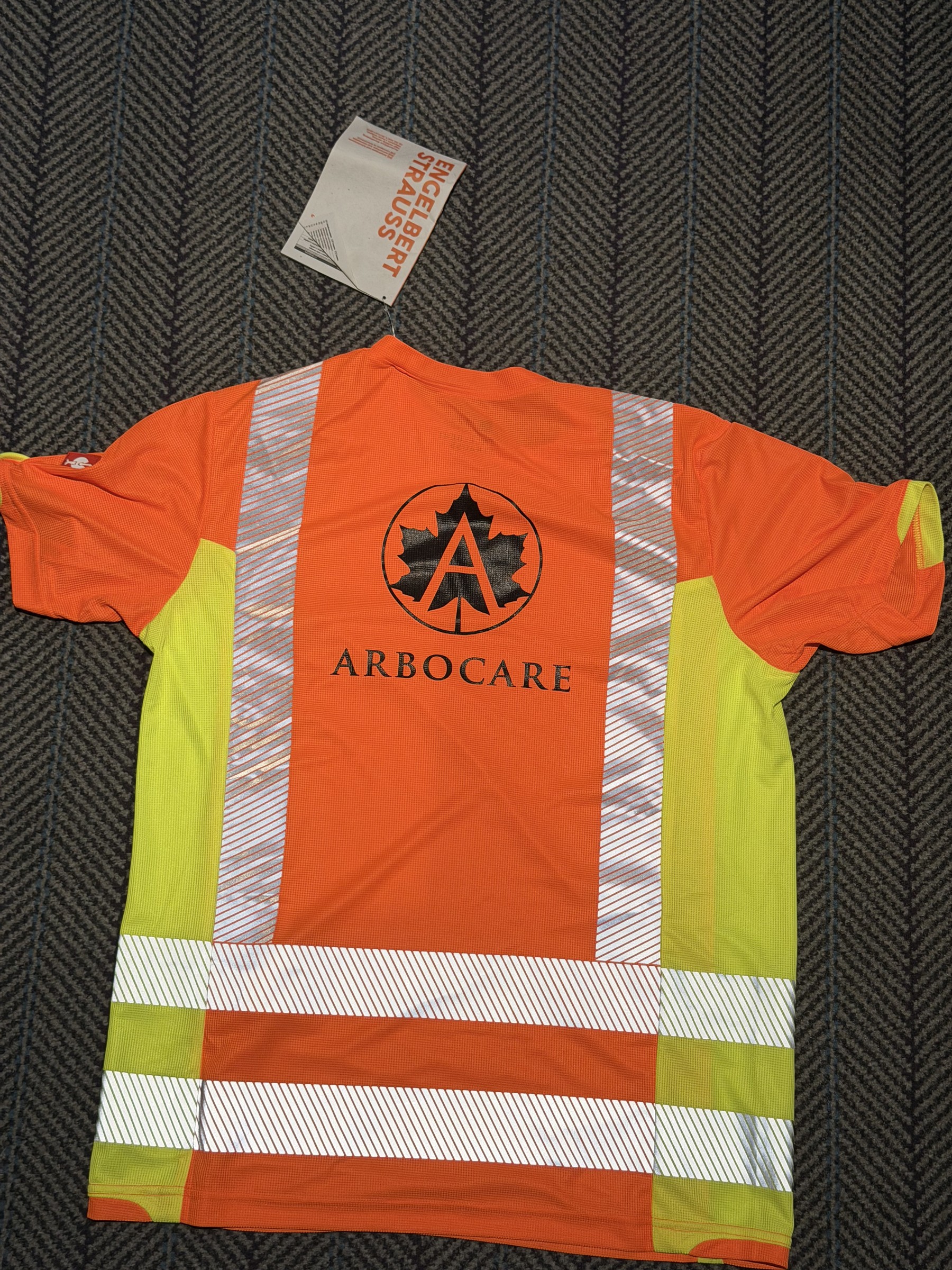
Shortly after midday, in a garden, I was wearing an orange Arbocare hi-vis shirt beside Ingo von Wurmb in his Arbocare hoodie. The photographs from that moment show a visitor from Japan in a German crew’s colours. On both backs is the same logo, a maple leaf with a letter A cut into it, above the word ARBOCARE.
Afternoon — one stop at a garden centre
Pflanzen-Kölle
After midday, Ingo took me to Pflanzen-Kölle in Munich, a garden centre chain whose horticultural business dates to 1818, when David Kölle founded it. The company today describes 13 garden centres across Germany with about 1,500 employees, and its headquarters are in Heilbronn.
For an arborist, a garden centre is upstream of the work: the trees that crews look after for decades are first chosen here, in a pot.
Pflanzen-Kölle sits in a large market. Industrieverband Garten (IVG), the German garden industry association, puts the German garden market in 2025 at around €19.7 billion, a provisional figure. In Japan, the Japan DIY Homecenter Association estimates the whole home-centre industry at ¥4.013 trillion in 2025, and in its 2024 survey of 21 responding companies, gardening supplies made up 8.2% of sales. The two numbers measure different things, but they help explain why a dedicated garden centre felt like a destination of its own.
Forest trees for home gardens
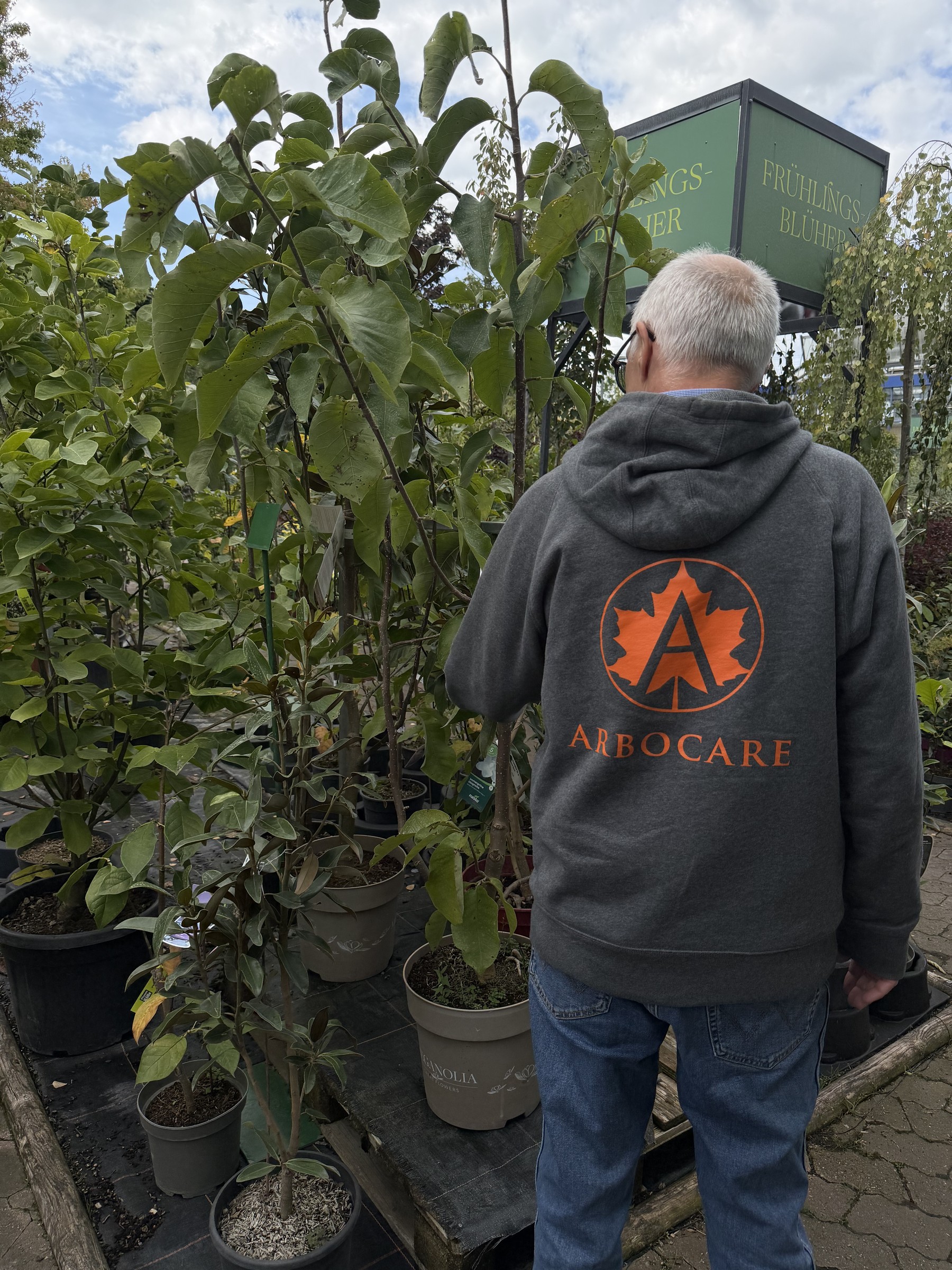
In the outdoor tree aisle, horse chestnut (Aesculus hippocastanum), English oak (Quercus robur) and weeping beech (Fagus sylvatica ‘Pendula’) were for sale to home gardeners. These grow large: a Bavarian forestry institute paper gives horse chestnut 25 to 30 m, the RHS gives English oak a mature height of 20 to 40 m, and it lists weeping beech as eventually higher than 12 m and wider than 8 m. Japan’s 2023 Housing and Land Survey gives an average site of 262.45 m² per detached house — about 16 m on a side, house included.
| Tree | Mature size (source) | Against a 16 m Japanese plot |
|---|---|---|
| English oak | 20–40 m tall (RHS) | Its height alone exceeds the plot’s width |
| Horse chestnut | 25–30 m tall (LWF Bavaria) | Taller than the plot is wide |
| Weeping beech | Over 12 m tall, over 8 m wide (RHS) | Half the plot or more |
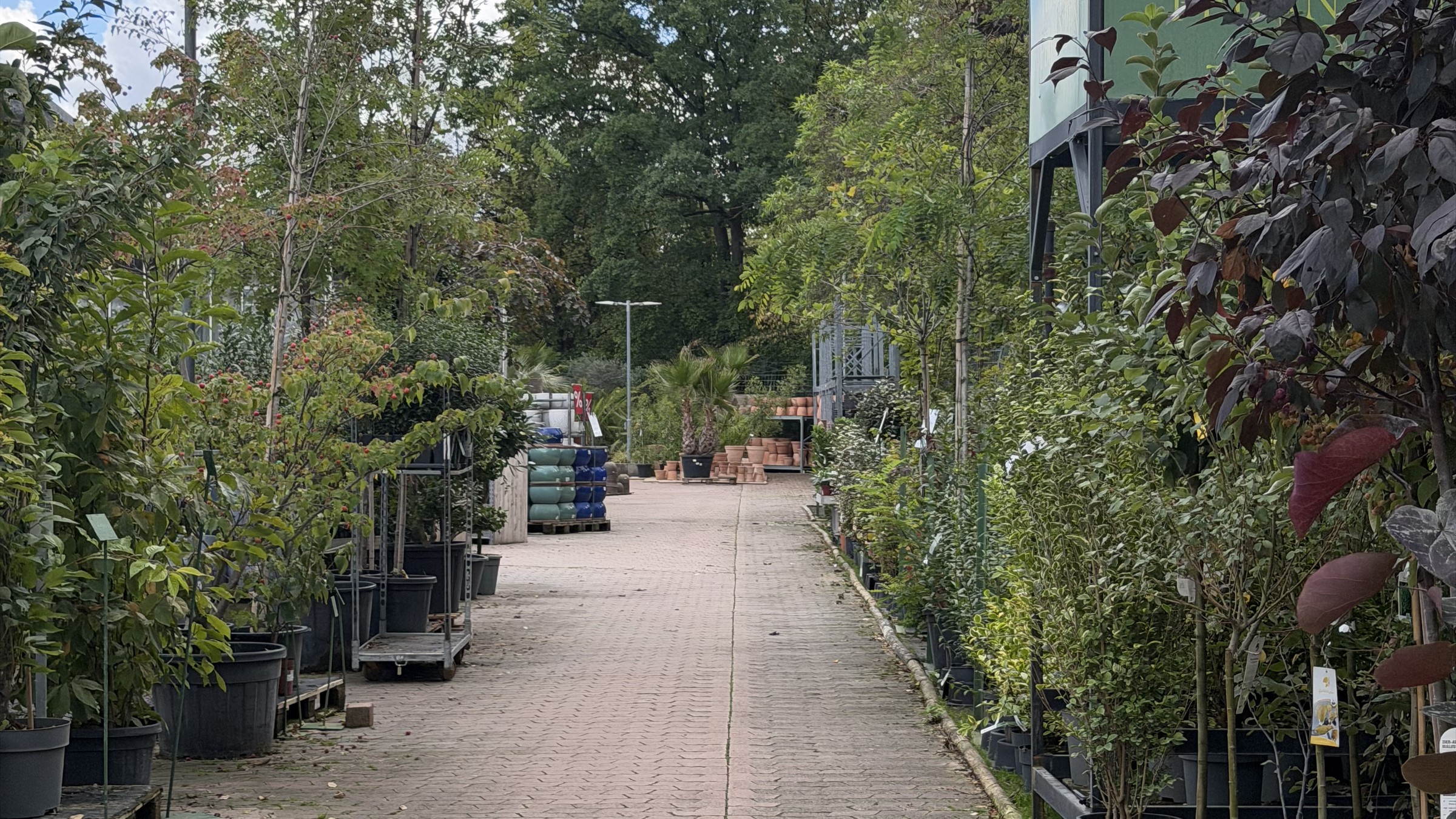
What comes with a big tree
The two largest species come with known problems in Bavaria. The Bavarian State Institute of Forestry (LWF) reports extensive leaf damage on horse chestnut from the leaf miner Cameraria ohridella, and it monitors the oak processionary moth, Thaumetopoea processionea, on oaks including English oak; the caterpillar’s hairs are an acute health hazard to people. German cities are cautious with both: the GALK street tree list, used by municipal parks departments, rates horse chestnut and English oak as suitable only with restrictions, and notes that horse chestnut is sensitive to de-icing salt. A homeowner who buys an oak in a pot is also, decades later, a likely client for a crew like Arbocare’s.
The locked cabinet
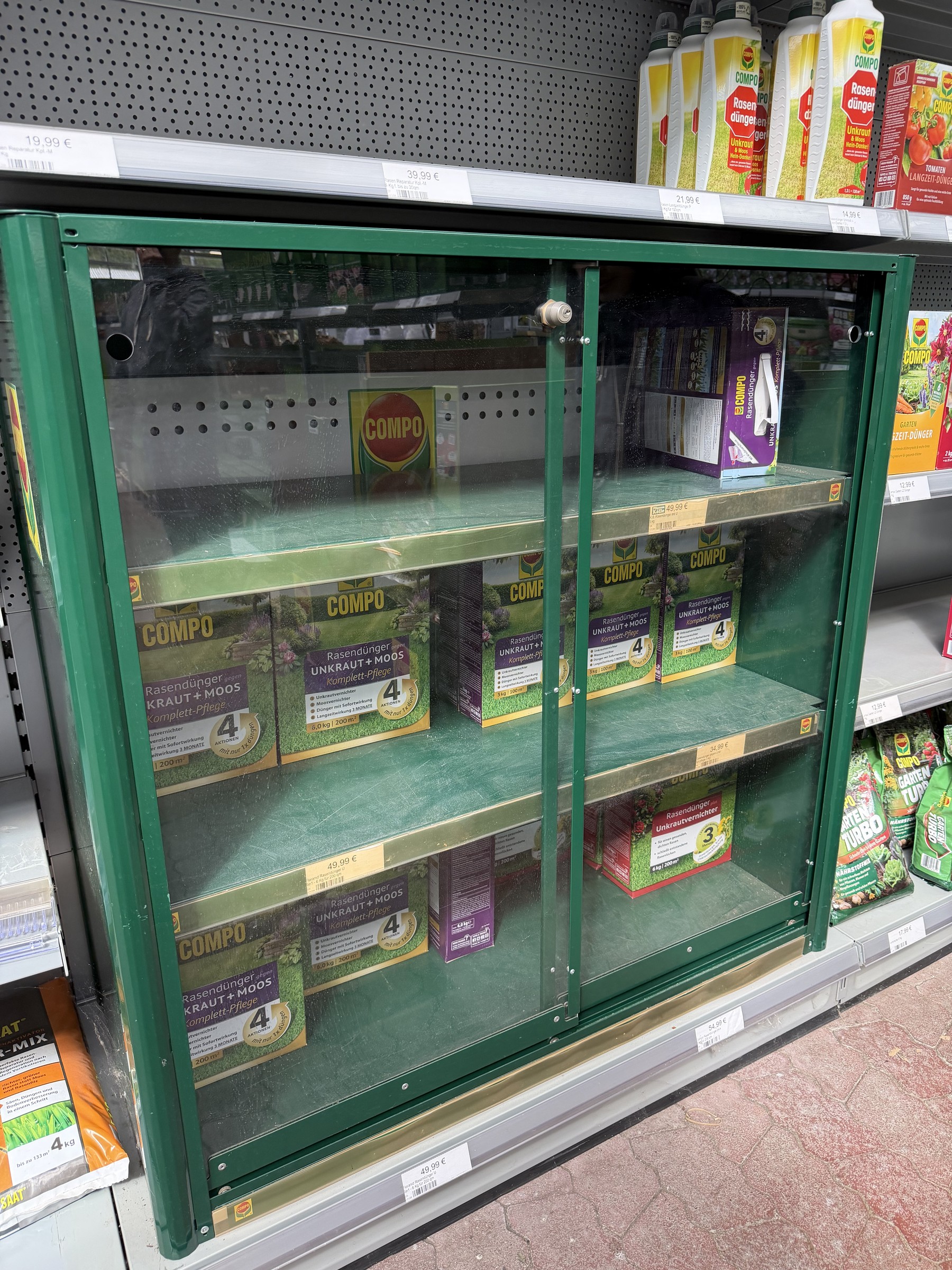
In the chemistry aisle, lawn feeds with weed control stood in a locked glass cabinet, while organic feeds from Neudorff and the store’s own brands sat on open shelves. Germany’s Plant Protection Act (PflSchG §23(2)) bans selling plant protection products through vending machines or any other form of self-service, and requires the seller to advise on proper use. Lawn feeds combined with a weed killer can be approved herbicides — the federal BVL database lists one such product as a herbicide — and a locked cabinet is one visible way to keep products like these out of self-service. In Japan, the Pesticide Control Act asks sellers to notify the prefecture for each place of sale (Art. 17), and in the ministry materials checked for this article I found no equivalent self-service ban. It was a small scene, but it matched the theme of the day: in Germany, many rules about green work are written down and visible.
Koi, batteries, Swiss shears
I learned that Japanese garden culture is not central to how Germans think about their own gardens, but koi are popular. I was told that ordinary koi sell for around €10 to €50 and high-grade fish for hundreds or thousands of euros. Niigata Prefecture describes parts of Ojiya and Nagaoka as the birthplace of nishikigoi, and Japan’s Fisheries Agency puts nishikigoi exports in 2025 at ¥10 billion, ¥1.4 billion of it to the EU. Japanese trees travel less easily than fish: the EU generally prohibits pine plants for planting, and a separate regulation (2024/2852) allows certain dwarfed plants from Japan, including Japanese white pine and black pine, only under conditions such as at least two consecutive years in authorised nurseries before export. On a shelf of store-brand liquid feeds I also saw a bottle of bonsai fertiliser — Bonsai-Dünger — next to orchid and cactus feeds.
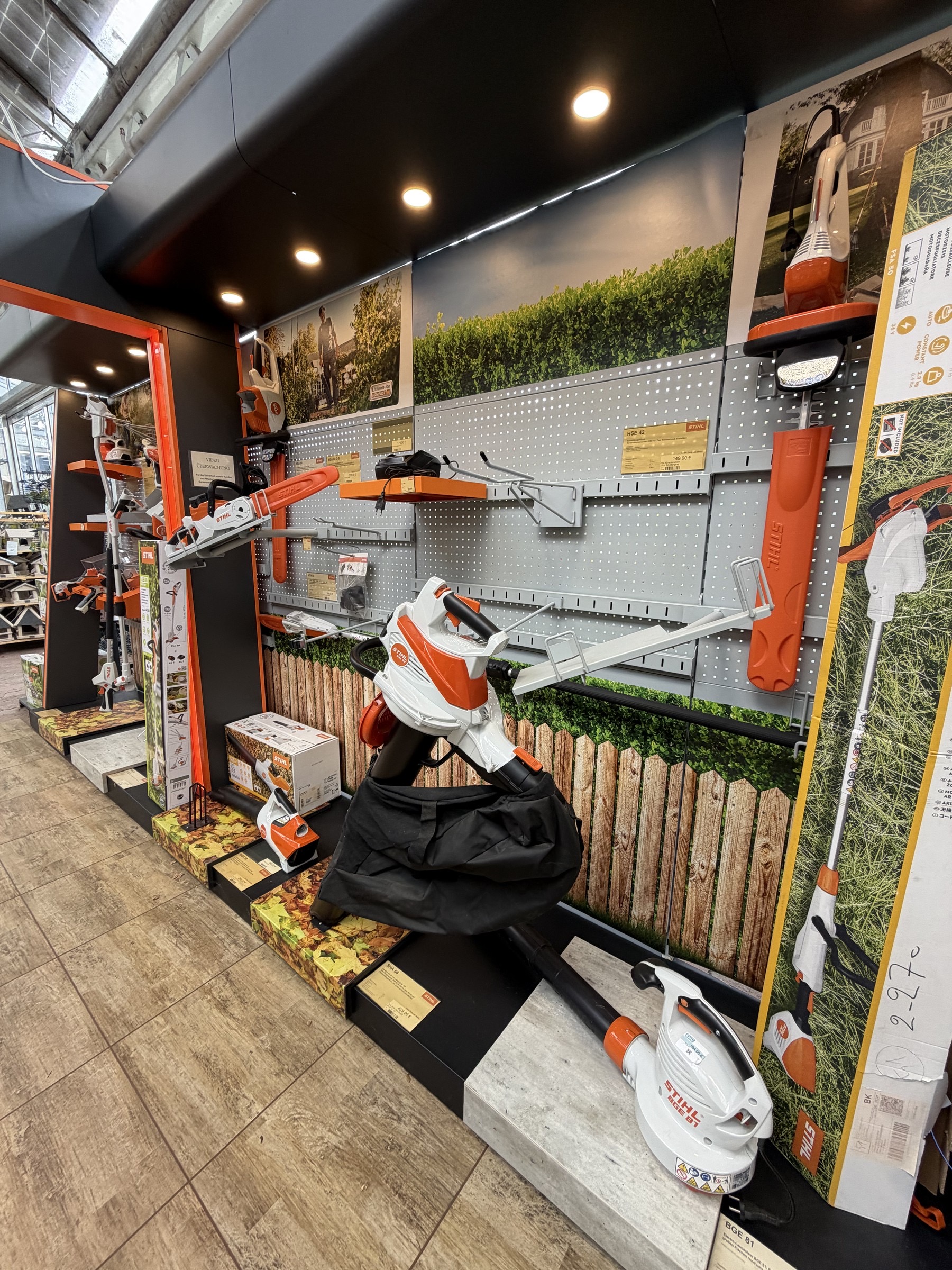
The garden centre’s STIHL section put battery machines at the front of its display. STIHL said that battery products made up 25 percent of its unit sales in 2024 worldwide, and around 60 percent in Germany and Switzerland. In Japan, the name I compare it with is Makita, which reported that cordless products made up 56% of its revenue in the year to March 2026. The two figures use different measures — STIHL counts units, Makita reports revenue — so they are not a ranking, but both show makers moving their ranges away from petrol. Among the hand tools, FELCO — founded in 1945 in Les Geneveys-sur-Coffrane, Switzerland — and GARDENA, founded in Ulm in 1961, had their own stands.
Late afternoon — the Arbocare crew at work
The sign at the edge of the job
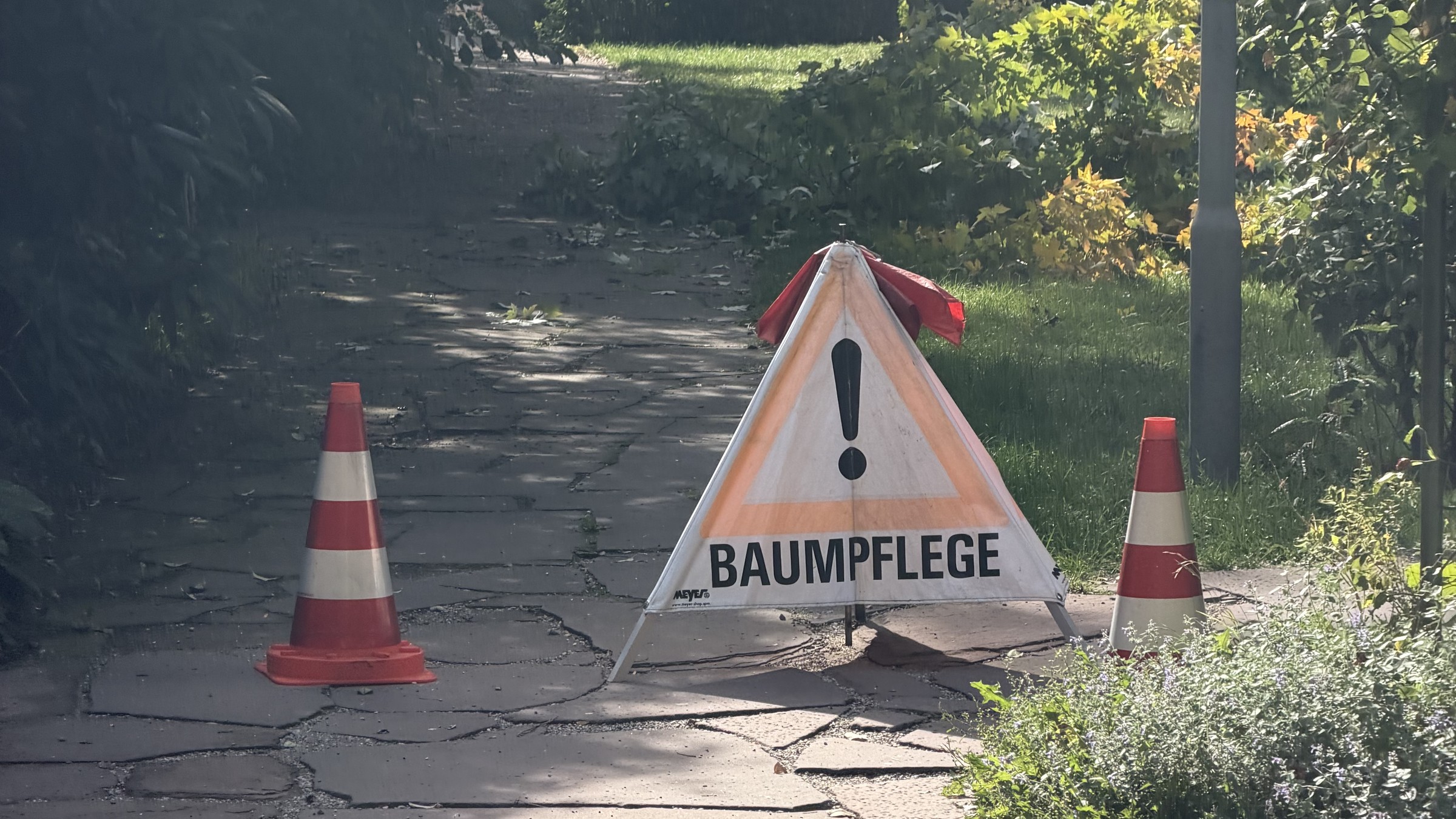
The last stop was an Arbocare job site in Bavaria. The first thing I photographed was a warning triangle on a flagstone path, with one word on it: BAUMPFLEGE, tree care. Two cones stood beside it. Further along, on a paved footpath, a second triangle read BAUMARBEITEN — tree works — with its own cones.
The crew
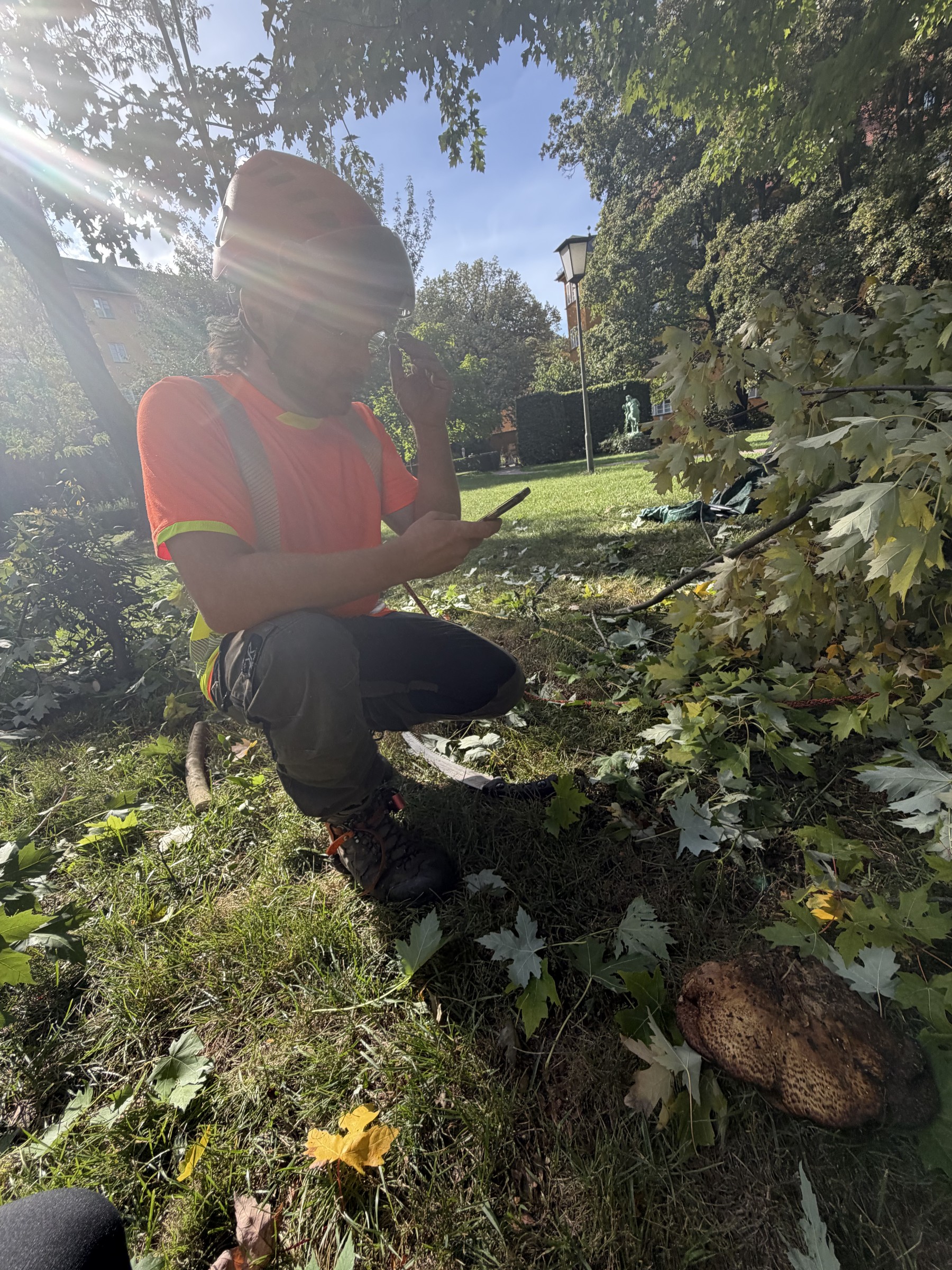
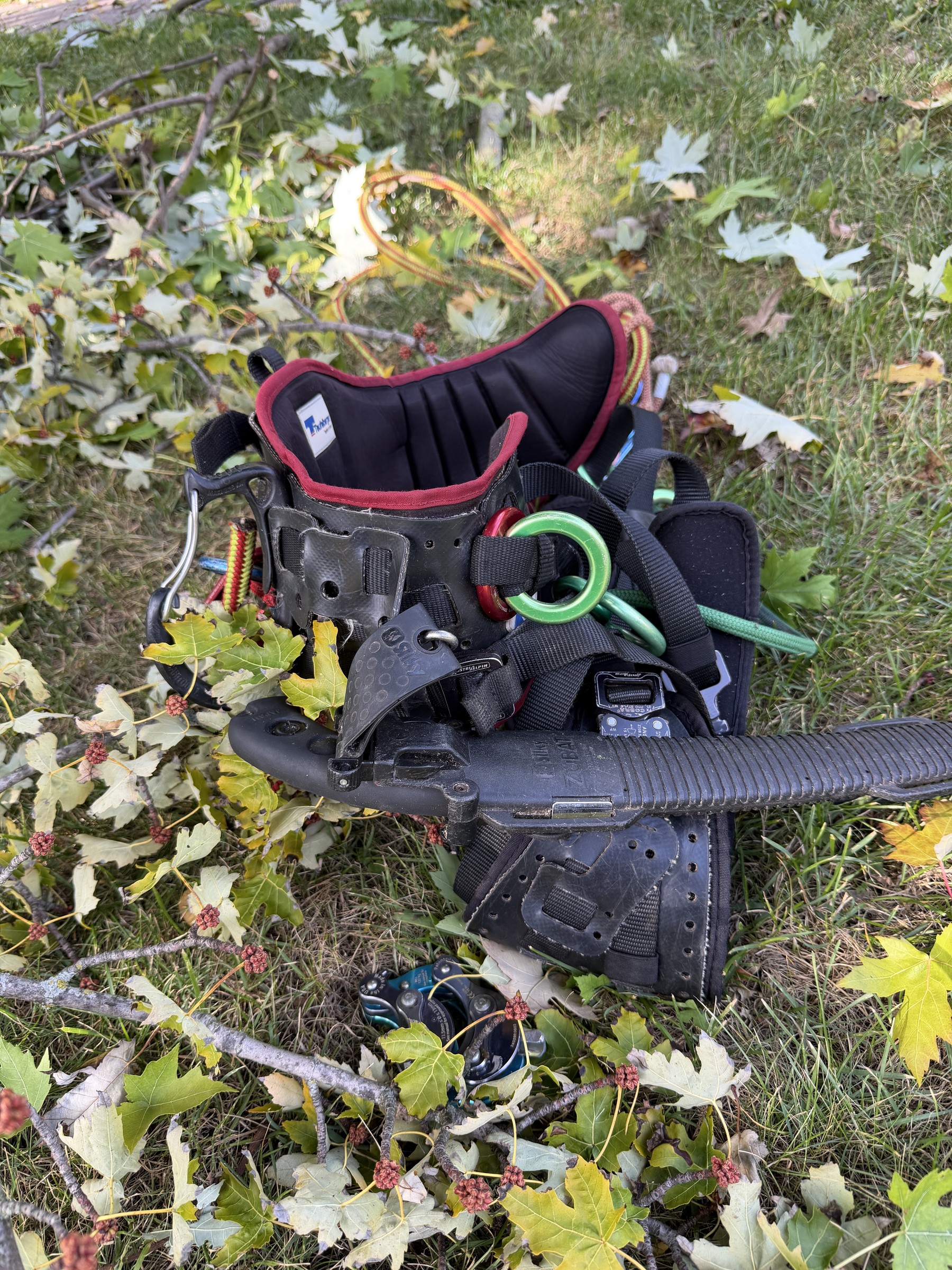
My photographs show a broadleaf tree above a lawn, with cut branches and leaves on the grass. An arborist in orange hi-vis and a climbing helmet crouched among the cuttings, and a climbing saddle lay on the brash.
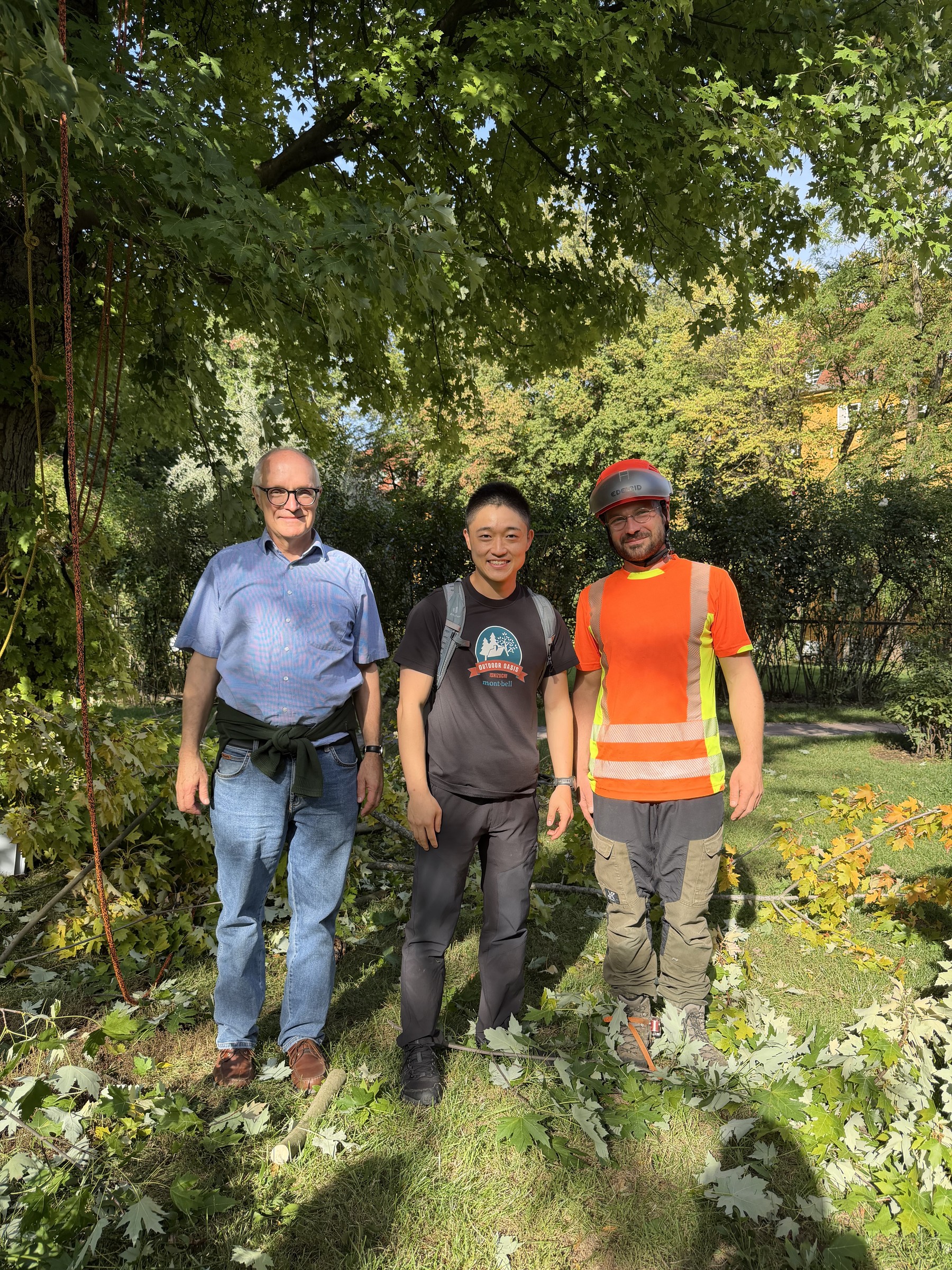
I saw only part of the job, and I will not describe the tree or the client’s site. What I can share are the people: a crew in the same orange I had worn earlier, and a photograph taken together under the tree near the end of my visit.
What I learned from my hosts
Clear qualifications, clear standards
The difference from Japan that I noted most clearly was how well defined German tree work is. The qualifications are named and examined: the European Tree Worker and European Tree Technician of the European Arboricultural Council, the FLL-certified tree inspector (FLL-zertifizierter Baumkontrolleur), and the publicly regulated Geprüfter Fachagrarwirt Baumpflege. The technical standards are written down too, in documents such as ZTV-Baumpflege.
Reading up afterwards
Afterwards, I looked up the documents behind the titles. Each one is an exam with a defined content:
– European Tree Worker (ETW). The EAC’s exam rules (January 2021) include a written theory test, an oral exam, a tree identification test and a practical exam, either climbing or with an aerial platform. – European Tree Technician (ETT). For people in junior or middle management or a supervisory role; the exam combines a written paper with management exercises in tree inspection and in the economic, legal and social side of the work. The EAC lists certification centres in Germany for both ETW and ETT. – FLL-certified tree inspector. Awarded after an independent examination with a written theory part and an oral practical part. – Geprüfter Fachagrarwirt Baumpflege. A public further-training qualification under a federal ordinance in force since 1 January 2021, also titled Bachelor Professional Baumpflege. Candidates need, for example, an apprenticeship in forestry, horticulture or agriculture, or another apprenticeship plus three years of relevant practice, or five years of practice. The ordinance assumes at least 1,200 hours of learning.
ZTV-Baumpflege itself — Additional Technical Contractual Conditions and Guidelines for Tree Care, 2017 edition — takes effect when it is made part of a contract. So when Arbocare’s website says it works to the ZTV, it is naming the rulebook it is ready to be measured against.
In Japan, the tree-specific certifications I work with — jumoku-i (樹木医) and the street tree pruner (gairoju sentei-shi, 街路樹剪定士) — are run by a foundation and an industry association. They are demanding, and our company works with qualified jumoku-i, though I am not one myself. The difference I heard about in Bavaria was in the shape of the system: more rungs, each tied to a named exam.
A culture of inspection
The other theme was Verkehrssicherungspflicht, the duty of a tree’s owner to take reasonable care that it does not endanger people passing by. It grows out of general tort law (BGB §823) and has been defined by the courts. Because of it, inspection and record-keeping are an everyday part of tree care in Germany. Germany’s Federal Court of Justice has said that how often trees must be inspected cannot be answered in general — it depends on the tree’s age, condition and location — and the FLL’s inspection guideline (2020 edition) notes that one inspection a year is usually sufficient.
The intervals themselves are set out in a 2021 model instruction from GALK, the conference of German municipal garden directors, and the association of municipal insurers, reproducing the FLL table:
| Tree’s condition, life stage | Lower safety expectation | Higher safety expectation |
|---|---|---|
| Healthy or slightly damaged, mature | Every 3 years | Every 2 years |
| Healthy or slightly damaged, ageing | Every 2 years | Once a year |
| More seriously damaged | Once a year | Once a year |
It is often said that German courts require two inspections a year, in leaf and out of leaf. The original rulings are more careful: in 2004 (III ZR 225/03) the Federal Court of Justice noted that some higher regional courts held that view but left the question open, and later the same year (V ZR 33/04) it said the frequency cannot be answered in general. In Japan, the national guidance — the road greening technical standard, the NILIM manual on preventing street tree failure (Technical Note No. 1059, 2019), and the draft guideline for urban parks — builds inspection into the management of public roads and parks.
The phrase I used afterwards, when I wrote about the visit on LinkedIn, was this: in Germany, trees are treated as urban assets to be professionally managed and protected. Arbocare’s four services — care, inspection, assessment, inventory — are that idea turned into a business.
| What I heard about in Bavaria | Example | Japan, in my work |
|---|---|---|
| Named qualifications | ETW, ETT, FLL-certified tree inspector, Fachagrarwirt Baumpflege | Jumoku-i, street tree pruner |
| Written contract standard | ZTV-Baumpflege (FLL, 2017 edition) | Specifications set client by client |
| Owner’s duty of care | Verkehrssicherungspflicht (BGB §823) | Clearest for public roads, parks (State Redress Act Art. 2) |
| Routine records | Tree inventory (Baumkataster) as a service | Varies by client |
What I took home to Tokyo
How a visit can be hosted
The first thing I took home is not technical. A firm in Bavaria opened its day to an arborist from Japan, from the first email to the last photograph: the supplier in the morning, the garden centre after midday, the job site in the late afternoon. It is a model of how a visit from abroad can be hosted.
Name what we do
The second is about language. Arbocare names its work in four words, and German tree care names its people by their qualifications. In Tokyo we do much of the same work, including diagnosis with resistance drilling and sonic tomography, which I have written about in How a Resistograph works. Naming it as clearly as my hosts do would help our clients see what they are buying. Arbocare’s list — care, inspection, assessment, inventory — is a simple template for that, and one that any client can read in a few seconds.
Keep the record
The third is the record. As Japan’s postwar street trees age — a problem I described in Japan’s falling trees crisis — writing down who looked at which tree, when, and what they decided will matter more. Japan already has a legal root for this on public land: Article 2 of the State Redress Act makes the state or a public body liable when a defect in the installation or management of a road, river or other public facility causes damage. What I heard about in Bavaria is a habit of routine records that turns such a duty into everyday practice, tree by tree. Comparing Japanese and European approaches to diagnosis is something I have explored before in VTA vs jumoku-i.
Thank you
To Ingo von Wurmb, for writing first and for giving me a whole day. To Moritz von Wurmb and the Arbocare team, for letting a visitor from Japan into their work, and for the photographs we took together. To Holger Fink and the Freeworker team, for turning a supplier I knew only by parcel into people I have met.
The trade is small enough that arborists can meet across continents, and every such meeting teaches something.
Frequently asked questions
Who are Arbocare? Arbocare is a tree care business in Freising, Bavaria, owned by Moritz von Wurmb. Its website lists tree care, tree inspection, tree assessment and tree inventory, states membership of ISA Germany, and says it works according to the ZTV-Baumpflege guidelines.
Who is Ingo von Wurmb? A former BMW engineer who supports Arbocare. He contacted me before my trip and guided me for a full day in September 2026.
What is Pflanzen-Kölle? A German garden centre chain whose horticultural business dates to 1818. It runs 13 garden centres across Germany with about 1,500 employees, with headquarters in Heilbronn. My hosts took me to its Munich store.
What is Freeworker? A supplier of tree climbing and tree care equipment in Gilching near Munich, in business since 1999. I visited its shop and, guided by Holger Fink, its warehouse and distribution side. A separate article covers that visit.
What is Verkehrssicherungspflicht? The duty of a tree owner in Germany to take reasonable care that a tree does not endanger people using a road, path or public space. It derives from general tort law (BGB §823) and has been defined by the courts.
How often are trees inspected in Germany? There is no single number. The Federal Court of Justice has said frequency depends on the tree’s age, condition and location, and the FLL inspection guideline says one inspection a year is usually sufficient.
Which qualifications do German arborists hold? Common titles include European Tree Worker and European Tree Technician (European Arboricultural Council), FLL-certified tree inspector, and Geprüfter Fachagrarwirt Baumpflege.
Sources
– Arbocare, company website: https://www.arbocare.de/ — checked 2026-11-13 – Stadt Freising, Wirtschaftsstandortkonzept Endbericht 2025: https://www.freising.de/media/user_upload/66_Wirtschaftsfoerderung_Liegenschaften/6610_pdf_Files/wirtschaftsstandortkonzept-freising-endbericht-2025.pdf — checked 2026-11-13 – TUM School of Life Sciences, Campus Weihenstephan: https://www.ls.tum.de/ls/campus/ — checked 2026-11-13 – Bayerische Staatsbrauerei Weihenstephan, History: https://www.weihenstephaner.de/en/our-brewery/history — checked 2026-11-13 – FLL, ZTV-Baumpflege 2017: https://shop.fll.de/de/ztv-baumpflege-zusaetzliche-technische-vertragsbedingungen-und-richtlinien-fuer-baumpflege-2017-broschuere.html — checked 2026-11-13 – FLL, certified tree inspector: https://www.fll.de/zertifizierungen/fll-zertifizierter-baumkontrolleur/ — checked 2026-11-13 – European Arboricultural Council, ETW and ETT: https://www.eac-arboriculture.com/etw-intro.aspx and https://www.eac-arboriculture.com/ett-intro.aspx — checked 2026-11-13 – Verordnung über die Prüfung zum Geprüften Fachagrarwirt Baumpflege: https://www.gesetze-im-internet.de/fabaumpflprv/BJNR264300020.html — checked 2026-11-13 – BGB §823: https://www.gesetze-im-internet.de/bgb/__823.html — checked 2026-11-13 – Bundesgerichtshof, judgment of 2 July 2004, V ZR 33/04: https://juris.bundesgerichtshof.de/cgi-bin/rechtsprechung/document.py?Art=pm&Blank=1&Datum=2004-7&Gericht=bgh&file=dokument.pdf&linked=urt&nr=30376 — checked 2026-11-13 – FLL, Baumkontrollrichtlinien 2020 (sample): https://shop.fll.de/de/downloadable/download/sample/sample_id/69/ — checked 2026-11-13 – State Redress Act (Japanese): https://laws.e-gov.go.jp/law/322AC0000000125 — checked 2026-11-13 – Japan Greenery Research and Development Center, jumoku-i (Japanese): https://www.jpgreen.or.jp/treedoctor/treedoctor1.html — checked 2026-11-13 – Japan Landscape Contractors Association, street tree pruner (Japanese): https://www.jalc.or.jp/training/sentei/ — checked 2026-11-13 – Pflanzen-Kölle, our nursery: https://www.pflanzen-koelle.de/unternehmen/unsere-gaertnerei/ — checked 2026-11-13 – Pflanzen-Kölle, careers site: https://karriere.pflanzen-koelle.de/ — checked 2026-11-13 – LWF Bavaria, contributions on horse chestnut (PDF): https://www.lwf.bayern.de/mam/cms04/service/dateien/w48-beitraege-zur-rosskastanie.pdf — checked 2026-11-13 – RHS, Quercus robur: https://www.rhs.org.uk/plants/14294/quercus-robur/details — checked 2026-11-13 – RHS, Fagus sylvatica ‘Pendula’: https://www.rhs.org.uk/plants/91418/fagus-sylvatica-pendula/details — checked 2026-11-13 – Statistics Bureau of Japan, 2023 Housing and Land Survey (via Ibaraki Prefecture, Japanese): https://www.pref.ibaraki.jp/kikaku/tokei/fukyu/tokei/betsu/zyutaku/zyu-tochi-r05/index.html — checked 2026-11-13 – Niigata Prefecture, nishikigoi (Japanese): https://www.pref.niigata.lg.jp/sec/suisan/1229630479974.html — checked 2026-11-13 – Fisheries Agency, nishikigoi exports (Japanese, PDF): https://www.jfa.maff.go.jp/j/kakou/export/attach/pdf/export2-7.pdf — checked 2026-11-13 – STIHL, financial press conference 2025: https://corporate.stihl.de/de/presse/presseinformationen-unternehmen/2025/stihl-bilanz-pk-2025 — checked 2026-11-13 – Makita, results presentation for the year to March 2026 (Japanese, PDF): https://www.makita.co.jp/ir/upload_file/m004-m004_01/20260512_pr.pdf — checked 2026-11-13 – FELCO, company history: https://www.felco.com/fr/pages/company-history — checked 2026-11-13 – GARDENA, about us: https://www.gardena.com/ch-de/c/ueber-gardena/ueber-uns — checked 2026-11-13 – Freeworker, company history: https://www.freeworker.de/unternehmen/freeworker/ — checked 2026-11-13 – Hochschule Weihenstephan-Triesdorf, Horticulture BSc: https://www.hswt.de/studium/studienangebot/bachelor/gartenbau — checked 2026-11-13 – FLL, Baumkontrollrichtlinien 2020: https://shop.fll.de/de/baumkontrollrichtlinien-richtlinien-fuer-baumkontrollen-zur-ueberpruefung-der-verkehrssicherheit.html — checked 2026-11-13 – GALK, model instruction for routine tree inspections (2021): https://galk.de/startseite/downloads/send/2-ak-stadtbaeume/711-muster-einer-dienstanweisung-fuer-regelkontrollen-von-baeumen-2021/ — checked 2026-11-13 – Bundesgerichtshof, judgment of 4 March 2004, III ZR 225/03: https://juris.bundesgerichtshof.de/cgi-bin/rechtsprechung/document.py?Art=pm&Blank=1&Datum=2004&Gericht=bgh&Sort=258&file=dokument.pdf&linked=urt&nr=28703 — checked 2026-11-13 – MLIT, Road Greening Technical Standard (Japanese): https://www.mlit.go.jp/road/sisaku/ryokuka/pdf/02.pdf — checked 2026-11-13 – NILIM Technical Note No. 1059 (Japanese): https://www.nilim.go.jp/lab/bcg/siryou/tnn/tnn1059.htm — checked 2026-11-13 – MLIT, urban park facility guideline draft (Japanese): https://www.mlit.go.jp/toshi/park/content/001414802.pdf — checked 2026-11-13 – LWF Bavaria, horse chestnut leaf miner: https://lwf.bayern.de/waldschutz/forstentomologie/061538/index.php — checked 2026-11-13 – LWF Bavaria, oak processionary moth monitoring: https://lwf.bayern.de/waldschutz/monitoring/066204/index.php — checked 2026-11-13 – Pflanzenschutzgesetz §23: https://www.gesetze-im-internet.de/pflschg_2012/__23.html — checked 2026-11-13 – MAFF, pesticide sales (Japanese): https://www.maff.go.jp/j/nouyaku/nouyaku_hanbai.html — checked 2026-11-13 – IVG, German garden market figures: https://ivg.org/der-gartenmarkt/aktuelle-marktzahlen/ — checked 2026-11-13 – Japan DIY Homecenter Association, industry sales (Japanese): https://www.diy.or.jp/i-information/association/jigyo/ — checked 2026-11-13 – Japan DIY Homecenter Association, annual survey (Japanese): https://old-diy.jpn.org/members/nenji-investigation.html — checked 2026-11-13 – Münchner Baumkletterschule, privacy policy (group companies): https://baumkletterschule.de/cms/datenschutzerklaerung/ — checked 2026-11-13 – Neudorff, about us: https://www.neudorff.de/ueber-neudorff — checked 2026-11-13 – GALK street tree list: https://strassenbaumliste.galk.de/ — checked 2026-11-13 – EU Implementing Regulation 2024/2852: https://eur-lex.europa.eu/legal-content/EN/TXT/?uri=CELEX%3A32024R2852 — checked 2026-11-13 – European Arboricultural Council, ETW exam rules (2021): https://www.eac-arboriculture.com/etw-exam-rules-january-2021.pdfx?forced=true — checked 2026-11-13
Related reading
This story is one of the exchanges on the Worldwide map, where I collect the arborists I have met, hosted and worked with.