

By Isaki Kasahara, a Japanese arborist pruning, assessing and caring for Japan’s trees and gardens · Updated November 27, 2026
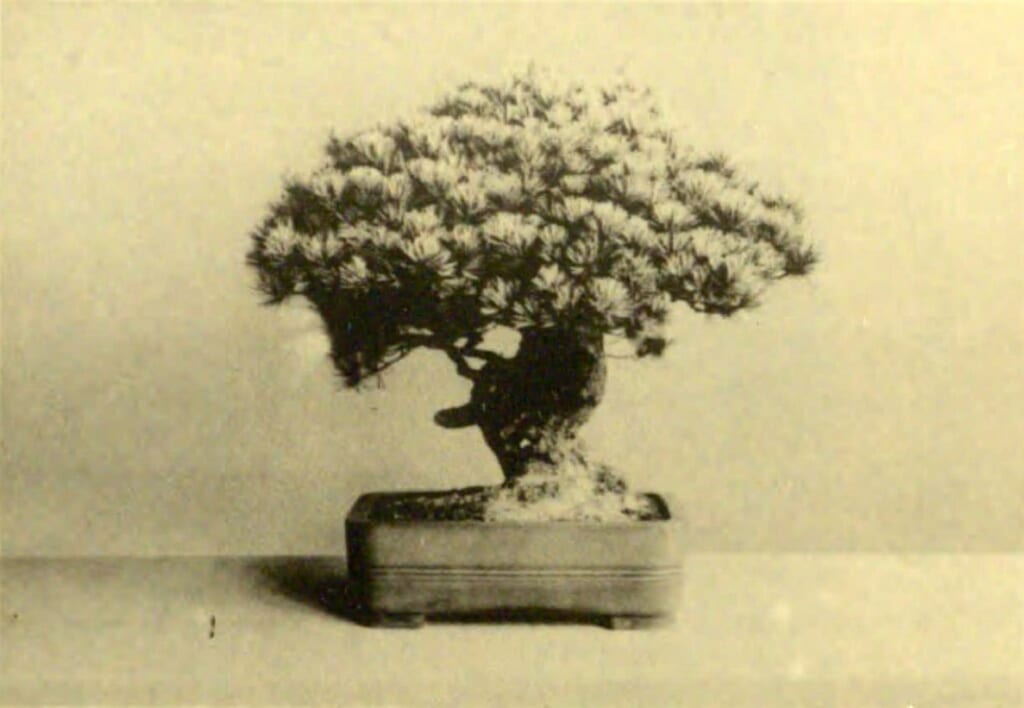
Nobody has shown that the Imperial Palace’s famous bonsai pine, ‘Sandai Shōgun’, is over 500 years old. Newspapers give it an age of “about 550 years”, the Imperial Household Agency describes an old palace five-needle pine as only “said to be 550 years old” and “traditionally” cherished by a Tokugawa shogun, and we found no contemporary document showing that Tokugawa Iemitsu, the third shogun, owned it. What can be traced on paper begins much later, with a Meiji-era statesman who left the tree to the imperial household in his will.
Below, the story is sorted into record, estimate and legend, starting from the one day the tree was shown by name.
November 2009 — a pine in a tea house in the East Gardens
Ten days in autumn
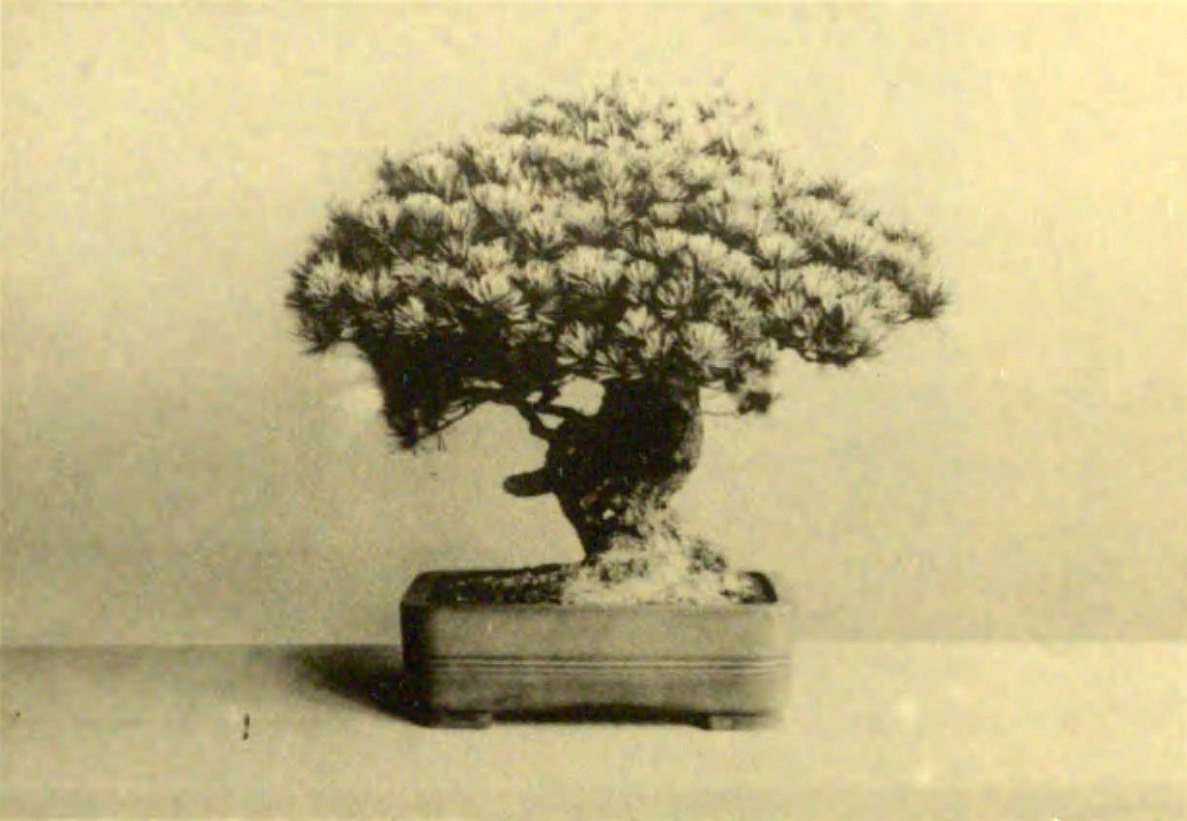
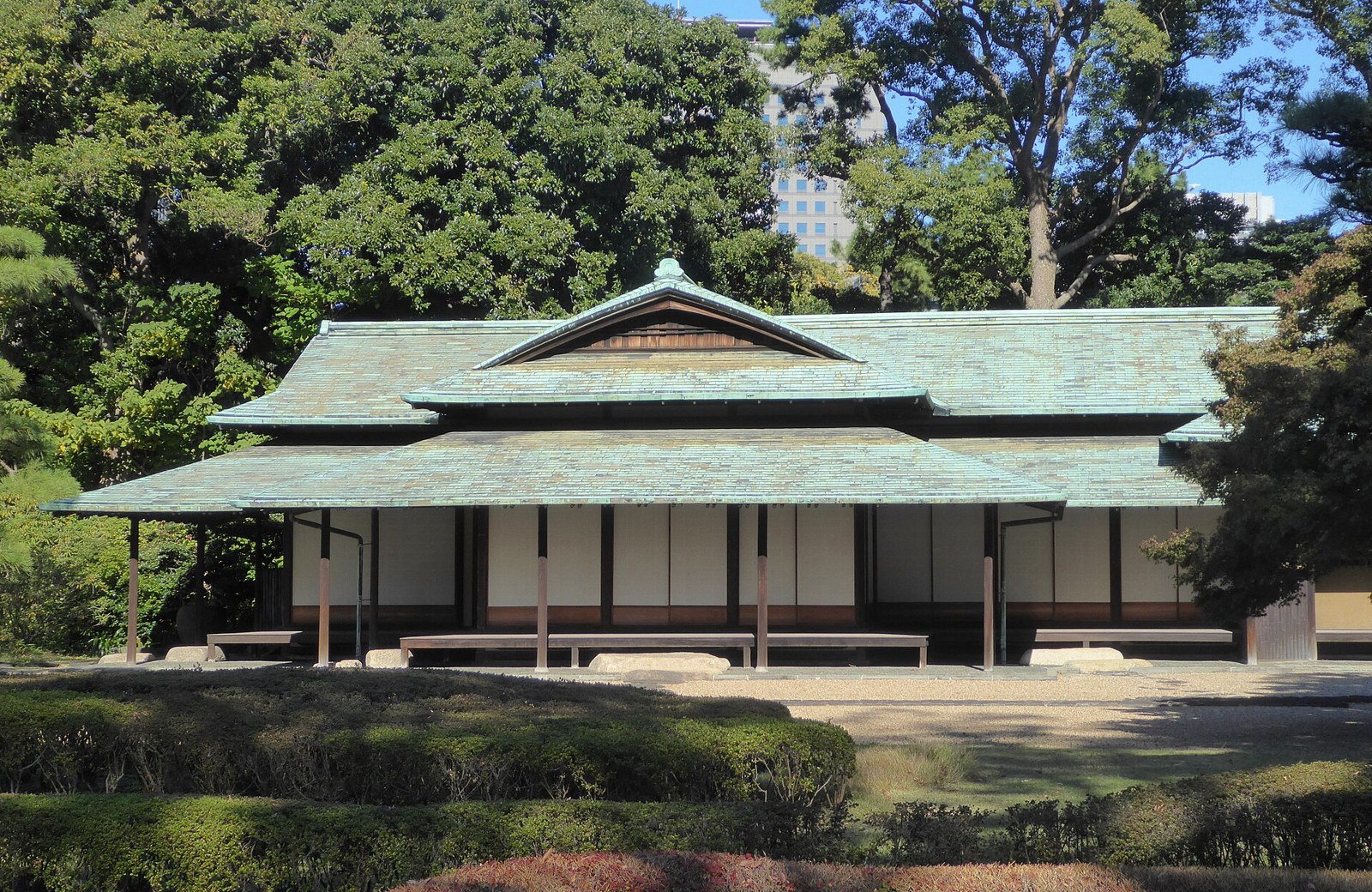
From 14 to 23 November 2009, the Imperial Household Agency put fourteen of the palace’s bonsai on show in the East Gardens of the Imperial Palace in Tokyo. The exhibition marked the 20th anniversary of the Emperor’s accession, and the trees stood in the Suwa no Chaya, a tea house in the Ninomaru garden. There were seven evergreens and seven deciduous trees.
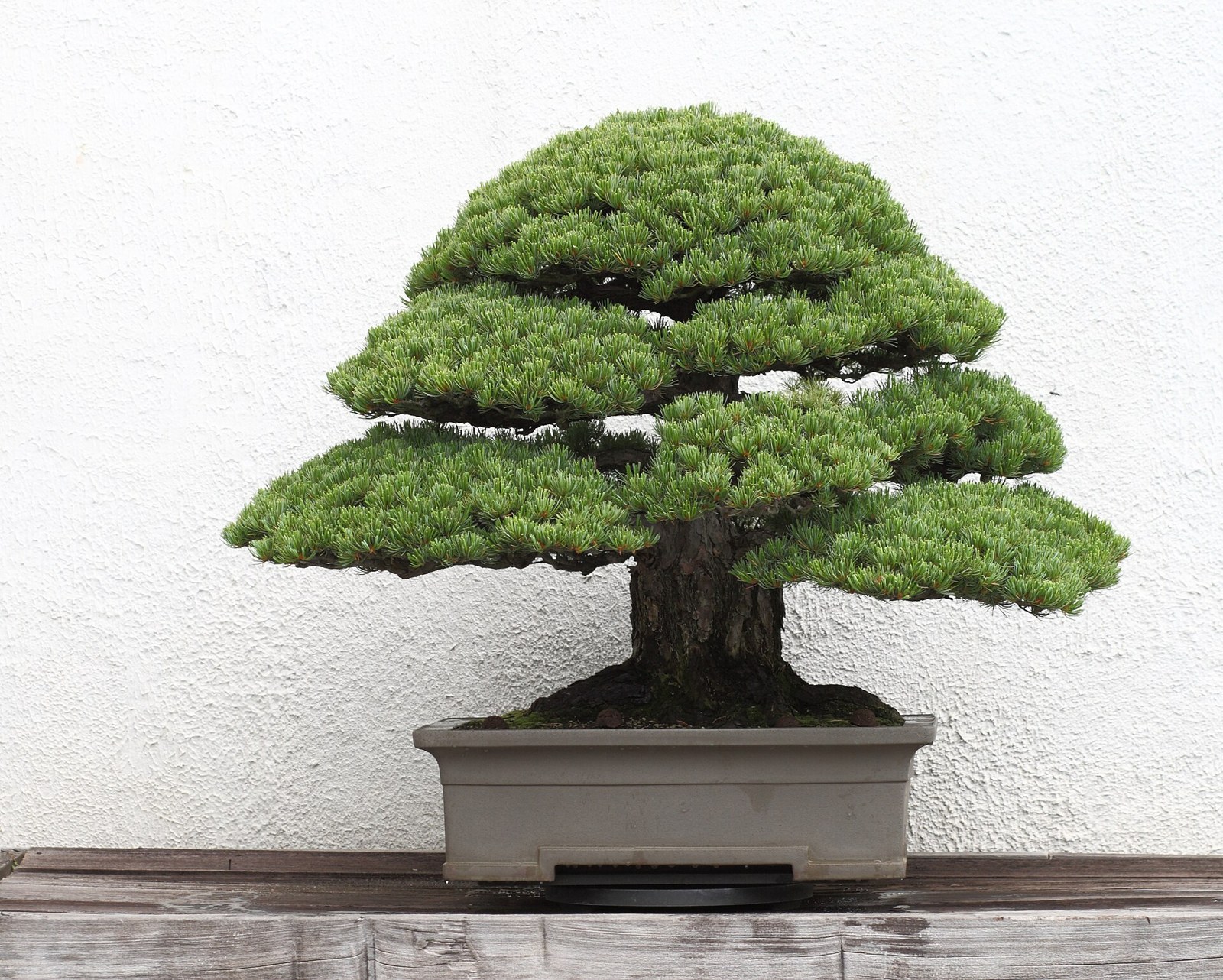
One of the evergreens carried the name ‘Sandai Shōgun’ (三代将軍) — “the Third Shogun”. The agency’s photograph page for the exhibition labels it plainly: goyōmatsu (五葉松), five-needle pine, with the name in brackets. In the same set of photographs is a second five-needle pine, ‘Kani-matsu’ (蟹松), the “crab pine”.
What a visitor would have seen
The Shikoku Shimbun, a newspaper that ran a series on the imperial bonsai that year, gave the tree’s height as 81 cm (about 32 inches). It sat in a shudei (朱泥) rectangular pot — unglazed, made of reddish clay. The paper described a settled, stable silhouette and the strength of the bark on the trunk.
That is a modest size. A Japanese white pine in a mountain forest can reach about 25 metres, according to the Flora of China. Here, a tree with a reputed age of more than five centuries was standing at 81 cm.
Why the name raised a question
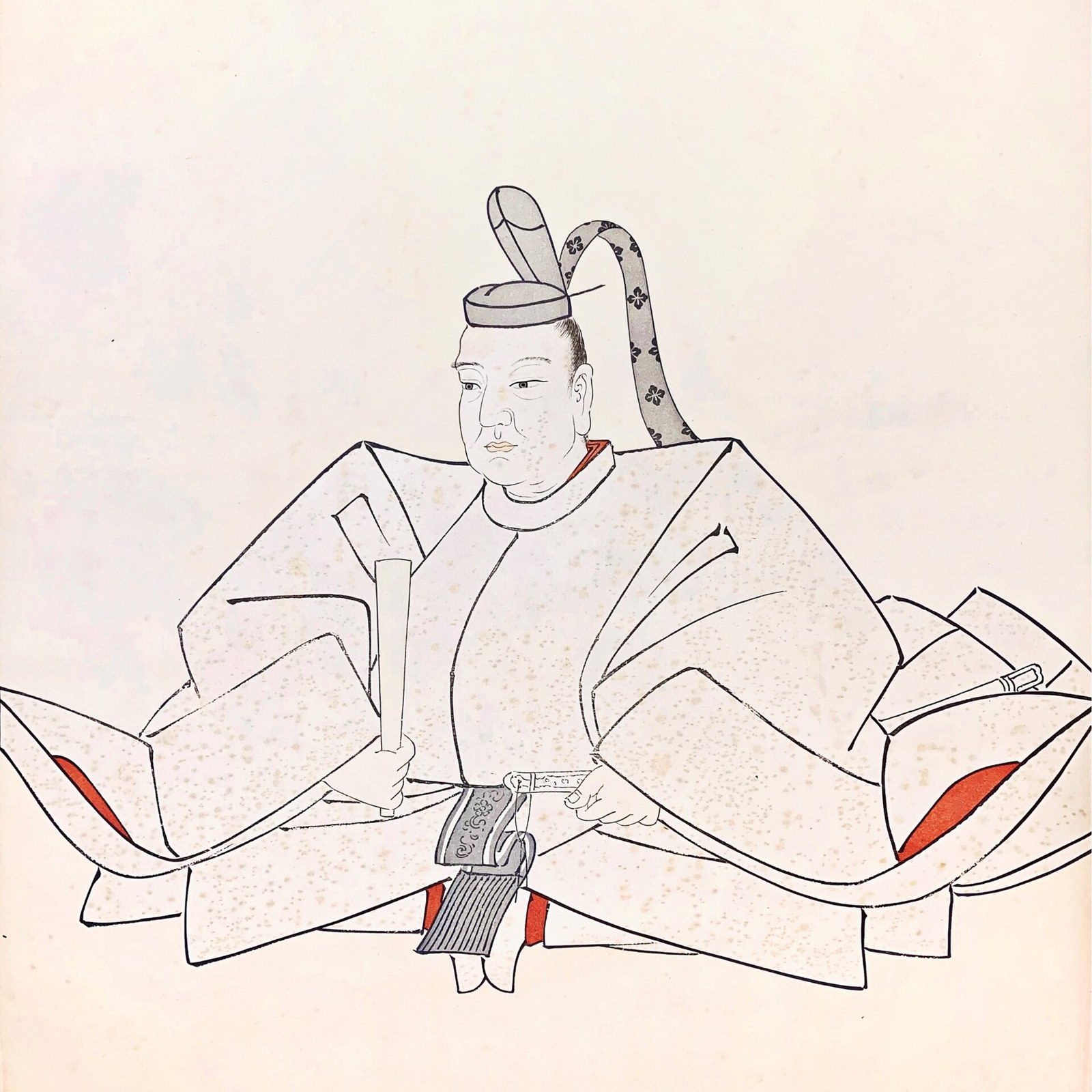
The name does the work of a story. “The Third Shogun” points straight at Tokugawa Iemitsu, who ruled Japan from 1623 to 1651. Put that beside an age of 550 years and the tree becomes a living thing older than the shogunate itself, handed from Edo Castle to the emperors. Most English retellings stop there. The documents do not.
What the Imperial Household Agency actually says — reading the wording
Two pages, two kinds of statement
The agency mentions the tree in two places. The 2009 exhibition page gives its name and species and nothing more. A later page about the palace’s New Year decorations, made at the Ohmichi Garden (大道庭園, Ōmichi Teien), describes “a five-needle pine said to be 550 years old and traditionally said to have been cherished by a Tokugawa shogun”. That page does not use the name ‘Sandai Shōgun’, and it does not say which shogun. It is the Shikoku Shimbun’s 2009 article on ‘Sandai Shōgun’ that gives the same tree an age of about 550 years and names Iemitsu, so the link between the agency’s unnamed description and this named tree rests on matching details, not on a single official statement.
The grammar of a hedge
The Japanese is precise about its own uncertainty. The age is followed by to iware (と言われ) — “it is said”. The shogun is followed by to tsutaerareru (と伝えられる) — “it has been handed down”. Neither phrase claims a measurement or a document. Japanese museum labels use the same habit: the Omiya Bonsai Art Museum in Saitama marks its famous five-needle pine ‘Higurashi’ with suitei jurei (推定樹齢) — “estimated age” — 450 years, and labels a black pine as den (伝) Ōkuma Shigenobu, “traditionally” once owned by the Meiji statesman.
What “550 years” means in calendar terms
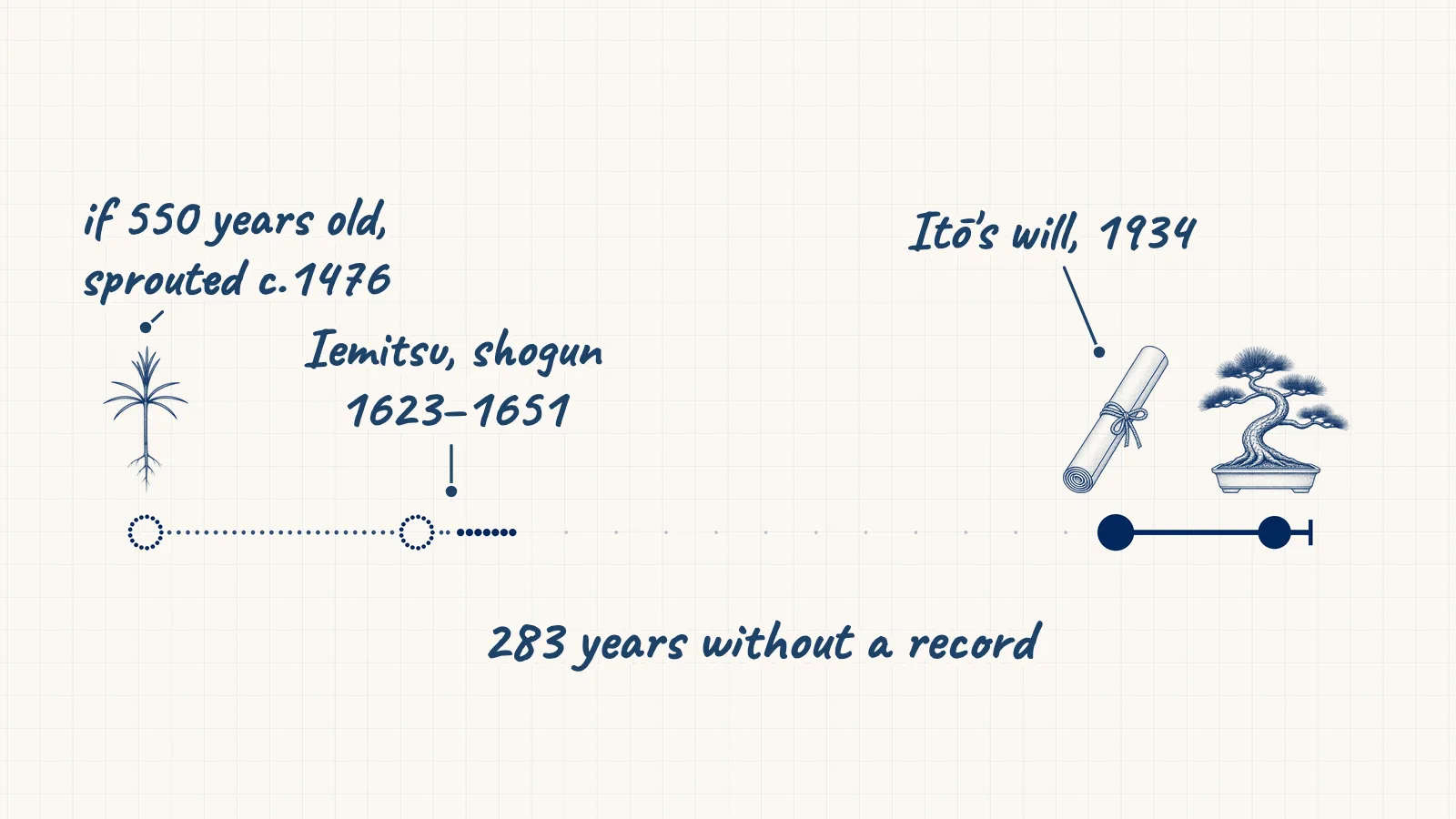
If the tree really were 550 years old today, it would have germinated around 1476. Iemitsu was born in 1604. So the story is not impossible: a tree already 130 years old could have come into his hands. But this is arithmetic built on an estimate. It shows the dates can fit, not that they do. It is also not clear that a figure like “about 550 years”, already in print in 2009, has been updated year by year.
Record, attribution, legend — three layers in one tree
Sorting the claims
The quickest way through the story is to sort each claim by the kind of evidence behind it.
| Claim | Kind of evidence | Source |
|---|---|---|
| The tree is a five-needle pine named ‘Sandai Shōgun’ | Record — agency’s own exhibition label | Imperial Household Agency, 2009 |
| It was shown in the East Gardens, 14–23 November 2009 | Record | Imperial Household Agency, 2009 |
| It is cared for at the Ohmichi Garden by the Garden Division | Record — agency description of the collection | Imperial Household Agency |
| It came to the imperial household under the will of Itō Miyoji (d. 1934) | Attribution — a government survey report; the will itself not published | Agency for Cultural Affairs |
| It is about 550 years old | Estimate — “about” (newspaper); “said to be” (agency, describing an unnamed five-needle pine) | Shikoku Shimbun, 2009; Imperial Household Agency |
| Tokugawa Iemitsu cherished it | Tradition — “handed down”; no contemporary document cited | Imperial Household Agency; Shikoku Shimbun; Noma (Kansai University) |
| The shogunate gave it to the nurseryman Itō Ihei | Tradition — reported only in a third-party summary of a 2026 broadcast | TV programme listing site |
Why the order matters
The bottom rows give the tree its fame and have the least behind them. That does not make them false; they are the history of what people have believed about a tree and passed on with it.
The Third Shogun — what is known about Iemitsu and plants
A household of plant lovers
Some early Tokugawa shoguns loved plants, and that part is on record. The National Diet Library notes that tree-centred gardening flourished in early Edo, and that the second shogun, Tokugawa Hidetada, was fond of camellias. A paper from Kokushikan University points to the primary sources: a camellia anthology held at the National Archives of Japan, and an appendix to Hidetada’s official chronicle telling how he waited for a camellia called ‘Hiroshima-shibori’ to bloom. The chronicle says he “especially cherished flowering plants”.
Pines in pots in the shogun’s records
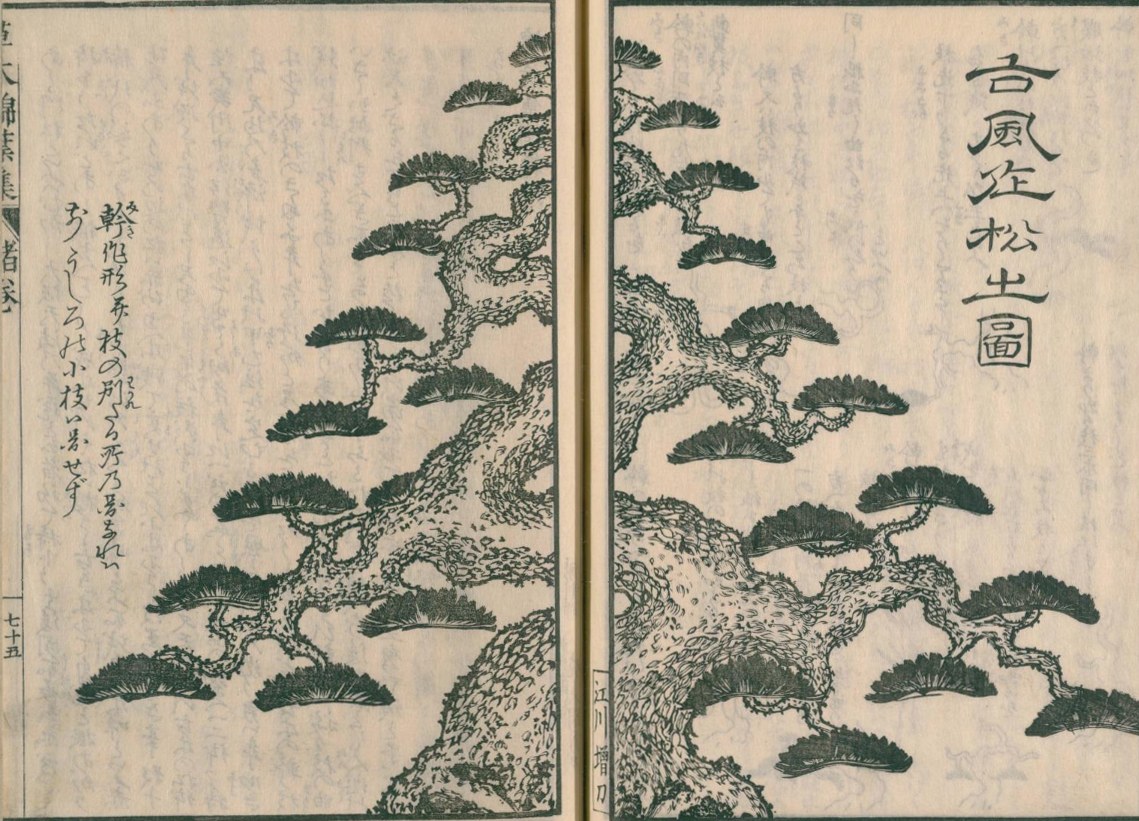
Potted trees appear in the official record too. The Agency for Cultural Affairs’ survey of bonsai culture notes that the Tokugawa Jikki (徳川実紀), the shogunate’s compiled chronicle, records pines and azaleas presented from the provinces, and uses the words bonsan-matsu (盆山松) and bonsai-matsu (盆栽松). The same report describes an early-Edo folding screen, the “Bonsai Screen”, that shows 23 bonsan and hachiki (鉢木) — potted trees and miniature landscapes.
So potted pines were known at the shogun’s court in Iemitsu’s century. That is the soil in which the story grows. It is not a record of this tree.
What the scholarship says about this pine
Haruo Noma’s study of flower gardening around Edo, published by Kansai University, describes the gardening tastes of Ieyasu, Hidetada and Iemitsu, and then mentions this tree as “a five-needle pine bonsai said to have been cherished by Iemitsu”. The wording is again tsutaerareru — handed down. The footnotes in that passage point to a general history of flower culture — on how gardening spread from the shoguns to lords and townspeople — not to a document about this tree. Neither the Agency for Cultural Affairs report nor the Imperial Household Agency cites a diary entry, an inventory or a gift record that names this pine and Iemitsu together.
How do you age a tree in a pot? — why 550 cannot be checked
Rings you cannot count
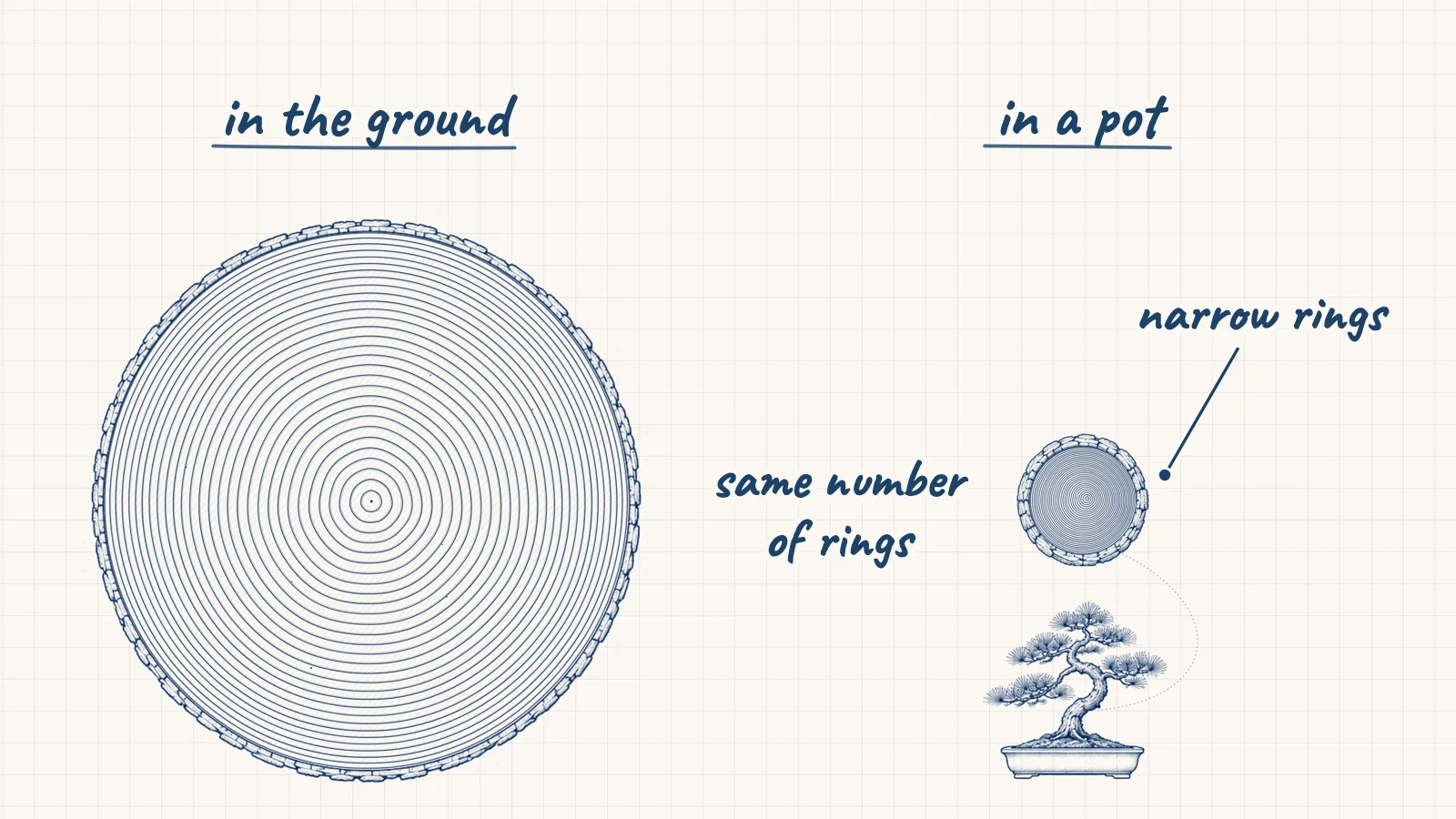
In the ground, the surest way to age a tree is to count its rings. In a living bonsai you cannot count them without harming the tree: taking a core with an increment borer means wounding it. The Forestry and Forest Products Research Institute (FFPRI) explains that without damaging a tree, you are left with a rough calculation from trunk diameter and average ring width.
Why diameter fails in a bonsai
For a bonsai, even that rough method is uncertain, because the trunk’s growth has been shaped by decades of training in a pot. Trees in the ground call for the same caution, as we explain in why Japan’s ancient trees live for a thousand years.
A museum committee’s aside
One documented public discussion of the age exists. In the minutes of a 2014 meeting of the Omiya Bonsai Art Museum’s steering committee, a member remarks that the Third Shogun five-needle pine “is already 500 years, or so it is said”, adding that “there are reference materials”. The minutes do not say what those materials are, how the figure was reached, or whether anything was measured. As far as the public record goes, 550 is a reputation, not a result.
Age claims at a glance
| Tree | Where | Label | What the label measures |
|---|---|---|---|
| ‘Sandai Shōgun’, five-needle pine | Imperial Palace | “About 550 years” (2009 newspaper) | Reputed age; method unpublished |
| ‘Kashima’, black pine | Imperial Palace | “390 years” | Agency’s stated age; method unpublished |
| ‘Kimigayo’, five-needle pine on rock | Imperial Palace | “About 150 years” (2009 newspaper) | Reported age |
| Japanese red pine, shown at Kokufu 2024 | Imperial Palace | “100 years” | Agency’s stated age |
| ‘Higurashi’, five-needle pine | Omiya Bonsai Art Museum | “Estimated age 450 years” | Estimate, labelled as such |
| Yamaki pine, five-needle pine | National Bonsai & Penjing Museum, Washington, D.C. | “In training since 1625” | Start of training, not germination |
The paper trail begins with Itō Miyoji — a collector’s will
A statesman with a bonsai bench
Itō Miyoji (伊東巳代治, 1857–1934) was a Meiji bureaucrat and politician. He was also, by every account we found, a serious bonsai man. A study by Nobuhisa Namimatsu at Kyoto Sangyo University cites a 1902 article in the Kokumin Shimbun that ranked owners of fine bonsai and placed “Baron Itō Miyoji” third. The same study says he did not just collect: he did the care himself and kept detailed records in his own hand.
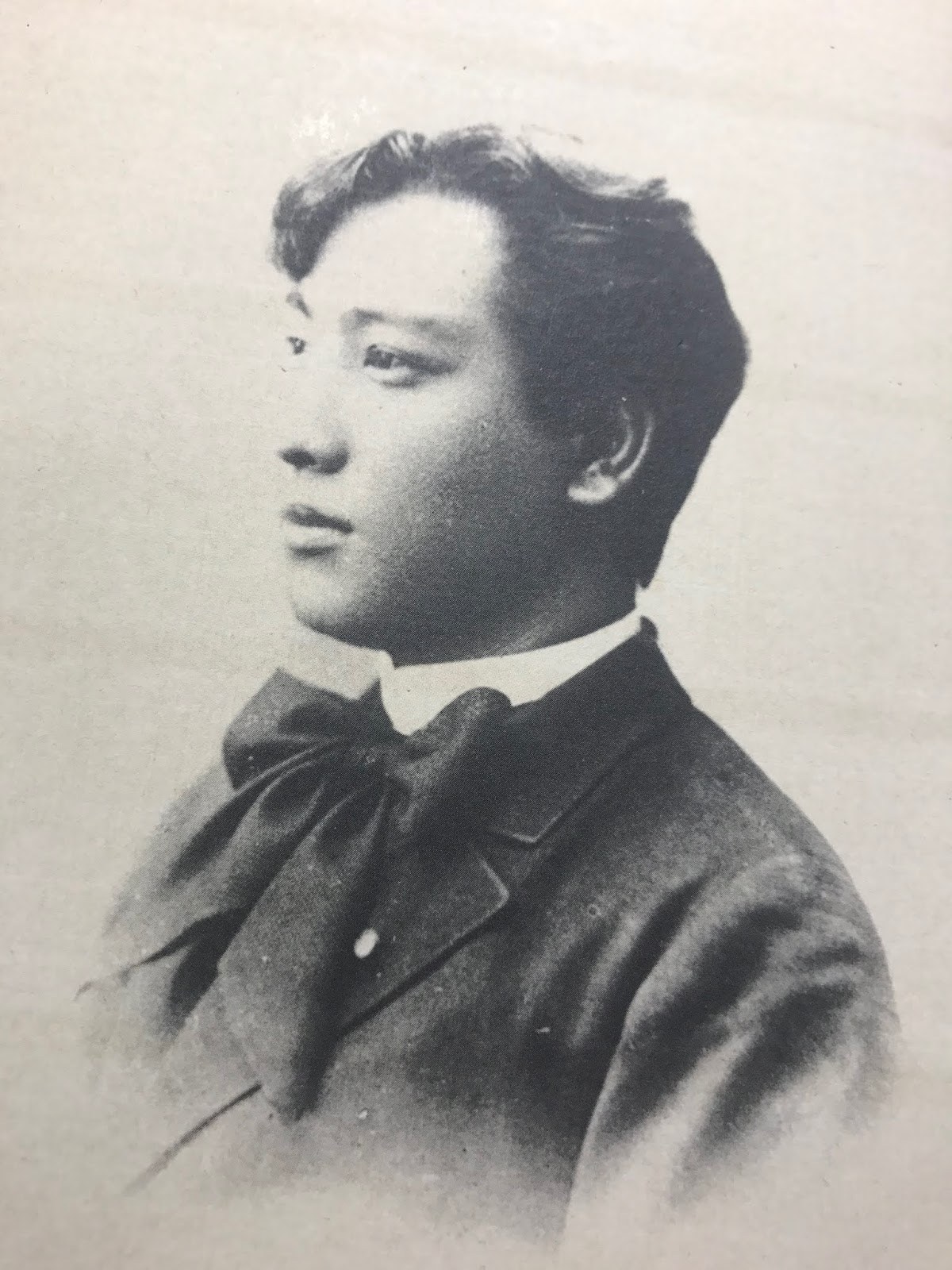
Presented by will
The Agency for Cultural Affairs’ bonsai report states that the five-needle pine ‘Sandai Shōgun’ “was presented to the imperial household under Itō’s will”. Itō died in 1934. This is the earliest link in the chain that a public body states as fact, and it is the point where the tree’s history moves from story to paper. Even so, the will and the palace’s receiving register have not been published, so the exact date the tree entered the collection is not known from public sources.
The gap of almost three centuries
Iemitsu died in 1651. Itō died in 1934. Between them lie 283 years, and in the sources we checked there is no continuous record of who owned or cared for this pine. One retelling fills part of the gap: a third-party summary of a 2026 NHK broadcast says the tree “is said to have been given by the shogunate to Itō Ihei”, a nurseryman. Itō Ihei (伊藤伊兵衛) and Itō Miyoji are different people, the broadcast itself could not be checked, and nothing we found connects the nurseryman to the statesman. It is one more layer of tradition.
The bonsai world around Itō
Itō was not alone. The Agency for Cultural Affairs report places the Meiji bonsai boom among politicians such as Ōkuma Shigenobu and Saionji Kinmochi and businessmen such as Iwasaki Yanosuke, and notes that the Emperor Meiji sent bonsai to the sickbeds of Sanjō Sanetomi and Iwakura Tomomi. Bonsai had become a gift between the most powerful men in the country. That is the world in which a collector left a famous pine to the throne.
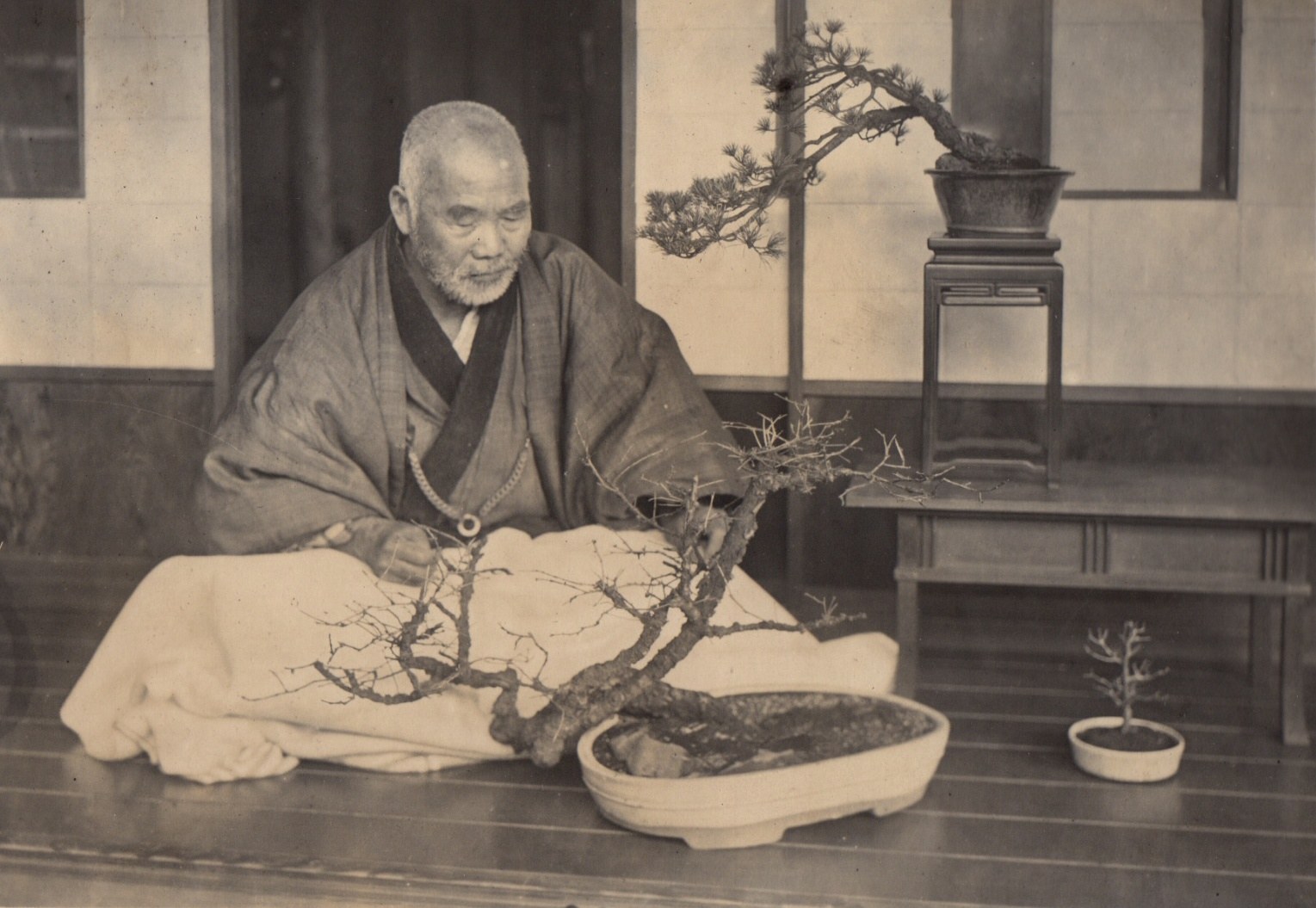
The Ohmichi Garden — who looks after the emperor’s bonsai
A Meiji workshop inside the palace
The Ohmichi Garden is, in the agency’s words, “a nursery for horticultural work established in the Meiji era”. It appears as number 7 on the agency’s English map of the palace grounds. The agency says the palace’s use of bonsai began as interior decoration for the Meiji Palace — potted trees chosen to stand in rooms built for state ceremony. The origin of the name “Ohmichi” (大道, literally “great road”) is not explained in any source we found.
Staff, not a family line
It is tempting to imagine a single family of gardeners passing the Third Shogun down from father to son. The record shows something different. Today the trees are cared for by staff of the Garden Division in the agency’s Administration Department, whose remit covers “gardens, horticulture and woodland”. In the imperial ministry’s own history, a Bureau of the Inner Gardens (内苑寮) was set up in 1908 to handle gardens and horticulture, and the Bureau of Construction (内匠寮) also had a gardens section. No published roster names the gardeners who tended this tree through the Taishō and Shōwa years.
About 500 pots, 300 uses a year
The agency gives the collection as about 90 species and about 500 pots, and says the bonsai are used in displays about 300 times a year in total. A 2009 newspaper gave about 90 species and 600 pieces; the two counts are from different years and may count differently, so this article uses the agency’s current figure.
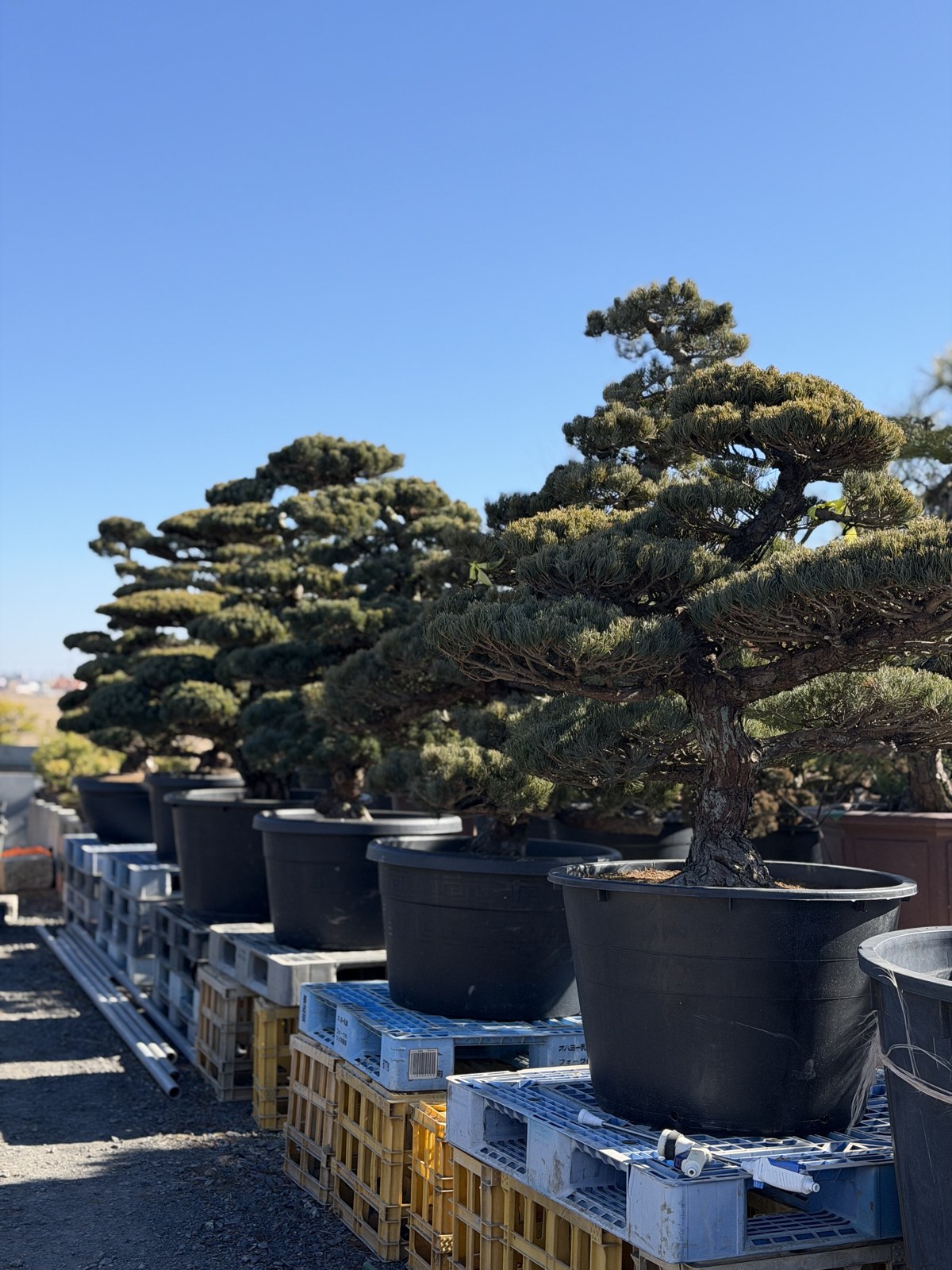
| What the bonsai are used for | Where | When |
|---|---|---|
| Large bonsai for state occasions | Palace halls such as the Minami-damari and Kita-kurumayose | Receptions for state guests, the Emperor’s Birthday and similar events |
| Standard-size bonsai | Palace rooms and corridors, the Imperial Residence, the households of imperial family members | Through the year |
| Haru-kazari (春飾り), New Year arrangements | Imperial Residence, Palace, imperial households | 30 December to 3 January |
The New Year arrangements are made at the Ohmichi Garden by the same staff. None of the agency’s pages says that ‘Sandai Shōgun’ itself appears in any of these displays in a given year, so I will not claim it does.
Keeping a five-needle pine alive for centuries — the yearly work
Why five-needle pine
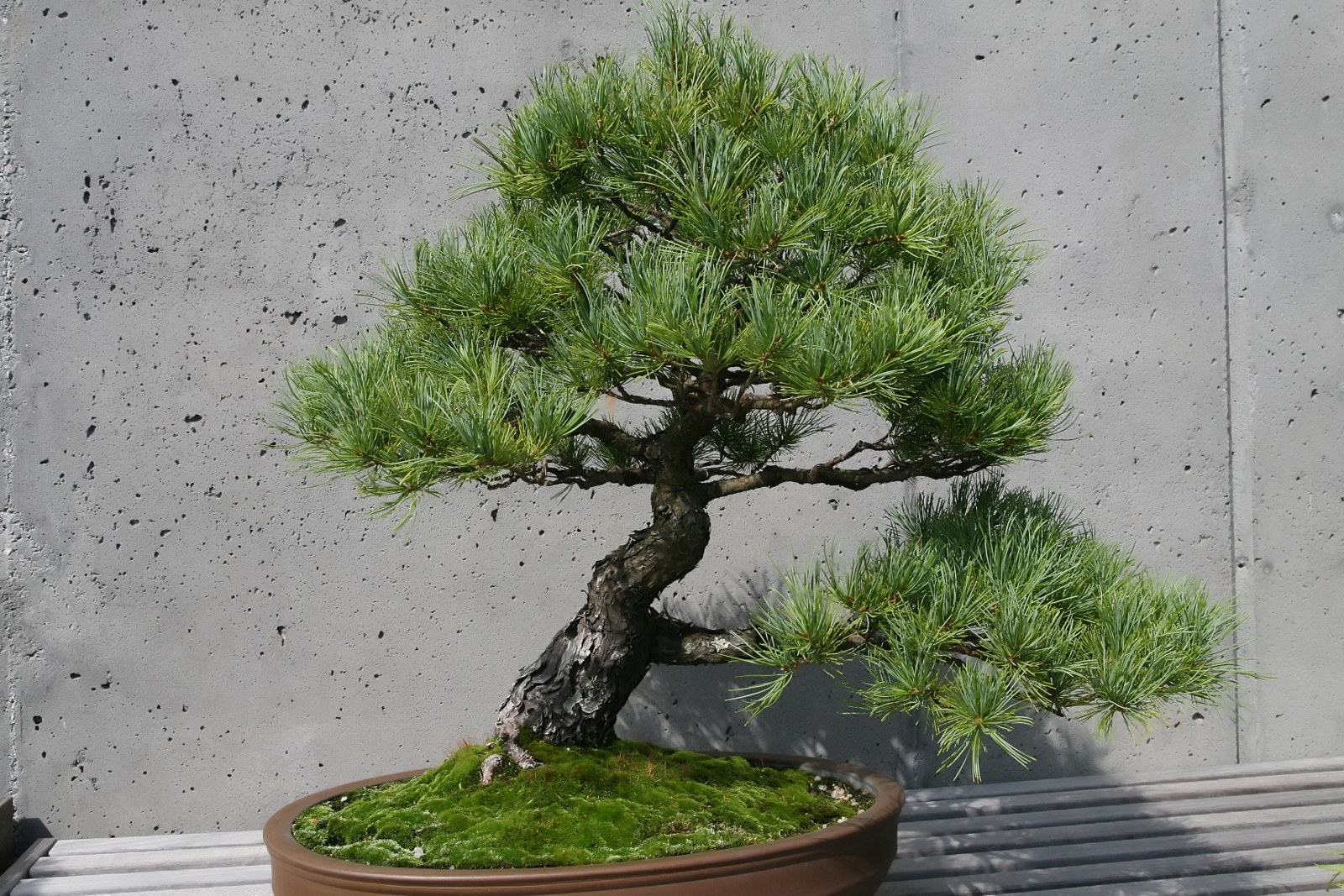
Pinus parviflora, the Japanese white pine or goyōmatsu, carries its needles in bundles of five. Kew’s Plants of the World Online gives its native range as Japan, southern Korea and the southern Kuril Islands; in Japan it grows in mountains on Honshu, Shikoku and Kyushu. The FFPRI Kyushu branch describes garden forms being propagated by grafting onto black pine seedlings two or three years old. Whether the Third Shogun is grafted is not on record.
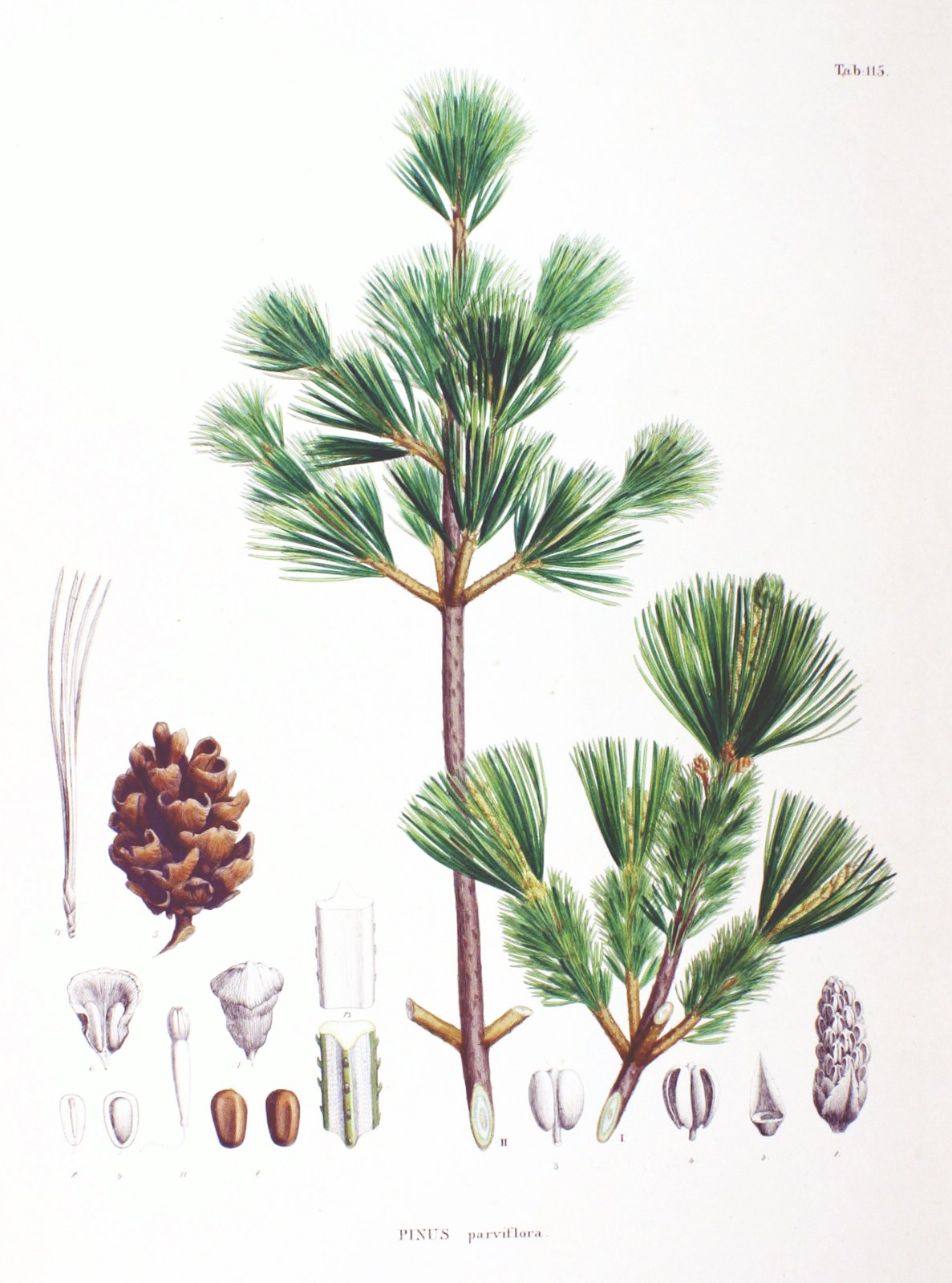
Today, the Akaishi five-needle pine grown around Shikokuchūō, Saijō and Niihama in Ehime and Takamatsu in Kagawa is named by the Ministry of Agriculture as an export bonsai.
The calendar
Nothing has been published about the work done on this particular tree, or about how the Ohmichi Garden schedules it. What is public is the general calendar for a five-needle pine bonsai, from the Omiya Bonsai Art Museum’s practical courses and growers’ guides.
| Month | Work | Why | Source |
|---|---|---|---|
| Late March | Repotting | The museum teaches conifer repotting in March; a Tochigi prefectural parks guide gives late March onward for five-needle pine and warns not to break up an old tree’s root ball heavily | Saitama City; Tochigi parks |
| May | Pinching new shoots | “With black and five-needle pine, the new shoots that have extended are pinched off part-way” | Saitama City |
| September | Removing old needles | Once the new needles have hardened, old ones are pulled to let light and air into the tree | Kinashi bonsai growers |
| December–January | Wiring | “Using wire to bend trunk and branches and set the form” | Saitama City |
Why the old root ball is left alone
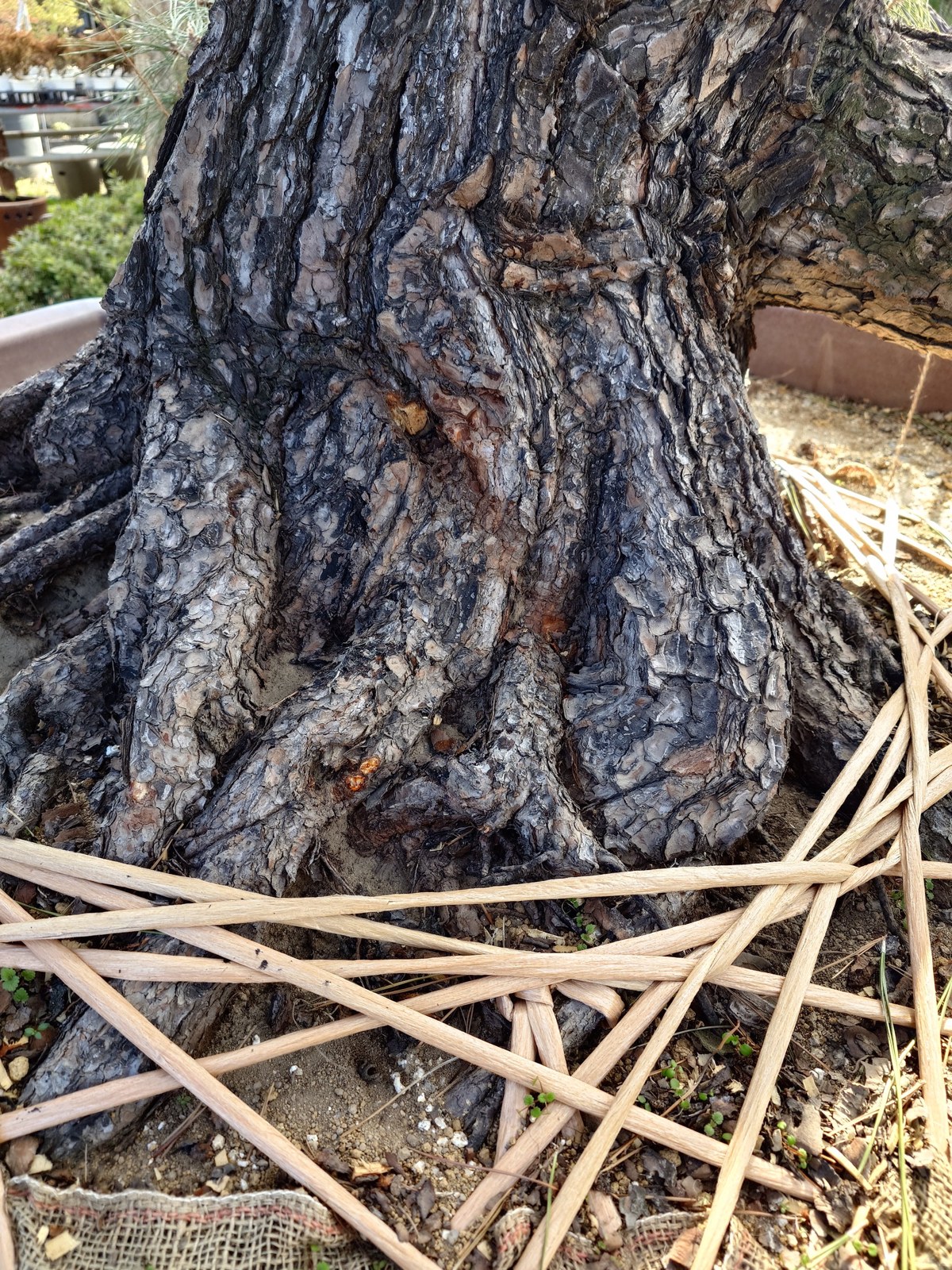
The repotting warning is the one I would underline for an old tree: the guidance for old five-needle pines is not to break up the root ball heavily. That is the judgement call in repotting an old tree — how much of the old root mass to keep. For a tree like the Third Shogun, no record of how the palace makes that call has been published.
Five-needle pine is not black pine
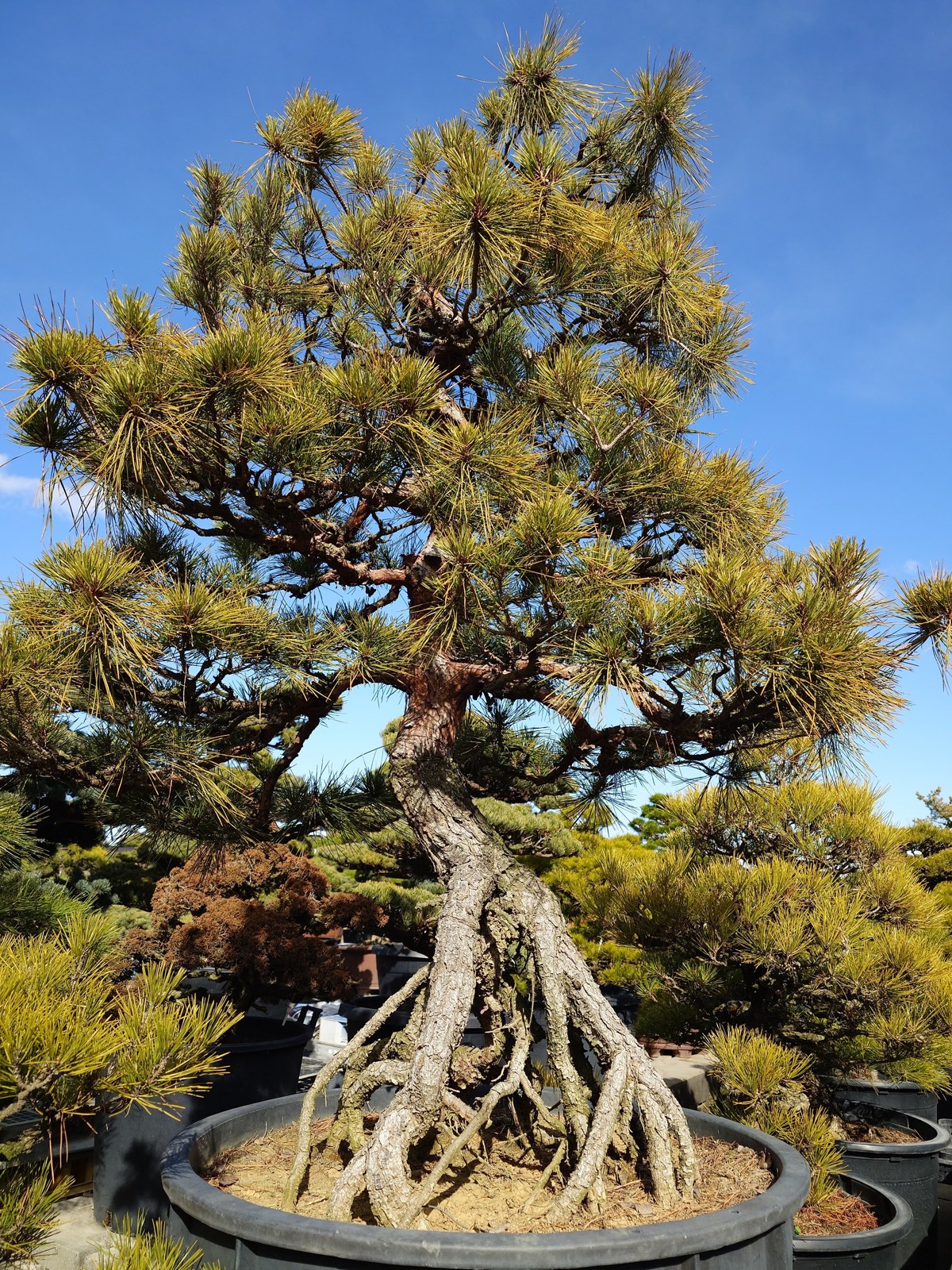
The calendar also shows where species differ. The Omiya museum’s October lesson on removing old needles belongs to the short-needle method for red and black pine, which follows the cutting of new shoots. That timing is not the guide for a five-needle pine, whose old needles come off in September once the new ones have hardened. On garden pines in the ground, the spring and autumn versions of this work are covered in midori-tsumi, reading a pine’s future in its spring candles and momiage, plucking old pine needles.
When the public has seen it — exhibitions on record
One confirmed showing, one flyer, one unnamed loan
The Third Shogun lives behind palace walls, so each public appearance is worth pinning down.
| Year | Where | What is confirmed |
|---|---|---|
| 2009, 14–23 Nov | Suwa no Chaya, East Gardens of the Imperial Palace | Shown by name; agency exhibition page and photograph |
| 2012, 10–14 Oct | Hama-rikyu Gardens, Tokyo (National Urban Greening Fair) | A flyer lists “five-needle pine, named Sandai Shōgun” for these dates; the flyer seen is a copy on a third-party site, not the organiser’s original |
| 2017, 28–30 Apr | Saitama Super Arena (8th World Bonsai Convention) | Not a confirmed showing of this tree: two unnamed imperial bonsai and three pots were announced |
What the 2017 showing was not
The 2017 World Bonsai Convention brought two of the palace’s bonsai to Saitama. It is easy to assume the Third Shogun was one of them, and that it stood in the Omiya Bonsai Art Museum. The city’s press release says the imperial bonsai were to be shown at the Super Arena, and does not name them. At the same time, the museum ran its own exhibition built around its own five-needle pine, ‘Higurashi’. Unless a source names the tree, the 2017 appearance of the Third Shogun is unconfirmed.
Omiya and the bonsai world the tree belongs to
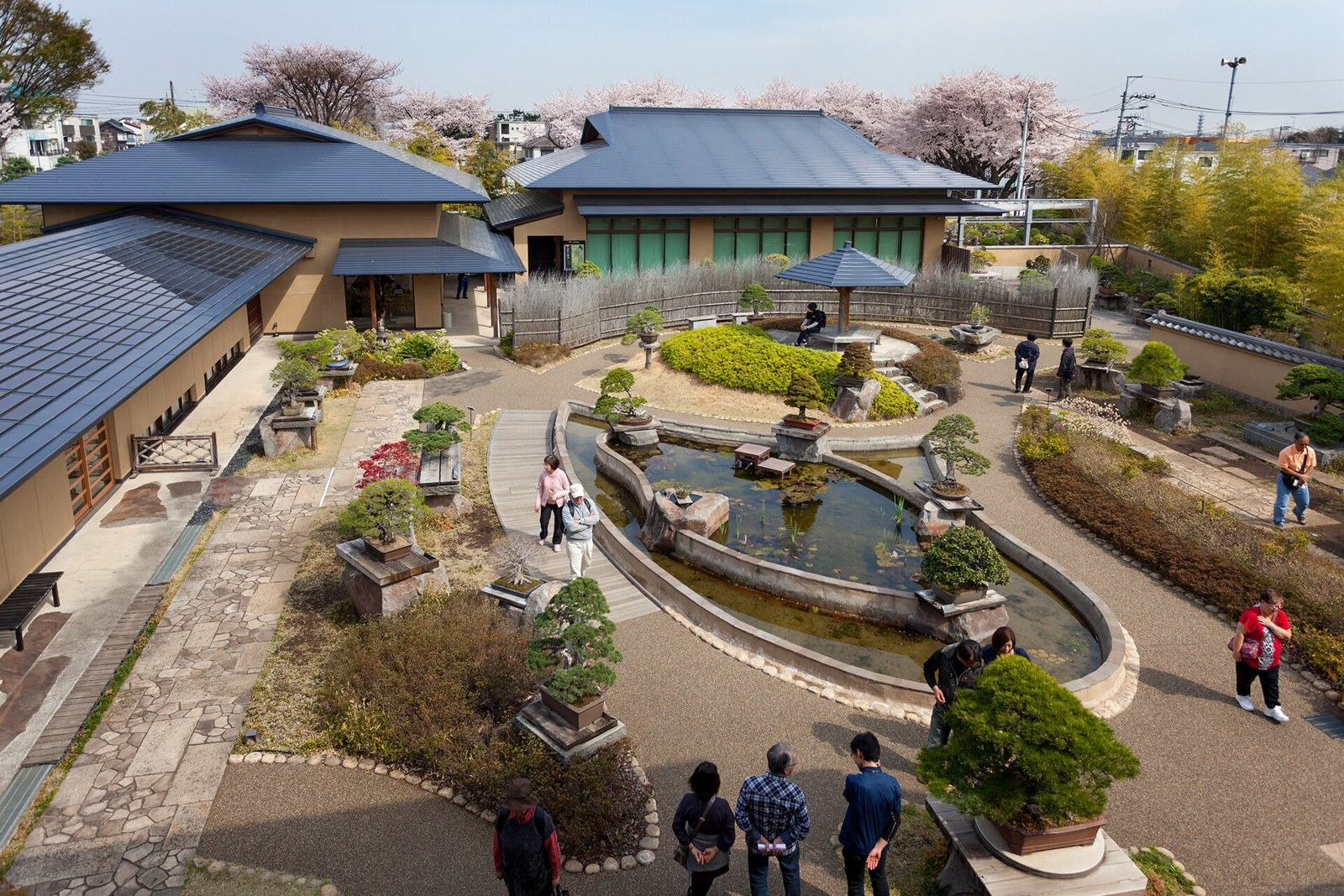
Omiya matters to the tree’s story even without a confirmed visit. After the Great Kantō Earthquake, bonsai nurseries from Tokyo moved north, and in 1925 the Omiya Bonsai Village was formed as their self-governing community. The museum dates its beginning to April 1925, when Shimizu Ritarō of the Seitaien nursery moved there. Itō Miyoji died nine years later. The date on which his pine entered the palace collection is not public.
Why a bonsai’s history matters more than its age
Provenance as part of the tree
In bonsai, where a tree has been is part of what it is. The Omiya Bonsai Art Museum publishes, for a zelkova once owned by the postwar prime minister Yoshida Shigeru, a “provenance of this tree” listing its owners, exhibitions and gift — separately from its age. The name ‘Sandai Shōgun’ is different. It preserves an attribution, not a documented chain of ownership. The only documented link in this tree’s provenance is Itō’s will.
Japan’s labels and America’s labels
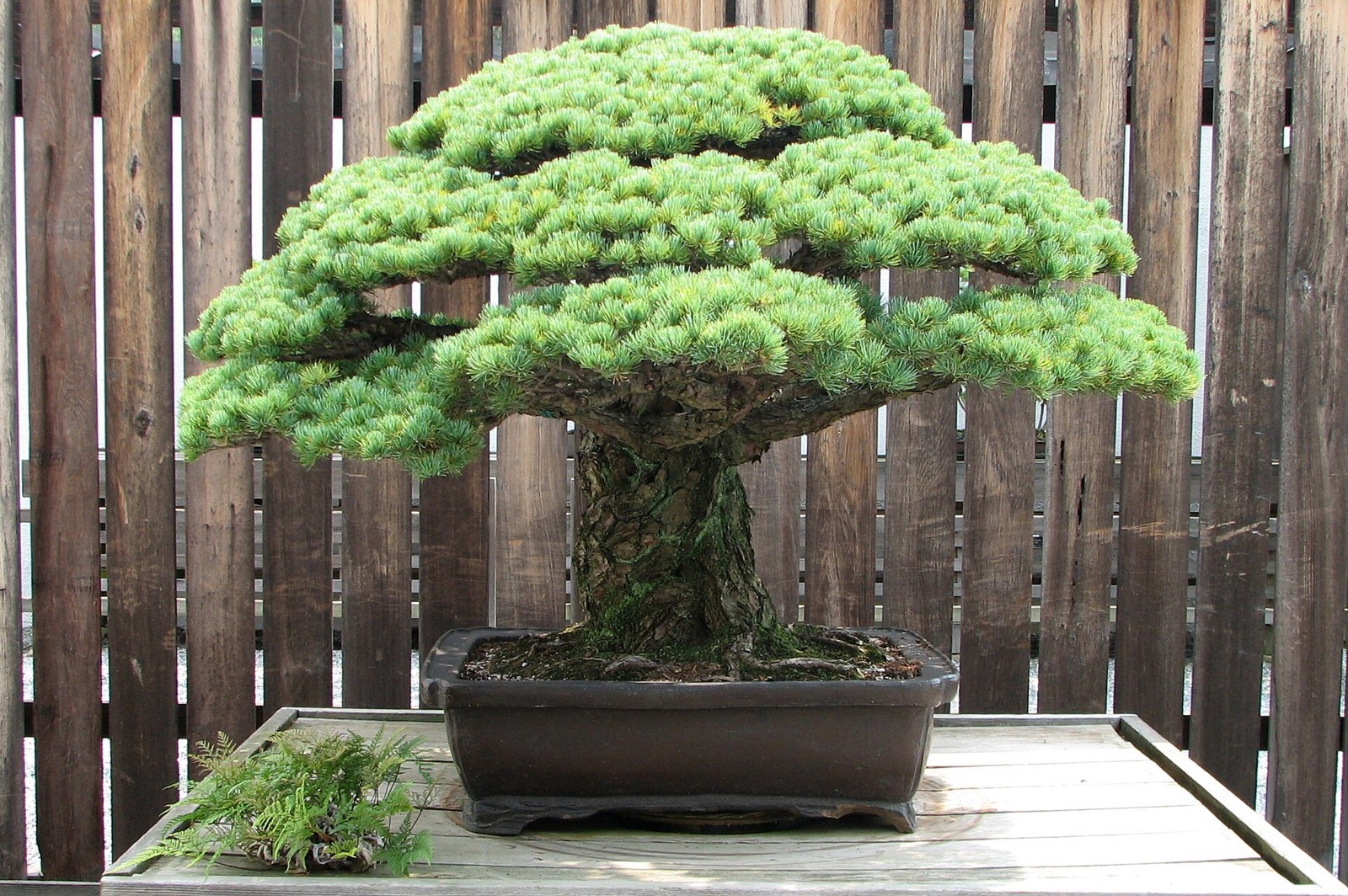
In the examples above, the labels differ. The National Bonsai & Penjing Museum in Washington gives a stated training date — the imperial household’s 1976 gift of a red pine is “in training since 1795” — not a germination date. The Japanese examples give an age, softened with “estimated”, “said to be” or den. The Third Shogun’s reputation belongs to the second type. I discussed how to read a training date in Hiroshima survivor bonsai — 400 years of the Yamaki pine.
A tree that is never finished
A bonsai is not a monument that stands by itself. It needs continuing care — watering, repotting, pinching — and its roots have only the soil the pot gives them. That dependence is the real difference from a garden tree, which I describe in Niwaki vs Bonsai. Whatever its age, the part of its care that can be documented runs from the Meiji collector who left it to the palace staff who keep it now.
Common misreadings
“It was Iemitsu’s tree”
The Imperial Household Agency does not say so. Its description of an old five-needle pine says only that it is traditionally associated with a Tokugawa shogun. The Iemitsu connection comes from the tree’s name and from the tradition retold in newspapers and scholarship, always with “it is said”.
“It has been in the palace since the shogun’s time”
The palace’s bonsai collection dates from the Meiji Palace, and the Agency for Cultural Affairs report says this tree came by Itō Miyoji’s will. Itō died in 1934. We found no basis for the idea that it passed directly from Edo Castle to the emperors.
“It is 550 years old”
It is said to be. The method behind the figure is unpublished, and the rings of a living bonsai cannot be counted without wounding it. The Omiya museum’s habit of writing “estimated age” is the honest form.
“It is the oldest bonsai in the world”
No source we checked makes that claim for this tree, and with ages that cannot be measured, any ranking of oldest bonsai compares reputations, not trees.
“A family of imperial gardeners has passed it down”
The record names an institution — the Garden Division at the Ohmichi Garden — not a family. If gardeners’ names survive, they have not been published.
Frequently asked questions
Is the Imperial Palace bonsai really over 500 years old?
Newspapers give ‘Sandai Shōgun’ an age of about 550 years, and the Imperial Household Agency describes an old palace five-needle pine as “said to be 550 years old”. No published measurement or method supports the figure, and a living bonsai cannot be cored without damage. Treat it as a reputed age.
Did Tokugawa Iemitsu own the Sandai Shogun pine?
That is a tradition, not a record. The agency describes an old five-needle pine as “traditionally” cherished by a Tokugawa shogun, and newspapers and scholars say Iemitsu is “said to” have cherished ‘Sandai Shōgun’. We found no contemporary document naming Iemitsu and this tree.
How did the pine come to the Imperial Palace?
According to the Agency for Cultural Affairs’ survey of bonsai culture, it was presented to the imperial household under the will of Itō Miyoji, a Meiji statesman and bonsai collector who died in 1934.
Who looks after the imperial bonsai?
Staff of the Imperial Household Agency’s Garden Division, at the Ohmichi Garden inside the palace grounds. The collection is about 90 species and about 500 pots.
Can the public see the Sandai Shogun pine?
The documented showing by name was in the East Gardens of the Imperial Palace from 14 to 23 November 2009. A 2012 flyer lists it at Hama-rikyu Gardens, but we saw only a copy of that flyer.
What kind of tree is it?
A Japanese white pine, Pinus parviflora (五葉松, goyōmatsu), with needles in bundles of five. In 2009 it stood 81 cm (about 32 inches) tall in a vermilion clay rectangular pot.
Sources
– Imperial Household Agency, New Year decorations at the Ohmichi Garden (Japanese): https://www.kunaicho.go.jp/learn/institution/shisetsu/kokyo/bonsai-ph/harukazari-sakusei.html — checked 2026-11-14 – Imperial Household Agency, 20th anniversary bonsai exhibition, overview (Japanese): https://www.kunaicho.go.jp/20years/higashigyoen/higashigyoen.html — checked 2026-11-14 – Imperial Household Agency, 20th anniversary bonsai exhibition, exhibits (Japanese): https://www.kunaicho.go.jp/20years/higashigyoen/higashigyoen-tenji.html — checked 2026-11-14 – Imperial Household Agency, organisation and duties (Japanese): https://www.kunaicho.go.jp/kunaicho/kunaicho/soshiki.html — checked 2026-11-14 – Imperial Household Agency, chronology of the agency (Japanese): https://www.kunaicho.go.jp/kunaicho/kunaicho/kunaicho-nenpyo.html — checked 2026-11-14 – Imperial Household Agency, “Welcome to the Imperial Palace” map (English): https://www.kunaicho.go.jp/wp-content/uploads/2026/10/illustrationmap-e.pdf — checked 2026-11-14 – Imperial Household Agency, 98th Kokufu Bonsai Exhibition (Japanese): https://www.kunaicho.go.jp/watch/activity/imperial-family-activity-01/info/bonsaiten.html — checked 2026-11-14 – Agency for Cultural Affairs, survey report on bonsai culture (Japanese): https://www.bunka.go.jp/tokei_hakusho_shuppan/tokeichosa/seikatsubunka_chosa/pdf/94359701_05.pdf — checked 2026-11-14 – National Diet Library, Itō Miyoji papers (Japanese): https://ndlsearch.ndl.go.jp/rnavi/kensei/itoumiyoji — checked 2026-11-14 – National Diet Library, authority record for Tokugawa Iemitsu: https://id.ndl.go.jp/auth/ndlna/00625964 — checked 2026-11-14 – Ibaraki Prefectural Museum of History, list of Tokugawa shoguns (Japanese): https://www.rekishikan.museum.ibk.ed.jp/06_jiten/tokugawa/15dai.htm — checked 2026-11-14 – National Diet Library, “The development of Japan’s own horticulture” (Japanese): https://www.ndl.go.jp/nature/21 — checked 2026-11-14 – Noma Haruo, flower horticulture around Edo and Tokyo, 17th–19th centuries, Kansai University (Japanese): https://kansai-u.repo.nii.ac.jp/record/12268/files/22-noma.pdf — checked 2026-11-14 – Kokushikan University bulletin paper on Hidetada and camellias (Japanese): https://kokushikan.repo.nii.ac.jp/record/6139/files/2186_3709_011_06.pdf — checked 2026-11-14 – Namimatsu Nobuhisa, “The formation of modern bonsai”, Kyoto Sangyo University (Japanese): https://ksu.repo.nii.ac.jp/record/10594/files/AHSUSK_HS_54_211.pdf — checked 2026-11-14 – Forestry and Forest Products Research Institute, Q&A on tree age (Japanese): https://www.ffpri.go.jp/qa/resources/qa-resource27.html — checked 2026-11-14 – Forestry and Forest Products Research Institute, Kansai branch, goyōmatsu (Japanese): https://www.ffpri.go.jp/fsm/business/jumokuen/02_ka/goyoumatu.html — checked 2026-11-14 – Forestry and Forest Products Research Institute, Kyushu branch, goyōmatsu (Japanese): https://www.ffpri.go.jp/kys/business/jumokuen/jumoku/zukan/goyoumatu.html — checked 2026-11-14 – Kew, Plants of the World Online, Pinus parviflora: https://powo.science.kew.org/taxon/urn:lsid:ipni.org:names:263192-1/general-information — checked 2026-11-14 – Flora of China, Pinus: https://www.iplant.cn/foc/pdf/Pinus.pdf — checked 2026-11-14 – Ministry of Agriculture, Forestry and Fisheries, Akaishi five-needle pine export group (Japanese): https://www.maff.go.jp/j/shokusan/export/gfp/attach/pdf/240807-33.pdf — checked 2026-11-14 – Omiya Bonsai Art Museum, five-needle pine collection record (Japanese): https://www.bonsai-art-museum.jp/ja/collection/a-100/ — checked 2026-11-14 – Omiya Bonsai Art Museum, ‘Higurashi’ (Japanese): https://www.bonsai-art-museum.jp/ja/collection/a-001/ — checked 2026-11-14 – Omiya Bonsai Art Museum, Yoshida Shigeru’s zelkova (Japanese): https://www.bonsai-art-museum.jp/ja/exhibition/exhibition-7310/ — checked 2026-11-14 – Omiya Bonsai Art Museum, Jinshari vol. 45 (Japanese): https://www.bonsai-art-museum.jp/ja/jinshari/jinshari-9088/ — checked 2026-11-14 – Omiya Bonsai Art Museum, about the Omiya Bonsai Village (Japanese): https://www.bonsai-art-museum.jp/ja/about/omiya/ — checked 2026-11-14 – Omiya Bonsai Art Museum, exhibition on the village’s beginnings (Japanese): https://www.bonsai-art-museum.jp/ja/exhibition/exhibition-4093/ — checked 2026-11-14 – Saitama City, bonsai practical courses (Japanese): https://www.city.saitama.lg.jp/004/005/004/006/003/p134722.html — checked 2026-11-14 – Saitama City, Omiya Bonsai Art Museum steering committee minutes, FY2014 (Japanese): https://www.city.saitama.lg.jp/006/008/002/012/004/018/p014066_d/fil/26-4.pdf — checked 2026-11-14 – Saitama City, press release for the 8th World Bonsai Convention, 27 March 2017 (Japanese): https://www.city.saitama.lg.jp/006/003/003/010/008/p052737_d/fil/0327gidai1kaiken.pdf — checked 2026-11-14 – Saitama City, World Bonsai Convention programme document (Japanese): https://www.city.saitama.lg.jp/006/007/002/015/009/p0419691_d/fil/0129-1shiryou.pdf — checked 2026-11-14 – Tochigi prefectural parks, Q&A on repotting five-needle pine (Japanese): https://www.park-tochigi.com/wp/wp-content/uploads/2020/07/%E7%B7%91%E3%81%AE%E7%9B%B8%E8%AB%87QA%E4%BA%94%E8%91%89%E6%9D%BE%E3%81%AE%E6%A4%8D%E6%9B%BF%E3%81%88-%E3%83%95%E3%83%A9%E3%83%AF%E3%83%BC%E3%82%A2%E3%83%AC%E3%83%B3%E3%82%B8%E3%83%A1%E3%83%B3%E3%83%88%E6%8C%91%E6%88%A6.pdf — checked 2026-11-14 – Kinashi bonsai growers, removing old needles in September and October (Japanese): https://kinashi-bonsai.com/teire/bonsai/10/ — checked 2026-11-14 – Shikoku Shimbun, “Imperial bonsai: Sandai Shōgun” (Japanese): https://bonsai.shikoku-np.co.jp/imperial/2009/06/12711/post-201/ — checked 2026-11-14 – Shikoku Shimbun, “Imperial bonsai: Kimigayo” (Japanese): https://bonsai.shikoku-np.co.jp/imperial/2009/06/12712/post_1-3/ — checked 2026-11-14 – 29th National Urban Greening Fair TOKYO, exhibition flyer (copy on a third-party site, Japanese): https://edoyasai.sakura.ne.jp/sblo_files/edoyasai/image/a-2E5AEAEE58685E79C81img430.pdf — checked 2026-11-14 – National Bonsai Foundation, Japanese Collection: https://www.bonsai-nbf.org/japanese-collection/ — checked 2026-11-14 – National Bonsai Foundation, the Yamaki Pine: https://www.bonsai-nbf.org/yamaki-pine — checked 2026-11-14