

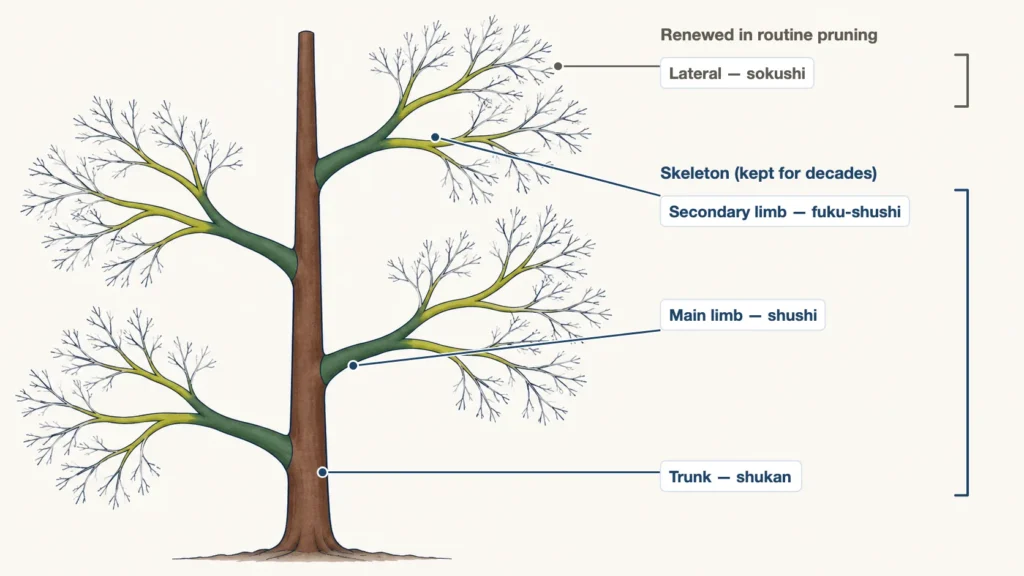
Structural pruning means shaping the permanent framework of a tree: one dominant leader where the species allows it, well-spaced scaffold limbs, and no branch larger than half the trunk it grows from. Reading the tree comes first. Before any cut, decide which stem is the leader, which limbs will stay for decades, and which branches are temporary and can go.
This guide turns that reading into a working method: the four tiers of branch, five questions to ask in front of the tree, how a species’ habit changes the answers, a walk-around sequence, and how the tier a branch belongs to decides which cut is open to you. The sources are University of Florida training plans, the ISA, and the pruning manuals Japanese public bodies use for street trees.
Why the skeleton comes first — reading decides which cuts exist
What “reading” produces
A reading is not a description of the tree. It is a sorted list: wood that stays, wood that is shortened, wood that goes. The Saitama Prefecture street-tree manual says as much in its own terms. It puts a pre-pruning checklist before any method: how the branches sit round the trunk, how dense the foliage is, how the first, second and third orders of branch are balanced, and whether repeated cuts have left knobs (Saitama Prefecture, Gairoju Sentei Manual, 2020, section 4.1.2). Only after that does it choose a cut.
Three outcomes for any branch
Every branch that reaches the reading ends in one of three places. It is kept as part of the skeleton. It is shortened so it stays subordinate, usually back to a smaller branch that takes over. Or it is removed. The five questions later in this guide decide which, and the tier table further down shows what each choice costs the tree.
What reading cannot show
A skeleton read from outside says nothing about hidden decay inside the trunk or at a union. If the reading raises that doubt, the next step is an inspection, not a saw. How to read tree decay without technology covers what can be judged by eye and by hand before any instrument is involved.
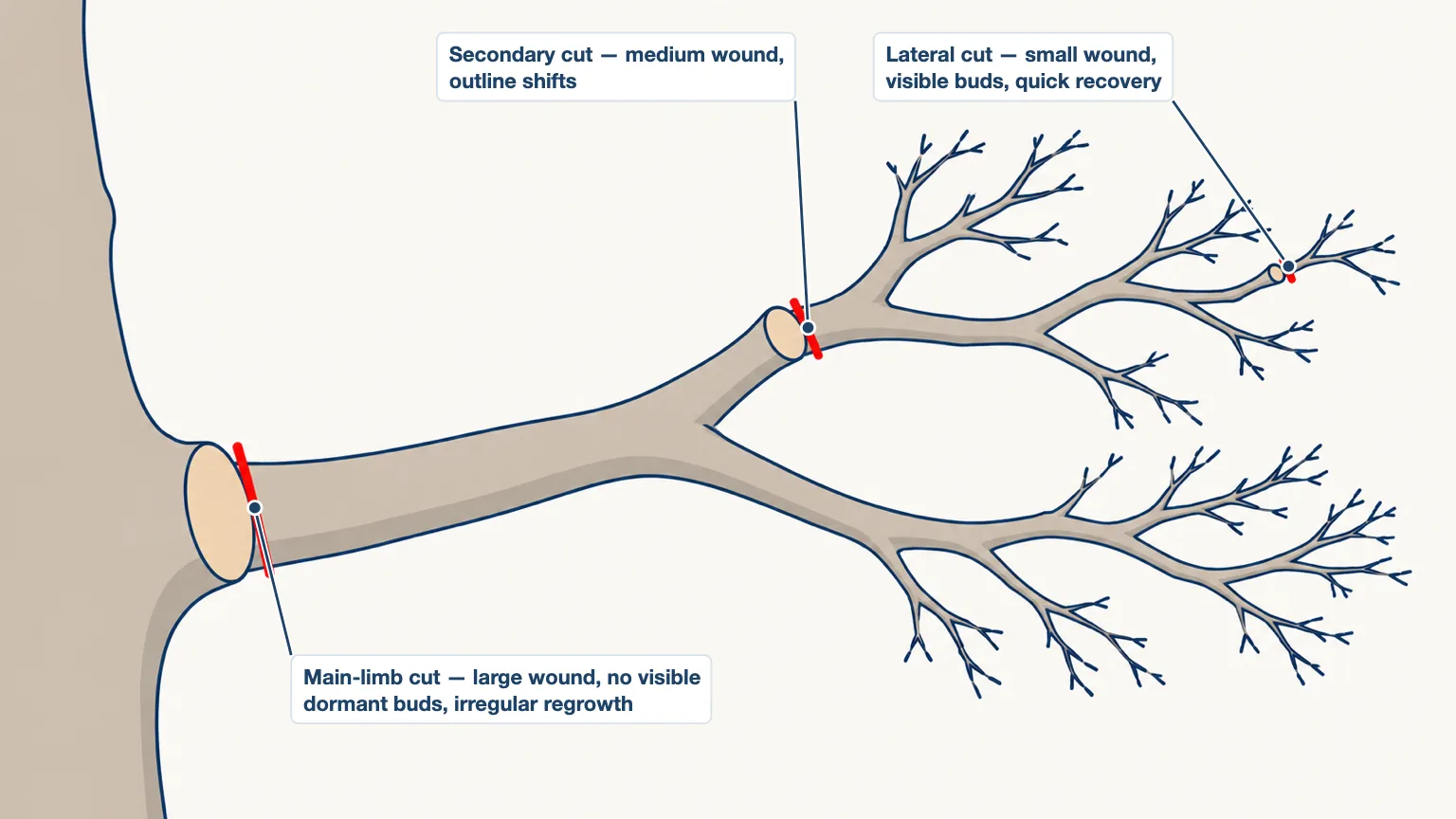
The four tiers — trunk, main limb, secondary limb, lateral
English and Japanese terms side by side
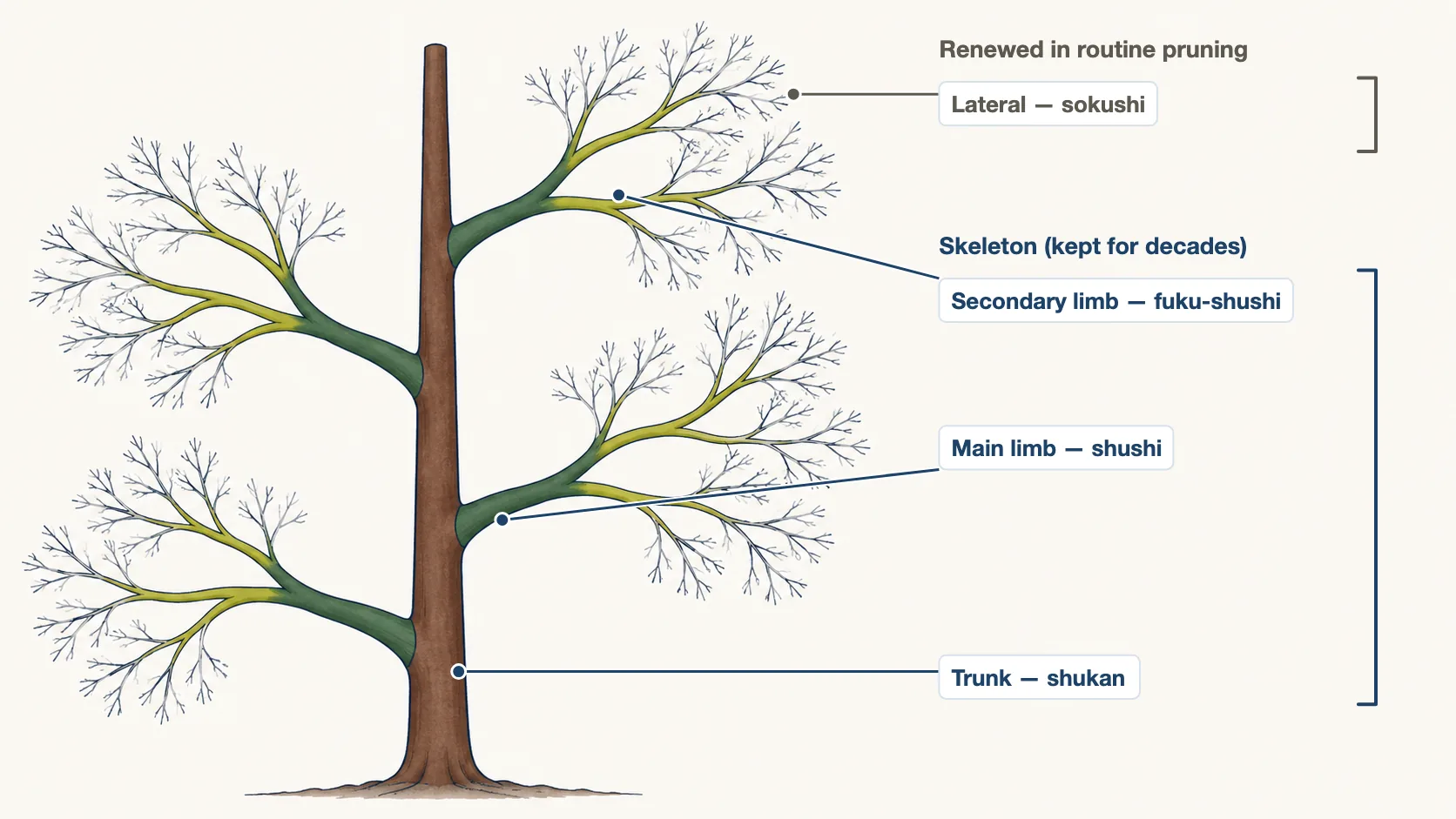
Arborists and Japanese practitioners describe the same framework in slightly different words. The diagram above follows the tiers named in Japanese street-tree manuals. The Saitama manual also calls the three branch tiers the first, second and third branch (一番枝・二番枝・三番枝), and Tokyo Metropolitan Government’s street-tree maintenance plan uses the same main, secondary and lateral vocabulary. Fruit growers use a similar ladder but usually call the second tier ashu-shi (亜主枝). The table matches Japanese terms to the English used in university extension material.
| English term | Japanese term | What it is | How long it stays |
|---|---|---|---|
| Trunk, central leader | Shukan (主幹) | The central stem that carries the crown | The life of the tree |
| Scaffold limb | Shushi (主枝) | Large limbs from the trunk that set the crown’s outline | Decades |
| Secondary scaffold | Fuku-shushi (副主枝) | Limbs dividing from a scaffold limb | Many years |
| Lateral, small branch | Sokushi (側枝) | Finer branches carrying leaves, flowers, fruit | Renewed in routine pruning |
The Saitama manual defines the main limb simply as the part of a branch that leaves the trunk, nearest the trunk, and the lateral as what divides from a secondary. It adds that the character and beauty of a tree’s form depend on how well these tiers are balanced, and that street-tree pruning is the craft of tuning that balance to species and space (section 5.3.1 and glossary, chapter 8).
Permanent against temporary
The line that matters for pruning runs between permanent and temporary wood. In Gilman’s terms, temporary branches are those expected to be removed eventually. On a young tree that is most of them: his plan states that all branches will eventually be removed on trees under 4 inches (10 cm) caliper, and that at year four most branches are still temporary. In a mature garden tree the finer laterals are the part renewed on each visit, while the scaffold changes only rarely.
Why the tier changes the cut
The tier is also a measure of consequence. A cut in the laterals is small, heals fast and can be redone next year. A cut in a scaffold limb leaves a wound that takes years to close and changes the tree’s outline for a decade. The table in the section on cutting shows this tier by tier.
Five questions to answer before the first cut
Edward Gilman’s University of Florida guide, Pruning Shade Trees in Landscapes (ENH1022), sets out six strategies for structural pruning in a fixed order. Turned into questions you can ask while standing in front of a tree, they become a checklist. Five of them are the core.
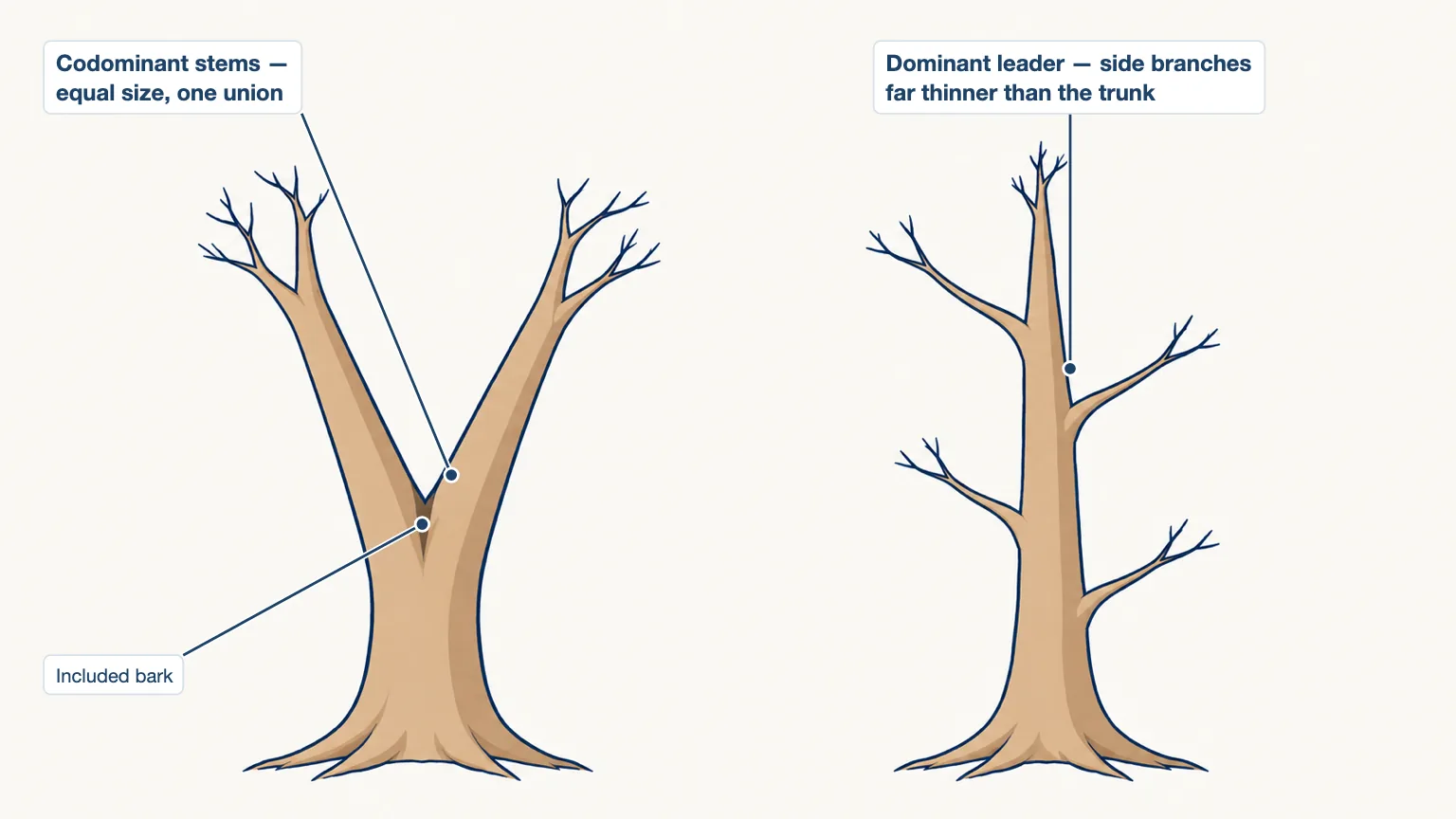
Question 1 — is there one dominant leader?
Gilman’s first strategy is to establish and maintain a dominant leader by subordinating all but one codominant stem. Codominant stems are two or more stems of similar size growing from the same point. Where they meet, bark is often squeezed into the joint (included bark), and the union is weaker than a branch attached below a single trunk. Subordinating means shortening the competing stem so it grows more slowly, not necessarily removing it.
A fuller paper by Gilman with Kempf, Clark and Matheny, written for an ISA symposium, turns this into three steps. First, identify the stem that will make the best trunk: among the largest in diameter, near the centre of the crown, and free of cracks, openings, large pruning wounds, inclusions or cankers. It does not have to be straight. Second, identify the branches that compete with it, meaning those that are large relative to the trunk. Third, remove them back to the trunk or subordinate them with a reduction cut, or both.
Question 2 — which limbs will be permanent?
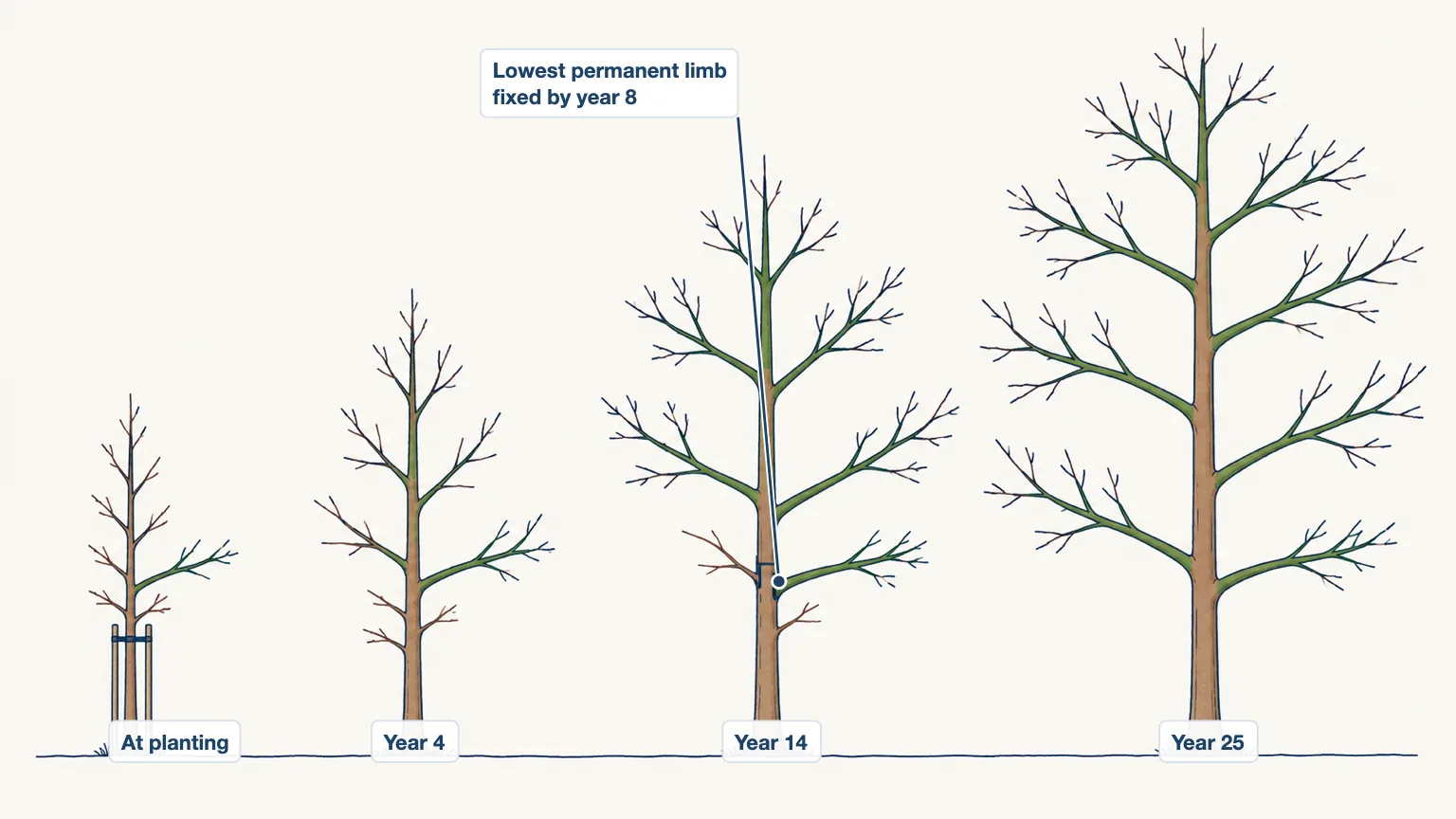
Gilman’s plan decides early where the lowest permanent scaffold limb will be, begins identifying permanent scaffold limbs at year fourteen, and expects five to ten of them by year twenty. Everything else is managed as temporary: kept for the leaf area it provides now, kept small, and removed when it is no longer needed. One strategy is easy to miss: position the lowest main scaffold limb high enough that it will not droop and have to be removed later.
Question 3 — is any branch more than half the trunk diameter?
Gilman’s rule is to prevent any branch from growing larger than half the trunk diameter. The research behind it is a 2003 test on red maple (Acer rubrum): 100 branches from 10 trees about ten years old, with branch-to-trunk ratios from 0.25 to 1.0. The smaller the branch relative to its stem, the more load it took to pull it off. The angle of attachment showed no relationship with strength, so upright branches held as well as more horizontal ones. Codominant stems were far easier to split apart than branches that were small relative to their stem; branches usually broke at or near the collar, codominant stems at the union.
The test used small branches (5 to 20 mm) on young trees, so treat the half-diameter figure as a working limit rather than a measured threshold for large limbs.
Questions 4 and 5 — spacing and leaf area
Limbs bunched at one height compete with each other and weaken the trunk at that point. Gilman’s plan says there should be only one large branch per node, with nearby branches shortened. Colorado State University Extension’s GardenNotes #613 expresses spacing as roughly 3–5% of expected mature height; for a tree expected to reach 20 m, that is about 60–100 cm between permanent limbs (arithmetic from the CSU range, not a figure the source states).
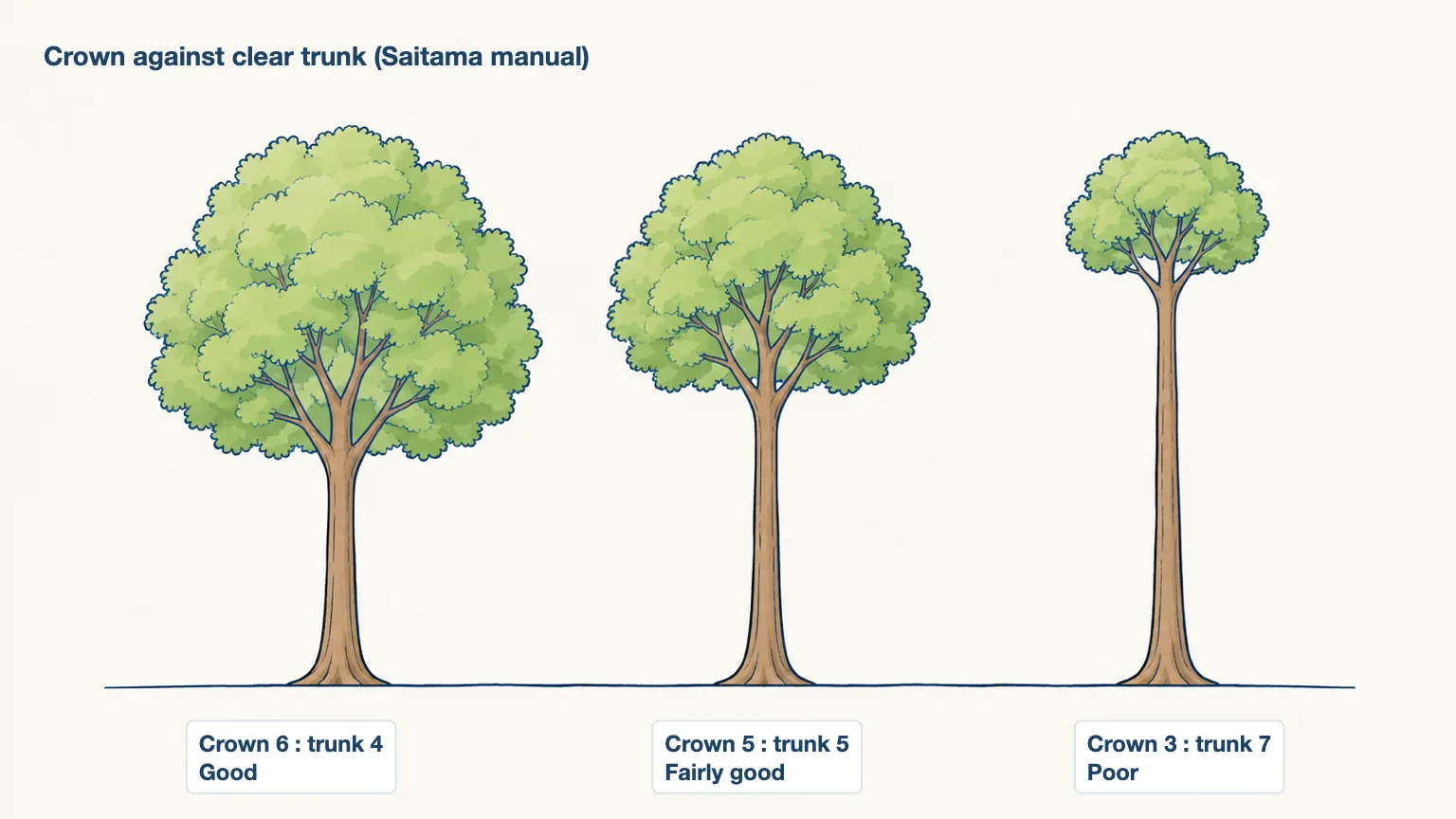
The fifth question is leaf area. Gilman keeps a live crown ratio above 60%: live branches on at least 60% of the tree’s height. Raising the crown too fast takes away the foliage the trunk depends on. The Saitama manual puts the same idea as a picture of crown against clear trunk: 6 : 4 is rated good, 5 : 5 fairly good, and 3 : 7 poor, with the lowest branches on a street tree at least about 3 m above ground (section 5.3.4). If the manual’s figure is read as crown height against total height, its 6 : 4 matches Gilman’s 60%.
How the skeleton forms — the leader, the lower limbs and the cuts that missed
Why one stem takes the lead
Trees grow most strongly at the top, where light is best. The Saitama manual calls this chōbu yūsei (頂部優性), top dominance: the crown thickens above while the lower crown falls into shade and the lower branches weaken, most strongly in sun-loving species. It describes pruning as largely the job of adjusting that tendency, and the full 1 : 2 : 3 density rule it sets for upper, middle and lower crown is covered in Sukashi pruning. For the reading, the point is narrower. A competing stem that is allowed to keep pace with the leader becomes a second trunk, which is why Gilman’s plan names competing leaders at every visit.
What temporary branches do while they stay
On a young tree the lower branches are not waste. Gilman’s plan keeps them for their leaf area and shortens them before they grow so large they have to be removed. The plan states that large branches should not be removed later, because removal initiates decay in the trunk; the better course is to shorten low branches while they are small. How trees seal wounds explains why a large cut costs the tree more than a small one.
The raised crown that skipped the real problem
The ISA symposium paper describes a common failure: crowns are raised by removing only small interior and low lateral branches. That leaves the largest branches, where the weakness is, untouched. Large branches then grow up at a steep angle into the permanent crown and become prone to cracking or breaking as they lengthen and gain weight, and trees pruned this way can lose large sections of crown. Reading the skeleton is what shows that the structural problem sits in the big wood, not in the thin growth that is easy to reach.
Reading by habit — excurrent, decurrent and designed skeletons
Excurrent trees
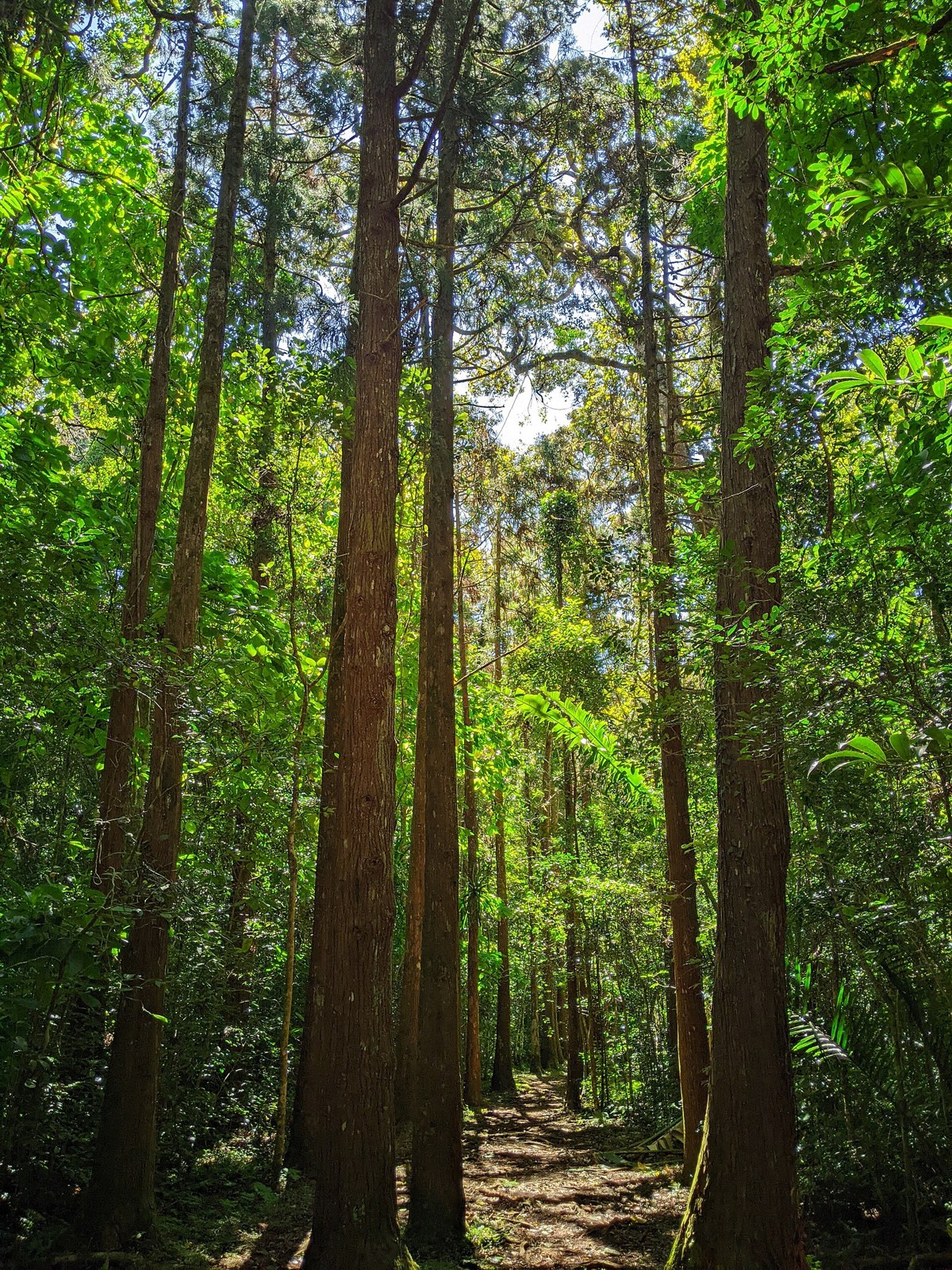
– Excurrent trees keep a single central stem that outgrows its side branches, giving a conical crown. Most conifers grow this way, as do some broadleaves such as sweetgum and pin oak. On these, the leader question is usually easy: there is one, and the job is to protect it.
Decurrent trees
– Decurrent trees divide into several large limbs and form a rounded or spreading crown. Elms, many oaks and zelkova grow this way. On these, codominant stems appear naturally, and the work is to keep one stem dominant for the first part of the trunk, then let the crown spread above it.
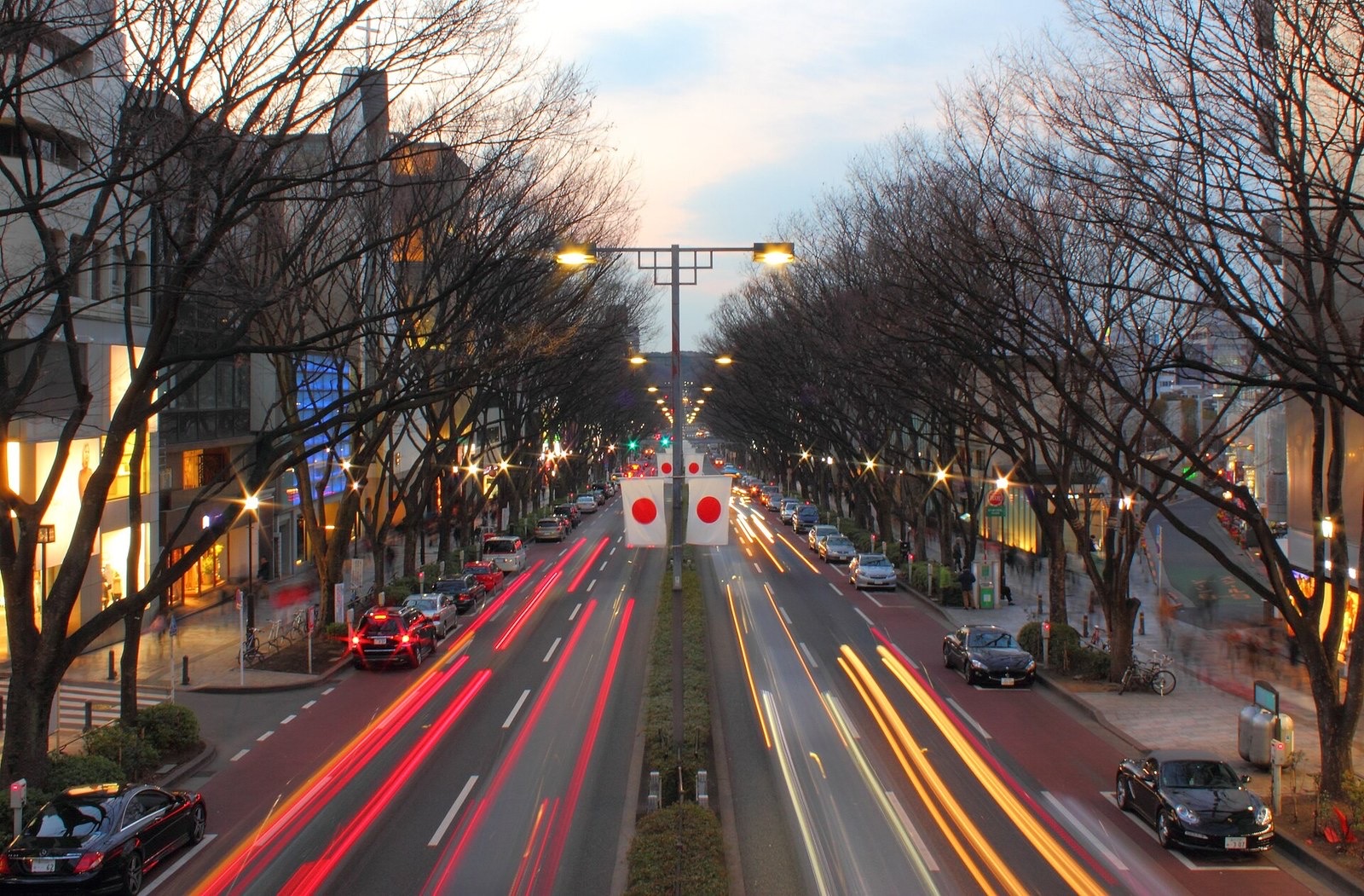
The Saitama manual sorts street trees in the same way with its own words: broad-crown trees whose main limbs branch from the top of the trunk (zelkova, cherry, pagoda tree, horse chestnut) and narrow-crown trees with one trunk to the top and main limbs set evenly round it (plane, tulip tree, trident maple). Its description of a good narrow-crown tree is a reading target in itself: the trunk runs to the top, the main limbs are spaced in a spiral from bottom to top, the upper limbs carry fewer branches than the lower ones, and crown to trunk is at least 5 : 5 (section 5.3.8). To correct a top that has become crowded, it keeps one horizontal or slightly upward limb about every 30–40 cm up the trunk, spread evenly round it (section 5.3.6). The reduction methods for each type are in Sukashi pruning.
Skeletons that are designed
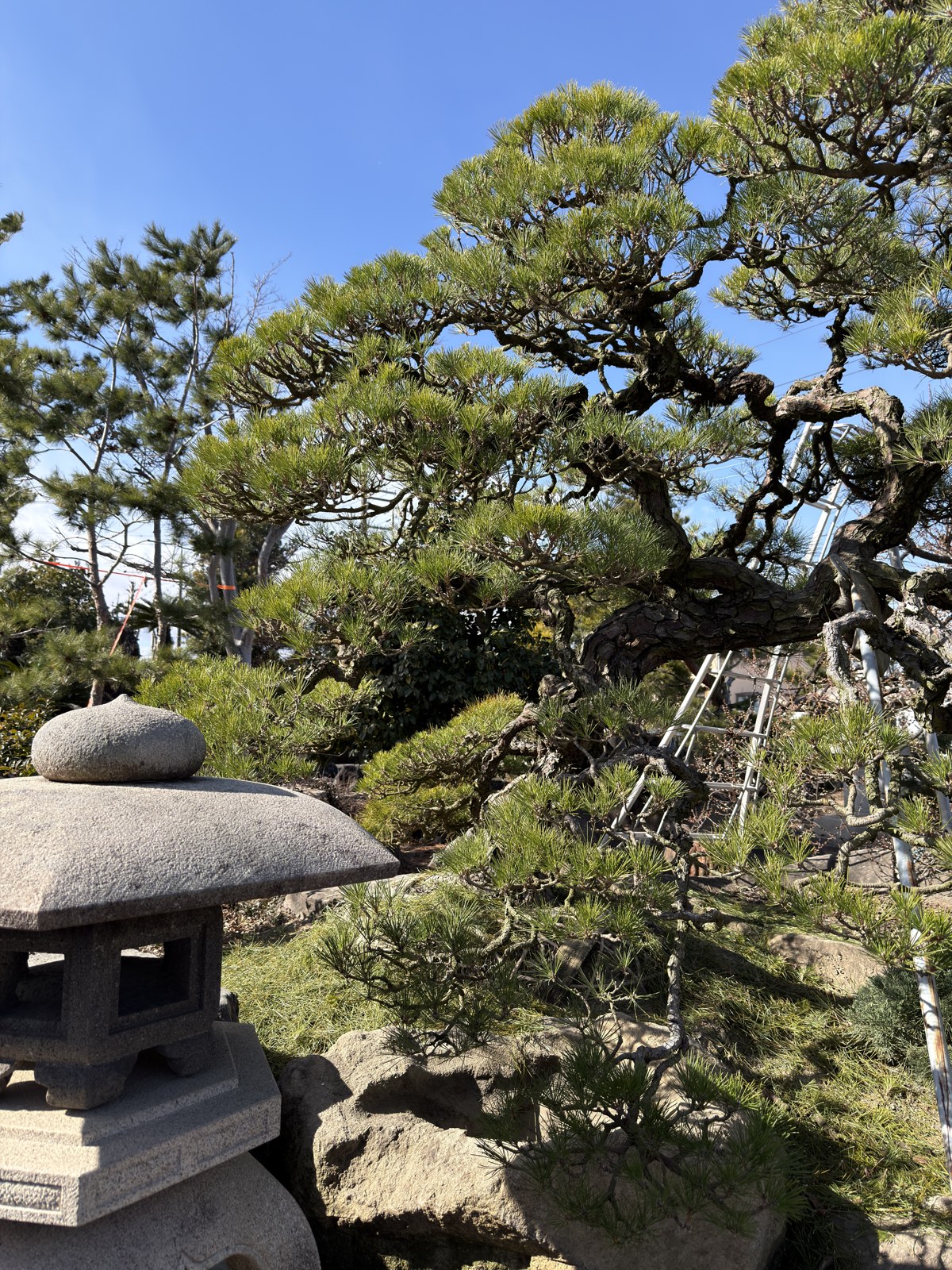
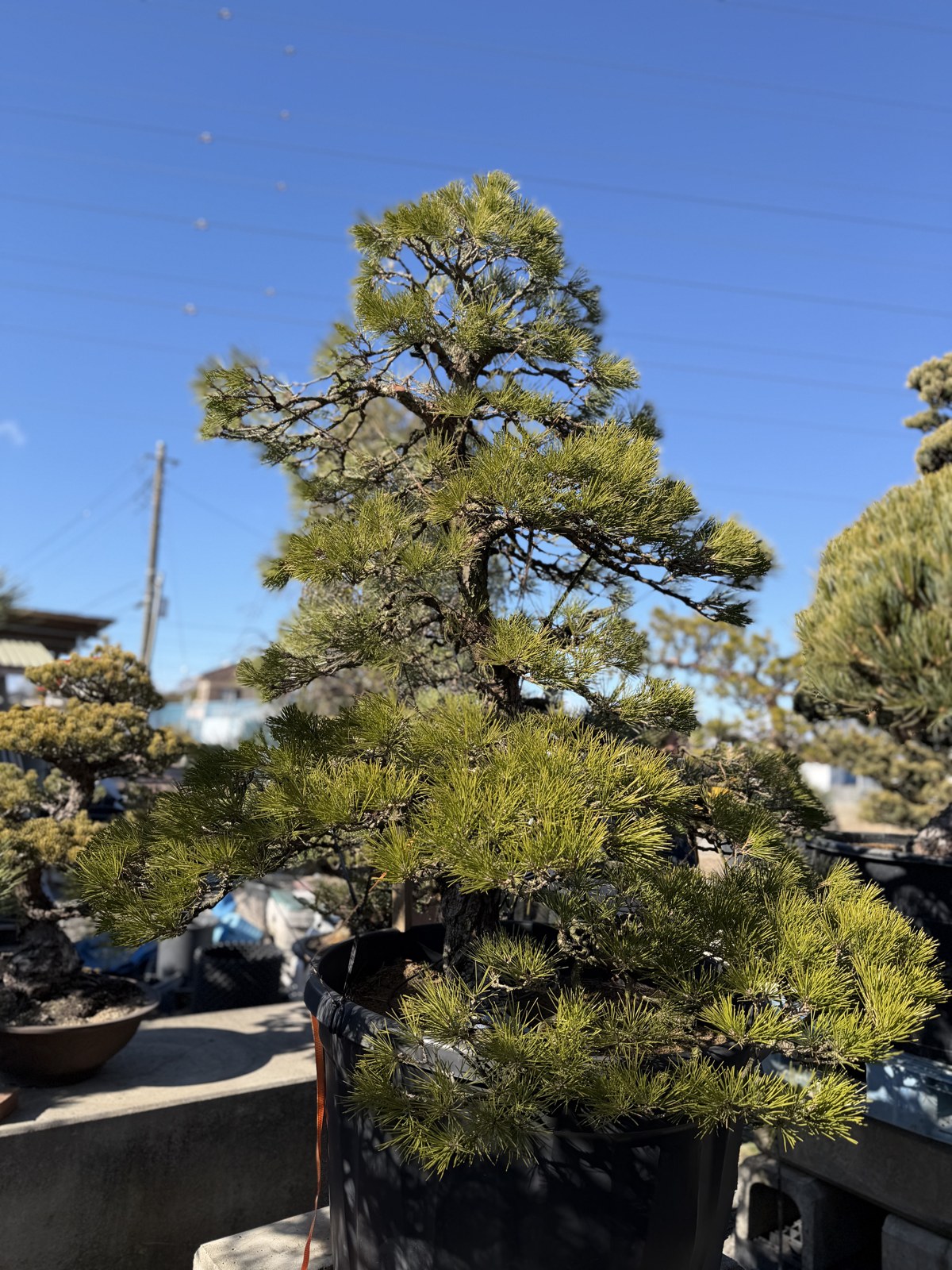
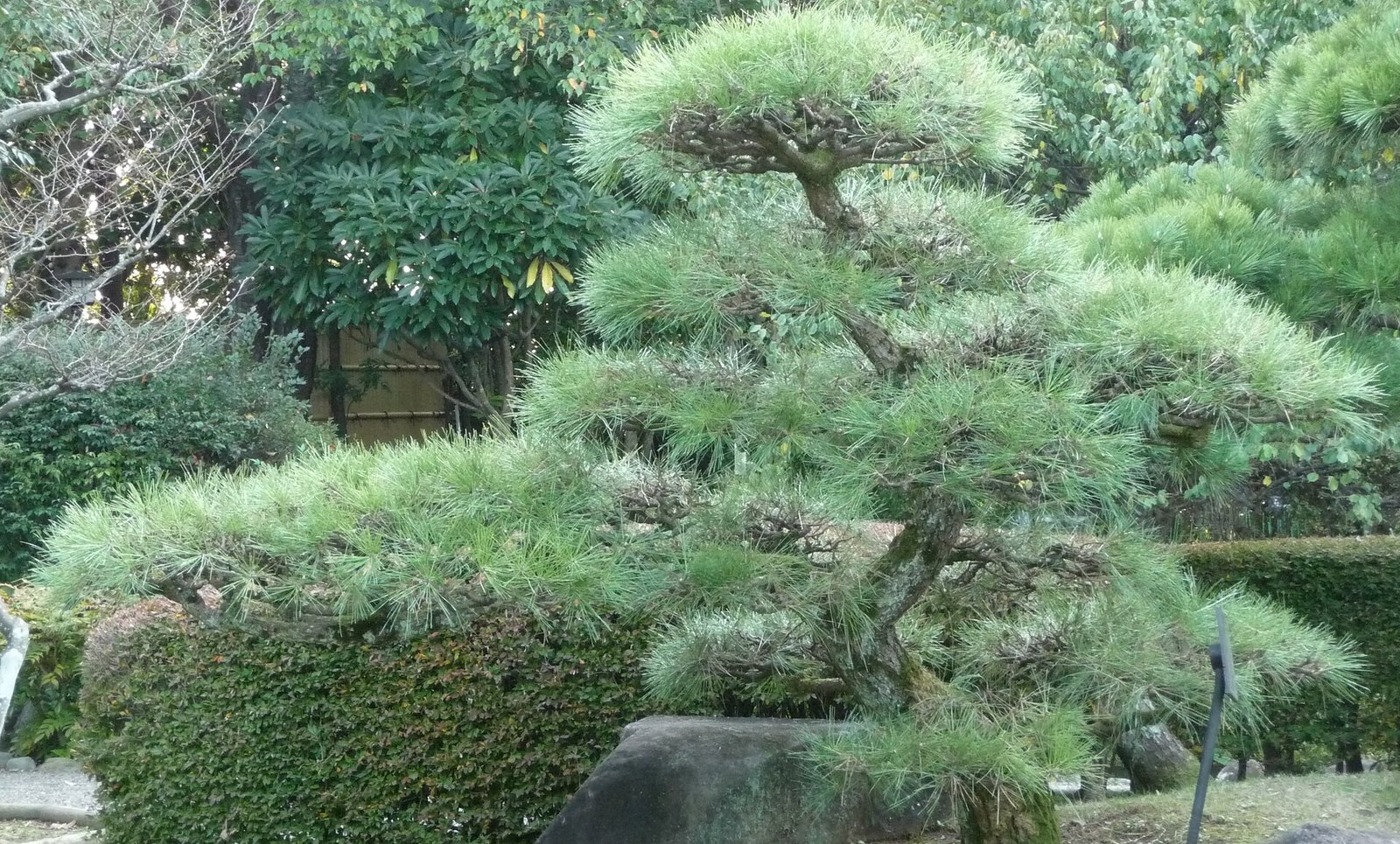
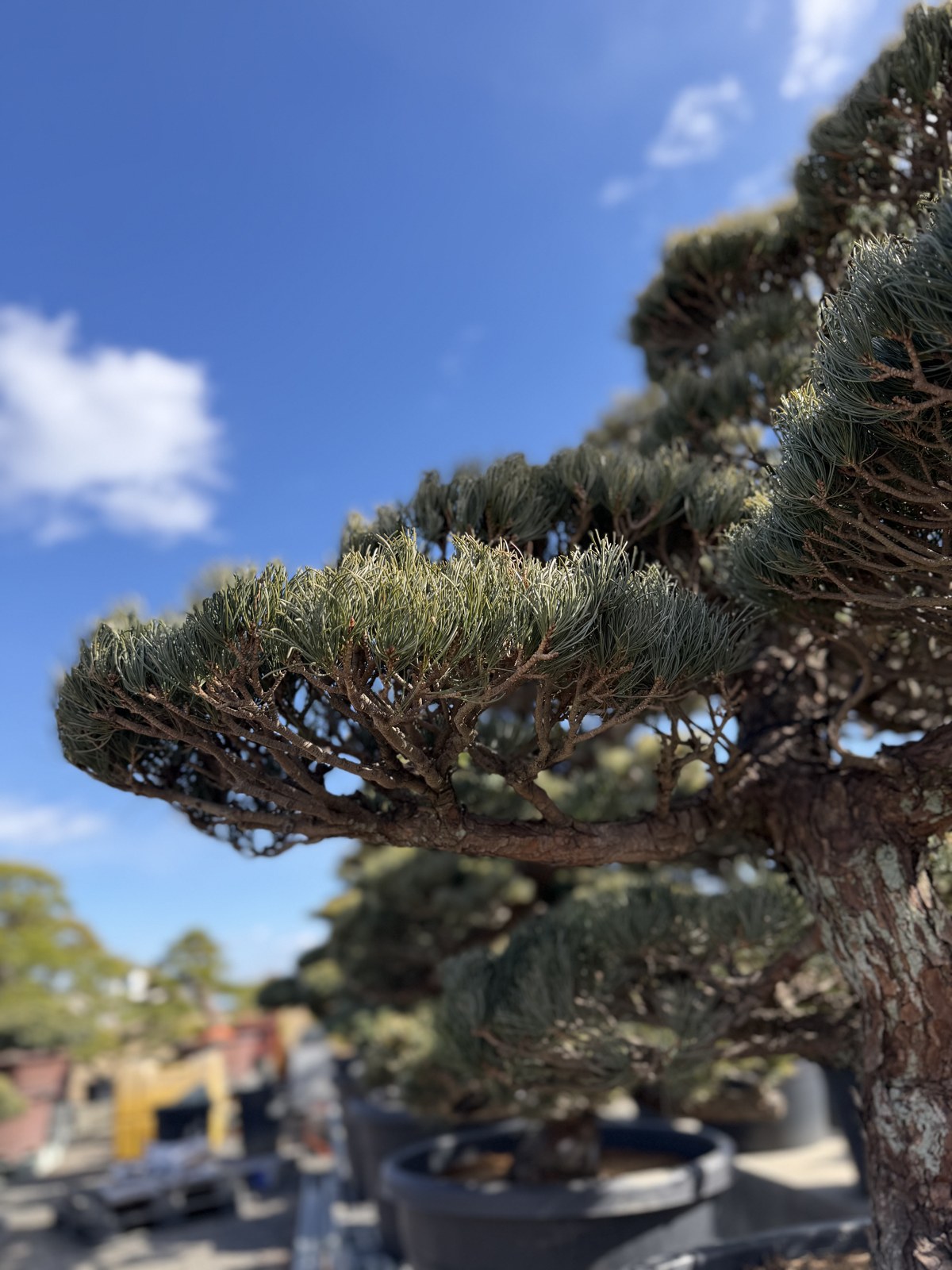
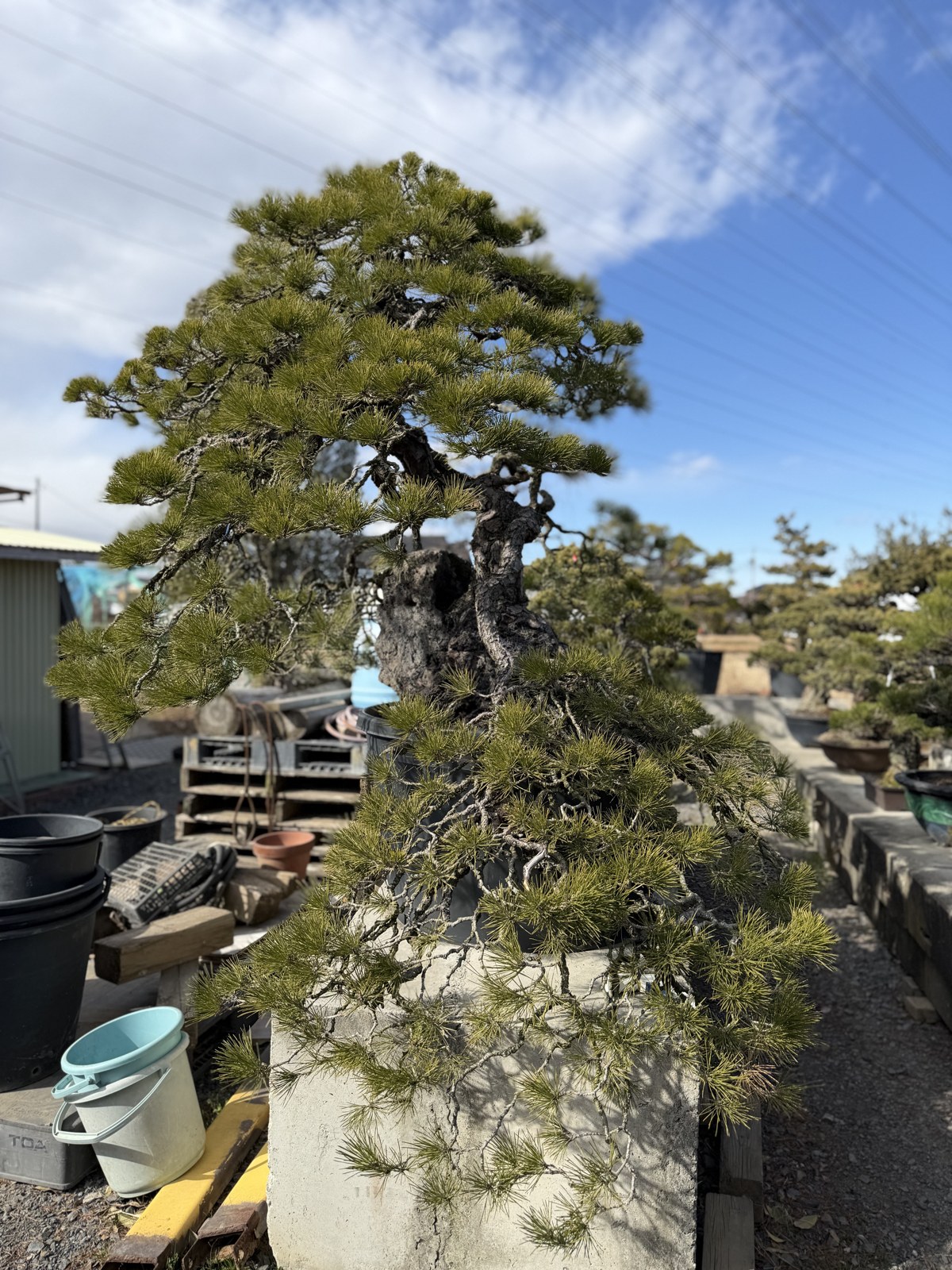
A trained Japanese garden pine is a special case. The species is excurrent in the wild, but in a garden it is trained into flat layers, each carried by a limb chosen for that job. The framework there is an imposed design rather than the species’ natural habit, and reading it means identifying which limb supports which layer. The yearly work that maintains those layers is covered in Midori-tsumi, and the winter work in Momiage. How garden trees are shaped on purpose, against how Western gardens read them, is the subject of Niwaki vs Topiary.
A walk-around reading — from a distance, from the base, from inside
Season decides what you can read
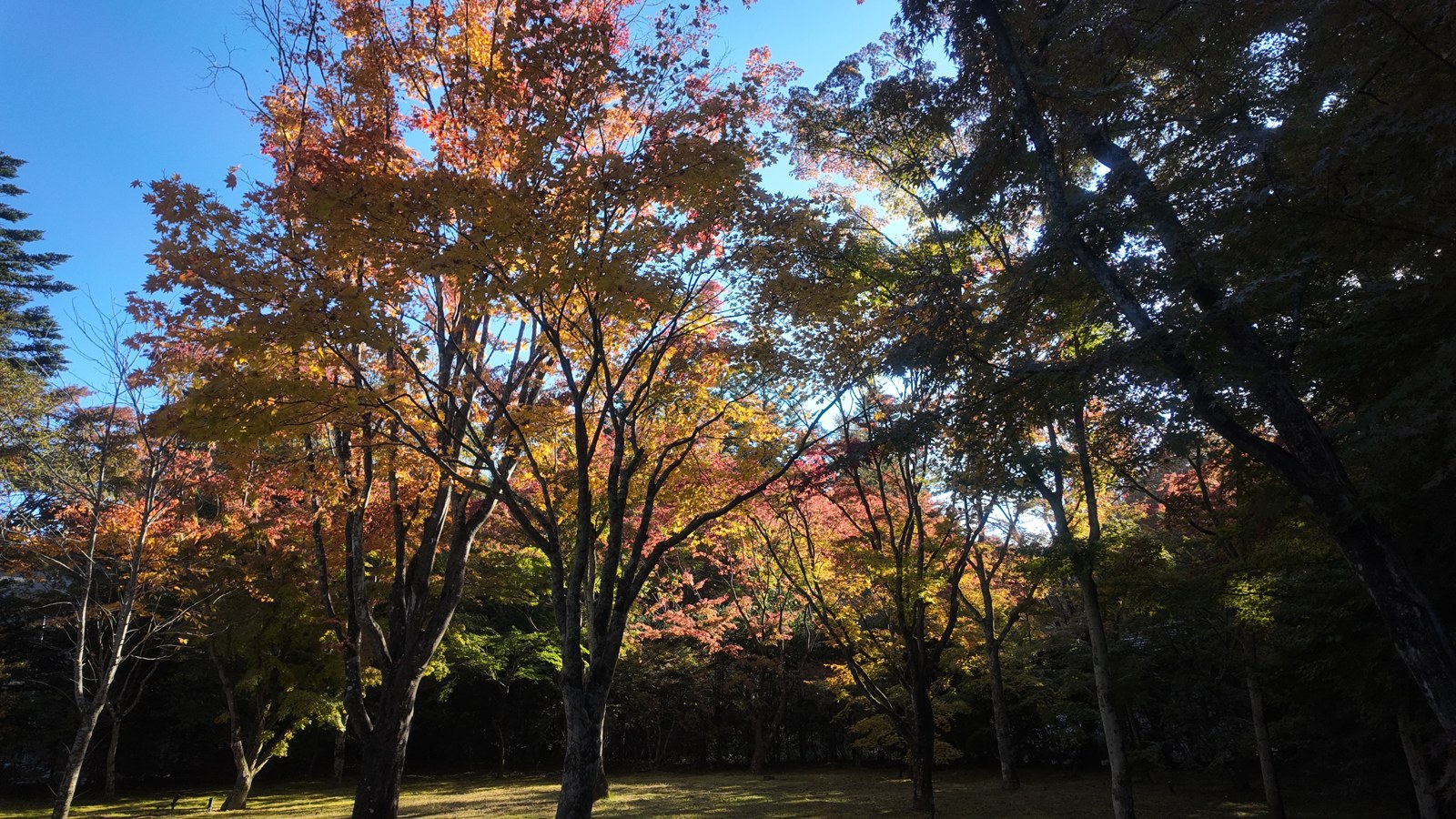
Deciduous trees are easiest to read in winter, when the limbs are bare. Evergreens never offer that view, so their framework has to be read through gaps in the foliage, or by looking up from inside the crown. A deciduous tree in leaf is somewhere in between: the main limbs show through the gaps, but the secondary tier is hidden.
Four passes
| Pass | Where you stand | What you decide |
|---|---|---|
| 1. Outline | Far enough to see the whole crown | Is the shape balanced round the trunk? Are there gaps with no skeleton, or clusters of limbs? |
| 2. Base and trunk | Close to the trunk, walking round | Is there one leader? Where is the lowest limb that stays? Are there competing stems? |
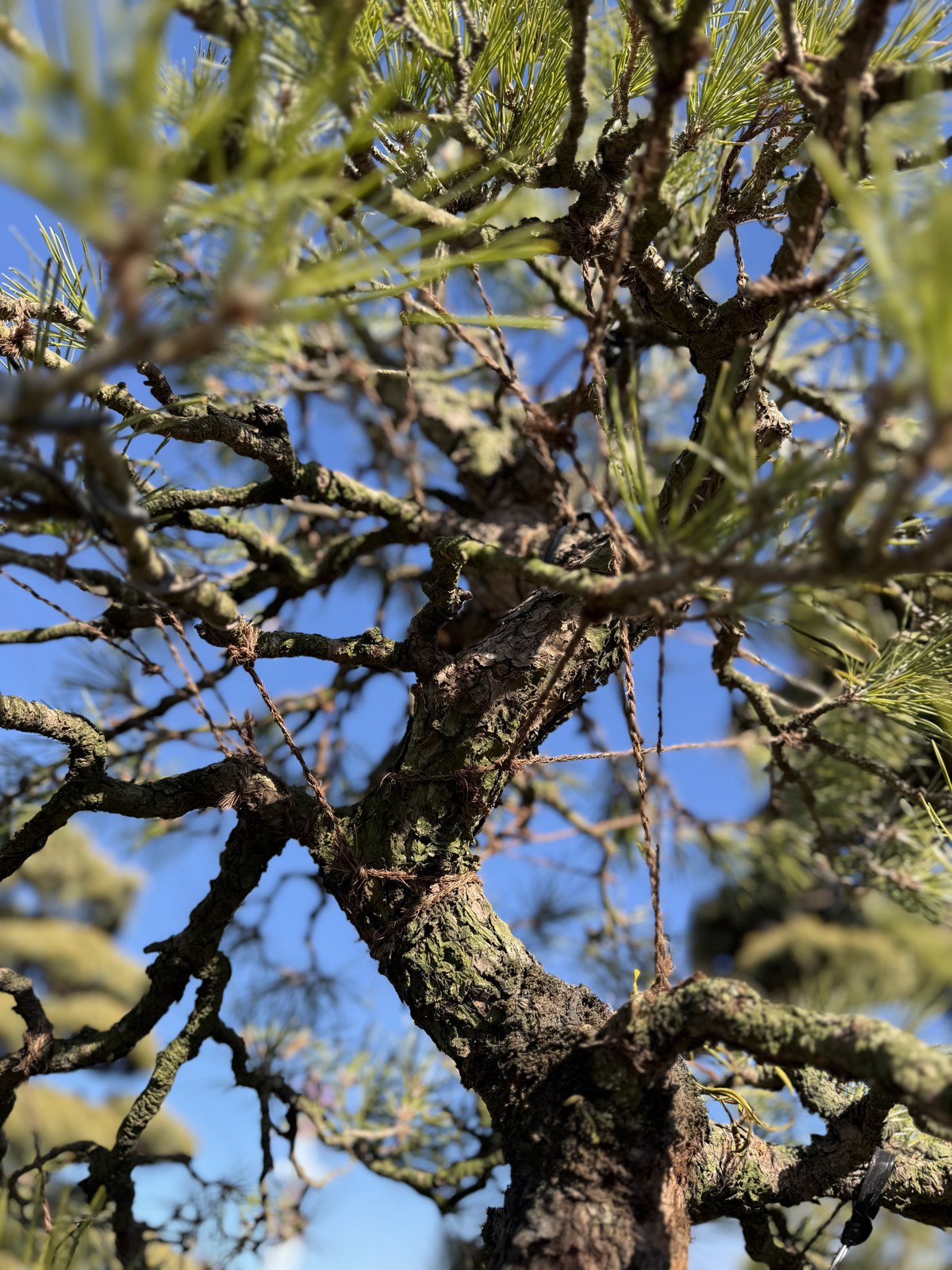
| 3. Under and inside | Looking up from beneath, or inside the crown | Which limbs carry the layers? Which unions are thick relative to the trunk? What is dead? |
| 4. Mark | Back at distance | What stays, what is shortened, what goes, and in what order |
The Saitama checklist covers pass 1 concretely. Where the skeleton has a gap and a small branch exists, keep and grow that branch; if there is none, keep a drooping upper limb or an upright lower one. Where skeletal limbs are concentrated, thin them with attention to the vertical gaps between them (section 4.1.2).
Writing the reading down
For repeat work on the same tree, a short sketch of the leader, the permanent limbs and the planned removals is worth more than memory. It also gives the next visit something to check: Gilman’s plan expects several visits over 25 years, and the sketch shows whether the tree is going where the plan intended.
From reading to cutting — what each tier allows
Cut small things while they are small
The Florida plan is built on this. Shorten low branches before they grow so large they have to be removed; space the scaffold limbs by shortening neighbours, not by taking down large ones later; start at planting. The cuts with the largest consequences are the ones the plan is designed to avoid.
What the tier tells you about regrowth
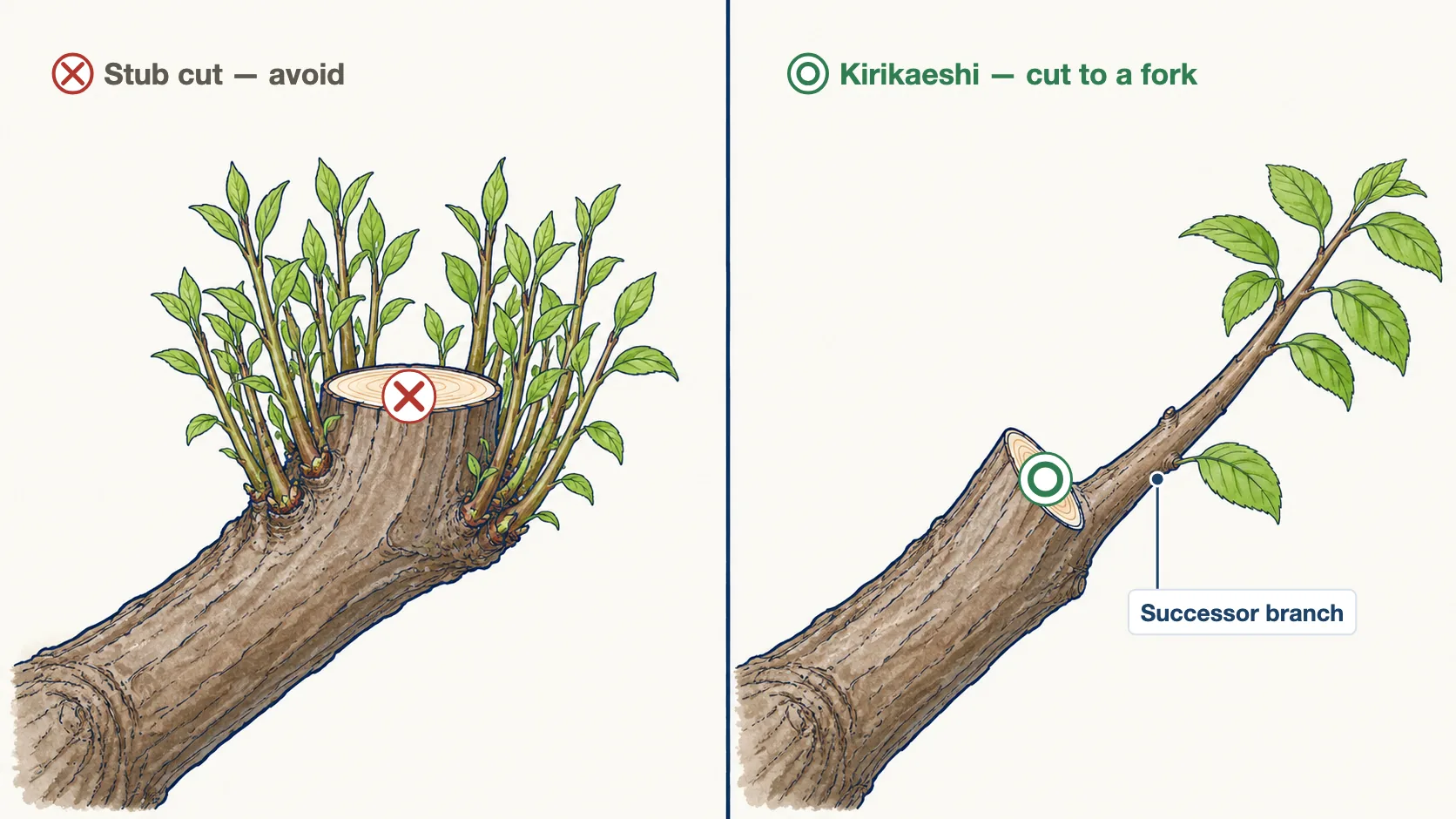
The Saitama manual’s description of heading cuts (kiritsume sentei, 切詰剪定) states the tier logic directly: moving from laterals to secondaries to main limbs, the tree after the cut is further from its target form and takes longer to recover. It adds that branches thicker than a secondary generally have no visible dormant buds, so new shoots come irregularly from adventitious buds around the cut and must be sorted the following year. It also warns that leaving a long stub of a main limb leads to dieback from the cut and decay that can reach the trunk (section 5.3.2, figure 5-7).
| Tier cut | What the cut does | Regrowth and risk |
|---|---|---|
| Lateral | Removes a small branch or twig | Quick recovery; buds are visible; can be repeated yearly |
| Secondary | Changes the middle of the crown | Moderate wound; the outline shifts gradually |
| Main limb | Changes the skeleton | Large wound; thicker wood has no visible dormant buds; regrowth is irregular and needs sorting |
| Trunk (leader) | Resets the tree | Rarely justified; decay risk is high; the manual requires full decay treatment and later checks |
Subordinate rather than remove
The ISA symposium paper adds a point about dose. The ANSI A300 standard recommends less than 25% of foliage removed in any one year, but that is an average across tree ages and health, and the paper says some branches need much more: about 60 to 70% of the foliage and buds on a large codominant branch of a young to medium-aged tree may be removed to subordinate it. The cap applies to the tree as a whole; a single competing stem can take a far larger share of cuts.
Training in years — the Florida plan, and how Japanese fruit growers plan a skeleton
Seven visits over 25 years
Structural pruning is not a single job. Gilman’s plan runs for 25 years, with seven pruning visits: at planting, then at years 2, 4, 8, 14, 20 and 25. It also limits how much foliage is removed at each stage.
| Visit | Main focus | Foliage removed (upper limit, Gilman) |
|---|---|---|
| At planting | Shorten or remove stems competing with the best leader; remove broken branches | 25% |
| Year 2 | Competing leaders; large, low, vigorous branches; branches within 12 in (30 cm) of the largest limbs in the upper half | 40% |
| Year 4 | Competing leaders; branches within 12 in of the largest limbs in the upper half; one large branch per node | 35% |
| Year 8 | Competing leaders; fix the lowest permanent scaffold, shorten aggressive branches below it | 25–35% |
| Years 14–25 | Competing leaders; identify and space 5–10 permanent scaffold limbs, 18–36 in (45–90 cm) apart | Not specified |
Two points stand out. Competing leaders are dealt with on every single visit, not once. And the plan fixes the position of the lowest permanent scaffold limb by year eight, shortening aggressive branches below it so that they never have to be removed at full size.
ANSI A300, the US tree care standard, lists developing structure among its pruning objectives, and the UK’s BS 3998:2010 covers the same work under formative pruning. Both frame it as something done in stages over years.
Spacing figures, side by side
| Source | Spacing guidance |
|---|---|
| Gilman, ENH1022 | 12 in (30 cm) from the largest limbs at years 2–4; 12–18 in at year 8; 18–36 in from year 14 |
| CSU GardenNotes #613 | About 3–5% of expected mature height |
| Saitama manual, narrow-crown top correction | One limb every 30–40 cm up the trunk, spread round it |
The numbers look similar because they measure different things. Gilman’s apply to a young shade tree being trained; the Saitama figure is for a street tree whose crowded top is being corrected. Compare the logic, not the digits.
The Japanese fruit-tree comparison
Japanese fruit growing plans the skeleton on paper before the tree is grown. A Wakayama Prefecture persimmon guide lists two-, three- (open-centre natural form, kaishin shizen-kei 開心自然形) and four-limb (modified central leader, henisoku shukan-kei 変則主幹形) systems. On vigorous sites it starts with the central leader and lowers it step by step once the limbs have opened, finishing with three or four main limbs, and places two or three secondary limbs on each main limb without crowding them. Laterals are renewed on a four- to five-year cycle. The same tier ladder — trunk, main limb, secondary limb, lateral — governs the work; what differs is that the schedule is fixed to a harvest, where the shade-tree schedule is fixed to structure.
Reading a mature tree — when the skeleton is already fixed
Most of the guidance above is written for young shade trees with space to grow. Japanese gardens, temples and streets often present a different case: a mature tree, already at the size it is expected to hold, in a space that will not get larger. Here the framework is no longer being built; it is being protected.
The questions change
– Which limbs are carrying the shape, and are any of them failing? Dead, cracked or decayed scaffold limbs come first. – Where is the tree adding size? On a mature tree held at a fixed size, most of the yearly cuts fall on the finer laterals at the ends of the scaffold. – Can a limb be shortened instead of removed? Cut it back to a successor.
Kirikaeshi — cutting back to a successor
The ISA’s guidance on mature trees is to reduce height or spread by cutting back to a secondary branch large enough to take over, at least one-third the diameter of the cut stem. Japanese gardeners call this kirikaeshi (切返し) — switching a branch to a smaller one that continues its line. The Saitama manual’s glossary defines it as keeping a short branch that divides from partway along a long one and cutting the long one off at that branch’s base, and calls it the basic technique of street-tree pruning (section 5.3.2).
The ISA’s limit on quantity applies throughout: generally no more than 25% of the crown at once, and less on mature trees. It also reminds pruners that no branch should be removed without a reason.
| Young-tree structural pruning | Mature tree held at a fixed size | |
|---|---|---|
| Main goal | Build a strong framework | Protect the framework, renew the edges |
| Typical cut | Subordination, removal of temporary branches | Reduction to a lateral, light thinning |
| Where cuts land | Throughout the crown | Mostly in the finer laterals |
| Time frame | 25 years of training (Gilman) | Ongoing, every few years |
The same reading underpins the wind work in Typhoon-Proofing Trees, and why a limited root and crown space shapes everything is the theme of Why Are Japanese Street Trees So Small?.
When the skeleton is wrong — topped trees, knobs and overgrown crowns
Topping against reduction
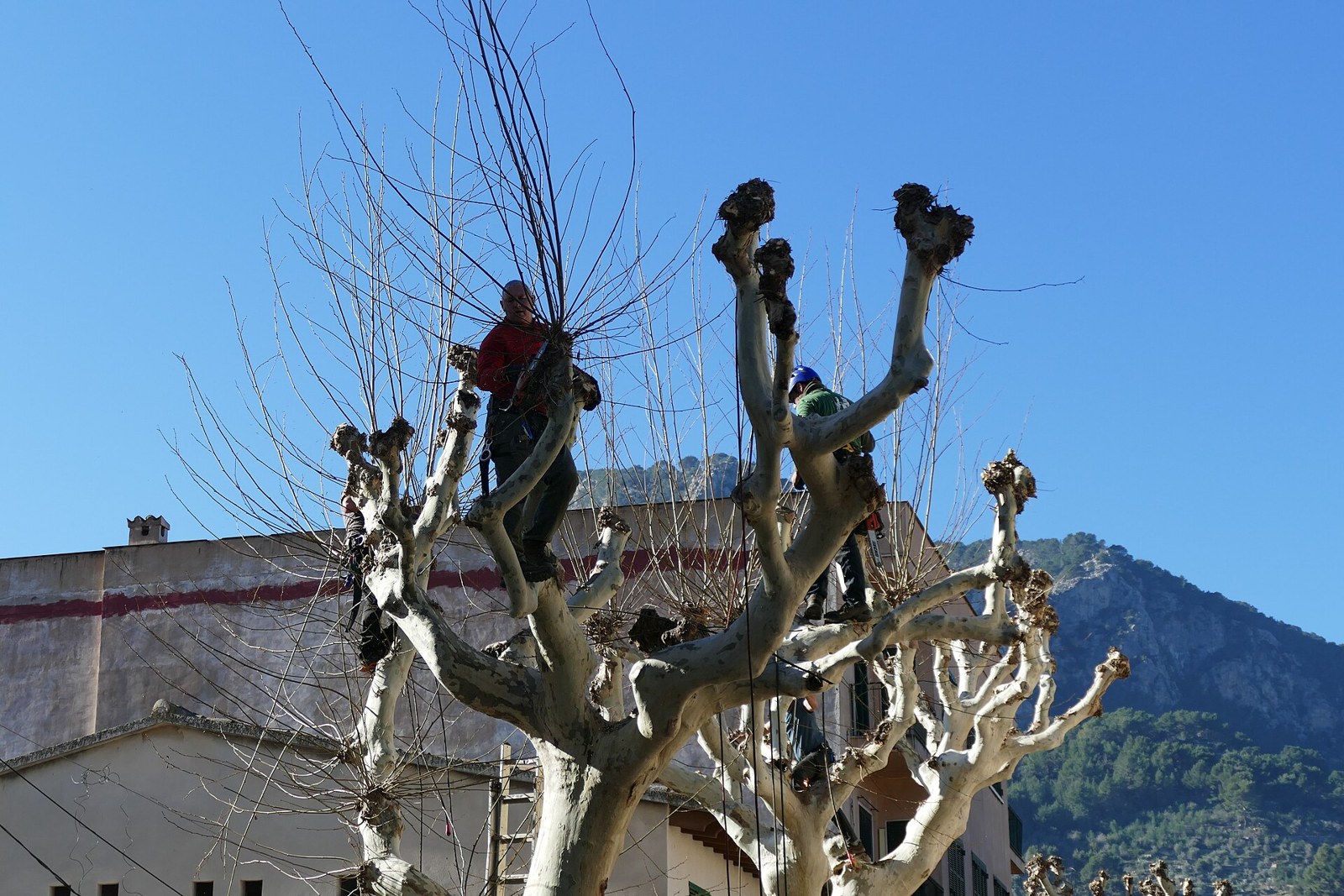
Sometimes the framework itself has failed: the tree was topped in the past, a limb was lost in a storm, or the crown has outgrown its space. The ISA contrasts topping with reduction: reduction, done back to properly sized laterals, helps maintain the tree’s form and structural integrity, while topping does not.
The three-year rebuild
Repairing a topped crown follows the same five questions, applied to the sprouts that grew from the old cuts. The ISA symposium paper treats sprouting after heavy pruning as expected and normal, and advises keeping the less vigorous sprouts because they help the tree resist decay behind the cut, while suppressing the most vigorous.
The Saitama manual gives a sequence for rebuilding a natural-form street tree after severe cutting: aim at the form wanted five to ten years ahead, and then in the first year choose three or four of the dozen or so shoots from each cut to grow, keeping three or four more as insurance against wind and snow breakage. In the second year, do not prune and watch. In the third, make the full shaping cut and reduce the three or four to one or two (section 4.2.1, type 4). It is slow, but it replaces a weak framework without creating new large wounds.
A shell over a skeleton
Even a tightly sheared Karikomi shrub has a framework under the surface, and the clipped shell lasts only as long as that framework stays sound.
Misreadings that lead to the wrong cut
Reading only the surface
Thinning twigs while the heavy limb is the problem: the raised-crown failure above. A reading that stops at the outline cannot find a weak union or a competing stem.
Treating the diagram as a template
The four-tier drawing is a vocabulary, not a target. A real zelkova, a plane and a trained pine each arrange their tiers differently, and the reading has to start from what the tree actually has.
Removing every codominant stem
Not removed, usually subordinated. A large cut in the trunk can do more harm than the weak union it was meant to cure; Gilman’s plan uses shortening, repeated over visits.
Fixing the wrong tier first
Because the tier decides the cost, the order is skeleton questions first, finishing cuts last. Dead and damaged wood comes out first, structural faults next, and the fine tuning of lateral density last.
Frequently asked questions
What is structural pruning? Structural pruning sets the permanent framework of a tree: a dominant leader where the species allows it, well-spaced scaffold limbs, and branches kept smaller than half the trunk diameter. It is done in stages, with most cuts made while branches are still small.
What is the difference between temporary and permanent branches? Permanent branches are the scaffold limbs that will form the mature crown. Temporary branches provide leaf area while the tree is young but are kept small and removed over time. On a young tree, most branches are temporary.
Should every codominant stem be removed? Not removed — usually subordinated. Shortening the competing stem slows it down so one stem stays dominant. On decurrent species that naturally divide into several limbs, the aim is a single dominant stem for the lower trunk, with the spreading crown above it.
What do shushi, fuku-shushi and sokushi mean? They are the Japanese names for the main limb, the secondary limb and the lateral. Japanese street-tree manuals also call them the first, second and third branch.
How long does it take to build a tree’s skeleton? Gilman’s plan runs 25 years with seven visits, and permanent scaffold limbs are identified from about year fourteen.
Does the same reading apply to a mature garden tree? The questions are the same, but the aim changes from building to protecting: most cuts fall on the finer laterals, and long limbs are shortened back to a successor of at least one-third the diameter.
Sources
– Edward F. Gilman, Pruning Shade Trees in Landscapes: A Plan for Training Shade Trees (ENH1022/EP276), University of Florida IFAS Extension (reviewed 2025) — checked 2026-10-29 – Edward F. Gilman, Brian Kempf, Jim Clark and Nelda Matheny, Structural pruning shade trees (ISA symposium paper) — checked 2026-10-29 – Edward F. Gilman, “Branch-to-Stem Diameter Ratio Affects Strength of Attachment,” Arboriculture & Urban Forestry 29(5): 291–294, 2003 — checked 2026-10-29 – Colorado State University Extension, Structural Pruning of Young Shade Trees, GardenNotes #613 — checked 2026-10-17 – International Society of Arboriculture, Pruning Mature Trees (TreesAreGood brochure, v03.2021) — checked 2026-10-17 – Tree Care Industry Association, ANSI A300 Part 1: Pruning (overview of pruning objectives) — checked 2026-10-17 – Saitama Prefecture, Road Environment Division, 街路樹剪定マニュアル (Street-tree pruning manual), December 2020 — chapters 4, 5 and 8, checked 2026-10-29 – Tokyo Metropolitan Government, Bureau of Construction, 街路樹維持管理計画書 (Street-tree maintenance plan), December 2021 — checked 2026-10-18 – Wakayama Prefecture, Ito regional office, 柿の栽培管理(整枝) (Persimmon cultivation: training) — checked 2026-10-29