

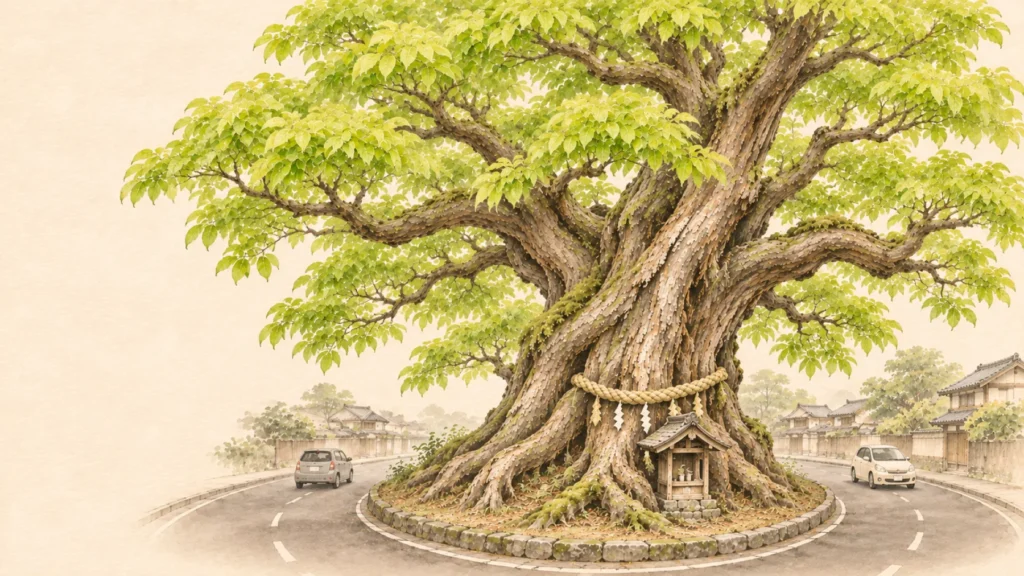
Trees stand in the middle of some Japanese roads because the road moved, not the tree. Studies of Osaka’s roadside trees describe trees that grew inside shrine, temple or house grounds and ended up on the road when streets were widened or land was re-plotted; the tree, often with a small shrine, stayed where it stood, and neighbours kept tending it. Belief matters — a sacred tree is treated as a place where a deity dwells, and local legends warn of misfortune for anyone who cuts one — but it works alongside a road standard that asks designers to consider keeping valuable trees, and residents who keep up the care.
This article follows one shrine in the middle of an Osaka street — its legend, its history, the rules around it and what an arborist would look at — and compares it with England and the United States.
In the Middle of Kusunoki-dōri — A Shrine in the Street
What you see first
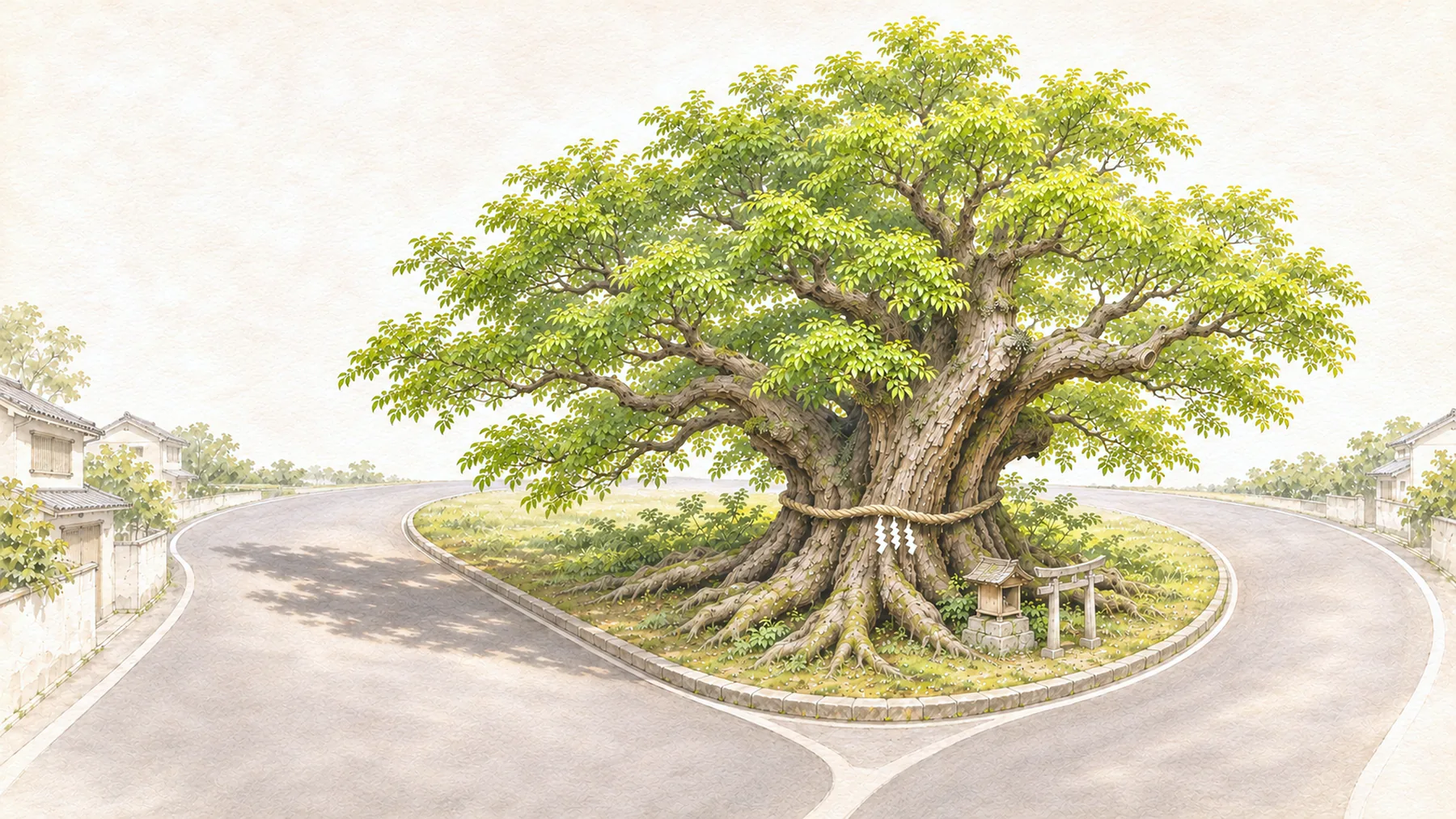
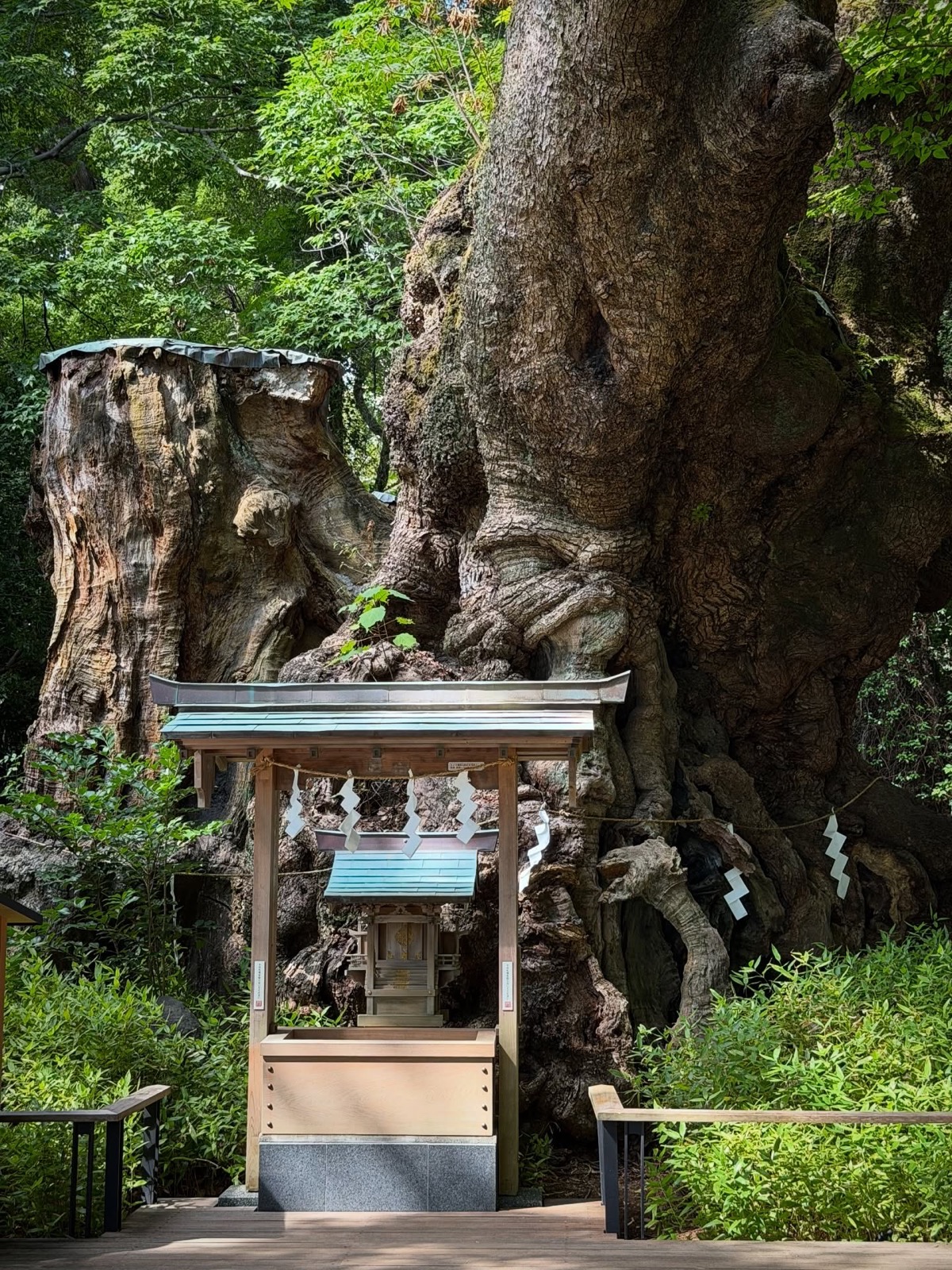
Walk east from the Tanimachi 7-chōme crossing in Chūō Ward, Osaka, along the street locals call Kusunoki-dōri — “Camphor Street” — and the road does something roads are not supposed to do. Right in the middle of it stand a torii gate, a little shrine and the remains of a tree wrapped in a straw rope. The temple that once owned this ground describes the spot simply: it is “right in the middle of the road” (道のど真ん中).
The shrine is known as 楠木大神 — roughly, “the Great Deity of the Camphor Tree.” In this article we call it the camphor shrine.
A tree that is no longer alive
Here is the detail that turns the usual story upside down. The original camphor tree (kusunoki, 楠/クスノキ, Cinnamomum camphora) is dead. A 2024 paper by Ueda and Nishikawa (上田・西川) in the landscape architecture journal Randosukēpu Kenkyū (ランドスケープ研究) surveyed trees standing on Osaka’s streets in 2021. At this address it recorded the camphor as a dead tree, citing an earlier survey that dated its death to around 1941–42. The cause is not known.
And yet, the same survey found a sacred straw rope — a shimenawa (注連縄), the rope that marks something as holy — still tied around the dead tree, and people still coming to pray. The researchers also recorded a kunugi (sawtooth oak, クヌギ) at the same spot, so any foliage seen there should not be taken for the old camphor’s.
So the first answer to “why is there a tree in the road” is already strange. In this case the tree died more than eighty years ago. What has been kept is the place.
The Legend — A Snake, a Curse, an Age Nobody Measured
What people said would happen
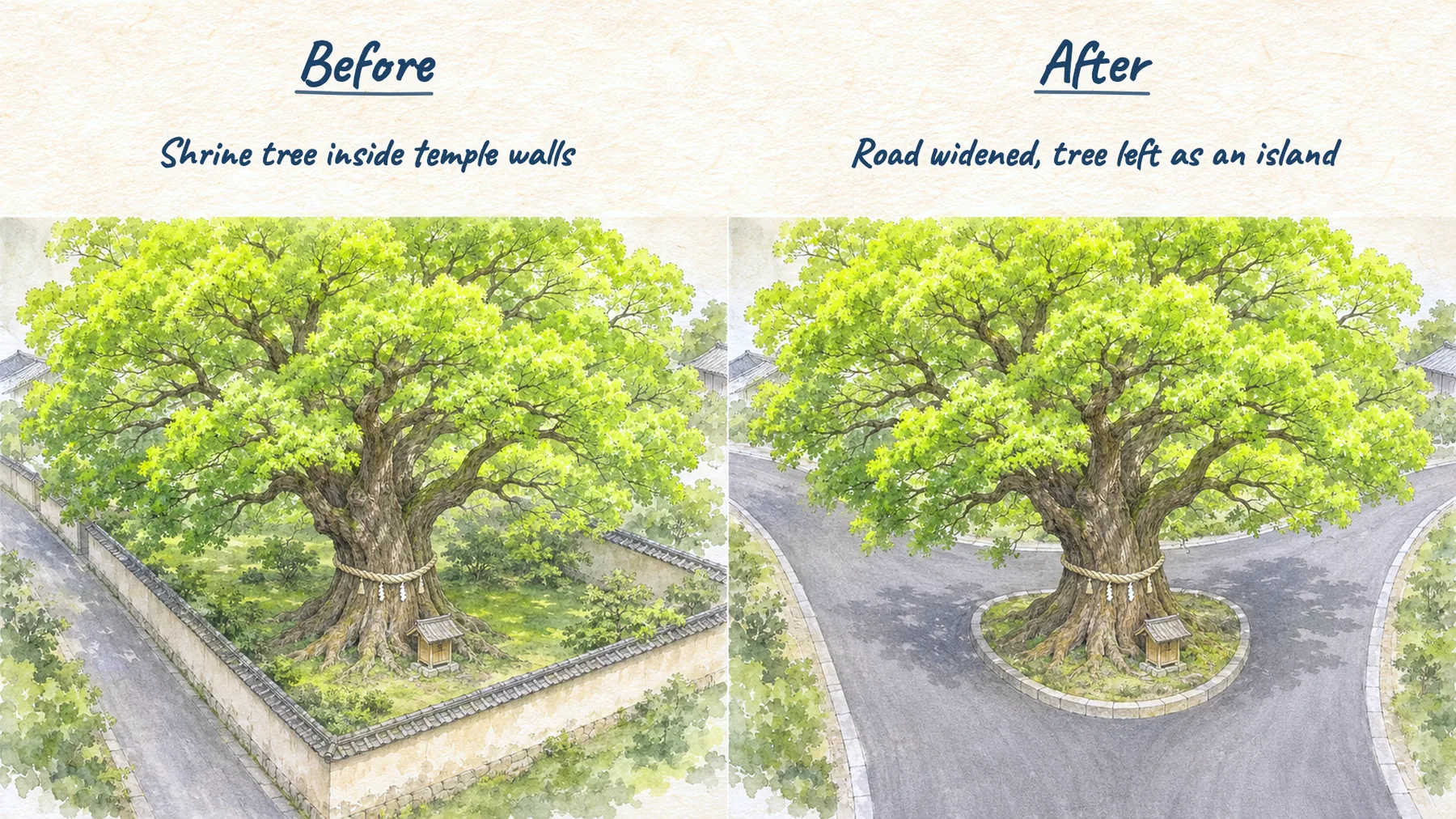
The story told about the camphor shrine is a familiar one in Japan. According to a 2021 article in Kenchikujin (建築人), the magazine of the Osaka Prefecture association of architects (大阪府建築士会), a snake that brought prosperity was said to live in the tree, and people feared that cutting it down would bring a curse (祟り, tatari). The same article says the tree was once said to be 500 to 600 years old.
Both claims are legend, and they should be read that way. No measurement method is given for the age. We found no record — no date, no name, no construction report, no newspaper story of the time — of any worker who was hurt or killed after touching the tree. What the record does show is simpler: the shrine still stands in a city street, and in 2021 people were still coming to pray there.
The white snake belongs to another shrine
Visitors sometimes merge this shrine with another one nearby. In Andōji-machi, also in Chūō Ward, a second roadside tree is known as Enoki Daimyōjin (榎木大明神). Despite the name, which suggests an enoki (Chinese hackberry), the tree there is identified as an enju (槐, Japanese pagoda tree). The white snake is recorded at that shrine: a leaflet kept there, transcribed by a visitor, gives its object of worship as a white snake (白蛇), and a published visit photographs a small shrine there labelled Hakuja Daimyōjin (白蛇大明神), the White Snake Deity.
The source for the camphor shrine speaks only of a snake, not a white one. The two shrines are near each other, and it is easy to see how their stories blur — which is why we keep them apart here.
From Temple Ground to Traffic Lane — How the Road Came to the Tree
Temple grounds until 1938
The camphor shrine did not start in a road. Honshō-ji (本照寺), a temple that used to stand in Tanimachi, says the tree stood on its precinct land until 1938. Some of the temple buildings were badly damaged in 1945, during the war. In 1968 Honshō-ji left Tanimachi and moved to Yao (八尾), and the temple gives the reason as Osaka’s city planning.
This is where the sources stop. The temple’s account tells us when the tree was on temple land, but not which road project put it on the carriageway, in which year, or who decided to keep the shrine. The Kenchikujin article links the road widening and the temple’s move to the early Shōwa period; the temple itself dates the move to 1968. For the move we follow the temple’s own account. For the road works we do not have a date.
A pattern found across Osaka
What happened in Tanimachi is not unusual in Osaka. A 2002 study by Yoshida and colleagues on Osaka’s robōju (路傍樹, “roadside trees”) looked at exactly this kind of tree: one that grew in the grounds of a shrine, temple or private house and ended up standing on the road after the road was widened or the land was re-plotted (区画整理, kukaku seiri, land readjustment).
That is the mechanism behind many “tree in the middle of the road” stories. Land readjustment redraws plots, straightens streets and makes them wider. A tree that stood just inside a wall now stands just inside the new road line. If it is cut, the problem disappears. If it is kept — because it is a shrine tree, or because people simply like it — the road has to go around it.
A typical sequence, as the Osaka studies describe it — not the documented history of any single tree:
| Stage | What changes | Who has a say in the tree’s fate |
|---|---|---|
| Before | Tree stands inside shrine, temple or house grounds | The landowner |
| Road widening or land readjustment | Plot boundaries move; the tree falls inside the new road line | The road project, plus the people who object to cutting |
| After | Tree stands on the carriageway, a traffic island or the pavement | The road administrator, with residents who tend the shrine |
Who looks after it now
The 2024 survey gives a snapshot of the camphor shrine in 2021. The landowner was recorded as the City of Osaka, and the main carers as local residents. That does not tell us who decided to keep it decades ago, but it shows how such places carry on: the public owns the ground, the neighbourhood keeps the shrine.
The 2002 study found the difficulty in that arrangement. Residents in its survey cared a great deal about keeping the roadside trees, but few wanted to take part in looking after them. Keeping a tree in the road is a decision made once; caring for it is work that has to be done every year.
What Makes a Tree Sacred — Shinboku, Himorogi, Tatari
Shinboku: a tree where a deity dwells
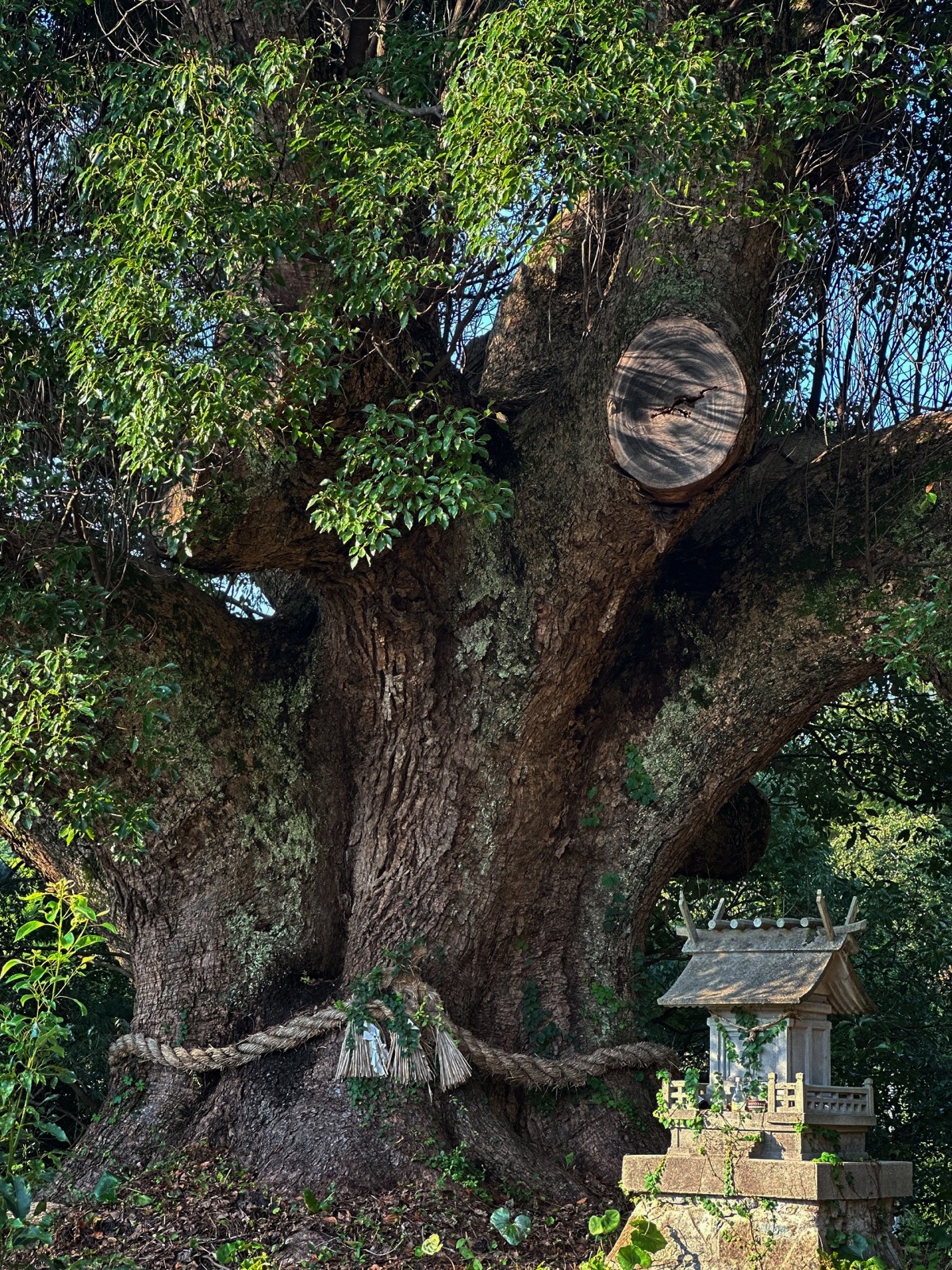
The word that explains most of these trees is shinboku (神木), also called goshinboku (御神木). Kokugakuin University (國學院大學) defines it as a sacred tree in which a divine spirit is believed to dwell. It is not a category of species or size. What makes it one is how a community treats it.
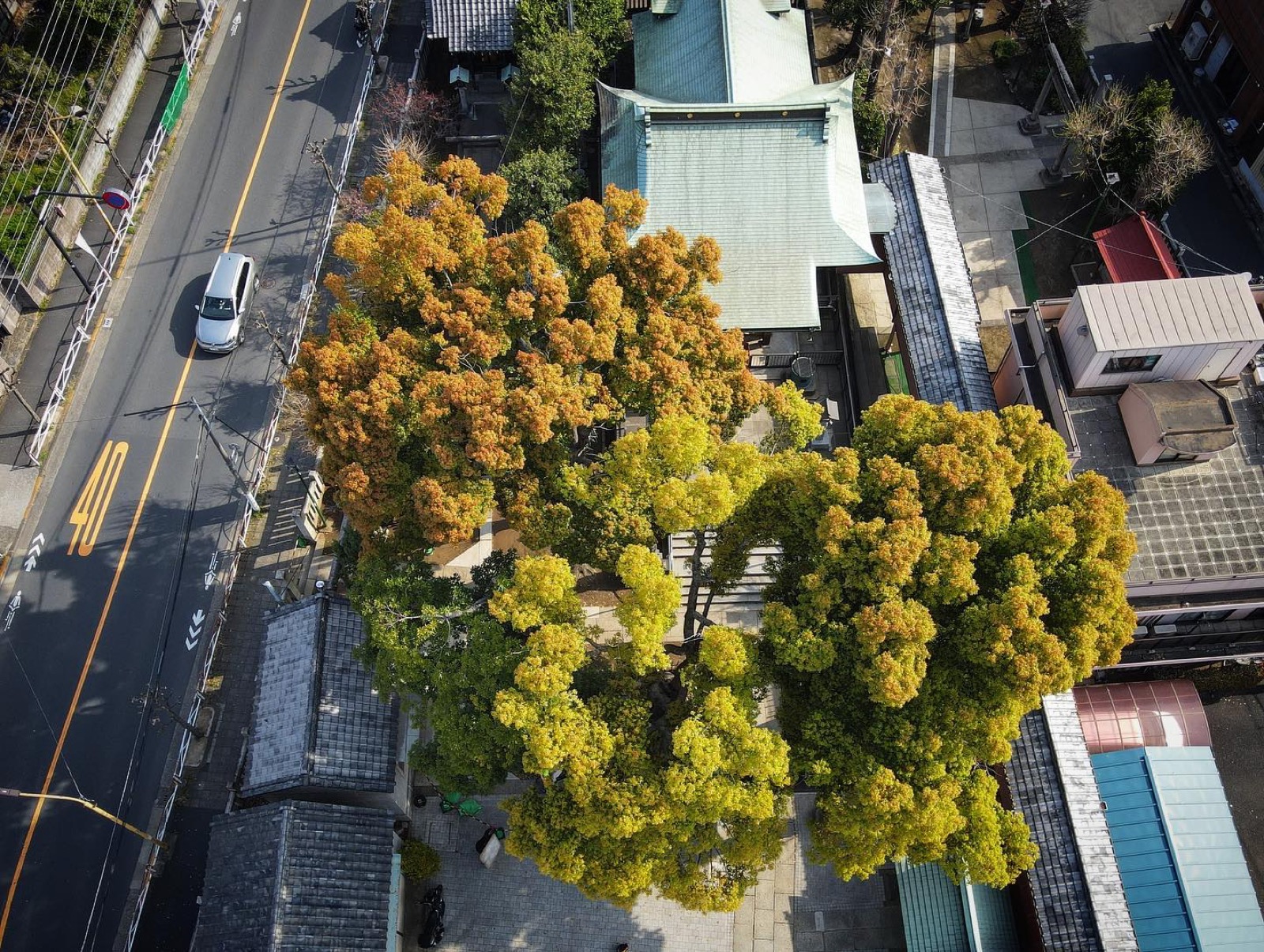
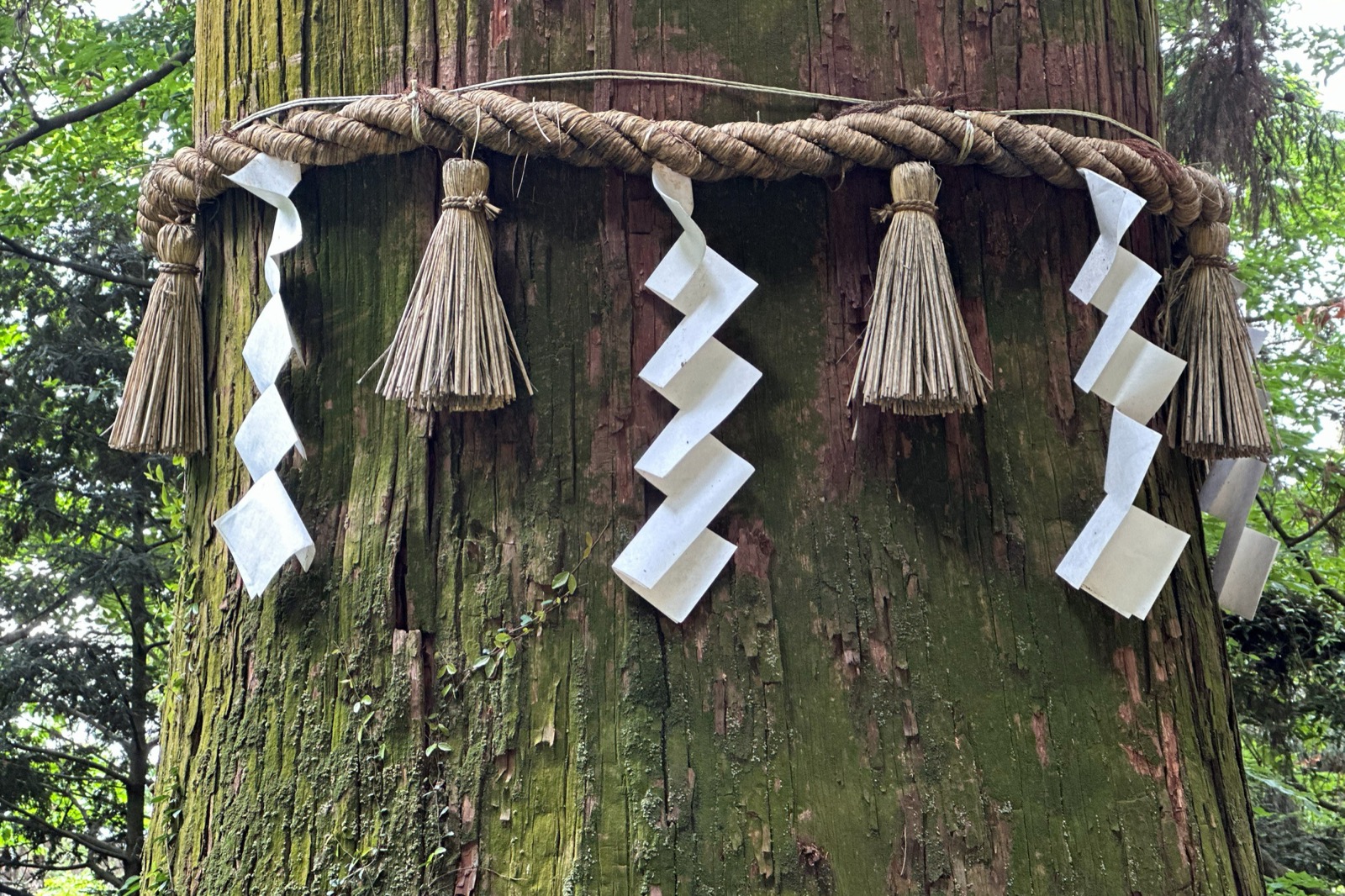
You recognise one by what is tied to it: a straw shimenawa rope, often hung with zigzag paper strips called shide (紙垂), and sometimes a small torii or a miniature shrine (祠, hokora) in front. On a road island, these few objects are what tell a driver that the tree is not just a leftover from a planting scheme.
Himorogi: the older idea behind it
Kokugakuin’s encyclopedia also describes himorogi (神籬): a sacred seat set up in a pure place and surrounded by evergreens, where a deity is invited during a rite. Today a himorogi can be as small as a branch of the sacred sakaki tree with paper strips attached. A himorogi and a shinboku are not the same thing, but they share a starting point — the idea that a deity can come to rest in living green.
Tatari: misfortune read as divine will
The curse in the Osaka legend has a name too. Kokugakuin’s encyclopedia explains tatari (祟り) as the manifestation of divine will, read into misfortune. It is a way of interpreting events, not a claim about cause and effect. When a story says “the man who cut the tree fell ill,” it is saying that the community read his illness as a sign. That is why we report these stories as stories.
| Term | Japanese | What it means | What you see on the street |
|---|---|---|---|
| Shinboku / goshinboku | 神木/御神木 | A tree where a deity is believed to dwell | A large tree with a rope around it |
| Shimenawa | 注連縄 | Sacred straw rope | Rope tied around the trunk |
| Shide | 紙垂 | Zigzag paper strips | White paper hanging from the rope |
| Hokora | 祠 | Small shrine | A box-sized shrine beside the trunk |
| Himorogi | 神籬 | Seat for a deity set up for a rite | Today often a sakaki branch with paper strips |
| Tatari | 祟り | Misfortune read as divine will | The legend told about the tree |
Three More Trees in the Road — Kobe, Nagoya, Hitachi
The camphor shrine is not alone. These three show the same pattern in different places, and they also show how much the details vary: one tree sits on the road, one on the pavement, one between two lanes of traffic.
Kobe: a camphor where the road narrows
In Nagata Ward, Kobe, the city’s list of “Citizens’ Trees” (市民の木) includes a camphor at Nishidai-dōri 2-4 known by the name of its shrine, 楠大神, “Great Camphor Deity.” The list gives its location as “on the road,” records that it was designated in 1974, and gives a height of 12 m (39 ft) and a trunk girth of 4.8 m (15.7 ft).
A collection of local folk tales published by the city, Nagata no Minwa, says the tree was not cut when the road was improved, and that the road is narrower at this point because of it. The same collection includes a tale of a man who fell ill after trying to cut the tree for the road widening. It is recorded as folklore, which is how it should be read.
Nagoya: left on the pavement
In Naka Ward, Nagoya, a camphor stands on the pavement of Nagashimachō-dōri, on the west side of the Tōshōgū shrine, at Marunouchi 2-chōme. The City of Nagoya says the tree originally grew inside the shrine grounds and was left standing on the road when the blocks were re-laid. The city’s page gives a height of 20.5 m (67 ft) and a girth of 2.91 m (9.5 ft). It does not give the year of the street works.
This one is on the pavement, not in the carriageway. It is still a “tree in the road” in the legal sense — it stands on road land — but nobody has to drive around it.
Hitachi: a cedar between the lanes
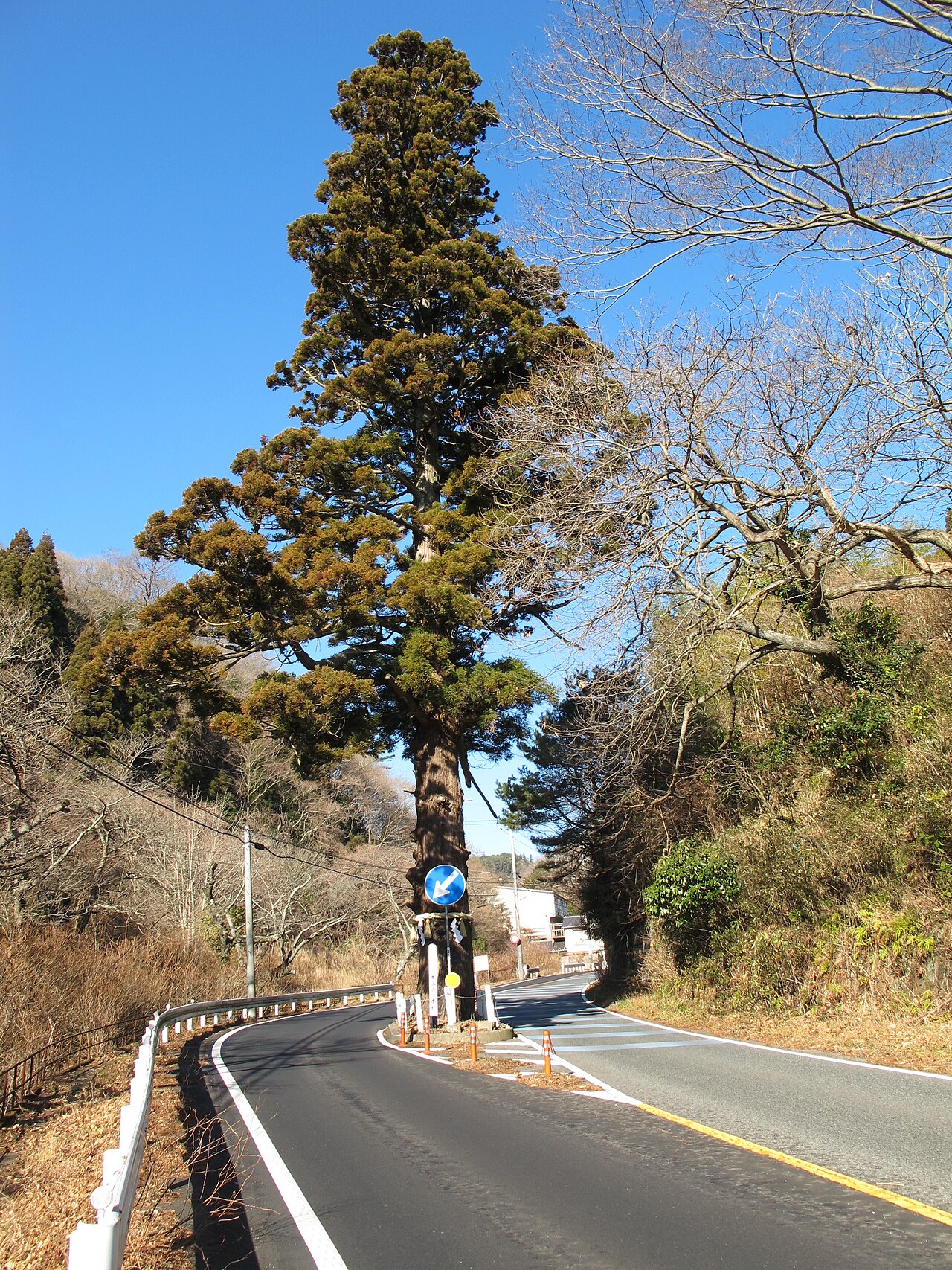
In Miyata-chō, Hitachi, Ibaraki Prefecture, a single Japanese cedar (sugi, Cryptomeria japonica) called Motoyama no Ippon-sugi (本山の一本杉) was designated a city Natural Monument on 27 June 1974. A city cultural-heritage document says it has been protected as a “sacred tree of development” since the founding of the Hitachi mine (日立鉱山).
A 2023 report by TV Tokyo describes the tree standing between the two opposing lanes. In the same report, a member of staff at the city’s local history museum says the mine’s people asked that it not be cut, and the road was built with the tree left in place. That is a spoken account, not a building record, and we report it as such.
The Rules — When a Japanese Road Keeps Its Tree
The national standard says “consider keeping it”
Belief explains why people object to cutting. The rules explain why a road can be built around a tree at all. Japan’s national Road Greening Technical Standard (道路緑化技術基準), issued by the Ministry of Land, Infrastructure, Transport and Tourism (MLIT) in 2015, says that where plants with a high need for preservation stand in a planned road area, the designer should consider leaving them in place (存置) or transplanting them.
The same standard is clear about the condition: greening is done on the premise of securing the road’s traffic function. It is not a rule that road trees may never be cut. It is a rule that cutting should not be the only option considered.
Road law: appurtenance or occupation
Japan’s Road Act (道路法) treats roadside trees planted by the road authority as “road appurtenances” (道路の附属物) — part of the road itself, like street lights. An old shrine tree that was there before the road is a different case; it was not planted by the road authority.
Objects of the kinds listed in the law that are placed on a road for continuing use need an occupation permit (占用許可) from the road administrator under Article 32, and only those kinds can be permitted. Being a shrine does not make something automatically allowed, and being old does not exempt a tree from the rules. How the camphor shrine in Tanimachi is handled on paper — as part of the road, as an occupation, or otherwise — would need to be checked in the road ledger, which we have not done.
Islands, strips, sight lines
The Cabinet Order on Road Structure (道路構造令) supplies the vocabulary. A planting strip (植樹帯) is a belt of road set aside for trees. A traffic island (交通島) is an island-shaped facility for safe, smooth traffic or the protection of pedestrians. At junctions, islands may be built where needed while keeping adequate sight lines. Prefectural and municipal roads also follow local ordinances under Article 30 of the Road Act, so the national order alone cannot tell you whether a particular city street is compliant.
In practice, a tree kept in the middle of a road ends up handled like an island: kerbed, and expected not to block a driver’s view of the junction.
Osaka’s Preservation Trees — and Why Road Trees Fall Outside Them
The criteria
Osaka designates “preservation trees” (保存樹) under the national Act on the Preservation of Trees for Maintaining the Scenic Beauty of Cities (都市の美観風致を維持するための樹木の保存に関する法律). The city’s guidance says species and age do not matter. What matters is size, plus the tree being healthy and handsome in form.
| Osaka preservation category | Threshold (any one) |
|---|---|
| Single tree | Trunk girth of 1.5 m (4.9 ft) or more at 1.5 m above ground, or height of 15 m (49 ft) or more |
| Climbing plant | Foliage area of 30 m² (323 sq ft) or more |
| Woodland | Combined foliage area of 500 m² (5,382 sq ft) or more |
| Hedge | Length of 30 m (98 ft) or more |
Being a sacred tree is not itself a reason for designation. And the law asks owners of designated trees to “endeavour to preserve” them; it does not make felling impossible.
The gap
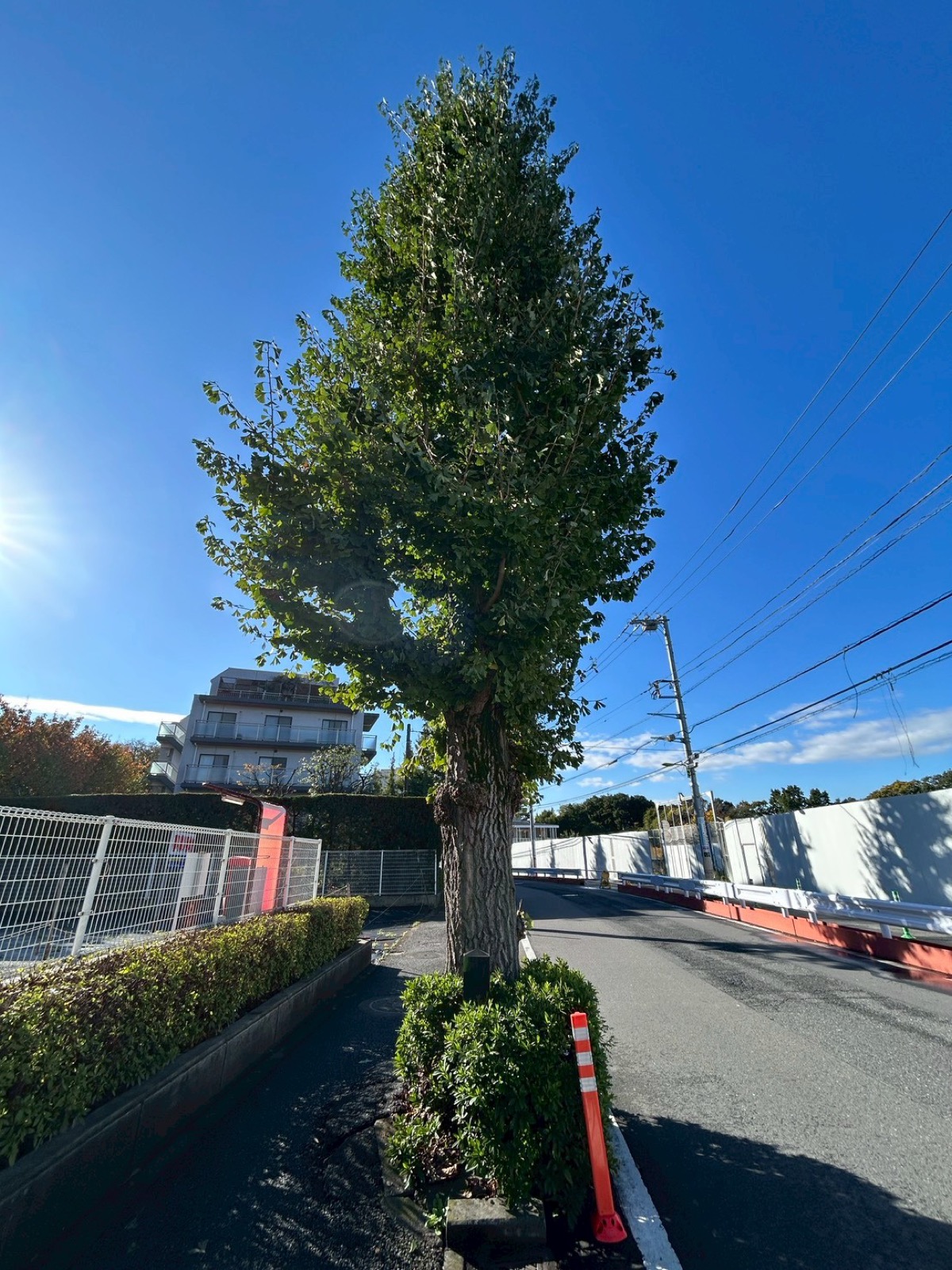
The law also excludes trees that are owned or managed by the national government or a local authority. Whether a particular road tree falls under that exclusion depends on who owns or manages the tree itself, not simply on whose land it stands. The 2024 paper noted that, at the time of writing, none of Osaka’s roadside trees had been designated as preservation trees.
In the sources we checked, we found no preservation-tree designation for the camphor shrine. It remains in the road, and local residents were still caring for it in 2021; how the decision to keep it was made is not on record in anything we found.
The Arborist’s View — What a Tree on a Traffic Island Lives With
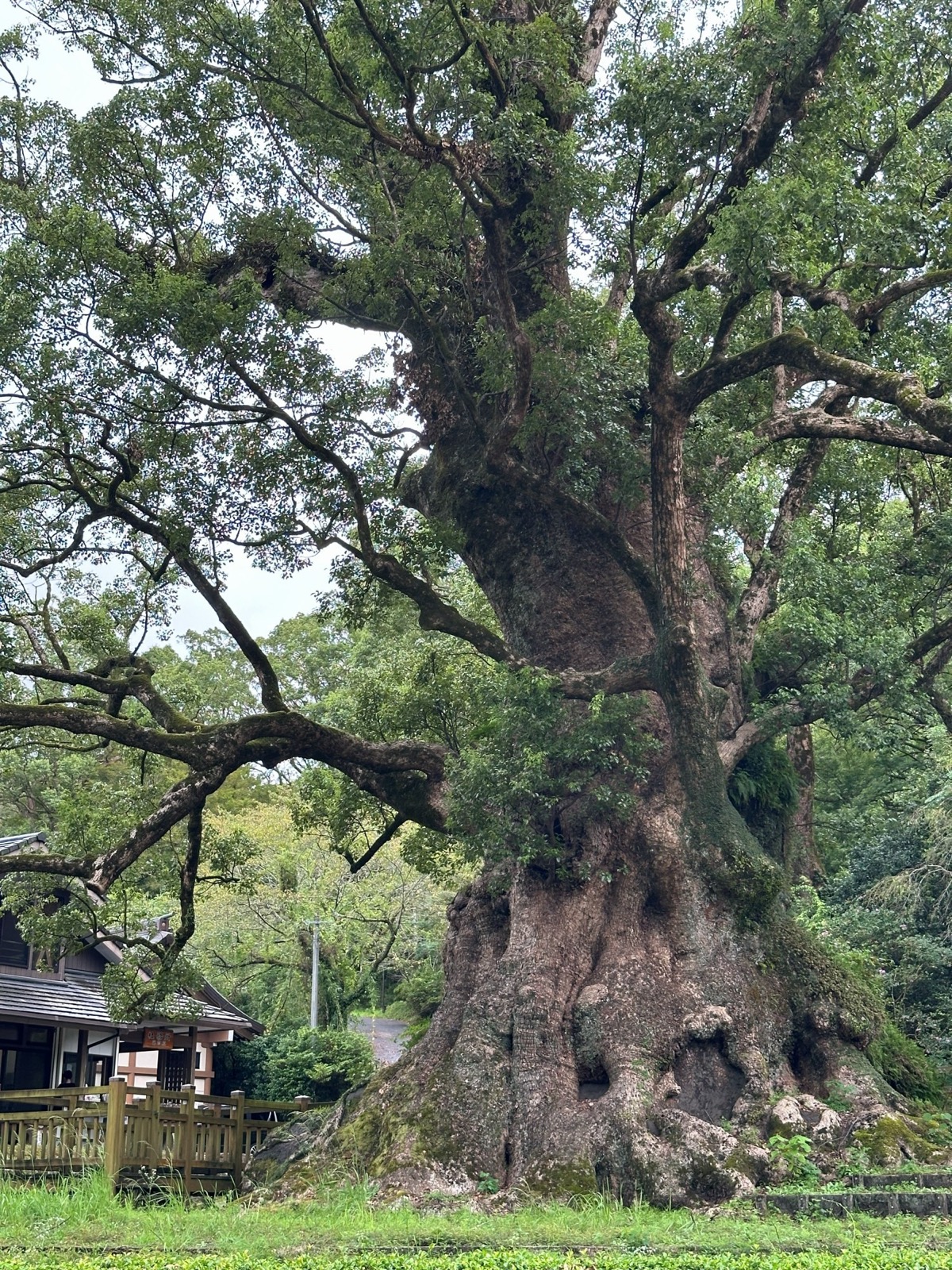
Camphor wants room above and below ground
Camphor is a big evergreen with a wide crown. The University of Florida’s extension service notes that it can reach 70 ft (about 21 m) and can form large surface roots, and that it needs ample space both above and below ground. Japan’s own road greening standard asks for planting soil in which roots can extend freely and take up water and nutrients.
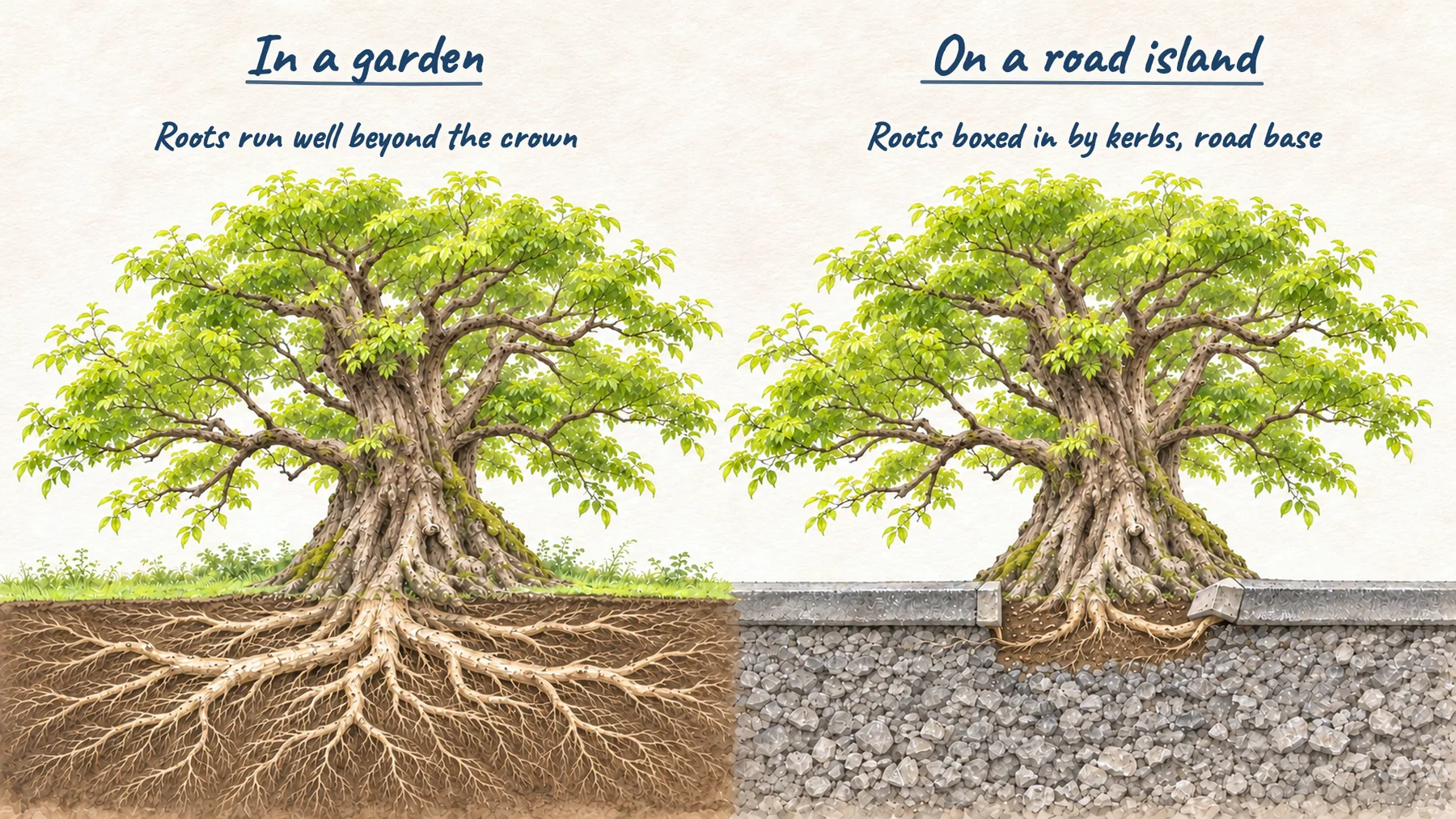
A tree on a paved island can get far less: a small opening at the surface, with road base and asphalt likely covering much of the ground its roots once used inside temple grounds. Nobody has published what lies under the Tanimachi island, so this is the general case, not a finding.
Root lifting: real, but not a species verdict
Surface roots lift kerbs and paving. A 2018 technical report on Yokohama’s street trees by Fujisaki and Yamauchi (藤崎・山内) recorded root-lifting cases among many species, including camphor — 2 out of 3,112 camphor trees, or 0.1%. The authors warn that rates cannot simply be compared between species, because the trees differ in age and in where they were planted. A camphor in a cramped old island and a young camphor in a new planting strip are not the same problem.
What we check on a road-island tree
A tree that stands in traffic has to be looked at with the road in mind as much as the tree. These are the questions worth working through:
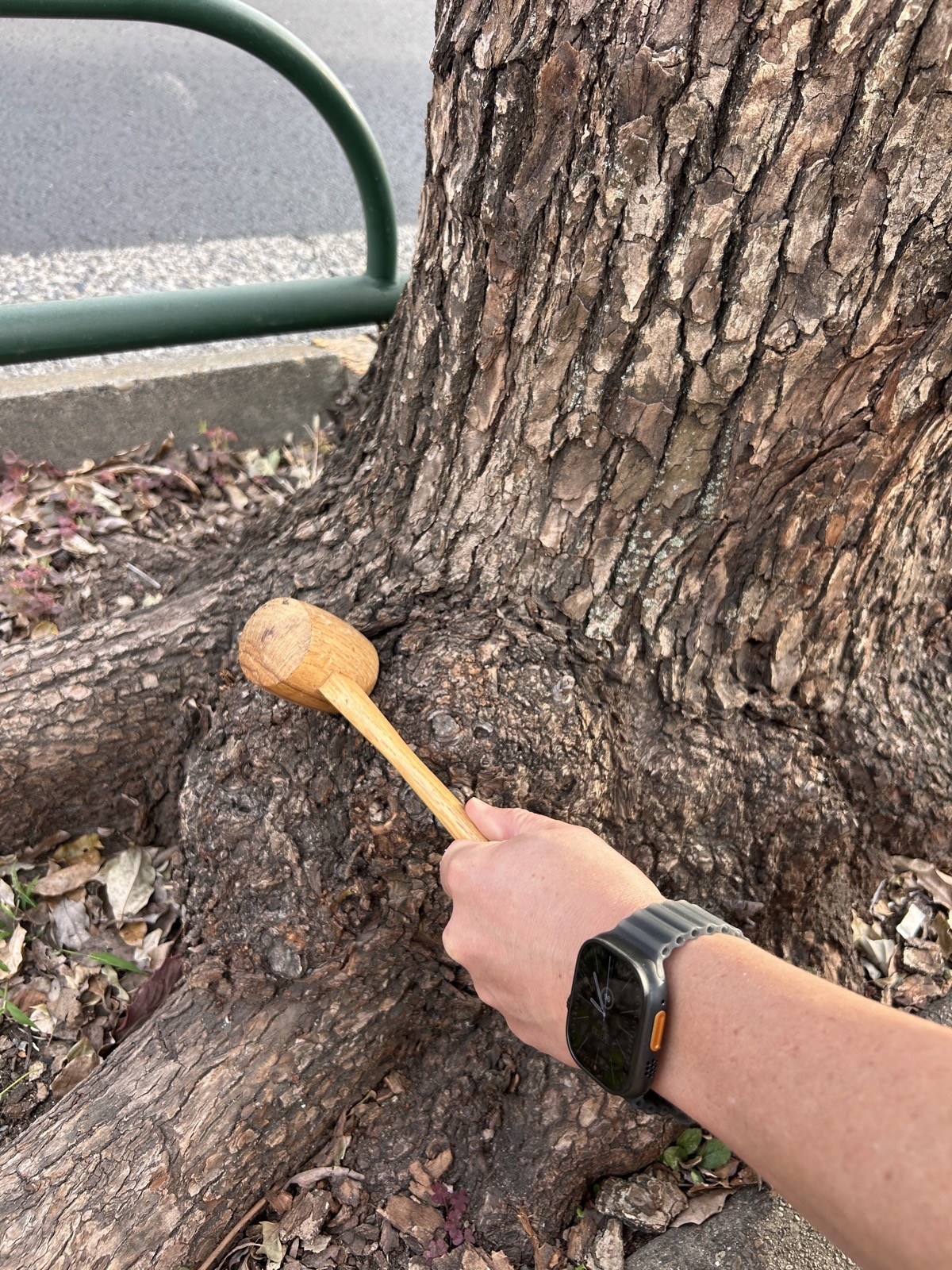
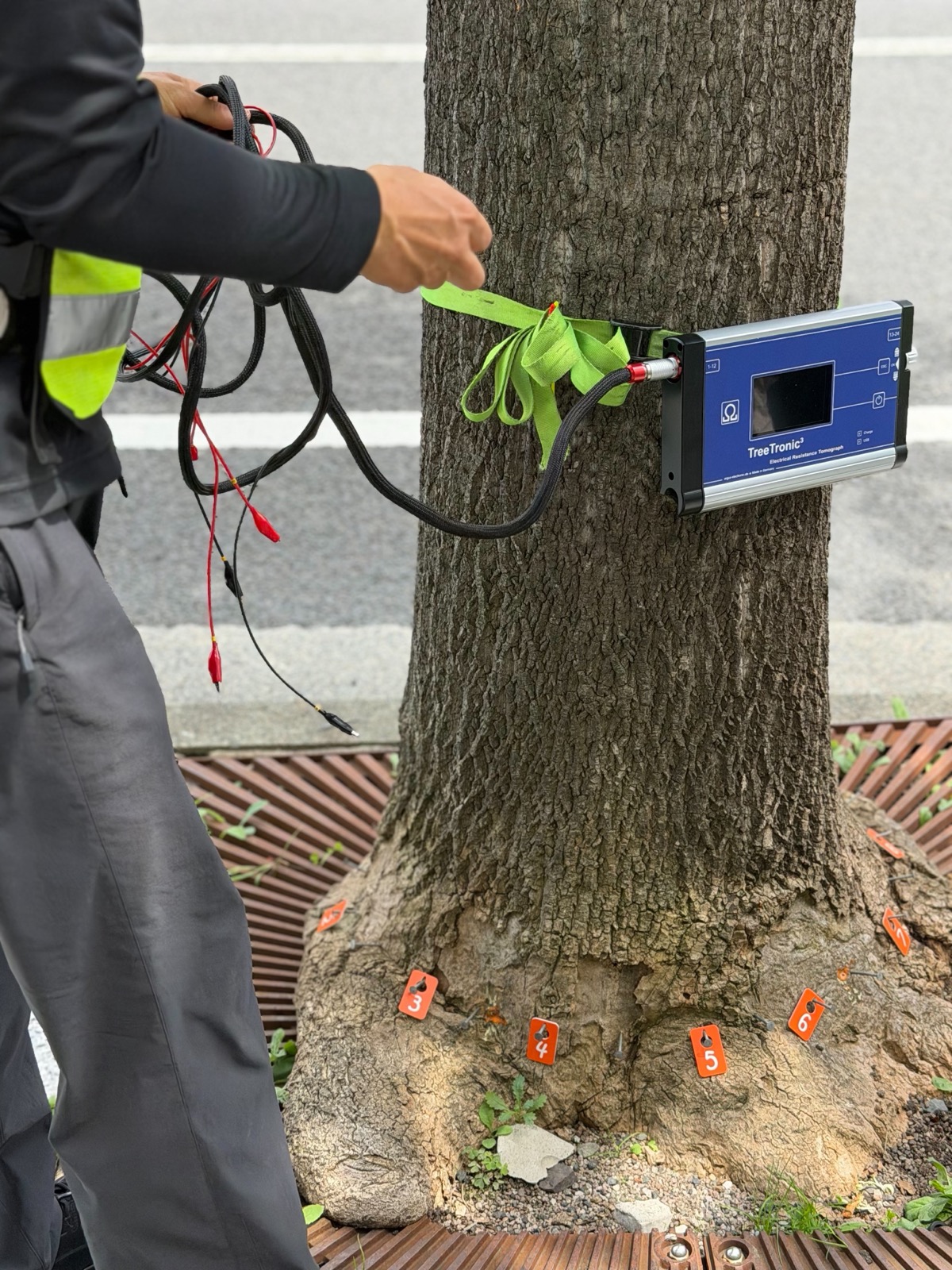
– The trunk at bumper height. Scars from vehicles, mowers or kerb works are entry points for decay. – The root plate under the asphalt. Lifted kerbs, cracked surfacing or a raised island edge show where structural roots are. – Decay inside the trunk. Old shrine trees can be hollow. Where it matters, decay is measured, for example with sonic tomography, rather than guessed from outside. – Deadwood over the lanes. Branches over traffic are judged by what they would hit. – Sight lines. Lower branches or the shrine structures can block a driver’s view of the junction. – The season. Camphor is evergreen, but it drops many old leaves in spring as the new ones open. On an island, that leaf fall lands in the lanes and the drains, so spring is when the neighbours’ sweeping matters most. – The shrine itself. Torii, hokora and rope are part of the job. Work is planned so that nothing on them is damaged or moved without the people who look after them.
None of this is unique to sacred trees. What is different is the outcome when a tree fails these checks. With an ordinary street tree, removal is one option on the list. With a shrine tree in the road, the assessment has to cover safety, the mitigation that is actually feasible — reducing the load, supporting the tree, giving the roots more ground — and the views of the people who look after the shrine.
Dead trees, too
The Tanimachi case adds one more question: what to do when the tree is already dead. A dead trunk standing in traffic does not grow, but it still decays. Its condition, the stability of what remains, and anything that could fall into the road need watching for as long as people choose to keep it. Keeping a sacred place and keeping a road safe are two duties that have to be met at the same time.
Elsewhere — Wyoming’s Tree Rock, England’s Street Trees, Menlo Park
The tree in the interstate
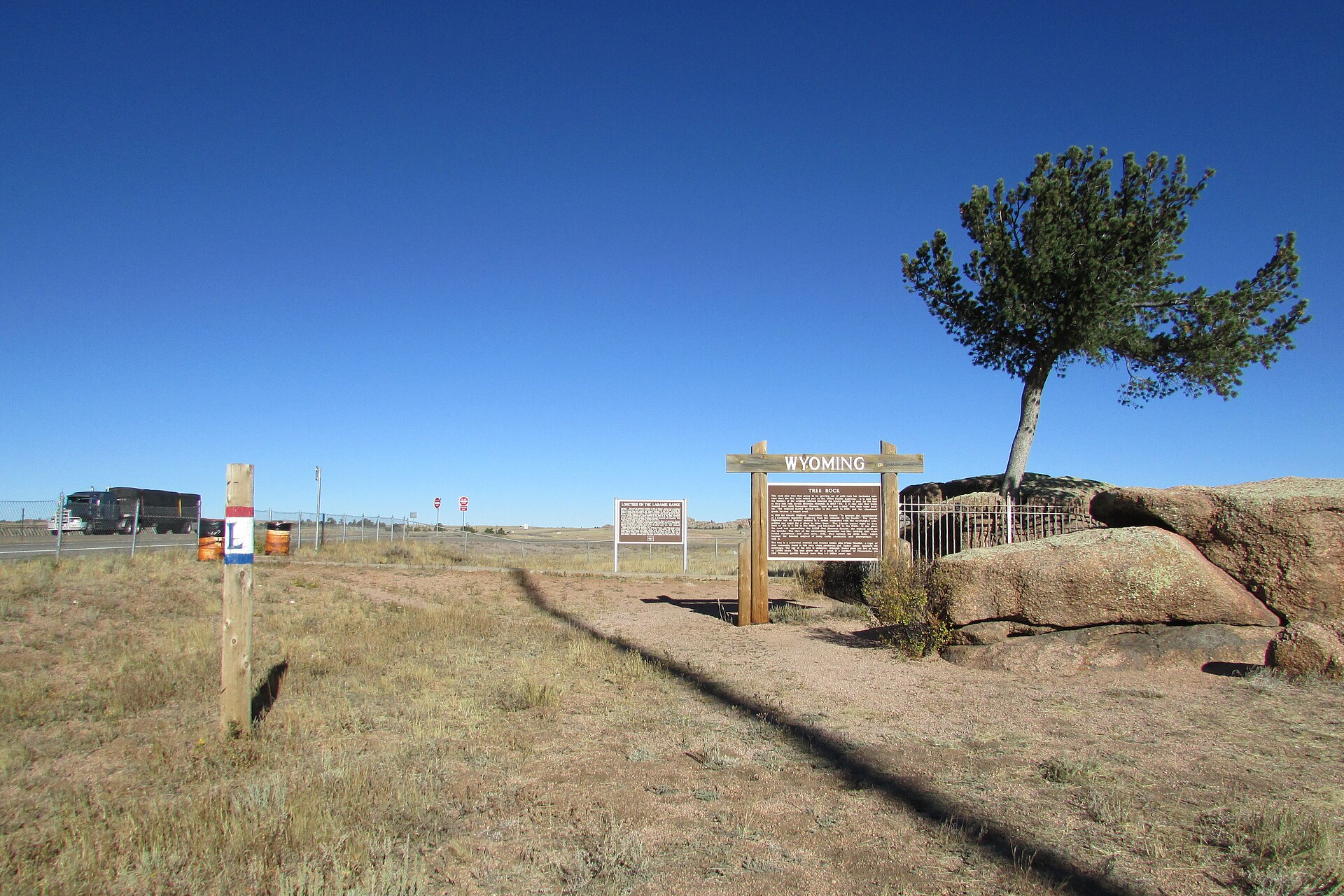
Japan is not the only country where a road has gone around a tree. Tree Rock in Albany County, Wyoming, is a limber pine growing out of a crack in a rock. A historic properties assessment published by the US Western Area Power Administration records that when Interstate 80 was built in the 1960s, Tree Rock was preserved as a pullout in the median. The local visitor bureau describes it today as standing between the interstate’s eastbound and westbound lanes.
The reason was not religious, but the result looks familiar: a single tree kept while a highway was built around it.
England: orders, consent and consultation
In England, a local planning authority can make a Tree Preservation Order (TPO) to protect specific trees, groups or woodlands “in the interests of amenity,” according to UK government guidance. Cutting down or pruning a protected tree generally requires the authority’s written consent. There are exceptions, including dead and dangerous trees and certain highway works, so a TPO is not an absolute bar.
Street trees have an extra rule. Under section 96A of the Highways Act 1980, a local highway authority in England must consult members of the public before felling certain trees on urban roads, with statutory exceptions. That duty came into force on 30 November 2023.
Menlo Park: protection by size
In the United States, protection is usually local. Menlo Park, California, is one example. Its heritage tree rules protect native California oaks of at least 10 inches (25 cm) in diameter and other trees of 15 inches (38 cm) or more, measured at a set height. Removing one, or pruning more than 25% of its canopy or roots within 12 months, needs a permit. The city council can also designate a tree for its historic importance by resolution, and there is an emergency removal permit where a tree poses an extreme risk.
| Japan (Osaka example) | England | Menlo Park, California | |
|---|---|---|---|
| What triggers protection | Size, plus health and form (preservation trees) | Amenity value, chosen by the authority (TPO) | Size, or council resolution |
| Trees on public roads | Excluded if owned or managed by government; none designated in Osaka (2024) | Public consultation before felling certain urban street trees | Covered by the city’s own rules |
| Role of belief | Not a legal criterion; works through community care | Not a legal criterion | Not a legal criterion |
| Safety exit | Road traffic function comes first | Exceptions for dead or dangerous trees | Emergency removal permits |
None of these systems is better than the others. They start from different questions. England asks the public before the street tree goes. Menlo Park measures the trunk. In Osaka, no roadside tree had been designated under the tree law by 2024, and what the record shows at the camphor shrine is history and continued local care.
What People Get Wrong — Three Common Assumptions
“Japanese people cannot cut sacred trees”
The national road standard asks designers to consider keeping valuable trees or transplanting them, and it puts the road’s traffic function first. The Osaka studies are about which roadside trees have survived — which means some have not. Legends explain why people resist cutting; they do not show that cutting never happens.
“The tree in the road is ancient”
The “500 to 600 years” figure is tradition, given without any measurement method. In Tanimachi the camphor itself is dead. In Kobe and Nagoya, the official figures are height and girth, not age.
“A protected tree can never be removed”
Osaka’s preservation law asks owners to endeavour to keep designated trees. England’s TPOs have exceptions. Menlo Park has emergency permits. Protection in all three is a process for deciding, not a ban.
A Place, Not Only a Tree — Why the Shrine Stays
Stand on Kusunoki-dōri again and the scene makes more sense. Temple grounds became public road. The camphor died around 1941–42. The temple left in 1968. And still, in 2021, a rope was tied around what remained and people were coming to pray. The legend of the snake and the curse is the sentence people use to explain it; the slower reason is that the place mattered to the temple that owned it, and still matters to the neighbours who look after it.
Osaka has another shrine camphor that the city grew around: the camphor tree at Kayashima Station, a different tree with a different story. For how Japan’s oldest trees are looked after, see why Japan’s ancient trees last so long and the great camphor of Kinomiya Shrine. The ordinary street trees around them face a very different life, as we described in why Japanese street trees are so small.
Frequently asked questions
Why are there trees in the middle of roads in Japan? Many grew in shrine, temple or house grounds before the road was widened or the land was re-plotted. When the new road line reached them, they were left in place with their shrines; many are treated as sacred, and local legends warn against cutting them. National road greening standards also ask designers to consider keeping valuable trees.
Is it true that people who cut sacred trees are cursed? That is a legend. Stories in Osaka and Kobe describe misfortune for those who cut such trees, and Shinto scholarship explains tatari as misfortune read as divine will. We found no documented case of a worker harmed after cutting the Osaka camphor.
Is the camphor in the middle of Kusunoki-dōri, Osaka, still alive? No. A 2024 study recorded the original camphor as dead, citing an earlier survey that dated its death to around 1941–42. In 2021 a sacred rope was still tied around it and people were still praying there.
Who looks after a tree in the middle of a Japanese road? It varies. For the Osaka camphor shrine, a 2021 survey recorded the City of Osaka as landowner and local residents as the main carers.
Are Japan’s road trees protected by law? It depends on who owns or manages the tree. The preservation tree law used in Osaka excludes trees owned or managed by national or local government, and a 2024 study found none of Osaka’s roadside trees designated. Road law and road design standards govern how the tree and its island are handled.
Are there trees in the middle of roads outside Japan? Yes. Tree Rock, a limber pine growing from a boulder, was kept in the median of Interstate 80 in Wyoming when the highway was built in the 1960s.
Sources
– Honshō-ji, “History of Honshō-ji” (本照寺の縁起) — https://honshoji.crayonsite.com/ (checked 2026-11-06) – Ueda & Nishikawa (上田萌子・西川遼, 2024), “大阪市における路傍樹の存続状況からみた保全の課題,” ランドスケープ研究 87(5): 437–442 — https://www.jstage.jst.go.jp/article/jila/87/5/87_437/_article/-char/ja/ (checked 2026-11-06) – Yoshida et al. (2002), “大阪市における路傍樹の現状と継承に関する研究” — https://www.jstage.jst.go.jp/article/ceispapers/ceis16/0/ceis16_0_31/_article/-char/ja/ (checked 2026-11-06) – 大阪府建築士会, Kenchikujin (建築人), November 2021 — https://www.aba-osakafu.or.jp/kenchikujin/img/2021/11/2111.pdf (checked 2026-11-06) – Osaka Mania, “文学碑” (Enoki Daimyōjin) — https://osakamania.jp/mania/bungakuhi/ (checked 2026-11-06) – Visitor records of Enoki Daimyōjin: shrine leaflet transcription — https://youkai.tou3.com/Entry/13/; site photographs — https://www.zero-position.com/entry/2022/04/15/173000 (checked 2026-11-07) – Kokugakuin University, “Shinboku” — https://www2.kokugakuin.ac.jp/oardijcc/archives/pictorialguide/overviewofashrineoffice/shinboku.html; “Himorogi” — https://d-museum.kokugakuin.ac.jp/bts/detail/?id=3729; “Tatari” — https://d-museum.kokugakuin.ac.jp/eos/detail/?id=8645 (checked 2026-11-06) – City of Kobe, list of Citizens’ Trees — https://www.city.kobe.lg.jp/documents/6939/20260602110035.pdf; Nagata no Minwa — https://www.city.kobe.lg.jp/documents/29465/nagatanominwa.pdf (checked 2026-11-06) – City of Nagoya, “長島町通のクスノキ” — https://www.city.nagoya.jp/kankou/kankouinfo/1013766/1013962/1034453/1014001.html (checked 2026-11-06) – Hitachi City Local History Museum, list of designated cultural properties — https://www.city.hitachi.lg.jp/museum/manabu_tanoshimu/1005344/1005345.html; cultural-heritage document — https://www.city.hitachi.lg.jp/_res/projects/default_project/_page_/001/005/239/04sansho.pdf (checked 2026-11-06) – TV Tokyo, December 2023 — https://www.tv-tokyo.co.jp/plus/entertainment/entry/202312/14346.html (checked 2026-11-06) – MLIT, Road Greening Technical Standard (2015) — https://www.mlit.go.jp/road/sign/kijyun/pdf/20150416ryokuka.pdf (checked 2026-11-06) – Road Act — https://laws.e-gov.go.jp/law/327AC1000000180; MLIT, road occupation system — https://www.mlit.go.jp/road/senyo/01.html; Cabinet Order on Road Structure — https://laws.e-gov.go.jp/law/345CO0000000320 (checked 2026-11-06) – City of Osaka, preservation trees — https://www.city.osaka.lg.jp/kensetsu/page/0000158867.html; Act on the Preservation of Trees — https://laws.e-gov.go.jp/law/337AC1000000142 (checked 2026-11-06) – UF/IFAS, “Cinnamomum camphora: Camphor-Tree” — https://edis.ifas.ufl.edu/publication/ST167/pdf (checked 2026-11-06) – Fujisaki & Yamauchi (藤崎健一郎・山内裕貴, 2018), “横浜市における街路樹の現況と課題” — https://www.jstage.jst.go.jp/article/jjsrt/44/1/44_217/_pdf (checked 2026-11-06) – Western Area Power Administration, Historic Properties Visual Impact Assessment (2020) — https://www.wapa.gov/wp-content/uploads/2023/04/RTW_20201101_Historic-Properties-Visual-Impact-Assessment.pdf; Visit Laramie — https://www.visitlaramie.org/things-to-do/scenic-drives/old-lincoln-highway/ (checked 2026-11-06) – UK Government, Tree Preservation Orders — https://www.gov.uk/guidance/tree-preservation-orders-and-trees-in-conservation-areas; Highways Act 1980 s.96A — https://www.legislation.gov.uk/ukpga/1980/66/section/96A; SI 2023/1170 — https://www.legislation.gov.uk/uksi/2023/1170/regulation/3/made (checked 2026-11-06) – City of Menlo Park, heritage trees (2026) — https://www.menlopark.gov/News-articles/City-news/20260810Help-protect-Menlo-Park%E2%80%99s-heritage-trees; emergency removal (2023) — https://www.menlopark.gov/News-articles/City-news/20230327-Preserve-or-remove-The-Heritage-Tree-Ordinance-and-emergency-removal-permits (checked 2026-11-06)