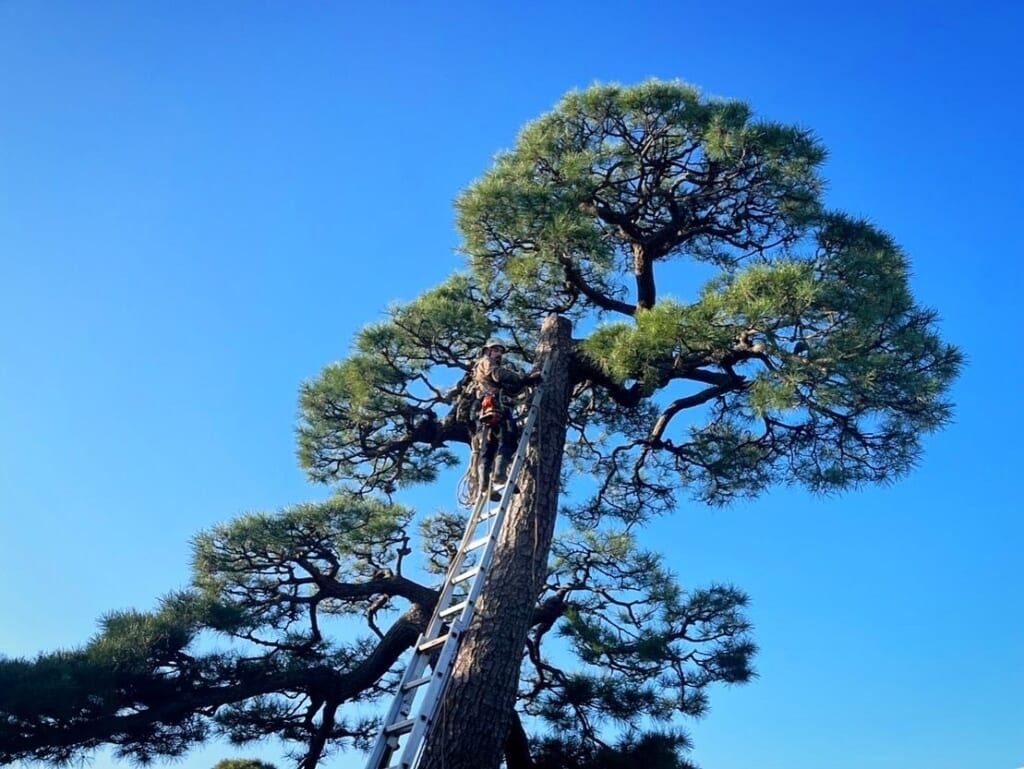
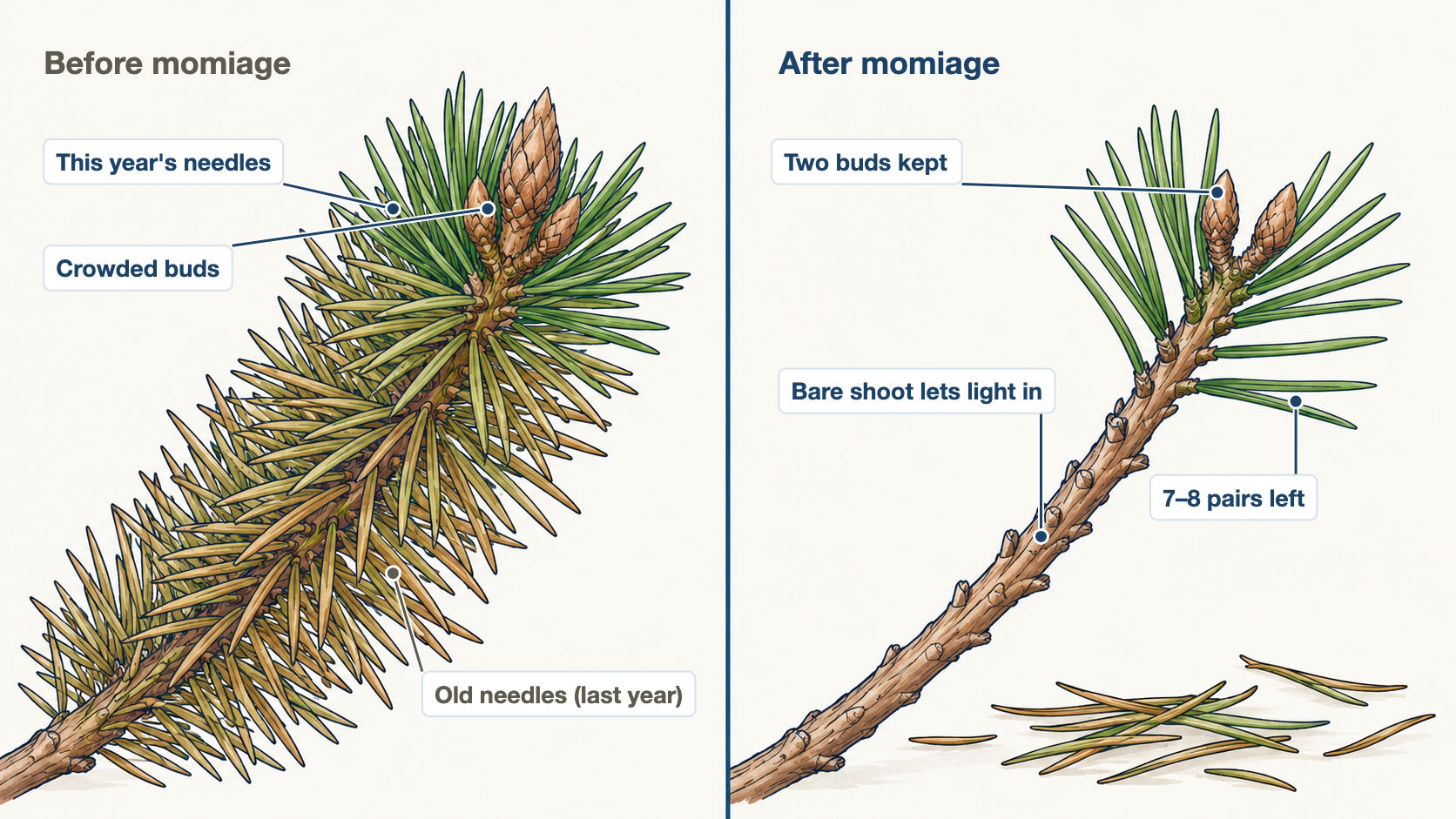
Momiage (もみあげ) is the cold-season work on a Japanese garden pine: the gardener pulls off the needles from previous years by hand, keeps only the current year’s needles, thins each branch tip to two shoots and shortens the strongest ends. North American Japanese-garden practitioners describe the same job running from October through the dormant season. Its purpose is to let light into the inside of the tree and to spread vigor evenly, so that a pine can hold one size for decades.
This guide separates momiage from candling and bonsai decandling, walks through what happens on a single shoot, compares black and red pine, and covers when to do less.
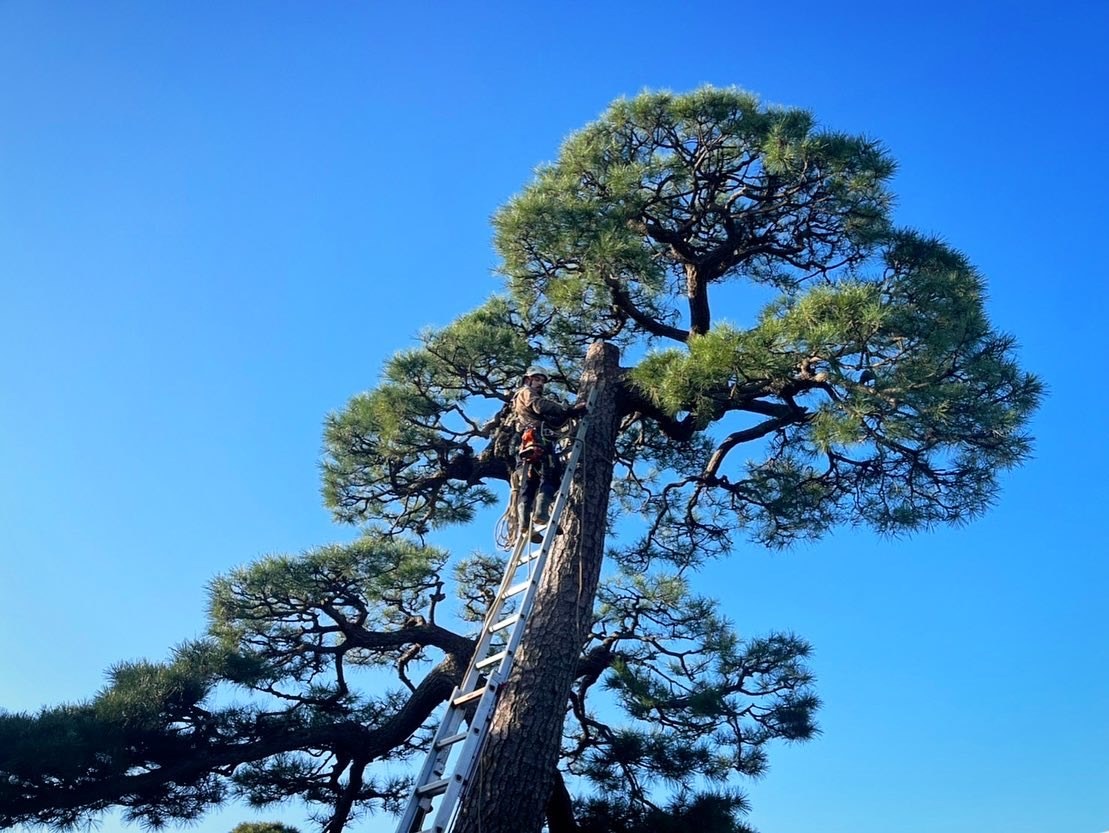
Candling, decandling, momiage — three jobs that get confused
“Pine pruning” covers three different techniques with overlapping names. They remove different tissue at different times of year.
| Technique | Season | What is removed | What it is for | Where it is common |
|---|---|---|---|---|
| Candling | Spring, before new needles expand | Part of each new shoot (“candle”) | Slowing extension, making the pine denser | Landscape pines in North America and Europe |
| Decandling | Early summer | The whole new shoot, so a second, shorter flush grows | Short needles, fine branching | Bonsai |
| Momiage | Autumn through winter | Older needles, surplus shoots, overstrong tips | Light into the interior, balanced vigor across the tree | Japanese garden pines |
Candling and momiage are not rivals. On a Japanese garden pine the spring work on the candles and the winter momiage are two halves of one year: spring controls how far each shoot grows, and winter removes the foliage that growth has made redundant. A pine that is only candled keeps several years of old needles, which shade the buds further back.
Why a pine cannot simply be sheared
The reason momiage is done by hand lies in how pines grow. University of Wisconsin–Madison Extension puts it plainly: pines produce buds only at the tips of the current season’s growth and will not produce new shoots farther back down the stem. New growth arrives once a year, from those terminal buds. The same guide warns against cutting branches back to older growth, because nothing will grow from it.
That has two consequences for winter work.
– Shears are the wrong tool for the foliage. A blade run across a pine cuts needles in half, leaving brown ends, and it can take off the very tips where next year’s buds sit. Pulling a needle out at its base removes it whole and leaves the bud alone. – Every decision is made at the tips. Because new shoots cannot be counted on from older wood, the gardener shapes the tree mainly by choosing which tips survive and how much foliage each keeps.
Interior light is the other half of the logic. A pine that holds three or four years of needles builds a dense outer shell. Writing about pruning demonstrations at the Portland Japanese Garden, the Chicago Botanic Garden notes that after pruning, more light can reach the inside and lower branches of the tree. Light on those inner shoots is what keeps them alive, and live inner shoots are what let a gardener keep the crown compact instead of letting it drift outward year by year.
Working through one shoot — needles, tips, strong ends
Bill Castellon, writing for the North American Japanese Garden Association, summarises the autumn treatment for most pines in three moves: cut back strong ends, thin to twos, and pull or cut needles. Broken down to a single branch, the work looks like this.
Needles. Second- and third-year needles are removed, which leaves only the current year’s needles on the tree. On a Japanese black pine the needles grow in bundles of two, and the older bundles sit further back along the shoot, behind the newer ones, so the plucking works along the older section of each shoot.
Tips. Where several shoots have grown from one point, they are thinned to two. Castellon describes one as the continuing leader of the branch and the other as a side branch. Two shoots make a fork; a fork repeated every year builds the fine, layered branching that a garden pine is valued for. Leaving three or more shoots at one point crowds them against each other.
Strong ends. The most vigorous tips are shortened. Castellon gives the reason as dispersing energy and improving the tree’s appearance. A pine, like most trees, pushes its strongest growth at the top and the outer ends; reducing those ends in winter gives the weaker inner shoots a chance to keep up.
Dead wood. Dead twigs and shoots that have already failed come out at the same time.
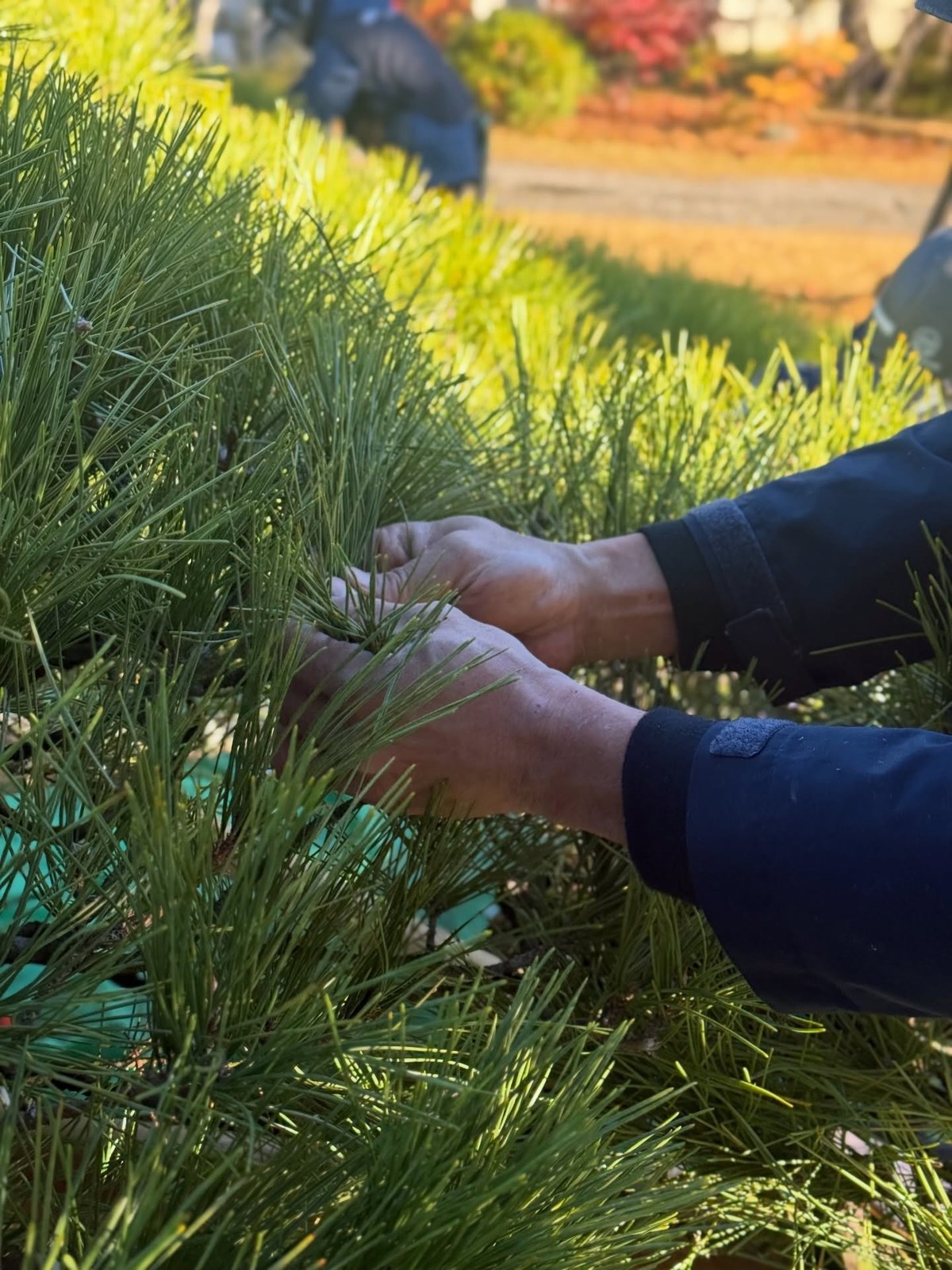
The amount of foliage left is a judgment about vigor rather than a fixed count. A strong shoot can lose more than a weak one; an even reduction across the whole crown simply preserves the imbalance that was there before. A garden pine several metres tall needs each branch read on its own.
Timing — October through the dormant season
Castellon’s own calendar runs thinning, cutting back and needle pulling from October through the dormant season. Within that span, the window is set by the tree rather than the date:
– Start once the current year’s needles have hardened and next year’s buds have formed at the tips. Before that, it is hard to see which tips are strong. – Finish before the buds begin to swell in spring. Swelling buds are easily knocked off by hands working through the shoot.
Black pine vs red pine — the same job at a different weight
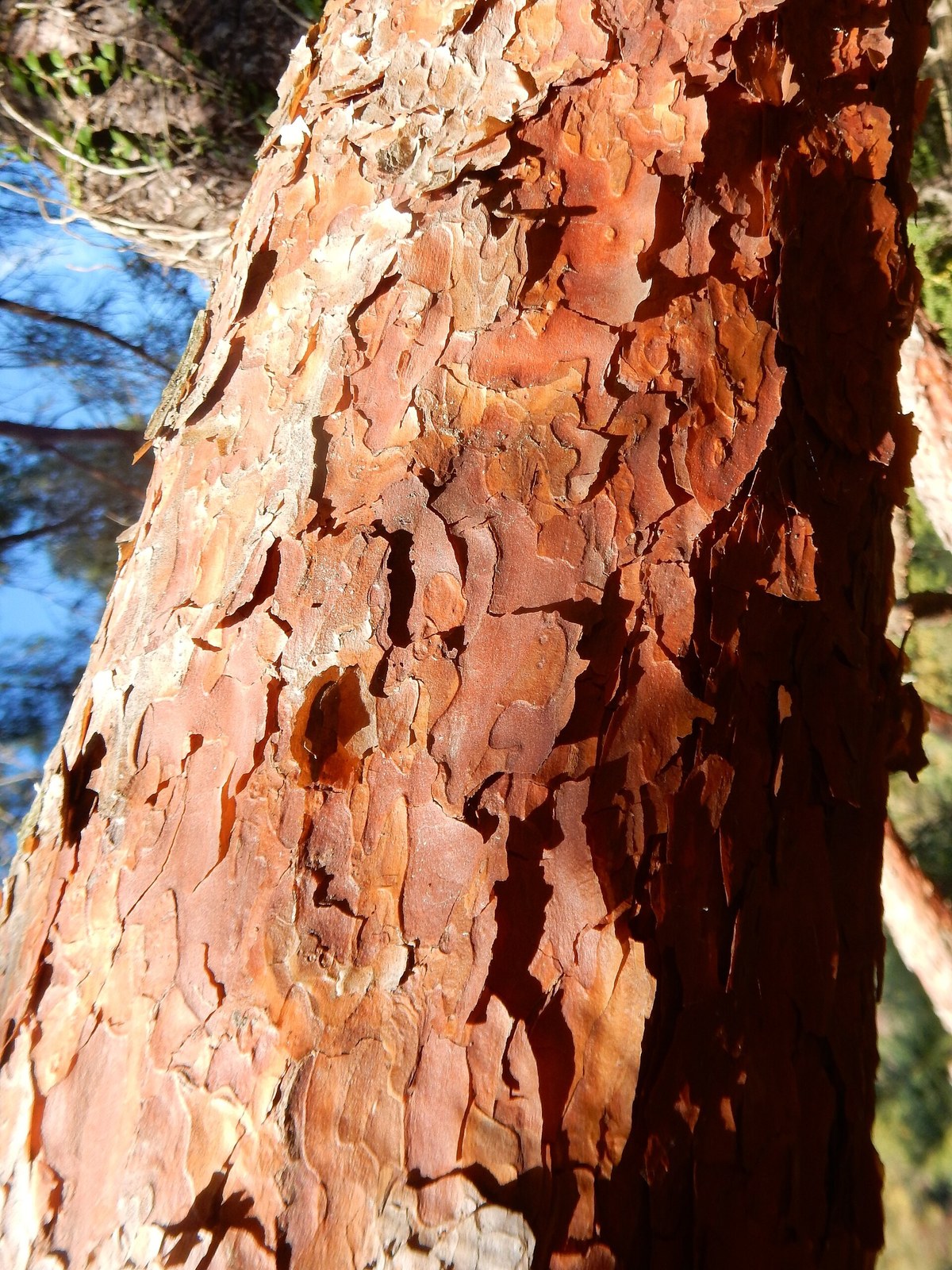
Japan’s two main garden pines are Kuromatsu (黒松, Japanese black pine, Pinus thunbergii) and Akamatsu (赤松, Japanese red pine, Pinus densiflora). They look alike from a distance, but they hold their needles for different lengths of time.
A study of seven black pines and seven red pines growing on the same site in Japan (Konôpka, Tsukahara and Jalkanen, 2000) measured how many years of needles remained along the main stem. Black pine kept a long-term mean of 3.7 needle sets; red pine kept 2.2. These are main-stem figures, not side-shoot counts, but the gap is clear. Black pine carries more years of old foliage at any time, and builds a denser shell for momiage to open. Red pine sheds its older needles sooner without help.
That does not make momiage a black-pine-only job. In Japan, garden red pines get the same winter needle plucking. Kyoto City’s maintenance specification for the gardens of its municipal art museum lists momiage for both species side by side: 18 black pines and 23 red pines around the pond, each to be worked at least once between January and March.
| Kuromatsu (black pine) | Akamatsu (red pine) | |
|---|---|---|
| Scientific name | Pinus thunbergii | Pinus densiflora |
| Needle sets retained (Konôpka et al. 2000) | 3.7 | 2.2 |
| Consequence for winter work | More old foliage to pull; full momiage usually worthwhile | Less old foliage; the tree does more of the clearing itself |
A species that retains fewer years of needles leaves less to remove, so the winter pass on red pine is usually lighter rather than skipped.
Health first — when to do less
Every move in momiage removes leaf area, and leaf area is what the pine lives on. Castellon’s rule is short: pines must be strong and healthy to prune; if they are not, get them healthy first.
A pine shows its recent health along its own branches. Each year’s growth is visible as a separate segment of shoot, so the length and needle colour of this year’s segment can be compared with the segments behind it. Where this year’s growth is clearly shorter or paler, find the cause before removing any foliage.
Doing less in one winter costs little: the old needles can come off the following year. Doing too much can take years to recover from, because, as the Wisconsin guidance warns, regrowth cannot be relied on from bare older wood.
Why Western landscapes rarely pluck needles
In North American and European landscapes, pine pruning usually stops at candling. Wisconsin Extension’s guidance is to remove roughly one-half to two-thirds of the candles before the needles expand, which keeps the pine compact and densely branched. Needle removal hardly appears in landscape advice; it is treated as a bonsai technique.
The difference comes from what each tradition expects of the tree, not from one being more correct:
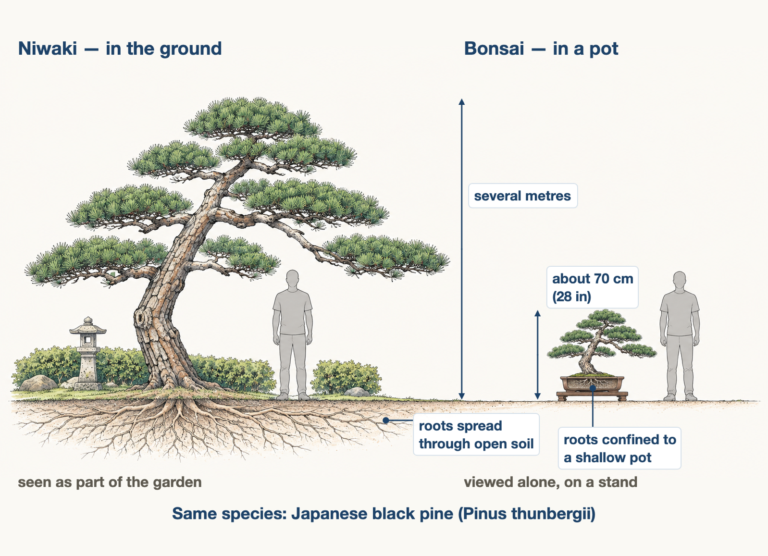
– Western landscape pines are generally expected to grow larger over time. Pruning slows them down and thickens them. Spring candling alone does that. – Japanese garden pines are expected to hold a fixed size and an open, layered structure for decades — the same thinking behind the niwaki approach compared with topiary. That requires removing old foliage so light reaches inner buds, which candling does not do.
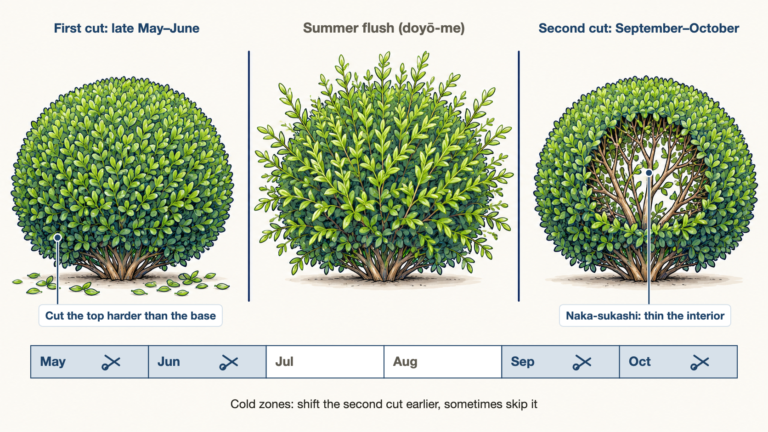
The open crown has a second effect: a thinned pine lets wind pass through, the reasoning behind Japan’s wind-resistant pruning methods. And where karikomi shapes shrubs as clipped masses, momiage has to work shoot by shoot, because a pine cannot be sheared. The spring half of the cycle is covered in Midori-tsumi.
Frequently asked questions
What is momiage? Momiage is the Japanese autumn-to-winter work on garden pines: removing older needles by hand, keeping the current year’s needles, thinning branch tips to two shoots and shortening the strongest ends. It is done on both Japanese black pine and Japanese red pine; black pine, which holds more years of needles, usually needs the heavier pass.
Is momiage the same as candling? No. Candling shortens the new spring shoots to control growth. Momiage happens months later and removes old foliage and surplus shoots so light reaches the inside of the tree. Japanese garden pines usually get both, one in spring and one in winter.
Can I shear a pine instead of plucking the needles? It is not recommended. Pines bud only at the tips of current growth, so shearing risks removing next year’s buds and leaves cut, browning needle ends. Plucking takes whole needles and leaves the buds untouched.
Sources
– Konôpka, B., Tsukahara, H., Jalkanen, R. (2000). “A Comparison of Needle Retention on Japanese Black Pine and Japanese Red Pine.” Journal of Forest Research 5(3): 175–180. Record via FAO AGRIS, checked 2026-10-17. – Jull, L. “Pruning Evergreens.” University of Wisconsin–Madison Division of Extension, hort.extension.wisc.edu, checked 2026-10-17. – Castellon, B. “Pine Pruning — A Year in Review.” North American Japanese Garden Association, najga.org, 28 June 2021, checked 2026-10-17. – Kyoto City. “業務内容の詳細” (maintenance specification, gardens of the Kyoto City Museum of Art, Annex 2). city.kyoto.lg.jp, January 2025, checked 2026-10-18. – Pogue, A. “What a Week at Portland Japanese Garden.” Chicago Botanic Garden, chicagobotanic.org, 4 January 2016, checked 2026-10-17.
Related reading
– Daisugi — The 600-Year-Old Japanese Technique of Growing Trees on Trees – Why Do Japan’s Ancient Trees Live for a Thousand Years?
New field notes from Japan’s trees every day — subscribe to the Japan Blue Arborist Journal on LinkedIn, or via the form in the footer.