Karikomi shapes shrubs into rolling green waves. A Japanese arborist explains cloud pruning's history, tools, technique — and how it differs from topiary.
Karikomi: The Japanese Art of Cloud Pruning Explained
Introduction
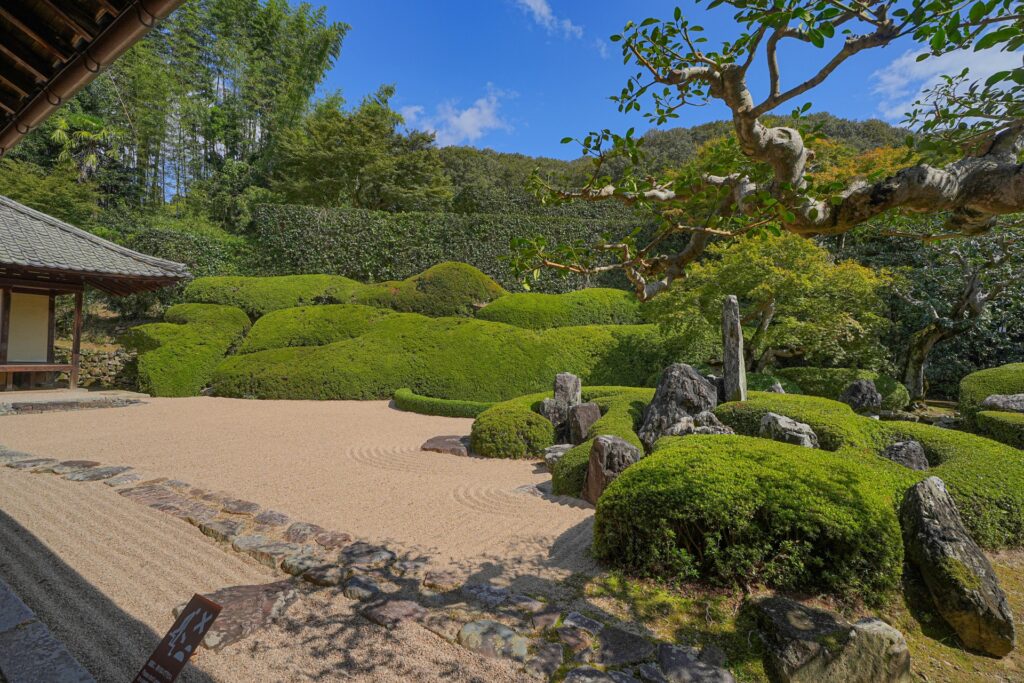
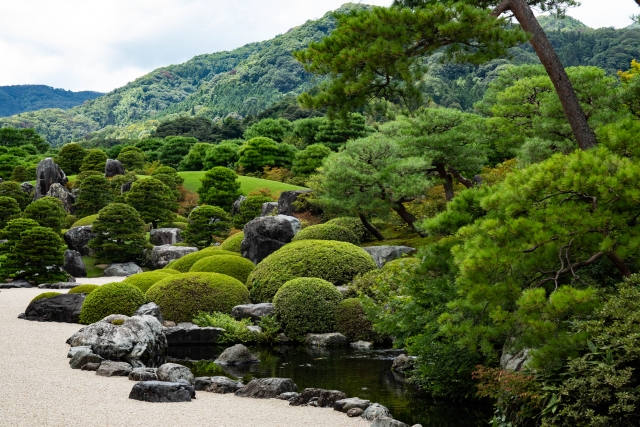
That landscape of rolling green mounds — soft domes and undulating ridges that make a garden look as though clouds have settled gently to earth — has a name in Japan. It is karikomi (刈込), and it has been shaping Japanese gardens for more than four centuries.
In the West, this aesthetic is usually called cloud pruning, and interest in it has grown steadily over the past decade. Yet there is a gap between what Western sources describe as cloud pruning and what Japanese practitioners actually mean by karikomi — a gap not just of terminology, but of purpose, philosophy, and technique.
As a Japanese landscape professional, I want to offer something that most English-language articles on this subject do not: a grounded explanation of karikomi from the inside — its origins, its key distinctions, its aesthetics, and what the practice asks of you as a gardener.
What Karikomi Actually Means
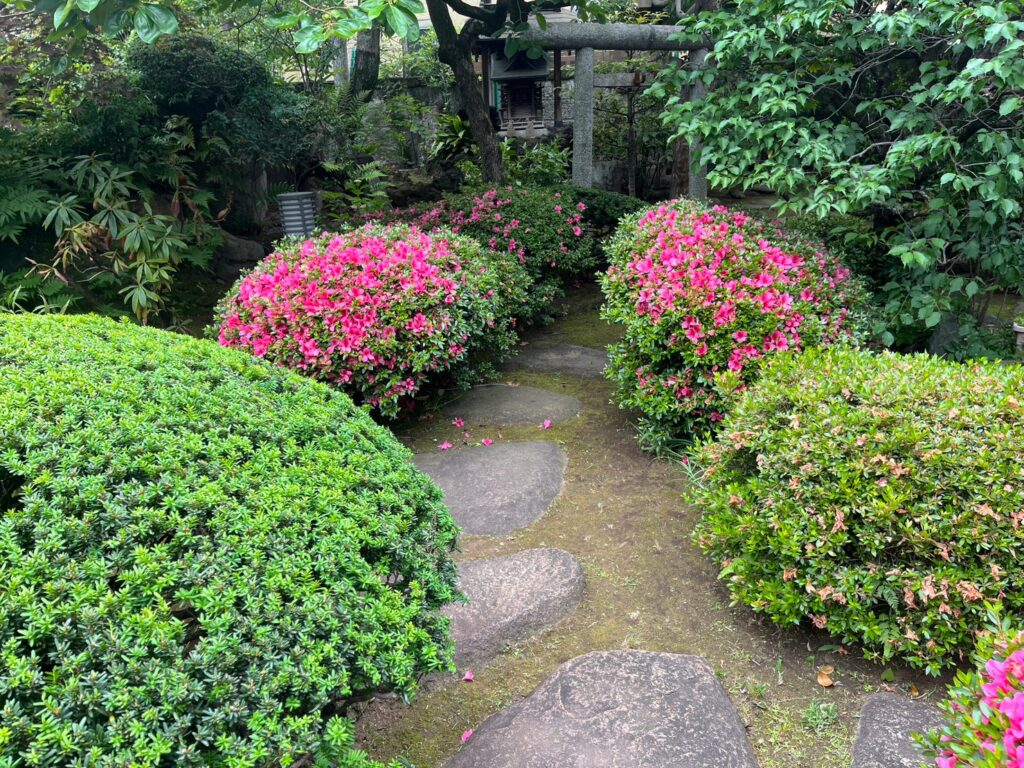
The word karikomi (刈込) comes from the Japanese verb kairikomu, meaning to shear back or clip hard. It is closest in English to “shear back” or “clip into form.” In the context of Japanese garden design, karikomi refers to the practice of shaping evergreen shrubs and small trees into smooth, rounded, or undulating forms using hedge shears or hand clippers.
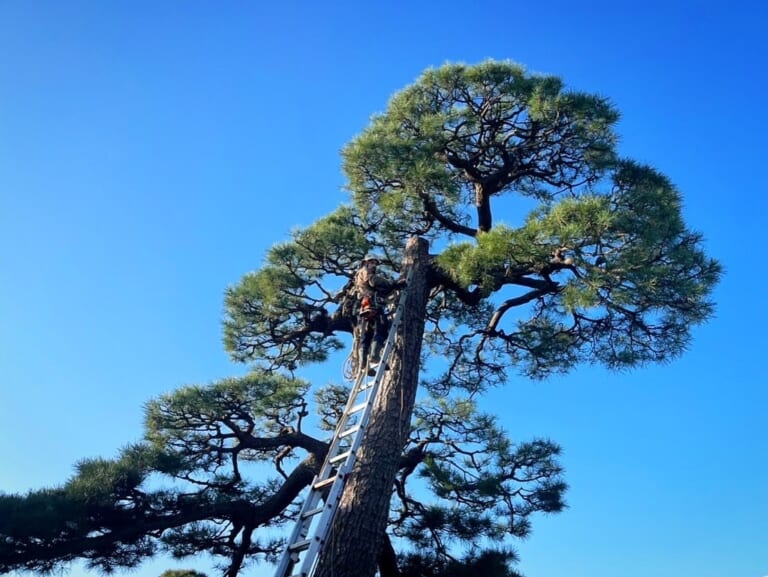
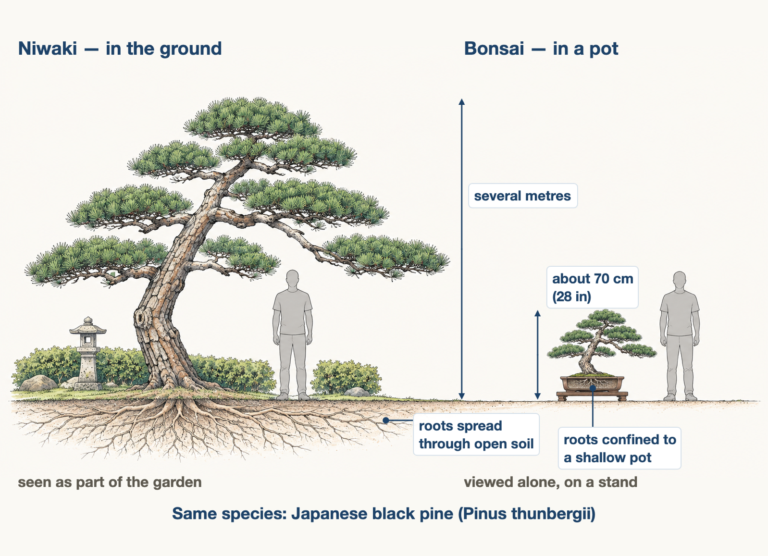
One clarification matters here, and it is one most English sources overlook. What the West calls cloud pruning most often refers to niwaki — the shaping of trees in the ground. Karikomi, in its traditional Japanese meaning, applies primarily to shrubs and mass plantings. Both belong to the same family of Japanese garden craft, but they serve different purposes and occupy different roles in the garden’s composition.
Three Core Concepts: Karikomi, Okarikomi, and Tamamono
Japanese garden practitioners work with three closely related but distinct terms. Understanding each one clarifies what is otherwise a blurry field of overlapping definitions.
Karikomi is the broad term for the technique itself — the act of clipping shrubs into shaped forms. It is the verb made noun, the practice made tangible.
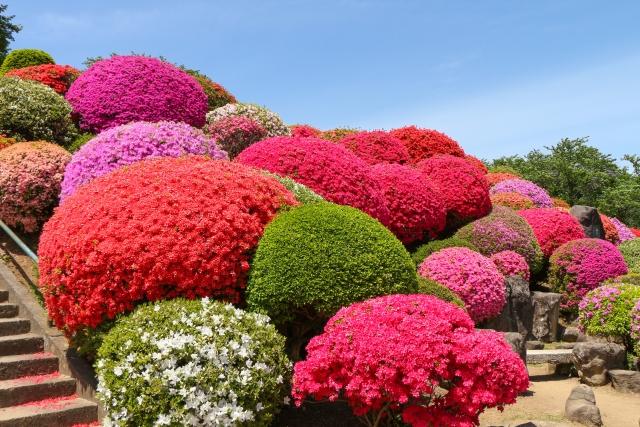
Okarikomi (大刈込) refers to large-scale massed plantings of shrubs clipped together into a single continuous form. Multiple plants, densely spaced, are treated as one sculptural body. The shapes they create — mountain ranges, ocean waves, rolling clouds, distant forest canopies — function as major compositional elements in the garden. The prefix o- simply means large or grand.
Tamamono (玉もの) refers to individual shrubs pruned into a semi-spherical dome. Placed in the garden’s foreground, tamamono are not balls — they are hemispheres, wider than they are tall, with their base sitting flush to the ground as if they were half-buried stones. The ideal proportion is roughly two parts wide to one part tall. This groundedness is essential: a tamamono that appears to float above the soil has lost its purpose.
A History of Karikomi — From Muromachi to Kobori Enshu
Karikomi did not appear fully formed at the beginning of Japanese garden history. Its rise as a primary design element has a specific arc.
In the Muromachi period (1336–1573), Japanese gardens were defined above all by stone compositions, dry landscape (karesansui) design, and raked gravel. Plants played a supporting role — background and texture rather than foreground statement. Clipping and shaping of shrubs existed, but was not yet the garden’s main voice.
The Momoyama period (1573–1615) changed this. The tastes of figures like Toyotomi Hideyoshi brought a new appetite for visual power and richness in garden design. It was during this era that okarikomi emerged as a primary compositional tool — masses of shaped shrubs representing symbolic forms: Mount Horai, the mythological isle of immortality; treasure ships laden with good fortune; cranes and tortoises, creatures of longevity in Japanese culture.
The man credited with perfecting this art is Kobori Enshu (小堀遠州, 1579–1647). Architect, tea master, and garden designer, Enshu worked under the aesthetic principle he called kirei-sabi — a refined, graceful form of wabi-sabi that prized elegance alongside imperfection. His garden at Raikyu-ji temple in Okayama Prefecture, designed around 1617, remains one of the most remarkable surviving examples of okarikomi. Rows of camellia at the rear and curved lines of satsuki azalea at the front create an impression of ocean waves crashing against the shore — a living sculpture that has been maintained, through continuous human attention, for more than four hundred years.
Through the Edo period (1603–1868), karikomi spread across the great daimyo gardens and temple gardens of Japan. The three celebrated gardens of Kenroku-en, Korakuen, and Kairakuen — each considered among Japan’s finest — all incorporate karikomi as an integral part of their design vocabulary.
The Aesthetics of Karikomi — Why Rounded Forms?
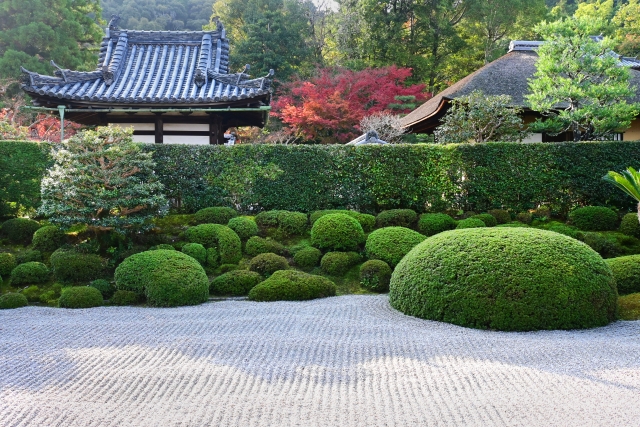
The rounded, wave-like shapes of karikomi are not arbitrary. They carry specific aesthetic logic rooted in the broader philosophy of Japanese garden design.
Stone and Plant in Dialogue
In Japanese garden composition, stone and plant are understood as complementary forces in conversation with each other. Stone represents hardness, permanence, and stillness. Plant represents softness, life, and change. The smooth curve of a tamamono set beside a rough granite rock is not a decorative arrangement — it is a dialogue between two different qualities of the natural world, each making the other more visible.
This is why the tamamono must appear to sink into the ground rather than rest on top of it. Its rounded base, allowed to grow flush with the soil without being cut away, makes it read as geological — something emerged from the earth, not placed upon it. Western topiary balls, with their stems visible and their spheres clearly above ground level, have the opposite effect: they read as human objects set into a garden. Karikomi reads as landscape.
Shakkei and the Art of Borrowed Scenery
Japanese garden design is built around a concept called shakkei (借景) — borrowed scenery — the practice of incorporating distant landscape elements into the garden’s composition by framing them through careful planting and design. Closely related is the concept of shukei (縮景), the compression or condensation of a vast natural landscape into a small garden space.
Okarikomi is one of the most powerful tools for shukei. When a mass of clipped azaleas forms a ridge of undulating green, it is not merely decorative. It is a mountain range, distilled. It is a wave, suggested. The garden visitor’s memory and imagination complete what the plants begin. This is why karikomi forms are always natural in their reference — mountains, waves, clouds, hills — never geometric or architectural. The language is always nature’s language, even when every leaf has been touched by a human hand.
Structure Through the Seasons
Clipped evergreen shrubs provide what Japanese gardeners call the garden’s kotsu — its bones or skeleton. While deciduous trees lose their leaves, while perennials retreat underground, while moss changes with moisture and light, karikomi-shaped shrubs hold their form through all four seasons.
In spring, satsuki azaleas burst into thousands of small flowers across the clipped surface — a brief and spectacular departure from the year-round green. In summer, the deep green of dense foliage cools the eye. In autumn, the smooth rounds anchor the garden as maple leaves fall. In winter, snow settles into the valleys between the mounds, tracing the forms in white. Karikomi is the constant against which all seasonal change is measured.
How to Practice Karikomi — A Practitioner’s Guide
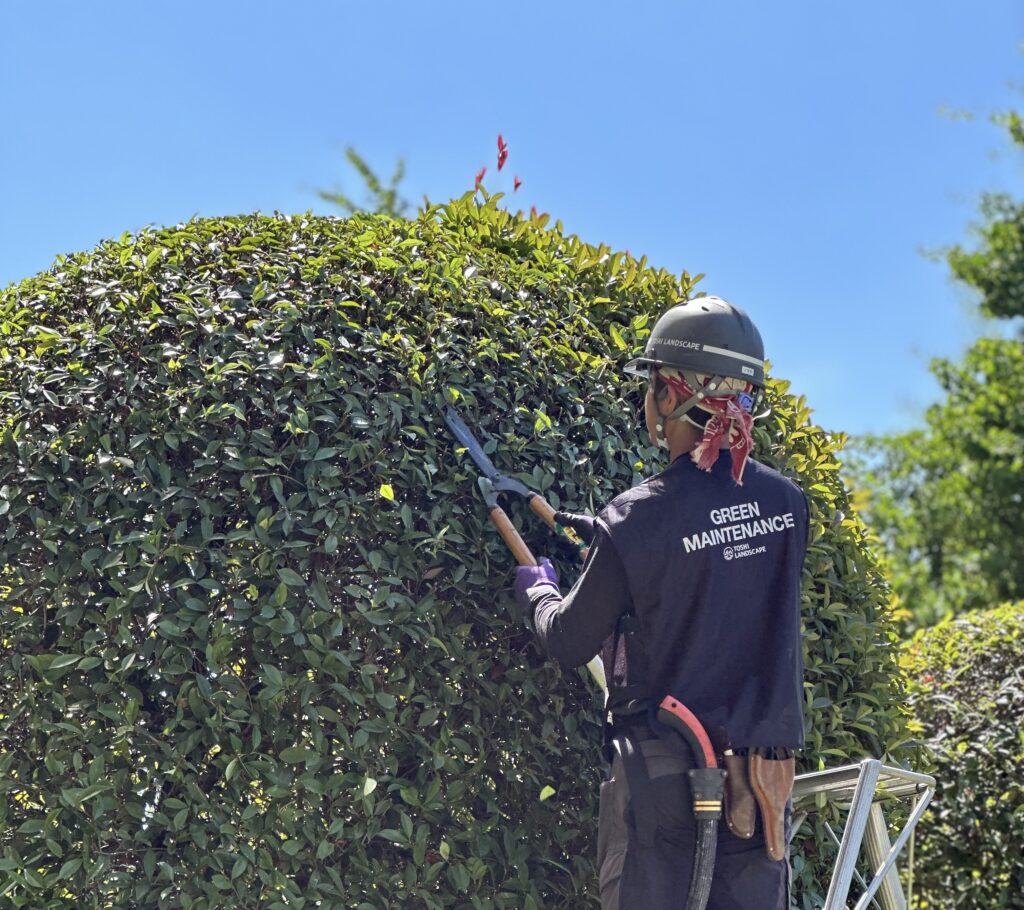
The full craft of karikomi cannot be transmitted through a single article. But the essential principles can be shared.
Choosing the Right Plants
Three qualities determine a plant’s suitability for karikomi. First, fine-textured foliage: large leaves show cut edges and create an untidy appearance after shearing. Second, evergreen habit: the form must hold through all seasons to serve its structural purpose. Third, the ability to regenerate from old wood: plants must be able to send new growth from brown, leafless stems after hard clipping, making long-term management possible.
In Japan, the primary karikomi plants are satsuki azalea (Rhododendron indicum and hybrids), Kurume azalea varieties, Ilex crenata (Japanese holly), Podocarpus macrophyllus (Japanese yew), enkianthus, and various camellia species.
For Western gardens, strong alternatives include Ilex crenata, Buxus (boxwood in appropriate varieties), Taxus baccata (English yew), Osmanthus × burkwoodii, and Lonicera nitida. Where satsuki azaleas are available — some specialist nurseries in the UK, US, and parts of Europe carry them — they are the closest equivalent to the traditional Japanese plant palette.
Timing the Cuts
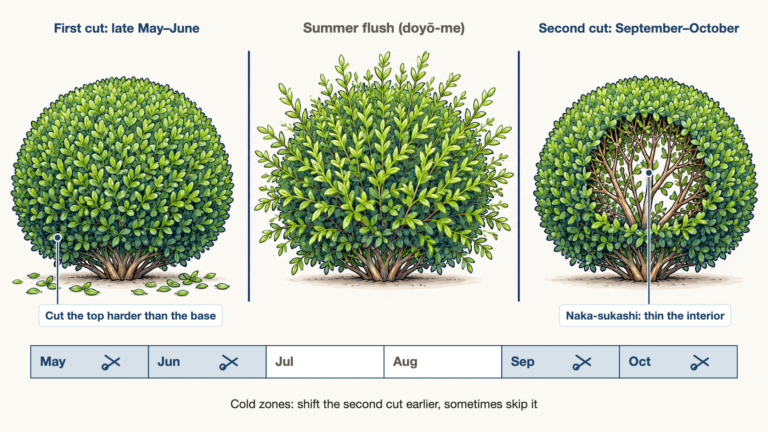
Satsuki and Kurume azaleas are pruned once after flowering, typically in late May or early June in most temperate climates. A second light shaping pass in early autumn, before the plant hardens off for winter, helps maintain crisp lines. Pruning too late in autumn risks removing next year’s flower buds or leaving wounds exposed to frost.
Ilex crenata and most other broadleaf evergreens are best shaped in midsummer, once the first flush of new growth has hardened. A second pass in early autumn is often beneficial for sharpening the outline before the growing season ends.
The Pruning Process
Begin always at a distance. Step back from the plant and observe its overall silhouette before touching it with a tool. The most common beginner error in karikomi is getting too close too quickly — proximity makes it impossible to judge proportion.
Start at the top surface, called the tenba. This uppermost point establishes the height and from it every curve and proportion flows downward. Once the tenba is established, work outward and downward in sections — top, sides, back, base — always in reference to the form you decided on at the beginning.
Japanese karikomi basami (刈込鋏) — hedge shears — are typically curved. Hold the curved blade facing upward, not downward as instinct might suggest. This orientation gives you consistent visibility over how much you are removing and significantly reduces the risk of accidentally cutting a hole into the surface. Hold one handle steady and move only the other: this reduces fatigue and improves precision.
After shearing, use a bamboo broom to gently sweep the clippings from the surface of the plant. Follow with hand pruners or snips to remove any stray branches that remain visibly proud of the surface. This finishing step — the equivalent of a sculptor’s final pass — is what gives the completed karikomi its characteristic smoothness.
The Shape of a Tamamono
A tamamono is not a ball. It is a hemisphere — wider than it is tall, with a ratio of approximately two to one. Its base does not taper inward; the widest point is at or very near ground level. The lower edges of the plant are not trimmed upward into the soil, but allowed to reach outward along the ground, creating the appearance that the shrub is seated in the earth, gravity-weighted, geological.
A tamamono that narrows toward its base — that has been cut inward below its widest point — has lost its essential quality. It looks potted. It looks placed. The goal is for the tamamono to look found: as though the earth simply grew it there, and the gardener’s only task was to reveal its form.
Okarikomi — When Many Plants Become One Landscape
The most poetic expression of karikomi craft is okarikomi: the massed planting of shrubs that, together, become a landscape rather than a collection of plants.
The beauty of okarikomi does not reside in any individual plant. It lives in the ridgelines created between plants — in the way light catches a crest and shadow pools in a valley — in the way the eye is drawn along a continuous wave from one end of the planting to the other. A single plant pruned into a dome is a tamamono. Dozens of plants pruned so that their forms flow continuously into each other become a mountain range, a sea.
For okarikomi to succeed, plant uniformity is essential. Using the same genus and species throughout the massing ensures consistent leaf texture, growth rate, and color response — all qualities that allow the eye to read the mass as a single form rather than as a crowd of individuals. A mixed planting, however carefully shaped, will always read as multiple plants. A uniform planting, once shaped with skill, becomes something else entirely.
The pruning of okarikomi is practiced as a continuous movement, not as a series of individual plant decisions. The gardener moves along the planting, reading the overall ridge and valley pattern, adjusting cuts to flow one into the next. The ridge must have rhythm; the valleys must have depth. The result should look inevitable — as though the landscape arose naturally, and the gardener merely kept pace with it.
Frequently Asked Questions
Q: Is karikomi the same as cloud pruning? A: Not precisely. In the West, cloud pruning most often refers to the shaping of trees — what Japanese practitioners call niwaki. Karikomi traditionally refers to the shaping of shrubs and mass plantings. Both belong to the same family of Japanese garden craft, and both use similar rounded, naturalistic forms, but they serve different compositional roles in the garden. In practice, the two terms are now often used interchangeably in English-language contexts.
Q: Which plants work best for karikomi in Western gardens? A: Ilex crenata (Japanese holly) is the closest equivalent to Japan’s traditional satsuki azalea and responds excellently to repeated shearing. Buxus, Taxus baccata, Osmanthus × burkwoodii, and Lonicera nitida are all viable candidates. For the most authentic result, seek out satsuki azalea hybrids from specialist nurseries — they are the plant this tradition was built around, and when they flower across a clipped surface in late spring, there is nothing quite like it.
Q: How often does karikomi need to be pruned? A: Satsuki and Kurume azaleas need pruning twice a year — once after flowering in late spring, and once in early autumn. Ilex crenata and most other evergreens can be maintained with one or two cuts per year depending on growth rate and the precision of form you are aiming for. In the early years, when you are establishing a shape, more frequent attention is needed. Once a mature form is achieved, less intervention is required to hold it.
Q: Can I convert existing overgrown shrubs into karikomi forms? A: Yes, but patience is required. First, assess the plant’s branch structure and identify the main framework you intend to work with. Never attempt to reach the final form in a single season — hard cuts that expose bare, leafless wood need time to regenerate, and the plant’s response must be observed before the next intervention. Spreading the process over two to three years gives the plant time to recover at each stage and gives you time to adjust your vision as the form develops.
Q: What is the most important thing to understand about the shape of a tamamono? A: That it is a hemisphere, not a sphere. Its widest point is at the ground, not at the middle. The base should appear to merge with the earth — not taper inward, not float above the soil, not narrow into a visible stem. A tamamono must look as though it grew there and belongs there. If it looks placed or potted, the most essential quality of the form has been lost.
Conclusion
Karikomi is the art of bringing landscape into the garden — not by transplanting it, but by suggesting it. Mountain ranges, ocean waves, rolling clouds: all of it compressed, distilled, and held in the form of clipped evergreen shrubs that a single person maintains with a pair of shears and decades of attention.
The garden at Raikyu-ji, where Kobori Enshu’s waves of camellia and azalea have been tended continuously for more than four centuries, is perhaps the clearest proof of what karikomi can become when practiced with commitment. The plants change — individual specimens are replaced as they age — but the landscape they embody persists.
Understanding karikomi means understanding that no single cut makes the garden. The garden is made by the accumulation of cuts over years and seasons, each one in response to how the plant grew since the last time you touched it. The gardener does not impose a form and then hold it fixed. The gardener maintains a conversation — with the plant, with the seasons, with the landscape the garden is trying to call into being.
That conversation, once begun, does not end.
Field notes from Japan’s trees arrive a few times each month — subscribe via the form in the footer, or follow the work on LinkedIn.