Daisugi (台杉) harvests straight cedar from a living mother tree every 20 years without felling it. How Kitayama's 600-year-old method works.
Introduction
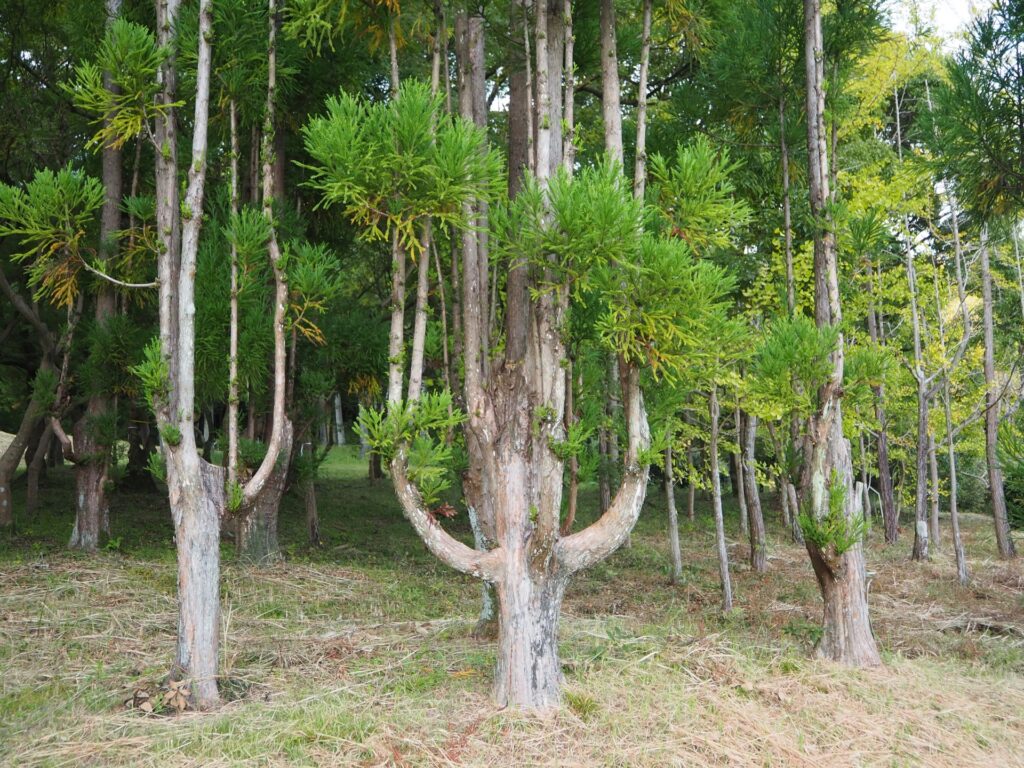
Daisugi (台杉) is a traditional Japanese forestry technique in which a single “mother tree” is kept alive while multiple perfectly straight cedar timbers are harvested from it, again and again, without ever felling it. Developed roughly 600 years ago in the Kitayama region north of Kyoto, the method shapes the top of the trunk into a flat “platform” from which vertical shoots grow. These shoots are cultivated as timber and harvested about every 20 years, while the mother tree itself lives for 200 to 300 years or more, producing dozens — sometimes hundreds — of trunks over its lifetime. It is one of the world’s earliest models of truly sustainable forestry: high-quality timber, with zero felling.
A few years ago, daisugi went viral in the West on the strength of a single photograph — a cluster of ramrod-straight trunks rising from one base, looking like a sculpture grown by nature itself. But what spread was the striking image, not the logic or the philosophy behind it. In this article, I want to explain — from the perspective of a Japanese arborist and landscape practitioner — why daisugi was invented, how it actually works, and what it can teach us today about sustainability and garden design.
Why Daisugi Was Invented
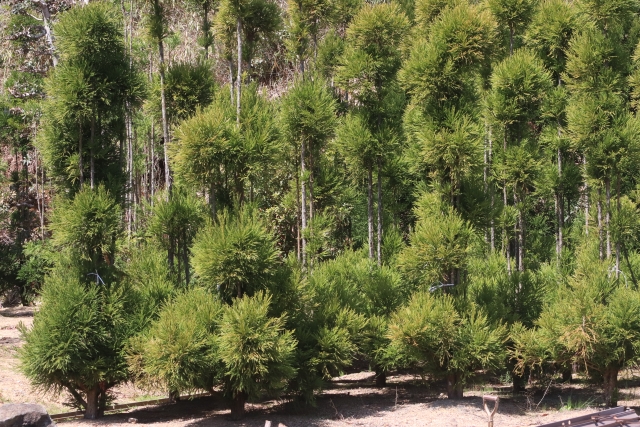
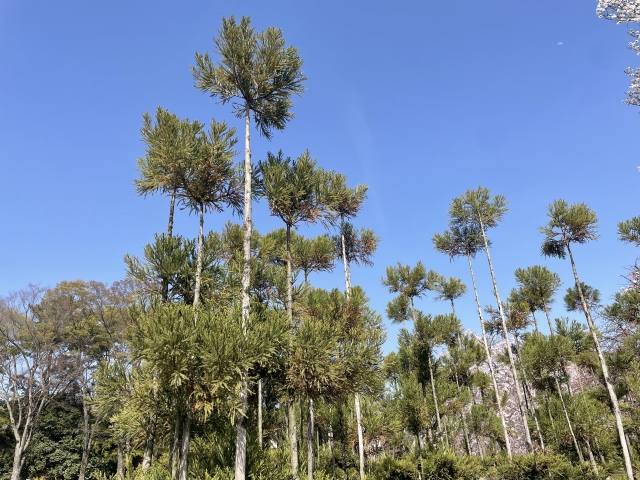
A 600-year-old problem: too little land, too much demand
Daisugi took shape during the Muromachi period (1336–1573), and especially the Oei era (1394–1428), in the Kitayama region. At the time, the ravenous construction demands of Kyoto’s ruling elite had stripped the surrounding mountains almost bare, creating a severe timber shortage. Planting new seedlings was no simple fix: suitable flat land was scarce, and growing a tree from scratch took decades. The pressing question became, “How can we harvest more good timber, and faster, without expanding the planting area?” Daisugi was the answer to that constraint.
There is a universal lesson here, one that reaches beyond forestry: constraint breeds technique. Daisugi was born from the bind of too little land and too little time, through the inversion of turning a single existing tree into a “timber factory.”
The straight timber demanded by teahouses and sukiya architecture
The second driving force was cultural demand. The slender, straight, knot-free timber harvested from Kitayama cedar — taruki (rafters) and migaki-maruta (polished logs) — was essential to sukiya-zukuri architecture and the tea house. The pared-down, refined spaces idealized by tea masters such as Sen no Rikyū called for flawless, perfectly true logs.
Daisugi was refined precisely to meet this high-value demand. What mattered was not raw timber production but crafting material that satisfied a “beauty of use.” A cultural aesthetic pushed the technique forward, and that technique in turn sustained an architectural culture — the two were inseparable.
How Daisugi Works
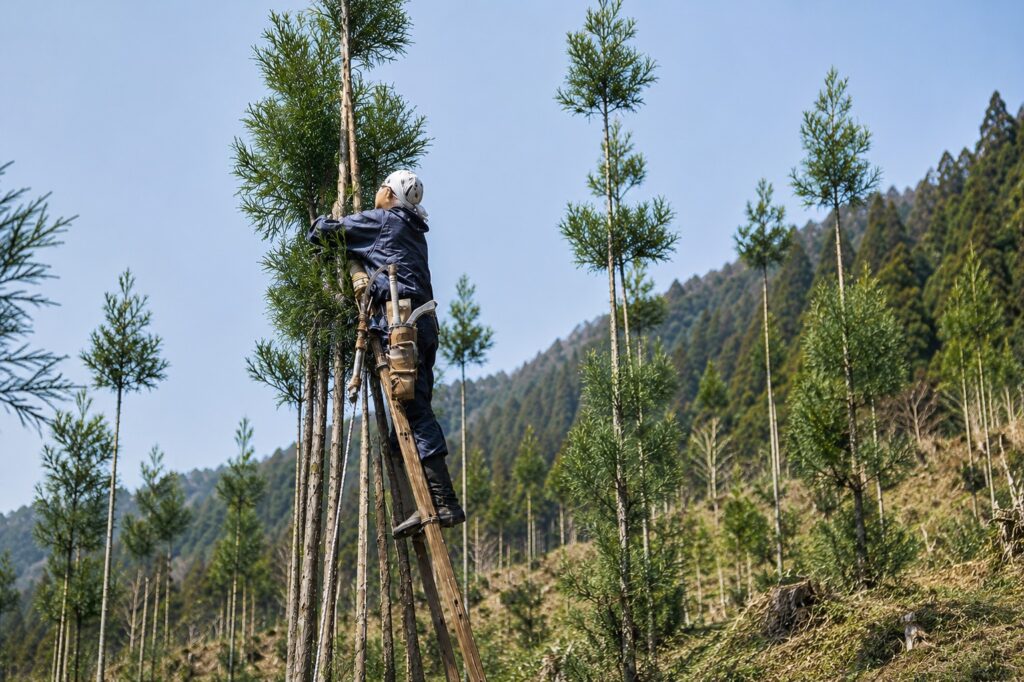
Shaping the mother tree into a platform
Daisugi uses sugi — Japanese cedar (Cryptomeria japonica), specifically the Kitayama cedar. A grower first selects a young tree and carefully prunes its upper branches to shape the top of the trunk into a flat “dai” (台, platform). Unable to concentrate its energy into a single leader, the tree instead sends up multiple straight vertical shoots from the platform. The thinking resembles bonsai: the grower channels the tree’s innate vitality in an intended direction.
The key point is that daisugi is not a technique that harms the tree. The mother tree’s roots and main trunk remain healthy, and the shaping never inflicts a fatal wound. If anything, the pruning improves light and airflow, creating conditions in which new shoots grow vigorously.
Pruning every 2–4 years is what produces flawless grain
Left alone, the shoots would spread branches and become gnarled, knotty, crooked wood. So the craftsman repeats eda-uchi (removing unwanted branches) every two to four years. This patient, ongoing maintenance is the key to the straight, knot-free grain daisugi is prized for.
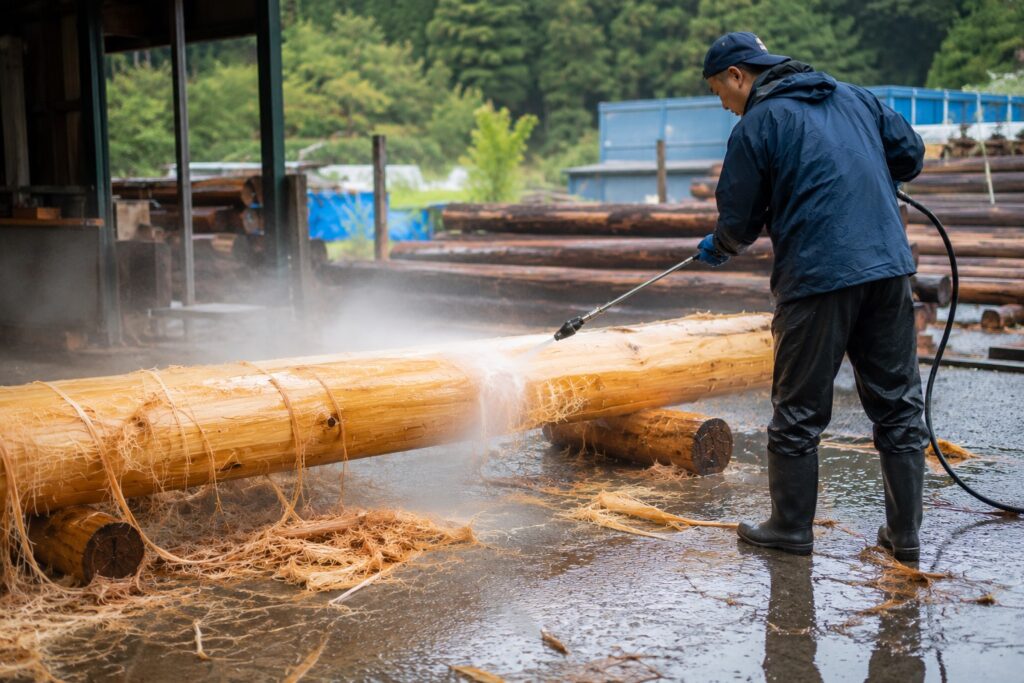
In Kitayama, a final step is added after harvest: the logs are painstakingly polished with sand to create migaki-maruta, polished logs. From cultivation through to finishing, the human hand never stops working the material. Daisugi produces, through sustained involvement, a quality that neglect could never yield — and that is the essence of the technique.
Harvest on a 20-year cycle, while the mother tree lives on
Once mature, the shoots can be harvested as timber roughly every 20 years. What is cut is the shoot, never the mother tree. Each time, the mother tree pushes out fresh shoots and continues to supply the next generation of timber. Records describe single mother trees yielding dozens — in some cases hundreds — of trunks over a lifetime, with some living well past 200 to 300 years.
In other words, daisugi behaves like a perennial field: once established, harvests continue across many human generations. It runs on a fundamentally different timescale from conventional forestry, where you plant, grow, clear-fell, and replant.
How It Compares to Forestry Techniques Elsewhere
Common ground with coppicing and pollarding
The idea of “using a tree repeatedly without killing it” is not unique to Japan. Europe has long practiced coppicing — cutting a tree near the base and harvesting the regrowth — and pollarding — cutting back above the reach of grazing animals to harvest the resulting shoots. Both keep the parent alive while yielding resources, sharing daisugi’s underlying philosophy.
What makes daisugi distinct
Yet daisugi has a striking originality. Its goal is not firewood or fencing but high-quality, perfectly straight logs destined to become the visible, finished woodwork of a building. To that end, it meets exacting standards — straight, knotless, uniform — through disciplined pruning and polishing. And above all, function and beauty were unified in it from the very start. Where European pollarding was largely utilitarian, daisugi pursued use and beauty at once, making it arguably the more refined expression of the same idea.
What Daisugi Offers the Present
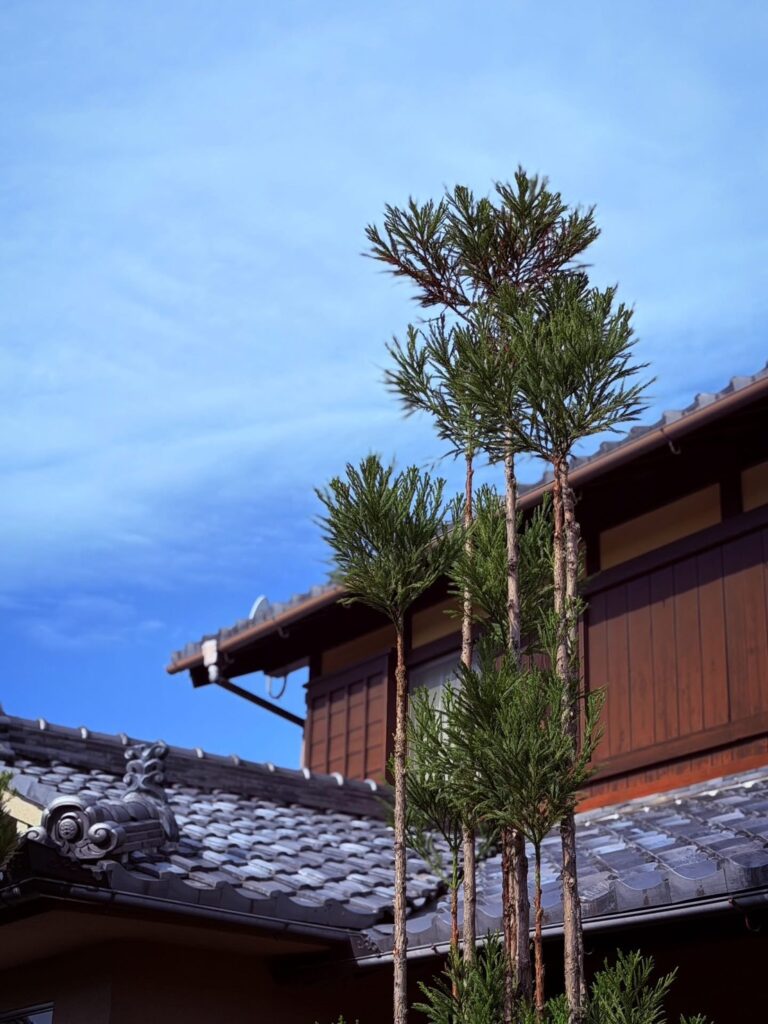
“Forestry without felling” and carbon
Daisugi’s defining feature is that the mother tree is never cut down to harvest. Because the tree stays alive, its root system and the surrounding soil are rarely disturbed, and it keeps absorbing and storing carbon. You obtain more timber from less land while preserving the forest’s carbon storage and the slope-stabilizing function of its soils. At a moment when clear-cutting is scrutinized for driving soil loss and carbon release, this is exactly why daisugi’s logic is being reappraised.
None of this means modern demand could be met entirely by daisugi — it is labor-intensive, and the road to harvest is long. Even so, the principle of growing with a tree rather than using it up offers rich guidance for designing sustainable forestry.
Daisugi in gardens and landscapes
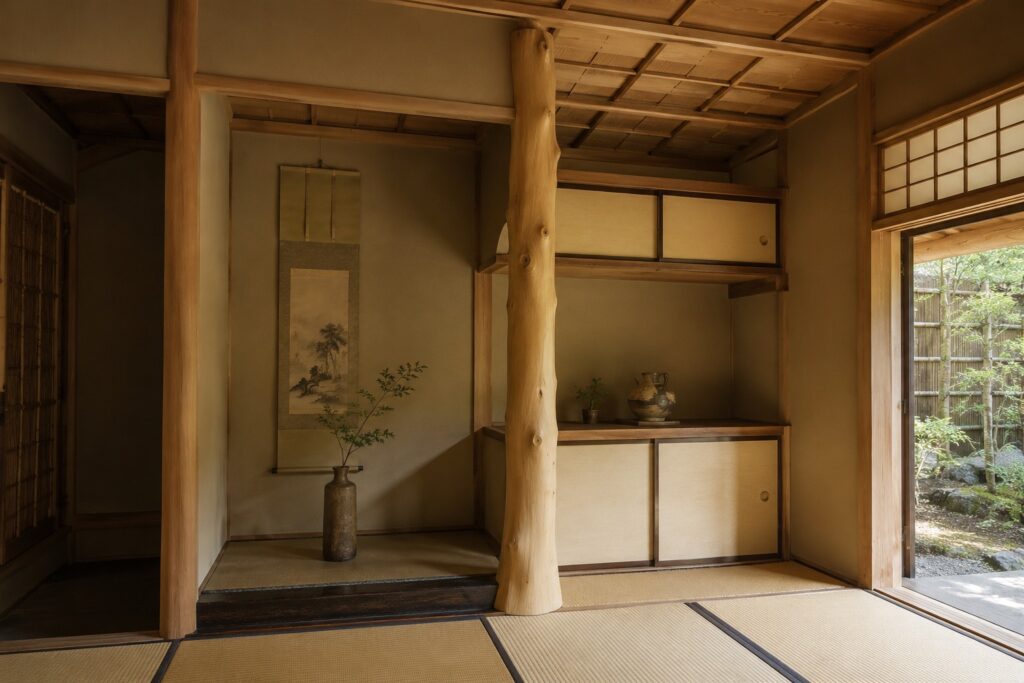
In recent years, daisugi has found a place in gardens as an ornamental form, not only as a source of timber. The distinctive silhouette of multiple trunks rising skyward has a sculptural presence no ordinary tree can match, and it adds vertical drama even in small spaces.
This use rests on the same philosophy as niwaki (庭木), the Japanese art of training garden trees: guiding a tree’s vitality by hand and shaping its form over time. Daisugi may be one of the purest embodiments of a distinctly Japanese view of nature — one that treats a tree not as mere “material” but as a living presence you accompany through time.
Frequently Asked Questions
Q: What is daisugi? A: Daisugi is a traditional Japanese forestry technique in which a single mother tree is kept alive while multiple straight cedar timbers are repeatedly harvested from it. It originated about 600 years ago in Kitayama, Kyoto, and the mother tree can live for centuries.
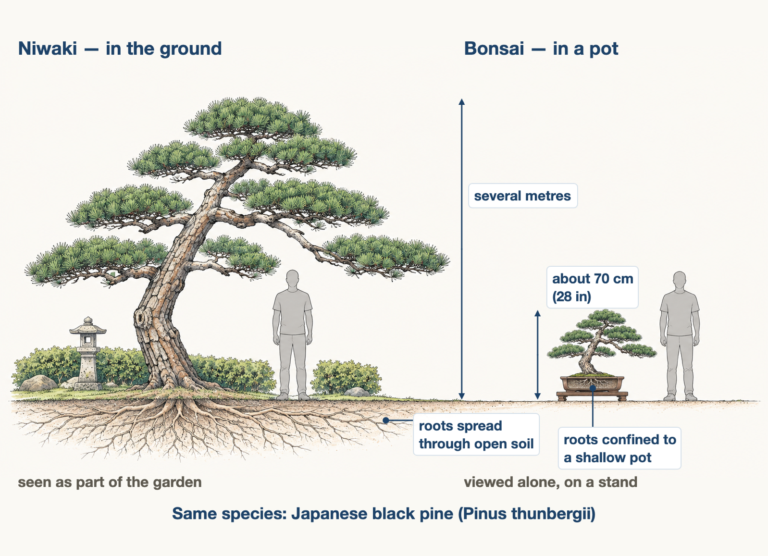
Q: How is daisugi different from bonsai? A: Both involve a human guiding a tree’s growth, but bonsai trains a tree to stay small for viewing, while daisugi is a practical technique for producing straight, high-quality building timber (though ornamental use is now growing too).
Q: How can you harvest timber without felling the mother tree? A: The top of the mother tree is shaped into a flat platform, and only the shoots that grow from it are harvested. The mother tree stays healthy and keeps producing new shoots.
Q: Is daisugi the same as European pollarding? A: They share the idea of keeping the parent alive to harvest regrowth repeatedly. But daisugi aims at high-quality architectural logs rather than firewood, and it is distinguished by disciplined pruning and polishing to produce straight, knot-free timber.
Q: Is daisugi still practiced today? A: Yes. It survives as a living tradition in Kitayama, Kyoto, and its sustainability and distinctive form have made it a subject of renewed global interest in garden design and sustainable forestry.
Conclusion
Daisugi was born from the constraint of a 600-year-old timber shortage and arrived at a single powerful idea: use a tree without killing it. Keep the mother tree alive, harvest its timber every 20 years, and sustain a forest across centuries. Beneath it lies a Japanese view of nature that seeks not to conquer the natural world but to move through time alongside it.
Now that climate change and sustainability have become global concerns, daisugi is at once a beautiful inheritance from the past and a hint toward the forestry and forest-making of the future. Could the principle of “keeping a tree alive rather than cutting it down” find a place in the tree care or garden design where you live? I hope you will take a moment to consider it.
Field notes from Japan’s trees arrive a few times each month — subscribe via the form in the footer, or follow the work on LinkedIn.