From samurai family crests to planting plans: how kamon botanical motifs quietly shaped Japanese garden design for centuries.
Introduction
Every plant in a Japanese garden was chosen for a reason.
When a paulownia tree stands at the entrance of a historic residence, it is not simply there because someone liked the look of it. When wisteria drapes across a pergola in a samurai-era garden, its presence carries meaning accumulated over centuries. In Japan, the choice of a plant has long been an act of declaration — a statement about what a family values, what it aspires to become, and how it understands its place in the natural world.
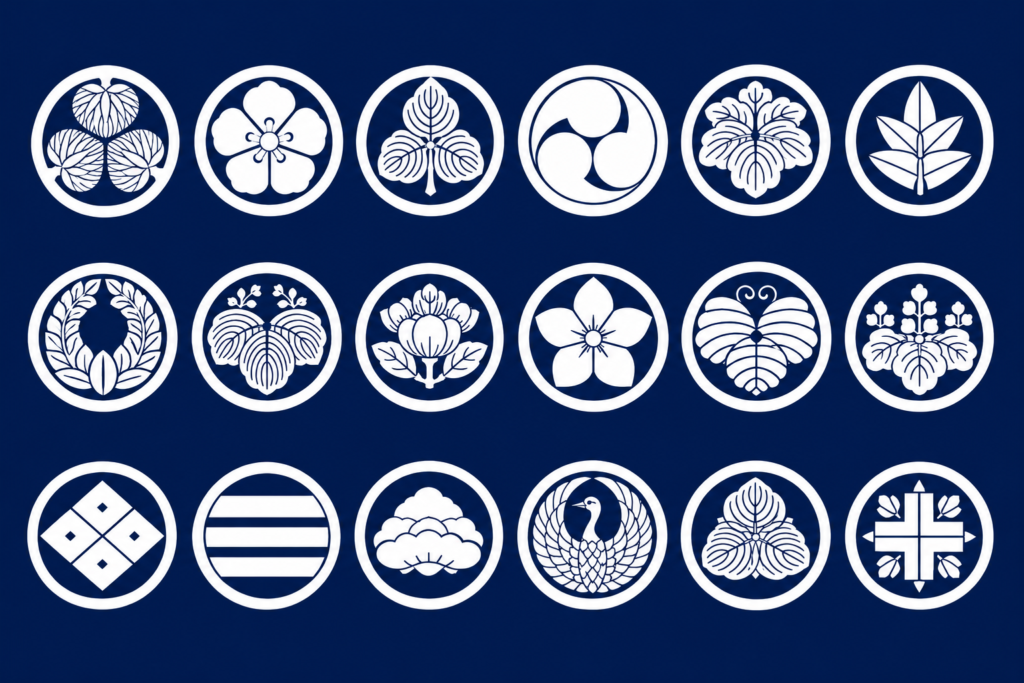
The system that made this meaning most explicit is kamon (家紋): the Japanese family crest. With more than 20,000 distinct designs documented, kamon are Japan’s equivalent of European heraldry — symbols passed down through generations, appearing on kimono, armor, temple gates, and gravestones. Of all the motifs used in kamon design, plants are by far the most common. The paulownia, wisteria, hollyhock, bamboo, plum blossom, and wild citrus are not merely decorative choices. Each was selected because its botanical character — its growth habit, its seasonal behavior, its ecological resilience — embodied virtues that a family wished to claim as its own.
As a Japanese landscape professional, I want to trace that connection between crest and garden: to show how the same plants chosen to represent a family’s identity also shaped the way Japanese gardens were designed and planted — and what that tradition can tell us about the philosophy of plant selection that still runs through Japanese landscape practice today.
1. Why Plants? The Japanese View of Nature and Symbolism
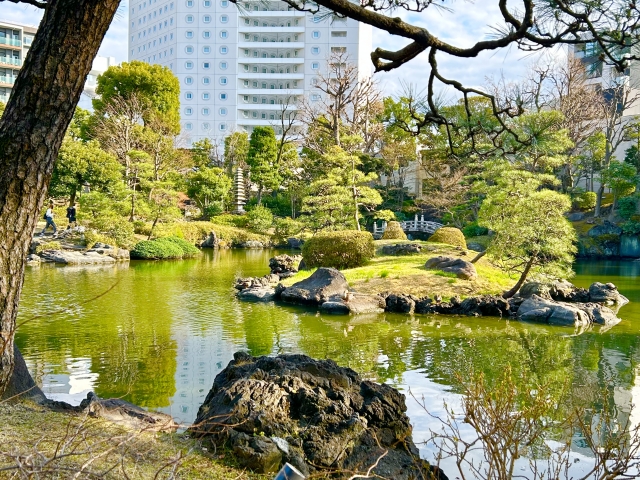
To understand why plants dominate kamon design, it is necessary to understand how Japanese culture has related to the natural world.
In Japan, plants are not simply organisms. Each species carries a character — qualities accumulated through observation across seasons and generations. The way pine holds its deep green through winter. The way plum blooms in February’s harshest weeks, before any other tree. The way bamboo bends under snow but does not break. These are not poetic impressions: they are precise botanical observations, translated into human values.
The Japanese word shizen (自然) is usually translated as “nature,” but its meaning is closer to “that which is as it should be.” Nature is the expression of each thing’s essential character — not untouched wilderness, but authentic being. A plant pruned to reveal its truest form is still natural in this sense.
When a family selected a plant for its kamon, it chose a plant whose shizen embodied the character the family aspired to. The crest became a promise: our family will live in the manner of this plant. That same logic — choosing plants whose essential character serves the purpose of a space — is the foundation of Japanese garden design.
2. The Six Plants of Kamon and Their Gardens
Paulownia (Kiri) — Authority, Speed, and the Wood That Holds Memory
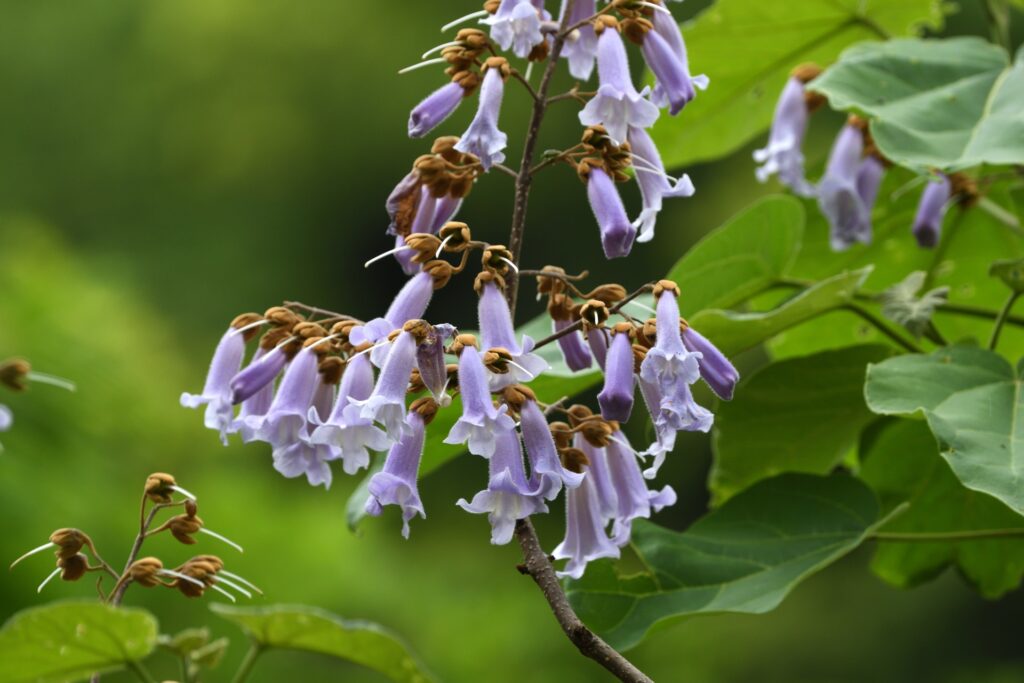
The paulownia (Paulownia tomentosa, known in Japanese as kiri) holds the highest rank among plant kamon. Used by Toyotomi Hideyoshi in the sixteenth century and adopted today as the official emblem of the Japanese government — visible on the Prime Minister’s podium and on every Japanese passport — the paulownia crest signals formal authority and institutional legitimacy.
The reasons for the paulownia’s association with status are rooted in its biology. The paulownia is among the fastest-growing trees in the temperate world, capable of adding several meters of height in a single season under favorable conditions. Yet despite its rapid growth, the wood it produces is exceptionally light, strong, and moisture-regulating — the preferred material for Japan’s finest tansu storage chests, koto string instruments, and traditional footwear. The combination of extraordinary speed and extraordinary quality is rare in any tree, and rare things in Japan tend to become symbols of distinction.
In garden design, paulownia functions as a background tree — its large leaves create substantial summer shade, and its lilac-purple flowers in late spring are striking from a distance. Historic Japanese residences planted paulownia not in the garden’s foreground, where stone and shaped shrubs hold the composition, but behind the main structure, where the tree’s scale and speed of growth could be used to quickly establish a sense of maturity and enclosure.
Wisteria (Fuji) — Graceful Persistence and the Architecture of Shade
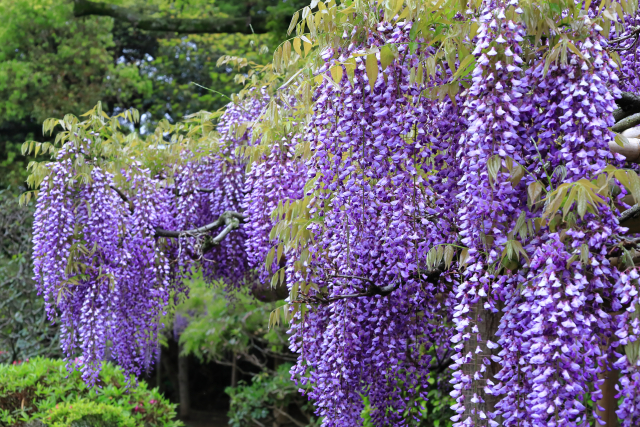
Wisteria (Wisteria floribunda) gave its name — and its emblem — to the Fujiwara clan, Japan’s most powerful aristocratic family of the Heian period. The name Fujiwara literally means “wisteria plain,” and the fuji crest became one of the most widely used kamon in Japanese history, adopted by both noble families and samurai households across many centuries.
What did wisteria represent? The plant is a vine — it cannot stand without support. It grows slowly in its early years, then establishes itself so completely that it may survive for centuries and cover enormous structures. Its flowers, which cascade in long purple racemes in late April and May, are among the most spectacular in the Japanese floral calendar. The association the Fujiwara clan cultivated was not of brute strength but of elegant, persistent influence: a family that grows quietly, wraps itself around power rather than confronting it directly, and eventually becomes inseparable from the structures it inhabits.
In garden design, the wisteria pergola — fujidana — is one of the most enduring structures in the Japanese garden tradition. Wisteria requires a strong framework to grow across, and the space it creates beneath — dappled with light through the falling flower clusters — is distinctively Japanese: neither open sky nor enclosed room, but a suspended, perfumed canopy. The famous wisteria displays at Kameido Tenjin Shrine in Tokyo and the century-old wisteria trees at Ashikaga Flower Park are expressions of a garden tradition built directly on the values the fuji crest represents.
Hollyhock (Aoi) — Sacred Ground and the Mark of Tokugawa
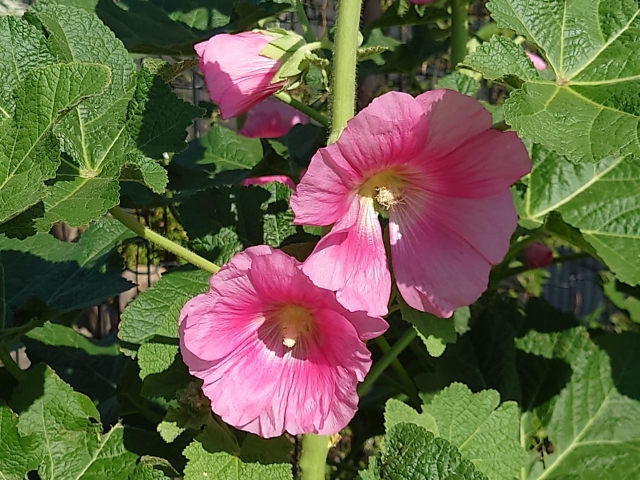
The triple hollyhock crest — mitsuba aoi — is among the most recognized symbols in Japanese history. It was the emblem of Tokugawa Ieyasu, the shogun who unified Japan in the early seventeenth century and whose family ruled for more than 250 years. Anywhere associated with the Tokugawa legacy — Nikko Toshogu shrine, Zojoji temple in Tokyo, the grounds of Edo Castle — the triple hollyhock appears in carved stone, lacquerwork, and roof tiles.
The plant used in the crest is not the garden hollyhock familiar in Western borders. It is futaba aoi (Asarum caulescens), a low-growing woodland perennial with paired heart-shaped leaves, native to Japanese mountain forests. It is also the sacred plant of the Kamo Shrines in Kyoto — Kamigamo and Shimogamo — which are among the oldest Shinto institutions in Japan. The Aoi Matsuri, one of Kyoto’s three great festivals, takes its name from this plant, which is used to decorate the ox-drawn carriages and participants’ headdresses during the procession.
The Tokugawa chose the aoi crest not merely for aesthetic reasons but to associate their authority with the sacred lineage of the Kamo Shrines. By wearing the Kamo Shrines’ plant, they placed themselves within a continuum of sacred Japanese space.
In garden terms, futaba aoi is a shade-tolerant ground-covering plant that grows naturally in the understory of woodland gardens. It appears in historically significant plantings at Kamo Shrine precincts, where it is cultivated under careful conditions to ensure its survival for ceremonial use. It is rarely used in contemporary ornamental planting, but its presence in a garden with Tokugawa associations remains a meaningful marker of historical connection.
Bamboo and Sasa (Take / Sasa) — Uprightness, Resilience, and the Zen Interior
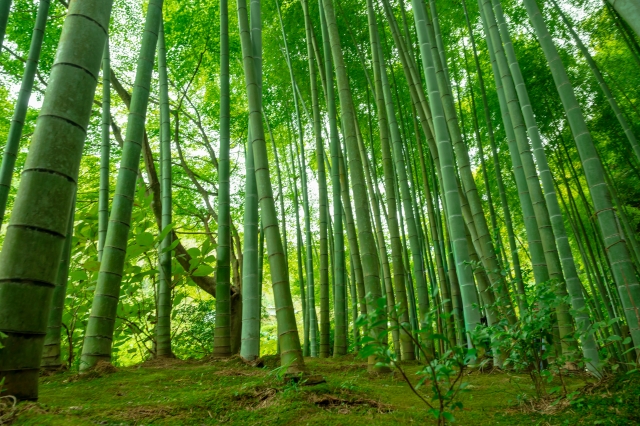
Bamboo and its smaller relative sasa (dwarf bamboo) appear extensively in samurai family crests for reasons that are inseparable from the plant’s physical character. Bamboo is evergreen: it does not concede its green to winter. It grows with exceptional speed. Its roots grip the ground tenaciously. And its culms, though hollow, resist wind by bending rather than breaking — returning to vertical after each storm.
Each of these qualities mapped directly onto samurai ideals: loyalty without wavering, growth without ostentation, resilience without rigidity. The hollow interior of bamboo carries additional significance in Zen philosophy, where ku (emptiness) is not absence but openness — the condition of a mind free from attachment and therefore capable of full response. A samurai who internalized Zen practice aspired to exactly this: a center that appears empty of ego and is therefore free to act.
In Japanese garden design, bamboo occupies a position of unusual importance. Black bamboo (Phyllostachys nigra), striped bamboo, arrow bamboo (Pseudosasa japonica), and the giant moso bamboo are all used in garden composition. Bamboo fencing — take-gaki — is one of the defining elements of Japanese garden structure. Bamboo groves create an acoustic environment — the sound of wind through bamboo, take-no-koe, or “voice of bamboo” — that is considered integral to the sensory experience of the garden. The connection between bamboo’s kamon symbolism and its role in the garden is perhaps the most complete of any plant: the values the crest represents are expressed through the plant’s physical presence in space.
Plum Blossom (Ume) — First Light in the Coldest Season
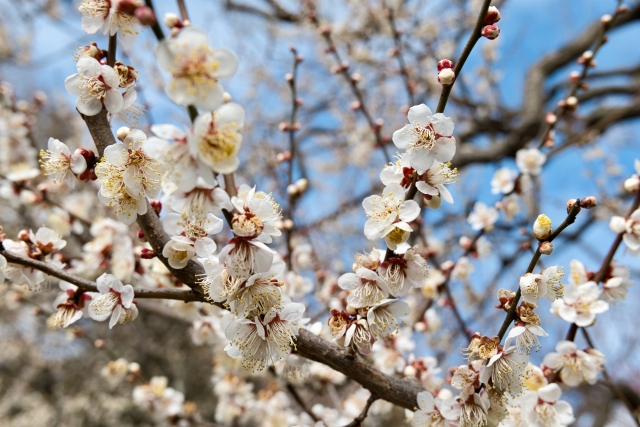
The plum blossom kamon is inseparable from Sugawara no Michizane (845–903), the scholar and poet who was exiled to Kyushu by political rivals and died in Dazaifu. After his death, he was deified as Tenjin, the god of scholarship and learning, and the Tenmangu shrines dedicated to him — most famously Dazaifu Tenmangu in Fukuoka and Kitano Tenmangu in Kyoto — adopted the plum blossom as their emblem.
Why plum? Michizane was said to have composed a poem to his beloved plum tree on the night of his forced departure from Kyoto: “When the east wind blows, send your fragrance, O plum blossoms — even without your master, do not forget the spring.” The plum’s ecological behavior gave the poem its meaning. Prunus mume blooms in late January or February in Japan — weeks before the cherry, when snow may still be on the ground. It flowers in the coldest, most difficult part of the year, and its fragrance is strong and particular. The plum does not wait for favorable conditions to begin. It begins precisely when conditions are least favorable, and it brings fragrance anyway.
This is the quality that Michizane’s legend attached to the plum: nobility maintained under adversity, excellence that does not require an audience or an easy season.
In garden design, plum is one of the oldest and most important flowering trees in the Japanese tradition — older than the cherry blossom culture. The great plum gardens of Japan — Kairakuen in Mito, with more than 3,000 trees of over 100 varieties — exist as living expressions of the ume kamon’s meaning: a garden that is most beautiful in the hardest season of the year.
Tachibana (Wild Citrus) — Immortality and the Eternal Garden
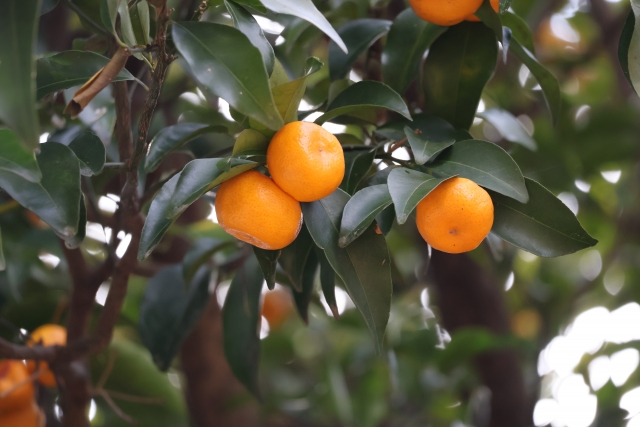
The tachibana (Citrus tachibana), Japan’s native wild citrus, retains its leaves, flowers, and fruit through all seasons simultaneously — a perpetual quality that made it a symbol of immortality and eternal renewal.
In the ceremonial garden of the Shisinden at the Kyoto Imperial Palace, a tachibana tree stands to the right of the entrance in a formal arrangement maintained for more than a thousand years: “ukon no tachibana” (tachibana to the right) and “sakon no sakura” (cherry to the left). The tachibana represents permanence; the cherry represents transience. Together they frame the threshold of imperial authority.
In contemporary garden design, tachibana is rarely planted — it is difficult to cultivate and not commercially available through most nurseries. Its significance remains primarily historical and ceremonial, visible in imperial and shrine precincts where tradition requires its presence.
3. What Kamon Plants Teach Contemporary Landscape Designers
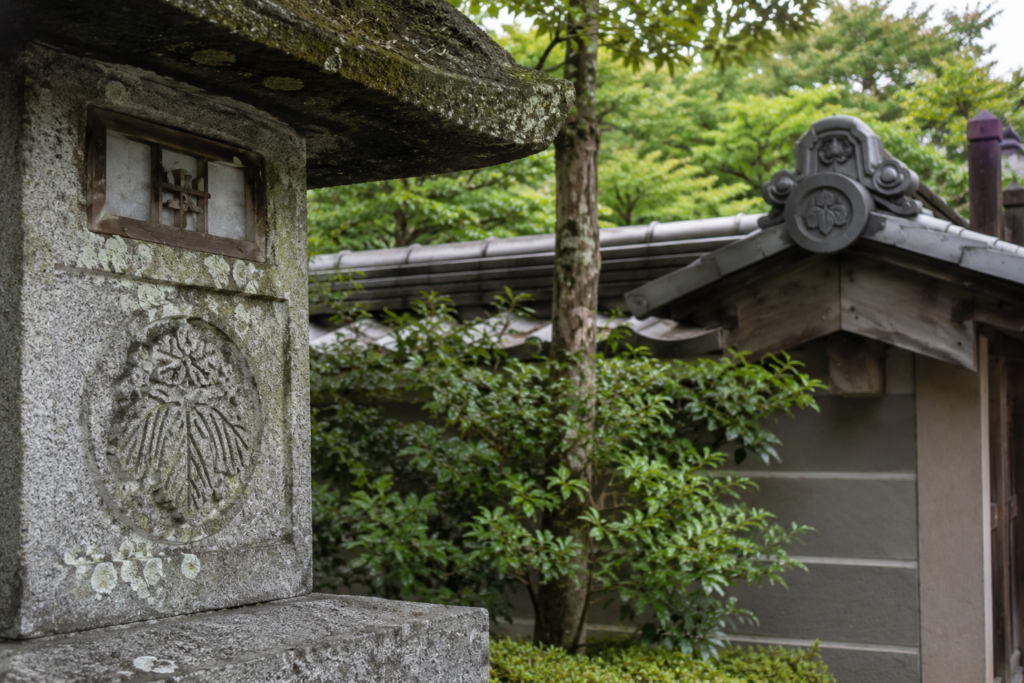
The kamon tradition holds a practical lesson for anyone involved in plant selection and garden design.
In most contemporary Western design, plants are chosen primarily for aesthetic qualities: color, texture, seasonal interest, scale. In the kamon tradition, the primary question was always “what does this plant do?” — not visually, but ecologically and characterologically. How does it grow? What does it survive? What does it give? The answers were then mapped onto human values.
Japanese landscape practitioners still approach plant selection this way. Before choosing a plant, the question is what its essential character contributes to the composition. Bamboo does not merely create a screen — it brings the sound of wind and the quality of vertical strength. Plum does not merely provide early flowers — it marks the end of winter before the eye is ready to accept that winter is ending.
The kamon plants represent a thousand years of accumulated observation about which plants carry which essential qualities. For anyone designing a garden with reference to Japanese principles, they are a reliable starting point.
Frequently Asked Questions
Q: Which plants appear most commonly in Japanese family crests?
A: The most frequently used plant kamon are paulownia (kiri), wisteria (fuji), hollyhock (aoi), bamboo and sasa (take), plum blossom (ume), wild citrus (tachibana), oak (kashiwa), wood sorrel (katabami), and chrysanthemum (kiku). Of these, chrysanthemum is reserved for the Imperial family and its immediate lineage. Paulownia, wisteria, and hollyhock are the three most historically significant, each associated with major periods of Japanese political history.
Q: Is there a direct connection between a family’s kamon plant and the plants in their garden?
A: In documented historical cases, yes. Wisteria pergolas appear consistently in gardens associated with Fujiwara-lineage families and institutions. Hollyhock is cultivated in shrine precincts associated with the Tokugawa legacy. Tachibana has been maintained at the Kyoto Imperial Palace garden for over a thousand years. More broadly, the plants most commonly found in Japanese gardens — plum, pine, bamboo, wisteria, chrysanthemum — are the same plants most commonly found in kamon. This is not coincidence: the same aesthetic and philosophical values shaped both traditions simultaneously.
Q: How does Japanese kamon differ from European heraldry?
A: The most fundamental difference is in what the symbol represents. European coats of arms traditionally identify an individual and their lineage. Japanese kamon represent the ie — the “house” or family unit — as a collective institution. European heraldry favors mythological and religious motifs: lions, eagles, crosses, dragons. Japanese kamon draw primarily from the natural world: plants, birds, geometric forms derived from nature. This difference reflects the centrality of observed nature — rather than mythological narrative — in Japanese symbolic culture.
Q: How can I find out my own family’s kamon?
A: The most reliable method is to examine the family’s butsudan (Buddhist altar), ancestral graves, or formal kimono. In Japan, kamon are traditionally engraved on gravestones and woven into the back, chest, and sleeves of formal black kimono. Asking older family members is often effective. Searching by surname can suggest candidates, but the same surname often corresponds to multiple different kamon, so direct family confirmation is more reliable.
Q: Can kamon plants be incorporated into contemporary garden design?
A: Yes — and meaningfully so. Rather than treating it as a decorative theme, consider what the plant’s ecological character contributes to the space. If a client’s family crest features bamboo, a bamboo grove or bamboo fencing brings the qualities of uprightness, seasonal sound, and visual rhythm into the garden. The meaning and the material quality reinforce each other. Bamboo, plum, and wisteria are the three kamon plants most central to contemporary Japanese garden practice — each carrying their crest symbolism directly into spatial and sensory experience.
Conclusion
A kamon is a small thing — a circle of a few centimeters, pressed into fabric or carved into stone. But what it contains is a complete philosophy of the relationship between a family and the natural world.
Each plant chosen for a family crest was chosen because its essential character — the way it grows, the season it chooses to flower, the conditions it survives — expressed something a family wished to claim as its own. Paulownia for the quality that combines speed with excellence. Wisteria for graceful, persistent strength. Hollyhock for sacred continuity. Bamboo for uprightness that bends without breaking. Plum for nobility in adversity. Tachibana for the promise of permanence.
These same plants shaped the garden tradition that grew alongside the kamon tradition — not because families necessarily planted their crest plants in their gardens, but because the same sensibility that chose a plant for a crest also chose plants for a garden. The eye that saw in bamboo the qualities of a samurai was the same eye that designed a bamboo grove to define the edge of a garden space.
Understanding kamon is, among other things, a way into understanding why Japanese gardens are planted the way they are. The plants were never arbitrary. They were chosen, each one, for what they knew how to be.
Field notes from Japan’s trees arrive a few times each month — subscribe via the form in the footer, or follow the work on LinkedIn.