The 2,000-year-old camphor of Kinomiya Shrine: what keeps Japan's sacred giant alive, and what its care teaches about veteran tree management.
Introduction
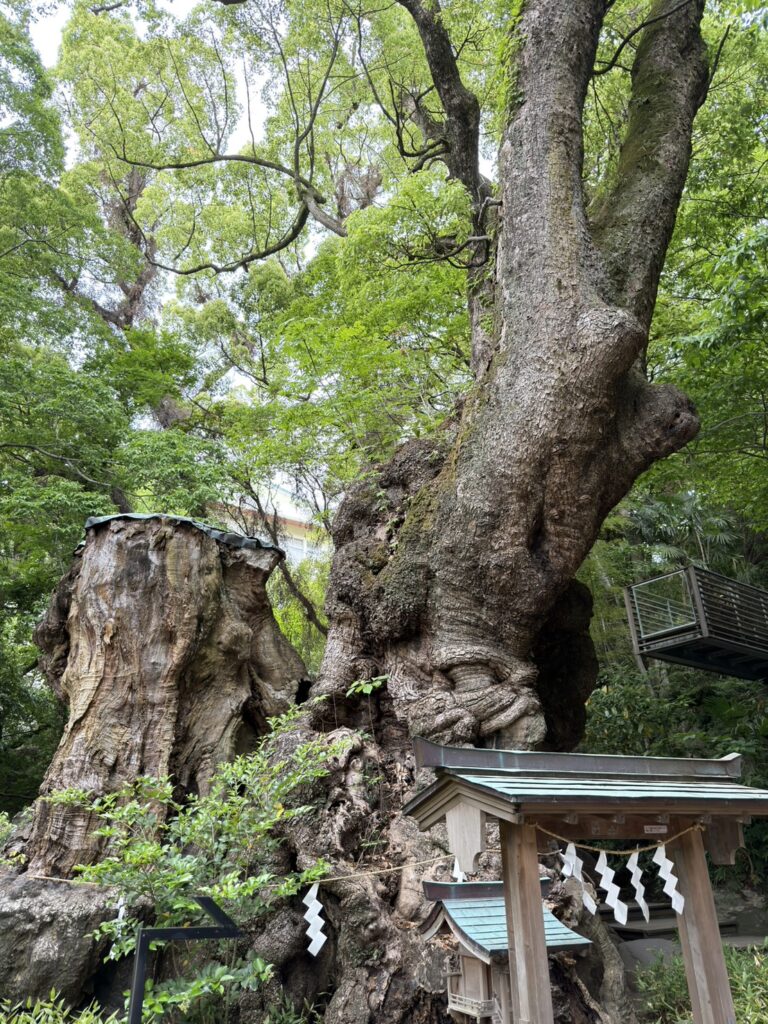
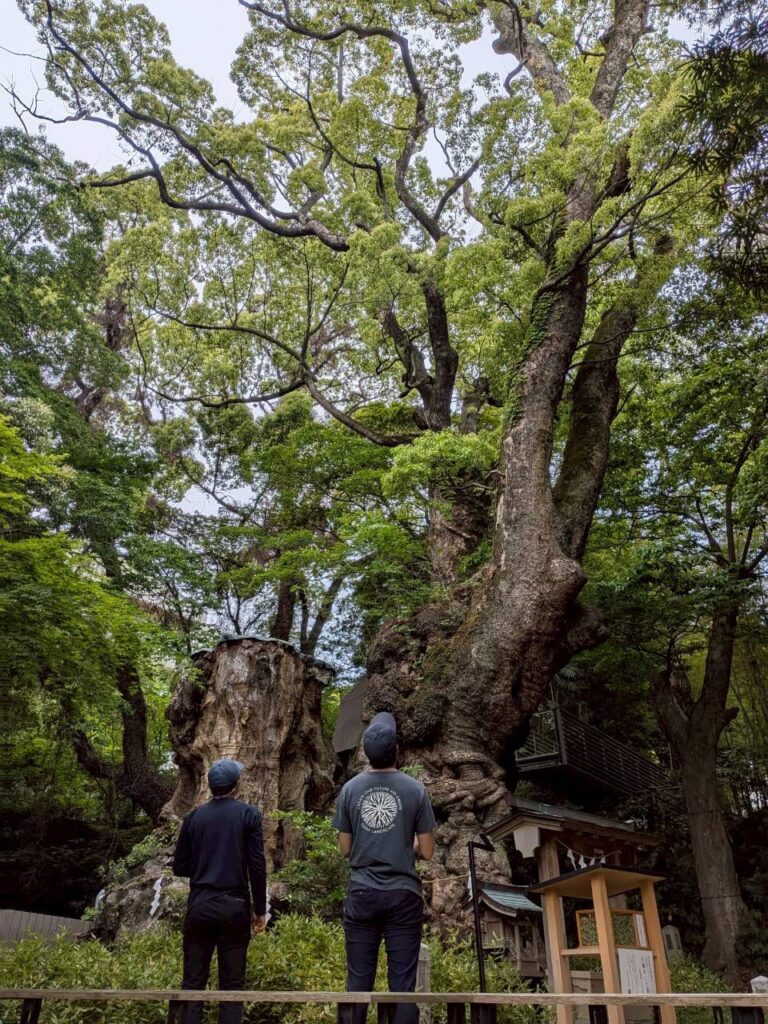
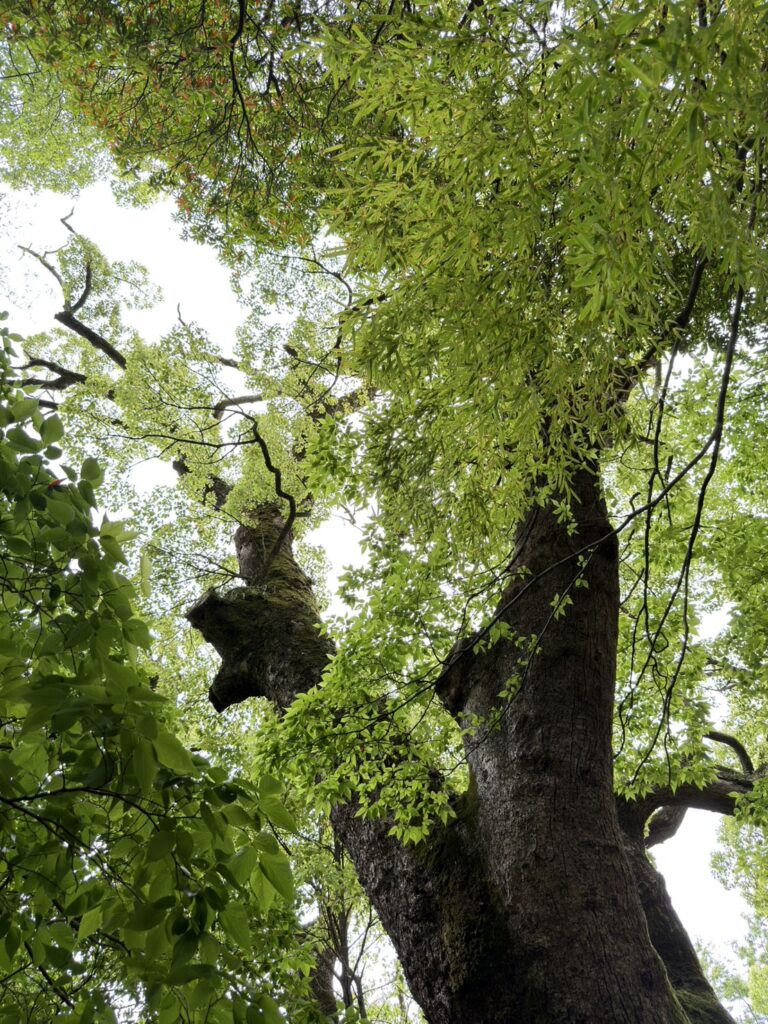
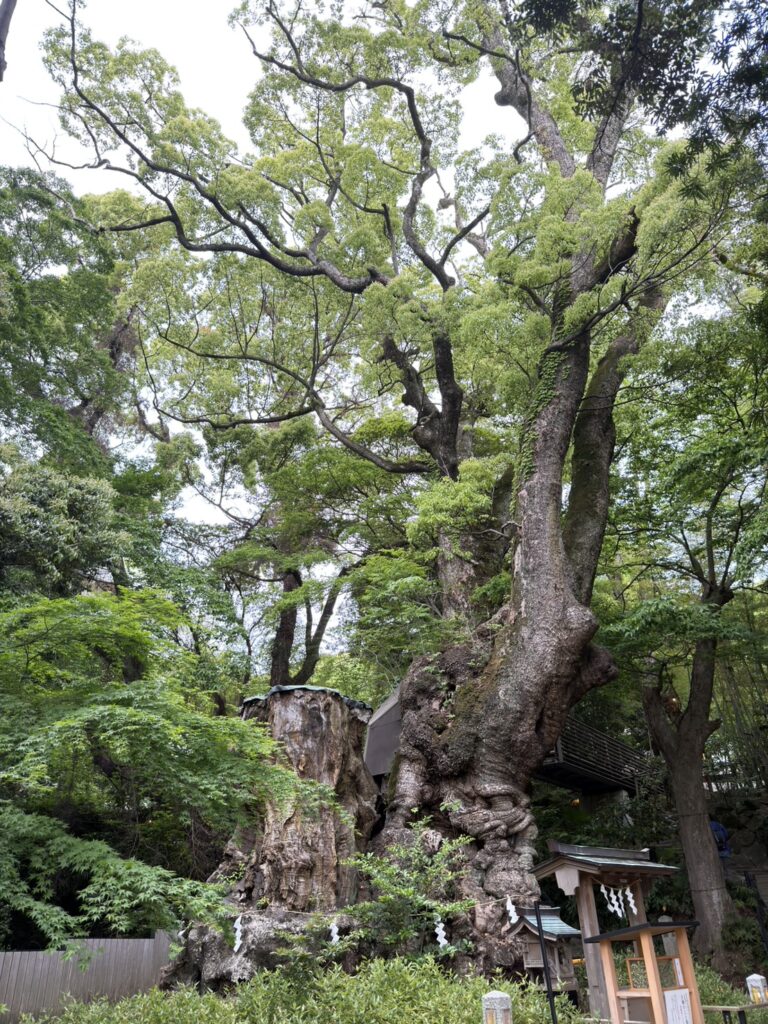
In the coastal city of Atami, Shizuoka Prefecture, a single camphor tree has been standing for more than 2,000 years. This is the Okusu — the Great Camphor Tree of Kinomiya Shrine (来宮神社). With a trunk circumference of approximately 24 meters and a canopy that blankets the entire shrine precinct, it is one of the largest and oldest trees in Japan. Designated a national Natural Monument by the Japanese government in 1933, this tree is far more than an ecological curiosity. It is a living sanctuary — a place where people have prayed, grieved, and hoped for millennia. This article explores the ecological, cultural, and spiritual dimensions of the Kinomiya Okusu, and why it continues to draw visitors from around the world.
What Is the Okusu? Scale, Age, and Official Recognition
A Tree That Defies Comprehension
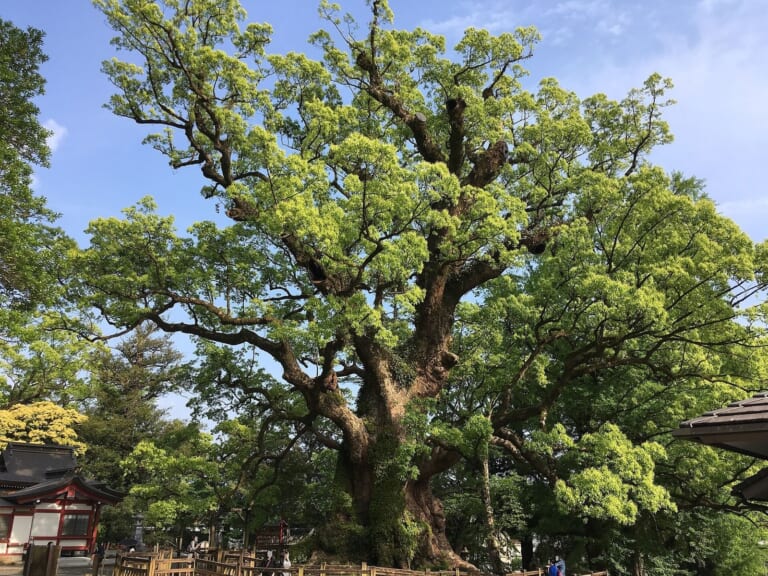
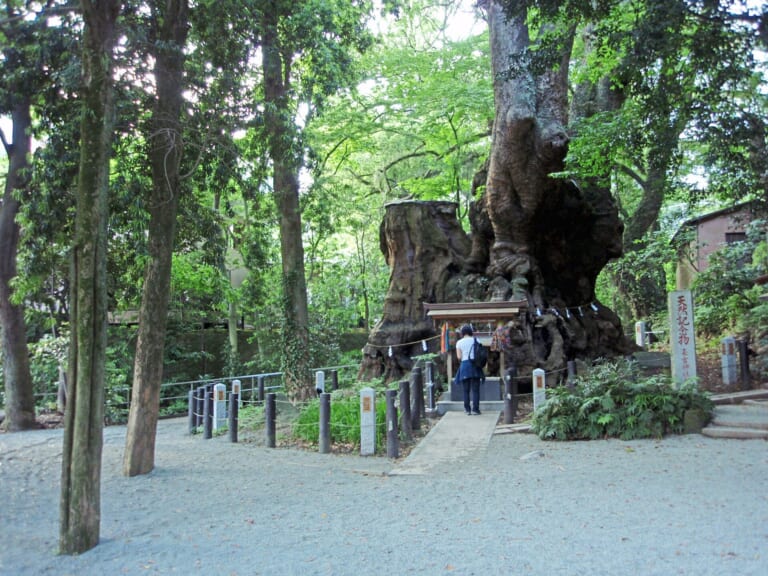
The Great Camphor Tree of Kinomiya Shrine is registered in Japan’s Ministry of the Environment survey of giant trees as the second-largest camphor tree (Cinnamomum camphora) by trunk circumference in the entire country. The largest, the Kamou no Okusu in Kagoshima Prefecture, measures approximately 24.22 meters around — just barely edging out Kinomiya’s 23.9 meters. At roughly 20 meters tall, with roots that splay dramatically across the ground and a hollow interior large enough to shelter several adults, the tree commands a physical presence that photographs can only partially convey.
No written records confirm the tree’s exact age, but shrine lore and dendrochronological estimates consistently point to a lifespan exceeding 2,000 years — meaning this tree was already alive around the time of the early Roman Empire. It has outlasted kingdoms, witnessed the rise of Edo, and continued to grow through Japan’s modernization.
A National Natural Monument Since 1933
The Okusu was designated a national Natural Monument (Tennen Kinenbutsu) on 28 February 1933, under the name Azusawake Jinja no Okusu — the great camphor of Azusawake Shrine, the formal name of Kinomiya Shrine. The designation reflects not only the tree’s biological uniqueness but also its deep cultural and historical significance to Japanese society.
Kinomiya Shrine and the Japanese Tradition of Sacred Trees
Trees as Divine Vessels in Shinto
In Shinto, Japan’s indigenous spiritual tradition, trees are often understood as yorishiro (依り代) — physical objects through which kami (divine spirits) are invited to descend. The older and larger the tree, the more potent its spiritual presence is believed to be. Across Japan, you will find ancient trees wrapped in shimenawa (sacred rope), marking them as sites of divine inhabitation.
Kinomiya Shrine is a particularly striking example of this worldview. According to shrine records, the sacred camphor tree predates the shrine structures themselves — the Okusu was not planted for the shrine; rather, the shrine grew around the tree. The very name “Kinomiya” (来宮) is believed to derive from “Ki no Miya,” meaning “Shrine of the Tree,” underscoring the fact that the tree itself is the heart of this sacred site.
The Legend: Walk the Circle, Gain a Year
One of the most beloved traditions at Kinomiya Shrine is the ritual of walking silently around the trunk of the Okusu once. According to local legend, completing this circuit adds one year to your life. If you hold a wish in your heart and walk the full circle without speaking, it is said the wish will be granted.
This practice of circumambulating a sacred tree — walking around it in quiet reverence — appears throughout Japan’s folk religious traditions. It reflects a belief that the life force of a great tree can be shared with those who approach it with intention. In the context of modern wellness culture, this act closely parallels the principles of Shinrin-yoku (森林浴), or “forest bathing” — the therapeutic practice of immersing oneself in the presence of trees, which has been validated by Japanese researchers as a measurable reducer of cortisol and blood pressure.
Ecological Perspective: Why Camphor Trees Live for Millennia
The Biology Behind Extraordinary Longevity
From an arborist’s perspective — or that of a Jumoku-i (樹木医), Japan’s certified tree doctor — the camphor tree’s extreme longevity is not accidental. It is the result of several remarkable biological adaptations.
First and most notably, camphor trees produce shōnō (樟脳), or camphor — a volatile aromatic compound that functions as a powerful natural preservative. Camphor has been used in East Asian medicine for centuries and was historically extracted from Cinnamomum camphora for use as an insect repellent and antiseptic. Within the living tree, this compound actively defends against fungal decay, wood-boring insects, and microbial degradation. It is, in effect, a built-in biocide that protects the tree from within.
Second, camphor trees possess exceptional bōga (萌芽) capacity — the ability to regenerate new growth from dormant buds even after severe damage. Where many tree species would succumb to storm damage, disease, or partial destruction, camphor trees can redirect their energy and rebuild their canopy. This regenerative resilience, combined with the chemical armor of camphor, creates conditions that support lifespans measured not in decades but in millennia.
The Ecological Role of a Giant Tree
The Okusu is not merely a cultural artifact — it is a functioning ecosystem. Its expansive canopy creates a microclimate within the shrine precinct, reducing ground-level temperatures and maintaining humidity levels that support a rich community of ferns, mosses, and lichens along the bark and root surfaces.
Studies on mature urban trees show that a tree with a canopy area of 100 square meters can transpire up to 400 liters of water per day, cooling surrounding air temperatures by as much as 8°C. A tree of the Okusu‘s scale would far exceed these figures. In an era of growing concern about urban heat islands — a phenomenon that drives summer temperatures in Japanese cities several degrees above rural baselines — ancient trees like this one represent irreplaceable natural infrastructure.
The roots, spreading wide and deep beneath the shrine grounds, also stabilize soil, prevent erosion, and contribute to groundwater recharge. What appears above the surface as a single dramatic trunk is, below ground, an intricate network of living infrastructure quietly sustaining the landscape around it.
Visiting Kinomiya Shrine: A Practical Guide
Getting There
Kinomiya Shrine is unusually accessible for a site of its spiritual and ecological significance. It lies just a 3-minute walk from Kinomiya Station on the JR Itō Line, and roughly 15 to 20 minutes on foot from Atami Station, one of the major stops on the JR Tōkaidō Main Line. The combination of easy rail access and Atami’s status as a resort destination means the shrine draws visitors year-round, from domestic day-trippers to international tourists exploring the Izu Peninsula.
Entry to the shrine precinct and the Okusu viewing area is free of charge. A small café on the grounds offers the rare pleasure of sitting with a drink while gazing at the ancient tree — a detail that speaks to how the shrine has evolved to welcome contemporary visitors without diminishing its sacred atmosphere.
How to Observe the Okusu Like an Arborist
To truly appreciate the Okusu, it helps to look beyond its sheer size and read what the tree’s form reveals about its 2,000-year history. A Jumoku-i would note the following:
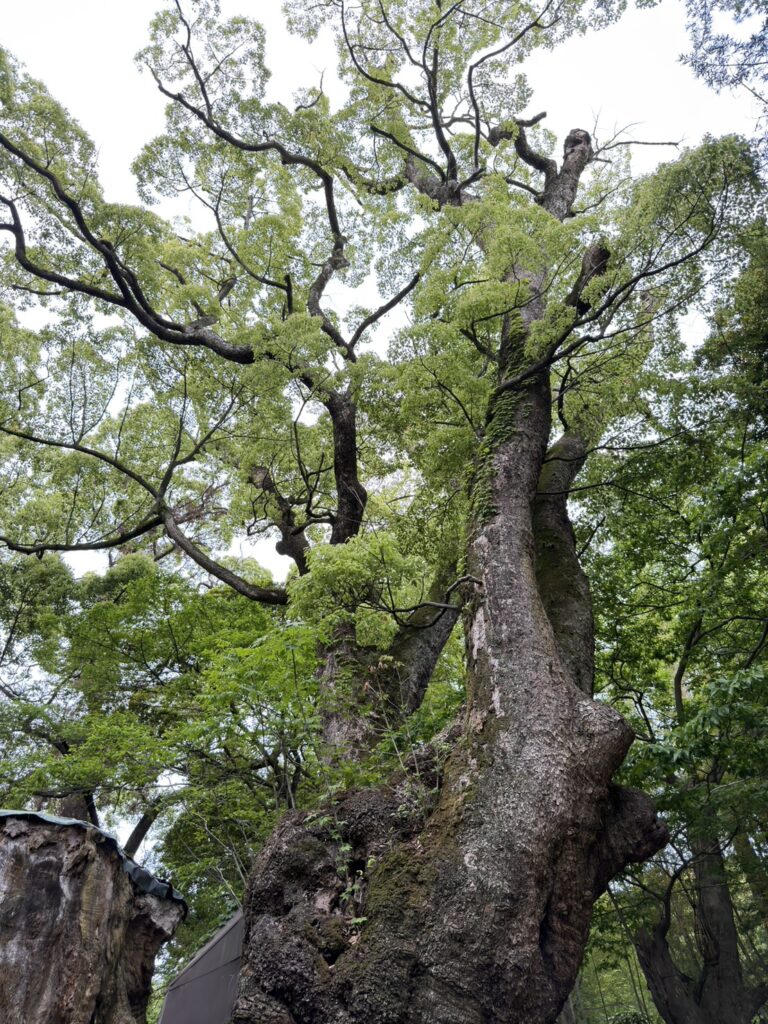
- Root buttresses: The dramatic surface roots radiating from the base are the tree’s structural response to gravity and wind load — a visual record of mechanical stress accumulated over centuries.
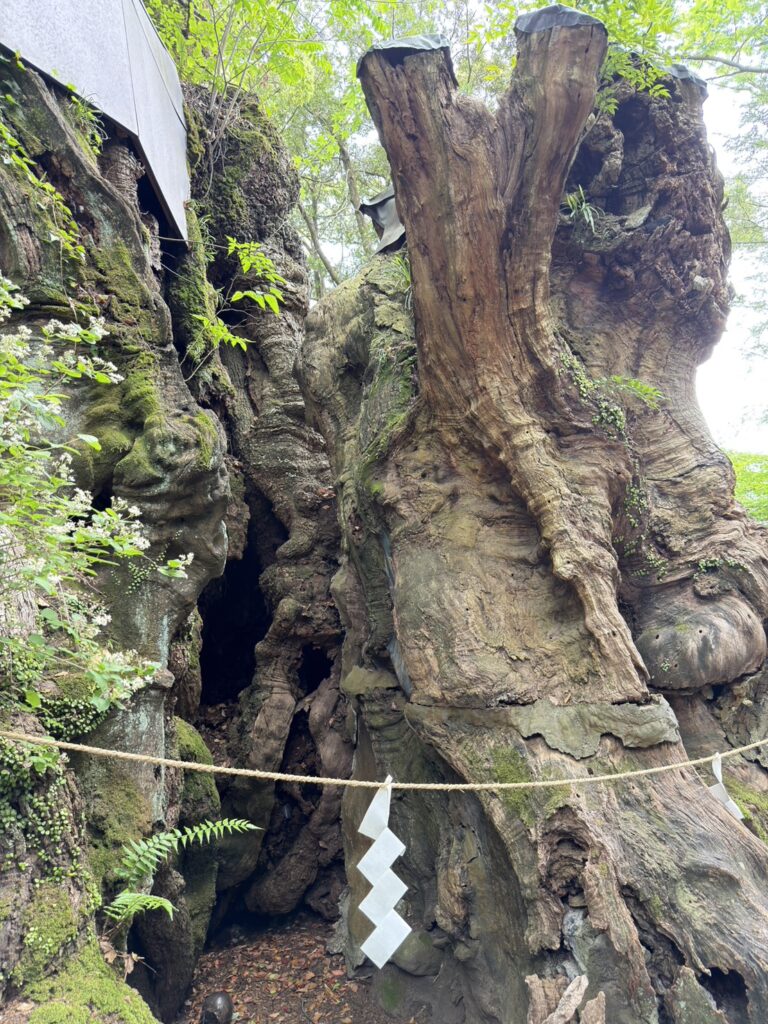
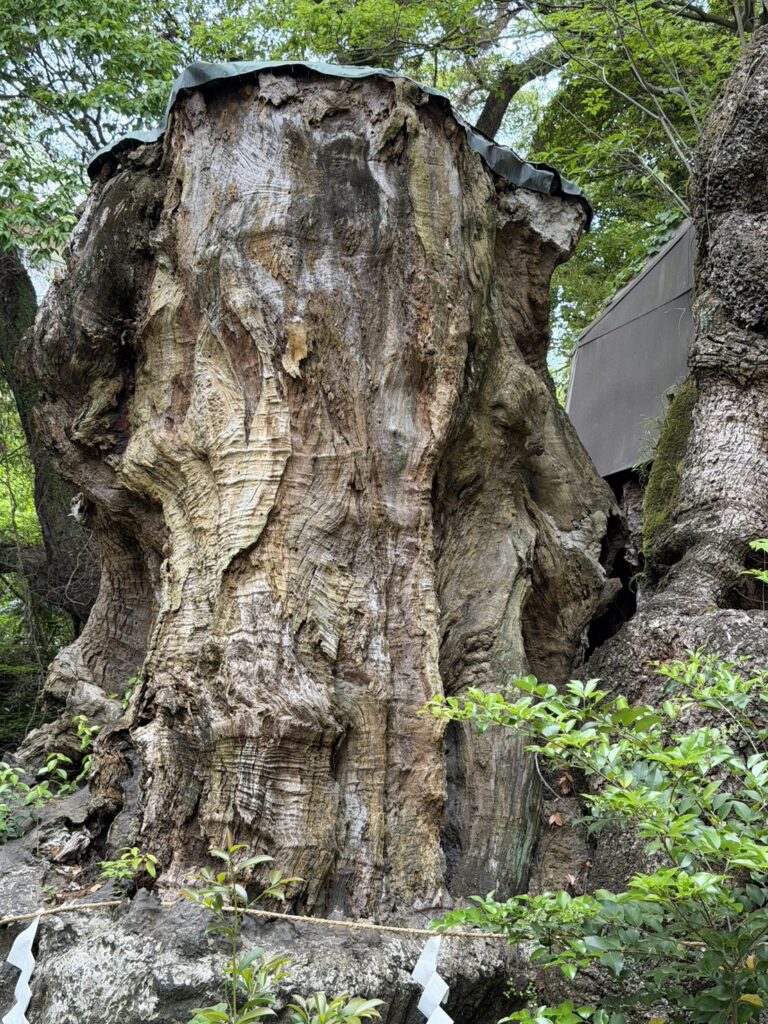
- Internal hollow: The cavity within the lower trunk, large enough to step inside, is common in very old trees. Counterintuitively, this hollowing can increase mechanical stability by distributing stress more efficiently across the shell.
- Bark texture: The deeply furrowed, ridged bark characteristic of aged camphor trees is a product of decades of radial growth pressing outward — each groove a compressed archive of growth rings.
- Epiphytic communities: The ferns, mosses, and lichens colonizing the bark and exposed roots represent a miniature ecosystem made possible by the Okusu‘s stable humidity and age-roughened surface. Their presence is a sign of environmental health.
Frequently Asked Questions
Q: How old is the camphor tree at Kinomiya Shrine? A: The tree’s exact age has not been confirmed by modern scientific methods, but shrine tradition and available research consistently estimate its age at over 2,000 years — placing its origin around the early centuries of the Common Era.
Q: Is the Kinomiya Okusu the largest camphor tree in Japan? A: By trunk circumference, it is the second largest, slightly behind the Kamou no Okusu in Kagoshima Prefecture. However, Kinomiya’s tree, a national Natural Monument since 1933, is arguably the most culturally significant camphor tree in Japan.
Q: Does walking around the tree really grant longevity? A: There is no scientific basis for the legend itself, but the act of walking slowly and silently in a natural setting does carry measurable wellness benefits. Research on Shinrin-yoku (forest bathing) by Japanese scientists — including work published by the Nippon Medical School — has documented reductions in cortisol levels, blood pressure, and heart rate following time spent among trees.
Q: Why do camphor trees live so long? A: Camphor trees produce a volatile aromatic compound called camphor (shōnō) that acts as a natural preservative, defending against fungi, bacteria, and insects. Combined with a strong capacity for regenerative growth, these traits allow the species to survive and recover from damage that would kill most other trees.
Q: Is the tree still healthy? A: Yes. The Okusu continues to produce new foliage each season, indicating active vitality. The shrine and relevant governmental bodies conduct regular tree health assessments and conservation treatments in line with its status as a national Natural Monument.
Conclusion
The Great Camphor Tree of Kinomiya Shrine has stood through 2,000 years of Japanese history — through the formation of its ancient capital cities, through centuries of war and peace, through modernization and into the present. It endures not through passivity, but through an extraordinary combination of biological resilience and the deep human care that sacred designation brings.
Whether you approach the Okusu as a traveler, a tree enthusiast, or someone simply in search of stillness, standing before it offers something rare: the visceral sense of time made tangible. Walk its circumference quietly. Look up into the canopy. Let 2,000 years of growth speak for itself.
Field notes from Japan’s trees arrive a few times each month — subscribe via the form in the footer, or follow the work on LinkedIn.