A submerged forest reshaped how I think about landscape design: ecology outlasts aesthetics. Field notes from an unusual site in Japan.
Introduction
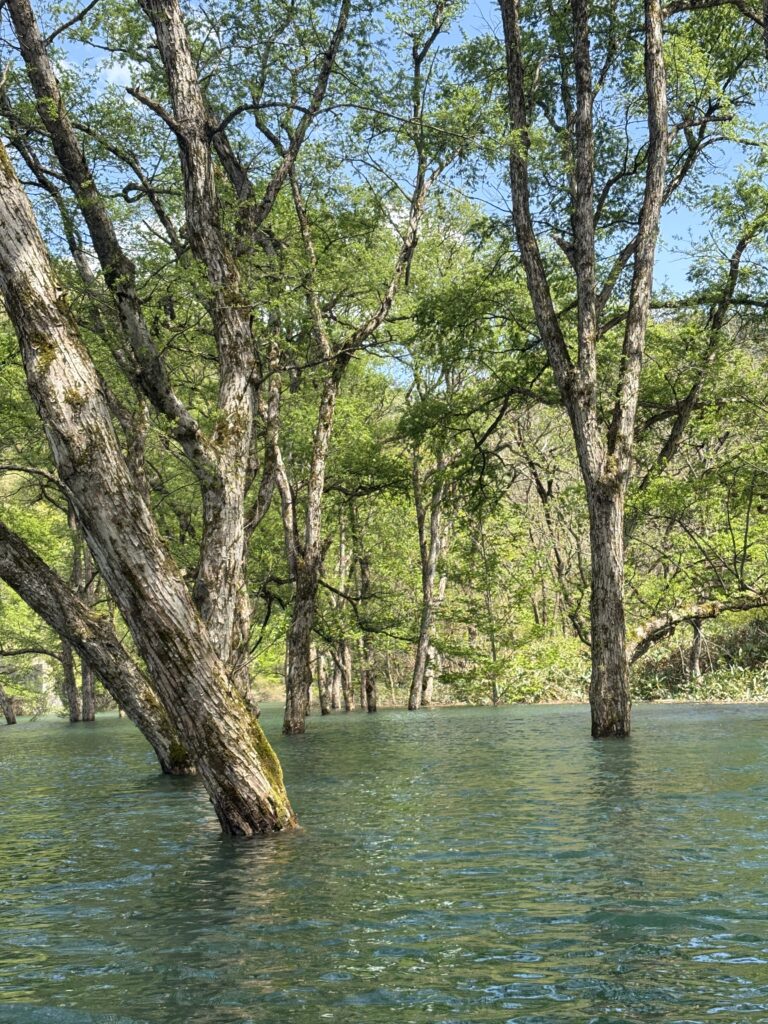
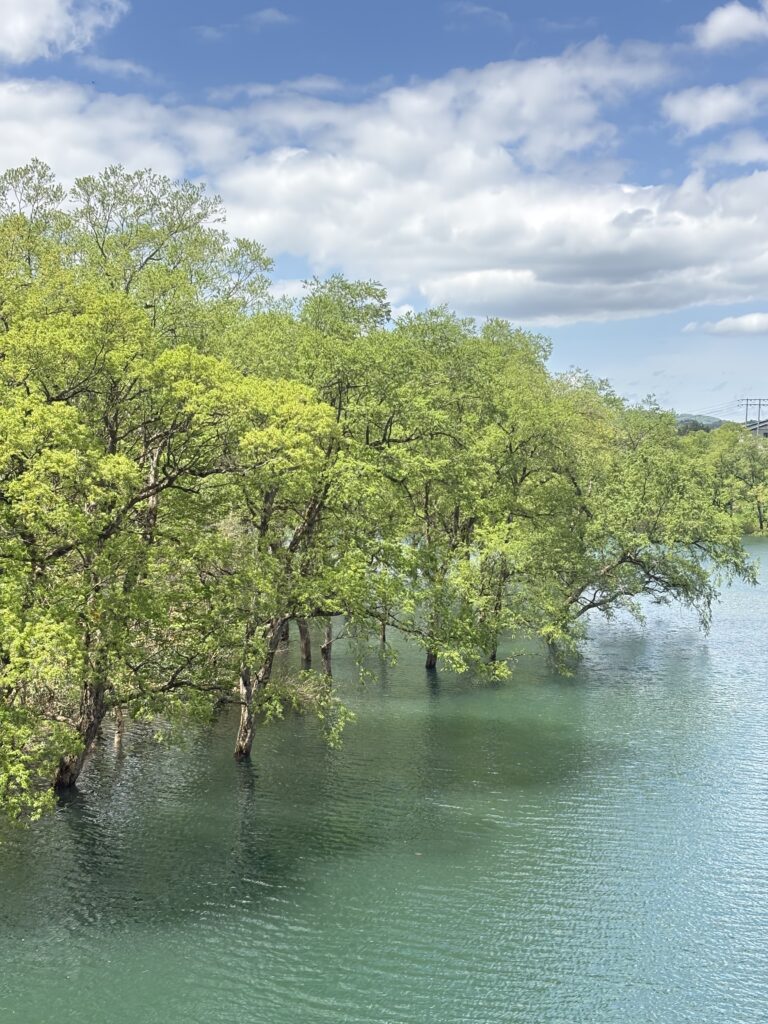
Why does a landscape exist where it does? Standing at the edge of Nishiakiko Lake in Iwate Prefecture, Japan, and watching trees rise silently from the water’s surface, that question becomes impossible to ignore. The submerged forest of Nishiakiko is widely photographed for its dreamlike beauty — but beneath the surface lies a far more instructive story. This landscape did not emerge from design intent. It emerged from the layering of water cycles, topography, tree physiology, and dam management — all working together over decades. For anyone involved in landscape design or green management, this place offers a clear and humbling lesson: beautiful, lasting landscapes are not created through aesthetics alone. They are built on ecology and time.
Nishiakiko’s Submerged Forest: How It Forms and Why It Matters
A Heavy-Snow Region and Its Seasonal Water Surge
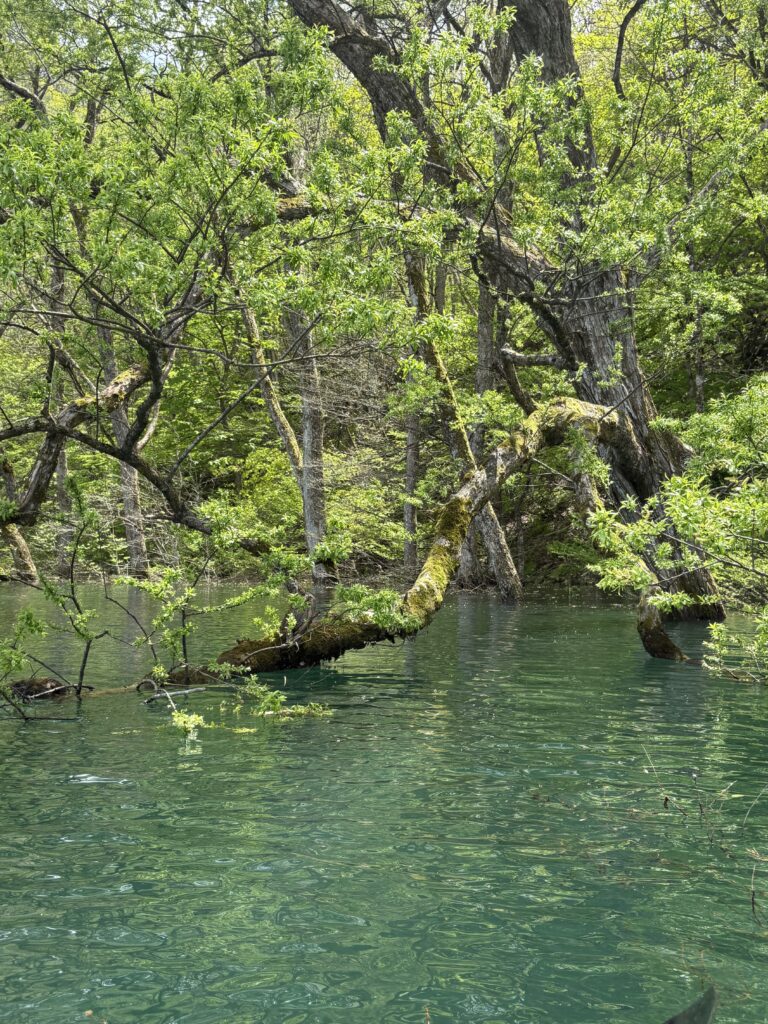
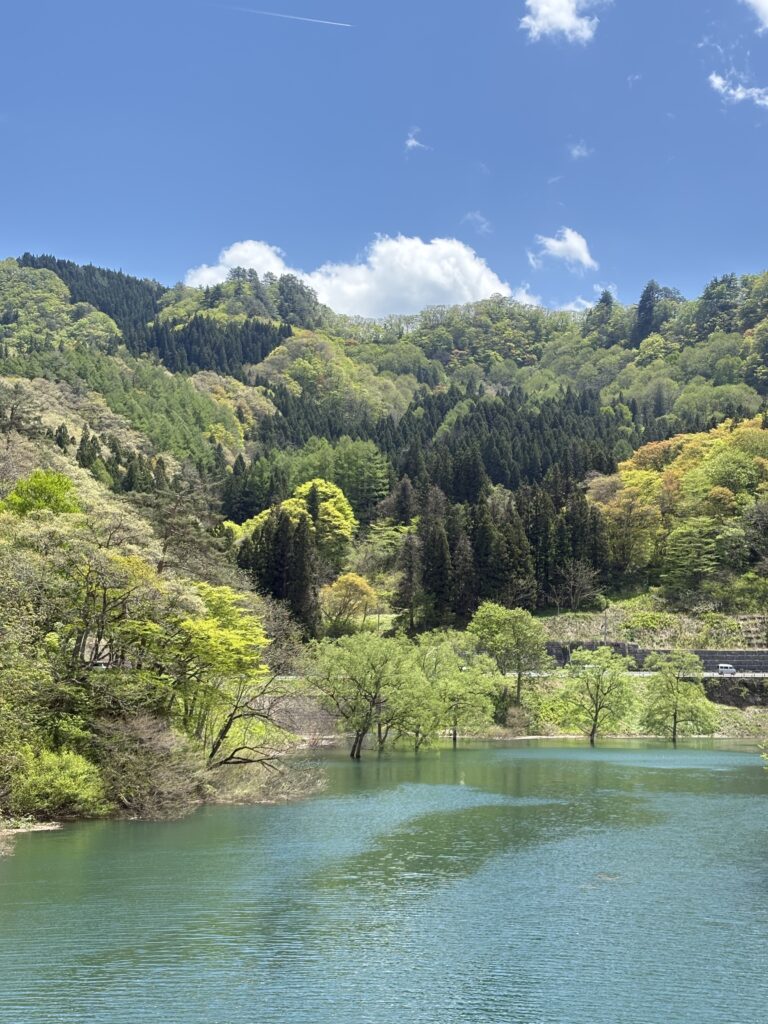
Nishiakiko Lake sits within the Nishiwaga Town area of Iwate Prefecture, deep in the Ou Mountains — one of Japan’s most extreme heavy-snowfall zones. Winter snowfall in this region regularly exceeds several meters. Each spring, massive volumes of snowmelt pour into the lake, which is regulated by the Yuda Dam. As the water level rises dramatically, the trees growing along the shoreline become partially or fully submerged. This annual cycle of flooding and recession creates the haunting visual spectacle that draws visitors from across Japan and beyond.
What makes this phenomenon significant is not its rarity, but its regularity. The flooding is predictable, seasonal, and tied to both natural snowmelt dynamics and deliberate dam water management. The landscape is, in a sense, co-authored by nature and human infrastructure — a fact that carries direct implications for how we think about designed landscapes.
The Physiological Stress of Root Zone Flooding
For most trees, flooding the root zone is a serious threat. When soil becomes saturated with water, oxygen is rapidly displaced. The root zone enters an anaerobic (oxygen-depleted) state, and root cells — which depend on aerobic respiration — begin to struggle. Nutrient and water uptake efficiency drops sharply. If waterlogging persists beyond approximately 10 to 14 days, many species experience root rot, growth suppression, and eventually dieback and death. Research on tree flood tolerance consistently shows that the majority of common landscape species cannot withstand prolonged inundation without significant damage.
This is not a minor consideration for landscape designers. In any site where drainage is poor, groundwater levels are high, or seasonal flooding is possible, the selection of plant species must account for the realistic maximum duration and depth of waterlogging. Failing to do so is one of the most common — and most costly — errors in planting design.
“Only the Species That Could Survive Are Still Standing”
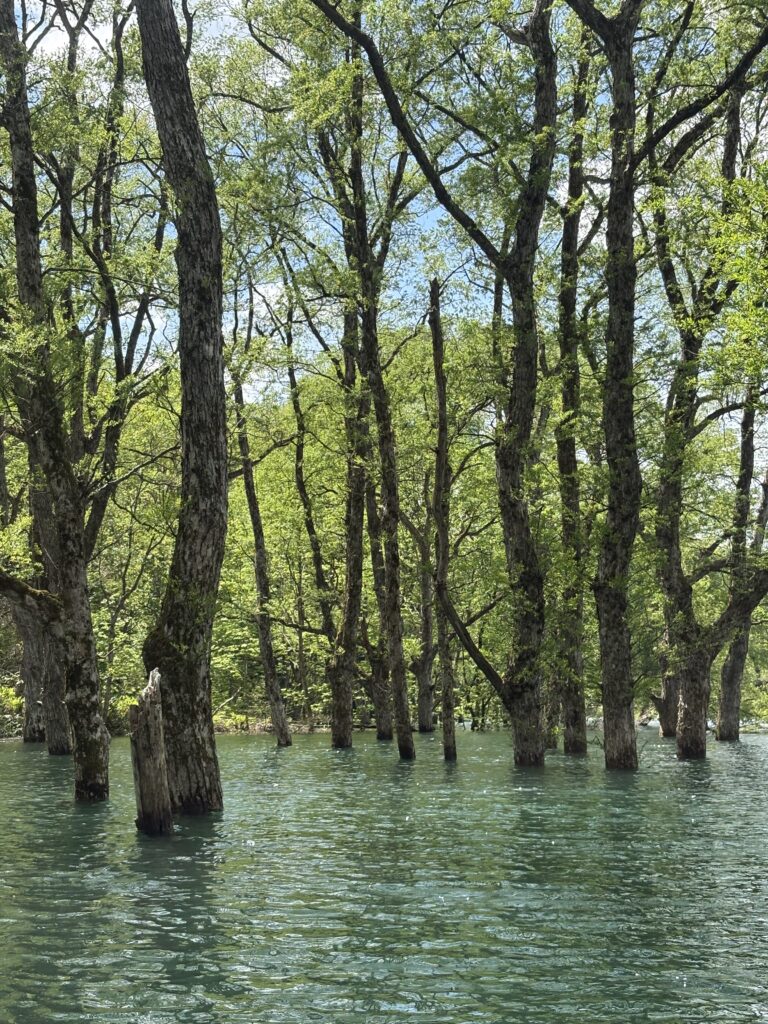
What remains at Nishiakiko, still rooted and alive after years of seasonal flooding, tells its own story. The dominant survivor is Salix alba — the White Willow (シロヤナギ in Japanese). White Willow has evolved a remarkable adaptation to flooded environments: it develops aerenchyma tissue (通気組織, tsūki soshiki) within its root system. Aerenchyma is a sponge-like cellular structure that creates air channels, allowing oxygen to move from above-ground tissue down into the roots even when the surrounding soil is fully saturated. This physiological mechanism enables White Willow to maintain root respiration — and therefore survival — under conditions that would kill most other trees.
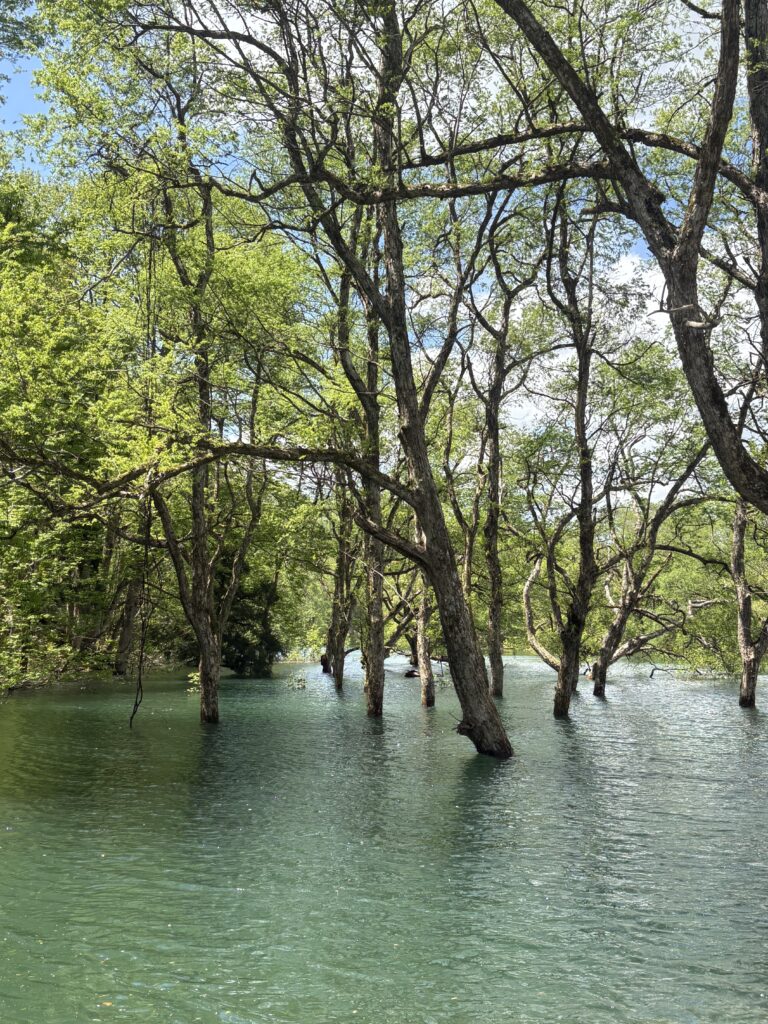
The landscape we see at Nishiakiko is not the result of planting design. It is the result of natural selection, operating over many flood cycles. In design terms, it is a “planting plan” where only the most site-appropriate species survived. This is the submerged forest’s clearest message to landscape professionals: the landscape does not lie about what the site will tolerate.
Implications for Landscape Design: Ecology Cannot Be Ignored
Reading the “Layered” Environmental Conditions of a Site
The Nishiakiko example demonstrates that any landscape is the product of multiple overlapping environmental conditions — not a single variable. Skilled landscape design and green management begin with the same kind of site reading. Before selecting a single plant species or drafting a layout, the following site conditions must be thoroughly assessed:
- Water environment: Drainage capacity, groundwater depth, flood risk frequency and duration, water quality
- Soil conditions: pH, organic matter content, compaction levels, presence of anaerobic zones
- Climate and microclimate: Annual and seasonal precipitation, snowfall, wind exposure, solar radiation patterns
- Human management factors: Irrigation schedules, maintenance cycles, and the influence of built infrastructure such as dams, culverts, or impermeable surfaces
A planting design that ignores any of these layers is fragile from the start. It may look impressive at installation, but without ecological grounding, deterioration is only a matter of time.
Species Selection Starts With “Can It Live Here?”
Japanese horticulture and landscape practice has long embraced the principle of Tekichi Tekiboku (適地適木) — literally, “the right tree for the right place.” This concept predates modern ecological science, but it captures its essence precisely. Species selection is not primarily an aesthetic decision. It is a site-compatibility decision, made by cross-referencing a plant’s physiological tolerances against a site’s actual conditions.
For wet or periodically flooded environments, reliable species include Salix alba (White Willow), Alnus spp. (Alder), Metasequoia glyptostroboides (Dawn Redwood), Nyssa sylvatica (Black Tupelo), and Taxodium distichum (Bald Cypress). Each of these species has developed specific anatomical or metabolic adaptations to low-oxygen root conditions. Conversely, species such as Prunus (cherry) or Zelkova — both iconic in Japanese landscaping — are highly susceptible to waterlogging and should never be specified for flood-prone zones without robust drainage infrastructure.
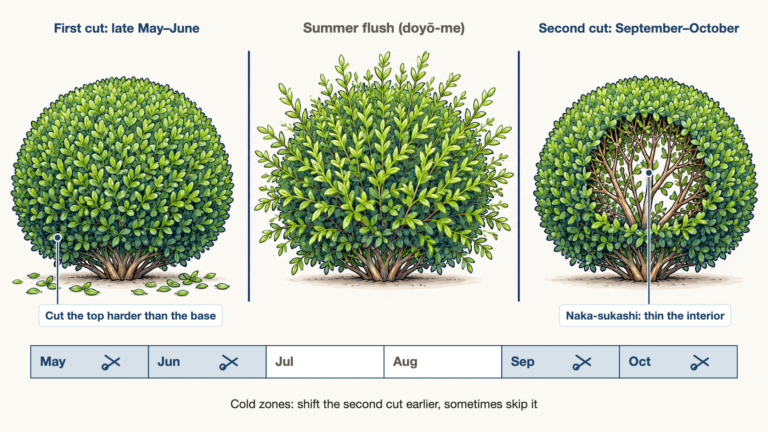
Management Cycles and the Design of Time
Landscape design is dynamic, not static. Trees grow, respond to seasonal stress, occasionally fail, and must be replaced. The White Willows of Nishiakiko are not the same trees they were fifty years ago — they are part of an ongoing, living system that renews itself through each cycle of flooding and recovery. Effective green management design must incorporate this temporal dimension explicitly.
In practice, this means planning for:
- Pruning cycles tailored to species growth rates and the structural requirements of the design
- Replanting schedules that anticipate the inevitable loss of individual specimens over time
- Monitoring protocols covering soil moisture, root health, canopy condition, and site drainage performance at defined intervals
When these elements are built into the design from the outset — rather than treated as afterthoughts — landscapes remain coherent and healthy across decades, not just in the first few years after installation.
A Japanese Philosophy of Landscape: Ma and Ecological Time
Japanese aesthetic tradition offers a concept that landscape designers worldwide would benefit from internalizing: Ma (間). Ma refers to the meaningful space between things — the pause between sounds in music, the empty space in a composition, the interval between one season and the next. It is not emptiness. It is potential.
At Nishiakiko, Ma is everywhere. It exists between the water’s surface and the canopy above it. Between the visible trunk and the submerged root system below. Between last autumn’s leaf fall and next spring’s flood. Japanese garden designers have always worked with this sense of time — understanding that a landscape at planting day is only the beginning of its story, and that the most important design decisions are the ones that allow the landscape to evolve gracefully through its seasons and years.
This is a perspective that Western landscape practice is increasingly embracing, particularly in the growing fields of ecological restoration design and climate-adaptive planting. The submerged forest of Nishiakiko is one of Japan’s most vivid, naturally occurring illustrations of what it looks like when ecology and time are allowed to lead.
Frequently Asked Questions
Q: What tree species are best suited for wet or flood-prone landscapes? A: Species with high flood tolerance include Salix alba (White Willow), Alnus spp. (Alder), Metasequoia glyptostroboides (Dawn Redwood), Nyssa sylvatica (Black Tupelo), and Taxodium distichum (Bald Cypress). These species share key adaptations such as aerenchyma tissue development and anaerobic metabolism that allow them to survive in oxygen-depleted root zones.
Q: How long can trees typically survive in flooded conditions? A: Flood tolerance varies significantly by species. Most common landscape trees — including cherry (Prunus) and zelkova — begin to show root damage after 10 to 14 days of continuous inundation. Flood-adapted species like Salix alba and Taxodium distichum can withstand waterlogging for several weeks to several months. When designing for flood-prone sites, always determine the site’s realistic maximum flood duration and match species accordingly.
Q: What does “ecological planting design” mean in practice? A: Ecological planting design prioritizes site-compatibility over visual preference. It begins with a thorough assessment of water, soil, climate, and biological site conditions, then selects species and management strategies that align with those conditions. The goal is long-term landscape health and resilience, rather than short-term visual impact.
Q: Has Japanese garden tradition always incorporated this kind of ecological thinking? A: Yes — the principle of Tekichi Tekiboku (適地適木, “the right tree for the right place”) has guided Japanese garden and planting practice for centuries. Japanese landscape professionals have long studied how plants behave in their natural habitats before specifying them for designed environments. This approach closely parallels what contemporary ecological landscape design now advocates.
Q: What is the submerged forest of Nishiakiko, and when is the best time to visit? A: Nishiakiko Lake (錦秋湖) is a reservoir in Nishiwaga Town, Iwate Prefecture, formed by the Yuda Dam. Each spring, snowmelt raises the water level significantly, submerging the trees along the shoreline and creating the famous “submerged forest” (水没林, suibotsurin) landscape. The phenomenon is typically most dramatic in April and May. The lake is also celebrated for its autumn foliage in October and November.
Conclusion
Nishiakiko’s submerged forest is far more than a scenic destination. It is a living record of what happens when water, soil, topography, tree physiology, and human infrastructure interact over many years — and a powerful reminder that landscapes are shaped by conditions, not intentions. The White Willows standing in that water are there because they earned their place, season after season.
For landscape designers and green management professionals, the lesson is straightforward: before asking what a landscape should look like, ask what the site will actually support. Investigate the water environment. Understand the soil. Choose species that are genuinely suited to the conditions. Build management cycles into the design from day one. This is what it means to treat landscape design as the design of ecology and time — and it is the only reliable path to landscapes that endure.
Field notes from Japan’s trees arrive a few times each month — subscribe via the form in the footer, or follow the work on LinkedIn.