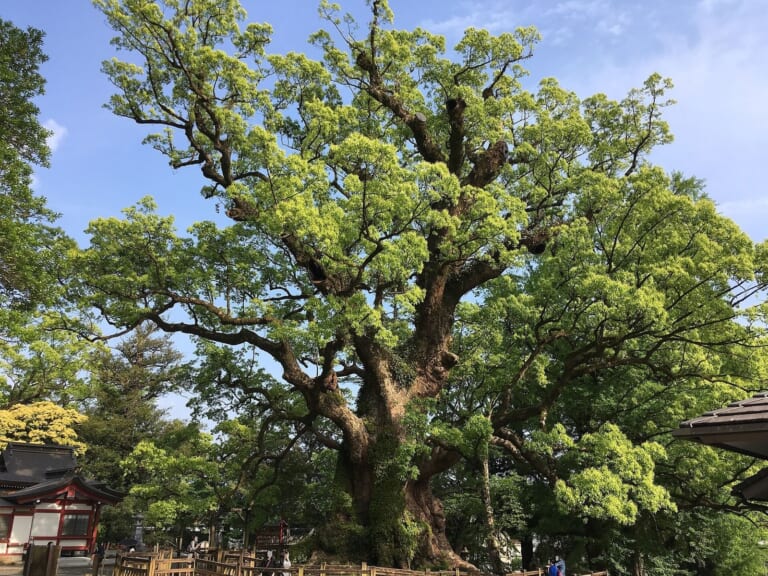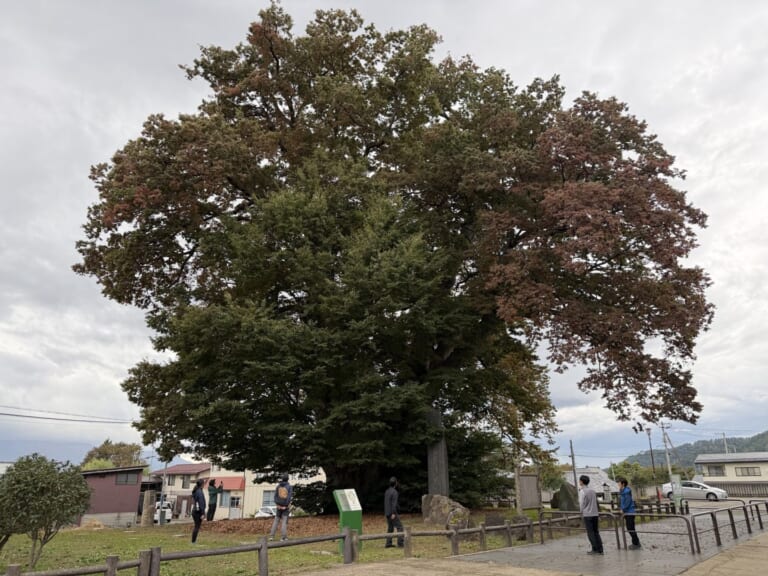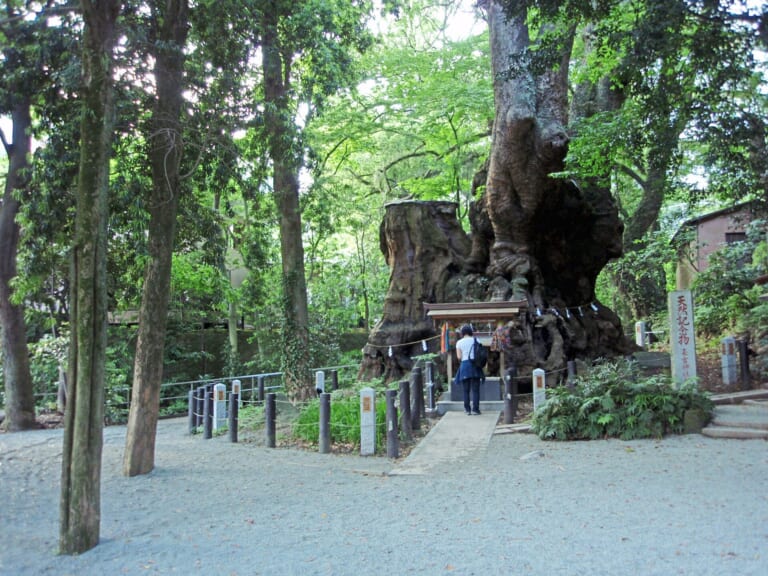
Miharu Takizakura has bloomed for a thousand years. How Japan keeps its most famous weeping cherry alive, and what it means to the town around it.
Introduction
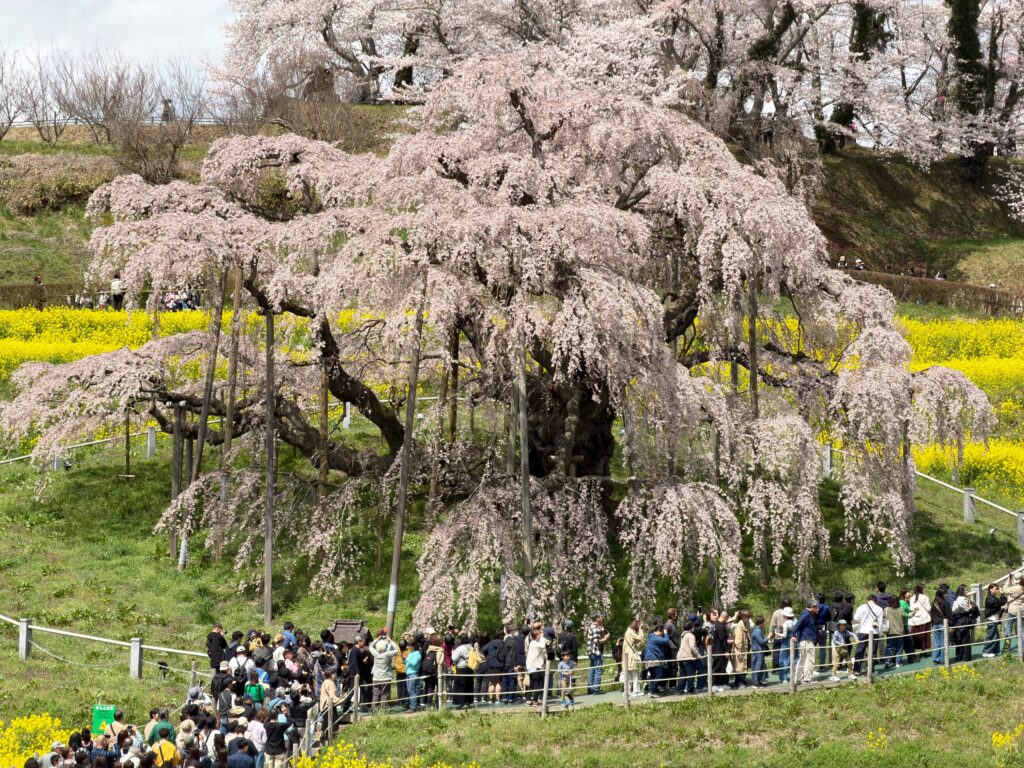
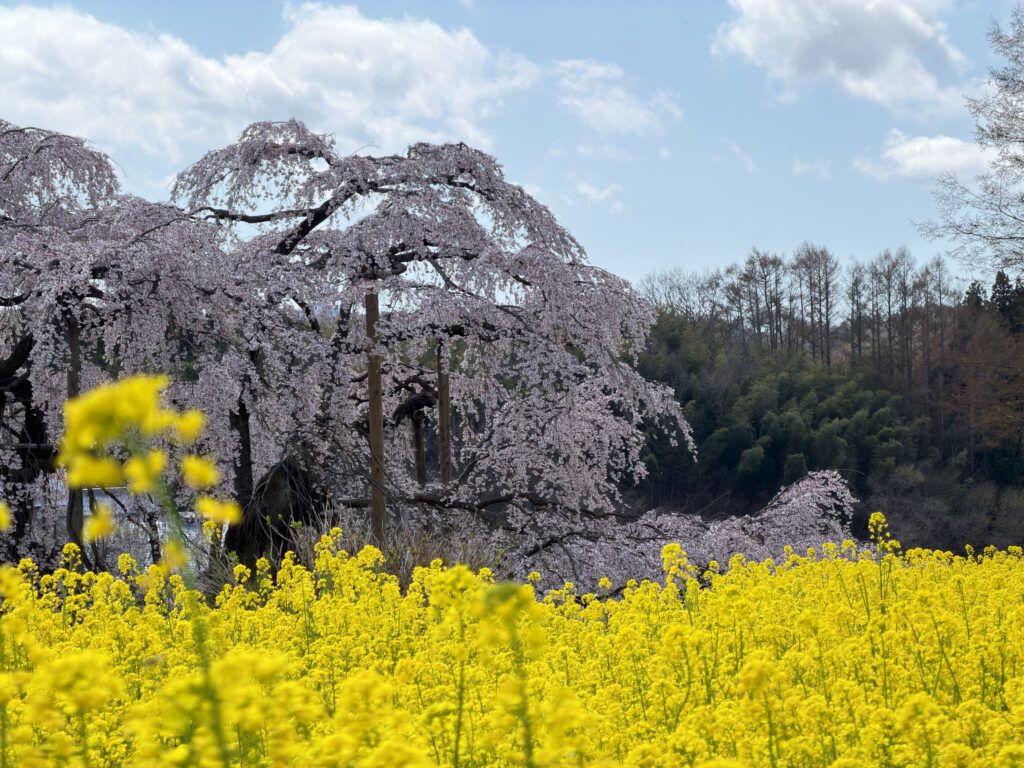
In the small town of Miharu, Fukushima Prefecture, stands a single cherry tree that stops people in their tracks every spring. Miharu Takizakura — literally “waterfall cherry of Miharu” — is a weeping cherry tree estimated to be over 1,000 years old, designated as a National Natural Monument of Japan, and celebrated as one of the country’s three greatest cherry trees. When it blooms in mid-April, its cascading branches draped in pale pink blossoms create one of the most breathtaking natural spectacles in all of East Asia. For anyone seriously interested in Japan’s landscapes, culture, or living history, this is not just a tree. It is an encounter with time itself.
What Is Miharu Takizakura? The Tree Up Close
Vital Statistics and History
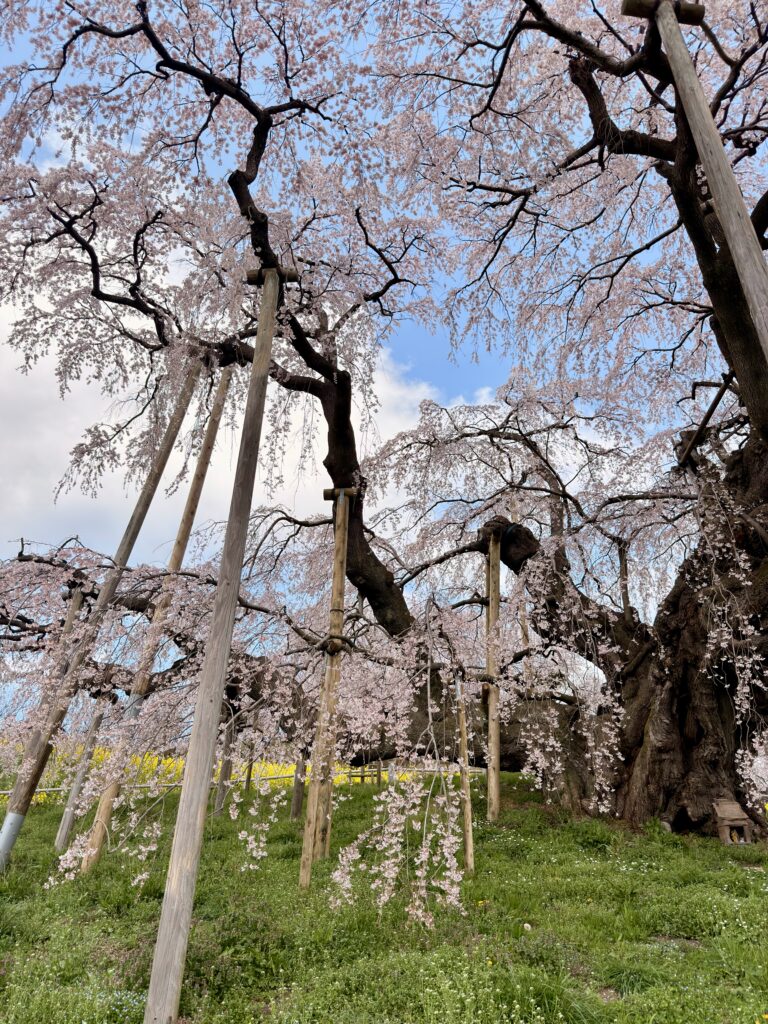
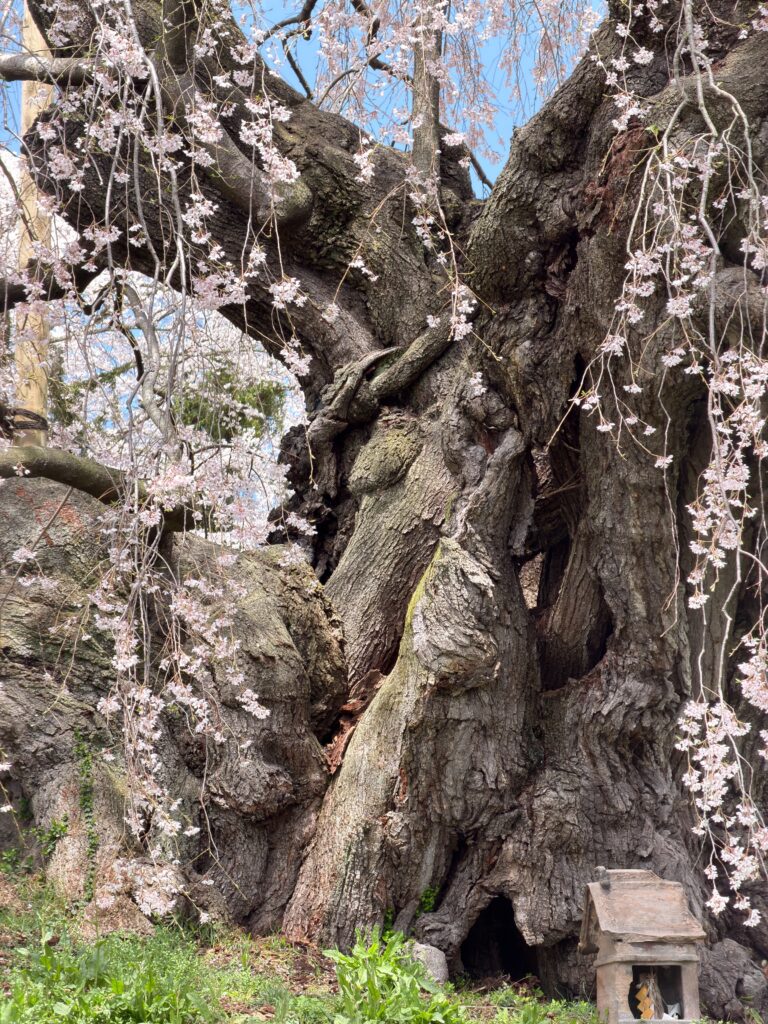
Miharu Takizakura belongs to the species Prunus pendula f. ascendens — a weeping cherry variety known in Japanese as Beni-shidare-zakura (紅枝垂桜). Its drooping branches produce countless small, pale-pink flowers that flow downward like a living waterfall.
The tree’s vital statistics are extraordinary:
- Estimated age: 1,000–1,500 years
- Trunk circumference: 9.5 meters
- Root circumference: 11.3 meters
- Height: approximately 13.5 meters
- Canopy spread: roughly 25 meters (east–west) × 20 meters (north–south)
Designated as a National Natural Monument in 1922, Miharu Takizakura is counted among Japan’s “Three Great Cherry Trees” (Nihon Sandai Zakura), alongside Jindai Zakura in Yamanashi Prefecture and Usuzumi Zakura in Gifu Prefecture. Each of these trees has survived for over a millennium, and each tells a profoundly different story about how Japan’s landscape and culture have evolved.
Why “Waterfall Cherry”?
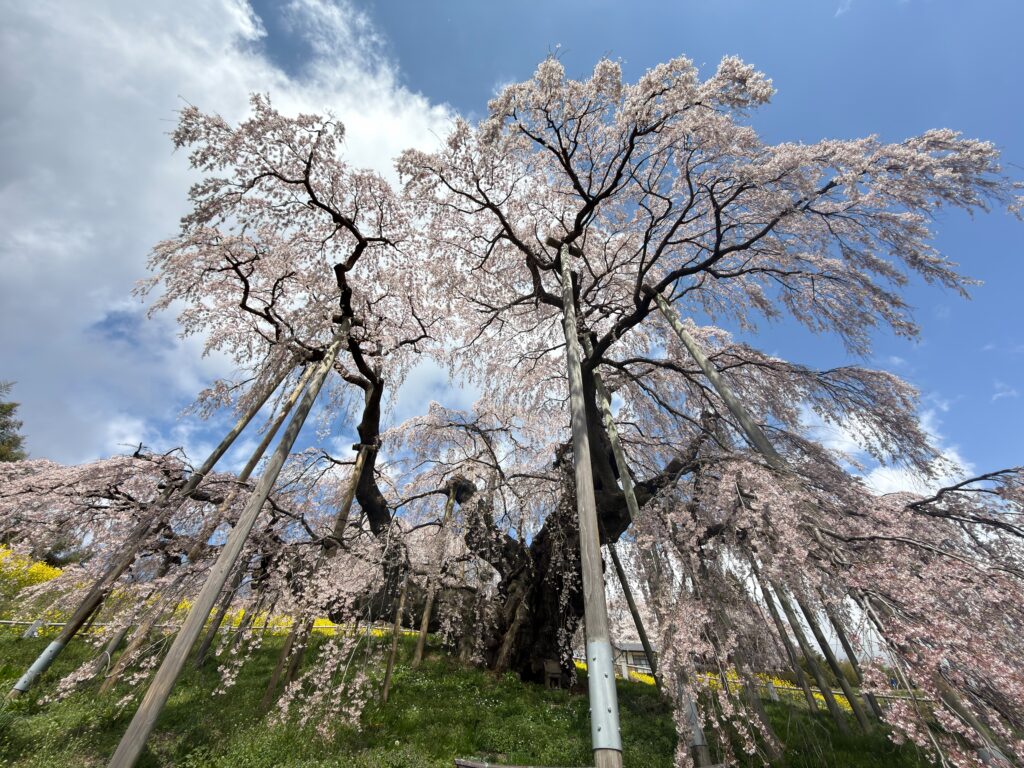
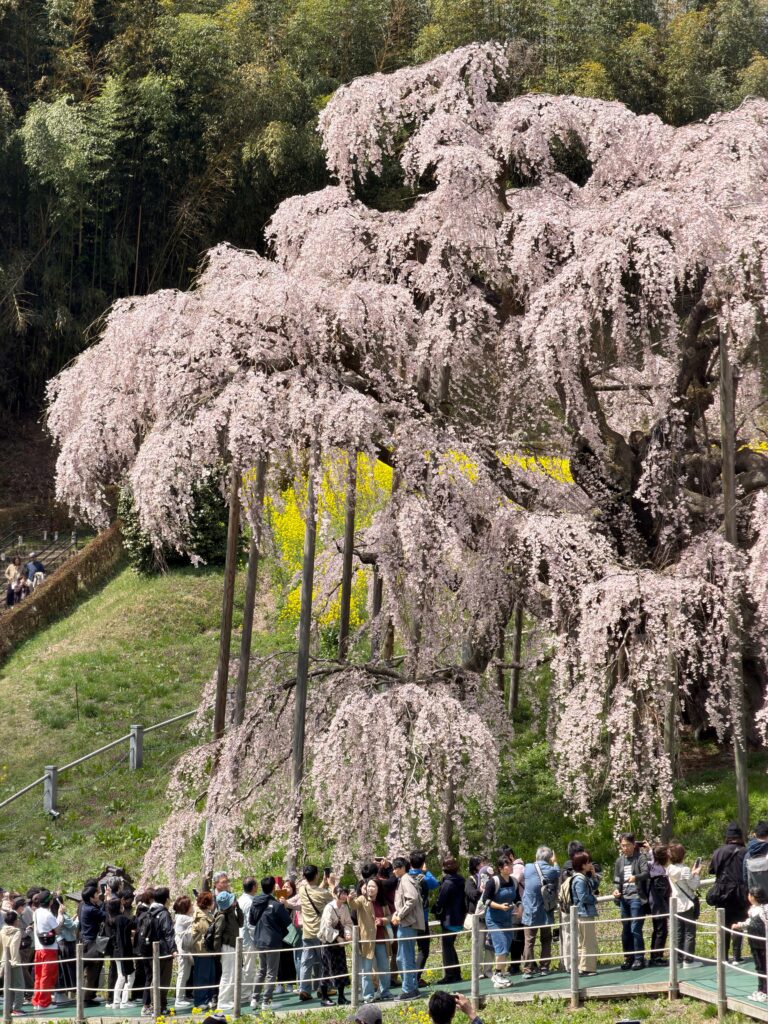
The name Takizakura — waterfall cherry — comes entirely from how the tree looks in full bloom. The long, weeping branches cascade from the crown all the way toward the ground, and from a distance the entire canopy resembles a pale pink waterfall pouring down a hillside. This visual impression is not just poetic; it reflects something deeply considered in Japanese landscape aesthetics. A single tree, shaped entirely by nature over a thousand years, creates what landscape designers call a sense of movement — a quality rarely achieved even in meticulously designed gardens.
A Living Lesson in Tree Care
What makes Miharu Takizakura even more remarkable is that it continues to bloom vigorously despite its extreme age. This is no accident. Japan has a profession called Jumoku-i (樹木医) — certified arborists specializing in the diagnosis and treatment of trees, particularly ancient and culturally significant ones. Think of them as doctors for trees: they assess structural integrity, identify disease and decay, manage soil health, and develop long-term care plans.
At Miharu Takizakura, ongoing conservation work includes soil aeration and improvement, drainage management to prevent waterlogging, installation of support poles for aging branches, pest and disease monitoring, and the design of visitor pathways that keep foot traffic well away from the root zone. The lesson here is one that landscape professionals around the world are increasingly embracing: the long-term health of a tree is inseparable from the management of the space around it. A tree does not exist in isolation — it exists within a landscape that either supports or degrades it.
When to Visit: Bloom Season and Timing
The Cherry Blossom Window
Miharu Takizakura typically reaches full bloom in early to mid-April — usually between April 5 and April 20, depending on the year’s weather patterns. Cherry blossom timing in Japan shifts by one to two weeks from year to year, so checking live bloom forecasts before booking travel is strongly recommended.
Japan’s famous Sakura Zensen (cherry blossom front) moves northward from Kyushu in late March to Tohoku in early April, making Miharu an ideal stop for travelers exploring the northeast. Because Miharu sits in a relatively sheltered inland basin, it tends to bloom slightly earlier than other Tohoku locations.
Morning vs. Evening: Two Completely Different Experiences
Early morning (before 7:00 AM) offers the quietest, most contemplative experience. Crowds are minimal, morning mist sometimes lingers around the hillside, and the diffused light of dawn gives the pale pink blossoms a luminous, almost otherworldly quality. For photographers and those who simply want a moment of stillness with a thousand-year-old tree, this is the recommended time.
Evening illumination transforms the tree entirely. During peak bloom, Miharu Takizakura is lit up after dark — typically from sunset until around 9:00 PM. Against the night sky, the cascading blossoms glow with an ethereal intensity that feels almost theatrical. It is a completely different tree at night, and many visitors make a point of seeing it twice: once by day and once after dark.
Getting There: Access from Tokyo and Beyond
By Train and Bus
- From Tokyo: Take the Tohoku Shinkansen to Koriyama Station (approximately 75 minutes), then transfer to the JR Ban’etsu East Line to Miharu Station (approximately 20 minutes). From Miharu Station, the tree is about 15 minutes on foot or by taxi. During cherry blossom season, shuttle buses typically run from the station directly to the site.
- From Sendai: Approximately 90 minutes by local train via Koriyama.
- From Fukushima City: Approximately 60–70 minutes by train.
By Car
From the Tohoku Expressway, take the Funehiki-Miharu Interchange — the tree is approximately 5 minutes away by car. Parking is available on-site, but during peak bloom it fills quickly. Arriving by 7:00 AM or earlier is the most reliable strategy for securing a space without a long wait.
Nearby Cherry Blossom Spots
Miharu town itself is named for the simultaneous blooming of three plants — ume (plum), momo (peach), and sakura (cherry) — and the surrounding area is filled with notable ancient trees:
- Ozawa no Sakura — an estimated 400-year-old weeping cherry
- Toda no Sakura — another 400-year-old specimen in a quiet rural setting
- Fukujuji Temple Sakura — a graceful weeping cherry within historic temple grounds
Further afield, Hanamiyama Park in Fukushima City offers a spectacular hillside garden where dozens of flowering tree species bloom simultaneously — one of Tohoku’s most celebrated spring landscapes. Kaiseizan Park in Koriyama provides an excellent cherry blossom avenue and is easily combined with a Miharu visit.
Cherry Blossoms, Japanese Culture, and the Philosophy of Impermanence
Why Sakura Move People So Deeply
To understand why Miharu Takizakura draws hundreds of thousands of visitors each year, it helps to understand how Japanese culture relates to cherry blossoms — and it goes far deeper than a scenic photo opportunity.
Cherry blossoms in Japan are intimately connected to a concept called Mono no Aware (物の哀れ) — often translated as “the pathos of things” or “an empathy toward things.” It describes the bittersweet awareness that beautiful things are fleeting. Cherry blossoms bloom for only one to two weeks before the petals fall. That brevity is precisely the point. The Japanese aesthetic does not turn away from impermanence; it leans into it, finding beauty in the fact that nothing lasts.
Hanami (花見) — the tradition of gathering beneath blooming cherry trees — is one of Japan’s oldest cultural practices, documented as far back as the 8th century. It is not merely picnicking under pretty flowers. It is a ritualized acknowledgment that beauty is temporary, and that paying full attention to a fleeting moment is a form of respect.
One Tree That Changes a Landscape
From a landscape design perspective, Miharu Takizakura exemplifies what Japanese practitioners call a keino kaku (景の核) — the “nucleus of a scene.” This concept describes how a single exceptional element — one tree, one stone, one view — can reorganize the meaning of everything around it.
The hillside where Takizakura stands is ordinary in every other respect. But the presence of that one ancient tree transforms the entire space into something charged with significance. The surrounding fields, the path that leads toward it, the viewing platform, even the sky — all of these become part of a composition centered on the tree. This is a principle that landscape architects and garden designers study carefully: the power of a singular focal point to give coherence and meaning to an otherwise unremarkable space.
Miharu Takizakura has been doing this naturally, without any human design intervention, for over a thousand years.
Frequently Asked Questions
Q: How old is Miharu Takizakura?
A: The tree is estimated to be between 1,000 and 1,500 years old. Pinpointing an exact age is scientifically difficult for trees this ancient, but historical records and arboricultural assessments consistently place it at over 1,000 years.
Q: When is the best time to visit Miharu Takizakura?
A: Full bloom typically falls between early and mid-April, most commonly around April 10–18. Because cherry blossom timing varies by year, checking a current bloom forecast before traveling is highly recommended.
Q: How far is Miharu from Tokyo?
A: By Shinkansen and local train, the journey takes approximately 2 to 2.5 hours. By car via the Tohoku Expressway, expect around 3 hours depending on traffic.
Q: Is there an admission fee?
A: During cherry blossom season, a voluntary conservation contribution of approximately ¥300 is typically collected at the site. Parking fees apply separately for those arriving by car.
Q: Is nighttime illumination available?
A: Yes — during peak bloom, the tree is illuminated after dark, generally from sunset until around 9:00 PM. The night view is dramatically different from the daytime experience and is highly recommended.
Q: Can I visit Miharu Takizakura outside of cherry blossom season?
A: The tree is accessible year-round, but the experience is fundamentally different outside of bloom season. In summer and autumn, the site is quiet and the tree’s enormous scale becomes more visible without the blossoms. For most travelers, the spring bloom remains the primary draw.
Conclusion
Miharu Takizakura is, at its most basic, a tree. But it is a tree that has been flowering for longer than most nations have existed in their current form. It has witnessed a thousand springs. It has outlasted empires, famines, and wars, and it continues — quietly, reliably — to produce its cascade of pale pink blossoms every April.
For travelers who want to understand Japan at a deeper level than temples and city streets can offer, standing before this tree is an experience that resists easy description. It is the feeling of being made aware of your own scale in time — briefly, vividly, and without any sentimentality.
If you have room for one natural landmark in your Japan itinerary this spring, let it be this one.